A 2026 Reflection — By Dr. John Persico Jr. with my AI Assistant Metis

Introduction (2026)
In 2014 I wrote an essay arguing that “Free Enterprise” does not truly exist. At the time, my concern was the ideological framing of markets as either sacred and self-correcting or as inherently exploitative and in need of total control. Twelve years later, that binary framing is even less useful.
We now live in an economy shaped by:
- Digital platforms with global reach
- Algorithmic pricing and behavioral data markets
- Artificial intelligence as a factor of production
- Supply chains that behave like complex adaptive systems
- Governments that simultaneously regulate, subsidize, and partner with enterprise
The old debate—markets versus government—has given way to a more important question:
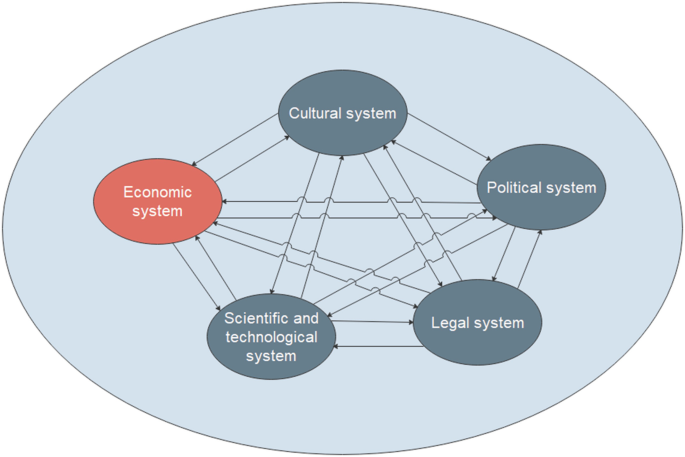
How do we design a system in which enterprise and governance function as interdependent components of a larger social, technological, and ecological whole?
This updated essay revisits my earlier argument through the lens of systems thinking, quality theory, and the emerging AI economy.
The Myth of “Free” Enterprise
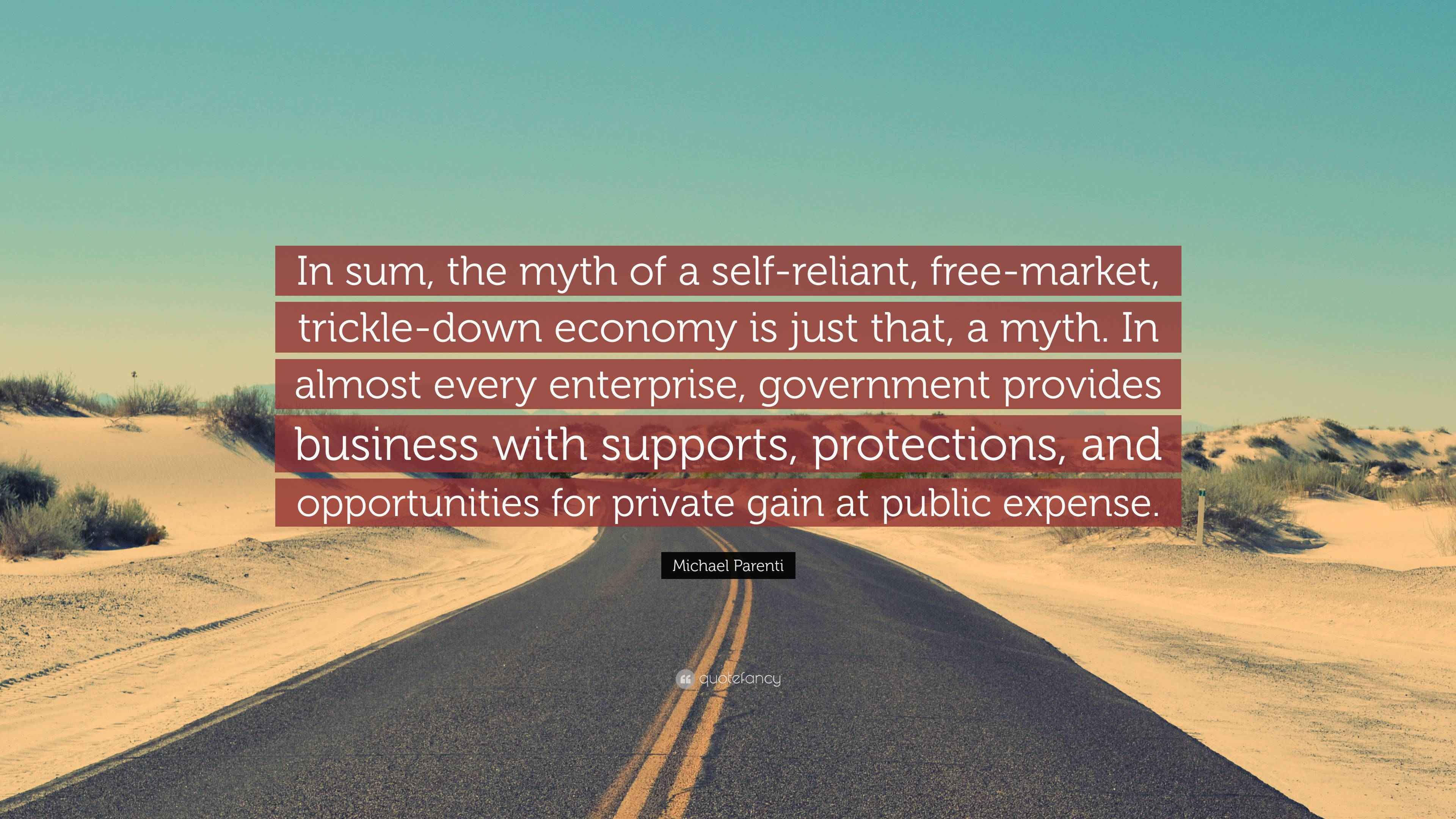
“Free Enterprise” does not exist. It is a powerful ideal, but an ideal nonetheless.
There are no free businesses. Every enterprise requires:
- Capital
- Labor
- Land
- Infrastructure
- Legal frameworks
- Social stability
All of these are paid for—directly or indirectly—by the broader system.
The real purpose of enterprise remains unchanged:
To provide goods or services that people want or need at a price they can afford, while generating sufficient return to sustain the organization.
Businesses that fail to provide value disappear—often faster than biological species.
What we call “free” enterprise is better understood as enterprise operating within enabling constraints.
What “Free” Actually Means
Historically, the term referred to freedom from arbitrary permission structures—freedom to start a business, to trade, and to innovate without needing approval from political elites.
It did not mean:
- Freedom from rules
- Freedom from costs
- Freedom from consequences
A useful analogy is a game that can be played:
A game without rules is not freedom—it is chaos.
A market without rules is not efficient—it is predatory.
Rules are not the opposite of freedom; they are the conditions that make freedom operational.
Markets as Complex Adaptive Systems
Modern systems theory helps us understand what Adam Smith intuited.
Markets are:
- Nonlinear
- Information-sensitive
- Path dependent
- Self-organizing but not self-optimizing
Price functions as a signaling mechanism, but signals are only as good as the information and structures that generate them.
In Dr. Deming’s terms:
Optimizing one component of a system will suboptimize the whole.
An unregulated monopoly can be “efficient” internally while degrading the broader economy.
Overregulation can stabilize one sector while suppressing innovation across many.
The goal is system optimization, not ideological purity.

The Role of Government: Enabling, Not Dominating
Government performs several system-level functions that markets alone cannot:
- Defining and enforcing property rights
- Providing public goods
- Correcting externalities
- Maintaining currency and legal stability
- Investing in long-term infrastructure
- Reducing catastrophic risk
Historically successful economies have not been purely laissez-faire or purely planned. They have been hybrid systems with dynamic interaction between public and private sectors.
The danger lies in extremes:
- Total central control suppresses initiative and local knowledge
- Total deregulation concentrates power and erodes competition
Both lead to systemic fragility.
Modern Market Failures in the Digital Age
The traditional list of market failures still applies, but new forms have emerged.
Platform Monopolies and Network Effects
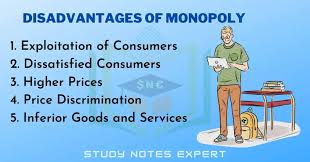
Digital platforms tend toward natural monopoly due to:
- Data accumulation
- Network lock-in
- Switching costs
Competition becomes structurally difficult.
Information Asymmetry at Scale
Algorithms now mediate:
- Pricing
- Visibility
- Credit
- Employment
When one side controls the data, the market signal becomes distorted.
Data as Capital
Data is now a factor of production.
Yet individuals generate it without meaningful ownership or bargaining power.
Labor Platformization
Gig work externalizes risk while internalizing control through algorithmic management.
These are system design issues, not simply moral failures of individual firms.
Artificial Intelligence as a New Economic Force
AI introduces a structural shift comparable to mechanization or electrification.
AI:
- Reduces marginal costs of cognition
- Amplifies winner-take-most dynamics
- Accelerates innovation cycles
- Displaces routine cognitive labor
Left entirely to market forces, AI development will likely:
- Concentrate economic power
- Increase inequality
- Prioritize short-term profit over system resilience
But over-centralized control would:
- Slow innovation
- Reduce adaptive capacity
- Create bureaucratic bottlenecks
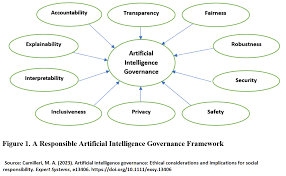
The challenge is governance of intelligence production within a mixed system. We are facing a very precarious situation today. Governance with intelligence is as uncommon as common sense to paraphrase Dr. Deming.
Regulation as System Design, Not Volume
The real issue is not the sheer number of rules but their:
- Coherence
- Clarity
- Alignment with system goals
Fragmented and overlapping regulations create:
- Compliance burdens
- Barriers to entry
- Uncertainty for small enterprises
Effective regulation should:
- Enable competition
- Reduce systemic risk
- Protect public goods
- Be continuously improved using feedback loops
This is quality management applied to governance. We started this when I worked for Process Management International in the 1990’s but not enough organizations had the discipline to work long term. Most organizations want what Dr. Deming facetiously called “Instant Pudding.”
Why Enterprise Still Matters
Enterprise nurtures:
- Innovation
- Local problem solving
- Adaptive capacity
- Human agency
It provides a mechanism through which individuals can:
- Create
- Exchange
- Experiment
- Build value
Even for those who never start a business, the existence of enterprise expands choice and opportunity. The concept of “Free” enterprise is a beacon to people all over the world.
Why Oversight Still Matters
Without oversight, markets tend toward:
- Concentration of power
- Externalization of costs
- Erosion of public trust
When systems lose legitimacy, populations often demand stability over liberty.
Sustainable freedom requires visible fairness and functional institutions.
Toward a Systems View of Political Economy
The real debate is not:
- Market vs. government
- Capitalism vs. socialism
The real question is:
How do we design a socio-economic system that optimizes the whole rather than its parts?
Such a system would:
- Treat markets, governments, and communities as interdependent subsystems
- Use data and feedback for continuous improvement
- Balance innovation with equity
- Integrate ecological constraints
- Govern AI as a public-impact technology
This is not an ideology. It is systems design. It is balancing structure and strategy not just for the short term but for the long term as well.
Conclusion: Freedom Through Design
Free enterprise was never “free,” and it never should be in the sense that an optimized market requires controls, rules, structures, incentives, policies, governance and procedures. Without these, you have a jungle where power trumps efficiency and politics trumps effectiveness.
The strength of a rational market lies in:
- Structured freedom
- Enabling constraints
- Dynamic balance
The task before us in the age of AI is not to choose between market and state, but to engineer a resilient, adaptive system in which both serve human flourishing.
Freedom is not the absence of rules.
Freedom is the presence of well-designed systems that allow individuals and institutions to create value without destroying the conditions that make creation possible.

 Aging Capriciously
Mar 01, 2026 @ 17:11:53
Good thinking but I’m not sure our systems can really go back to not being exploitive, especially in the US where individualism is such a huge part of the psyche. This type of Capitalism is more prevalent in the Scandinavian countries which by US standards are Socialist and thus a dirty word.
Here is a good listen to Geoffrey Hinton whom I’m sure you know: AI must foster ‘maternal instincts’ or we risk extinction, warns Geoffrey Hinton | CBC Radio
LikeLiked by 1 person
Mar 01, 2026 @ 21:11:59
Hi Wayne, I have listened to some of Hinton’s tapes. You motivated me to buy his most recent book. He is quite intelligent. I guess sometimes I want to be an optimist or maybe an idealist and have at least a kernel of faith that humans can be different. If I were a betting man, I would bet on the human race being extinct inside of the next 1000 years. But bets require pragmatism and I like to think I am more pragmatic than anything else.
LikeLike
Mar 01, 2026 @ 17:17:00
Some very good thoughts there but I think you are straying into Socialist territory which I understand is not well liked in the US, the land of Individualism, free enterprise and sucks to be poor because it’s your own fault?
On a similar note here is a CBC podcast with Geoffrey Hinton whom I’m sure you know: AI must foster ‘maternal instincts’ or we risk extinction, warns Geoffrey Hinton | CBC Radio
LikeLiked by 1 person
Mar 01, 2026 @ 21:14:53
Most Americans or at least MAGA’s would not know the difference between a socialist, a communist or a man from Mars. IMHO Yes, Americans think they are the land of rugged individuals but that is one big bullshit fantasy. What Hinton says about AI developing maternal instincts is a very profound thought. I think he right. We have gotten to far with machismo and patriarchy.
LikeLike
Mar 02, 2026 @ 20:39:23
Framing markets as systems with enabling constraints rather than ideological extremes is the useful move here. Especially in the AI era, the question is less about “free” and more about how intelligently we design feedback, accountability, and power distribution within the system.
LikeLiked by 2 people
Mar 02, 2026 @ 22:23:00
Good points. I agree 100 percent. Thanks for commenting.
LikeLiked by 1 person