The 4500 Year Road to Trump’s Success  –  Revisiting my 2017 essay on the long rise of corporate power — by J. Persico with help from my AI Assistant Metis

In 2017, I began an essay about Donald Trump with the Great Pyramid of Giza.  I still think that was a good place to start.  A pyramid makes you ask who could command enough labor and resources to build it.  A cathedral, a palace, and a skyscraper invite the same question.  The answers tell us something about how power was organized in each age.

What I would change today is how confidently I described power passing from one group to another.  I had kings giving way to priests, priests giving way to governments, and governments giving way to corporations.  That sequence made for a readable essay.  It also made the transitions look more complete than they were.  One of the best examples of how power actually works was already in my essay, almost at the end.

Smedley Butler and the rise of corporate power

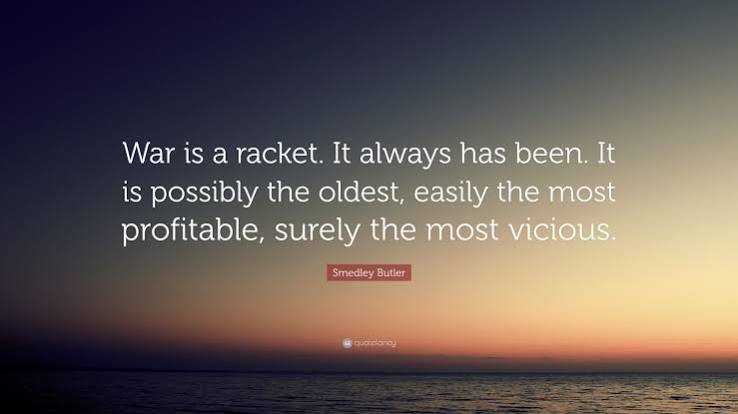
General Smedley Butler looked back on his career in the U.S.  Marines and described using American military force in ways that served banks, oil companies, and other commercial interests.  I quoted him because he showed how far private economic interests could reach into public affairs.  They could benefit from the actions of an institution with powers no American corporation possessed on its own.

That relationship worked in both directions.  Industrial capacity made it possible for governments to arm and supply millions of soldiers through years of fighting in the First World War.  Butler asked who profited from that effort.  A generation later, the United States drew on its factories, workers, and productive capacity to help win the Second World War.  The government financed and directed much of that mobilization.  American industry, in turn, gave the government the means to turn its decisions into ships, aircraft, trucks, and supplies on a vast scale.  If you want to understand military power, you have to look at what a country can produce and sustain as well as what it can put on a battlefield.  Smedley Butler, War Is a Racket · The National WWII Museum, “Becoming the Arsenal of Democracy”

I would keep the Empire State Building in the essay, too.  Construction began in 1930, and the people behind it included a former General Motors executive and members of the du Pont family.  They chose Al Smith, the former governor of New York, to head the development company.  The building’s height gets your attention.  The people who put it there tell you more about the relationship between industry, finance, and politics.  Empire State Building history

The names change faster than the system

Look at the first Fortune 500, published in 1955 using 1954 figures, and then look at the list half a century later.  Many of the names have changed.  Fortune also broadened the ranking in 1995 to include service businesses, which makes the two lists harder to compare directly.  The question that interests me is what happened to the companies that disappeared.  Some declined or failed.  Others were bought, and their factories, brands, and customers ended up in somebody else’s hands.  A name can disappear from a list while the economic power it once represented is absorbed by an even bigger company.  Library of Congress, “First Fortune 500 List Published” · Fortune’s account of the 1995 change

Google and Alphabet have made hundreds of documented acquisitions.  The number caught my attention, but one purchase tells me more than the tally.  When Google bought DoubleClick, it gained a major piece of the infrastructure publishers used to sell online advertising.  A federal court found that this purchase and another acquisition helped Google gain monopoly power in two advertising technology markets.  The court’s finding of unlawful monopolization rested on Google’s broader conduct.  What matters for my argument is that buying a company can give the buyer control over something many other businesses depend on.  That kind of power can accumulate one deal at a time.  Google and Alphabet acquisition tracker · Federal court opinion on Google’s advertising technology business

Where Trump fits

In “WTF America?!”, the Meiselas brothers trace part of Trump’s rise back to Richard Nixon and Roger Ailes.  Their account helps explain how a conservative media audience developed and how television presented Trump as a man who knew how to run things.  I still have the question that led me to write the original essay.  Why had so many Americans come to see success in business as a qualification for governing a democracy?  Television could make Trump look like a commanding executive.  The prestige of the executive had a much longer history.  WTF America?! book preview

I was too quick in 2017 to declare big business the new sovereign.  That word implies ultimate authority.  The history I was pointing to is full of bargains, contests, and reversals.  Sometimes governments direct industry.  Sometimes businesses get governments to act on their behalf.  Sometimes voters, workers, or competitors change the terms.  A better test of who holds power is what happens when their interests collide.  Who gets to set the rules?  Who can get an exception?  Who can make a decision stick?  The Golden Rule that “He or she who has the gold makes the rules” is too often true.

An election can change who occupies the White House in a single night.  It takes generations to build the institutions, fortunes, and habits of mind that make a particular kind of candidate seem like the answer.  That is the road I was trying to trace in 2017.  It still seems to me that we spend far more time talking about the man who arrived at the end of it than about who built the road.

Read the original essay, “The Road to Trumps Success Began 4,500 Years Ago”

When Everyone Is Armed Security by Professor Taboo

Why Did The Democrats Sweep the Midterms?

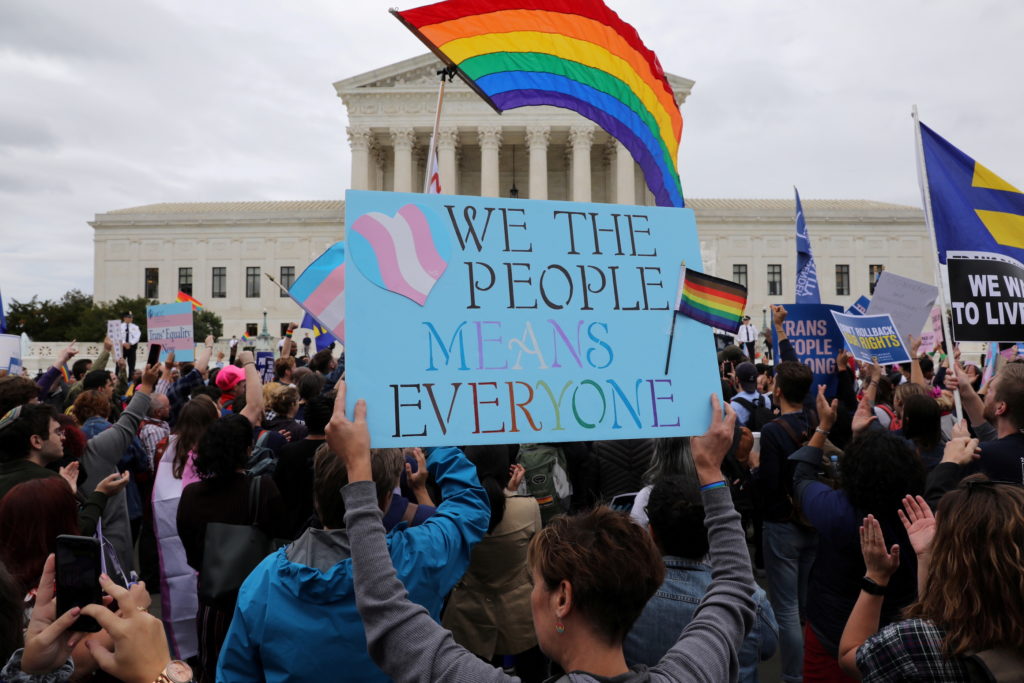
FILE PHOTO: LGBT activists and supporters hold a rally outside the U.S. Supreme Court
  • It was not because of the flyers they sent out or the posters on street corners that were put up. 
  • It was not because of the phone calls the Democratic Party made.
  • It was not because of the doors the candidates knocked on.
  • It was not because of all the money they spent campaigning.

Here are the reasons they won: In rank order –  IMHO

  1. Trump is one of the worst people in history to ever hold office
  2. The Republican Party has a leadership rife with sycophants, ass kissers and opportunists.
  3. Millions of Americans spoke out, marched and carried homemade flyers to denounce the Republican Party and its policies.
  4. We had a Progressive Wing of the Democratic Party which started to exert itself and stand apart from the traditional centralists in the Party who are clueless when it comes to the needs of the common person. 

Fame, Fortune, Cars and Immortality – by Dr. John Persico Jr.

I have talked about fame, fortune  beautiful people and cars.  These are a few of the things that many of us lust after.  Foolishly chasing them in the hope that they will bring us happiness.  But the epitome of all desires by humans is immortality.  All other aspects of our egos are merely means towards achieving a dream that we will never be forgotten.

Some people want buildings named after them.  Some want giant arches or statues to be remembered by.  The pharaohs of Ancient Egypt built huge pyramids so that they would not be forgotten.  Many famous people have airports, streets, awards, and other tokens of fame named after them.  While I have often lusted after such symbols of immortality, I am reminded of a poem by Shelley about a statue.

Ozymandias

By Percy Bysshe Shelley, 1819

I met a traveler from an antique land
Who said: Two vast and trunkless legs of stone
Stand in the desert. Near them, on the sand,
Half sunk, a shattered visage lies, whose frown,
And wrinkled lip, and sneer of cold command,
Tell that its sculptor well those passions read
Which yet survive, stamped on these lifeless things,
The hand that mocked them and the heart that fed:
And on the pedestal these words appear:
“My name is Ozymandias, king of kings:
Look on my works, ye Mighty, and despair
!”
Nothing beside remains. Round the decay
Of that colossal wreck, boundless and bare
The lone and level sands stretch far away.

There is an irony here that I cannot ignore.  The king’s monument lies in ruins, but Shelley’s poem keeps his name alive.  The warning against immortality has itself become a vehicle for remembrance.  Even so, being remembered for two hundred years is a long way from being remembered forever.

When I became a graduate research assistant at the new Vocational Education building on the St. Paul Campus, we were told that each Ph.D. graduate would have a brick inscribed with their name on it.  The brick would find its way somehow into one of the buildings walls.  Placed in such a way that it would survive for eternity.  I entered graduate school in 1982 and completed my Ph.D. degree in 1986.  I was never given a brick with my name on it.  As far as I know, no one else ever had their name put on the wall.  Unless it was inscribed in graffiti too discrete for even the university maintenance department to notice.

To be honest, I was mildly disappointed.  I was ready to settle for immortality by brick.

I doubt that the Vocational Education building will stand forever.  Thus, even if I did get my name on one of its walls, it would hardly reflect my idea of immortality.  Who would know from my name alone, the wonders I accomplished in the 21st Century of America?

But what do I mean by immortality?  My first thought was simple: something that lives forever, whether a person, an idea, or a thing.  The more I considered it, however, the more I realized that I was mixing several different desires.

Living forever is one thing.  Being remembered after death is another. Having an influence that continues after people have forgotten your name is something else again.  A building named after me would not keep me alive.  It might not even keep anyone interested in who I was.

Religions and philosophies complicate the question further. Some promise the survival of a soul. Others imagine rebirth.  Buddhist teachings about the Deathless do not simply promise that the familiar personal ego will continue forever. We use similar words for very different hopes.

If you are still confused, I suppose we could go to Webster’s definition to settle things a bit.  Looking at the various theories that have been proposed over the centuries does not provide a clear answer to what immortality really means.  As I started looking for a universal definition, the hundreds that emerged made me realize that most of the great thinkers in history as well as great religions all have very different ideas as to what immortality entails.

I find this somewhat surprising since I was sure that for most of us it meant simply living forever.  Alas, life is never that simple.  A key question that my search led to was “What, if anything, will live forever?” Do we have an immortal soul that will go on living long after our body returns to protons and electrons?  Will we come back again in some ghostly appearance and stalk the universe?  Is there a heaven where good people like us will get to live forever with their favorite pets and/or spouses?  How crowded and confusing this would get on Friday nights. 

What if I told you that immortality was a fiction?  A fiction that humans created like they created the “God” in their image.  An idée fixe that according to Max Stirner is simply wheels in the head.  For Stirner, a “wheel in the head” is an abstract concept, ideal, or belief that a person treats as absolute, sacred, and superior to their own individual self.  Instead of the individual owning the idea, the idea owns the individual.

Key elements of Stirner’s concept include:

The “Spooks” of Mind: Stirner argued that abstract concepts like God, the State, Morality, Humanity, Duty, or Truth are not real, physical entities. They are illusions—ghosts or “spooks”—that people construct.

Our ancient ancestor woke up in the middle of a night a million years ago and decided that he did not want to die.  Death represents oblivion.  A passage into nothingness.  No remnants remaining of life.  Nothing and nobody to remember.  A life’s journey of experiences, learnings, meetings, friends, relatives, loves and all gone. 

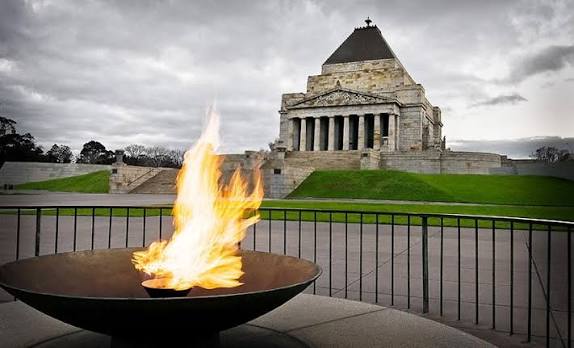
Perhaps you will get a gravestone that a few people will visit for a few years.  If you are remarkable enough, perhaps you will get an eternal flame on your grave.  How long will your eternal flame burn if you do get one?

Did you know that according to Google, there are only about nine prominent naturally occurring eternal flames known in the world, though estimates vary?

Google adds that If we include man-made eternal flames—such as memorial torches, religious lamps, and civic monuments dedicated to leaders or fallen soldiers—there are hundreds or thousands of them maintained in the world. 

Eternal has much the same meaning as immortal.  Webster’s defines Eternal as “having no beginning and no end, lasting forever, or existing completely outside of time.”

Synonyms: 

• Immortal

• Everlasting

• Perpetual

• Enduring

• Timeless

We don’t want to die.  We don’t want our works, our loves, our treasures, our hopes and dreams to pass into nothingness.  So we invent the idea of immortality.  We create a belief that somehow we can preserve all the treasures of our lives.  Maybe, just in a bunch of pictures of events that meant so much to us.  Places we visited.  People we knew.  Houses and cars and stuff we owned. 

Unfortunately, when our heirs are going through what remains of our possessions, the pictures get sifted and only those few with images of our heirs may get saved while the rest will go into the garbage bin.  That is one place that does not seem to be sacred to humanity, the garbage bin. 

In some respects, the lack of sanctity related to garbage might be the ultimate sin of mankind.  Perhaps 90 percent of everything that humans including you and I ever made will end up in the garbage bin. 

I have noticed that the greatest writers, poets, artists, authors, philosophers, historians, scientists, painters, sculptors and musicians will be lucky if they are remembered for more than one work that they created. 

What irony that Van Gogh now the highest paid artist in history sold few paintings while he was alive.

We might console ourselves with the belief that immortality can only be achieved after we die.  Socrates, Plato, Jesus, Buddha, Mohammed, Moses and many other great prophets as well as leaders only stepped into the ranks of immortality after they passed away.  Jesus said that you are never a prophet in your own land.  Maybe no one can be immortal until after they die.

However, posthumous fame may be of little consolation.  Or does it mainly comfort those of us who hope that recognition might eventually catch up with our own neglected brilliance?

What if you could buy immortality?  What if someone in the vast world of capitalism found a way to sell immortality.  We hear talk of being frozen upon death.  What if some new conglomerate came along and for a price guaranteed that they would keep (if not our bodies) at least our memories and accomplishments alive forever?

Instead of the obituary which plays in the local newspaper for a week and then is read by a few at your “celebration of life”; what if you could buy a guarantee that your name would become immortal?  How much would you pay for the privilege? 

You would not have to build a pyramid or an arch.  The XYZ Life Company would create an ongoing marketing program to insure that you were never forgotten.  You could simply buy immortality for a price.

Sadly, you can see the potential glitch in this idea.  Companies come and go.  The top companies yesterday are now in the dustbins of history.  Like your frozen body, who is going to do the marketing after the XYZ Life Company goes bankrupt or the senior executives run off with the profit?

Do you trust capitalism to insure your immortality?

Our tortoise Mikey, short for Michaelangelo, roams our yard daily.  He is much more active when the weather is warm, but he spends more time in his heated thermostatically controlled to 74 F house when the weather turns colder.  This week the highs will be in the mid-70’s and the lows will be in the mid-fifties.  Occasionally, we bring him inside for a soak.

Mikey belongs to an ancient lineage.  Turtles and their relatives have an evolutionary history extending back more than 200 million years.  That does not mean his particular species has existed that long.  Our own species, Homo sapiens, has been around for roughly 300,000 years. Neither comparison gives an individual tortoise—or a human—immortality.

Perhaps the question that I should have asked before worrying about my missing brick is this. 

Why must a life last forever to have mattered?

A kindness can matter to the person who receives it even if neither person is remembered a century later.  The same is true of a friendship, a love, or an afternoon spent enjoying the world.

The dream of immortality does little to help us live today. 

I wonder if Mikey ever realizes that his species has been a lot more immortal than ours has. At least in terms of longevity. I suspect turtles will continue to hold an edge. It is probably not an idea that Mikey spends a great deal of time thinking about.

He never seems concerned about whether a street will be named after him or an arch built for him.

Mikey is now out roaming the yard, getting on with his day.

Just another Tortoise Day.

PS: 

My thanks to Metis my AI assistant for her suggestions in making my writing better than it would be without her ideas and editing.  I do not always take her suggestions but she often makes a good point even when I do not agree with her. 

What Is Real Love? by Mr. Wahidullah Noorzai

The Silent Power That Calls the Soul from Earth to the Heavens

A Note from Dr. John Persico

I want to post a blog by Mr. Wahidullah Noorzai. Mr. Noorzai left some very interesting comments on my blog dealing with the meaning of love. I asked Mr. Noorzai if he would consider elaborating on his concepts of love and what real love entails. He has done so with this blog post. I think you will enjoy it very much. Please feel free to leave comments.

Love is a pain that holds the treasures of the world within;

Whoever enters love’s struggle finds all its sorrows therein.

And if, far from the beloved, “hawa” should come to be,

There is no grief—for Adam himself is there with me.

Noorzai

1. A Truth Beyond the Reach of Words

No word can fully contain the truth of love. Language, however beautiful and expansive, sometimes takes refuge in silence before its greatness. Love is not one of those truths that can be understood merely by hearing its name. It must pass through the soul, take root in the depths of one’s being, and reveal itself in moments when even language falls short.

Love cannot be found only in saying, “I love you.” Sometimes it is hidden in a quiet gaze that understands another person’s suffering without asking a question; in a smile that brings light without expecting anything in return; in a hand that offers help without making a display of it; and even in a silence more eloquent than a thousand words. This power can flow so quietly through human existence that its presence goes unnoticed, yet its absence can leave the entire world stripped of meaning.

Perhaps love is that hidden force which leads human beings beyond the boundaries of the self. It teaches us that the world was not created merely for taking and possessing. In its presence, another person is no longer a stranger, their suffering no longer seems insignificant, and the beauty of existence extends beyond the limits of personal interest.

Love creates an expansiveness within the soul that enables a person to cherish something without seeking to own it, to give without demanding repayment, and to remain beside another without taking away their freedom.

Perhaps the first sign of recognizing love is this: in its presence, a person no longer thinks only of themselves. Their inner world grows wider, and life acquires a meaning beyond the mere passage of days.

2. Love and the Wisdom of Creation

From a faith-based perspective, love can be understood in connection with the wisdom of creation, divine mercy, and the beauty of existence. If we regard the universe as a manifestation of God’s will and wisdom, then love may also be seen as one expression of that wisdom—a force that brings life out of the dryness of isolation and makes connection, empathy, and flourishing possible.

Within this perspective, love is not merely an emotion between two people. It carries a broader meaning: from the relationship between the human being and the Creator to our relationship with other living beings; from our way of looking at nature to the manner in which we respond to the suffering and needs of others. It is as though a wisdom lies deep within existence, calling beauty toward generosity, power toward mercy, and life toward connection.

Of course, this understanding represents a spiritual and faith-based interpretation of the world—one in which love is not merely a psychological state but a reflection of a higher meaning in human life. Even those who do not approach this perspective through religion can encounter part of this human truth through experiences of beauty, kindness, care, and empathy.

Perhaps creation becomes more beautiful to us when, instead of seeing the world as a collection of things to possess, we recognize it as a reality whose dignity deserves to be respected and with which we must live responsibly.

3. Union with the Divine: Love Beyond Reward

In the mystical tradition, love reaches a horizon in which the beloved is not a means of obtaining a reward but the destination itself. The lover no longer longs merely for what may be received; the longing is for the presence and vision of the beloved. Here, love moves beyond the calculations of profit and loss and becomes a truth whose value lies within itself.

In a well-known supplication attributed to Khwaja Abdullah Ansari, this meaning appears in language filled with longing and freedom from the desire for reward:

“O God! The flowers of Paradise are thorns in the eyes of those who truly know You. What concern has the seeker of You with Paradise?

O God! If Paradise is the delight and light of the eyes, then without seeing You, it is pain and sorrow.

O God! Paradise without the vision of You is a prison, and asking a noble soul to leave one prison for another is no noble act.

O God! If You send me to Hell, I make no claim against You; and if You grant me Paradise, I have no desire for it without the vision of Your beauty. Fulfil our true longing, for I seek nothing but union with You.”

In this invocation, love moves beyond the desire for what the beloved gives and reaches toward the beloved themselves. Reward is no longer the destination; presence is what gives meaning. This is the horizon in which mysticism sees love as a path through which the soul can escape the narrow confines of self-centeredness.

In this understanding, union is not simply the attainment of an external desire; it is an inward transformation of the lover. The further a person moves away from self-centeredness, the closer they come to a wider horizon of existence. In this experience, the soul seems to need no wings made of physical matter. It rises beyond the limitations of fear, possession, and calculation, reaching an expansiveness whose name it may once have known only through words.

This flight is not an escape from life; it is a deeper way of seeing it. It is a return to the world with eyes that recognize beauty more clearly and a heart that can more readily understand the suffering of others.

4. The Heart: A Mirror That Receives and Reflects Love

If language cannot express the whole truth of love, perhaps we must return to the place where human beings feel it before they can put it into words: the heart.

Here, the heart does not refer merely to a physical organ. It is a symbol of the deepest human capacity to receive, recognize, and respond to affection. The mind can think about love, analyze it, and construct definitions for it. Yet a distance remains between knowing about love and actually living it—a distance that only experience can reveal.

The heart may be understood as a mirror in which the beauty of affection is reflected. But not every mirror remains clear. Selfishness, resentment, fear, and the desire to possess can cloud it. A person may continue speaking about love while gradually losing the ability to see another person as they truly are.

A heart that receives love does not stop at feeling. That experience must also be reflected in a person’s gaze, words, behavior, and choices. If kindness does not become visible through action, it remains no more than an aspiration. Affection that fails to recognize another person’s suffering has not yet reached its full potential.

Perhaps this is the secret of the heart: whatever it receives, it reflects in a new way through the human being. When affection finds a place within it, the world beyond may also share in its light.

5. Nature: The Silent Language of Love

Nature sometimes offers lessons in beauty, endurance, and transformation without speaking a single word. Consider spring: after the silence of winter, the earth comes alive again, blossoms emerge, and color returns to the world. This renewal is an image of the hidden power of life—a power that does not lose its capacity to flourish, even after a period of stillness.

Water, too, changes stone through its softness and persistence. Its strength does not always lie in force or impact; sometimes it lies in a quiet, continuous movement that leaves a profound mark over time. Perhaps love is often like this: not a cry demanding to be proven, but a constant presence that quietly transforms something within the human being.

The mountain offers another image: a symbol of steadfastness in the face of winds and storms. And the volcano reminds us of a hidden force that gathers deep within the earth and may eventually emerge with tremendous power. Yet not every form of power is necessarily love. Power becomes meaningful when it is directed toward creation, life, and the common good.

Nature does not provide scientific proof of love, but it can offer a beautiful metaphorical language through which to reflect upon it. In spring, water, mountains, and the sky, we find signs that remind us that life is not defined only by hardship and resistance. Gentleness, endurance, renewal, and generosity also belong to its beauty.

6. Love: A Power That Enables the Soul to Rise and Transform

When love takes root in the depths of a human being, it can transform that person—not because they lose their identity, but because their capacity for existence expands.

A person who moves only within the orbit of personal desires sees the world through the lens of self-interest. But when affection finds a place within them, their vision extends beyond the boundaries of the self. They can share in another person’s happiness even when they receive nothing from it; they can feel sorrow for someone whose name they do not even know; and they can love beauty not in order to possess it, but simply to appreciate it.

This is the flight that love creates within the soul: a movement from the narrowness of selfishness toward the expansiveness of empathy, from the desire to possess toward the ability to share, and from fear toward trust.

Yet this transformation should not separate human beings from the ground beneath their feet or from the realities of life. If love is a noble truth, its signs must also be visible in this world, among the people with whom we live. The greatness of love is not expressed only in moments of passion and longing; it is also revealed in the way we treat one another, in difficult choices, and in our commitment to protecting the dignity of life.

7. Love or an Escape from Loneliness: The Difference Between Need and Sharing

Perhaps one of the most difficult questions about love is this: Do we truly love another person, or are we attached to the feeling that their presence creates within us?

Sometimes human beings mistake the presence of another person for an escape from their own loneliness. They flee an inner emptiness, seek refuge in someone’s companionship, and call the peace they receive from that presence love. In such a relationship, the other person may be desired less for who they truly are and more for the role they play in soothing our loneliness, anxiety, or emotional needs.

As long as that presence satisfies our needs, the relationship continues. But when that source of comfort becomes unavailable, the emptiness returns. A person may then begin searching for another presence to soothe the same need once again.

This condition should not be confused with every form of human need or attachment. Human beings are not independent of affection, companionship, and connection. Needing another person is not, in itself, evidence of an absence of love. The problem begins when we no longer see the other person as an independent and valuable human being, but instead regard them as a means of filling the gaps within ourselves.

Love begins somewhere deeper: when we cherish another person not to escape loneliness, not to possess their peace, and not merely to satisfy our own desires, but because of the value and uniqueness of their existence.

In this sense, love understands the language of giving and sharing. Sharing, however, does not mean that a person who loves never needs to receive affection in return. A living relationship between two people involves both giving and receiving. The difference is that neither person reduces the other to a source of emotional consumption.

Perhaps love can be described as the effort not to own another person, but to recognize their existence without trying to confine them within the boundaries of our own needs and expectations.

8. Love Between Two People: Respect for the Heart and Mutual Dignity

When love moves from the world of thought and emotion into the lives of two human beings, it encounters a more delicate and, at the same time, more challenging reality. Here, the matter is no longer simply a beautiful feeling. It concerns two people, each carrying an inner world, memories, wounds, hopes, needs, and freedoms of their own, who nevertheless wish to travel part of life’s journey together.

Sometimes, amid the noise of everyday life, a heart beats not to hear more words, but to receive a deeper kind of attention: a gaze that truly sees it, rather than merely noticing its presence; that understands it, rather than simply hearing its voice; and that respects its dignity, even in moments when it cannot explain its pain.

Such a heart needs something beyond the physical touch of a hand. It needs a sense of security, understanding, and acceptance. Sometimes a gaze born of genuine understanding can lift a burden from someone’s shoulders that no grand speech could ever ease.

But this respect cannot be one-sided. If one person must constantly understand, forgive, remain patient, set aside personal wishes, and carry the difficulties of the relationship alone, while the other considers themselves exempt from accountability and responsibility, what has developed is no longer a complete expression of love.

True love does not mean that one person disappears into the wishes of another. It means creating a space in which both can remain themselves while still sharing affection and commitment.

Acceptance is one of love’s highest expressions. Yet acceptance does not mean abandoning one’s dignity or tolerating humiliation and domination. To love someone is to recognize their differences, respect their freedom, and make room for their growth—just as we expect our own freedom, differences, and growth to be respected.

A deep bond is not ownership of another person. It is the conscious choice of two free human beings who wish to remain beside one another without either being forced to abandon themselves in order to preserve the relationship.

9. Responsibility: When Love Becomes Action

Perhaps the value of love becomes most visible during difficult days, when illness, exhaustion, anxiety, or changing circumstances transform the shape of life. At such times, affection can no longer be confined to beautiful words. It must become a real presence, patient attention, and responsible action.

A helping hand, a presence that does not abandon, patience that does not humiliate, and attention that takes even unspoken needs seriously are all expressions of a love that has moved beyond emotion and become action.

Responsibility can be the practical language of love. But it must arise from mutual dignity, not from coercion, fear, guilt, or a habit of one-sided sacrifice.

Sometimes, in shared life, a person assumes responsibilities they could not have anticipated at the beginning: caring for someone who is ill, enduring economic hardship, offering companionship through exhaustion, or accepting changes that time imposes upon life. Such responsibilities can be expressions of commitment and affection. Yet they should never mean that one person must always give while the other always receives.

Love approaches human dignity when neither person is required to surrender the right to be seen, heard, and respected as a human being simply in order to be loved.

10. Freedom, Rights, and the Boundaries of Love

Without freedom, love can gradually turn into dependence and possession. A person who loves another cannot disregard that person’s freedom simply because they feel attached to them. Genuine affection recognizes the independent existence of the other.

Commitment does not mean ownership. Loyalty does not mean depriving another person of choice and growth. Generosity should not mean destroying one’s own needs and dignity.

In a healthy relationship, both people have the right to speak, disagree, express their wishes, and maintain personal boundaries. Respecting these boundaries is not a sign of insufficient love; it is one of the conditions that allow love to remain healthy and endure.

No one should have to endure humiliation, violence, coercion, or domination to prove their affection. Accepting a person is not the same as accepting every action they take. We can love someone while still opposing behavior that harms their dignity or the dignity of others.

Perhaps love approaches maturity when two people can remain close while preserving each other’s independence; when they can be committed without sacrificing freedom; and when they can accept responsibility without turning it into a chain around another person’s life.

11. Love and Responsibility in Human Society

If love can transform the inner world of an individual and bring a relationship between two people closer to respect and responsibility, can it not also acquire a broader meaning in social life?

A society is not merely a collection of individuals living alongside one another. It is a network of shared dependencies, responsibilities, opportunities, and vulnerabilities. Every human being needs the support of others at some point in life, and no one can imagine themselves permanently outside these human connections.

In such a society, speaking about rights is essential, but it is not enough. Rights without mutual responsibility may become a one-sided demand, just as responsibility without respect for rights and dignity can lead to coercion and exploitation.

In its social meaning, love invites us to build a culture in which people pay attention not only to their own interests but also to the living conditions of others. It calls for a society in which the suffering of vulnerable people is recognized, opportunities are distributed more fairly, and the responsibility to support human beings does not fall upon a limited and forgotten group.

Within this perspective, love does not replace justice, law, or responsible institutions. Rather, it can strengthen the human spirit necessary to make them meaningful. Affection that does not lead to fairness and respect remains at the level of emotion; and responsibility separated from human dignity can become a tool of imposition.

Perhaps one of the greatest expressions of love is to contribute to building a world in which no one has to surrender their dignity in order to receive a little affection.

12. Returning to the Truth of Love: What Remains in the End

So, what is real love?

Is it the feeling that makes the heart beat faster at the beginning of an acquaintance? Is it contained in the longing to meet, in affectionate words, in the giving of gifts, or in the promises people make to one another? Or is its truth far deeper than all these expressions?

Perhaps love cannot be confined within a final definition. From the wisdom of creation to union with the Divine, from the quiet invocations of mystics to the peaceful gaze of two human beings, from the blossoming of spring to the hand that offers help in difficult times, love takes many forms. Yet in all of them, we may find a sign of moving beyond selfishness and approaching a wider truth.

Love is neither possession of another person, nor an escape from loneliness, nor the sacrifice of one human being for the comfort of another. It is a power that can bring people closer to generosity, understanding, freedom, dignity, and responsibility.

Perhaps what we were unable to express at the beginning has become a little clearer by the end: love is not a truth about which we merely speak. It is a truth that must be present in the way we see, cherish, give, and live.

If love has found a place in our hearts, its influence should also be visible in our conduct: in a gaze that understands another person, in a hand that offers help, in words that do not humiliate, in responsibilities that are shared fairly, and in relationships that protect the freedom and dignity of both people.

And perhaps this is the secret of love’s silent power: it cannot be seen, yet it changes the way we look at the world; it cannot be held in our hands, yet it expands the inner world of the human being; it needs no language, yet it can give life its deepest meaning.

Love is the power that calls the soul from the narrow confines of the self toward the vastness of existence. And when it takes shape in human life, it becomes an affection that seeks neither ownership nor the emptying of another person’s identity, but rather the beauty of living together with dignity, freedom, and meaning.

A Note of Appreciation from the Author

My sincere thanks to Dr. John Persico for his thoughtful engagement with this work, his generous editorial attention, and the opportunity to share these reflections with a wider audience.

Our exchange has been more than a discussion about an article. It has been a meaningful human encounter—one that has opened a space for reflection and dialogue about love, affection, respect, empathy, and our shared human experience.

I am grateful for his care, patience, and willingness to preserve the spirit of the original work while helping it reach readers.

Wahidullah Noorzai

Founder, Noorzai International Doctrine Academy (NIDA)

Former Senior Military Officer | Field Strategist | Regional Security Analyst

What Love Really Is!

by Dr. John Persico Jr, October 27th, 2026

No doubt if you have been to any weddings, you have heard the following verse:

“Love is patient, love is kind.  It does not envy, it does not boast, it is not proud.  It does not dishonor others, it is not self-seeking, it is not easily angered, it keeps no record of wrongs.  Love does not delight in evil but rejoices with the truth.  It always protects, always trusts, always hopes, always perseveres.”  –  1 Corinthians 13:4-7 NIV

To which I say bullshit.  That’s right BULLSHIT! You show me one marriage that is anything close to this and I will write you into my will.  Only in some la-la land that does not exist in our universe is love anything close to this definition. 

Now, I could go with my skepticism, and I would say, “Love is really lust in disguise.”  I have seen dozens if not hundreds of women that I FELL in love with on first sight.  How do you fall in love with someone that you have never met and know nothing about?  Easy, but I don’t want to get pornographic, so I won’t discuss the details here. 

However, I have another view on what love really is and what love really means.  This description does not come from skepticism or optimism.  It comes from seeing life through my lens of 80 years on this earth. 

My three word description –  Love is sacrifice

Love is giving up things that may cost you much in life.  Jesus said that “Greater love hath no man than this, that a man lay down his life for his friends.”  — John 15:13

  • Love means doing things you do not want to do
  • Love means going places you do not want to go
  • Love means putting up with people you do not like
  • Love means taking responsibilities you do not want
  • Love means forgetting as well as forgiving
  • Love means TRYING to be kinder
  • Love means TRYING to be more patient
  • Love means TRYING to be more compassionate

As we grow older and our relationships with others change, so too will the roles that we can play with them change.  Once upon a time, love meant having fun with my spouse.  Going out to a nice dinner.  Going to new places to visit. 

Today, we spend more time going to doctor’s appointments.  More time taking care of each other.  My responsibilities in my relationship with Karen continue to grow despite my efforts to avoid any added responsibilities.

I wrote a blog a while ago about the differences between rights and responsibilities.  Everyone demands their rights but few if any demand their responsibilities.  Why is this so?

The answer is clear.  Rights are a gift.  You get rights seemingly free of charge.  The illusion of those demanding their rights is that there is no cost.  And of course everyone loves a freebie. The reality as I said is quite the opposite.  For every right, there is a responsibility.  The responsibility is the cost that you pay for your right.

Responsibilities mean work.  Work is how we pay for what we get.  There are no free lunches on this planet.  None exist except in the minds of fools who think they deserve a free ride.  We seem to be inundated, indeed swamped and drowning today in such fools. 

I want my rights!.  I want my rights!

Let me diverge a bit to explore with you what some of the great teachers and prophets had to say about rights and responsibilities.  We will return to the subject of Love after this brief detour.

Jesus on Rights and Responsibilities:

Rather than demanding or protecting personal rights, Jesus repeatedly commanded his disciples to yield them for a higher spiritual purpose.

The Two Greatest Commandments: Jesus condensed all religious and ethical duties into two absolute responsibilities: loving God completely and loving one’s neighbor as oneself (Matthew 22:36-40).

Social and Communal Duties: He placed a heavy emphasis on caring for the marginalized, poor, sick, and imprisoned.  He explicitly states that a person’s ultimate judgment is tied to how well they fulfilled their responsibility to the “least of these” (Matthew 25:40)

Bahá’u’lláh on Rights and Responsibilities:

Bahá’u’lláh, the founder of the Bahá’í Faith, directly addressed both rights and responsibilities, weaving them into a single, interdependent framework for global civilization.  Writing in the 19th century, his teachings heavily anticipated modern concepts of universal human rights.

However, Bahá’u’lláh did not view rights as independent demands. In the Bahá’í framework, an individual’s rights are guaranteed only by the collective responsibility of humanity to uphold justice and unity.  — https://bahaiteachings.org/bahai-principles-human-rights-for-all/

Rabbi Jonathan Sacks on Rights and Responsibilities:

The late Chief Rabbi Lord Jonathan Sacks wrote extensively on how the modern obsession with individual rights, divorced from communal duties, fractures society.  In his philosophy, he championed what he called Radical Responsibility.

“Judaism is a religion of holy responsibility… It is God’s call to human responsibility.”

Rabbi Sacks argued that the ancient Greek and Western traditions are built on rights, while the Hebrew Bible is built on covenants and duties.  He noted that a society focused entirely on “what I am owed” creates a culture of blame and victimhood.  True human freedom and the protection of minority rights, he argued, only survive when individuals step up and say, “I am responsible.”  —- https://rabbisacks.org/videos/rabbi-sacks-on-a-responsible-life-example/

Muhammad on Rights and Responsibilities:

Prophet Muhammad framed rights as sacred entitlements guaranteed entirely by our strict, divine responsibilities to God and humanity.  His teachings demand absolute personal accountability across all social classes, fiercely binding individuals to structural obligations like protecting minorities, caring for the marginalized, and paying workers instantly.

In this divine framework, the rights of the vulnerable are only secured when believers actively fulfill their radical responsibilities, knowing they will answer directly to God for any failure to act. — From ChatGPT

Buddha on Rights and Responsibilities:

The Buddha did not speak in terms of personal “rights,” but built his entire ethical system around universal responsibilities, karma, and reciprocal duties (Dharma).  In ancient India, the concept of legal entitlements did not exist. Instead, the Buddha taught that true freedom, peace, and harmony are achieved not by claiming what the world owes you, but by mastering your responsibility over your own mind and actions. — https://www.buddhistdoor.net/features/a-buddhist-understanding-of-the-dharma-and-human-rights/

Lord Krishna (The Bhagavad Gita) on Rights and Responsibilities:

The Teaching: Krishna introduces the concept of Svadharma—the specific, inescapable moral duty of an individual based on their unique position, life stage, and circumstances in society.

Focus on Responsibility: Krishna famously states: “You have a right to perform your prescribed duty, but you are not entitled to the fruits of your actions” (Gita 2:47).  He teaches that human beings have zero control over outcomes or what the world owes them; our sole, supreme responsibility is to execute our moral duties with total detachment from personal gain.  — https://en.wikipedia.org/wiki/Dharma

The responsibilities we have towards others is not easy to conduct.  I am imagining a wedding ceremony where the participants take vows of responsibility to each other.  The idea of “Love, honor and obey” does not say much that is practical.  Here is my take on a:

Vows of Responsibilities

Today, I choose you as my partner, and I accept my responsibility for the marriage we begin together.

  • I promise to consider how my words, my actions, and my decisions affect you.
  • I will listen with the intention of understanding you, especially when we disagree.  I will speak honestly and with kindness and make room for truths that may be difficult to hear.
  • I take responsibility for my mistakes.  When I hurt you, I will acknowledge it, offer a sincere apology, and work to repair the harm.
  • I will respect your dignity, your boundaries, and your freedom to be yourself.  I will support your friendships, your interests, and your dreams, and give you room to grow.
  • I will carry my fair share of our responsibilities—the work that is visible and the work that often goes unnoticed.  When circumstances change, I will help us find a fair balance again.
  • I will be open with you about our resources, our commitments, and the decisions that shape our future.
  • I will care for my own well-being, ask for help when I need it, and recognize that you, too, need care and support.
  • In times of illness, uncertainty, and sorrow, I will offer my presence, my patience, and whatever strength I can give.  I will respect your limits and be honest about my own.
  • I will notice your efforts, express my gratitude, and make time for affection, laughter, and the ordinary pleasures of being together.
  • When difficulties arise between us, I will face them with you.  I will seek understanding, accept help when we need it, and do my part to keep our relationship a place of safety and trust.
  • I cannot promise that I will always know what to do.  I promise to keep learning, to reconsider when I am wrong, and to follow these words with action.

With love, freely given, I accept these responsibilities today—and commit myself to practicing them throughout our life together.

I only wish that I had been practicing these vows longer and more persuasively than has been the case.  My excuse was to insist that I never wanted to be a saint.  However, the closer the door gets to closing on my life, the more that I would like to go out knowing that I was trying to be a better person. 

I leave it to the world to decide if I have succeeded.

What Was Kohen Wiley’s Life Worth?

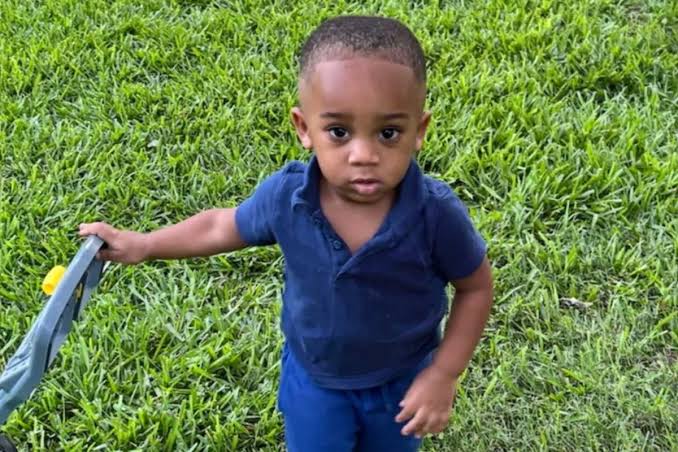
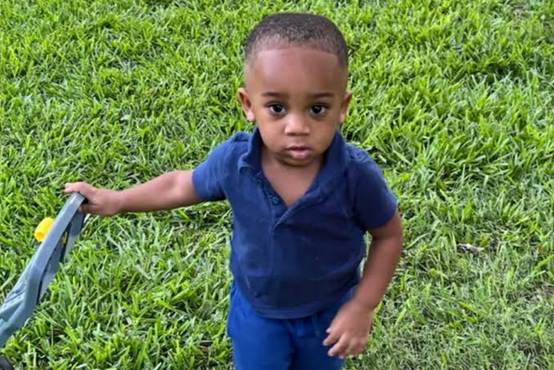
I venture off from my usual blog trajectory to post a story that deserves to be told and retold.  I would be remiss if I did not share this story and the tragedy that it entails.  In America, we say that the penalty must match the crime.  I am not against prosecuting thieves and other criminals, but the punishment should match the crime.  In the crime described above, the perps had no weapons.  The only thing they were holding was a one year old child named Kohen Wiley. 

Now $22.47

You save $2.50

was $24.97

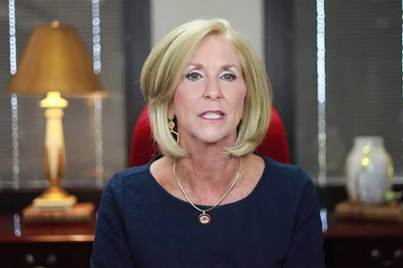
The police shooting that killed 1-year-old Kohen Wiley as he sat in his mother’s lap in a Walmart parking lot in Senatobia, Miss., in June “was justified,” Mississippi Attorney General Lynn Fitch’s office announced on Monday. 

One year old toddler Kohen Wiley was killed in his mothers arms over a pack of stolen diapers that cost between 20 and 30 dollars. 

Yesterday, the Mississippi department of public safety released body-camera and surveillance footage from the shooting, at a Walmart in Senatobia, during which the toddler died in his mother’s arms after being shot.

“Today, the Office of the Attorney General announced it has completed the review of a June 14, 2026 incident in Senatobia involving one officer with the Senatobia Police Department,” the attorney general’s statement said.  “In this incident, the Attorney General’s Office found the use of force was justified.  Pursuant to Section 45-1-6 of the Mississippi Code, the review followed an investigation by the Mississippi Bureau of Investigation.”  Fitch is a 2027 Republican candidate for governor.

Officers were responding to a shoplifting call alleging that Wiley’s mother, Vellesiya Wiley, and Latoya Ferrell had stolen a pack of diapers.  The women exited the store with the child as officers arrived, entered their vehicle and began to leave the parking lot.  Officers drew their weapons, and Vellesiya Wiley lifted her son up to show the officers that a child was in the car.  One officer fired into the vehicle, killing the baby as she held him.  A bullet also wounded Ferrell.

I reviewed the footage.  I do not buy the claim that the officers were in fear for their lives or that the suspects were trying to run them down. 

I do think that the concept of “excessive force” here would be a great understatement.

The thought that the “use of force was justified” deserves criminal prosecution if not for racism or cruelty but certainly for stupidity.

The moral of this story is clear:

If you are Black, poor and need diapers, you will be shot if you attempt to shoplift them.  

Meanwhile billionaires rob Americans blind.

Did Kohen deserve to die over a package of diapers?

Do More Armed Citizens Make Us Safer By Metis (AI Assistant)

Introduction:

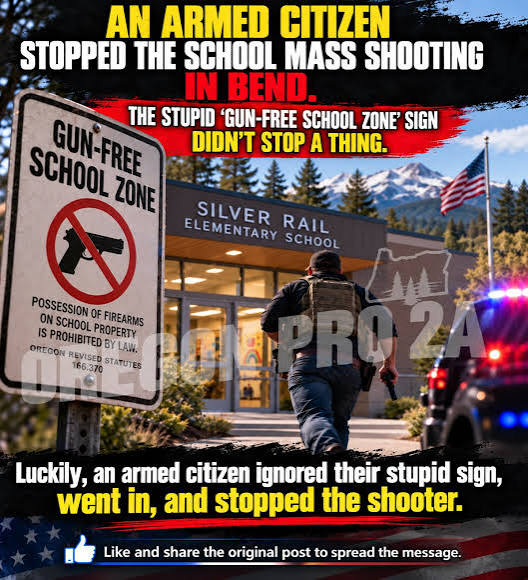
After the recent school shooting wherein an armed citizen stepped in and saved many lives, the newspapers went gaga over it.  Once more it was the old story. We need to all be armed so that we can prevent such mass killings.  You have heard the trope, “The only thing that stops a bad guy with a gun is a good guy with a gun.”  While this situation may indeed happen, it is more the exception rather than the rule. 

The real question is this “Are we safer with more guns and more people armed or are we less safe with more people having access to own and carry a weapon?

I asked my AI assistant whom I call Metis to address this question.  The following is her reply.  I have not edited a single word that she wrote.  Let me know what you think in the comments section. 

Metis: 

An armed citizen who stops a mass shooter deserves recognition for the lives saved.  Yet that rescue cannot, by itself, tell us whether encouraging millions of people to carry guns makes society safer.  Public policy must account for everything that follows from wider gun availability, including the violence that additional guns may enable.  My reading of the evidence is that widespread civilian carrying is a poor public safety strategy, even though an individual carrying a gun can sometimes save lives.

That conclusion requires qualifications.  Research does not provide a dependable numerical comparison between the chance of a citizen stopping a massacre and the chance of additional guns producing one.  Evidence about mass shootings is less conclusive than evidence about homicide overall.  Those limitations should guide our confidence without preventing us from reaching a judgment.

Consider what the question asks us to compare.  One side concerns an emergency already underway: a killer is shooting, and a citizen might intervene.  The other concerns the consequences of a social policy over years: more people possess or carry firearms, and the frequency or severity of violence may change.  A percentage describing how attacks ended cannot be directly compared with a percentage describing changes in homicide rates.  They measure different things.

How often citizens stop an attack

The FBI studied 160 active shooter incidents occurring between 2000 and 2013.  Five ended after armed people other than police exchanged gunfire with the attackers.  Four involved security guards; one involved a citizen with a firearms permit.  That single ordinary civilian intervention represented approximately 0.6 percent of the incidents in that historical dataset.  The report also documented successful interventions by unarmed people.  [1]

The figure needs careful handling.  It is historical, drawn from a particular dataset, and describes one type of successful intervention.  It does not mean an armed citizen confronting a shooter has only a 0.6 percent chance of succeeding.  In many incidents, no armed civilian may have been present or positioned to act.  Estimating success when an opportunity exists would require reliable information about those opportunities, including unsuccessful attempts.  The FBI percentage does not supply that denominator.

Definitions introduce another difficulty.  An active shooter incident involves someone actively killing or attempting to kill people in a populated area.  A mass shooting may be defined by a threshold of people wounded or killed.  Researchers use different thresholds and may treat domestic violence, gang violence, and public attacks differently.  Their totals therefore cannot always be combined or compared.  [1, 4]

There is a legitimate objection to counting only completed massacres: someone who stops a gunman early may prevent the incident from reaching the threshold.  That success could disappear from a database restricted to mass shootings.  A fair assessment must allow for this possibility.  It must also avoid assuming that every interrupted shooting would otherwise have become a massacre.  The outcome that would have occurred without intervention is often unknowable.

These problems leave us with a narrower, defensible finding.  Armed civilian intervention can work.  Existing incident counts do not establish the precise probability that a particular citizen will succeed, or prove that increasing the number of armed citizens produces a net public benefit.

There is another measurement problem worth remembering.  The share of attacks stopped by civilians could rise simply because more civilians carry guns.  That increase alone would not show whether total deaths declined.  We would still need to know whether attacks became more frequent, whether interventions reduced casualties, and what happened to other forms of violence.  Conversely, a low intervention count cannot demonstrate that every additional carrier is ineffective.  The useful policy measure is the change in harm across the population exposed to the policy.  A count of successful rescues contributes to that assessment, but cannot complete it on its own.

What broader research tells us

To evaluate public safety, we need research that examines outcomes across communities and over time.  RAND’s Gun Policy in America project reviews studies of firearm policies, evaluates their methods, and grades the strength of the evidence.  Its current synthesis finds supportive evidence that shall-issue concealed-carry laws increase total homicides, firearm homicides, and violent crime.  Supportive is RAND’s strongest evidence category.  [2, 3]

Shall-issue laws generally require authorities to issue concealed-carry permits to applicants meeting specified legal criteria.  Research on these laws is more informative than simply observing that one place has many guns and another has fewer.  Studies can examine what happens after policy changes while attempting to account for other influences.  They remain observational studies, subject to methodological limits, rather than controlled experiments involving otherwise identical societies.

Nevertheless, the direction of the stronger evidence matters.  The claim that expanded carrying protects society predicts a reduction in violence after the policy changes.  RAND’s assessment points toward increased violence instead.  Individual defensive benefits may exist within that outcome, but they have not produced the overall reduction in homicide that the public safety argument promises.  [2, 3]

We must also distinguish carrying from ownership.  These findings do not measure the consequences of every firearm kept for hunting, sport, or home defense.  They bear directly on the proposition that making public carrying more broadly available improves safety.  They cannot justify treating every possible restriction on ownership as equally effective.

Mass shootings deserve their own qualification.  RAND rates the evidence on how concealed-carry laws affect mass shootings as inconclusive.  That does not establish that expanded carrying prevents massacres, nor does it establish that such laws necessarily increase them.  It means available research cannot reliably settle that specific policy question under RAND’s standards.  We should say so plainly.  [3]

A separate study published in The BMJ in 2019 examined states from 1998 through 2015.  It found that greater estimated gun ownership and more permissive gun laws were associated with higher mass-shooting rates.  Its definition required at least four victims killed by firearm, excluding the perpetrator, and included domestic and other incidents.  This finding supports concern about gun availability, but an association cannot establish exactly how many attacks additional ownership would cause.  [4]

The study and RAND’s conclusion answer different questions.  An association between estimated ownership and mass shootings is not the same as a demonstrated effect of a particular concealed-carry law.  Preserving that distinction makes the argument more credible.  Evidence should retain its meaning even when a stronger claim would better serve our preferred conclusion.

Why a rescue cannot settle public policy

A successful intervention is compelling because its benefit is visible.  A person acts, the attacker stops, and survivors can identify someone who helped them.  Prevention is harder to see.  When a policy helps prevent a killing, there may be no dramatic event and no identifiable person who knows that their life was spared.  This difference can influence which evidence attracts our attention.

Imagine, purely as an illustration, that a change in gun policy enabled five lifesaving interventions but also contributed to twenty additional deaths.  The interventions would remain valuable, and the people who acted might deserve gratitude.  The policy would still have increased the death toll.  Those numbers are hypothetical; the point is that evaluating the policy requires counting benefits and harms together.

Wider availability could affect violence through several routes.  A gun might be available during an escalating argument, stolen and later used in crime, or used in a mistaken response to a perceived threat.  A defender might also stop an assault.  These are possible mechanisms, not a substitute for measuring outcomes.  Research must determine what happens when such effects operate across an entire population.

Calling someone a responsible owner does not resolve that calculation.  It describes an important intention or record of conduct, but public policy operates across people with different judgment, circumstances, and training.  Nor does questioning expanded carrying imply that ordinary owners are would-be mass murderers.  An overall increase in harm can occur without most owners ever committing a violent crime.

What I would support

My conclusion favors policies evaluated by their results.  RAND finds evidence supporting several specific approaches, including safe-storage laws that reduce firearm harms among young people and waiting periods that reduce total homicides.  Its review also finds evidence that certain background-check requirements reduce homicide.  The strength and scope of those findings differ by policy and outcome; none should be advertised as a guarantee against every massacre.  [2]

People also bring constitutional principles and personal values to firearm policy.  Evidence cannot decide every question about rights or acceptable restrictions.  It can test the factual promise that wider civilian carrying makes the public safer.  On that question, the stronger evidence gives us reason to doubt the promise.

I would honor the citizen who saves strangers during an attack.  I would also ask whether our policies reduce the number of people who ever face that terror.  My judgment favors reducing dangerous access through measures supported by evidence, while assessing their actual results.  The lives saved by an armed defender count.  So do the lives lost elsewhere under the same policy.

Sources

[1] Federal Bureau of Investigation.  A Study of Active Shooter Incidents in the United States Between 2000 and 2013.  Published 2014.  See Resolutions, printed page 11.
https://ucr.fbi.gov/office-of-partner-engagement/active-shooter-incidents/a-study-of-active-shooter-incidents-in-the-u.s.-2000-2013

[2] Smart, Rosanna, et al.  The Science of Gun Policy, Fifth Edition.  RAND, 2026.  See Key Findings.
https://www.rand.org/pubs/research_reports/RRA4360-2.html

[3] RAND.  The Effects of Concealed-Carry Laws.  See evidence summary for violent crime and mass shootings.
https://www.rand.org/research/gun-policy/analysis/concealed-carry.html

[4] Reeping, Paul M., et al.  State gun laws, gun ownership, and mass shootings in the US: cross sectional time series.  The BMJ, 2019;364:l542.
https://pmc.ncbi.nlm.nih.gov/articles/PMC6402045/

Fame, Fortune, Cars, Women and Immortality – Cars

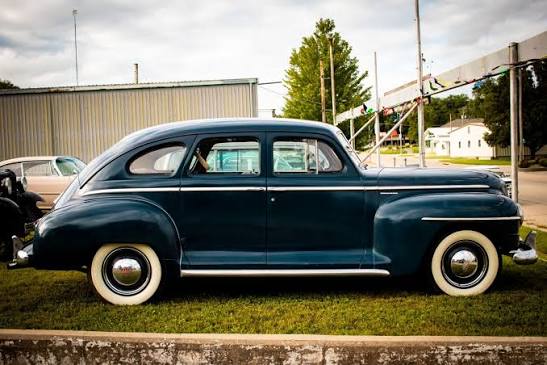
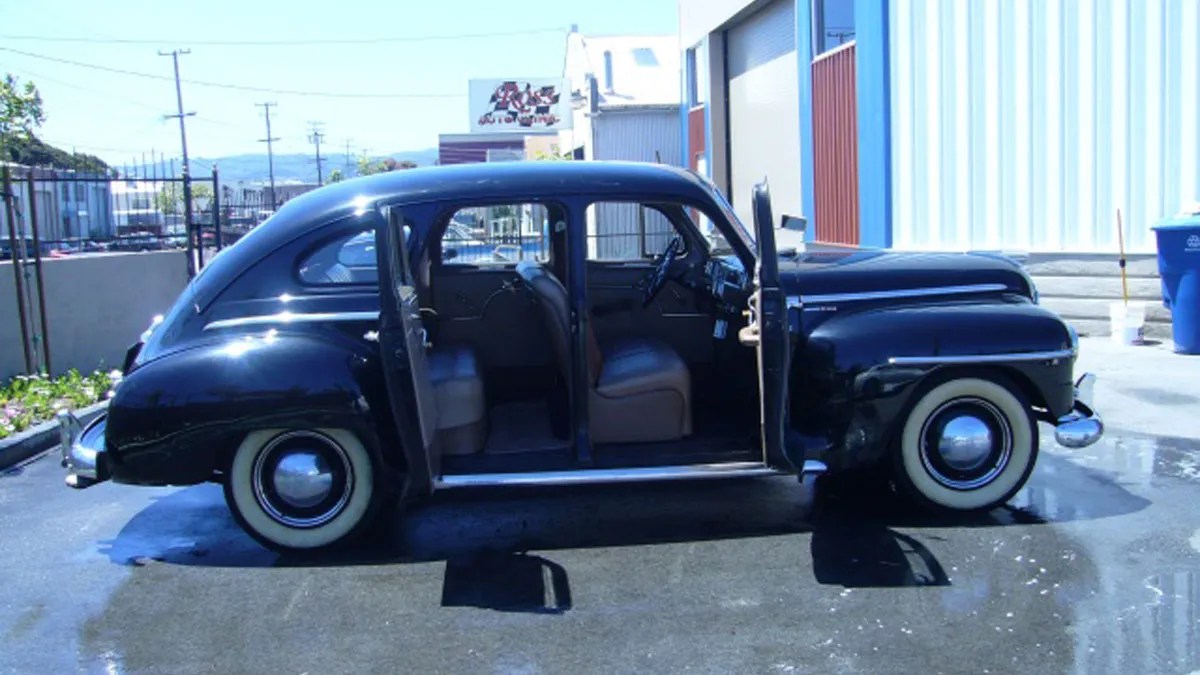
My first car was a 1947 four door blue Plymouth.  The car cost me fifty dollars, and I lost my virginity in this car. 

My father found the car for me.  It belonged to a friend of his who had died and left the car.  I bought the car from his widow in 1962 after I turned sixteen.  I paid for the car myself.  I was working nights in a Mammoth Mart where I ran the concession stand and sometimes the grill. 

The deal was that I had to pay for the car, insurance and any gas I used.  My father would teach me to drive.  It goes without saying that it was a stick shift. 

The car was in mint condition until I rammed it into our garage door while attempting to park it after a training session with my dad.  He was not happy about the garage, but it did little damage to the car.  The car was built like a tank.  This was accident number 1. 

I had three accidents in this car. 

The second accident was when I ran over some rough roads and ripped the bottom out of the oil pan.  Stupid me.  I tried to keep driving to get home until the engine froze up.  We had the car towed.  My uncle and I dropped the oil  pan later on and put new rings and rods in the engine.  It did not quite run like new again, but it did run.    

The guys on the corner loved the car because of the big back seat.  It was like a small sofa. Guys would borrow my car to make out with their girlfriends.  Back in the sixties, the choices for making out were very limited. 

Cops would patrol the local parks and harass you if they found a couple in a car in any stage of undress.  Parents of course back in the sixties did not condone bringing your girlfriend home for such activities. 

Thus, a big dark sofa in the back of a car parked someplace inconspicuous lent itself to many an endeavor.  That back seat is where I lost my virginity.  I did not know the girl’s name and never saw her again.  She was just one of many girls who stopped by our street corner periodically for a midnight tryst.  The guys all knew that I was a virgin and as the window steamed up in the car, I could see a few of the assholes trying to peek in on me.  My “first time” left a lot to be desired.  I learned from this that sex means a great deal more when love is involved.

The third accident with this vehicle happened this way.  I was coming over a rise in a rural road when a friend and I were out just tooling around.  I did not see that there was a stop sign at an intersection.  It was actually obscured by a bush.  I thundered into the middle of a main road and ran smack into a car with a family in it.  The impact rolled the other car and did quite a bit of damage to my car.  By some fortune, no one in either car was hurt.  It could have been a tragedy but fortunately for all, it was not. 

The police were called.  An ambulance was called.  I was in a bit of shock and so were some of the other people.  I received a summons for reckless driving and had to appear in court.  The judge decided that I was not at fault.  I decided to junk the car.  The guys on the corner wanted me to get it fixed but I was tired of the car.  You can guess why they were very disappointed.

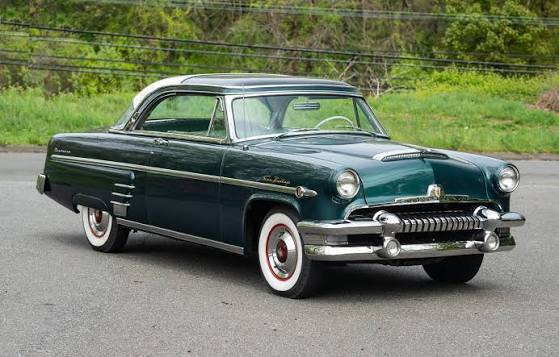
My next car was a 1954 two door Mercury coupe with a 256 cubic inch engine with a two barrel carb.  This car saw many a drag race down Pedersen strip at night.  We would bet money on who would win.  I took on many a small block 283 Chevy and 289 Ford and beat them.  It was easy to get them to put up the dough since most thought that since their engines were bigger, they would blow me off easily.  I always won if they had two barrel carbs but occasionally I would race Chevs or Fords with a 4 barrel carb.  I only won about ½ my races with these guys.

I left this car when I left home one night and joined the military the next day. 

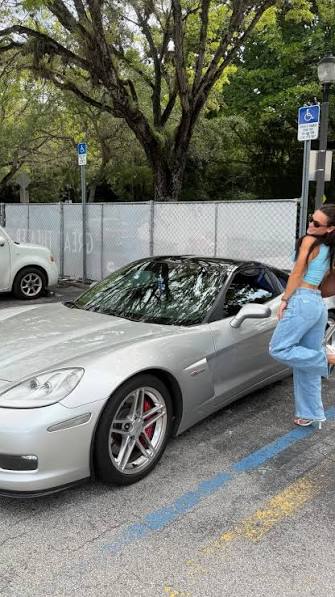
Other guys I knew had cars I could only dream of having.  Corvettes and even Jaguar XKE’s were all owned by some guys I knew who had parents with money.  I could only dream that someday I could afford to buy one.  To date, I have never owned either, though I did buy a used Porsche 924 a number of years later.

Of course, my real dream was that I could pull up alongside some cool looking girls from Dean Estates and say, “Hi babe, want to go for a ride with me?”  They would hop in my speedy sports car and I would drive by the corner and the guys on the corner would all drool while envying me my car and my new girlfriends. 

There is a link between cars and men and women.  The ads show it.  The movies show it.  But does real life show it?  Do beautiful women and beautiful expensive cars have some type of symbiotic relationship?  Will you really get the woman of your dreams with a Ferrari or Lamborghini? 

I think it is another form of brainwashing.  Not all people succumb to it.  But as a young man, I was conditioned to believe that money, fast cars and beautiful women would make me happy and successful.  Jesus could preach poverty and charity all he wanted to.  I would choose fame and fortune.  Only years later did I realize that Jesus and all the great prophets were wise.  Unlike Madison Avenue they were not trying to tell us that buying more things would make us happy and successful. 

I must ask this question.  Do some women buy expensive sports cars to snag the “man of their dreams?”  I doubt it, but who knows.  I would imagine women are also brainwashed into thinking that Fame and Fortune will guarantee them happiness.    

I wonder if I would have been more attracted to Karen if she had owned a Pagani Zonda or a Bugatti La Voiture Noire. 

But how long can a relationship last if the foundation is built on a Ford F-150 Raptor R or a Dodge Ram 1500 Tungsten? 

I am not really sure.  I would have to know how many miles I could go before needing a new model.  That pertains to the vehicle and not my wife. 

As far as Karen goes, I would say that she is an “Oldie but a goodie.”  By all means, a keeper.

Is America a Land of Violence and Hate? – Xenophobia

What the hell is Xenophobia?  Whenever I have used this word, this is a common question I get asked.  Ironically, it is a very common behavior in America.  You would think that everyone knew exactly what it means.  On any given day in the USA, there are examples of Xenophobia in the news. 

Now I pride myself on doing blog posts that will appeal to the average person.  No big words that only someone with a Ph.D. can understand.  Yet here I am using a word that perhaps a large percent of Americans would not know what it means.  So, I guess that it is time to pull the curtain back and “give it up.” 

Xenophobia is the irrational fear, hatred, or dislike of people from other countries, cultures, or backgrounds who are perceived as foreign or strange.

Key Characteristics

  • Origin: The word comes from the ancient Greek words xenos (meaning “stranger” or “guest”) and phobos (meaning “fear” or “flight”). It first appeared in English in the late 19th century.
  • In-Group vs. Out-Group: It is built on the mental division of people into an “in-group” (those who belong) and an “out-group” (outsiders viewed as a threat).
  • Common Triggers: It often spikes during economic hardship, political instability, or rapid social and demographic changes, where outsiders are used as scapegoats for local problems.
  • Manifestations: It can lead to social exclusion, verbal harassment, discrimination, institutional policies against migrants, or violence.

A Xenophobe is a person who strongly dislikes, distrusts, or fears people perceived as  foreigners, strangers, or members of a different culture or nation.

How often have you heard people say “This is America, speak English” or “If you don’t like it here go back to your own country?” 

Let’s break this definition of Xenophobia down further:

In-Group vs. Out-Group:

My team, my church, my religion, my God, my beliefs, my group, my club, my race, my ethnic group is better than your group.  In fact, my group is so much better than your group, that I think we need to eliminate your group from America. 

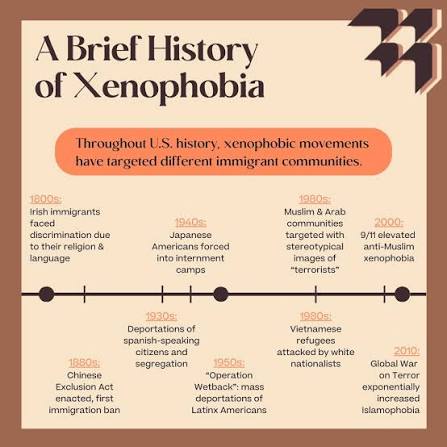
The thinking that underlies the belief that my group is superior can lead to the idea that violence is justified so as to eliminate your group.  In some cases, this will mean taking the rights away from other people.  In the extreme it can mean denial of basic rights, expulsion, physical attacks or murder.  History has repeatedly shown us a progression of violence against others that goes from stereotyping, to blame, to tolerating humiliation of others, to denying fair treatment and sometimes ending in violence.  Think Nazi Germany. 

If you have been paying attention, you will notice that people we call racists, bigots, sexists all share many of the characteristics of Xenophobia. 

Xenophobia, racism, sexism, and Homophobia can share common biases and reinforce one another, while targeting different characteristics.  However, there are some substantive differences between Xenophobia and Racism as well as between Xenophobia and Sexism and Xenophobia and Homophobia.  For instance:

Xenophobia vs. Racism

  • Xenophobia focuses on a person’s nationality, culture, or foreign status (the idea that someone is an “outsider” who does not belong).
  • Racism is a belief system that judges an individual’s worth or capabilities based on fixed physical attributes like skin color or racial category.
  • While they often overlap and feed into each other, a person can experience or display them independently.

Xenophobia vs. Sexism

Xenophobia and sexism are both forms of systemic prejudice and discrimination, but they differ fundamentally in their targets, origins, and expressions.  Xenophobia targets people based on their nationality, geographic origin, or cultural foreignness, whereas sexism targets individuals based on their sex or gender identity.

Xenophobia vs. Homophobia

Xenophobia and Homophobia are both forms of systematic prejudice rooted in an irrational aversion to a specific group, but they target entirely different aspects of identity and operate on different social dynamics.  While Xenophobia targets a person’s geographic, national, or cultural origin, Homophobia targets a person’s sexual orientation.

Shared Similarities between Xenophobia and other Prejudices:

  • Scapegoating:  Minorities, women, gay people and immigrants are frequently scapegoated by political or social movements during times of societal stress to deflect attention from structural problems.

Now one might well ask, well how much Xenophobia actually exists in the USA today or perhaps how many Xenophobic people are there in the USA?   Here is what my AI assistant gave me in response to this question.

SurveyFindingWhat it tells us
PRRI, March 2026 report33% agreed that “Immigrants are invading our country and replacing our cultural and ethnic background”; 62% disagreed.A substantial minority endorses a belief I would interpret as a strong indicator of xenophobic attitudes.
Gallup, June 202621% said immigration is bad for the country; 73% said it is good.Most Americans favor immigration overall.  The negative response alone does not establish prejudice.

PRRI: Immigration Enforcement, ICE, and Civil Liberties in the Second Trump Administration — March 26, 2026.  Source for the 33% agreement with the invasion-and-cultural-replacement statement.

Gallup: Americans’ Support for Immigration Down, Still Strong — Source for the June 2026 findings: 73% said immigration is good for the country; 21% said it is bad.

My best assessment is Xenophobia affects tens of millions of Americans and has considerable political significance, but the evidence does not support calling most Americans xenophobic. We can measure the prevalence of specific hostile beliefs much more confidently than we can count “xenophobic people.”

Conclusions:

I would like to leave you with three questions.  If we can create one iota of doubt in even a few of the people out there who exhibit some of the hostilities I have discussed we would have made some progress. 

No one is born Xenophobic.  Many of us welcome meeting new people, experiencing new cultures, talking with people who are not “just like we are” or people who “do not belong to our clan or church or group.”  

Just like Racism, Sexism and Homophobia, Xenophobia is learned.  Something that is learned can be unlearned.  But it takes developing some empathy and compassion for all people.  The Baháʼí believe in the Unity of all humanity.  We are all one people on the face of the earth trying our best to do what we can to lead a decent life and create a good future for our children. 

Xenophobia is a virulent disease.  It spreads from one Xenophobe to another.  It becomes  a group identity and a safe haven from having to question one’s own prejudices. 

An open Democratic society is not a society that is without risks. 

In the “Parable of the Good Samaritan”, the Samaritan gave aid to a wounded traveler thought to be Jewish.  First-century Jews and Samaritans were divided by deep religious and historical hostility.  The Samaritan gave his own money and time to help the victim with no guarantee that he would be paid back.  The Samaritan crossed a boundary of prejudice to help someone outside his own group.

Three Questions:

  • How do you think people coming to this country for a better life feel when they are told “Go back to where you belong, we don’t want you here?”
  • How do you think people who belong to a different group than you do feel when they are told they are dirty, dangerous and unclean or worthless?
  • What do you think Jesus would say to an immigrant who needed asylum or to a Gay person who simply wanted to be treated like other people? 

Previous Older Entries