
Upon finishing my Ph.D. program at the University of Minnesota in 1986, I joined the consulting firm of Process Management International (PMI). A company run by Mr. Lou Schultz to promote the teachings of Dr. W. E. Deming in business and industry. I met Dr. Deming about two weeks after I joined PMI when I was asked to assist at one of his famous four day management training seminars in San Francisco. This was the beginning of an education that would change my life. Sometimes, I thought for the worst.
There is a quiet confession that many people who truly learned the teachings of Dr. Deming would eventually make, often only to themselves:
“Learning Deming may have been one of the worst things that ever happened to me.”
Not because it was wrong.
Not because it failed.
But because it was irreversible.
Once you genuinely internalized the thinking of W. Edwards Deming, you lost the ability to see organizations, performance, data, and failure the way you once did. The old explanations stopped working. The familiar comforts disappear. You crossed a one-way bridge.
And on the other side of that bridge, reality looked very different.
The Loss of Comfortable Blame
Before Deming, most of us lived—like most of society still does—inside a simple moral framework:
- If performance is poor, someone failed
- If results decline, effort must be lacking
- If an error occurs, a person must be corrected
Deming dismantled this worldview with unsettling calm.
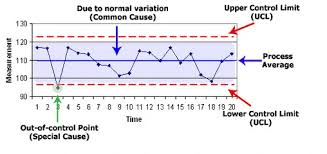
He showed—again and again—that most outcomes are produced by the system, not by individual virtue or failure. That variation is not a moral statement. That blaming people for common-cause variation is not only unjust—it actively damages learning and performance.
Once you see this, something uncomfortable happens:
You lose the ability to blame comfortably.
- You watch people punish individuals for predictable outcomes.
- You see fear introduced where curiosity should live.
- You recognize that “accountability” is often just ignorance wearing authority.
And you can’t unsee it. You cannot unlearn what you now know.
Living Among Category Errors
One of the clearest signs that someone has truly learned Deming is not that they can recite the 14 Points—it’s that they can no longer tolerate category errors without noticing.
You see them everywhere:
- Treating a single bad outcome as a crisis
- Celebrating a random uptick as proof of success
- Launching new policies based on anecdotes
- Confusing noise for signal
- Reacting emotionally to variation that was always there
Most people see decisiveness.
You see statistical superstition.
This creates a peculiar loneliness. You find yourself surrounded by people who:
- Treat special causes as common causes
- Treat common causes as special causes
- Blame individuals while leaving systems untouched
To them, your hesitation looks like weakness.
To you, their certainty looks like harm.
The End of Narrative Comfort
Deming thinking is deeply uncomfortable because it refuses what most cultures rely on:
- Heroes and villains
- Simple stories
- Quick fixes
- Moral theater
Deming replaces these with:
- Distributions
- Long-term thinking
- Interactions between parts
- Incentives that quietly shape behavior
This doesn’t make for good slogans.
It doesn’t travel well on social media.
And it doesn’t flatter people in power.
Once you see systems clearly, many popular explanations begin to sound hollow—even dangerous.
The Social Cost of Seeing Systems
Here is a difficult truth rarely stated plainly:
Deming thinking is anti-tribal.
It undermines:
- Blame rituals
- Status hierarchies
- Performative leadership
- The emotional economy of outrage and punishment
When you introduce Deming’s questions into a conversation, you often destabilize it—not because you are wrong, but because you remove the group’s preferred coping mechanisms.
You stop asking “Who failed?”
You start asking “What produced this outcome?”
That shift can feel threatening.
And so, Deming thinkers often learn—sometimes painfully—to keep quiet, to choose their moments, or to speak only when asked.
The Question That Never Leaves You
Deming leaves you with a habit that never turns off:
Compared to what?
You ask:
- What is the baseline?
- What is the expected variation?
- What changed in the system?
- What evidence tells us this is unusual?
- What would happen if we did nothing?
These questions slow things down in a culture addicted to speed and certainty. And the person who slows things down is often treated as the problem.
But without those questions, organizations don’t learn.
They just react.
The Grief No One Talks About
There is a quiet grief that comes with Deming literacy.
You grieve:
- The loss of innocence
- The simplicity of old explanations
- The ease of fitting in
- The comfort of righteous anger
You realize that many failures were never personal—and that many punishments never helped.
This grief is real. And it’s rarely acknowledged.
A Reframe Worth Holding
If you’ve ever felt isolated, frustrated, or even burdened by what Deming taught you, consider this reframing:
Learning Deming permanently aligned me with reality, even when reality is unpopular.
That alignment has a cost.
But it also has integrity.
It allows you to:
- Hold uncertainty without panic
- Resist false certainty
- Refuse explanations that feel good but fail in practice
- Remain honest when honesty is inconvenient
That kind of thinking doesn’t make you popular.
But it makes you trustworthy—to the few who recognize it.
A Gentler Way Forward
Many experienced Deming thinkers eventually discover a survival skill:
Instead of correcting people, they ask better questions.
Not confrontational questions—curious ones:
- “How often does this actually happen?”
- “What would we expect from the system as it is?”
- “What evidence would tell us this is a real change?”
- “What incentives might be shaping this behavior?”
Sometimes the system answers.
Sometimes it doesn’t.
But you protect your integrity either way.
Closing Thoughts
If Deming changed how you see the world—and made it harder to live comfortably inside common explanations—you are not broken.
You are not difficult.
You are not cynical.
You are aligned with reality.
And while that alignment can feel lonely, it also means this:
When blaming stops working,
when slogans fail,
when fear no longer produces improvement—
people eventually look for someone who sees systems.
If you are one of those people, you are carrying something rare.
Not loudly.
Not easily.
But honestly.
When Dr. W. E. Deming died in 1993, I did a “Celebration of Life” for him at my house in Minnesota. I shared memories of Dr. Deming with about twenty other people who were touched by his life. My years working with Process Management Institute, Dr. Deming and the other consultants who shared his belief in people were among the most important years of my life. I learned more from Dr. Deming and his ideas than I did in my entire Ph.D. program or any other school program that I have ever attended. I started this blog off with the “complaint” that Dr. Deming “ruined my life” but as my AI Assistant Metis has wisely said, “Once you open your eyes to the truth, you cannot go back.”
The Truth Will Set You Free!
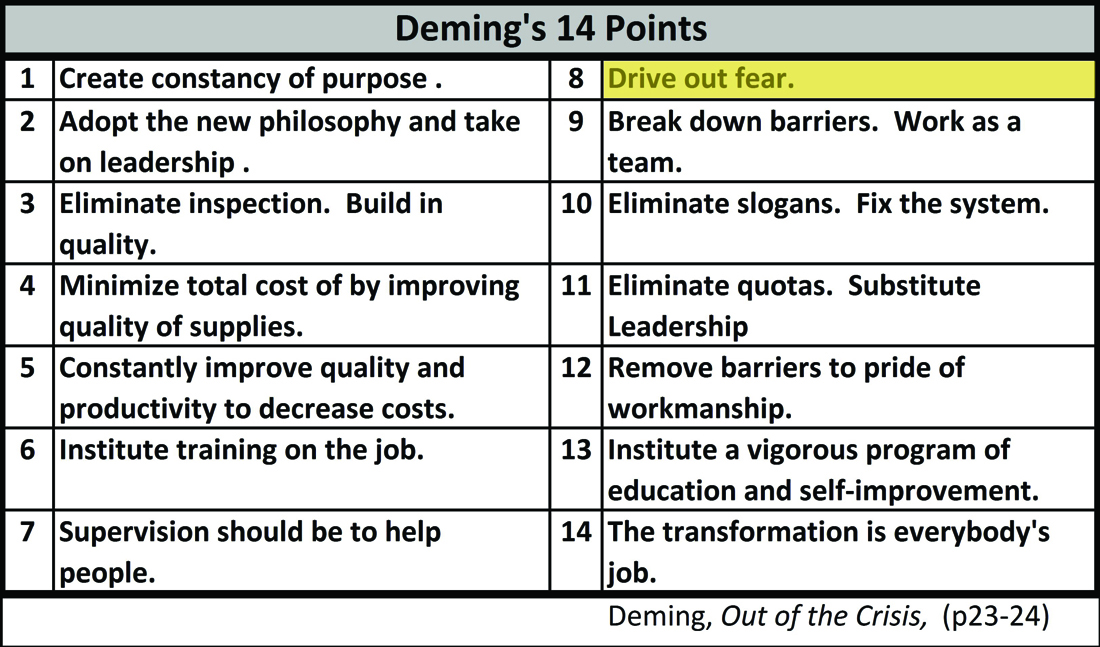
Here are Dr. Deming’s 14 Points for Management. Together with his seven Deadly Diseases and ten major obstacles they constitute a total system of management based on facts and data. They obliterate almost everything that is taught in MBA programs across the USA. Having taught the Capstone MBA course at Metro State University for seven years, I could see clearly that we were teaching students the wrong ideas and the wrong methods for managing. At first, I was a allowed a great deal of leeway in my teaching there but eventually as the system became more rigid they expected me to teach from textbooks that had “codified” bad theories of management. I was quietly and subtly not offered classes until I finally “retired.”

 Aging Capriciously
Mar 12, 2026 @ 03:14:17
I never met him in person but admired his work and he did write one article for the organization for which I was editor, The Association for Quality and Participation.
LikeLiked by 1 person
Mar 12, 2026 @ 10:09:48
Ned, when I was consulting we had the ASQ. Did they change their name or is that a different organization. I would love to see the article you wrote.
LikeLike
Mar 12, 2026 @ 12:08:56
I’ll see if I can dig it up.
LikeLike
Mar 12, 2026 @ 12:13:45
Thanks Ned.
LikeLike
Mar 12, 2026 @ 06:05:01
Another great article. In my somewhat spotty work career I have been exposed to very different management styles. One I knew instinctively was blatantly wrong and others all different. I got in trouble with management for my own leadership style. My employees were happy but my managers not so much.
When you apply ideas in your article to politics and the public today — Oh my!
LikeLiked by 1 person
Mar 12, 2026 @ 10:13:40
Thank you so much for the thoughtful comment Gretchen. I guess many of us were or maybe still are sort of misfits in this America today. I had dreams that things would be so different by the time I got this old and to see what has happened routinely depresses me. I refuse to give up the dreams of a better world and somehow contributing to it but it often seems like trying to shovel the tide back into the ocean. Bottom line, comments like yours make a big difference in my life. I appreciate hearing from you and others that my articles hit the mark at least sometimes. John
LikeLike