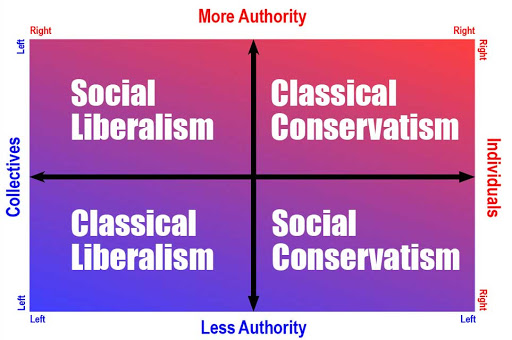
Introduction: (Skip if you have read Part 1 and Go to Part 4 below)
A number of years ago, I wrote an article about the famous “Golden Mean” of Greek philosophy. The mean was basically a rule that said the best way of living is to balance extremes. Another way of looking at what this rule implies is that evil or bad things happen when we over do something. We need to take all things in moderation. Thus, drugs, smoking, guns, watching TV etc., are not evil or bad in themselves but when we take them to extremes, they became dangerous and counterproductive.
Life is an ongoing struggle to find our proper balance. However, it may never be a question of equal balance because the proper balance can never be static. There are many dimensions or polarities in life where it is not really a matter of moderation or balance but more a matter of dynamically imposing a temporary order between two extremes. The concept of Hegelian Dialectics comes to my mind as an aide in thinking about this process.
Dialectical thinking can be described as: “The ability to view issues from multiple perspectives and to arrive at the most economical and reasonable reconciliation of seemingly contradictory information and postures.” This is a much more complex process than simply balancing extremes. The more I thought about it the more I decided to add a corollary to the Greek Rule. Since I think time has easily proved the value of the Golden Mean, a corollary by definition is a proposition that follows from and is appended to one already proved. My corollary is as follows:
John’s Corollary:
Anytime, one concept in a set of opposing concepts is allowed to dominate the other concept, extreme dysfunction will result.
I want to discuss this more by using five pairs of concepts that I think are critical to our world today. I want to show you how the distortion created by proponents of each concept is dangerous to life as we know it. I do not use the word dangerous loosely or frivolously or for effect. The battle between these ideas is destroying life as we know it on this planet. The proponents of each side of these polarities seek to destroy the proponents on the other side.
Rather than looking at things from a systems perspective and trying to dynamically adjust the system, opponents are driven to allow one idea to dominate to the exclusion of the other idea. Witness the name calling between conservatives and liberals today. Each side demonizes the other side and assumes God is on their side and Satan is on the other side. Liberals are evil to conservatives and conservatives are evil to liberals.
Here are the five pairs of concepts we will look at in the next few weeks. This week we will look at number four on my list. We have already discussed the “efficiency versus effectiveness” dimension in part one of this blog series and the “growth versus development” dimension in part two and the “society versus economy” in part three.
- Efficiency versus Effectiveness
- Growth versus Development
- Society versus the Economy
- Conservative versus Liberal
- Rights of the Individual versus Rights of the Group
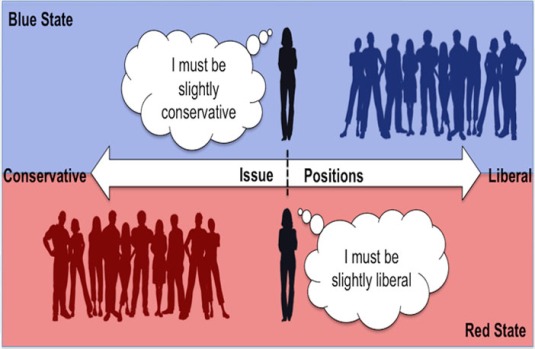
Part 4. Conservative versus Liberal:
Being a Liberal was once a label that someone could be proud of. Today it has become a name of scorn. Those to the left of liberals including progressives and radicals regard Liberals much like salt that has lost its flavor. Jesus said “You are the salt of the earth, but if salt has lost its taste, how can its saltness be restored? It is not good for anything any longer but to be thrown out and trodden underfoot by men.” – Mathew 5:13
All too often Liberals seem to lack the desire to take a strong position. They seem to prefer to walk a middle road that often goes nowhere. Once upon a time a Liberal was defined as: “One who is open-minded and not strict in the observance of orthodox, traditional, or established forms or ways.” — Meriam Webster. Basically, a liberal was someone who was willing to change and was quite comfortable with change. The political definition of a Liberal was someone who was committed to individualism, liberty, and equal rights. Liberals believed that these goals required a free economy with minimal government interference. Today, we have a new concept for liberals or “Neo-liberals.” A Neo-liberal is defined as someone who believes “in market-oriented reform policies such as ‘eliminating price controls, deregulating capital markets, lowering trade barriers’ and reducing state influence in the economy, especially through privatization and austerity.” — Wikipedia
The definition of a “Neo-liberal is somewhat of a paradox since it contains many of the same concepts as we see in a definition of a political Conservative. If you accept (as many pundits claim) that Democrats are liberals and Republicans are conservatives, then it would be almost impossible to tell the difference between a Neo-liberal, a Conservative, a Liberal, a Democrat and a Republican.
I have always hated to be called a Liberal. The liberals that I knew seemed like the proverbial salt that had lost its flavor. Bleeding hearts who were more than willing to give anything away as long as it did not impact their well-being. They would not stand up in the face of adversity and they always wanted to acquiesce when the going got rough. Never one to stand up and fight, Liberals exemplified a Democratic party that I thought was beset by cowardice albeit they were always civil and polite.
But that brings us to the Conservatives. This is the other extreme of my Conservative Liberal dimension. Today Conservatives are the Tea Party zealots who have little in common with traditional Conservative values. The current Republican Party has become the residence for what we should to be calling “Neo-conservatives.”
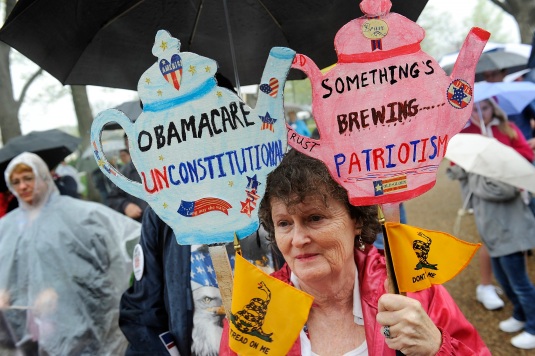
People hold signs at a Tea Party Patriots rally calling for the repeal of the 2010 healthcare law championed by President Barack Obama, on Capitol Hill in Washington, March 24, 2012. The Supreme Court will hear arguments next Monday to Wednesday over the fate of Obama’s healthcare law, a battle with legal, political and financial implications for the U.S. healthcare system’s biggest overhaul in nearly 50 years. REUTERS/Jonathan Ernst (UNITED STATES – Tags: POLITICS HEALTH CIVIL UNREST) – RTR2ZTA0
“Conservatism in the United States is a political and social philosophy characterized by respect for American traditions, republicanism, limited government, support for Christian values, moral universalism, pro-business, opposition to trade unions, strong national defense, free trade, protectionism, anti-communism, rugged individualism, advocacy of American exceptionalism, and a defense of tradition and Western culture from the perceived threats posed by communism, socialism, and moral relativism.” — Wikipedia
The traditional definition of a Conservative was someone who wanted to conserve or someone who did not relish or look forward to changing. It was more of a careful orientation to established policies, procedures, and institutions. Merriam Webster’s online dictionary defines a conservative as someone who: “a: Tends or is disposed to maintain existing views, conditions, or institutions: Traditional conservative policies. b: marked by moderation or caution.”
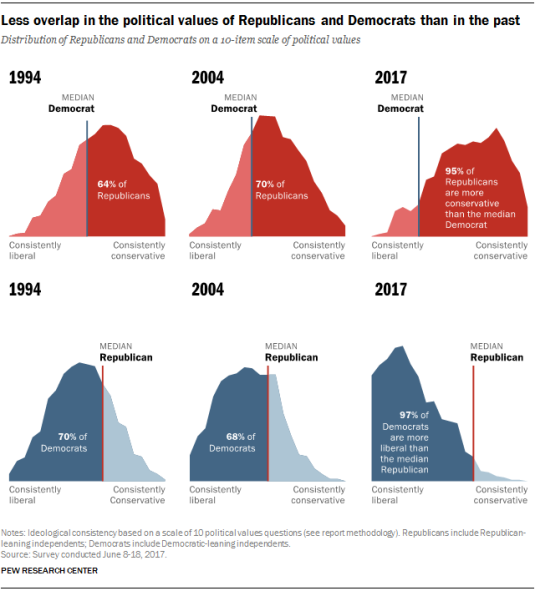
Once upon a time a grudging respect existed between Conservatives and Liberals as exemplified in the show featuring Gore Vidal and William Buckley called “Firing Line.” Each side knew that the truth politically and socially lay in a balance or a dynamic Hegelian tension between the two ends of the continuum. I often thought of myself as socially liberal and fiscally conservative. In the old days, this would have had me with a foot in both the Democratic Party and the Republican Party. That day is long gone. Murdered, assassinated, and executed by Right Wing Pundits and Corporate Capitalism that has no use for social benevolence or taking care of the sick and needy.
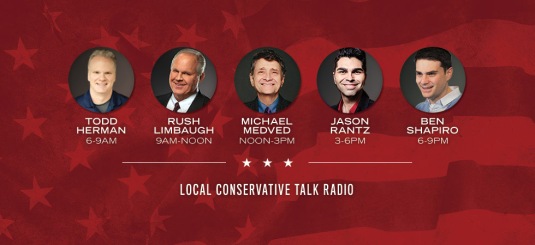
Starting in 2000, I listened nightly to AM 1280 in Minneapolis, also called “The Patriot Radio Station.” This station was a haven for right-wing commentators like Laura Ingraham, Dennis Prager, Mike Savage, and Hugh Hewitt among many others. Day in and day out, these fascists would spew out slander about Liberals. Liberals were associated with all the bad in the world and none of the good.
I wrote a blog four years ago about these right-wing nutcases called “Bigots, Liars and Right-Wing Radio Talk Show Hosts.” In this blog, I explored the lies, calumnies, slanders, and bigotry that characterized most of their discourse. For seven years, I tuned into the station. Sometimes, I listened during the day and other times at night. Always it was the same drumbeat: Liberals bad. College Professors bad. LGBTQ bad. Socialists bad. Democrats bad. Nowhere on any radio station in the country were people or talk show hosts using the same derogatory comments to define Conservatives. I have no doubt that the lies and hatred spewed forth on this station as well as other right-wing stations have poisoned the USA population against the ideas of Liberalism.
I know I stated off with my own less than positive slant towards Liberals but my attitude has more to do with Liberalism as it exists today and less with the traditional notion of a Liberal person who is willing to change and accepts change when needed. Similarly, I have nothing but the deepest respect for the traditional values of a Conservative who is oriented towards caution and discretion when it comes to change. Nevertheless, which ever side I choose to be on, it goes without saying that according to John’s Corollary:
“Anytime, one concept in a set of opposing concepts is allowed to dominate the other concept, extreme dysfunction will result.
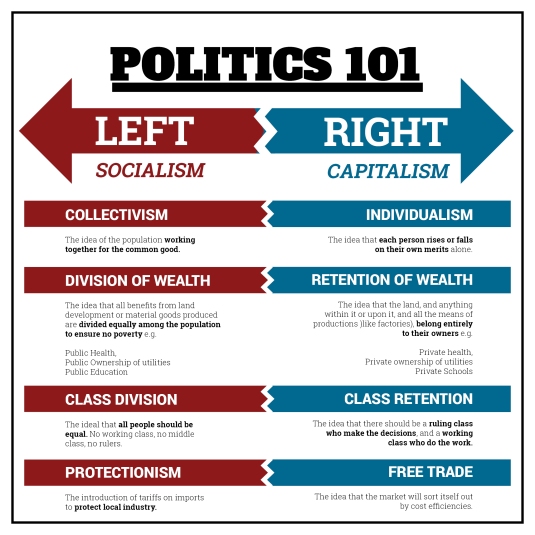
Conservatives need Liberals and Liberals need Conservatives. Many people are condemning the extreme partisanship that has divided America. I could not begin to list all the books that purport to both describe this partisanship and propose to have a solution to end it. Most of these solutions are what I would call “pie in the sky” or looking at the world through “rose collared classes.” There are many reasons for the divides that exist. I am not a big believer in the idea that simply condemning the partisanship will end it. What is my solution, you have every right to ask? Am I any more pragmatic and less naïve than many of the pundits out there? Sadly, I do not think there are any fast solutions, and I am not sure how many that I might propose would be workable. But here goes my short list:
- Just as Nazism was outlawed in Germany, we need to outlaw and label as terrorist organizations many of the right-wing groups that exist in America.
- We need to broaden the definition of hate speech to make it a crime to label people and equate them with evil just by virtue of their job or title. Unless an organization advocates violence and bigotry they should be entitled to respect.
- Establish a bi-partisan group to monitor media and to restore some balance to reporting in terms of objectivity and factual relevance.
- Expect schools to teach critical thinking and not simply recite facts for Standardized Achievement Tests. Students need to learn to see the pros and cons in any position or argument and to understand that the world is not black and white.
- Create a national award system for journalists and commentators that are able to bridge the divide between left-wing and right-wing positions and who seek to find a solution that is win-win.
- Create a higher standard for ethics in the Legal Profession. Today the Legal profession in the USA actively aids and abets the right-wing fanaticism that is fueling much of the hate in this country.
“Neither the fanatics nor the faint-hearted are needed. And our duty as a Party is not to our Party alone, but to the nation, and, indeed, to all mankind. Our duty is not merely the preservation of political power but the preservation of peace and freedom. ― John F. Kennedy
I am open to other ideas. If you would share any, please send them to me via email or post them in the comments section.

 Aging Capriciously