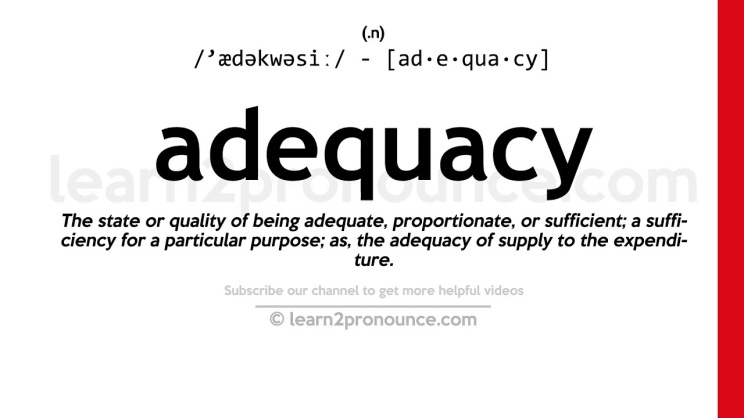
It is my belief that we all want to feel that we can do something well. Something that we will be proud of and perhaps something that we can be remembered for. Adequacy is not being exceptional or a gold medal winner. It is simply feeling that we can succeed at something and that we are competent at something. Adequacy is the opposite of inadequate. When we feel inadequate, we feel that something is missing in our lives, and we feel inferior. No one wants to feel inferior. Many of us will search our whole lives for a feeling of adequacy.
Some people think that we are born with an “original” sin. I think we are born with an original disease. I call it “Comparisonitis.” It is the tendency to compare ourselves to others and to be compared to others. This disease starts at birth and haunts us our entire lives. We are compared in school with grades, at work with performance evaluations, at sports with ranking and even intellectually with IQ tests. We are constantly measured against other people. Most of us are found wanting. We are instilled with a sense of inadequacy that infects our lives. Our Search for Adequacy is a search to overcome the inadequacy driven by society, family, and friends.
 When we are born, we are compared to growth charts and Gesell Developmental schedules. for our development. Lag behind and your parents will be worried. As we grow up, we get compared to sisters, brothers, cousins, and others. Who has not heard the comment “You are just like your father,” or “your sister had straight A’s when she was your age.” In school, we will be tested from kindergarten through college on a variety of measures designed to see how we stack up. Each state will routinely rate the children in a school district or region to compare to other children in the country. Children and schools are then ranked and rated from best to worst. Everyone with any eyes and a brain knows that the school districts with the most money will almost always have the highest rated schools.
Dr. Deming believed that such rankings and ratings had no statistical validity. During Covid, the comment was repeatedly made that we must get kids back to school because they are falling behind. I am bewildered since I do not know what they could be falling behind. Standardized testing is one of the worse things to ever happen to education and so-called education experts continuously come up with statistically worthless comparisons to warn us about how bad our children are doing compared to other nations.

Let me give you two examples of how worthless these claims are about success and falling behind. First example, If I read a novel, in about six to eight weeks, I will have forgotten at least 80 percent of what I have read. Textbooks are even worse in terms of retention. After I finished my Ph.D. program, how much of the material that I had covered in courses the previous 4 years do you think I retained? Was I falling behind the Japanese? Was I falling behind the Ph.D. students still in school? How can you fall behind when it is perfectly normal to lose memory of anything from mathematics to languages if you do not routinely use them.
Second example. I had French for seven years in middle school and high school. A year after leaving high school, I could not speak a sentence in French if my life depended on it. I passed seven years of French studies but without speaking it regularly with anyone. Most of the knowledge I gained of the French language was worthless. Dare I say most of the knowledge taught in schools is worthless. Meaning that if it will not be used in life, it will not do you one bit of good. I think of the classes I took in Algebra as another example. This was a class that I received an A in. I loved mathematics when I was in school. I still am waiting to use any of my long-forgotten Algebra skills. I will make an exception to my above complaints for schools. If you have a good memory and you go on a Trivia contest, some of your schooling may help you to win a first place.
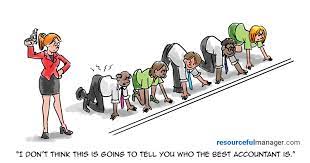
Comparisons in the workplace can be and often are just as egregious and useless as comparisons in schools. Performance appraisals, performance ratings and other HR devices to measure individual productivity are notoriously misleading. People are ranked and rated by measures with little or no statistical validity. You may work for one supervisor that rates employees very leniently and another who is a Simon Legree. Merit raises may be based on “who you know” and awards such as “employee of the month” are usually nothing more than popularity contests. Dr. Deming called performance evaluations one of his seven deadly diseases for companies. In “Out of the Crisis”, page 101, Dr. Deming states the following as one of the seven deadly diseases:
“Evaluation of performance, merit rating, or annual review… The idea of a merit rating is alluring. the sound of the words captivates the imagination: pay for what you get; get what you pay for; motivate people to do their best, for their own good. The effect is exactly the opposite of what the words promise.”
One of my favorite quotes is a statement by Senator Hubert Humphrey which is engraved on a wall at the University of Minnesota. He stated the following:
“Democracy is a system that achieves extraordinary results with ordinary people.”
In my consulting experience, I often found organizations stating that they wanted to hire the best people out there. Even considering the faulty means of evaluating candidates that are often used by companies, the fact remains that there are not enough extraordinary people to go around. I encouraged companies to follow Dr. Deming’s advice. Do not rely on ratings and rankings to compare people. It was Deming’s belief that most people wanted to do a good job. The system usually placed the majority of limits on what an employee could do. Thus, it was management’s responsibility to remove the barriers and obstacles in the system preventing and limiting increased productivity. No amount of exhortations and warnings of firing will make a difference in a bad system. Another famous Deming quote was “Put a good person in a bad system and the system will win every time.”
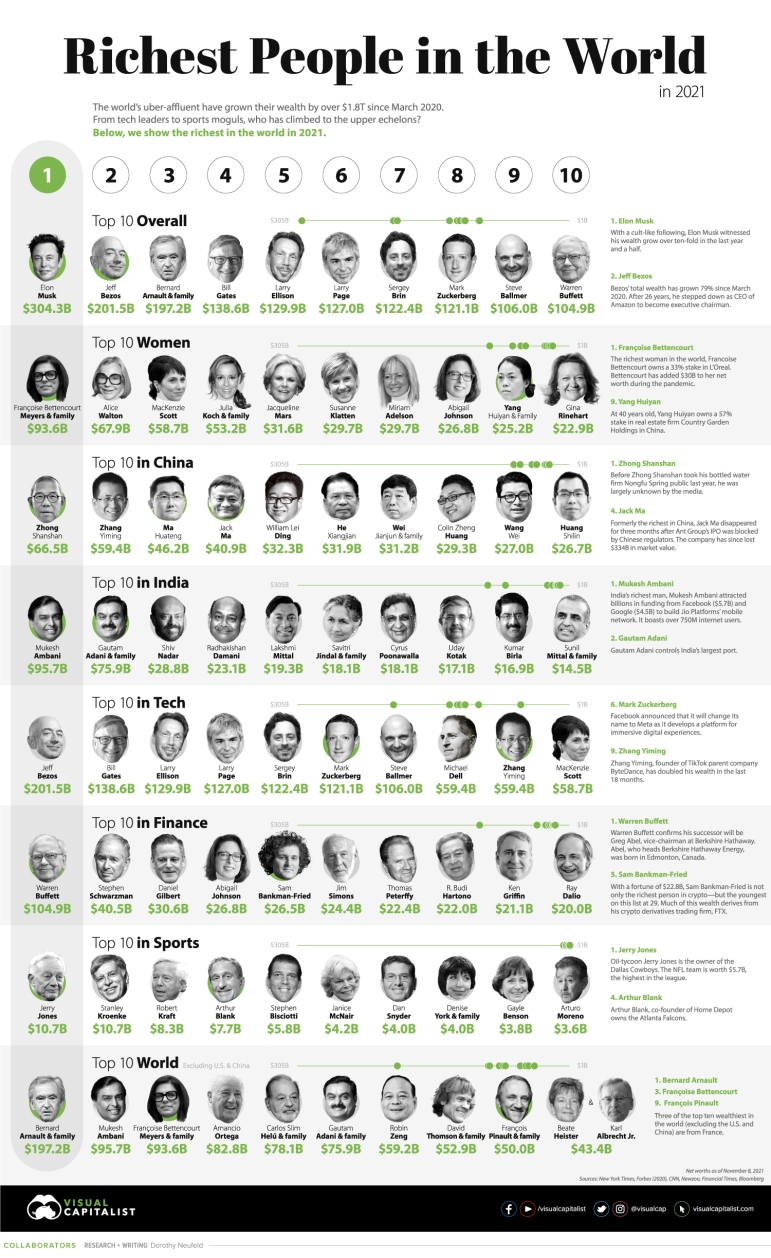 About fifteen years ago, I wanted to test out a hypothesis. Forbes Magazine each year publishes its list of 200 richest people in the world. It gives a great deal of information about each person such as schooling and net worth. I wanted to test whether or not a college degree made a difference in net worth. I added up the overall net worth of all college graduates and compared it to the overall net worth of all those who did not complete college. About fifty five percent of the Forbes richest people had either a bachelor’s degree or a master’s degree. The remaining forty five percent either did not enter college or did not finish college. Who do you think earned more money? Imagine my surprise to find that the average net worth of non-college degreed rich people was 3.5 billion dollars compared to 2.5 billion dollars for degreed people. All the hype on college degrees may just help make colleges richer.
Is it any wonder that so many of us grow up feeling inadequate? Our Search for Adequacy is full of roadblocks and barriers. I could go into the realm of sports in schools to demonstrate this even further but anyone who went to high school or college knows how biased this system is. Schools teach competition versus cooperation and comparison versus individuality. Thus, millions of us wonder about our value and standing in a society that seems bent on destroying our self-esteem.
Conclusions:
- We search and we search but will we ever find that we are adequate? How can we find what society seems to want to hide from us?
- Do not allow yourself to be compared to others. We are all unique and we all have unique skills. No two people on the face of the earth have ever been and ever will be exactly alike. Even identical twins who may share the exact same DNA will have slightly different fingerprints.
- Read what Dr. Deming and other statistical experts have to say about the value of testing and rating systems. Knowledge and understanding of statistics can help you to see whether or not a system is useful or destructive.
- Find a support system that will help to build your self-esteem. We all need help from others. Find positive people to help you and stay away from people that demean your skills and abilities. My spouse Karen belongs to two music groups, one for mountain dulcimers and one for the ukulele. She also belongs to a quilting group. These groups are comprised of positive people who help each other. There are no tests for dulcimer playing. No teachers comparing each ukulele student to other ukulele students. No employers ranking and rating employees on their quilting performance.

Next week we will look at Man/Woman’s Search for Authenticity.
Authenticity is being true to yourself. It is being who you really are versus who others want you to be. It is being true to a set of values, morals or principles that define a good life. It is defining oneself and not letting others define you. What do you want your life to be like? What will you stand up? What is worth living for and dying for? These questions frame a Search for Authenticity which will continue our entire lives.


 OSHO: His given name was Bhagwan Shree Rajneesh. OSHO was a religious teacher from India. He wrote numerous books on life, religion and spirituality. He also gave talks and started several communities for his followers. His books and talks were full of insights and stories to make you think and question your own life. OSHO became infamous when he tried to start a community of acolytes in a rural area of Oregon. The town OSHO started was called Rajneeshpuram. It became a target for locals who thought that their community was being taken over by a bunch of cultists. Things went south when some of OHSO’s devotees exceeded authority and tried to retaliate against the local community. This is perhaps another case, where the man did not live up to his message. Nevertheless, I have never found any spiritual writings that are as profound and thought provoking as OSHOs.

 Aging Capriciously