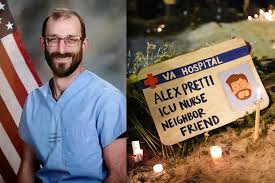
Introduction
Some stories do not ask to be told.
They insist.
They rise up from cold streets and broken lives and troubled consciences, and they refuse to be buried under official statements, polished press releases, or convenient forgetting. They stay with us. They trouble our sleep. They whisper, “What will you do with this?”
The story of Alex Pretti is one of those.
He was not famous. He did not seek attention. He did not set out to become a symbol. He was a nurse. A healer. A man who believed that helping others was not an occasional act, but a way of life. On a bitter January morning in Minnesota, he carried that belief into a public square—and paid for it with his life.
What follows is not just a poem.
It is a witness.
A remembrance.
A refusal to let truth be erased.
The Ballad of Alex Pretti
On a January morning, bitter and gray,
When Minnesota’s breath froze night into day,
While most stayed hidden in quilted retreat,
One man rose steady on compassionate feet.
Alex Pretti, a healer by trade,
Tended brave souls in the debts war had made,
An ICU nurse with a heart open wide,
Who served those who served—no comfort denied.
That morning he walked where the cold winds cried,
To stand for the weak, to stand for the right,
At a rally for peace, with justice in sight,
Where freedom still flickered in shadowed light.
A few days before, another had fallen,
Renée Good—her name softly calling,
A mother, a poet, a keeper of flame,
Struck down while peace was her only claim.
Two watchers of order, two keepers of calm,
With nothing but courage and outstretched palms,
Both standing firm in a fragile land,
With nothing but truth in their trembling hands.
Then chaos descended in armored form,
With shouted commands and chemical storm,
A woman was hurled to the frozen ground,
And Alex ran forward at mercy’s sound.
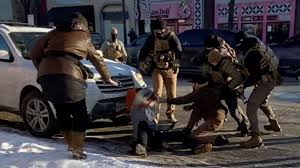
They sprayed him blind with burning pain,
They crushed him down in iron rain,
Six bodies upon him, fists and knees,
Power unleashed without restraint or ease.
They found his weapon—still untouched,
No threat displayed, no finger clutched,
No cry for violence, no shot returned,
Only a conscience that fiercely burned.
Then thunder spoke—two shots rang clear,
And Alex fell to a silence severe,
His body stilled on the icy street,
Where justice and cruelty cruelly meet.
They stepped away… then fired again,
Eight more times into the fallen man,
As if death itself were not enough,
As if mercy were weak and hatred was tough.
No hands reached out, no aid was given,
No prayer rose up to the wintered heaven,
A good man lay where freedom bled,
While truth grew quiet among the dead.
And later came voices, official and loud,
Draped in uniforms, wrapped in their pride:
“They were not peaceful, they were the foe,
They were paid, they were violent, they had to go.”
Terrorists, rioters, enemies named,
Their memories twisted, their honor shamed,
But cameras remember what power denies,
And witnesses speak what survives the lies.
They saw him fall while shielding a stranger,
They saw his courage outweigh the danger,
They saw a man choose love over fear,
When the cost was life and the end was near.
For heroes are not those crowned by command,
But those who stand when others can’t stand,
Who give their breath so others may breathe,
Who plant their hope in frozen grief.
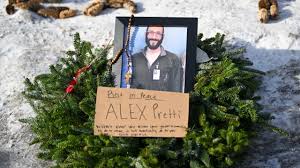
So sing his name in winter’s cry,
Let Alex Pretti never die,
For every heart that still believes
In justice, compassion, and mercy’s leaves—
His story lives in every soul
That dares to make a broken world whole.

Reflections on the Ballad of Alex Pretti
When the last verse is read, the danger is that we will sigh, feel sad for a moment, and then move on.
But stories like this were never meant to be “consumed.”
They were meant to change us.
Alex Pretti did not die because he was reckless. He died because he was decent. Because he stepped forward when it was safer to step back. Because he chose compassion when fear was being weaponized. Because he believed that another human being was worth protecting—even at great personal cost.
The real question his life leaves us is not “what happened to him?”
It is what happens to us now?
Will we remember?
Will we question easy lies?
Will we defend the vulnerable?
Will we insist that power answer to truth?
If we do, then Alex’s life was not silenced.
It became a call.
And it is still calling.
On May 12, 2025, Acting Director Todd Lyons authored a secret memorandum that was later leaked by a whistleblower. ICE officers were told to follow the memo’s guidance instead of written training materials. It authorized ICE officers to forcibly enter people’s homes without a judge’s warrant:
‘Although the U.S. Department of Homeland Security (DHS) has not historically relied on administrative warrants alone to arrest aliens subject to final orders of removal in their place of residence, the DHS Office of the General Counsel has recently determined that the U.S. Constitution, the Immigration and Nationality Act and the immigration regulations do not prohibit relying on administrative warrants for this purpose.’[11]
Administrative warrants are generated and signed by ICE agents and are not approved of by either federal district court or magistrate judges.[12] Historically administrative warrants were used to arrest individuals in public places, and only judicial warrants could authorize ICE agents to enter private residences.[12] The practice described by the memo is likely a violation of the Fourth Amendment which requires a warrant issued by a judge to authorize physical intrusion into private residencies.[13] Although addressed to all ICE officers, the memo was only shared with select DHS officials who were directed to verbally brief this policy to ICE officers during training.[12][13] The memo was to be kept confidential under risk of potential firing

 Aging Capriciously