 We have all heard the words, Special Ed, Special Needs. We know that these words refer to kids who are “different.” But do we really know what it means to be different, to be special? Perhaps some of you have had special needs children. If so, you do know what it means to be special or to have a special needs child. For many, like me, it is a somewhat abstract idea. Once in a while, I see a “different” child in a Walmart or someplace out and about. My general feeling is sympathy for the child but also gratitude that I have been blessed to date with good health.
Yesterday, I had the opportunity to engage on a deeper level with about 10-15 special needs children. As some of you know, I still do substitute teaching work at two high schools in Arizona. Because of the shortage of both teachers and substitutes, I can usually pick which classes I want to sub for. Years ago, you needed a license in a specific area to substitute in that area. For instance, if you were substituting as a math teacher, you needed an education license in Math Teaching. That is not the case here. I substitute for most subjects from math to history, to band, to choir, to dance, to art, to construction, to automotive and even 4H.
 This past week, I accepted a substitute teacher position in an ESS class or Special Ed class. I was somewhat reluctant to take this class because I knew that there was no teachers aide in the class. In many Special Ed classes, the regular teacher has one or two “Paras” who assist with class management. A few weeks earlier, I had been asked to substitute for only one period in this same class. I was rather surprised to find out that I was alone with ten special needs students. Because they are all very different, having someone aboard who understands their various needs is important. I had no experience with any of these children and have never been trained as a Special Ed teacher. The forty-five minutes went quickly, and I had no problems. Thus, when I saw the opportunity to sub for an entire day (which includes five periods of 45 minutes each) in this Special Ed class, I took it.
 As the day drew closer, I had more and more trepidations. Could I handle these children for five periods by myself? Would I end up doing some emotional damage to these kids? Would there be situations I could not handle. The day of the class, I went in to see the administrative assistant who gives out class keys and class assignments. I think she noticed my reluctance and she asked if I would want to switch with another class that was missing a teacher. It would be a PE or Physical Education class. She knew I have done a great deal of subbing with PE/Health, and I am very comfortable with such an assignment. My undergraduate degree is a B.S. in Health Education with a K-12 certification. Meaning I am certified to teach any grade from kindergarten through 12 grade. In point of fact, I have now taught every grade from pre-school to Ph.D. classes at the University of Minnesota.
I mulled over the offer to switch and decided against it. I told her I thought I might actually have the opportunity to do some real teaching with the special needs students. In the regular classes, my offers to help with work or assignments are routinely shot down. Usually, with polite “No, thank you but we are okay.” I want to say, “You mean you are not anxious and eager to take advantage of my fifty plus years of education, experience, and knowledge?” I suspect I would get the same responses.
 So off I went to five periods of Special kids on a Friday which is the worst day to substitute teach. Friday is the end of the school week and kids are sick of the school regimen and anxious to be free from bells and schedules. Added to this eagerness to leave the school environment is the fact that there are only about three weeks to go until the end of the school year. Students are primed for anything but education.
I arrived in the classroom about 30 minutes early which is my usual strategy. This gives me time to find the regular teachers assignment and to peruse it to be sure that I understand it. I decided to write the instructions out on the whiteboard as well. The teacher had five class periods. Two dealt with reading. Two dealt with science and one dealt with math. The assignments seemed straight forward. Three of the five assignments had physical worksheets. The assignment for the two science periods was to be done on their computers. All assignments were to be completed by the end of the class. Students were allowed to work together.
 The entire day turned out to be very delightful and fulfilling. Not only did I really enjoy interacting with these kids, but I really learned the meaning of “Special.” Each child was very unique. As a group, some had special emotional needs. Some have special physical needs. Some had special cognitive needs. For some the dividing line was difficult to discern.
All of the students interacted very differently with me and their fellow classmates. Some students were gregarious. One young girl went around the class to make sure that students were working on their assignments. She frequently offered me advice on running the class. She came in for several periods and I enjoyed her extroversion. The other students seemed to regard her as a De Facto teacher.
 Some students were very solemn and said little. They did not really interact with others and pretty much kept to themselves. Some students were more loquacious and liked to laugh and joke with other students. Another young lady in the class started talking about her pet rabbits. I put a short video from “YouTube” up on the screen that showed pictures of various rabbits and some of their habits. The kids all enjoyed the pictures and kept focused on their assignment while they watched the photos of rabbits doing some funny things like sleeping with a cat and sitting on someone’s head. There is hardly anything cuter than a young fluffy rabbit.

Over the course of the day, I actually managed to help several students with their assignments. To my amazement and surprise, these Special Needs students stayed focused on their assignments. In a regular class, many of the students will do all they can to avoid working on their assignment. From texting on their cell phones, to playing video games, to social media on their laptops, it is a constant challenge to get students to “focus” on their education and not on some video game.
All of the fifteen or so special needs students that I saw during the day were polite and respectful. Two of the young men in the class looked like big jumbo teddy bears and acted like one. They were always smiling and happy and learned my name right away. I use Dr. John rather than my last name as I try to be somewhat informal with students. In addition, out here in the Southwest, Persico is not easily pronounced. I use the Dr. prefix to let them know that I have credentials beyond simply a teaching degree. I think many regular students as well as regular teachers see substitute teachers as some sort of losers that can’t really teach or do anything else. For instance, substitute teachers are never included in teacher prep meetings or teacher education activities at either campus. I have been subbing out here for five years now. During the “Red for Ed” movement, I was told that I could not join because I was only a substitute teacher. My net pay is $130 per day. Sure, Karen and I can always use the money, but if you think that I am substitute teaching for the money, you do not know me very well.
If I only wanted money in my life, I would stick to writing this blog. Since starting it fifteen years ago, I have made millions on endorsements for Trump products. I have collected hundreds of thousands of dollars for doing keynote speeches at Republican conventions. Famous Hollywood directors are always importuning me with opportunities to have my life story made into a movie or video game. Marvel even contacted me about using my persona as a superhero for one of their comic book series. I turn them all down because truth be told, Karen and I have more money than we know what to do with. Besides that, I value my anonymity over Fame and Fortune. Now you know that I am almost as big a liar as Trump. However, look how far he has got by lying.
In Conclusion:
I ended up the day feeling very good about myself and my students. I learned why we should think of these children as special. I do not think that I will see a Special Child again and feel sorry for them. I will be grateful that the universe has room for all kinds of people including those who are different from the norm. There is a big difference between difference and deficit. I hope I made a difference in their lives in some way or at least made the day fun for them. I see no reason why school and education should not be fun. Instead, for too many students today, we have turned our schools into prisons. Did you have security guards in school when you went to high school or teachers carrying concealed weapons?

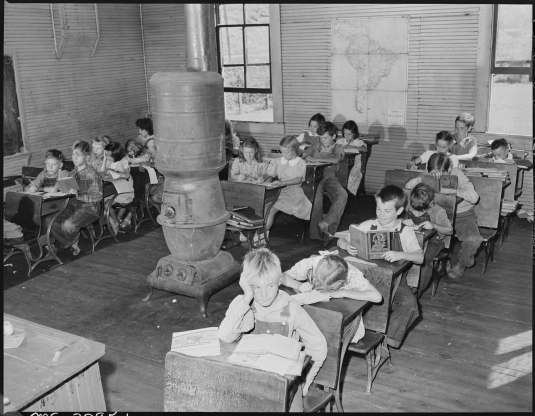
 Today we have an elite system of schooling whereby the children of the wealthy get to go to charter schools, private schools and high-priced universities that are beyond the incomes of the average person. These schools may still provide a decent education, but they are “not open to the public.” This morphing of schools from democratic institutions to elite institutions did not happen by accident. It became all too clear to many people that the public-school system was collapsing. Anyone who has taught in a public school today knows the chaos and bedlam that is called education in these schools. Discipline has gone out the door and students terrorize each other and even the teachers. The results of the decay of the public-school system has seen the wealthy shift their funding to private schools while those who cannot afford private schools often opt for home schooling. The rise in home schooling parallels the decline of the public-school system.
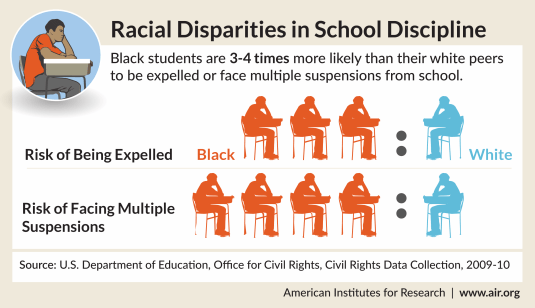 Teachers sit helplessly by as the school system they belong to sinks slowly but inevitably beneath the waves of societal change. Like the proverbial fish, teachers are the last ones to see the water. Asking a teacher how to fix the system is like asking a fish how to fix the ocean. Adding to the general ignorance are pundits in both the business arena and the political arena who propose solutions based on what worked in the past or worse what they think has worked in the business arena. Thus, we see proposed solutions such as:
 Many young people who are now either lost in the present system of schooling or who are ill-served by it would be rejuvenated and excited again. Classrooms would no longer be places where the concept of discipline permeated every minute of instruction. There would be no such thing as failures or dropouts. No such thing as staying back or not passing. No detention or hall monitors. Vocational education, music, art, and drama would be as important as reading and math and science. Poor kids would get the same education as
  rich kids. All kids would find joy and fun in their education since it would be designed to meet their needs and interests and unique abilities. People from two to ninety-two would be able to receive the education and knowledge they need to be effective members of society regardless of whether they had yet begun to work or had retired. Education would be for life. Public funding would be provided throughout a person’s lifetime.
 Aging Capriciously