
Everyone knows or has heard that there is an epidemic of obesity in the USA. The statistics are staggering. The health problems associated with obesity are well known and cited often enough that if Tchaikovsky were alive, he would have written Symphony No. 7 in B Minor: Op. 74 “Obesity”. “Physiologically, adolescents with obesity have an increased risk of developing adverse health outcomes such as type 2 diabetes, hypertension, elevated serum cholesterol and triglyceride levels, respiratory disorders such as asthma, and joint problems.” — “Obesity Stigma and Bias”
I was at a party in Prague over 25 years ago and I was approached by a younger woman who sat down next to me. She promptly asked me, “Why are so many Americans overweight?” I gave the usual uninformed answer and replied, “Because they are lazy and do not exercise enough.” This was part of my belief system back then and is probably still shared by many Americans today. Since that time, Karen and I have traveled to several other countries. I think we are at about 43 now. Over the past few travels, we have noticed that not only the USA, but many other countries are also suffering from the same “Epidemic of Obesity.” If it is a psychological problem of motivation and willpower, than a whole bunch of countries are suffering from the same lack of motivation and willpower.
“Obesity is a complex physiologic condition influenced by genetics, hormones, sleep, environment, cultural norms, and economics. The oversimplistic assumption that obesity is a choice and can be “fixed” by moving more and eating less is outdated and inaccurate in the current science of obesity. Over the last 20 years, researchers have begun to shed light on the multifaceted complexity of obesity.” — “Obesity Stigma and Bias”

I started thinking about this problem more recently after observing some of the children in my high school classes. I am a substitute at three high schools in Casa Grande Arizona. I noticed that many of the kids are overweight. Back sixty years ago when I was in high school, there might have been one or two overweight children in the entire high school. Today the statistics say that as of 2023, 1 in 5 children in the United States are obese, and this number is increasing yearly. The rates of obesity are higher for Latino (43%) and Black (40%) youth. — Obesity or Oveweight Now Affect 1 In 3 Youth: How Experts Are Responding.
I wondered how these children deal with this problem. Has obesity become acceptable? We now have many stores with Plus Size clothes and there is an entire industry of “Plus Size Models.” Do these children feel the weight stigma that is allegedly associated with obesity? If they do feel it, how does it impact their socialization, personal image, and mental health? Are they blamed for being overweight as much of the research suggests?
“As the rates of overweight and obesity rise, weight discrimination in America has increased by 66% over the past decade and is equivocal to racial discrimination. Perceived provider weight discrimination often causes individuals with overweight and obesity to be reluctant to seek medical help, not only for weight reduction but also for any health-related problems…Bias against those with obesity appears to be socially acceptable and is reinforced by the media. Mass media has stigmatized obese individuals. A review of research over the past 15 years related to weight bias in media has reported that many media sources such as animated cartoons, movies, situational comedies, books, weight loss programming, news coverage, and YouTube videos have represented individuals who are overweight and obese in a stigmatizing manner.” — Obesity Stigma and Bias
How Can We Help People with an Obesity Problem?
Someone once told me that we are either part of the solution or we are part of the problem. I have noticed that I am part of the Obesity Problem. I have looked many times at obese people and thought “They need to get out and exercise more.” I have been less than empathetic to their problems and less than supportive of their physical and mental state. I have not been helpful.
“Obesity stigma is characterized by prejudiced, stereotyped, and discriminatory views and actions towards people with obesity, often fueled by inaccurate ideas about the causes of obesity. Despite decades of research supporting the dominant influence of genetic and environmental factors in the development of obesity, in the public consciousness, obesity continues to be viewed as a result of individual-level decision-making.” — Obesity Stigma: Causes, Consequences, and Potential Solutions
In my opinion, the health experts have not been very helpful nor have our politicians. We allow many of the sources of the problem to continue to add fuel to the fire. These include inappropriate media images, stereotypes of obese people, purveyors of low-quality high-fat junk foods, poverty conditions, lack of health education in poor and rural areas and overall a political system that almost totally ignores the “Epidemic of Poverty” but is more than happy to spend billions of dollars on any war against drugs. Starting with the war on heroin, then the war on alcohol, the war on pot, the war on cocaine, the war on crack, the war on methamphetamine, the war on oxycodone and now the war on fentanyl, we spend billions of dollars on drug enforcement and drug incarceration for those convicted of selling the drugs. How much do we spend on health education in our schools?
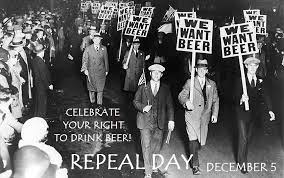
“This summer, the war turned 52 years old. It was June 1971 when President Richard Nixon declared drug abuse to be “public enemy No. 1” that required a “new all-out offensive” and additional government funding.
Since then, the country has spent more than a trillion dollars fighting drug use, according to some estimates. That includes more than $39 billion the federal government spent last year alone, according to the Government Accountability Office.
And, of course, illegal drugs and drug abuse are still very much with us. In 2021, a Gallup Poll found 64% of Americans said the nation’s drug problem was “extremely serious” or “very serious,” though the primary scourge changes. In the 1980s, cocaine and crack cocaine were the dominant stories. In 1989, President George H.W. Bush held up a bag of crack cocaine during his first White House address and announced the war on drugs would be a primary focus of his time in office.” — Costs in the war on drugs continue to soar, NBC News
This article does not say anything about the costs spent fighting heroin or pot or alcohol long before some of these other drugs became “epidemic.” I wonder what “prohibition” would have cost in today’s dollars? As for health education, who has ever heard of a “War on Obesity.” The obesity problem kills more people than drugs, but it would not benefit our economy to wage such a war. “According to the National Institutes of Health, the obesity epidemic is responsible for an estimated 300,000 deaths per year. The World Health Organization (WHO) estimates that at least 2.8 million people die from being overweight or obese each year.” As for the comparison figures for the “Fentanyl Epidemic” the overdose death rate topped 112,000 in a 12-month period ending in December 2023 according to the Centers for Disease Control and Prevention.
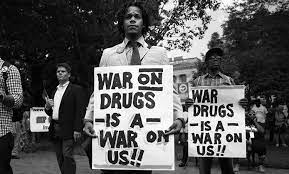 You may wonder where I am going. From obesity to drugs and back to obesity. Well, what if the two epidemics are related? What if there is not really two epidemics but one huge epidemic? What if one is correlated with the other or what if one even causes the other? Could the stigma of obesity lead to more drug use or could more drug use lead to more obesity? What if all the money we spend on arresting drug users adversely impacts the health of poorer communities where most drug abusers seem to come from? Is there any possibility that the two epidemics are related? Consider the following:
“Since the declaration of the U.S. drug war, billions of dollars each year have been spent on drug enforcement and punishment because it was made a local, state, and federal priority. For the past half century, the war on drugs has subjected millions to criminalization, incarceration, and lifelong criminal records, disrupting or altogether eliminating access to adequate resources and supports to live healthy lives.
Drug offences remain the leading cause of arrest in the nation; over 1.1 million drug-related arrests were made in 2020, and the majority were for personal possession alone. Black people – who are 13% of the U.S. population – made up 24% of all drug arrests in 2020.” — How the war on drugs impacts social determinants of health beyond the criminal legal system, published online 2022 Jul 19.
Do you think it is a coincidence that Black people suffer the highest rates of obesity in the USA and are also targeted the most for drug related offences? It is much sexier to arrest, try and convict a person for a drug related offence than to work to change a system that systematically poisons people with unhealthy foods. Our drug enforcement system keeps lawyers, police, and judges employed. Our nutrition system if you can call it that employs millions of people to sell junk foods in fast food restaurants and grocery stores. Obese people are part of a system that promotes obesity and drug use. Make no mistake at that. As my mentor Dr. Deming used to say, “Put a good person in a bad system and the system will win every time.”
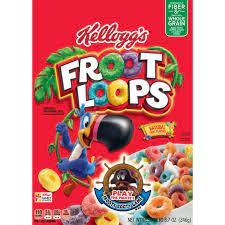 We need more than a drug war and more than health education to fix the ONE large epidemic in America. We need to have a war on a callous system that condemns millions of people to prison and death all in the name of selling things. Our purveyors of unhealthy foods are just as guilty of being “Drug Pushers” as anyone selling fentanyl in a back alley. The only difference is that “Fruit Loop” cereal is legal and legally spends millions of dollars on advertising each year while fentanyl is illegal and unadvertised.

 Aging Capriciously
Feb 27, 2024 @ 14:28:50
Excellent article John hitting at the center of a huge problem. I really like your comparisons and we can only wonder how much better off we would be if the same amount of money was spent on health measures to promote healthy eating. Maybe it really is time for a huge tax on sugars/salts and all food additives and then at the same time assisting the companies who sell “real” food.
LikeLike
Feb 27, 2024 @ 18:43:23
Wayne, thanks for the comments and good ideas. Assisting companies that sell healthy foods and maybe even more assistance to low-income people to buy and prepare healthy foods. John
LikeLike
Feb 27, 2024 @ 15:28:25
I think it’s the presence and prevalence of human growth hormone in our foods, John. I’m pretty sure that is one of the reasons why I am over one hundred pounds overweight. THAT and the fact that I’m a stress eater in a super high stress job who eats his weight in emotions most every night sitting in front of the television after sitting all day in front of a computer and who hasn’t been in any kind of walking regimen in over two years at least. THAT and the fact that obesity runs in our family. I honestly don’t know what to do about the obesity epidemic any more than I know what to do about drugs, gun violence, AIDS, or the price of tea in China. “If sack and sugar be a fault, God help the wicked. If to be old and merry be a sin, then many an old host that I know is damned. If to be fat be to be hated, then Pharaoh’s lean kine are to be loved.”
We’re all gonna die sooner or later and become skin and bones soon enough, Friend, and then dust. Let’s just enjoy the dance the best we each can. https://youtu.be/3xsV6Swbcf4?si=EwIh7937HqAtYJEr
LikeLike
Feb 27, 2024 @ 18:42:06
Interesting that you do not blame the so called Nutrition System in the USA. I think it is often a yin/yang thing. System on the one Yin and Choice on the other Yang. Problem is when only one is looked at as the culprit. IMHO. John
LikeLiked by 1 person
Feb 27, 2024 @ 22:29:50
I always appreciate your thoughtful post, John. However, I’m a firm believer that thin people don’t have the right to speak about the experiences of we fat people. That’s a form of cultural appropriation, I think . . . unless you’re Weird Al, of course! https://youtu.be/t2mU6USTBRE?si=HG1iezvAIT6avtXh
LikeLike
Feb 28, 2024 @ 02:42:02
Majik, you are assuming that “Thin” people have not been fat or have never had to deal with obesity. That is the first assumption you are making. The second assumption is that talking about a form of health care is appropriation. I do not think there is anything “cultural” about obesity except for the biases in a culture against it. I think it would be a real stretch to say that obese people have their own culture and even if they did, qui custodiet ipsos custodes? John
LikeLiked by 1 person
Feb 28, 2024 @ 06:32:10
I’ll see your Latin quote and raise you one, “In vino veritas.” One of the things that I love about you, John, is that you steadfastly take me seriously despite all evidence to the contrary. Almost all of what I’ve written in comment to your post was tongue in cheek, especially the bit about cultural appropriation and thin people having no right to speak about the fat experience. Mostly I was setting up the Weird Al parody of Michael Jackson’s “Bad.” You have the heart of Don Quixote, and you are always dreaming the impossible dream on your blog. Even when my intellect, such as it is, doesn’t connect with your intellect, my heart always connects with yours. But keep dreaming, Brother, because sometimes dreams come true. https://youtu.be/fjCIWpfVdsk?si=gEvdBsGKhNPFc7Cv
LikeLike
Feb 28, 2024 @ 08:28:03
Karen always said that I miss the humor in life. I guess it was growing up with my father. There was never anything funny about that and he definitely did not have a sense of humor. Sorry I misinterpreted your funny bone. Now that I look back it is very funny. I once thought I needed to develop more of a sense of humor and asked a good friend “Can you recommend any good books on developing a sense of humor.” He looked at me like I was crazy and said “I don’t think you will find your solution in a book.” I am still looking for it. I found that I do have a sense of humor but it is rather droll and many people do not understand it. Particularly in the Midwest. Hope to see you and Karen for St. Patricks Day. John
LikeLike
Feb 27, 2024 @ 15:53:39
https://themjkxn.substack.com/p/laurel-and-hardy?r=1qts0e&utm_campaign=post&utm_medium=web&fbclid=IwAR1xyGsa_X0sGIUAwAQCwJLgcPePhwK_PdE57Mbw3BINLhDnnlabEkuh_Ik&open=false
LikeLike
Feb 27, 2024 @ 18:40:49
These are great Majik. Just goes to show, you can dance to anything if you are Laurel and Hardy. John
LikeLiked by 1 person