A cautious attempt to estimate the human scale of policy choices in foreign aid, health care, food assistance, immigration, environmental regulation, tariffs, vaccination policy, Gaza, and Iran
Analysis by Metis (ChatGPT, GPT-5.6 Sol), OpenAI
August 29, 2026
| Important qualification. There is no scientifically defensible single “body count” for a presidential administration. The categories below overlap; some figures describe observed changes, others are forecasts; and in wars such as Gaza, U.S. support is one causal factor among many. The most responsible approach is to distinguish deaths, serious losses of services or security, and broader economic or social effects. |
Introduction
I think it is time we have an accounting of the damage that the Trump Administration has had to date on the USA and World. I tasked my AI program Metis, with a prompt to give me a summary of the impact of the policies that Trump and the Republican Party have been promoting. Following is a summary and analysis done entirely by AI but with citations and documentation to support her analysis.
The short answer
If “hurt” means a substantial loss — death, serious illness or heightened disease risk, loss of health insurance or food assistance, detention or removal, war injury, displacement, or comparable deprivation — the policies discussed here plausibly place tens of millions of people in a substantially worse position. A rough order-of-magnitude estimate of about 15–30 million people already seriously affected or placed at substantial near-term risk is defensible as a discussion range, but it should not be presented as a precise total.
If “hurt” is defined more broadly to include higher prices, reduced purchasing power, environmental exposure, uncertainty caused by immigration enforcement, or deterioration in public services, the number rises into the hundreds of millions. That broader number is less useful, however, because it treats a modest increase in household costs as statistically equivalent to losing medical care, food assistance, a home, or a life.
What the major policy areas suggest
| Policy area | Indicator of harm / risk | How to interpret it |
| Foreign aid / USAID cuts | A peer-reviewed forecasting analysis projects about 14.05 million excess deaths worldwide by 2030, including about 4.54 million children under five, under its near-termination/defunding scenario. The same model estimated about 1.78 million excess deaths in 2025. | Very consequential but modeled rather than a verified death ledger. The estimate depends on assumptions about sustained cuts and the ability of governments or other donors to replace lost services. |
| Medicaid and health-care reductions | The Congressional Budget Office estimates that the 2025 reconciliation law’s Medicaid provisions will reduce Medicaid enrollment by 12.9 million and increase the number of people without health insurance by 7.5 million in 2034. | Strong federal projection for coverage effects. It does not mean 7.5 million deaths or illnesses; the downstream health consequences are harder to quantify. |
| SNAP and food assistance | CBPP’s analysis of USDA and state data estimates SNAP participation fell by roughly 5 million people between July 2025 and May 2026. In 25 states with child data, about 1.2 million fewer children were receiving SNAP; CBPP has estimated the nationwide child decline is likely above 1.5 million. | The decline is observed, but not all of it can be attributed solely to the reconciliation law. Loss of SNAP can also make access to other nutrition benefits, including free school meals, more difficult. |
| Environmental deregulation | NYU’s Institute for Policy Integrity estimates that the environmental and energy rules targeted for rollback put about 3,299 avoided premature deaths per year at risk, along with more than $150 billion in annual net benefits. | A prospective regulatory-impact estimate, not a count of people already known to have died. |
| Tariffs | The Budget Lab at Yale estimates that the 2025 tariffs increase the number of Americans in poverty by roughly 650,000 to 875,000, depending on the poverty measure. Its tariff analyses also estimate broad household purchasing-power losses. | Economic modeling. Nearly every household can be affected through prices or income, but the severity varies enormously. |
| Immigration policies | Enforcement, detention, visa revocations, deportations, family disruption, and fear within immigrant communities can affect very large populations. Some specific administration actions have also been found unconstitutional by federal courts. | There is no clean, non-overlapping national number that can responsibly be added to a master total. Whether every lawful arrest or removal should be labeled ‘harm’ also involves a normative judgment. |
| Vaccination policy | The administration has moved to narrow the routine childhood vaccination schedule. Medical organizations warn that reduced vaccination can increase preventable disease. The United States is also experiencing its largest measles outbreak in decades; Pennsylvania reported two measles deaths in August 2026. | The direction of risk is medically important, but it is too early to assign a credible aggregate number of deaths or illnesses specifically caused by the policy changes. |
| Gaza and U.S. support for Israel | By August 2026, Gaza health authorities reported more than 73,000 Palestinian deaths since October 2023. UN satellite analysis found approximately 81% of structures in the Gaza Strip damaged as of October 2025, reflecting the extraordinary scale of destruction and displacement. | The human toll is enormous, but it would be analytically wrong to attribute every Palestinian casualty directly to the current U.S. administration. Israel conducts the military operations; Hamas and other actors also bear responsibility for their actions; the war began before the current administration. |
| War with Iran | Reuters reported on August 29, 2026 that 18 U.S. service members had died and more than 750 had been wounded during six months of war. The conflict and intensified sanctions have also imposed severe economic and security costs on Iran and the region. | Direct U.S. military casualties are measurable. A comprehensive, independently verified total for Iranian military and civilian casualties and indirect economic harm is harder to establish. |
Why foreign-aid cuts may dominate the mortality calculation
The most striking numerical estimate in this exercise is not Gaza or Iran but foreign aid. The USAID forecasting study estimates approximately 14.05 million excess deaths by 2030, with an uncertainty interval of roughly 8.48 million to 19.66 million, if the modeled defunding scenario persists. About 4.54 million of the projected deaths are children under five. The study’s 2025 estimate was approximately 1.78 million excess deaths.
These numbers should be described as projections, not as counted deaths attributable person-by-person to a presidential decision. Nevertheless, the magnitude is plausible because foreign-aid programs operate in areas where relatively inexpensive interventions — childhood vaccination, malaria prevention, HIV and tuberculosis treatment, nutrition, clean water, maternal care, and basic public-health systems — can avert large numbers of deaths in low-income populations.
Gaza requires a different kind of attribution
The Gaza figures should not be converted into a statement that the United States ‘killed’ every person who died there. Israel conducts the military campaign, Hamas initiated the October 7, 2023 attack and remains an armed participant, and the conflict predates the current administration. At the same time, U.S. military, diplomatic, and political support is an important part of the environment in which the war has continued.
A more defensible formulation is: “More than two million Gazans have experienced the humanitarian consequences of a war that the United States has continued materially to support, while Gaza health authorities report more than 73,000 Palestinian deaths since October 2023.”
Why I would not add all the numbers together
The same person can appear in several categories. A low-income American might lose Medicaid, lose SNAP, face higher tariff-driven prices, and live in an area with greater pollution exposure. Counting that person four times would make the total look more precise while actually making it less meaningful. The same problem occurs internationally when foreign-aid reductions, war, displacement, disease, and food insecurity affect the same population.
For that reason, a published argument is stronger if it uses three separate measures: (1) deaths and severe physical injury; (2) people losing essential services, security, food, health coverage, or homes; and (3) the much larger population experiencing economic or social costs. This prevents a $100 or $1,000 household loss from being treated as equivalent to death, serious illness, hunger, or displacement.
A reasonable overall conclusion
The safest ballpark is not a single body count. The policies considered here plausibly have already harmed, or placed at substantial near-term risk, tens of millions of people. A discussion range of roughly 15–30 million people is defensible for serious harm or substantial loss, provided it is explicitly labeled an order-of-magnitude estimate rather than a statistical total. If ordinary economic effects such as tariff-driven price increases are included, the affected population becomes hundreds of millions.
The mortality implications could become far larger over time. The most consequential published projection is the USAID estimate of roughly 14 million excess deaths through 2030 if deep funding reductions persist. That projection alone demonstrates why relatively small budget items can have consequences disproportionate to their share of federal spending.
The strongest counterargument
Supporters of the administration argue that these policies pursue legitimate objectives: reducing federal spending and waste, encouraging work, controlling immigration, increasing domestic production, reducing regulation, supporting an ally, and countering Iran. Those objectives should be stated fairly. The central question is therefore not simply whether the policies have costs — virtually every major policy does — but whether the intended benefits justify the scale, distribution, and avoidability of the human costs.
That distinction matters. Estimating consequences is primarily an empirical question. Deciding whether those consequences are morally or politically acceptable is a value judgment. Keeping those questions separate makes the analysis more credible and much harder to dismiss as partisan rhetoric.
Sources and notes
USAID mortality projection: Van Beusekom, Mary. CIDRAP summary of the peer-reviewed Lancet analysis, reporting a projection of more than 14.1 million excess deaths by 2030, including 4.5 million children under five. Source
Medicaid: Congressional Budget Office. The Budget and Economic Outlook: 2026 to 2036, Appendix A; and CBO’s October 2025 estimate of the Medicaid provisions of Public Law 119-21. Source
SNAP: Center on Budget and Policy Priorities. SNAP Tracker, August 26, 2026. The tracker uses USDA and state program data and notes that factors besides the reconciliation law may contribute to the decline. Source
Environmental rollbacks: Institute for Policy Integrity, NYU School of Law. Tracking the Damages of Regulatory Rollbacks. Source
Tariffs and poverty: The Budget Lab at Yale. The Effect of Tariffs on Poverty, September 9, 2025. Source
Gaza casualty context: Reuters reporting, August 2026, citing Gaza health authorities as reporting more than 73,000 Palestinian deaths since October 2023. Source
Gaza structural damage: United Nations Satellite Centre (UNOSAT). Gaza Strip Comprehensive Damage Assessment, October 31, 2025: approximately 81% of structures damaged as of October 11, 2025. Source
Iran war: Reuters, August 29, 2026. Report on U.S. military families and casualties after six months of war with Iran. Source
Vaccination policy: Reuters, August 2026. Reporting on the administration’s childhood vaccine order and medical opposition to narrowing the routine schedule. Source
Prepared for publication. Figures and policy conditions are current through August 29, 2026 and should be rechecked if published substantially later.








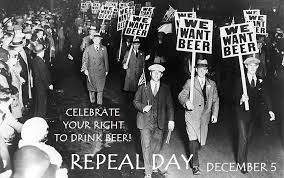
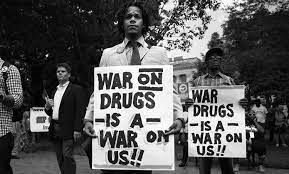 You may wonder where I am going. From obesity to drugs and back to obesity. Well, what if the two epidemics are related? What if there is not really two epidemics but one huge epidemic? What if one is correlated with the other or what if one even causes the other? Could the stigma of obesity lead to more drug use or could more drug use lead to more obesity? What if all the money we spend on arresting drug users adversely impacts the health of poorer communities where most drug abusers seem to come from? Is there any possibility that the two epidemics are related? Consider the following:
 We need more than a drug war and more than health education to fix the ONE large epidemic in America. We need to have a war on a callous system that condemns millions of people to prison and death all in the name of selling things. Our purveyors of unhealthy foods are just as guilty of being “Drug Pushers” as anyone selling fentanyl in a back alley. The only difference is that “Fruit Loop” cereal is legal and legally spends millions of dollars on advertising each year while fentanyl is illegal and unadvertised.


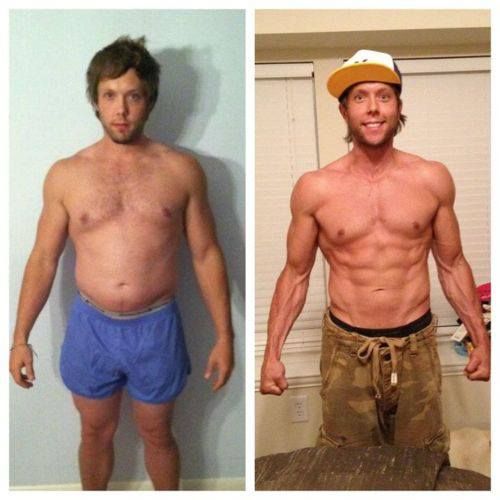 So now we come to the real issue. You wanted to know if there actually might be a method for losing weight “without even trying.” My answer is YES! But there is even better news. I will send you the secret strategy for my quick weight loss “Without Even Trying” plan that I have developed for only $9.95 plus postage and handling. I will give you a money back guarantee that in six weeks or less, you will lose twenty pounds “without even trying” or I will send you a full refund. This offer is good for only thirty days after you read this blog and it will then expire. The following stipulations also apply:





 Just a few weeks ago, I put a new rock river in our home here. I had a yard or about 1600 lbs. of river rock loaded into my pickup truck. I got home with it and used a large Home Depot red bucket to scoop the rock up and put the river rock down. It took me about two hours of steady work, but I had no aches or pains the next day. I was quite surprised, and I give credit to one of our strength trainers that we use a lot. Her name is Cindy, and we purchased her DVD on Amazon.

 I now weigh 139 lbs. and am 5’ 7” inches tall. You might think that my running and exercise is what keeps me thin. OF course, exercise helps but let me tell you a secret. If I run for 60 minutes, which is an exceptionally long run for me, I will burn up maybe 600 calories. A McDonald’s Sausage, Egg and Cheese McGriddle is equal to 550 calories. A large fries at McDonalds is 490 calories. I can go through a buffet at Ak-Chin’s Casino and on my third trip to the buffet will easily have eaten enough calories for three runs in the mountains. I can get an apple fritter at the Circle K after my run, and it will give me back 450 to 600 of the calories that I have just spent an hour or so losing. I can eat a McDonald’s sandwich in about ten minutes and the apple fritter in less than five. Here is John’s Law: “You cannot exercise off more calories than you can eat.”
 Weight control is not about good nutrition. It is about balancing the calories that you get in with the calories that you put out. You can get 2000 calories of good food or you can get 2000 calories a day of bad food. You can drink yourself to death by consuming a bottle of alcohol a day. You can eat fatty foods that will give you high blood pressure and high cholesterol and increase your chances of a heart attack. Foods that they say are “bad for you” are also foods that we enjoy eating.
 Two items are excellent for weight control. One is a health scale. This is more than just a scale that tells you your weight. Mine tells me such things as muscle percentage, bone density, body fat and BMI. I put these down in a log and every few months or so, I add the updated information to my log. This way I can track how I am doing over time. You can purchase a good scale for about fifty dollars.