I sit here in my car driving the speed limit of 75 mph on the interstate and being passed by multitudes of cars doing at least 85 mph or maybe 90 mph. It feels like I am standing still. I watch as cars pass on the right, left and in-between in their hurry to get somewhere really important. Speed limits and stop signs seem to be only ideologies obeyed at the discretion or whim of the drivers on the roads today.
Americans have always said that they want less government. Today, it seems that they want NO government. People clamor for their rights at every mention of some law or other injunction that they do not feel applies to them. Hardly any American cannot find some law that they find unfair and unjust.
Edmund Burke said that the “Government that governs best is the government that governs least.” Abraham Lincoln said that “If all men were just, there still would be some, though not so much, need of government.” Many Anarchists would agree with these sentiments. In the past, Americans have treated Anarchists as terrorists and revolutionaries. Anarchists are despised by most Americans. Yet, few Americans understand that many Anarchists share their same belief in “eliminating the government.” The January 6th attacks on the Congress of the USA could have been a picture-perfect representation of an Anarchist attack. Unfortunately, for such simple depictions of Anarchists many are not violent revolutionaries. One definition of an Anarchist given by the FBI is as follows:
“Anarchism is a belief that society should have no government, laws, police, or any other authority. Having that belief is perfectly legal, and the majority of anarchists in the U.S. advocate change through non-violent, non-criminal means.” — FBI. Gov
The implications of this definition are profound. Consider that “The majority of anarchists are non-violent” whereas the majority of those storming the US Capital on January 6th were engaged in violent criminal attacks. How many of the people attacking the Capital would agree that they were engaged in the same type of criminal activities that they ascribe to Anarchists? Nevertheless, both groups share a dislike for government.
A closer reading of Lincoln and Burke though does not show an advocacy for NO government, only less government. What are the primary purposes of a government than and how can it reconcile achieving these purposes while at the same time not becoming a burden on the everyday lives of its citizens? Here are the five most important functions of a government:
The five most important functions of a government typically include: (From ChatGPT)
- Maintaining Order and Security:
Enforcing laws, protecting citizens from crime, and ensuring national defense against external threats.
- Providing Public Services:
Offering essential services like education, healthcare, infrastructure (roads, bridges), and utilities that individuals or private businesses might not adequately provide.
- Protecting Individual Rights and Freedoms:
Upholding constitutional rights, such as freedom of speech, religion, and equal protection under the law.
- Economic Management:
Regulating trade, managing taxes and public spending, and addressing unemployment and inflation to foster a stable economy.
- Formulating and Enforcing Laws:
Creating legislation that reflects societal values and ensures justice, while maintaining systems to fairly enforce these laws. (End of ChatGPT)
Few people would disagree with any of these functions. But if God lies in the details (or the Devil some might say), than our disputes are more around “what exactly will be done and how will it be done.”
Any one of these five functions can illustrate the problem that people have with the government. For instance, what Public Services will be provided? We accepted education many years ago as a public service, but now some want to privatize education. Other people want childcare as a public service while there are people who disagree with the idea.
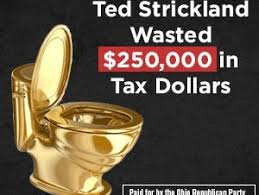
 But the question of what services and what laws to provide are not the only problem people have with the government. A bigger problem lies in the “how” of government. By how, I refer to the efficiency of government. The government has long been lambasted for its lack of efficiency. Several years ago, Senator William Proxmire of Wisconsin created his “Golden Fleece Award.” Periodically a government agency would receive this award for an egregious offense of efficiency. Some of these became famous even if they might have been a gross exaggeration. One that comes readily to my mind was the “Golden Toilet” bowls case. Allegedly, a government office ordered gold-plated toilet bowls. Whether this is an urban myth or not, there are indeed countless stories of government bureaucracy creating inefficiency.
When I worked as a principal strategic planner for the Metropolitan Council in Minnesota, I saw so many examples of government waste and stupidity that I often came home complaining to my spouse that, “If only the citizens of this state could see the waste and inefficiency that I am trying to deal with, they would grab guns, knives and even pitch forks and march on city hall.”
That was over twenty-five years ago, and people have finally marched (if not on city hall) on the Capital of the USA. Unfortunately, as is the case with much anger, it is often misplaced and misguided. It is not only the Federal Government that is inefficient, but also most state governments, county governments and city governments that are inefficient as well. When I was teaching the concepts of quality and process improvement to companies, I would use a conceptual framework based on two key economic concepts to explain how a company could improve its operations.
There are two key economic concepts that every organization must be concerned with. The first key concept is Effectiveness. Effectiveness can be defined as “Doing the right things.” The second key concept is Efficiency. Efficiency can be defined as “Doing things right.” In order for any organization to maximize productivity it must be both efficient and effective. It does not matter if you do the right things, but you don’t do them right. Vice versa, if you do the wrong things but you do them right, that is nonproductive as well. We can summarize these maxims simply by the following idea: Your clients and customers expect that you will give them “What they want or need at a price that they can afford.” Price reflects the efficiency of an operation, while giving customers what they want or need reflects the effectiveness of the operation.
In my experience, both as a business teacher and a management consultant, business organizations focus more on efficiency than effectiveness. There are countless examples of products and services that are neither needed nor wanted by people, but advertising can always be effective in convincing consumers otherwise. I am thinking of cigarettes and carbon-based products as two such examples.
On the other hand, the government typically focuses more on effectiveness (that is giving people needed services) and much less on efficiency. The government tries to reduce the waste and garbage that comes from industry as a direct offshoot of their so-called efficiency. The most noted example is the environmental degradation caused by many business products. Today we face a world where climate change is destroying our lives and our environment. If the trends noted today keep growing, we will eventually inhabit a planet where human life can no longer exist. Much of this climate change could have been prevented. However, companies and politicians in the pocket of big oil have spent billions of dollars in efforts to deny that climate change is taking place due to carbon-based fuels.
The secret of sustainability (a dirty word to some people) on a global scale is to have businesses and governments that are both effective and efficient. Unfortunately for most governments, they get the worst of the publicity. There is much less criticism of the ineffectiveness of big business to provide products that are compatible with a clean environment than there are criticisms of the government for inefficiently trying to regulate this business waste. It is easy to see why that is the case. As my friend Dick always said, “Follow the money.”

The government spends very little money trying to convince you that the climate is changing, or that too much production of carbon fuels is destroying our environment. Big business has dozens of lobbyists padding the campaign budgets of politicians to convince them to ignore the effects of global warming and to deny that it exists.
Big business also spends billions of dollars trying to convince you that they can provide government services more efficiently than the government. The last few years have seen ongoing attempts to privatize education, prisons, waste treatment plants and many other public services where big business think they can make a profit. In addition, big business has been at the forefront of efforts to deregulate organizations such as banks, public utilities and airlines in order for them to manage these organizations without restrictions. Having no restrictions, gives them free rein to make as much profit as they like. Yes, you may get these services cheaper and thus more efficiently than the government would provide them, but you will pay a hidden cost. There are no free lunches in the world. The Great Recession of 2007 followed the issuing of loans and mortgages that had too little collateral and too high interest rates leading to a catastrophic failure of banks and homeowners.
IF you want further corroboration regarding my above analysis of the 2007 recession, you can read the following from ChatGPT:
“The 2006 recession was actually part of a broader economic crisis that led into the Great Recession (which officially spanned from late 2007 to 2009), but the roots of the downturn started around 2006.
The major cause was the housing market crash. Here’s a quick breakdown of what happened:
Subprime Mortgage Lending: Banks and lenders gave out risky loans (subprime mortgages) to people with poor credit histories. These loans often had adjustable interest rates that started low but later spiked, making it hard for borrowers to keep up with payments.
Housing Bubble Burst: Housing prices had been soaring due to speculation and easy credit, but by 2006, home prices peaked and started to fall. As prices dropped, homeowners who couldn’t sell their homes or refinance their loans began defaulting.
Mortgage-Backed Securities (MBS): Banks bundled these risky mortgages into financial products called MBS and sold them to investors. When homeowners started defaulting, the value of these securities collapsed, causing massive losses for banks and financial institutions.
Foreclosures and Bank Failures: Foreclosures skyrocketed, and big financial players like Lehman Brothers collapsed or needed bailouts, which deepened the economic panic.
The domino effect triggered a credit crunch — banks stopped lending, businesses cut jobs, and consumer spending shrank, all of which pushed the economy into a full-blown recession by late 2007.”
Consumers and the American public paid a big price for the greed and stupidity of the banking industry. A greed which was supported by Government deregulation which in turn was pushed by greedy politicians ignoring the need for regulation. Behind all the politicians are legions of lobbyists for the banking industry.
Major insights I want to leave you with:
- People want a free lunch when it does not exist.
- Politicians (first and MOST) represent those from whom they get the most gold. He who has the gold makes the rules.
- Businesses and citizens will never regulate themselves without some help from a government to set norms that everyone must abide by. Witness, the amount of gun violence, air pollution, water pollution, road rage and senseless speeding that exists today. There are too many people and too many organizations which will not police themselves.
- Efficiency and Effectiveness are the fundamental building blocks for any sustainable economic system that is going to deliver ongoing value to society.
- We need a government that is fair, nonpartisan, educated and responsible to the citizens and not the lobbyists. We do not have that now.
Some Solutions I Would Like to Suggest:
- Make lobbying illegal. Lobbying is bribery. Ban all lobbyists from congress.
- Overturn Citizens United Ruling: Corporations are not people and should not be allowed a vote. Just as we separated Church and State, we must have a constitutional amendment to separate Corporations and State.
- Term limits for all politicians. I recommend one six-year term for all elected positions. Furthermore, once an elected politician leaves an office, they cannot hold another government position in any office for ten years.
- Have Vouchers for Campaign Contributions: Every year, each eligible voting citizen of the USA would get a monetary voucher for 500 dollars to fund as many campaigns as they want to contribute to. The voucher money could only be used to fund political campaigns. The maximum that any citizen could contribute to political campaigns in a year would be 1000 dollars. No PAC money, no corporate funds, no other funds except funds from individual registered voters would be allowed.
- Supreme Court Justices: Supreme Court Justices should serve a maximum of 15 years. New justices should be selected by the following practice: A bipartisan committee of judges nominates a total of 6 candidates. The final candidate is selected at random from the pool of six.
These changes would be only a first step in bringing true democracy back to America. There are many changes needed to make the Government bureaucracies throughout America more efficient and effective. The ideas I have given above are only a start. We need to bring efficiency and effectiveness to our Education, Health Care, Justice, Military, Social Services, Immigration and Diplomatic systems. In several other blogs, I have suggested ideas on how to go about dealing with some of these systems. However, nothing is more important than getting the corruption out of Government fostered by our present system of electing candidates to office.

What is a lobbyist?
Lobbyists are professionals hired by a special interest group to represent their interests to Congress.
The term “lobbyist” harkens back to the days when people hung around in lobbies waiting to get a word in with legislators heading to vote.
All kinds of groups hire lobbyists — from corporations and private companies to nonprofits and unions — to try to persuade the government to pass legislation that’s favorable to them.

 Aging Capriciously
Feb 25, 2025 @ 09:58:15
As I mentioned in a recent post on my blog, this is the main reason 20% of the colonists supported the Brits during the Revolution and then left for the colonies to the north, they believed that the Brits were providing, from a distance, peace, order, and good government.
LikeLike
Feb 25, 2025 @ 13:27:24
Jane, I need to go back and read the blog you wrote. When did you publish it? Can you send me the link. I did not know this. In the uSA, it is always taught that these “disloyal” colonists were simply traitors. Thanks for the comment. John
LikeLiked by 1 person
Feb 25, 2025 @ 14:00:52
John, I’ve been posting every 2-3 days about the nightmare that has become the United States. This particular post is at this link, and there are more on either “side” of it. https://robbyrobinsjourney.wordpress.com/2025/02/21/sorry-but-my-outrage-just-grows-and-grows-world-leadership-ha-its-all-about-the-lust-for-money-and-power-of-one-man/. I also learned my history in the U.S. and learned the same thing. The “patriots” of course were also known as “rebels” and the “traitors” were also known as “Loyalists”. You’ll notice that the colonists who didn’t want to pay the British govt (their own govt at the time) still don’t want to pay taxes today. And when the pre-federation group of leaders from the several and diverse colonies tried to establish taxes to the individual colonies to fund their revolution, several colonies refused. Some things never change.
LikeLike
Feb 25, 2025 @ 17:09:05
Funny, you mention the taxes. The first major or minor revolt in the USA called the Whiskey Rebellion was over taxes and Washington called out the militia to put it down. The Whiskey Rebellion was a violent protest against a new tax on whiskey that took place in Western Pennsylvania from 1791 to 1794. The rebellion was led by farmers who viewed the tax as unfair. It was the first tax on a domestic product by the Federal government. I guess we will always have people who think that there is as I said “A free lunch.” Thanks for you comments Jane. The history is interesting. I left some comments on your blog at your site. For some reason, I stopped getting notices of your blog but I resubscribed. Love your writing and your ideas. John
LikeLiked by 1 person
Feb 25, 2025 @ 17:39:15
Welcome back, John. You may want to read, at the least, the two recent posts that share Canadian perspectives with Americans.
And
LikeLike
Feb 25, 2025 @ 12:44:53
Hi John, seems like the only way I can leave a comment is to reply to the email. Great blog, thanks, last two were awesome as well, I shared the Goodbye America article with a few close friends, that was extraordinary. I appreciate the time you spend developing your blogs, great work. As a thought in the list of suggestions, it sure would be valuable to have some secure, independent, foolproof mechanism to call out gross misinformation, fact checkers are rapidly achieving the status of highly endangered species…
LikeLike
Feb 25, 2025 @ 13:25:17
Good idea Dennis. I think fact checkers would be extremely valuable. I suspect Trump will continue gutting anyone who speaks out against his insanity. I have to think more about how a group of fact checkers could be organized in terms of both efficiency and effectiveness. Not sure a Dept of Fact Checkers would be the best means but perhaps some incentives for Universities or schools to start a “fact checking curriculum.” Perhaps incentives for online media to hire more fact checkers? Anyway, thanks for the comments. John
LikeLike
Feb 25, 2025 @ 14:33:20
Thanks for another thoughtful article.
I really like the 5 solutions and have at times suggested similar thoughts for our country.
However, when reading the first part of your article it would appear from here that is exactly what your current leader is attempting to do?
LikeLike
Feb 25, 2025 @ 16:42:49
Wayne, when I was doing quality improvement consulting, Deming always said there are two ways to cut costs. One is with a meat cleaver. The other is with a scalpel. When you cut with a cleaver you cut muscle and fat and bone. When you cut with a scalpel, you only cut the fat. Trump is cutting with a cleaver or to illustrate, you have seen the moron Musk with a chain saw waving it proudly in the air. In the present scenario many good people are getting hurt. My efforts with companies NEVER entailed layoffs. We always strove to improve the process so that the company could make more money and either pay people more or hire more people.
W. Edwards Deming, believed that by focusing on continuous improvement of a process, you inherently improve quality, which in turn leads to reduced costs; essentially saying “improve the process, improve quality, costs go down.”
Key points about Deming’s philosophy:
Focus on the system, not individuals:
Deming emphasized that most quality issues stem from systemic problems within an organization, not individual worker errors, so improving the process is key.
Continuous improvement:
He advocated for a constant pursuit of improvement in all aspects of a process, not just quick fixes.
Statistical process control:
Deming promoted the use of statistical methods to monitor and analyze processes, identifying areas for improvement.
LikeLiked by 1 person
Feb 25, 2025 @ 17:05:16
Comment Move over, El
LikeLike
Feb 25, 2025 @ 19:50:32
Move over, Elon Musk and the 2025 Department of Government Efficiency, D.O.G.E. to listen and implement the plans of Dr. John Persico.
The distrust of government is evident with the legal, financial and environmental consequences. Thanks to John and ChatGPT the functions of government are explained. I agree in wanting less government. Will that prevent the waste? I support efficiency and effectiveness.
John’s solutions to streamline government are commendable. 1) No more lobbyists! 2) Curb corporations! 3) Politicians serve six years and wait ten more years before eligible again! 4) Registered eligible voters spend $500 voucher toward political campaigns! 5) Fifteen year term for Supreme Court Justices selected by bipartisan committee of judges!
Go drive a Tesla, Elon Musk. John Persico is driving his ideas to improve government.
Socorro
LikeLike
Feb 25, 2025 @ 21:01:19
Thanks Socorro. I appreciate your comments very much. Hope all is well. John
LikeLike