
As I get older, I have noticed more and more people talking about loneliness. One of my greatest fears has always been loneliness. I remember embracing the song “Sometimes I feel like a Motherless Child” by Richie Havens. He was not the first singer or author of this song, but he made it quite popular during the sixties and seventies. This song reflected how I felt about life and growing up. I was on my own with no one who loved or cared about me. No mother. No loved ones. Just myself.
“The most terrible poverty is loneliness and the feeling of being unloved.” —Mother Teresa
I grew up somewhat hard and even at times cruel because it was my way of fighting back against the possibility of loneliness that lurked around every corner. I never trusted anyone because I was sure that they would abandon me and then I would feel the pain of loneliness. It is hard to describe this pain. It is not a physical pain. For me it felt like being thrown off the top of a high mountain or bridge and spiraling down as I waited to hit the ground. During acute panics of loneliness, I would feel dizzy and lose my sense of balance. My core felt empty. I was shrouded with feelings that embraced despair and contempt for myself. There was nowhere to run or anyone to turn to. I was alone on an island barren of people, trees or any living creatures. Not like purgatory and not like limbo. Just a nothingness in which I existed with no other human beings.

“When you have nobody you can make a cup of tea for, when nobody needs you, that’s when I think life is over.” —Audrey Hepburn
I dreaded these feelings and would do anything to avoid them. I would abandon other people before they could abandon me. This destroyed many relationships I had over a period of years including my first marriage and to some extent the relationship I had with my daughter. It continues to intrude on my life whenever I feel threatened with the loss of love in my relationship with Karen.
“You can be lonely even when you are loved by many people” — Anne Frank:
I tell you these things not because I want sympathy or any feelings of support. I want you to know that I take loneliness more seriously than many other elements of life that cause us pain. For this reason, I want to look at loneliness and what seems to be behind the increase that many people say is happening in America. If one asks well, “Define Loneliness” or what data do you have that supports loneliness is on the increase in America, I am going to plead “Mea Culpa.” I don’t have the requisite data to prove conclusively that loneliness is an epidemic as some have claimed. But frankly, I don’t give a damn. If there is one person in America or the world that is suffering from loneliness, that is one person too many for me. However, there is in fact some data to support the five major trends that I am going to discuss later in this blog as contributing factors to the loneliness that so many people experience.
“There were moments of intense pain & utter darkness that I wanted to end it all. The only thing I wanted was not to live.” ― Lala Agni,
For those of you that are not convinced that loneliness is a problem today. Here are some facts and data that point in that direction. Because surveys define loneliness differently (daily vs weekly vs “often”), the cleanest approach is to present a small set of credible, recent benchmarks. Here are some that my AI assistant Metis found:
- Gallup (daily loneliness): 20% of U.S. adults reported feeling lonely “a lot of the day yesterday” (Aug 27–Sept 4, 2024), up from ~17–18% earlier in 2024 and below the pandemic peak of 25%. Gallup.com
- Pew Research Center (frequency): 16% say they feel lonely/isolated all or most of the time, 38% say sometimes, 47% hardly ever/never (report published Jan 2025). Pew also finds adults under 50 report “often” loneliness more than 50+ (22% vs 9%). Pew Research Center
- Harvard “Making Caring Common” (overall prevalence): A nationally representative May 2024 survey found 21% of U.S. adults feel lonely. Making Caring Common
- AARP (older adults trend): Among adults 45+, AARP reports 40% are lonely (fielded Aug 2025), up from 35% in 2010 and 2018. AARP
- Workplace-focused lens (Cigna Group): “More than half of American workers classify as lonely,” with the report tying loneliness to absenteeism, disengagement, and turnover risk. MediaRoom
Depending on how it’s measured, loneliness shows up in anywhere from about one in five Americans to well over half in some surveys—especially when you ask about frequent feelings or focus on workplaces. Gallup found that 20% of respondents felt lonely ‘a lot’ on the prior day, Pew found 16% of respondents feel lonely all or most of the time, and the nation -wide Harvard survey put overall loneliness at 21%.”
Now lets look at five of the reasons commonly cited for the increase in loneliness in America.

1) We spend less time “doing life” with other people
Large-scale time-use data show Americans are less likely to socialize on a given day than a decade ago, and when we do, we spend less time at it. In 2024, BLS reports 30% socialized/communicated on an average day (down from 38% in 2014), and average time fell from 43 minutes to 35 minutes. – Bureau of Labor Statistics
I often ask my students what they are going to do on the weekends. The majority of times, the reply I get reflects their intentions to stay home and play video games. I find it amazing that they are not going to go out to a park to play sports with other people. Instead, they are going to interact with their friends through the digital world. We all see this today wherever we go. People texting and playing video games in restaurants, bars and parks, rather than talking or interacting with others. We may not want to admit it, but older adults can be just as addicted to their phones as children seem to be.

2) Social networks are shrinking (fewer close confidants, weaker “bench strength”)
The Surgeon General’s advisory summarizes evidence that social networks are getting smaller and social participation is declining and cites research showing a steep drop in daily social time (e.g., “companionship/social engagement”) from 2003 to 2020. That same advisory highlights the broader “fraying” context—lower trust in each other and institutions—which makes connection harder to initiate and sustain.
Once upon a time family dinners on Sunday were a major social event in the lives of most Americans. Today, large-scale displacement of families now make such events almost impossible on a weekly basis.

3) Demographic and household shifts leave more people without built-in companionship
The Surgeon General’s advisory points to long-run declines in marriage rates and family size, plus a rise in single-person households (e.g., 13% in 1960, rising substantially over time). That matters because for many people, spouses/partners, kids, and nearby kin are the default daily social glue.
There is probably no place in America where “Leave it to Beaver”, “Father Knows Best” or “Ozzie and Harriet” families are the norm anymore. Two parent families are becoming rarer and rarer. Many young people opt for simply living together either to avoid a commitment that they are apparently not willing to make or else feel that they could not keep. You can argue about the value of a traditional relationship all you want. I am not going to argue that children must be brought up by a Mom and Dad. However, having two or even more adults to help in child raising has always made the task somewhat easier. Many years ago, the task of child raising was presumed to be a communal or extended family activity. Few homes today include a mom, dad and grandparents.
It is even rarer to find homes where either parent is home to simply look after their children. The economics of modern life demand that both parents have jobs. It is unbelievable to me when I remember that my father was only a postal worker and never a manager and that my mother stayed home with four kids. Nevertheless, we had a tidy small home in a small town and food on the table every day. We might even have had a lot more if my father was not a compulsive gambler spending his earnings or at least a portion of them on the horses.
4) Erosion of “third places” and community institutions
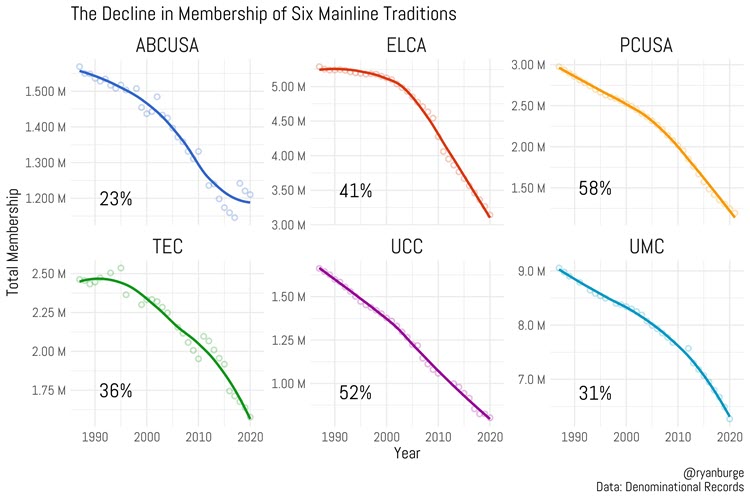
Over the years, there has been declining participation in traditional community anchors—religious groups, clubs and labor unions. When these institutions fade, people don’t just lose activities; they lose the repeated, low-effort contact that turns acquaintances into friends.
If you are my age, you may remember the large number of social networks that people once belonged to from Camp Fire Girls to Girl Scouts to Boy Scouts to Fraternal groups like the Elks, Moose, Eagles,, Masons, and Shriners. Churches were another source of community for many people. I will repeat that the data shows sharp declines in participation in all of these groups.

5) Technology reshapes connection (often replacing, not enriching, relationships)
The Surgeon General’s advisory is careful here: the evidence is “complex,” but there are documented benefits and harms, and it concludes we have reason to be concerned about certain kinds of tech use affecting relationships and social connection. Once upon a time, it was claimed that TV would destroy family life. Then it was the Internet. Now it is the social media programs. Experts seem to pop up to dispute that any of these technologies have had or are having an adverse impact on socialization. However, common sense argues against the wisdom of paid shills who benefit and profit from the exploitation of others via the media platforms that they shill for.
So How Do We Address the Loneliness that Exists in our Country Today?
This is a very difficult question to answer. Lets start by describing what we are not going to do.
- We are not going to eliminate TV or streaming digital media. This is not likely to happen given the number of hours people spend in front of TV’s.
- We are not going to eliminate or ban Smart Phones. This will never happen as they serve too many good uses and are now a necessary part of doing business in the world.
- We are not going to ban social media groups or make participation in real time groups like church or fellowship groups mandatory. This would involve a gross violation of the freedom and individual rights that people have.
Where Do We Go from Here? Three Realistic Ways Forward
- Rebuild everyday human contact—where people already are
Loneliness will not be solved by telling people to “try harder” or “get out more.” It will be addressed when we intentionally rebuild regular, low-effort human contact into the places people already show up: libraries, senior centers, veterans’ halls, walking paths, coffee shops, classrooms, and clinics. What matters is not the size or novelty of these efforts, but their consistency. A weekly discussion group does more than a one-time event. A familiar face does more than a thousand online “connections.” Human bonds form through repetition—by seeing the same people, in the same places, over time. We once understood this intuitively. Community was not something we scheduled; it was something we inhabited. Recreating that does not require nostalgia or ideology—only intention.
When Karen and I moved to Wisconsin after she retired, we discovered several places in Frederic, Wisconsin where people would meet. The farmers met in the Dairy Coop. The literary people met in the library. The mechanically oriented people met in the Holiday Gas Station. We lived in Frederic for 14 years and knew about everyone in town. The meetings at the venues mentioned above went on every day when each venue was open.
Before we left Frederic to move to Arizona permanently, the library had decided not to allow meetings anymore. We were too noisy they said. The Holiday Station took out the table and chairs that we had set around claiming the space could be used for more products. The Dairy Coop caught fire and was not rebuilt. This past year, the Safeway store in Casa Grande removed the outside tables they had where people could rest and not be in the way of food carriages. You could sit, drink coffee and carry on a conversation with friends. It seems as though all over America there is a conspiracy to eliminate places where people can socialize.
- Reclaim in-person connection as the default, not the exception
Technology has given us extraordinary tools, but it has also quietly taught us that presence is optional. Texts replace visits. Zoom replaces conversation. Scrolling replaces sitting with one another in silence. This does not mean rejecting technology. It means re-establishing boundaries. Phones down during gatherings. In-person meetings when distance allows. Choosing eye contact over convenience when the choice is ours to make. Loneliness is not cured by communication alone; it is cured by being seen. And being seen requires physical presence, attention, and a willingness to tolerate a little awkwardness. The cost of connection has gone up—but the cost of avoiding it is far higher.
“Society is the product of our relationships – if our relationships are confused, egocentric, narrow, limited, national, we project that and bring chaos into the world.” — Krishnamurti
A few years ago, my wife’s adopted daughter came out to visit. She had her cell phone with her and spent more time on the phone than she did talking to us. I was very peeved and told Karen, next time she comes tell her to leave her phone in her luggage. Realistically now though, how do you think this would go down? Parents fight schools that want to ban cell phones in the class because they say, “What if I had to call my son or daughter or they have to call me?” It is amazing that we grew a nation of people long before we had cell phones.
- Treat loneliness as a shared moral responsibility, not a private failure
Perhaps the most damaging myth about loneliness is that it is a personal shortcoming—a sign of weakness, poor social skills, or individual failure. When loneliness is framed this way, people hide it. And hidden loneliness only deepens. A healthier society would name loneliness for what it is: a civic and moral challenge. One that affects public health, democracy, trust, and social stability. One that cannot be solved by individuals acting alone.
A simple but powerful starting point would be for organizations, churches, employers, and communities to ask regularly: “Who has disappeared from our circles—and why?” and “How can we create more shared space for people to communicate and get to know each other.”
My wife Karen has been in a choir for over ten years now and she often does not know the names of new members or even all the old members. I asked her why several times and I always get the same response “Well, we don’t get time for socializing as we are busy practicing our songs for the Sunday service.” This seems criminal to me. I never started a business meeting that I facilitated without going around and allowing each person to introduce themselves and say a little about their background. What is so important that we cannot take a few minutes to let others know we care about who they are?
A final thought
Loneliness in America will not be solved quickly, cleanly, or perfectly. In fact, it will not be solved at all unless we decide—quietly and collectively—that showing up for one another is not optional. Connection is not a luxury. It is the infrastructure of a humane society.
Martin Luther King Jr. developed the concept of an “inescapable network of mutuality” where the fate of individuals is interconnected. He also stressed the mutual obligation individuals have for each other’s development. King emphasized that unity is crucial for survival, stating, “We must learn to live together as brothers or perish together as fools.”
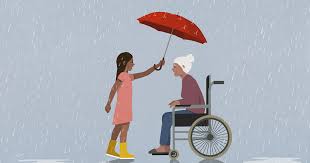
Reaching out should not be seen as charity. It should be seen as a survival skill. It should reflect Love, Empathy and Compassion for others.

 Aging Capriciously
Jan 05, 2026 @ 08:08:28
Your quote is so true John:
“You can be lonely even when you are loved by many people” — Anne Frank.
Loneliness is not simply about being on your own. Perhaps feelings of ‘alienation’ describe it more effectively? It’s concerning to read of the increasing number of young people experiencing it, highlighted during Covid when they missed out on the important peer group stages of socialisation. Some suffered greatly as a result and stark differences are still currently seen in schools due to lack of pre-school socialisation or the negative effects experienced during the teen years. Yes, we were all affected in many ways but little was made of the adverse effects on the young ones, it seemed all about us older folk!
So much in society is about ‘the individual’. We constantly talk of individual rights, individual choices, flexibility to work at home on our own, plus all you have already mentioned. There’s little encouragement to “reach out” to others. In fact the reverse is true. Concentration and words on endless ‘inner work’ on ourselves rather than action on connection, communication and participation leads us to be unable to do the latter in my opinion. All potentially leading to loneliness. What a sad state of affairs!
LikeLike
Jan 05, 2026 @ 09:23:34
Marge, I agree with you. I felt my “solutions” were kinda weak. Do you have any better ideas to add? I certainly think as you note “we spend too much time on inner work” rather than on connection or I guess you could say outer work. The art of friendship if ever there was an art seems to be nonexistent or very rare these days. Interesting that Aristotle wrote reams on friendship but it is little studied in school. Can you imagine anyone getting a degree in friendship? Maybe we should have such a degree. Better than spending money on bombs and bullets. Thanks again for taking the time to comment. Happy New Year John
LikeLiked by 1 person
Jan 05, 2026 @ 11:17:55
Happy New Year John. Let’s hope it is globally too – not a good start though! 🙄🙂
LikeLike
Jan 08, 2026 @ 05:19:40
It’s difficult isn’t it?! I’m drained by the way society generally has become, all about the ‘I and Me’! Lots of words alongside little action. Of course both are important but it’s clear to see that many of us are stuck inside our own echo chambers. This is notable when we see people investing in their specific, self-interested groups, not allowing a difference of opinion or criticism, not being able to discuss, debate, disagree, or to agree to differ, which then results in verbal abuse and blocking. Not being able to negotiate and see ways forward. How can we point fingers at our politicians (yes, I do too!) when we do the same ourselves?!
We need to get out there and interact. Find a middle way. Find something worth fighting for together despite the smaller differences. Mind you, that said, it’s rather scary currently isn’t it? Who wants to be out in the streets observing, let alone peacefully demonstrating, when we could be shot in the face and accused of terrorist activities? 😳
LikeLike
Jan 08, 2026 @ 07:07:02
So true what you say Marjorie. It is not easy living today. Who would have thought that at our advanced age and what we thought was an arrow of progress defining reality that we would have had to face, global warming, world wide Covid epidemic and perhaps worst of all Donald J. Trump and his supporters. It is like living a nightmare. John
LikeLiked by 1 person
Jan 05, 2026 @ 14:11:35
Thanks John for a very thorough article touching on many areas of life today. Today’s lifestyles mostly sadden me and a lot of it is based on aloneness! As you point out it is all too common to see or be in a group where one or more are not participating but may be looking at “social media”, which I think needs rebranding! What the heck is social about looking at a tiny piece of technology when others around you are chatting?
Even in one of my son’s families, which is quite social, it is not uncommon to see at least 1 or 2 cell phones in use and that person get tuned out!
I think the most immediate cause of societal damage has been technology and how most of us have become wired so quickly, maybe even addicted, to the sound of a new ping.
It all makes me think that I really don’t know where our society is headed except for an overall collapse.
LikeLike
Jan 07, 2026 @ 16:14:30
Very sad Wayne. I wish I could be sure that a collapse was not coming but I am ambivalent about it. You touched my funny bone when you said “what is social about looking at a tiny piece of technology.” That is really funny. I don’t think many people think of the ludicrousness of it all. Thanks for your thoughts. John
LikeLike
Jan 06, 2026 @ 07:08:40
An excellent write, sir. It’s something I’ve given a lot of thought to (https://markedwardjabbour.com/2023/12/15/its-way-worse-than-you-think/ ); and I have no solution. Other than – it will take each individual deciding to, yes, look inside themselves, and talk about *that*. Perhaps with a professional.
Additionally, your post got me taking another look at this “Loneliness Epidemic”. We Boomers were, perhaps, the apex of civilization. Three generations ago (1850’s) things were horrific (slavery, etc.). Three generations forward (Gen Z) things (human connection) are looking really bad, too. But in a different way than the mid 19th Century.
Anyway – great post!
LikeLike
Jan 06, 2026 @ 07:53:56
Thanks Mark for the comments. I think too many people bury their heads in the collective ground AKA Media, TV, Cell Phones and choose to ignore reality until it bites them in their butts. John
LikeLiked by 1 person
Jan 08, 2026 @ 11:10:37
I have had to be alone this week due to my spouse’s hospitalization. I am blessed that he did well and will be coming home. There are many people in that hospital that are losing loved ones this week, and they will experience the ultimate loneliness, because there loved ones will not be returning home. So when I say I have not been lonely this week, it’s because I know it is temporary. My daughter stuck her head into my apartment last night and asked if I were lonely? My reply, “ No, and I don’t need any company”. 😊. I know I may sound uncaring, but I have enjoyed this time alone. I am sure I would be feeling differently if this were a permanent situation.
I have experienced losses which have lead to missing a loved one. Is that loneliness? Are there different types of loneliness?
I always enjoy your blogs, they get me thinking! ❤️
LikeLiked by 2 people
Jan 08, 2026 @ 11:43:20
Hi Jeanine. I am not an expert on loneliness but I know there is a difference between being alone and being lonely. That difference makes all the difference in the world to someone feeling lonely. I thought this quote was very touching and telling: “Loneliness is my least favorite thing about life. That thing that I’m most worried about is just being alone without anybody to care for or someone who will care for me.” —Anne Hathaway
LikeLike