By John Persico Jr. (with Metis)
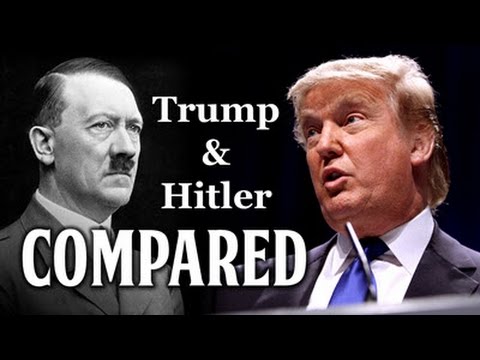
Introduction: Why This Comparison Matters
In recent years, comparisons between Adolf Hitler and Donald J. Trump have become common—and controversial. Some people dismiss these comparisons as irresponsible. Others use them casually as political insults. I have been arguing for this comparison since well before Trump was elected in 2016. I was told that I was taking a biased approach to Trump’s brand.
I believe both approaches miss the point: either to say that Trump is simply another Hitler or to argue that comparisons are unfair. There is a valid comparison, and Americans need to understand it.
The purpose of comparison is not name-calling. It is pattern recognition.
As someone who spent much of his professional life working in quality management, organizational development, and systems improvement, I learned early on that bad outcomes rarely come from one bad person alone. They emerge when systems stop working. Dr. Deming always said, “Put a good person in a bad system and the system will win every time.”
Leadership failures are usually symptoms before they are causes.
This essay explores that idea by comparing Hitler and Trump across two dimensions:
- Political strategy
- Psychological profiles
Not to equate them—but to understand how democracies drift toward dangerous leadership. Today NPR showcased an author who was an expert on how democracies devolve into autocracies. It was chilling listening to her list of steps that move us in that direction. We are marching towards it every day. Trumps call for Nationalizing elections and now the State Department sanitizing any records that disagree with Trump’s lies are just another step.
A Lesson from Consulting: “The Problem Was Never the Worker”
Early in my consulting career, I worked with a manufacturing firm that was experiencing high defect rates and growing customer complaints.
Management insisted the problem was “lazy workers.” They wanted stricter discipline. More supervision. More punishments. More fear. I studied the system. In my younger days, I owed no allegiance to any corporate executive. If I had a God of Leadership, it was Dr. Deming. One of his key principles was “Drive out Fear.” His 14 Points for Management were my Commandments. If you did not listen to what we believed, I would simply walk.
After studying the system, I found
- Broken equipment that was on no logical repair timetable.
- Confusing procedures that had no root in logical process analysis
- Inconsistent training and worse no training.
- Unrealistic production targets. Goals arbitrarily set without any analysis of system capabilities.
- No feedback loops either in the system or between employees and management.
The workers were doing the best they could in a bad system.
When leadership focused only on individual blame, nothing improved. When we fixed the system, performance improved almost immediately.
That lesson stayed with me:
Systems shape behavior.
Politics is no different.
- How Power Is Built: Political Strategy
At one point, I believe that I had read just about every book written on Hitler. During the seventies and eighties, that meant about 20-30 books specifically targeting Hitler’s rise, his personality, his strategies and of course his own book Mein Kamph. Years went by and many more books have been written. I can no longer say I that I have read most books about Hitler. I can still say though that my knowledge of Hitler is not facile and is probably greater than the average person. Let’s start with Hitler’s political strategy.
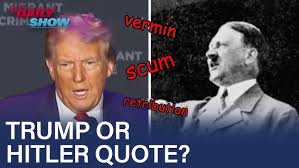
Hitler’s Strategy:
Hitler rose in post–World War I Germany, a nation crushed by:
- Economic collapse
- Social humiliation
- Institutional distrust
- Political fragmentation
He exploited these weaknesses methodically. Much as Trump has, Hitler had an instinct for understanding the Zeitgeist and what bothered the average German citizen. His strategy tapped into these elements. As you read the following five pillars, see if you can relate these to the present Zeitgeist in America:
Hitler’s strategy rested on five pillars:
- Scapegoating enemies
- Centralized propaganda
- Mythic nationalism
- Organized intimidation
- Legal takeover of institutions
He used elections first.
Then he dismantled democracy.
Power became permanent.
Opposition became treason.
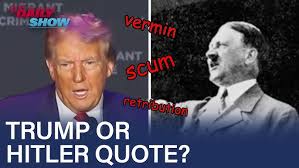
Trump’s Strategy:
Trump emerged in a very different environment: a media-saturated, polarized democracy where outrage travels faster than facts. A nation where income inequality was growing faster than incomes. A country that lost nine million manufacturing jobs to overseas competition added by NAFTA. A country that did little or nothing to help the 9 million displaced workers, except to tell them to go back to college and get a degree.
Trump’s strategy emphasizes:
- “The people vs. the elites” framing – Anybody with a brain or independent thought must be destroyed.
- Constant media dominance: Replacing supposed Left Wing Bias with Right Wing Bias.
- Personal branding: Trumps name on everything. The Brookly Bridge should soon become the Trump Bridge.
- Loyalty over law: Double down, lie, sue, invert the law, ignore the law. Follow your Fuhrer. Trump is by default the New America Fuhrer.
- Delegitimizing oversight: Destroy all responsible government agencies.
- Resort to diversions: Wars, acquiring new territory, attacking immigrants, attacking the Democratic Party, attacking potential opponents with dehumanizing insults. Biden and the Obamas being the most recent examples.
- Performance and Opportunism: Rather than building a disciplined party structure, Trump has built a personality movement. Politics became performance. Trump has become a master of what I will call “Chaos Theater.” Beyond Theater of the Absurd, Trump’s brand builds mayhem with ICE, Goons, Trump Supporters and his legion of Sycophants.
Political Strategy Comparison
|
Feature |
Hitler |
Trump |
|
Media Control |
Total |
Partial |
|
Violence |
Central |
Indirect |
|
Institutions |
Destroyed |
Weakened |
|
Democracy |
Abolished |
Strained |
|
Organization |
Structured |
Personality-based |
Another Consulting Story: When Leadership Became Theater
Years ago, I worked with an organization where the CEO loved dramatic speeches. Every quarterly meeting was a show:
Big promises.
Big blame.
Big applause.
But behind the scenes:
- Data was ignored
- Problems were hidden
- Staff were afraid to speak up
- Long-term planning vanished
Performance declined steadily. I was called in to help restore profits and sales. At my second meeting (after I had done initial interviews with all of senior management), we had a senior management staff meeting. I started the meeting off by a summary of what I had heard from the CEO’s direct reports. In the middle of my presentation, he stopped me. He interrupted with the following comment, “I have heard all of this before. What I have in front of me is a bunch of whiners. If they just do their jobs we would not need you. That is the first strike. The second strike is that one of your Power Point slides misspelled my name.” Rather stunned, I apologized for the name error and went on. This contract did not last long, and the company was later sold.
The CEO thought motivation came from threats, exhortations and slogans. In reality, blind obedience soon replaced competence. Eventually, the organization collapsed. That experience taught me that when leadership becomes theater, systems decay. Leadership must be based on trust and teamwork. Which brings us back to politics.
- Politics as System Performance
From a quality perspective, democratic institutions are like complex production systems.
They require:
- Reliable information:
Thomas Jefferson famously stated that he would prefer “Newspapers without a government to a government without newspapers” Little did Jefferson realize that newspapers would one day become propaganda outlets for those with the most money to spread whatever beliefs they wanted regardless of truth or veracity.
2. Feedback loops that can either build democracy or destroy it:
Two examples of destructive feedback loops are the following:
- Gerrymandering (Reinforcing Loop): Legislators redraw their own district lines, protecting incumbents from opposing voter opinions. This creates a “safe seat,” which allows them to ignore moderate views, leading to more extreme policy, which further divides the electorate and makes the next election even more partisan.
- Media and Polarization (Reinforcing Loop): The decline of local news leads citizens to rely on national media, which tends to focus on partisan conflict. This increased exposure to national conflict drives greater political polarization, increasing demand for more extreme, divisive content.
An example of a positive feedback loop upon which the Founding Fathers built our government are the loops between the Supreme Court, Legislature and Executive. Originally it was thought that this system of checks and balances would keep our democracy strong and stable. Unfortunately, any system can be undermined, and this is happening in the USA for the following reason:
What we call our American System of Checks and Balances works if the “Feedback Signal” is respected. For this loop to remain stabilizing, two things must be true:
Independence: The judges must not be entirely controlled by the branch they are supposed to check.
Enforcement: The other branches must agree to follow the court’s ruling, even when they disagree with it.
If the President or Congress begins to ignore court rulings, the feedback loop breaks, and the system enters a state of “open-loop” instability, which often leads to authoritarianism or systemic collapse. We can see this happening in America today as both the President and ICE and other government agencies now routinely ignore court orders. The undermining of our system is further enhanced by partisanship that elects people who are more loyal to their parties than they are to the American public. Or who are more loyal to the corporation that provide big bucks for their campaigns.
3. Independent auditing and Controls:
Increasingly we see an executive that is attempting to gut any auditing or independent agency that stymies his political policies or ambitions. Trump has taken over the Justice Department with his sycophants and is now going after the Federal Reserve Board.
4. Professional standards:
A wide swath of professional standards are being eroded across the USA as any regulatory agency such OSHA, FFA, FDA, EPA, CDC and even NOA are facing emasculation when their policies conflict with those of Trump and his immediate billionaire supporters.
5. Ethical leadership:
There is nothing I can say here that would be too severe or exaggerated in terms of the leadership provided by Trump. To begin to compare the idea of ethical leadership with Trump’s leadership would take a book. In fact, many books and articles have already been written on the subject.
Those of you in my corner do not need any evidence to know that there is a vacuum of ethics in all branches of government today. Those in the other corner are not going to change their minds regardless of what I say or what Trump does. We have a gap in America today between those who believe in moral ethical leadership and those who believe leadership should be based on self-serving opportunities to make as much money as possible.
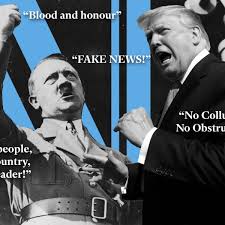
When any of the above five characteristics weaken, showmanship and theater fills the gap.
- Charisma replaces competence.
- Loyalty replaces truth.
- Noise replaces analysis.
This is how dangerous leadership becomes “normal.”
Looking Ahead to Part II
In Part II, we will examine the psychological profiles of Hitler and Trump and ask:
- What kind of personalities thrive in broken systems?
- Why do narcissistic leaders flourish during institutional decline?
- What can citizens do to strengthen democratic quality?
I am asking you to undertake this further study, because understanding systems without understanding psychology is incomplete. And understanding psychology without understanding systems is misleading.
John Adams said:
“And liberty cannot be preserved without a general knowledge among the people, who have a right from the frame of their nature, to knowledge, as their great Creator who does nothing in vain, has given them understandings, and a desire to know—but besides this they have a right, an indisputable, unalienable, indefeasible divine right to that most dreaded, and envied kind of knowledge, I mean of the characters and conduct of their rulers.”
To be continued in Part II

 Aging Capriciously
Feb 08, 2026 @ 18:52:23
John, I hibernated for a while, it seemed to me, while every one who posted knew the answer, none of them put it into action!!
So I have returned!! Trump/Hitler in my view there is no connection, love him or hate him Hitler had a dream. He also did some good things for Germany, not the least was to restore their pride. Yes, he did some very bad things and yes the bad, at least in my view outweighs the good.
So to Trump, I know of not one good thing he has done, it seems he has cheated from day one, dodged military service based on a lie, been bankrupt a number of times, boasts of having abused women, hase reneged on deals with international friends and allies.
But worst of all, he has abused the American people, I am not (I hope) vindictive, but may Donald rot it hell.
LikeLike
Feb 08, 2026 @ 19:08:20
Jon, Can’t say I have any use for trump, so no defense there. However, I don’t put Hitler any better regardless of what he did for the Aryans. You are forgetting what he did to the Jewish people. I hope they both rot in hell. Thanks for comment though. John
LikeLike
Feb 08, 2026 @ 20:33:03
Once again John you have performed yeoman duty here in highlighting these comparisons, thank you. I truly fear your are correct and unless the American people stand up soon it will be too late in my opinion. I fear Canada is in the same situation as many close neighbours to Germany back in the early years before full on warfare.
I have passed this along to a few friends.
LikeLike
Feb 09, 2026 @ 08:18:12
Thanks Wayne, We had a march this weekend in Casa Grande but I had a brief cold and did not attend. I think it is important to put my feet where my mouth is as well. I have attended 3 NO KINGs marches and plan on tryin get to more. Too many people are not taking a stand. I hope to motivate at least a few more. Thanks for sharing my blog. I have had this one on my mind for many years now.
LikeLiked by 1 person
Feb 09, 2026 @ 08:46:57
Thank you, John. You express clearly the similarities, differences of these two megalomaniacs. Without doubt, their approaches have great similarity. If only the wisdom of Deming were more widely understood… Regards, Barry
LikeLike
Feb 09, 2026 @ 11:47:34
Thanks Barry, I learned from Dr. Deming that most of what I learned in Grad School was wrong. He was not always very easy to talk to but he was always brilliant. Thanks for taking the time to comment.
LikeLike
Feb 09, 2026 @ 08:48:44
Great post, John. Thanks.
If only the wisdom of Deming were more widely understood…
LikeLike
Feb 09, 2026 @ 09:35:26
Thanks, John, your experience in quality management is so valuable in this context, I really appreciated your assessment and am looking forward to part 2. Dennis
LikeLike
Feb 09, 2026 @ 11:49:20
Hi Dennis, I could never thank Deming enough for what I learned from him. Much more than I ever learned from my grad studies at the U of M. Thanks for being a reader. Without readers, writers would wither away and die or perhaps just fade away. John
LikeLike
Feb 11, 2026 @ 09:05:54
Excellent blog. I understand more comprehensively the similarities between the two evil ones. Thank you for enlightening me. I have called Trump another Hitler on more occasions than one, now I have some knowledge to support my claim. Thank you John.
LikeLike
Feb 11, 2026 @ 15:40:12
Thanks Jeanine. As they say, knowledge is power.
LikeLike