
There are moments in history when a society is given a preview of its own future—and chooses not to watch carefully.
For me, one of those moments came in the 1990s, when I was working as a Manpower Counselor II in Wisconsin and in Minnesota during the passage and early aftermath of NAFTA. At the time, we were told—confidently, repeatedly—that while some jobs would be lost, the overall benefits would outweigh the costs. Workers, we were assured, would “retrain,” adapt, and move into the new economy.
What actually happened was something quite different.
Estimates vary, but roughly nine million U.S. jobs were displaced as manufacturing and supply chains moved overseas. What followed was not a serious, well-funded national effort to help workers rebuild their economic lives. Instead, what I saw—up close, not from policy papers—was a flood of platitudes and a drought of real support.
- We told people to be resilient.
- We praised self-reliance.
- We offered résumé workshops and motivational language.
What we did not offer, at scale, were tuition support, wage replacement, relocation assistance, or realistic time horizons for retraining. The institutions tasked with helping displaced workers—the U.S. Employment Services across the country—were simply not resourced to do the job they were implicitly blamed for failing to do.
That experience has stayed with me. And today, as we enter the age of artificial intelligence, I feel an uncomfortable sense of déjà vu.
The NAFTA Lesson We Never Learned
The NAFTA era revealed a deep American contradiction.
We celebrate the dignity of work and the virtue of independence, yet we systematically resist policies that provide people with a genuine hand up when economic forces beyond their control upend their livelihoods. Assistance is too often framed as a “handout,” as if the worker failed rather than the system shifting beneath their feet.
But self-reliance is not a personality trait—it is an outcome. It requires conditions: time, income continuity, access to education, and psychological safety during transition. Without those, telling someone to “retrain” is not empowerment; it is abdication.
NAFTA was not just a trade agreement. It was a stress test of our institutional capacity for empathy and foresight. We failed it.
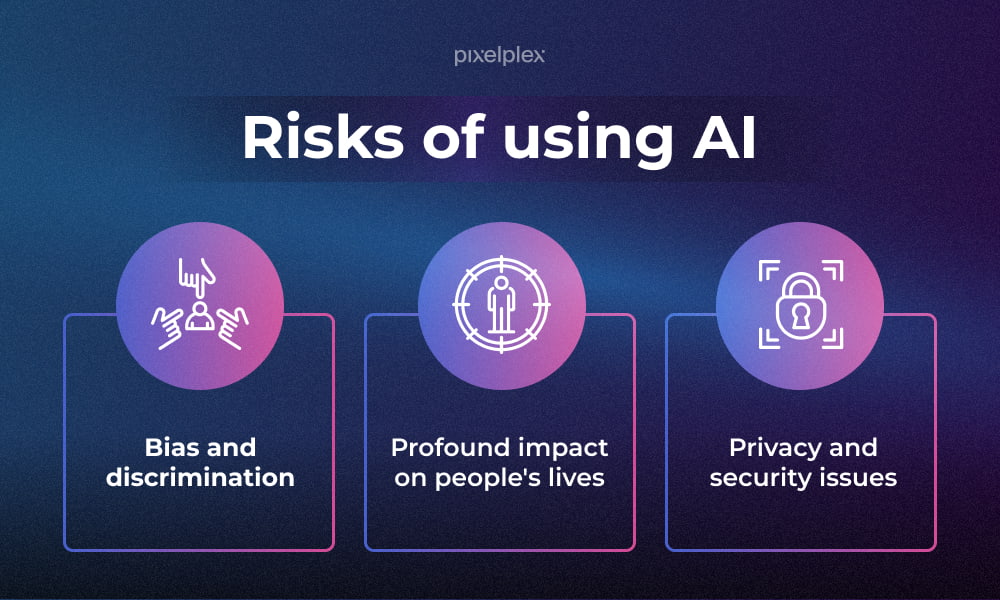
AI: Same Pattern, Faster Clock
Artificial intelligence now presents a similar challenge, but with three critical differences.
First, AI does not primarily replace muscle—it replaces cognition. The jobs at risk are not limited to factory floors but include clerical work, administrative roles, entry-level analysts, paralegals, content creators, and other forms of routine knowledge work.
Second, AI scales instantly. Software does not relocate gradually; it deploys everywhere at once.
Third, the displacement will occur in place. Unlike NAFTA, where jobs moved geographically, AI eliminates roles where they already exist—inside offices, hospitals, law firms, and universities.
The speed of this transition matters. Institutions that struggled to respond over decades after NAFTA will now be asked to respond in years—perhaps months.
And once again, we hear familiar refrains: people will adapt, new jobs will emerge, lifelong learning is the answer. All of these statements may be true in the aggregate. They are insufficient at the human level. I have been guilty of spewing some of these tropes as well.
The Myth of Individual Failure
From a systems perspective, what we are witnessing is not individual failure but institutional short-sightedness.
Our political time horizons are short. Retraining pays off over five to ten years; elections occur every two to four. Productivity gains accrue quickly to firms; worker transitions unfold slowly and messily. The incentives are misaligned.
There is also a powerful moral narrative at work—one that individualizes economic outcomes. If someone fails to land on their feet after displacement, the story quietly shifts from “structural change” to “personal inadequacy.” This narrative is comforting to those untouched by disruption, but corrosive to social trust.
- Edwards Deming warned against judging systems by superficial metrics. Workforce programs today are often evaluated by short-term placement rates, not long-term employability, dignity, or stability. This is classic systems tampering: optimizing appearances while degrading outcomes.
What a Real Hand Up Would Require
We are not short on models. Other countries have done this better, and we have known how to do it ourselves.
A serious response to AI-driven displacement would include:
- Wage insurance during retraining periods
- Tuition and living stipends tied to realistic labor-market demand
- Employer-linked retraining pipelines, not generic skills programs
- Portable benefits decoupled from continuous employment
- Local labor-market intelligence, not national slogans
- Language that preserves dignity rather than implies failure
None of this undermines self-reliance. It enables it. The real question is can we have both guns and butter. During World War II we rationed gasoline and butter. Today a 37 percent increase in the military budget has been proposed. Can our economy handle the help we need to provide jobs and careers and livelihoods to people during what I will call the “GREAT AI TRANSITION” and also continue to fund an already bloated military budget?
The Stakes This Time
The NAFTA displacement largely affected blue-collar workers in specific regions. AI displacement will be broader: mid-career professionals, new graduates, credentialed workers with mortgages, healthcare needs, and identities built around their professions. This is a displacement that will impact the middle class of America.
If we repeat the NAFTA pattern—efficiency first, empathy later—we should not be surprised by rising resentment, political polarization, and distrust of institutions. When economic policy fails, culture wars rush in to fill the vacuum.
I’ve Seen This Before
The most troubling part of the AI conversation is not technological optimism or pessimism. It is historical amnesia.
We have already seen what happens when we disrupt livelihoods without building credible pathways forward. We know the human cost. The question is not whether AI will create jobs in the long run. It may but it may destroy more jobs than it creates and more high paying jobs at that. The evidence on NAFTA can be summed up as follows by my AI assistant Metis:
“NAFTA likely produced small overall economic gains for the U.S., but not a net increase in high-paying jobs for American workers. The benefits were broad and modest; the losses were sharper and fell heavily on particular workers, industries, and towns.” — https://www.usitc.gov/publications/332/ec201406a.pdf
The question is whether we will once again confuse an increase in Gross Domestic Product with an increase in individual human well-being. If you have two people in a room and one has a whole fried chicken to eat and the other person has nothing to eat, on the average you have ½ a chicken per person in the room. This statistic will be small consolation to the person who is starving to death while watching the other person eat a whole chicken by themself.
If we let this happen. If we cannot value human beings more than profits, we will not be able to blame the problem on artificial intelligence.
It will be on us.

 Aging Capriciously
Apr 15, 2026 @ 20:21:30
My opion? Just an ordinary Australoan retiree. This article proves to me that people aee dispensible. Technology will enhance the opportunism rampant already. AI is a dangerous tool in the hands of people who have no care for other people who will be made redundant. It is typical of the way our world is moving, with no regard whatsoever for the people these new technologies adversely effect.
The rule is “GREED REIGNS SUPREME”.
LikeLike
Apr 15, 2026 @ 21:06:24
Maybe we can change the rules Anne. I love the lyrics from the Impossible Dream.
To right the unrightable wrong
To love pure and chaste from afar
To try when your arms are too weary
To reach the unreachable star
This is my quest
To follow that star
No matter how hopeless
No matter how far
To fight for the right
Without question or pause
To be willing to march into hell
For a heavenly cause
LikeLike