The Greatest Story Never Told!

I think this is a great day to write a blog.  Imagine rain and thunder and lightning in Arizona!  I went to a conference on writing skills at Central Arizona College on Thursday with my friend Socorro.  It is amazing how much one can learn about writing no matter how much one thinks they know.  I have been suffering from “writers block” for the past week or perhaps “lack of writing time” and this workshop motivated me to get my butt on the keyboard.  There is no writing without some form of sitting time.  With a day of rain and storms, there is little I can use in the form of an excuse to not write this blog.  Besides, I was inspired by my dead grandfather last night to tell this story.  It is the story that he never told me.  I woke up in the middle of the night thinking about this story and deciding it needed telling.

Now if he never told me this story, you may be wondering how I can write it.  Simple, I will make it up.  See, my grandfather never did tell me any stories, at least none that I remember.  In fact, I don’t remember anyone telling me stories when I grew up.  My father never told stories, my mother never told stories and I never listened to my teachers so I don’t have any stories from them.  And yet today, I seem to always have a story to tell that fits the occasion, whether I am speaking, teaching or writing.  I love stories.  Where do I get my stories?  My stories come from many sources including other people, events, dreams, mistakes, stupidity, idiots and geniuses.  I use stories from: Socrates, Uncle Remus, Aesop, Kant, Einstein, Deming, and of course myself.  I am a neophyte in the art of story-telling and the truly great story tellers are a continuing inspiration to my writings.

So what is the greatest story ever told?  Or perhaps, I should say what is the greatest story “Never told.”  Some of course, would say that the greatest story ever told is a religious one and concerns the coming of their deity or prophet or god.  Jesus Christ is often noted as the “Greatest Story Ever Told” and since there are so many religious or at least spiritual people out there; it would be foolish for me to argue or promote my own “greatest story” against such opinions.  But that does leave the “Greatest Story Never Told” as the one I can talk about. In fact, I think this is the one my Grandfather never told me.

Once upon a time (all good stories start out with this line, as I am sure you know) there was a little girl who lived in Kansas and had a dog named Toto.  “Ooops, sorry, I forgot that story has been taken.  Okay, let’s try this one.”  Once upon a time, there was a little boy named Harry Potter who (Dam, that story has also been taken). “I will start again.” Once upon a time there was a place called the Shire wherein dwelt a group of beings known as hobbits.  “Oh!  You really think Tolkien would mind if I expropriated his stories?”  Darn, this is going to be more difficult than I thought.  All the good stories have been told already.  Are there no stories that are waiting to be told?  Would you settle for how I came to love reading and libaries?  Well, this may not be a great story but I can assure you it has never been put in print before.

The story goes like this:

Once upon a time, there lived a shy introverted fearful little boy (that’s me) who had a big bad mean old father.  My dad stood 6’4” tall and was a former professional boxer.  His rule was law and you did not ever ever ever talked back to my dad.  My father ruled the house with fear and intimidation.  He was very competitive and did not like to be beat at anything but especially cards.  My father’s rule was “Kids should be seen and not heard and most of the time, they shouldn’t be seen.”  It was scary to ask my father for anything, because you never knew how he would respond.  I quickly learned that if I wanted anything, I would ask my mother who would then somehow broach the subject with my dad.  It was a little like going into the lion’s den.  My father might be stormy or tranquil depending on his mood. His mood would depend more on how he did at cards or the horses then on how the weather was doing.   Thus, one day when I was quite young and first starting out in school, I noticed that other kids could do their homework at home because they had encyclopedias.

Since my father seemed to put great store in my grades and how I was doing at school, I naturally reasoned that he would want to provide me with resources to insure my success.  Of course, knowing my father, this was not a sure assumption.  Thus, I made the pitch to my mom and asked her if I could get a set of encyclopedias to help me with my schoolwork.  My mom thought this was a reasonable, if not expensive request and agreed to ask my father about the proposition.  His reply was delivered to me directly. It was not hard for him to figure out who made the request, since I was the oldest child and my mother never read.  I still remember his response.  It went like this:  “What the hell do you think libraries are for anyway.  Get off your lazy butt and go get a library card.”  Thinking this was prudent advice to follow, I trudged down to the local library.  When I entered the library, I remember it as perhaps the greatest moment of my entire life.  Books on shelves, books on the floor, books hanging from the ceilings, books on display on walls, more books than I had ever thought existed.

A kindly old librarian helped me to get a library card (back then, you did not need a passport, driver’s license, patriot disclosure form AND birth certificate to get a card).  I was like a kid in a candy store. I could not hold all the books I wanted to take home. Finally, I worked my way around to the encyclopedias.  I could not believe it, there before my eyes were the World Book and OH MY GOD,! the “Encyclopedia Britannica.”  The Britannica was the Rolls Royce and Rolex of encyclopedias all rolled up in 20 or so volumes.  It was well known that it contained all the knowledge known to mankind from the Pharaohs on up to President Dwight D. Eisenhower, with monthly updates for new wisdom.  I could not have been happier if I had died and gone to paradise.  Unfortunately, you could not take reference materials home.  Nevertheless, my love affair with libraries started at this moment.

I love libraries more than football fields, baseball fields, basketball courts or hockey stadiums. I would give up all the sports in the world to support one library.  I cannot think of a more useful development for humans than the establishment of a library. I revile the Spanish for destroying the libraries of the Incas and I would hold out capital punishment solely for anyone desecrating a library.  If I were president, the highest priority on my budget would be for libraries. I would cut military and defense spending by ½ tomorrow and allocate the money to libraries. I would include foreign aide to build libraries in every country in the world that lacks the funds to do so.

Okay, I digress. So you know I love libraries, books and am a very curious person.  There is more to the story though.  You may or may not remember that there were three levels of encyclopedias:  Very Expensive, Britannica; Expensive, World Book and Cheap, Funk and Wagnall.  My mom knew I could not take reference books home and she still felt bad for me.  She decided on her own that she would somehow get a set of encyclopedias for me.  You may remember the old S&H Green Stamps?  Well, I gather our local grocery store had some sort of promotion wherein for X amount of money spent you received some stamps. My mother assiduously saved these stamps and one by one using the stamps saved she collected an entire set of Funk and Wagnall encyclopedias for me.  I never learned how my father felt about this contribution but I will never forget how grateful I was (even though I still longed for a Britannica) for my mother’s compassion and thoughtfulness for my needs.     

End of Story.

So that Dear Readers is the “Story my Grandfather Never Told Me” and perhaps for me, it is the “Greatest Story Never Told.” I wish I could say that I always treated my mom with the respect she deserved or that I did not often take out my latent hostility towards my father on her but that would of course be a lie.  My father died at the age of 60 and my mom died at the age of 67.  I long ago realized that they had their own demons to deal with and if perhaps they were not always the perfect parents, I sincerely believe they both tried their best and only wanted the best for me.  Another story never told.

Ok, time for questions:

Do you have a library card? Are you a Friend of the Library?  Do you use your local library?  Do you enjoy reading? If not, why not?  Do you help insure that your town has enough funds to support the library? Would you rather go to a football game then your local library?  Have you ever been to a library?  If not, when will you go for a visit?

Life is just beginning.

Beyond Death and Dying

“The days of our lives, for all of us, are numbered…We know that. And yes, there are certainly times when we aren’t able to muster as much strength and patience as we would like. It’s called being human. But I have found that in the simple act of living with hope, and in the daily effort to have a positive impact in the world, the days I do have are made all the more meaningful and precious. And for that I am grateful.”
Elizabeth Edwards   

I have noticed a curious phenomenon.  As I get older and the people I know get older (which is most of them), there seems to be more concern about death and dying.  I observe more people talking about their heart conditions, ailments, cancer or whatever ills afflict them. Some of these people could go on forever talking about doctors, appointments, medical exams, medical procedures, treatment regimens, hospital care, nursing care, palliative care, hospital food.  Perhaps I am in denial, but five minutes is enough for me to hear about death and dying.  I am sorry, I know you are dying but so are we all.  Do I really have to hear about every stage of your progress towards your end journey?  Is there nothing else to talk about?  What about living?

Death seems to be the most common fascination of our news media as well.  Each day brings a fresh story of some new death, murder, massacre, slaughter or other carnage.  What would it take to produce more stories of people who are really living?  Of course, we do occasionally get snippets of such people.  One of the most inspirational stories of the past year concerned the young Pakistani girl Malala Yousafzai who was shot by the Taliban. 

Malala was a 15-year-old who was shot at point-blank range in October 2012 after becoming a symbol of resistance to the Taliban’s efforts to deny women education and other rights. The attack on Malala, which also wounded two of her classmates prompted international revulsion and condemnation, and helped galvanize supporters of women’s education worldwide.  This is a story worth telling and it is a story about defying death and dying.  Threatened by the Taliban with death, Malala refused to be silent.  She put her life on the line for her beliefs.  Death was not a fascination with Malala but an acceptable risk for living her life and not being afraid to pursue her beliefs.

“When we talk about sin, we need to understand what sin is. Sin is not God says ‘you can’t do this’ because He wants to take something away from you. He says: “If you do this, it will be death. If you do this, it will be life.” And then He says: “Please, choose life, so that you can live. I’ve made you, I know how you work. I’ve made this whole Earth, I know how it works.  Please, choose life.”
― Lacey Mosley

I understand that each moment brings me closer to my death but more importantly each moment is another moment of living.  My brother-in-law suggested that the only reason people retire in Arizona is to die.  I was not offended by his remark because in some ways it seemed to be true.  I have met too many people down here who seem to be somewhat patiently and stoically marking time until the Grim Reaper comes for the harvest.  Some of them seem to be having fun while waiting and others seem to be morbid about the wait.  I often meet people who say “I wish I had something to do” or “There is nothing to do down here.”  Nothing to do except wait until they die. 

To have a sense of fatality about life is perhaps not a bad thing.  Before I received my prostate cancer diagnosis, I was continually battling (at least mentally) such comments as “You are so healthy, you will live to be a hundred.”  “You are a runner, you are so healthy.”  I would often comment on the numbers of runners I knew who dropped dead of a heart attack.  I hope it was not connected to their runningJ.  I am sure that I offend some people when I am not as sympathetic to death and dying as they are.  For instance, I may hear a comment like: “My sister-in-law who is 85 years old is dying of some incurable disease.”  Well, I am very sorry, but we all are going to die someday and 85 is not a bad age to live to.  I feel more sympathy for the unexpected deaths and premature deaths that afflict families. Young people who die before their “allotted” age.  On the other hand, what are any of us allotted? 

Instead of focusing on dying, we should be more concerned about what our living means to the world.  What are our lives writing in the sand each day?  What footsteps do we take?  What good are we doing today?  What kindness are we bestowing? What value are we creating for others?  God Forbid, are our golf scores and Pickleball matches going to be our legacy to life?

“I’ve reached the point where I hardly care whether I live or die. The world will keep on turning without me; I can’t do anything to change events anyway.”
Anne Frank

I have been struck by the emphasis on the goal of retiring that many people placed when I was growing up.  It once seemed to be the sole reason for working.  “When I retire” was a mantra and a rationale for putting in 30 years at a job one hated.  “Someday, I will sit on the dock and fish every day.”  Ironically now, many of the “retired’ people I know are busier than ever with schedules chocked full of activities.  But what is the value of a day full of activities?  Echoing my brother-in-law, are we simply filling up our days until we die?  Is there any value in living that does not include purpose as well as passion?  Is it enough purpose to golf or fish every day? 

I think the reality is that most of us are not taught in schools or even in our homes to pursue a life of passion and purpose.  If we were taught to pursue a life of passion, we would go into work and careers that we loved without concern about “making a living.”  We would follow our hearts more and our minds less.  If we pursued purpose more and money less, we would all be driven to find work and goals that helped make the world a better place for future generations. We would be more concerned about finding ways to help the poor and the less advantaged.  We would be less worried about what we need and more worried about what others need.  The world would be less greedy and less self-centered. 

Living is to worry about others.  Dying is to worry about your-self.  What can I do to make a difference today is a question that helps keep the focus on giving back rather than receiving. 

“I have showed you all things, how that so laboring you ought to support the weak, and to remember the words of the Lord Jesus, how he said, It is more blessed to give than to receive.”   –Acts 20:35 (King James Version):

We have all heard the quote that “Today is the first day of the rest of our lives” but I rather think now that “Life is just beginning.”   When I was young, I did not really know what life was.  That is not to say that I know what it is now either. However, I am much more content with life and I am able to live more in the present.  Living in the present was never my strong suit. I think the young do not worry about death and I know that when I was young, I had an almost suicidal attitude towards life. Like I was challenging it to try and kill me.  A friend of mine used to say he had “no regrets” and when he died, it was the theme of his funeral.  Some might say he died too young but he reminded them as he was dying that he “had no regrets.”  I doubt that anyone could make such a claim unless they lived their life with passion and purpose. 

To conclude then, don’t die, live.  Dying will take care of itself. It is the living that needs care. While, I am not going to jump off any high cliffs in the near future and I certainly am more cautious about some things, too many cautions can be live threatening activities.  What is life for if not growing and growing means taking risks?  When you stop growing, you stop living.  When you stop living, you have only dying to look forward to.

“All God does is watch us and kill us when we get boring. We must never, ever be boring.”
Chuck Palahniuk    

Ok, time for questions:

What does living mean to you?  What fears do you have of death?  Why?  Are you really living or are you just marking time?  Do you have passion and purpose in your life?  Do you think it’s too late? What would it take for you to live a life of passion and purpose?  What fears stop you from really living?  Are you banishing fears as you get older or are you accumulating more fears? What good do they do you?

Life is just beginning.


Fifty Shades of Red

Dam, just when I have got over my fixation with Porn and what do they do, they publish a series of “soft” (What is soft? As in flaccid?) porn novels that are now being made into a series of movies and I would presume a TV series, comic books and eventually bubble gum cards.  Women all over America are running into “Adult” shops to buy whips, handcuffs and blindfolds. 

By the way, here is a disclaimer, if you can’t take “Hard Core Porn” stop reading now.  I can’t stand wishy-washy watered down forays into anything. If you are going to go for something, go all the way.  Life without Passion is Unforgiveable!  Stole that line from Sean Combs!  So why bottle it up with shades of gray when you can have pure unadulterated lust.  Let out your real Marquis De Sade or your real Leopold von Sacher-Masoch, depending on what turns you on. These names of course are the two historical figures from which the terms sadist and masochist derive.  A sadist and masochist are complimentary lovers.  Somewhat like the Yin and Yang concept.  One loves to inflict pain and the other loves to receive pain. 

Just when I thought Americans could not plumb any further depths of sexuality and lo and behold, out comes a book that turns every woman who reads it a-quivering with lust and passion.  Furthermore, whereas Lady Chatterley’s Lover was “Banned” in Boston, there has been no discernible effort to ban “Fifty Shades of Grey.” What is this sign of the times telling us?  Are we getting more permissive?  Are some women getting to realize that maybe they are missing out on something?  Is it a sign that the aging “boomers” never really were as sexually liberated as they thought they were?  Or is it a symptom of frustration with the Right Wing Puritanical Evangelism that has saturated this country over the last few years?  Will we soon see readers of Fifty Shades of Grey streaking through the streets wearing nothing but handcuffs and blindfolds?

Sex usually requires a partner and therein lays one problem with this phenomenon.  Assuming that this “Grey” frenzy is mostly attacking older women, it is unlikely to find fertile ground among their aging mates.  I like to think that for many of the “real” men I know our porn has always been Red for passion. A “real” man dishes it out hard and fast.  But let’s be honest here. In terms of baby boom “real” men, hard is not what it used to be and fast means we are probably asleep by 9:30 PM or else too tired to pop or even think of Red passion.  Of course, there is Viagra and assorted “hardeners” but most of us have learned that no matter what the drug is there are always side effects.  Not to mention, that many of the positions in the Kama Sutra are beyond wishful thinking for either us or our spouses.  The last time I tried one exotic position, I almost had to call 911.  Even years of Yoga practice did not seem to help.  The spirit is willing but the flesh is now beyond weak.  Marathon sex sessions are a thing of the past.  Actually, I have never had a “marathon” sex session.  This suggests a title for my next book which could be marketed to all of the “Grey” readers.  “How to Have Marathon S&M sessions without Dying of a Heart Attack or Dislocating Your Hip Socket.”  

Perhaps, “Fifty Shades of Grey” is more of a fantasy for the young. They have the stamina, they have the energy, they have seen and absorbed more information about sex than the previous 20 generations combined and they are still capable of contortions that would disable most elderly.

Nevertheless, I am still left wondering why so many people are always fantasying about sex.  Our ads and commercials routinely sell products and services by depicting women as sex objects.  Our TV shows blare innuendoes and double-entendres about sex faster than a politician can lie. Movies are even more unbelievable.  What used to pass for “Hard” core porn a few years ago now is close to carrying a “Family Fare” rating.  Porn is perhaps the biggest seller on the Internet with more sites dedicated to porn than even t-shirts. 

To return to my original question, why are we so engrossed in reading, watching, imagining and fantasying about sex?  Are our love lives so impoverished that “Fifty Shades of Grey” is a decent substitute? Or are we so afraid of the real thing that we would rather watch others do it than do it ourselves?  How many people would engage in S&M with their partner? 

I think we are a nation of voyeurs and hypocrites. Fantasy lives of sex would be okay if we not so contradictory in dealing with the reality of sex.  We condemn unbridled sexuality but secretly watch it in a myriad of safe guises.  We want to imagine “doing” it but we would never really do it. The reality of sex denigrates and condemns those who really do it or who make a living doing what we only fantasize about doing. Porn stars are considered second rate actors in Hollywood where they are mistreated and abused by the porn video industry.  Prostitutes and escorts are illegal in most states despite their ubiquitousness.  Strip-tease dancers are banned to shady “adult” clubs where they can be watched by people not wanting to be seen in public places observing such displays.  Millions of people spend a few billion dollars a year on Internet Porn secretly watching others do it and wishing it were them.  These same voyeurs would never admit to their spouses or lovers that they were engaging in Internet porn, hiring an escort or watching a strip-tease dancer. 

We have a society wherein the “Good Girl” “Bad Girl” paradigm still holds sway.  The good girl you marry and the bad girl you “—-.”  Now we see those “good girls” reading “Grey” and fantasying about what it would be like to be a “bad” girl.  Renowned relationship and psychology expert Lisa Firestone echoes my questions with her comment about the “Grey Phenomenon.” She says:  

“My concern is whether the popularity of a text like 50 Shades of Grey reflects a more pressing psychological matter regarding sexuality. Does it really reconnect readers with their desire to be physically intimate? Or does it merely point out how easy it can be for us to lose touch with our own sexuality? How much are we drawn to real romance, connection, passion, and affection with a partner? And how much are we drawn to fantasy? Are our actions moving us toward or away from having a close and fulfilling sexual relationship?”

Nathan Bransford also answers my question as follows:   

“Why now? Maybe as we sprint toward chartering new gender and relationship dynamics with more sensitive guys and greater equality there’s some appetite to escape into a story with a less complicated and familiar throwback to a dominant man and submissive woman. Maybe we’ve become such a sexually open society people were ready for the needle of mainstream edginess to be moved a little farther over.  Maybe Christian Grey and his dorkily named helicopter are just that hot.”

I thought I would conclude this blog with the above two comments that address the questions I raised in respect to the mass popularity of “Fifty Shades of Grey.”  Being an aspiring author, I can only admit to wishing I had written the tome.  Being an aging man, I bought my wife several copies of each edition of the series, just to make sure she would read them. I would love to report that my sex life has improved dramatically since she started reading the series, but I cannot tell a lie.  At my age, truth becomes a very valued commodity.  Besides, Karen (my spouse) tells me it is more about romance and less about S&M.  She explains that if I were more romantic, ate less garlic and did not fall asleep so fast, our love life would improve dramatically. 🙂  I am sorry though, I am addicted to Garlic and Sleep. Maybe if I could just get a Sex Addiction going or perhaps I could dress up as Christian Grey and sneak into my bedroom some night with handcuffs and whips?  Would she still notice my Garlic breath? 

Ok, time for questions. 

How’s your sex life?  Did you read “Fifty Shades of Grey?”  Do you think we are too obsessed with sex?  Why so many Romance novels?  Why so much sex on TV and in the Movies? Are we just a nation of “voyeurs?”  Are we really Puritans at heart?  What do you need to do to have more fun in your sex life?  Are you adventurous?  Would you have sex in an up elevator or a down elevator?  What limits your sexual nature?  Are you afraid of what the neighbors might think? 

Life is just beginning.


What is wrong with education? Part 2

ul_protestIn Part 1 of “What is wrong with education?”, I described some of my history, experiences and beliefs about the American Educational System.  I think most of my ideas are probably unconventional and in part that may be because I have been an outsider to the system.  Dr. Deming used to say that “Change comes from the outside by invitation only.”  I have never been asked to help bring change to our educational system and in fact many fellow educators are rather turned off when I tell them that I would close all schools in this country and turn them into 24 hour community centers or perhaps libraries.  I have never been one for understatement and Karen keeps telling me that my hyperbole has the effect of killing my message.  My problem is I mean it.  Schools are dead and dying only they do not know it.

Marshall McLuhan knew this was true because the times have changed and both the Industrial Design of our educational system and the density of information transfer that can happen inside a school are now fundamental impediments to learning and education.  For the past 40 years educational studies (The Goodlad Study, Nation at Risk, Fitting the Pieces) have continually shown that we need to make major changes in our school systems.  Numerous studies point to the decline in standardized test scores of American students relative to students in other countries. I have been in and out of schools for the last 40 years (from kindergartens to university classes) and the only thing you will find changed in most schools is the technology.  You will probably find computers, projectors and maybe the use of IPads or Smart Phones in some classes.  In many schools, you will also find an increased emphasis of sports for the elite athletes and those that can afford to pay for athletics and a decreased emphasis on Physical Education for the majority of students.

So-called education experts, politicians and the ubiquitous “run it like a business advocates” all push for more “industrial era solutions” like

  • Higher pay
  • Teacher testing
  • Pay for performance
  • Stricter teacher selection criteria
  • Getting rid of tenure
  • More money for schools

Unfortunately, what made for success in the old paradigm cannot make success in the new paradigm.  The new paradigm is gradually emerging as our schools collapse from within, our students drop out at alarming rates, the half-life of curriculum makes for obsolescence even before most students graduate and most destructive of all is the current cost of attending, maintaining and supporting schools today.  Consider the irony, that most kids who are home schooled do better on standardized tests than kids in either public or private schools.  At a home school, you often do not have any of the following:

  • A certified and licensed teacher
  • Large laboratories or extensive facilities
  • Bonus pay
  • Pay for Performance
  • Tenure

And consider what it costs for Home Schools to achieve better than average results. The following facts about Home Schooling are from Investopedia, not exactly your usual biased pronouncements from school administrators:

There’s no doubt that research speaks very kindly of homeschooling. Not only is it cheap compared to other education options, but the results are generally better. Most parents who homeschool spend less than $600 per year compared to the $10,000 average spent per pupil by public school systems. However, parents who homeschool are still paying a portion of that $10,000 expense. Surprisingly, spending such a low amount on a child’s education produces impressive results. One study found that the average homeschooled student outperformed the average public school student by roughly 30 percentile points.

There is an excellent online article called “Eight Reasons Home Schooling is Superior to Public Education”.  Some reasons given for its success may be open to criticism but they will surprise you:

  1. Free thinking is allowed and encouraged
  2. Focus is on education
  3. Freedom from Pop Influences

One would think that given the performance of home schooling that anyone in the traditional school paradigm would have some serious doubts about the effectiveness of the current educational system. Instead teachers, unions, and administrators all rally around the flag and continue to either resist change or support panaceas that offer no real change to the present educational system.  The Teacher of the Year is heralded in every school district and local press as the solution to the problems that are seen as “individual centered” rather than system centered. Thus, if only we had better teachers or more caring teachers or more motivated teacher or smarter teachers than everything would be okay.  No it would not be okay.  And unfortunately, neither President Obama’s agenda for change or his new Education Czar have any real insights into the changes that are needed in American schools.

A recent article in the Economist Magazine was titled: Higher education: Not what it used to be: American universities represent declining value for money to their students. The problem with American education goes all the way from grade school on up to the university level.  There is hardly any part of the American Education system that should be retained or that could be said to be useful to our country.  We are falling behind the rest of the world, because they are catching up.  Ironically, they are simply imitating a system that is failing in this country but with some modifications has allowed other countries to gain parity with the U.S.  In my research and travels, I have found no reason to think that we should adopt a system used in Germany, China or Japan.  They are more disciplined in their application of the U.S. Model, but it is no more effective in these countries at creating a New Paradigm for a new millennium of education than it has been or will be in this country.

You may be wondering “Well, what is the New Paradigm?”  In a nutshell, the solution is to design a new educational system from the ground up.  Some design factors for such a system must include the following:

  • Eliminate school districts, school boards and 90 percent of all current school administration.
  • Eliminate standardized school curriculums and create customized educational design programs for students based on need and interests.  We don’t need a factory to produce learning for a limited time. We need a system that will produce learning and education for a lifetime not a lockstep grade by grade progression system that ends with a MBA.
  • Develop Schools of Excellence with specific discipline foci that will be located where need and population are greatest. Thus, Minnesota might have 10-15 Art Schools in the state, 30-40 Math Schools, 10 Music Schools, 20 Vocational Education Schools and 30-40 writing schools. Students would attend these schools voluntarily and only for as long as indicated by their customized curriculum.  Some students would go to three or four of these Schools of Excellence and others might just attend one.
  • Hire experts as Teacher/Facilitators. Emphasis should be on critical thinking, hands on learning and blending theory with practice.  Teachers should not need “credentials” if they can demonstrate competence in the subject being recruited for.
  • Eliminate standardized test programs.  All these tests do is encourage cheating by teachers and students.
  • Eliminate generic diplomas and degree requirements.  No longer should anyone have to go to school for 16 years and college for 4 years to get the training they need for gainful employment.
  • Create a standardized education tax for the U.S. so that students regardless of where they live would have the same funds available for education.
  • Provide parents and students educational vouchers to use at the school of their choice or to support the accomplishment of their child’s educational curriculum.
  • Abolish seniority and tenure systems for all educators.  Schools should be allowed to hire who they choose, when they choose.  Schools should be “Employment at Will.”
  • Schools would have to publish yearly “transparency” data including dropout rates, completion rates, grade averages and where relevant hiring and placement rates.  All schools would have a financial statement available to the public and a standardized business plan or education plan. Such a plan would show need, customers and how customers were going to be served.
  • All schools would be “education at will.”  Schools would be free to terminate students at will and students would be free to leave at will.

Chris Hedges noted author, journalist and Pulitzer Prize winner says this about education in the US today:

“We’ve bought into the idea that education is about training and “success”, defined monetarily, rather than learning to think critically and to challenge. We should not forget that the true purpose of education is to make minds, not careers. A culture that does not grasp the vital interplay between morality and power, which mistakes management techniques for wisdom, which fails to understand that the measure of a civilization is its compassion, not its speed or ability to consume, condemns itself to death.”  — (Empire of Illusion, 2007)

John Gatto, who was New York City teacher of the year in 1989, 1990 and 1991 has the following perspective on education:

“I’ve noticed a fascinating phenomenon in my thirty years of teaching: schools and schooling are increasingly irrelevant to the great enterprises of the planet. No one believes anymore that scientists are trained in science classes or politicians in civics classes or poets in English classes. The truth is that schools don’t really teach anything except how to obey orders. This is a great mystery to me because thousands of humane, caring people work in schools as teachers and aides and administrators, but the abstract logic of the institution overwhelms their individual contributions. Although teachers do care and do work very, very hard, the institution is psychopathic — it has no conscience. It rings a bell and the young man in the middle of writing a poem must close his notebook and move to a different cell where he must memorize that humans and monkeys derive from a common ancestor.” – (Dumbing Us Down: The Hidden Curriculum of Compulsory Education)

Andrew Hacker, Professor Emeritus at Queens College New York with over 40 years’ experience in Higher Education believes that:

College is not worth the cost. Our system of higher education is broken…Our principal premise is that higher education has lost track of its original and enduring purpose: to challenge the minds and imaginations of this nation’s young people, to expand their understanding of the world, and thus of themselves. — (Higher Education?: How Colleges Are Wasting Our Money and Failing Our Kids—and What We Can Do About It)

I have included some of the above quotes to show that I am not alone in my belief that “lower” and “higher” education in the USA today are outmoded, defunct, obsolete, wasteful and counter-productive.  Higher educators commonly blame “Lower” educators for the problems they inherit at the “Higher level” while “Lower” educators blame parents, funding, administrators and students.  “Kids today are lazy, do not read, watch too much TV, play too many video games, only care about making money and feel entitled to everything.”  The “Last Great Generation” is fond of knocking the “latest” generation and calling them the “Entitlement Generation.”  The problems with schools could all be solved if we did away with students, tenure, parents, administrators, unions and teachers. Colleges would be a lot better off if they only had “good” students who really wanted to get an education.  These and other shibboleths continue to obscure the real problem which is the SystemDr. Deming noted that:

“The Appreciation of a system involves understanding how interactions (i.e., feedback) between the elements of a system can result in internal restrictions that force the system to behave as a single organism that automatically seeks a steady state. It is this steady state that determines the output of the system rather than the individual elements. Thus it is the structure of the organization rather than the employees, alone, which holds the key to improving the quality of output.” –(The New Economics for Industry, Government, Education, second edition)

My list of changes needed would only scratch the surface of providing a New Paradigm for education in the new millennium.  I am suggesting that we strongly need to rethink every aspect of the delivery and provision of education in America today. Without making substantive changes in how we educate all of our population, not just children but adults as well, we will never regain the greatness that America had during the 20th Century.

Ok, time for questions. 

Did you think school was fun when you went?  Do you think school could be fun?  What if we combined Play, Education and Work into the functions of a school? What do you think it would be like for students?  Do you have any idea of what Higher Education costs today?  Do you know what the average salary of an NCAA Football Coach is?  Click on the link if you want to find out!  Do you think teachers are paid too much?  Do you think American schools are the best in the world?  How do you explain the high ratings for Harvard?  Should we allow students to leave high school to perform community service or join the military?  What would you do to FIX education?

Life is just beginning.

Are We Living in More Dangerous Times? Part 2

In my previous blog, I asked the question are we living in more dangerous times.  Now I hope you have read my prior blog.  If not, now is the time to go back and read it.  This issue will make a lot more sense if you have read the first part of this blog.  Everywhere you go it seems that people are concerned about the threat of violence and mayhem.  The newspapers provide daily grist for the mill. Each day brings a never ending series of sordid tales of rape, debauchery and brutality to our fellow citizens.  Who do we blame for this? Should we blame anyone or is it all in our imagination?

Let’s look at some statistics which while they are admittedly broad brush strokes (i.e. not your local town data) will still tell us something about the state of crime in our world.  The first statistic is the murder rate.  Now since the population has grown a great deal each year we need to look at the per capital murder rate, that is the rate adjusted for population growth.

REGIONAL MURDER RATES, 2001 – 2011


MURDER RATES PER 100,000 PEOPLE

REGION

2011

2010

2009

2008

2007

2006

2005

2004

2003

2002

2001

EXECUTIONS
(As of 1/17/13)
South 5.5 5.6 6.1 6.6 7.0 6.8 6.6 6.6 6.9 6.8 6.7 1080
Midwest 4.5 4.4 4.6 4.8 4.9 5.0 4.9 4.7 4.9 5.1 5.3 155
West 4.2 4.2 4.6 5.0 5.3 5.6 5.8 5.7 5.7 5.7 5.5 82
Northeast 3.9 4.2 3.8 4.2 4.1 4.5 4.4 4.2 4.2 4.1 4.2 4
NATIONAL RATE 4.7 4.8 5.0 5.4 5.6 5.7 5.6 5.5 5.7 5.6 5.6

 The above chart from http://www.deathpenaltyinfo.org/murder-rates-nationally-and-state#nat1970  shows us several facts. Sorry, I could not get the entire chart in this blog. The link above will take you to the actual chart which includes some additional data not able to be seen on the chart above.  Of primary importance is the number of executions for murder by each region.

  1. The murder rate has actually declined from 2001 until 2011.
  2. Executions do not seem to have any impact on homicide rates.  In fact, the reverse looks like it could be supported in that states with fewer executions have a lower homicide rate.
  3. The Northeast looks quite a bit safer than the South.

If you are interested in state and city data, you will find it on this same website.

The next statistics to look at would be the rates for burglary or home break-ins, assaults, car thefts, rapes and violent crime. One could argue, that any one of these statistic is much more likely to leave us feeling nervous and insecure than the murder rate. We all fear the thought of some deviates breaking into our house, assaulting, attacking or raping us.

The following chart is too small to read but if you click on it, you will enlarge it and be able to see the figures more clearly.

Image

Looking at the above chart:  (http://www.fbi.gov/stats-services/crimestats)  you can see that from 1992 through 2011, the following happened despite the increase in population:

  1. Violent crime rate dropped from 757.1 per hundred thousand to 386.3
  2. Rape rate dropped from 42.8 per hundred thousand to 26.8
  3. Burglary rate dropped from 1,168 per hundred thousand to 702.2
  4. Vehicle theft rate dropped from 631.6 per hundred thousand to 229.6

If you are interested in regional, city or state data, you can find it at this website or various other websites such as for Arizona:  http://www.azdatapages.com/datacenter/crime/fbi-ucr-crimes.html

Now granted, there are wide spread differences between cities and between states but the overall crime stats are such that at least nationally, most people should feel much safer and more secure.  This is obviously not the case.  The following data was taken from a Poll by CBS in 2009.

Do Americans feel safer now than before 9/11? For many, the answer is no, according to a CBS News/New York Times poll.

Fifty-four percent of Americans say they generally feel safe, but 46 percent say they feel somewhat uneasy or in danger.

Compared with five years ago, 39 percent of Americans say they feel less safe now, compared with only 14 percent who say they feel safer. Forty-six percent say they feel the same.

More also say the threat of terrorism has grown since 9/11 than said so a year ago. Forty-one percent say the threat has increased since the attacks, an 11 percent jump from last year. Just 14 percent say the threat has decreased, while 43 percent say the threat has not changed.

How safe do you feel compared to five years ago?

More Safe
14%
Less Safe
39%
Same
46%

I could not find more recent data for this than 2009, but my guess would be that there has been a continued decline in how safe people feel.  Let us summarize the key points so far.

  1. People feel less safe in the USA than they did years before.
  2. The behavior of most people seems to slide towards more fear of being attacked and the need arm themselves or take other preventative measures: e.g., guard dogs, security systems, gated communities, pistols, concealed weapons, assault rifles, neighborhood watch groups, etc.
  3. The Crime Stats show we are actually safer than anytime in the past 20 years.

Thus, the simple conclusion should be that threat of crime is a growing perception but not a growing fact.  What is the answer for this paradox?  Why are we more afraid, when we should be less afraid? Why are we carrying more weapons, when we do not need to?  Why are we barring our gates, alarming our homes and spending huge amounts on safety, not to mention curtailing our lifestyles, when in reality we should be dancing in the streets?  Perhaps, some areas are more dangerous, some cities have higher crime and indeed some areas should be avoided by the prudent, but on the whole, we are a safer and less violent country than years ago.  So WHY the FEAR?  Is it simply a sign of an aging population or is it the media and news obsession with crime that creates a distorted image in our minds and paralyzes some of us with a fear of becoming the next victim or headline?  Maybe you can send me your thoughts on this question?

Ok, time for questions.

What is behind the increase in fear in our society?  What can we do about it? What do you do in your life to help overcome the fear that seems to surround us? What changes do you think we need to make in this country to reduce the fear and violence in our society?

Life is just beginning.

PS:

I just had to add this PS. After writing this article I was driving to a meeting and heard the following news report on NPR.  Apparently a family making maple syrup in their home was raided when neighbors reported the funny smells and called the police to report the house as a suspected meth lab.  The full report can be found at:  http://www.informationliberation.com/index.php/a/?id=42835

The mother living at the home reportedly gave the SWOT team each a bottle of maple syrup to take home. She then told the reporters that she wanted to invite any of her neighbors to a Pancake Dinner at her home where they could try her maple syrup.

This TRUE story illustrates the “paranoia’ that seems to plague our country today.  No one is safe from “imagining” a fantasy of criminals just waiting to ravage our homes and neighborhood.  Add the “Illegal” immigrants to this potpourri and you have a volatile mixture of fear, xenophobia and hysteria. “Hold it, I see a bunch of young Arab kids grouped together across the street, I need to call Homeland Security, they could be plotting another Arab terrorist attack.”

Aside

Are We Living in More Dangerous Times? Why Are So Many People Afraid?

How many times have you thought about going out someplace but decided that it was not worth the risk?  How many people do you know that carry guns, Mace, or other concealed weapons?  Years ago, we did not have gated communities, neighborhood watch groups, child alert systems and an endless barrage of news about school shootings and “random acts of violence.”  Children could walk to school by themselves.  Kids actually went Trick or Treating on Halloween and were not afraid to eat unwrapped goodies.  Today, the headlines daily blare a cacophony of events that continuously seem to eclipse previous events in terms of violence and horror.  Just when I think I have heard the most heinous crime ever, tomorrow’s paper brings a story of even more devilry and devious mayhem.  It is like an infinite number of horror writers were banging on an infinite number of typewriters to create an infinite number of stories that will terrorize and incite fear in our communities. 

Is it any wonder that more and more states are passing concealed weapons permits and groups like the NRA fight to limit even reasonable efforts at gun control?  We have a vast population of people who are terrified of being raped, robbed, kidnapped, murdered, shot, slashed, assaulted, run over, or somehow other horribly victimized by a system and society that seems to relish and exalt crime.

Many of us blame “Kids Today” for this.  As Socrates said:

“Our youth now love luxury. They have bad manners, contempt for authority; they show disrespect for their elders and love chatter in place of exercise; they no longer rise when elders enter the room; they contradict their parents, chatter before company; gobble up their food and tyrannize their teachers.”

Two thousand and five hundred years later and many of us would say this sounds like what we could say in the 21st Century except we might substitute “Shoot their teachers” instead of “tyrannize their teachers.” 

We blame a society where no one seems to have any responsibilities but everyone seems to have rights.  This generation of kids has been called the “Entitlement generation.”  Margaret Wente writes the following to explain the problem:

The entitlement mindset didn’t come from nowhere. It came from us. It came from a generation of adults who believed that kids should never be allowed to fail, or told the truth about their abilities, or learn that getting what you want is sometimes hard. On top of that, we have the modern fallacy of higher education – much beloved of politicians, who believe the acquisition of a BA is a sort of alchemy that can transform intellectual dross into gold and ensure that everyone, no matter how inert, can succeed in the knowledge economy.

Dr. Ken Coates cited in the Wente article believes we should bring back vocational education and that university level education should be for students who are interested in, and capable of, high-level work. Colleges and tech schools can offer more practical, job-oriented education for everyone else.  The problem with Ken’s ideas is that we would need to reverse the clock, to go back to a time when not everyone needed or was expected to earn a college degree.  I am a firm believer in that you must go forward and that there is no turning back the clock.  Coates is right however when he notes that “There is no easy route to great success. A generation has lost touch with that.”

But is this the reason for the increase in fear and violence in our society?  Are a generation of spoiled, lazy and highly indulged kids to be blamed for the walls and gates and guns that are now endemic in our society?  And more to the point are our fears well-founded?  Are we really more violent than in past years?  Or are our perceptions out of touch with reality?   

In my next few blogs, I would like to touch on this subject of violence and whether or not we really should be more fearful today. I would also like to show the role that education plays or could play in ameliorating some of the problems that our society now faces.  It is my belief that we live in different times but not worse times.  I think many people confuse a difference with a deficit and this leads to the conclusion that times are bad, people are worse and the Apocalypse is right around the corner. 

How many times have I listened to some “Religious Nut” who ranted about the Rapture and the coming ending of the world? I suppose this is a natural outcome of a desire to escape from a reality populated by maniacs, serial killers, pedophiles, crooked politicians and “entitled” people.  Surrounded by such a backdrop, is it any wonder that many people seek solace in the belief that the end is coming and that an avenging angel will come down to smite the evil and take the “good” up to their just deserts? 

“And I saw a great white throne and the one sitting on it. The earth and sky fled from his presence, but they found no place to hide. 12 I saw the dead, both great and small, standing before God’s throne. And the books were opened, including the Book of Life. And the dead were judged according to what they had done, as recorded in the books. 13 The sea gave up its dead, and death and the grave[a] gave up their dead. And all were judged according to their deeds. 14 Then death and the grave were thrown into the lake of fire. This lake of fire is the second death. 15 And anyone whose name was not found recorded in the Book of Life was thrown into the lake of fire.”   Revelation 20:11-15

 Ok, time for questions. 

Are times more violent today?  Are we faced with more dangers today than in past generations?  Are kids the problem?  Is entitlement the problem? Are schools the problem?  Are guns the problem?  Do we have too many people today who are lazy and expect something for nothing?  Are you more afraid then you were years ago?  Do you fear more?  Do you live in a gated community?  Do you carry a concealed weapon?  What do you think it would take to help make you less fearful? What would it take to make society less fearful? 

Life is just beginning.

What is wrong with education today? Part 1

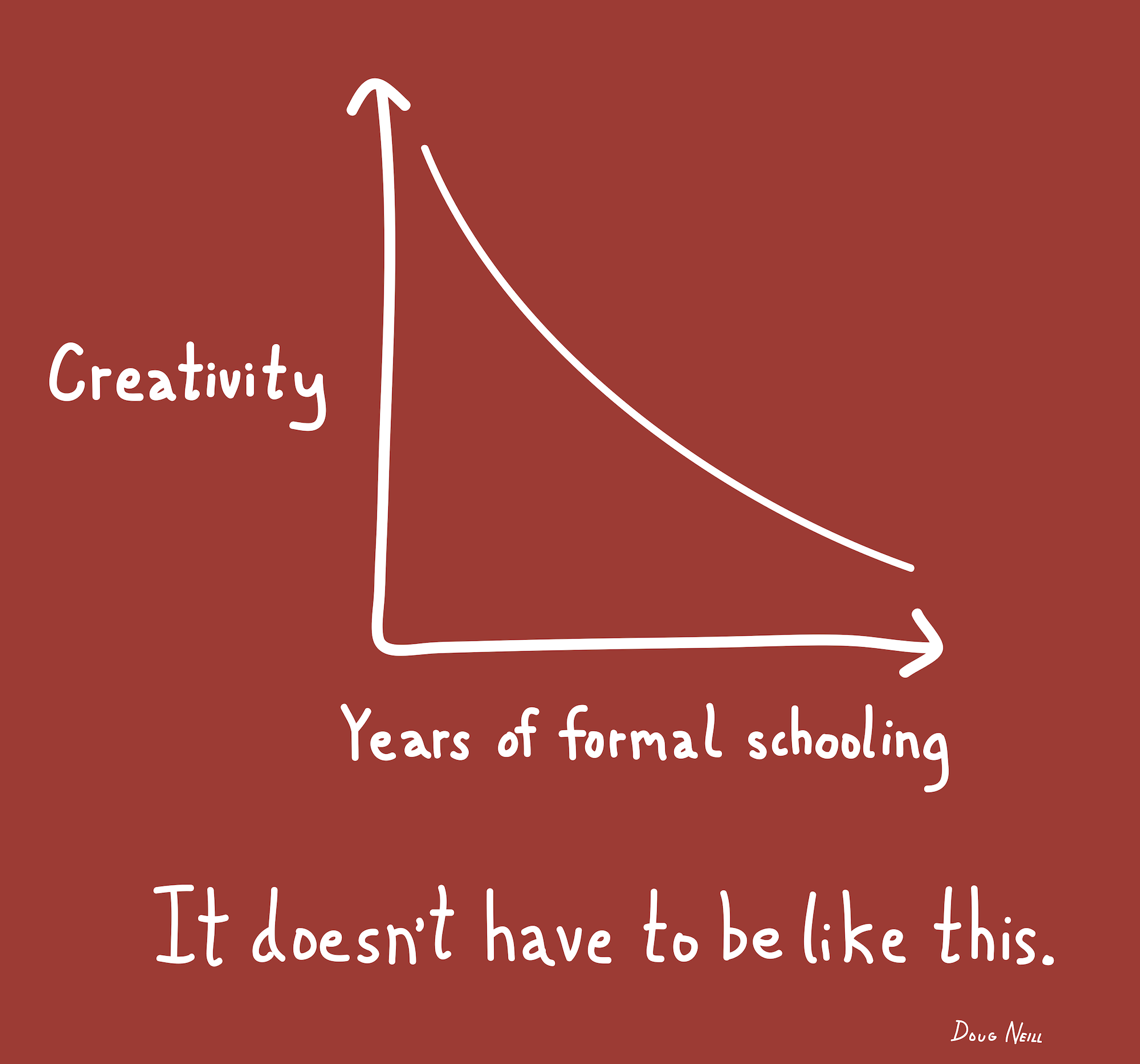
Creativity-vs_-Formal-SchoolingMy father always put a great store in my getting an education.  I am not sure if my mother could have cared less.  However, from an early age, it was my dad who always looked at my report cards and wanted to make sure that I was doing well in school.  Oddly enough, his interest in education did not seem to entail putting away any money for college. I remember quite well sometime before I finished high school when I told my dad “I would like to go to college.”  His reply was “Great, good luck.” No mention of money, no talk about how it could happen financially.  Realistically, it was rather a moot point. Most of my high school teachers disliked me; my grades were abysmal, my SAT scores below average and my desire to attend college was well below my desire to party and score with the “chicks.” (Please note this was a colloquialism of the times)

Thus, the future was clear.  The time was 1964.  The Vietnam War was looking for bodies and the military would take anyone who could still breathe.  I checked out the uniform options and decided (with limited knowledge) which uniforms might be the best “chick” magnets.  Based on this rather biased assessment, I decided to join the Air Force and enlisted for four years.  During this time, I partied, drank, read, exercised, partied, drank, read and did less and less exercise.  I honestly cannot say whether my uniform attracted the “chicks”, but I did not seem to want for drink or sex, the two most important things in my life at the time.  One thing not on my radar was “school.”

Often, other enlistees would ask me about attending classes or going nights to a local college.  “John, if we get enough guys interested, we can have Professor So and So come out to the base to deliver the class.”  My typical answer was “Professor So and So can shove his class, I am not interested.”  I managed to stay away from any education for my entire four years (One notable exception being my AFSC training school.  I will talk about his situation in a later blog.) When I married my first wife in 1967, I informed her I had no desire to attend college or ever set foot in a school again.  High School had been enough torture for me.  My favorite class in HS was detention where all the other goof-offs went and we could have a swell time finding creative ways to harass the detention monitor.

I should note a fact here.  I am the only member of my immediate family who ever went to college, not to mention obtaining a Ph.D.  Not my mother, father, brother or two sisters and hardly any of my first cousins, nor aunts, uncles and other relatives ever set foot in a college.  I have subsequently found a long lost and now deceased cousin who also received his Ph.D. but a college education was certainly not typical in my family.  It was rather like getting a winning lottery ticket. It was something that everyone espoused as a greater good, but few if any every obtained a degree or even thought about what it took to get a degree.

At this point, I am boring you with the history of my life and you are probably wondering why and where this story is going?  I want to show you that education was not something that was part of the woof and warp of my existence.  Unlike many people today, I did not have any chart memorized that showed how much a college degree versus no college or versus a high school diploma would be worth. In fact, I would venture to maintain that most of the people I knew in the sixties went to college simply because they wanted to get a liberal arts degree and sincerely believed that Higher Education would make them a better person.  The Democratic Liberal Arts Paradigm was still dominant in education at the time as opposed to what I call the Technocratic Function Paradigm that now dominates education. Today, students by a large margin, go to school to get jobs, make more money and have a planned career. This was not the case in the 60’s.  One is not better than the other as a motive, just different.

Ok, time for questions.  I will continue this blog next week.

What are your beliefs about the value of education?  Do you think older people are wiser than younger people? Does aging lead to wisdom? Does education lead to wisdom?  Can young people be wise and old people be fools?  How much is a Higher Education worth?  Do we have an education bubble in this country?  Should we have free Higher Education for all qualified students?  Should we allow students to leave High School to perform community service or join the military?

Life is just beginning.

Beginning Again

I want to thank all of you who have followed my blog here and posted comments or sent me feedback.  I am starting a new blog and have written the first post today. I will try to do 2 per week and the subject is on Aging.  This subject affects everyone of us since we are all, whether young or old, aging.  You can read my first post at my new blog site:

https://agingcapriciously.com/2013/02/06/aging-or-saging/

I look forward to your comments and continued readership.  If you enjoy my blogs, please send them to others, print them out and use them wherever you like or send me ideas you might have for subjects or content.  I don’t know about other writers but I enjoy feedback and like Mark Twain said “I can go six months on a small compliment.” 

How Education Destroyed Four Friends!

Once upon a time there were four friends who were inseparable when they were growing up.  None of them had started school yet and they spent their days together playing and having as much fun as they could.  Each of them had special gifts which were recognized by the others. No one friend felt superior because of their gifts but instead tried to share them with the others. One of the friends was a rabbit named Bolt.  Bolt was named after the famous sprinter Usain Bolt who could run like the wind. Bolt was so fast that no one could keep up with him and he would frequently take one of his other friends on an insane ride through the woods.  Round the trees, up the cliffs and down the gulleys. It was like a wild roller coaster ride with the wind and branches whipping around the rider and Bolt.

A second friend in the group was a young monkey named Reinhold who was named after the greatest Alpine climber in history Reinhold Messner.  Reinhold could climb any tree in the forest with either his hands or his tail.  He would swing from tree to tree with his eyes closed and when he let go, he would somehow fall so magically that before you could blink he was now swinging from another branch far off in the distance.  All of his friends loved to go for a ride with Reinhold because his acrobatics and maneuvers were so unpredictable.

Amphitrite was a fish.  The other friends had met Amphitrite on one of their journeys down to the sea for a drink of water. Amphitrite was named after the goddess queen of the sea and she was smart and graceful.  She was half mermaid and half fish and could outswim any creature in the sea.  She would take a friend for a ride on her back across the sea and plunge down into the depths past sunken ships, undersea mounts and vast schools of smaller brightly colored fish.  These trips were enjoyed by all because of the incredible differences they would find between the surface world and the world beneath the sea.  Amphitrite was also very intelligent and when any of her other friends had a problem they would come to Amphitrite for a solution.

The final four of the friends was an eagle named Felix who was named after the great base jumper and flyer Felix Baumgartner.  Felix was as fearless as his namesake and would ascend to unbelievable heights and then come straight down like a rocket.  At the last minute, he would turn and follow the contours of the land below him.  Felix could soar on an updraft or downdraft practically in his sleep.  When he wanted to accelerate, there was not another bird in the sky who could keep up with his speed.  Trips with Felix were always hair-raising to say the least.

Well, one day, the parents of the four friends, decided that it was time for them to start school.  Enough playing, now it was time to become serious and think about what they would do for the rest of their lives.  Swimming, running, climbing and flying were all well and good but they needed a more balanced education.  A Liberal Arts program was the trick.  The parents enrolled the four friends in the school taught by the wise old owl named Professor Harvard.  Professor Harvard had degrees in everything and was widely known as being the smartest animal in the forest. There was not a factoid, equation, puzzle, dilemma, mystery or riddle that Professor Harvard could not solve.  Professor Harvard was happy to enroll the four young students.  “We will make adults out of them yet and set them on the course to a prosperous and useful life.”

The school was organized into five classes: One for climbing, one for swimming, one for flying, one for running and one for literature.  It was understood that a well-rounded education was the key to prosperity and success.  Of course, everyone must know how to read since literature is the cornerstone of fairytales, Aesop Fables, Uncle Remus tales, Hans Christian Anderson stories, Winnie the Pooh stories and many other animal tales too numerous to mention.

Upon the first day of school Professor Harvard advised the new students that the curriculum would be rigorous and none could pass unless they completed their studies in each area.  Each student would be tested at the end of the class by a physical demonstration of their prowess. The best student would get an A. Next best would get a B, and so on.  The worst student would get an F for flunk and would need to take the class again. The literature test would be based on a written test where students would have to describe the moral in a series of well known tales.

Now some of the students were indeed worried about the curriculum but they were assured by all that if they only put their minds to it, set their goals high, did not let failure deter them, and thought positively they would have no problem with getting their diploma.

However, things did not work out so well for our four friends. By the end of the running class, Bolt was an A student, Reinhold a B, Felix a C and poor Amphitrite was given a F and told she must repeat the class.

By the end of the Flying Class, all but Felix were feeling very discouraged and frustrated. Try as they might, none of them could get the hang of flying.  Reinhold squeaked out a B although some thought his acrobatics were not really flying but it was decided to give him a B anyway. However, Bolt and Amphitrite were both colossal failures and were given F’s.  Amphitrite was now a straight F student.

In the climbing class, Felix got a B, while Reinhold received an A, Bolt managed a C but poor Amphitrite again received an F.  She was on the verge of dropping out but being a very smart person and wanting to fit into the world around her, she would not let her 3 straight F’s daunt her and finally she was rewarded for her perseverance.

When it came to the swimming class, Amphitrite received her first passing grade. Indeed she excelled in the class and received an A.  Felix, Reinhold and Bolt all were modest swimmers and managed to pass the class with C’s.

The final class was the most feared by all except for Amphitrite.  Most of the friends dreaded literature as their memories and reading skills were well below average. Amphitrite however loved to read and had no problem relating the stories to their intended morals. One example should suffice:

What is the moral of the following tale?

The Blind Man and the Cub – A Fable from Aesop

There was once a Blind Man who had so fine a sense of touch that, when any animal was put into his hands, he could tell what it was merely by the feel of it.  One day the Cub of a Wolf was put into his hands, and he was asked what it was.  He felt it for some time, and then said, “Indeed, I am not sure whether it is a Wolf’s Cub or a Fox’s: but this I know—It would never do to trust it in a sheepfold.” 

Amphitrite could quickly grasp the essence of each story and received an A in the literature class.  The other three friends could not seem to comprehend the meaning of the various tales and much to their regrets each received an F in this class.  Professor Harvard gave out the various grades and pointed out the option of summer school to each student.  None seemed overly excited about the prospect.

By the end of school, the four friends were no longer friends. None of them saw any fun continuing the activities that had previously meant so much to them.  Indeed, the various grades and tests they had been subjected to created feelings of inadequacy and superiority which further alienated them from each other. Thus, each friend went their own way in the world, never to see each other again.

Felix was killed when he collided with an airplane at 47,000 feet.  Amphitrite could not get over all of her F’s, became a drug addict and died of an overdose.  Reinhold felt mediocre and decided not to take any more risks in life. He was penniless and lonely when he died from drowning while trying to swim across a small pond. Bolt decided running was not that useful and became more of a slug and couch potato.  He would spend endless hours in front of the TV watching football and baseball games.  He was killed by a fox that caught him one day right outside his den.  He had become so fat and slow that he could not get back into his den before Mr. Fox caught him.

As we grow older, do we grow smarter, wiser, and more sage or do we simply grow old and die?  What is education? What is school?  Are they the same?  What happens when we keep doing the same thing and expect different results?  In my next blog, I want to tell you about my Ph.D., my education, my schooling and my results.  I am planning to do 1 blog each week and they will be capricious.  What does Capricious mean and why Aging Capriciously?   Please follow me for more stories, fables, myths and tall tales. 

Life is just beginning.

It is Finished

It Is Finished!  What does the phrase, “it is finished” mean?  Does it mean, over and done with? Does it mean that it is accomplished?  These were Jesus’s last words on the cross (John 19:30).  Did he mean that his life was over or was he saying that his life’s work was over?  Somehow, while I did not want to seem blasphemous, this phrase was echoing in my mind and it seemed a fitting way to end my Time Blog.  What does “it is finished,” mean?

I started this blog sometime in October of 2009.  A friend of mine had asked me what I had written recently.  This was several years after my last book was published (1998) and I had not been writing for several years.  He noted that it was a shame that I was not writing and I replied “I only write if I get paid for it.”  Later on I thought about this and upon some reflection realized that in writing one does it because they love it but not necessarily because you think you will make any money on it.  Putting aside my pecuniary interests, I decided to write for love and passion.  Meaning to hell with any writing for business or clients or money, I would simply write what I felt like.

It took a while but I finally settled on the idea of writing about time. I decided that I would write a series of reflections upon the many and manifest varieties and concepts that time is associated with.  Time seems to affect every element of our lives and I am and have been (or at least thought I was) a master at using, saving, managing, deploying and creating time.  Money has tnever been important to me or my life but I am obsessed with time.  I cannot waste a minute of it. It is the most precious thing in the world to me.  It is truly (or was anyway before I started this blog) my GOD.  Along the way of writing this blog, I began to see that I was holding on to a phantom.  Time did not exist except in my mind and heart. I was creating it each morning when I woke up and letting it go each night when I went to bed. 

I decided to write a blog every weekday or at least try to.  I reasoned that more people would read my blog if it were regular and dependable.  I have now posted or written 700 blogs counting this one.  I confess that I have recycled several blogs and either edited them or expanded them as upon further thought, I decided they needed more work and could be republished.  I have written at least 500 new blogs on time over the past 3 years.  My readership grew from about 400 “views’ per month to about 3,000 views per month.

I do have some confessions to make.  Would it were only one.  However it would not be fitting or just to close my final blog without being honest.  I had thought of ending this blog many times.  Often I would write and ask for comments or feedback. I even posted polls and surveys and seldom if ever did any readers respond or reply.  It was very disappointing.  I constantly questioned the value of what I was writing and saying.  I was on the verge of quitting many times when out of the blue I would get a comment or remark from a reader with some insights, praise or questions about my blog.  This single comment out of nowhere would reenergize me.  I would decide to continue writing.  It was sufficient that at least one person knew I existed and depended upon my blog for some inspiration or motivation.  I often decided that even if only one person in the universe read my blog, I would continue writing it.  Over the years, the number of comments trickled in and it was enough to sustain me. 

My sorrow and regrets are somewhat mundane. I had selfishly and egotistically wanted my blog to grow to at least a million readers a month.  I had secretly nourished a hope that I would be “discovered” and a talk show, movie and many You Tube videos would all trumpet my talent and creativity to the world.  The days turned into weeks. The weeks turned into months and the months turned into years and here I am.  Still unknown!  Still unheralded!  Still not a celebrity!  Many others with what seemed to me much less talent and much less to say were feted and lauded every single day.  From Donald Trump to Sarah Palin, fools like these make millions on talk shows, speeches and lectures.  Is value truly determined by the quality of what we have to say?  Dr.  Deming and many of my other mentors all sent a message that quality was more important than quantity.  Have I been lacking in some intrinsic quality that is necessary in order to find fame and fortune?  Have I been too mean spirited to the gods above or perhaps not offered Zeus the right sacrifice?  Why have Oprah and Sally and Jay and Barbara not called upon me for advice and recognition? 

One of my other friends cautioned me.  She said “write about things that uplift people.  Do not write negative ideas and spend your time criticizing or harping on the evils of the world.”  She said, people will take more note and value from your writing if you spend more time on the positive side of life than the negative.  For the most part, I agreed with her and I would say that I have tried to write inspirations and motivations to help others. However, I decided that there is also a role for me to speak out against what I perceive as the evils and injustices in the world.  I reasoned that a little lecture would not turn off to many readers and might just help to mobilize others against injustice. 

One of my most proud efforts is my series of blogs on immigration.  I was worried that many people would take offense at my opinions.  Living in Arizona, I was even advised that it might be dangerous to write about this subject when the tensions and feelings are running so high.  Nevertheless, for many reasons I chose to speak out against the anti-immigration forces.  I truly do not know whether my comments made one iota of difference to anyone but it seemed the right thing to do.  I am constantly reminded of the quote by Edmund Burke (1729-1797) that “The only thing necessary for the triumph of evil is for good men to do nothing.” Thus, I have taken the negative road several times over the years to speak out against what I thought were evils in the world.  If you hated or loved these blogs, it really did not matter to me.  My faith was that somewhere on this planet, I might make a difference to someone who felt hopeless, unloved or unlovable. 

Jesus in his ministry consistently noted that we must help the poor.

John 3:17 –  But if someone who is supposed to be a Christian has money enough to live well, and sees a brother in need, and won’t help him–how can God’s love be within him ?

John 3:18 –  Little children, let us stop just saying we love people; let us really love them, and show it by our actions.

I will end this blog with the famous words of Dr. Martin Luther King“If you want to say that I was a drum major, say that I was a drum major for justice. Say that I was a drum major for peace. I was a drum major for righteousness. And all of the other shallow things will not matter.”

I don’t pretend to have the depth or piety of Jesus or Dr. King, but I have hoped that over the years some good would come to the world from my writings. 

But difference or no difference to the world, it is time to move on.  For those of you who have been faithful readers, part-time readers or sent comments and feedback, I want to thank you. Go and do likewise.  This blog is finished.

Previous Older Entries Next Newer Entries