Lucy in the Sky with Diamonds or “How did our drug laws get so crazy?”

Picture yourself in a boat on a river
With tangerine trees and marmalade skies
Somebody calls you, you answer quite slowly
A girl with kaleidoscope eyes  —- (From the Beatles) (Click here to listen)

lucy_in_sky_with_diamonds_by_weirdplushie-d5r2kziHave you ever wondered why we do not arrest obese people?  What if we treated people who abused food like we treated people who abused drugs?  We could argue “Why don’t we arrest obese people since we arrest drug addicts?”  Do not both of them abuse their bodies?  If you look at the five most common reasons given for drug control policy:  Morality, Health, Profit, Discrimination and Social Control, it could be argued that obesity violates at least four of these principles.  As yet, we do not see too many obese people running amok, but who knows, maybe cases of “Crazed” obese people are just being under-reported.

It seems unfair to me that obese people are not treated the same as drug abusers.  Obese people are making a choice to the same extent that most drug users are.  Obese people cause a huge drain on our medical system.  Obesity is an offense to morality (sloth) if not aesthetics.  A large portion of the increase in medical expenses over the last twenty years can be blamed on lifestyle choices of which obesity is one of the primary negative factors.  Thus obesity directly impacts our national productivity.  What if obesity was subject to a series of “obesity laws” that made obesity illegal?

Consider the following court scenario in a system where obesity was illegal.    Jane Doe has just been arrested on charges of obesity and is brought to court for a pre-trial hearing. 

Prosecutor:  I am going to bring five charges against the defendant for gross and negligent obesity.

Defense Attorney:  We are not going to argue that the defendant is not fat or grossly obese.  We are going to argue that the defendant posed no threat to society.

Prosecutor:  The defendant was found in a Mc Donald’s eating a Big Mac in clear violation of the 2017 Obesity Act (OA) which states that “No obese person may partake of high fat foods found in fast food restaurants.”   A DOP agent (Department of Obese Patrol) found the defendant eating a Big Mac, fries and a shake.  The defendant tried to conceal the food and when confronted by the DOP agent, she attacked the agent and tried to resist arrest.

Judge:  What are your five charges?

ProsecutorThe five charges are as follows:

  1. Gross obesity in violation of the 2017 Obesity Act, article 1
  2. Posing a hazard to the national health in violation of Article 6 of the OA
  3. Hiding the presence of fattening foods in violation of Article 27 of the OA
  4. Contributing to the deterioration of the military readiness statute as specified in Article 29 of the OA
  5. Presenting a negative image of Americans to the world in violation of Article 31 of the OA

Prosecutor:  Each of these charges carries a minimum felony sentence of two years.  However, because this is the defendant’s third offense, the minimum sentence would be life.  We would be willing to plea bargain this to forty years without parole if the defendant agrees.

Defense Attorney:  Your honor this is a travesty of justice and a mockery of everything the judicial system was established for.  I have already noted that my defendant posed no threat to society.  We expect a jury to hear this case and we will not plea bargain.  This law is wrong, unfair and does not help protect or prevent the rest of the population from gross obesity.

Judge:  You are entitled to a trial if you so desire it, but I warn you.  You will not be allowed to challenge the validity of the Obesity law.  The law is the law and the legislative and judicial functions are clearly separated by the US constitution.  This law has been duly authorized and approved by the government of the United States of America.  The only question here is was the defendant guilty as charged.  We will not question the validity, fairness or equitability of the law.

Cellophane flowers of yellow and green
Towering over your head
Look for the girl with the sun in her eyes
And she’s gone

Now consider the criminal justice system as it applies to drugs.  By the term “drug” I am defining as anything that is either a: Hallucinogen, opiate, stimulant, or depressant.  See also the list for Schedule II drugs which includes many more than the following list:

  • Alcohol is legal if you are over 21 in most states.  Alcohol is a depressant.
  • The sale of marijuana for recreational use is a felony in nine states and illegal in a dozen others.
  • Coffee and caffeine is legal in all States in coffee, tea, soft drinks and energy drinks.  Caffeine is a stimulant.
  • LSD, Peyote, Hashish and Mescaline are illegal in all 50 states unless you have a permit to use for experimental or religious reasons.    These are all hallucinogens.
  • Nicotine in cigarettes is legal in all 50 states.   Nicotine is a stimulant.
  • Vicodin, Percocet, Oxycodone must have a doctor’s prescription in all fifty states.  Buying controlled substances online without a valid prescription may be punishable by imprisonment under Federal law.  These are all opiates.
  • Cocaine and Methamphetamines are classed as Schedule II drugs and both are illegal without medical authorization in all 50 states. Both are classed as stimulants.

If you look at the list you may wonder what the criteria for banning some drugs are and legalizing other drugs.  If you can figure this out, you are either an anti-drug zealot or you live in Wonderland along with the Red Queen and the Mad Hatter.  Consider the following possible drugs and some criteria which might impact their legality:

Drug

Health Hazards

Addictiveness

Incapacitation Capacity for Violence
Alcohol

High

Moderate

High

Moderate

Caffeine

Low

Moderate

Low

Low

Nicotine

High

High

Low

Low

Hallucinogens

Moderate

Low

High

Moderate

Opiates

Low

Moderate

Low

Low

Marijuana

Low

Low

Low

Low

Lucy in the sky with diamonds

If after looking at this chart, you conclude that alcohol and nicotine should be added to the list of illegal substances, you would not be alone.  Conversely, you might wonder why opiates and Marijuana are illegal (a situation which is finally beginning to change with Marijuana).   The fact is there is no rhyme or reason.  Prejudice, bias, stupidity, ignorance and politics govern the legality of drugs in all fifty states and the Federal government.  The results of this irrational and ignorant policy are as follows:  (These facts are from the Drug Policy Alliance)

  • Amount spent annually in the U.S. on the war on drugs: More than $51,000,000,000
  • Number of people arrested in 2012 in the U.S. on nonviolent drug charges: 1.55 million
  • Number of people arrested for a marijuana law violation in 2012: 749,825
  • Number of those charged with marijuana law violations who were arrested for possession only: 658,231 (88 percent)
  • Number of Americans incarcerated in 2012 in federal, state and local prisons and  jails: 2,228,400 or 1 in every 108 adults, the highest incarceration rate in the world
  • Proportion of people incarcerated for a drug offense in state prison that are black or Hispanic, although these groups use and sell drugs at similar rates as whites: 61 percent
  • Number of states that allow the medical use of marijuana: 20 + District of Columbia
  • Estimated annual revenue that California would raise if it taxed and regulated the sale of marijuana: $1,400,000,000
  • Number of people killed in Mexico’s drug war since 2006: 70,000+
  • Number of students who have lost federal financial aid eligibility because of a drug conviction: 200,000+
  • Number of people in the U.S. that died from a drug overdose in 2010: 38,329
  • Tax revenue that drug legalization would yield annually, if currently-illegal drugs were taxed at rates comparable to those on alcohol and tobacco: $46.7 billion
  • One-third of all AIDS cases in the U.S. have been caused by syringe sharing: 354,000 people
  • U.S. federal government support for syringe access programs: $0.00, thanks to a federal ban reinstated by Congress in 2011 that prohibits any federal assistance for them

Follow her down to a bridge by a fountain
Where rocking horse people eat marshmallow pies
Everyone smiles as you drift past the flowers
That grow so incredibly high

The above statistics do not talk about the human toll that our so-called drug policy exacts.  What about the thousands of people labeled as ex-cons and felons who may never be able to find a legitimate job again?  What about the thousands of families destroyed by taking a parent away from their children?  What about the inability or unwillingness to help treat people with an addiction?  What about the wasted lives and productivity of the men and women that we incarcerate under our present drug laws?

Again, you may wonder if something has been left unsaid.  Surely there must be a good reason or even several good reasons for our current drug policy.  Could anyone want to spend billions of dollars without some underlying rationale?  Indeed, several possible reasons for our present drug policy have been advanced.  Let us take a brief look at how each of the following reasons impact drug policy.

  • Morality
  • Health
  • Profit
  • Discrimination
  • Lack of social control and violence

Morality:  Some people think that they should be able to dictate what the rest of us can do, think, wear, feel or put in our bodies.  It is immoral to have sex.  It is immoral to dance.  It is immoral to sing.  It is immoral to play.  It is immoral to get high.  “An idle mind is the devils workshop.”  The Moral Majority wants to dictate parsimony in terms of who can be idle and who cannot.  Drug laws are made to prevent us from having too much fun.  That would be a sin.

HealthWe need to protect the public health.  The logic here is that drugs are harmful and can do damage to the human body.  The problem with this reason is the lack of consistency in its application.  While it is undoubtedly true that many drugs if taken to excess can kill, it is also true that many legal drugs (Alcohol and nicotine) are very dangerous to the body over a period of time.  The decision as to which drugs are harmful and which are not seems to be purely a matter of popular preference.   As far as I know, there is little interest in banning cigarettes, despite the fact that they do much more harm.  According to the Centers for Disease Control, tobacco kills more people than HIV, illegal drugs, car accidents, suicides and murder combined.  Drug laws are made to protect our health.  God forbid anyone would overdose on drugs.

Profit:  This reason concerns the profit motive with the drug trade.  If drugs were legal and cheap, who would benefit?  The answer would be the larger population.  This cannot be permitted to happen until there is a profit to be made.  Thus, it is more beneficial to wage a war on drugs until drugs can be commercialized and like cigarettes mass produced at a considerable profit to a select few.  It will not do to allow people to grow pot in their back yards or synthesize meth in a kitchen lab.  We have a game here and the game is called MONEY.  Until the powerful with money can figure out how to control the means and modes of production, drugs will remain illegal.  There is presently a great deal more profit in illegal drugs than legal drugs.  Drug laws are made to protect commercial interests and to insure profits for a few.  You cannot have drugs without taxes.

Discrimination:  One reason that has been advanced is a blatant discrimination against minorities and poor.   It is more often the poor and minorities who turn to illicit drugs to escape the lack of opportunities and frustration with an economic system that seems like no win for them.  The data on incarceration for drug use shows a disproportionate number of minorities arrested and convicted for drugs.  (See statistics above from the Drug Policy Alliance)

Do you dig it Man?  If you are rich or a celebrity or powerful, you can get high and no one will care or bother you.  But if you are poor, ebony, amber, ruby or chestnut, the fates will not be so kind to you.  Politics and not reason rule drug policy and the drug war.  More Americans use drugs of one kind or another than at any point in history.  Prisons are so full; they have to release many convicts before their time is up.  What if all the people misusing prescription narcotics were suddenly arrested?  What if the doctors who are over prescribing these drugs were arrested?  We would have to change the name of this country from the USA to the UPA or United Prisons of America.  Drug laws are made to keep the poor and minorities in their place.  You cannot allow the underprivileged to have any escape from a reality that haunts and torments them daily.

Lack of Social Control and Violence:  Another reason is the idea that drugs lead to wanton violence and lowering of criminal inhibitions.  Examples abound of outlandish portrayals of drug maniacs and drug users’ gone lunatic.  One popular one was a movie called “Reefer Madness” in which drug crazed people descend into scenes of rape, suicide and murder.

An interesting study conducted in Great Britain on drug use and its portrayal in the press (Representations of Drug Use and Drug Users in the British Press, 2010) concluded that

  • Drug users were more likely to be condemned than empathized with in all newspapers, but were most likely to be condemned in the tabloid press, where around a fifth of users were condemned.
  • Where the effects of drug use were mentioned in news items for either the community or the individual, these were overwhelmingly negative.
  • Over the sample period, stories that mainly focused on recovery and rehabilitation were few and far between. When they did surface they mainly concerned the appropriateness of government proposals to rehabilitate heroin users.

yellowsubmarine-130438The media needs to sell papers.  Titillating stories of drug abuse and drug addicts run amok sell more papers and get more watchers then stories of drug use that have more positive outcomes.  The hypocrisy here is beyond imagination.  The majority of Americans use drugs every day to treat low energy, pains, headaches, depression and simply for recreation.  Drug laws are made to insure that drug use does not get out of hand.  Out of hand drug use is an oxymoron if there ever was one.

“In June 2011, the Global Commission on Drug Policy soberly proclaimed: “The global war on drugs has failed, with devastating consequences for individuals and societies around the world.” In its report, the commission — members of which include economists, policy experts, and several former world leaders — argued that, 40 years after President Richard Nixon launched the U.S. War on Drugs, circumstances today demand a new approach. Among the commissioners’ recommendations, two stand out: to “end the criminalization, marginalization and stigmatization of people who use drugs but who do no harm to others,” and to “encourage experimentation by governments with models of legal regulation of drugs,” particularly cannabis, “to undermine the power of organized crime and safeguard the health and security of their citizens.”   National Affairs

To paraphrase Patrick Henry, what are we waiting for?  What are we procrastinating for?  What are we afraid of?  What will it take for us to change these barbaric laws?  How many more lives will we damage?  How much more money will we waste?  How many more people will we allow to die?  Shall we argue? Shall we entreat?  Shall we equivocate?  Are we blind to the truth?  Will we wait until it is too late?  What more arguments need be made before we are convinced?  What evidence needs to be produced that has not already been made evident?  What research is left to find regarding the failure of our drug policy?  What is stopping us from seeing the truth?  How many more people will be arrested before we decide to act?

Newspaper taxis appear on the shore
Waiting to take you away
Climb in the back with your head in the clouds
And you’re gone

You say well “Marijuana will slowly become legal as the tide is starting to shift and public opinion is being exerted on our political leaders.”  This is simply the first step.  It is not nearly enough.  The discrimination and stupidity that is behind most of our drug policy must be completely routed out and eradicated.  It will not solve the problem if we only legalize or decriminalize Marijuana.  The focus on drugs must be shifted from seeing drug use or drug abuse as a crime to seeing it as a treatable medical or emotional problem.  Putting people in jail for drug abuse is cynical where no crimes are committed and no one is hurt.  It is like the old debtors prison where poor people were thrown in jail until they could pay their bills.

It is time for us to speak out against a political leadership that refuses to accept the truth.  The truth is that our national drug policy is a failure.  Those who have the power are afraid of an environment in which the populace can find alternatives to such profitable mass produced narcotics such as television, shopping malls, video games, sports and movies.  They are afraid of a population that can make its own decision concerning what drugs it uses and what it uses drugs for.  They are afraid of an environment where decisions on drug use are taken away from the “authorities” and given back to the citizen.  It is time we “take back our rights.”  Prohibition was a massive failure and simply caused alcohol to become more expensive, more crime and more criminals.  Our current drug war has had the same disastrous effects.  When will we learn?

Lucy in the sky with diamonds

Time for Questions: 

What drugs have you taken this morning?  Do you consider pills drugs?  What about coffee and alcohol, how much of these do you use weekly?  Do you think that our present drug policy is effective? Why?  What would you change if you could?  Do you know any drug addicts?  Are they criminals?  Do you think they should be arrested and jailed?  Why or why not?  What would you do to someone who broke into your house to steal your pills or to steal money to buy drugs?  Should we arrest them, shoot them or treat them?

Life is just beginning.
I would like to make it clear that while I find some merit in each of the five reasons most often given to ban drugs or to control the sale of drugs, I also find a great deal of hypocrisy and politics in each of these reasons. You may ask: “If someone broke into your house to steal or buy drugs, what would you do?”  My answer:  I would probably shoot them.  I am not condoning criminal behavior or the argument that so and so was drunk or high and was not responsible.  Drug addicts and alcoholics should not be exempt from the responsibility for crimes they commit while under the influence.   You do the crime, you serve the time.

Oct-13-Is-Drug-Legalization-the-Answer-Section-3-730x2713.jpg

Why Do We Need “Free Enterprise”?

free-enterprise_logoLast week we looked at the problems of government.  This week, I want to look at the issues both pro and con with “Free Enterprise”.  First of all, let’s start with the obvious:  “Free Enterprise” does not exist.  It is like the Holy Grail, a wonderful concept but a myth.  There are no free lunches and there are no free businesses.  The purpose of a business is as follows:

To provide goods or services that people want or need at a price they can afford and that allows the business enterprise to make a profit. 

Businesses provide value.  If they do not provide value, they become extinct but much faster than dinosaurs.  Businesses exist in an extraordinarily dynamic environment where rapid change and obsolescence creates a life span for most companies that is less than fifty years.  It is a rare organization that makes it to one hundred years or more.

Why we need enterprise is an easy question to answer.  It is clear that people have myriad wants and needs that must be provided for.  However, why not let the Government do it?  Why should enterprise be free?  Why not have planned economies as in socialism?

Both theory and experience can show us the reason why enterprise should be free.   But first, what do we really mean by free.  We certainly do not mean that products, services, land, capital and human resources are free.  Each of these elements is required for a successful business but they must be bought and paid for.  So what do we mean by free?  What are most people talking about when they equate “Free Enterprise” with mom, God, baseball and apple pie?  

Most people talking about “Free Enterprise” have no clue where the term originated or what it really means.  However, these same people take great umbrage at anyone who questions the role of “Free Enterprise” in the USA.  It is interesting how people will defend things they know very little about.  President U. S. Grant questioned how the average Confederate soldier could support the Southern plantation system when the majority of soldiers were about as poor as most slaves and saw little or no benefit from the system they were giving their lives for.  The same is true for many Americans.  Most people in this country are not entrepreneurs nor are they owners.  In fact, most people own little or no stock in any company.   Yet the average American thumps their chest and cries out with great pride that “I support “Free Enterprise”.

“New data from Pew Research suggests that more than half (53 percent) of Americans have absolutely no money in the stock market, including retirement accounts.  The Pew data show that just 15 percent of people with a family income of less than $30,000 per year are invested in the stock market; as families earn more, their participation in the stock market increases.  Fifty-five percent of those who earn between $30,000 and $75,000 per year are invested in the market, while 80 percent of those who earn $75,000 or more are.”

Investopedia explains “Free Enterprise” “The “Free Enterprise” movement started in the 1700s, when many individuals were restricted from starting and owning their own business without the permission of the government.  The movement looked to reduce ownership and other related restrictions, such as how one should operate their business and who they were allowed to trade with.”  In other words, “Free Enterprise” is about being able to run your own business without the government telling you what to do.  A government that probably could not manage a paper bag factory efficiently.

A number of years ago there was a brilliant economic thinker by the name of Adam Smith (1723-1790).  Smith theorized that the most efficient markets would be laissez faire.  Basically, without knowing the terminology of self-organizing systems which we now speak of today, Smith recognized that the laws of pricing and its attendant mechanisms would best provide for a rationale distribution of goods and services that people wanted.  Today, we talk about Complex Adaptive Systems with elements of sensitive dependency and strange attractors and we understand that the Free Market is best described by such terms.  Pricing may be a strange attractor and value one of many conditions that are described as sensitive dependency to initial conditions.   No human being or government can possibly have the capacity or information to efficiently regulate a complex adaptive system.

Nevertheless, today we realize that rules, policies and regulations are essential to a “Free” market.  Think of a sporting event without rules, referees, penalties or umpires.  What you would have these control mechanisms would be chaos and not a game.  You cannot have an Efficient Market (A more appropriate term than Free Market) without rules.  You would have anything but efficiency and no one would benefit.  So some structure and planning is needed.  The problem becomes one when too much structure and too much planning intrude on the operation of the market. This is what you had in the Soviet system and it ultimately led to the collapse of the Soviet Union.

Centralized government planning can be invaluable in helping a nation’s economy.  Countries like Japan and Taiwan which have had a close collaboration between government and private enterprise have done quite well in terms of productivity and economic success.  Even in the USA, there is a great deal of unseen and seen collaboration between government and private enterprise.  However, it is the extremes which create the dangers.  Seldom has government planning been taken to the extremes that it was in the Soviet Union or China before the uprisings in 1989.  Consider the comments of David Elton Trueblood from the Ludwig von Mises Institute:

“It is easy to see, then, that the Soviet system represents a far more radical innovation than it would if it were concerned merely with ownership. The nationalization of the means of production involves a radical shift in the power structure, especially in the eminence accorded to the central planning bodies. The system enables the party machine to have a monopoly of power, for they have all but the legal attributes of ownership. Above all, it allows a few who are the new elite to seek to control the total lives of the masses.” 

EcoPillars for free enterpriseWhat most people despise about communism and centralized government planning is not just the inability to allocate resources effectively and efficiently, but more importantly, the attempt to control the economic choices of citizens and the destruction of entrepreneurial spirit.  Soviet communism went well beyond simple economic planning when it decided that all enterprise would be run by the government.  The profit incentive would be eliminated and the proletariat would control the means of production.  Everyone would be free from being a “wage slave.”  However, this so called freedom actually meant that no one would have any freedom over their economic decisions.  Whether or not the odds favor any of us becoming a billionaire, we all enjoy the hope and dream that we someday might be another Bill Gates or Warren Buffett.  Communism kills that hope and dream.  However, it was the Communist policies towards individual initiative which destroyed the dream and not any single model of centralized government planning.  There are many advantages to some centralized government planning and to throw out all such planning is to throw the baby out with the bathwater.

Free Markets left to their own accord can be monstrously inefficient and ineffective.  Here are some typical examples of market failure:  (Source:  Economics Online)

Productive and allocative inefficiency

Markets may fail to produce and allocate scarce resources in the most efficient way.

Monopoly power

Markets may fail to control the abuses of monopoly power.

Missing markets

Markets may fail to form, resulting in a failure to meet a need or want, such as the need for public goods, such as defense, street lighting, and highways.

Incomplete markets

Markets may fail to produce enough merit goods, such as education and healthcare.

De-merit goods

Markets may also fail to control the manufacture and sale of goods like cigarettes and alcohol, which have less merit than consumers perceive.

Negative externalities

Consumers and producers may fail to take into account the effects of their actions on third-parties, such as car drivers, who may fail to take into account the traffic congestion they create for others. Third-parties are individuals, organizations, or communities indirectly benefiting or suffering as a result of the actions of consumers and producers attempting to pursue their own self-interest.

Property rights

Markets work most effectively when consumers and producers are granted the right to own property, but in many cases property rights cannot easily be allocated to certain resources. Failure to assign property rights may limit the ability of markets to form.

Information failure

Markets may not provide enough information because, during a market transaction, it may not be in the interests of one party to provide full information to the other party.

Unstable markets

Sometimes markets become highly unstable, and a stable equilibrium may not be established, such as with certain agricultural markets, foreign exchange, and credit markets. Such volatility may require intervention.

Inequality

Markets may also fail to limit the size of the gap between income earners, the so-called income gap.  Market transactions reward consumers and producers with incomes and profits, but these rewards may be concentrated in the hands of a few.

I hope you are impressed by the large number and substance of possible market failures.  No doubt there are other examples of “Free Market” failure.   What can be done about these failures?  The answer is simple.  It is the government’s job is to try to rectify these failures but with as light a hand as possible.  Too heavy a hand and it actually ends up stifling and distorting the “Free Market.”  It is apparent from the current animosity towards the government that it is either failing in these tasks or exerting too heavy a hand in the administration of these tasks.  For instance, government critics might point out:

It is hard to imagine any small business or large business having to sort through this many regulations.  Either the business is inundated with red tape and cannot prosper or any prospective business person is discouraged from even trying to start a business.  Both are not conducive to a productive and prosperous economy.

Conclusion: 

We need ““Free Enterprise” or a “Free Market” because it nurtures the human soul.  It is also generally more efficient and effective than any centralized government planning.  We need “Free Enterprise” as the cornerstone of a dynamic democratic government wherein citizens have the liberty to choose their economic endeavors.  No economic system has yet proven to be as resilient and productive as a “Free Market.”  However, there are no perfect systems.  The “Free Market” must have oversight mechanisms.  Like it or not, without government regulations (just like the rules needed in any game), the economic system would devolve into chaos, confusion and a distorted disequilibrium that would quickly have citizens clamoring for a dictator like Hitler and Mussolini who would promise to restore order.  Unfortunately, people would be buying order at the expense of their freedom.  Hitler and Mussolini both made the markets efficient again but at the price of liberty, justice and equality.  If we do not want to pay that price, we must rely on our government to provide the rules, policies and regulations that will keep our economic system viable and FREE.  See my blog “Why do we need government” for an explanation of what citizens must do to insure that government does its job. 

Time for Questions:

What does “Free Enterprise” mean to you?  Have you ever started or run your own business?  Have you ever thought about running your own business?  What is stopping you?  Can you think of any other country where it would be better or easier to start a business than the USA?  Where?  Why?  Do you think that any business has a responsibility to society? Why or why not?

Life is just beginning. 

Why Do We Need Government?

blog_pew_government_inefficient_wastefulGovernment is inefficient.  Government is bureaucratic.  Government is a parasite.  Government is wasteful.  Government is mindless and autocratic.  Government wastes our tax money.  Government is corrupt and politically immoral.  Government workers are uncreative.  Government workers are lazy.  Government workers are drones.  Government workers don’t care.  Government workers are stupid.  SO WHY DO WE NEED GOVERNMENT? 

My blog this week will be the first of two parts.  Part 1:  Why do we need government and next week Part 2:  Why do we need free enterprise? 

Yesterday, I was sitting in my dentist’s office when another client appeared and took a seat next to my wife.  He immediately started ranting about “Big Government” and how the government was ruining the country.  I listened to him politely for a few minutes and then “counter attacked.”  I said “We wouldn’t need government if the greedy people in business did what they were supposed to do.  We wouldn’t need government if all the citizens in this country treated each other with dignity and respect.  We wouldn’t need government if all the other nations in the world all did the right things and treated everyone everywhere with dignity and respect.”  Later on when leaving the office, Karen told me he was pleased that I agreed with him.  I wondered what “ghost” he was talking to.  I guess people see what they want to see.

“All things are subject to interpretation. Whichever interpretation prevails at a given time is a function of power and not truth.”   ― Friedrich Nietzsche

It is not unusual to hear someone railing about the government today.  Government has become a whipping boy for all the ills that seem to plague modern society.  I have worked in big business.  I have worked in small business in a privately owned construction firm.  I have worked for the past 29 years as a management consultant to corporations, non-profits and government enterprises.  As an Organization Development and Process Improvement consultant, my job is to look at how organizations can become more efficient and effective.  I have had a unique opportunity to witness the disabilities that afflict both government and private business.  Over the years, I have continually observed that the curse or bane of business is effectiveness, “that is doing the right things.”  While, the bane of government is efficiency, “that is doing things right.”  The ideal organization (that perhaps only exists in the abstract) is one that balances efficiency with effectiveness.  To use another metaphor, they are two sides of the same coin.  Herein lays the big dilemma.  How can we get any organization to balance the two when the incentives for accomplishing each are often diametrically opposite?

Businesses see their primary role as making a profit whereas governments see their primary role as protecting the public welfare.  (I will say more about the perils and pitfalls of business next week.)  For now, I would like to explore the reasons why so many people hate government.  Actually, it is one reason, multiplied about a million times per day.  The government is magnificently, awesomely, incredibly, monumentally, epically, colossally, monstrously, inefficient.  I have worked in city, county, region, state and federal government both as a consultant and as an employee.  In most cases, my job was to help improve things.  I was awed and appalled by the waste and inefficiency that I saw surrounding me.  If I had wanted to design a system to be inefficient, it would be difficult to beat the government.  Please understand, this is not to say that the government does not often provide good high quality services.  It often does.  Or that it does not provide good products.  It often does.  Sanitation departments, police departments, fire departments, forest services, park departments, libraries and education departments are run at least as effectively as they would be if in the hands of private business.  The problem is the costs and efficiency of said operations.  The formal definition of efficiency is that a situation can be called economically efficient if:

  1. No one can be made better off without making someone else worse off (commonly referred to as Pareto efficiency).
  2. No additional output can be obtained without increasing the amount of inputs.
  3. Production proceeds at the lowest possible per-unit cost.

Creativity and innovation are the sparkplugs that power productivity increases in the business world.  Unfortunately, governments (which are bureaucracies) are often antithetical to either creative endeavors or more innovative ideas.   This means that numbers 1, 2 and 3 above are generally held at a constant and little or no productivity is gained from the typical government bureaucracy.  Output is not increased for constant costs.  Unit costs are seldom lowered and politics (a disease of government) continually interferes with any optimization of Number 1. Technological changes have helped lower government costs in many areas but such changes are often introduced much later and more slowly than they would be in private industry.

Let’s take one example here to show what I mean.  We will use the education system in the USA to show the poor relationship between increased costs and improved productivity.  Here are the three key findings from a report titled “Return on Educational Investment, 2011.”  It was conducted by the Center for American Progress.  Their three key findings were:

  • Many school districts could boost student achievement without increasing spending if they used their money more productively.
  • Low productivity costs the nation’s school system as much as $175 billion a year
  • Without controls on how additional school dollars are spent, more education spending will not automatically improve student outcomes

From my experience, I would wager that a study on any area of government in the USA would come to the same three conclusions as it applies to employee or worker productivity instead of student productivity.  This is the bane of government.   It is grossly and almost criminally negligent in its inefficiency.

In times of heightened global competition, offshoring and outsourcing of jobs, downsizing of organizations, economic recession, flat or falling incomes, increased unemployment and fears of increased economic turmoil, it is easy to understand why government has become the whipping post for so many citizens.  The government worker who is “here to help” is a longstanding joke and always good for a laugh.  The government worker that wants to increase taxes to pay for things that many of us do not perceive as relevant to our lives becomes at best a pariah and at worse a loathed, despised and hated enemy.  To the latter people, “The government is here to help” is no joke.  Unfortunately, these problems lead many people to ignore both the good that government does and the reasons it is needed in the first place.

“There is nobody in this country who got rich on their own.  Nobody.  You built a factory out there – good for you.  But I want to be clear. You moved your goods to market on roads the rest of us paid for. You hired workers the rest of us paid to educate. You were safe in your factory because of police forces and fire forces that the rest of us paid for. You didn’t have to worry that marauding bands would come and seize everything at your factory… Now look. You built a factory and it turned into something terrific or a great idea – God bless!  Keep a hunk of it. But part of the underlying social contract is you take a hunk of that and pay forward for the next kid who comes along.” ― Elizabeth Warren

The role of public goods in the development of the USA is easy to overlook.  We take police departments and fire departments for granted, until we need them.  We scorn welfare and unemployment programs unless we become unemployed or in need of public assistance.  The famous individualist Ayn Rand received Social Security and other public benefits.

“In interview with Evva Pryror, a social worker and consultant to Miss Rand’s law firm of Ernst, Cane, Gitlin and Winick verified that on Miss Rand’s behalf she secured Rand’s Social Security and Medicare payments which Ayn received under the name of Ann O’Connor (husband Frank O’Connor).” Mark Frauenfelder

We ignore the sewer system until our sewer back up. We take our clean water for granted until there is a water shortage.  We take our safe airways and freeways for granted until there is an accident or other disaster.  We trust that our banks are safe and guaranteed secure by the Federal Government.  We rely on billions of dollars of research to fuel technology, industry and healthcare which come from federal taxes.  We trust that our nation will be protected from terrorism by our state and federal military.  We rely on government regulators to protect our food from pathogens and disease.  We expect the government to keep our borders secure.  We demand that government stop our businesses and industries from conducting themselves as monopolies.  Businesses decry government oversight unless it benefits their bottom line.  When all else fails, we all want a government handout.   Student loans, small business loans, and SSI are all deemed entitlement programs.  If you would like to see the entire list of government funded programs click on the hyperlink:  List of US Federal Government Funding ProgramsThere are 1607 programs on this list for a total of nearly 2 trillion dollars.  Some examples:

  • Adoption Assistance, $1,622,700,000 total funding
  • AmeriCorps, $272,752,000 total funding
  • Child and Adult Care Food Program, $1,856,368,000 total funding

If you are in favor of “Free Enterprise” you may wonder why so many private businesses receive vast amounts of public assistance.  Consider the following facts:

  • The Cato Institute estimates that the U.S. federal government spends $100 billion a year on corporate welfare. That’s an average of $870 for each one of America’s  115 million families. Cato  notes that this includes “cash payments to farmers and research funds to high-tech companies, as well as indirect subsidies, such as funding for overseas promotion of specific U.S. products and industries…It does not include tax preferences or trade restrictions.”
  • In addition to the federal subsidies, a New York Times  investigation found that states, counties and cities give up over $80 billion each year to companies, with beneficiaries coming from “virtually every corner of the corporate world, encompassing oil and coal conglomerates, technology and entertainment companies, banks and big-box retail chains.”

http://www.alternet.org/economy/average-american-family-pays-6000-year-subsidies-big-business

Yes, let’s complain about the government unless we are on the receiving end of the benefits and largess.  I laugh when people talk about free enterprise and the American business system.  Scratch just slightly below the surface and you will not find a business small or large in this country which does not somehow benefit from a strong centralized government.  Could the government be more efficient?  Of course the answer is yes.  Could the government be more accountable?  The answer is also yes.

Could the government be run like a business?  The answer is absolutely not.  Never the twain shall meet and that is a good thing.  Business and government have different goals.  Remember the famous saying:  Quis custodiet ipsos custodes?   Translated this means, “Who guards the guardians.”   In a perfect world, we would not need guardians or any other gate keepers.  However, this is not and never will be a perfect world.  Governments exist to protect the public welfare, to insure a level playing field and to help provide and distribute equitably the basic necessities of life for all its members.   Toys R Us, American Airlines, Microsoft and General Motors do not have the same goals or responsibilities as the government.   Even in an ideal world, they would not have the same goals as the government.

“The end of democracy and the defeat of the American Revolution will occur when government falls into the hands of lending institutions and moneyed incorporations.”   ― Thomas Jefferson

I am no different than the average American.   I am dismayed by our political system and I generally have a well-founded contempt for most politicians.  Unfortunately, just like somebody has to collect the garbage, somebody must run the government.   I have little doubt but that the people/citizens get the government they deserve.  Too lazy to vote!  Too lazy to watch the debates!  Too lazy to be informed about their choices!  Too lazy to actively participate in the political process!   Most Americans would rather tune into the football or basketball game then watch any show dealing with politics.  When was the last time, you went to a political rally or read up on a candidates record?  “Who guards the guardians?”  

The government is made up of two major parts.  The first of these parts includes the systems of policy, procedures, rules, regulations and administrative processes that comprise the backbone or structure of the government.  The second part includes the employees, managers, staff and politicians who run the government on a daily basis.  The quality of the government is dependent on the quality of these two parts.  Good people in a bad system = bad.  Bad people in a good system = bad.   We must have the best people we can hire in the best system we can create or we will not have a strong viable government.    Bureaucracy  1

Over the past twenty or so years, the quality of the two parts of the government seems to have deteriorated.   I have no doubt that the “public guardians” are responsible for this.  It is easy to blame the government but as POGO said “We have met the enemy and he is us.”  We are the government.  If the government is bad, it is because the public is not doing its job.  It is because the public is not “guarding” the process.  If the public would rather be entertained then when it gets stupid corrupt immoral politicians, it should not be surprised.  If the public will not pay decent salaries for government workers, it should not be surprised.  And if the public expects that it can just leave all the government to others to take care of, it should not be surprised.  It will get the government that it deserves.  Stupid, corrupt, inefficient and immoral!!!

Many people have noted that fundamental institutions in America seem to be under attack or in peril.  Education, public works, criminal justice, drug enforcement, immigration control and regulatory controls in many areas are not meeting the needs of a twenty first century nation.  Times change and systems must change.  We can no longer rely on systems and policies founded in the eighteenth and nineteen century to still be appropriate for the world today.  The Law of Entropy says that all systems will tend towards decline.  The only constant in the world is change.  We must develop the will power and determination to “change the things that need to be changed.”  The quote “Insanity is to keep doing the same things and expect different results” repeatedly comes to my mind.  We foolishly think that simply by throwing more money into outdated systems that they will somehow improve.  The only reality is as Einstein so astutely noted: 

We cannot solve our problems with the same thinking we used when we created them.”  — Albert Einstein   

As a consultant, I could make minor fixes to the systems I interacted with.  Major change is generally beyond any single consultant and requires total system commitment.  Furthermore, as Dr. W. E. Deming always said “Change comes from outside by invitation only.”  We will only be able to make major changes in government by a concerted desire from inside the system that is fueled by the creativity and innovative ideas that will need to come from outside the system by the entire citizenry.  No single person or groups of people can see the system in its entirety.  In order for change to occur, a systems overhaul must be taken according to the principles of systems thinking.  Like the story of the blind men and the elephant, it takes a variety of perspectives to see the truth.  The truth is that government inefficiency, political corruptness, employee laxity and bureaucratic inertia can be fixed.  The sad part is that the public would rather leave it up to the foxes to watch the chickens.  The weekly NFL game or NASCAR race is more important than who is running the government.

“One of the penalties for refusing to participate in politics is that you end up being governed by your inferiors.”  — Plato

Time for Questions:

What do you think of government?  What do you want its role to be?  Are you satisfied with the government today?  Why or why not?  What do you think you could do to help improve government?  Do you stand up for what you believe by voting and taking an active interest in politics?  Or do you just leave governing to others?  Who should make sure government is doing its job?

Life is just beginning. 
 

The Seven Secrets of Everything: Part 4

Congratulations, if you have read the first three parts of my blog.  If you have not, you should really go back and read the first three parts before you read Part 4.  If you have read Parts 1-3, now it is time for the last two Secrets of Everything.  Let me warn you that these last two secrets are the most difficult of all.  If you can master these two and the other five, you will truly have a glorious life.  You will live a perfect or near perfect existence.  Of course, perfection is impossible.  Thus it is more likely, you will seesaw on one or more of the Seven Secrets.  Sometimes you will do well and other times you will slip and might even fall off the see-saw.  The trick is to keep getting back on again.  Don’t give up.  Keep trying.  Remember what Gandhi said:  “Satisfaction lies in the effort, not in the attainment.  Full effort is full victory.”

Secret 6.  Never get sick, lose your cool or be unhappy. 

I can hear your thoughts now.  Impossible, ridiculous!  How can anyone never get sick or always be happy.  We are not always in control of what happens to us so how could anyone practice this Secret.  Totally useless!

What if you are wrong though?  What if this Secret is not useless!  Allow me to present my side before you dismiss what I have to say.  Let me explain each part of this Secret, and then you can accept or reject my arguments.   It will cost you nothing and might just be worth your time.

First of all, in respect to sickness and illness, you will get sick.  You cannot avoid it.  Nevertheless, many people are more sick and ill than other people.  Have you ever stopped to wonder why?  Some of it is certainly genetics, some environment and some culture.  However, some part of sickness is due to our own choices and decisions.  We call this lifestyle choice.  Some of us eat too much, some of us do not exercise enough, some of us have too much self-induced stress, some of us eat or drink the wrong things.  Are all of you choices wise?  Do you watch your weight?  Do you eat and drink the right foods?  Do you smoke?  Do you exercise regularly?

If you can say that your diet and exercise are exemplary, then you can blame, God, your mother or the weather the next time you are sick.  However, if you eat too much, drink too much, smoke too much and never exercise, then how do you know if you are not responsible for your own infirmary?  I am sorry but I see too many people who act as though good heath was not in their control.  It is in your control to a larger extent then you want to believe.  Make the right choices and you will see your health improve dramatically, whether or not you have good genes or not.

Next, we take being cool and being happy.  Buddha said that unhappiness is a fact of life.  Sorrow and suffering are part of the human condition. However he also said that:

“All that we are is the result of what we have thought: it is founded on our thoughts and made up of our thoughts. If a man speak or act with an evil thought, suffering follows him as the wheel follows the hoof of the beast that draws the wagon…. If a man speak or act with a good thought, happiness follows him like a shadow that never leaves him.”  — Gautama Buddha

Our thoughts and beliefs are what we feel and are the precursors of all of our emotions.  We choose to be happy or sad.  We choose to be angry or calm.  We cannot live in a world without sorrow or a world without people who will test and challenge us.   We have no choice over the behavior of others.  We can choose how to react to these situations.  We can choose to be sad or happy.  We can choose to be angry or thoughtful.  Our choices of how we react to outside events are 100 percent in our control.  The fully responsible individual is one who chooses his actions and reactions to the events and people that are part of his/her life.   No one can make you feel or even do something unless you choose to do it.  They can kill you or they can hurt you, but they cannot make you think or feel anyway other than you choose to feel and think and act.

Stone walls do not a prison make,

Nor iron bars a cage;

Minds innocent and quiet take

That for a hermitage.

If I have freedom in my love,

And in my soul am free,

Angels alone, that soar above,

Enjoy such liberty.  

 — From, To Althea, from Prison by (Richard Lovelace, 1618-1658)

 Secret 7.  Don’t let death or failure get you down. 

Some of us will know the moment of our death and some of us will not.   The only thing we all must know is that we will die.  I am 67 years old and it seems hardly a month has gone by for the past five years or so that I am not going to the card shop to buy a sympathy card.  My heart goes out to the friends and relatives of mine who have lost loved ones.  Some die way before their time as in the case of several who died in accidents or in wars.  Others live to a “ripe” old age of ninety or more and pass away at night in their beds.   Some die with great pain and others seemingly painlessly.  My father died at age 60 and my mother at age 67.  My younger sister died at age 59.  Some died or natural causes and some of “unnatural” causes.  Two of my close cousins committed suicide, one by hanging and one by gunshot.

Remembering that I’ll be dead soon is the most important tool I’ve ever encountered to help me make the big choices in life. Because almost everything – all external expectations, all pride, all fear of embarrassment or failure – these things just fall away in the face of death, leaving only what is truly important.”  — Steve Jobs

When I was diagnosed with Prostate cancer two years ago, I did not need a “wakeup” call.  I had woke-up many years before with the passing of too many loved ones to count.  I wondered whether to ignore the diagnosis and live with it or whether to have it treated and live with the after effects.  Should I go through with surgery, incontinence, impotence and would it be worth it? Or would I simply find out that the cancer had spread and further treatment was useless?  What was the quality of my remaining life worth?  Would it be one of radiation, chemo, surgery and pain killers for ten or fifteen more years or should I just live the rest of my days as best I could and let “nature” take its course.  It was not an easy choice to make.

Now that I have survived the surgery and the doctors think they have removed all the cancer (I have heard many cases of it returning), I am left to deal with the after effects and as I have joked to die in ten or twenty years from something else.  Many people would say it just was not my time.  However, I have not the slightest clue when my time is, so maybe I just got lucky or maybe modern science and medicine helped me to beat the odds.  Perhaps, it was all the prayers that many friends and loved ones said for me.

I confess I am grateful to know I will live to write at least a few more of these blogs.  Some have said that “They have not yet begun to fight.”  I have not yet left my mark on the world.  Thus, I continue to write these blogs and hope that with whatever time I have left, I can help make a positive contribution to the world and the lives of those living today and in the future.  What other reason is there for life if not to help others.  If we fail in this task, we must simply start over and over and over again.  Like with the uncertainty of death, we face the uncertainty of making a difference.  We may never know if we made a difference, but we must keep trying and we must simply have faith.

“I am not sure exactly what heaven will be like, but I know that when we die and it comes time for God to judge us, he will not ask, ‘How many good things have you done in your life?’ rather he will ask, ‘How much love did you put into what you did?” –Mother Teresa

“God doesn’t require us to succeed; he only requires that you try.” — Mother Teresa

Time for Questions: 

What is the meaning of your life?  What value do you want to leave the world?  What would you want them to say about you at your funeral?  Do you keep trying or do you give up?  Where have you made a difference in the world?  What could you do today to make a difference tomorrow?

Life is just beginning. 

In many respects, the Seven Secrets of Everything reflect the ideas of the Eight Fold Path that Buddha described for right living.  These are summarized below in the chart.  They are broken down under Wisdom, Morality and Concentration.  I think my Seven Secrets of Everything exemplify these concepts.  I have not really found any new secrets since Buddha was here long before I was born.  Practice my Seven Secrets or follow Buddha’s Eight Fold Path and you will find the life with meaning and righteousness that all human beings seek.

eightfold-path

“Even death is not to be feared by one who has lived wisely.”

“Furthermore, there is the case of the person who has done what is good, has done what is skillful, has given protection to those in fear, and has not done what is evil, savage, or cruel. Then he comes down with a serious disease. As he comes down with a serious disease, the thought occurs to him, ‘I have done what is good, have done what is skillful, have given protection to those in fear, and I have not done what is evil, savage, or cruel. To the extent that there is a destination for those who have done what is good, what is skillful, have given protection to those in fear, and have not done what is evil, savage, or cruel, that’s where I’m headed after death.’ He does not grieve, is not tormented; does not weep, beat his breast, or grow delirious. This, too, is a person who, subject to death, is not afraid or in terror of death. — Abhaya Sutta: Fearless

The Seven Secrets of Everything: Part 3

In the first part of my Seven Secrets of Everything, I justified the idea of seven as an excellent number for basing models and theories on.  In part 2, I introduced the first two of the Seven Secrets of Everything.  In part 3, I am going to discuss the next three Secrets and why they are important and useful as a means of living one’s life.

3.  Surround yourself with wise people.  Don’t worry whether they are likable or not. 

Many people are afraid of others who are smarter than they are.  Smart people are often portrayed as geeks, nerds, “college professors”, bores, smartasses, know-it-alls, intellectuals, strange and/or eccentric.  A streak of “anti-intellectualism” runs through American culture that was very well described by Richard Hofstadter in his book “Anti-intellectualism in American Life.”

It is ironic that the United States should have been founded by intellectuals, for throughout most of our political history, the intellectual has been for the most part either an outsider, a servant or a scapegoat.” — Richard Hofstadter

You have only to listen to the radio talk show hosts to see the disdain and denigration they routinely heap on educated people in this country.  College professors are regularly blamed for the majority of the problems in American life.  Ironically, even the colleges themselves contribute to this problem by exalting the doer over the thinker as they pay college coaches ten to hundred times greater salaries that they pay their own instructors.  What is more important in most high schools in this country, the football team or the debate team, the basketball team or the chess team?  The answer is obvious.  Look at any small town newspaper and see how much print is allocated to local sports and how much print to intellectual endeavors.

Turn on TV if you want to see a desert of intellectual activity.  Grossly negative stereotypes of intelligent people abound in almost every show with the exception perhaps of a few like Sherlock Holmes and Bones.  Nevertheless, even such shows as these portray the intellectual protagonists as social misfits with little ability to adapt to normal human society.  If you are an intellectual and a minority, the situation is even worse.  Asians are depicted as emasculated computer geeks while intellectual Blacks, intellectual Native Americans and intellectual Latinos do not even exist.  Smart intelligent Arabs will be depicted as secretly harboring jihadist tendencies and on the verge of losing it any minute.

0520_nicethoughtsOne has only to look to history to see the importance of surrounding yourself with intelligent people.  The wise ruler has always been the individual who has had advisors that they could depend on.  The downfall of many of the great rulers in history has been partly due to the fact that they eventually isolated themselves from reality by cloistering themselves with sycophants who would reflect back anything they thought was expeditious to say.  Irving Janus in his book “Groupthink” describes this very same phenomenon in relation to the Bay of Pigs invasion.  The majority of Kennedy’s cabinet thought it was a bad idea, but they were all too afraid to speak out and appear disloyal.  It does a leader no good to have intelligent people as advisors if they are afraid to speak up or if the leader does not listen.

“Advice to leaders in formulating decisions was provided by Keith Pinto, who opined that “Encouraging mavericks, risk takers, and soul searching questions is part of the chaos that leaders need to face to find meaning from ambiguity.” As John van Wyk said, “It is also the case that … [the truly successful leader] … has the courage to hold close even the fiercest critics.” Gad Gasaatura suggested the use of the “name optional approach” to encourage contrarians to express views.”  — Leadership: A Matter of Sustaining or Eliminating Groupthink, by James Heskett 


The moral of this 3rd Secret is clear.  Woe to the individual in life who is afraid of smart.  Woe to the individual who has only friends that are dumb and dumber.  Woe to the individual who only has time for Duck Dynasty, shopping, TV and the Casino.  The mind is a great big muscle and like most muscles it will atrophy unless routinely challenged and stretched.  You strengthen your mind by exposing it to new thoughts, new ideas and checking all your old ideas and beliefs against the metric of new, contrary and dissenting opinions.   When was the last time you visited your local library?

4.  Love and help everyone you can, friends, enemies and strangers alike.

There is a famous story that runs through the Christian gospels called “The Parable of the Prodigal Son.”   I hated this story more than I can tell you.  Each time I heard it, I was filled with fury at the stupidity and disrespect that seemed to me to be the primary characteristics of this tale.  In the parable, a father has a worthless son who upon coming of age demands his birthright or share of the family fortune.  Having done nothing to earn it is the first strike I have against this story.  So what does indulgent dad do, he gives worthless son, his share of the family fortune and off worthless son goes with not even a hi-five to his old man.  The oldest son, who has always done more than his share of the work, continues on in fidelity to his dad, doing what he is told and helping to run things as his father ages.  In the meantime, worthless son spends all his money and ends up living with hogs and fighting with them for scraps of food.  Of course, worthless son soon decides to go back to indulgent dad and see if he can get a better deal, food and work wise.  What else would you expect worthless son to do?

Dear old dad has been pining away for worthless son.  Every day he has looked out to see if perhaps worthless son might be coming back.  My opinion is good riddance, but no dad burns to see his son again and lo and behold one day he spies him coming back down the road.  Here is where I really get burned up.  Dear old dad yells to the servants, “my son is coming back.  Bring clean garments and kill the fatted calf for tonight we will celebrate and have a feast in honor of his returning.”  Can you imagine the stupidity?  At this point, all I can think about is the oldest son who has done everything for his old man, but does he get a feast or a fatted calf?  Of course not!  The moral is clear.  Greed and stupidity get rewarded and hard work and loyalty goes unrecognized.  The oldest son is angry and confronts his father who gives some inane excuse for his behavior:  “And he said to him, ‘Son, you are always with me, and all that is mine is yours.  It was fitting to celebrate and be glad, for this your brother was dead, and is alive; he was lost, and is found.’” — Luke 15:11-32

I am not buying this.  If I were oldest son, I would get my share and tell dad, “Sayonara.  Let your worthless son do the work I have been doing for years and see what happens.”  Year after year, I listened to this story and year after year, I shook my head in disgust.  Each time I heard it, I was angry.  I attended thirty Jesuit retreats and at each retreat someone would discuss this story or suggest it as a Bible reading.  I read or heard this story at least fifty times and fifty times I shook my head in amazement at the stupidity of human beings:  The father for spoiling his youngest son; the oldest son for putting up with dear old dad and the youngest son for being such an ungrateful brat.   I could not understand the point of this story.  Human beings like this revolted me.  Then one day, out of the blue so to speak, it hit me.  Like some fog was lifted from my head.  It must have been well after my 25th retreat that one day I was listening to the story when the “Ah ha” hit.  All of a sudden, I understood the moral of the story: the power of forgiveness.

tumblr_m8f6elwrRk1rv59p5o1_500It would have been more difficult to forgive the son than to wage a vendetta against him or just to simply forget him.  I could never have done it.  My father always told me “get even.”  I remember the Old Testament “an eye for an eye.”  I lived with the idea of revenge, which as we all know is a “dish best served cold.”  Hurt me or someone I cared about and I would get even with you if it took me the rest of my life.  I might forget but I would never forgive.  Forgiveness was for the weak minded.  Vengeance was for the strong.

I was nearly 60 years old, when the true meaning of this parable became clear to me.  At some point, tears came to my eyes.  It was like I was sorry for harboring hatred and ill will to this delinquent son for sixty years.  Ever since I could remember, I hated this kid and wanted to see a different outcome to this story.  The worthless son was part of my vendetta against injustice and waywardness.

What does forgiveness have to do with loving everyone?  It is easy to love those you like; it is difficult if not impossible to love those you hate.  Forgiveness is the other side of the coin for love.  If you cannot forgive your enemies, you cannot love them.  If your world is full of vendettas and feuds, you will have no room for love.  Only by being willing to forgive can we open our hearts to love.

I once thought I was a very moral man because I always treated people who treated me well with great reciprocal effect.  I was fair, honest, loyal and helpful to those whom I cared about.  I cared about people who were like me, fair, honest, loyal and helpful.  Woe to you if you were not.  I had a list a mile long with the worthless of the world that I would not have thrown a scrap of dog bone to.  I regarded myself as a moral man tempered by the hardships and discipline of daily life.  I had no use for anyone less tempered or less disciplined.  Forgiveness was for those who merited forgiveness and those few folks were really hard to come by.

Understanding this parable opened my eyes and my heart.  I thought I was strong and tough.  I realize now I was callous and mean.  I thought I was loving but realize now I was uncaring.  I thought I had the moral high ground, but realize now I was a zealot who expected everyone to live up to my standards.  True love is unconditional.  True love is tempered by forgiveness.  Love is abundance.  The more you give, the more you have.  Hoarding love for only a select few or only for those you like, diminishes the hoarder and diminishes the world.

Hatred does not cease by hatred, but only by love; this is the eternal rule. — Buddha

5.  Obey all the moral laws of the universe. 

Surely now, he must be kidding.  How could anyone obey all the moral laws that have been known to humanity since the beginning of time?  And what do I do when the moral law conflicts with the civil law?  Who do I obey God or Caesar?  Which should take precedence?  Moral or civil law?

I assure you that I am not kidding.  To answer some of these questions, let us look at how the philosopher Immanuel Kant defines “moral law.”  The following interpretation of Kant’s meaning  of “moral law” is by fLuXEDuP and can be found at:  Yahoo Answers.

According to Immanuel Kant, there are two faculties of the mind: theoretical reason and practical reason. Theoretical reason allows us to answer the question, “What can I know?”, while practical reason allows us to answer the question, “What ought I to do?”  For Kant, practical reason issues a duty to respect its law. That is, morality is not rooted in consequences (consequentialism), but rather in sheer duty or responsibility or obligation to humanity.  

For Kant, practical reason issues a “categorical imperative” that commands us to act in a accordance with the dictates of reason. There is only one categorical imperative, but Kant offers three formulations of it: 

1) Act as if your maxim were a universal law of nature. What if everybody did this action? A “maxim” is a personal principle of action, such as “I will never lie,” “stealing is wrong.” If your maxim is not one that can be universalized, then it does not issue from the categorical imperative. For example, if your maxim was “lying is permissible”, then human relationships would not be possible because we would not know who to trust.  This formulation, then, can be summed up with the question, “What if everyone did this?”  

2) The second formulation goes as follows: Treat another rational being as an end in them self, not as a mere means. This means that we should value the other person solely for who they are and not merely use them to serve our needs.  Kant’s point is that a person should not be a “mere” means. Treat that person as a rational being, much in the same way you would want to be treated.  The Golden Rule! 

3) The third formulation is as follows: Act as if your maxim would harmonize with a kingdom of ends. This means that the action should be consistent with a world in which people are treated as ends in themselves.  This formulation can be summed up by the question:  “Will this benefit the individual I am dealing with here and now?”

donotSo you see that you must obey any “moral law” that meets the criteria described above.  To do otherwise, is to create unethical and immoral actions.  Of course, you can find exceptions to any rule, but this does not invalidate a general set of principles which are essential for a society to live by.  For instance, suppose everyone decided to pick and choose the “moral laws” they wanted to live by?  Each neighborhood would have a different set of standards to judge the goodness or badness of its citizens.  Can you imagine the confusion and disorder this would create?  What if in a family, each member of the family chose their own set of moral laws?  What I am espousing and what Kant has described is the belief in a universal set of principles guided by practical reason that calls upon all of us to obey the underlying foundation for a moral set of laws to live by.  These laws demand us to respect:  Humanity, others and the individual.

Many of us think that we are special. We think we are above the law or that we can choose who and what we want to obey.  I have often heard people say “No one tells me what to do.”  This is really absurd.  It misses the point of moral behavior entirely.  It is not a matter of others telling you what to do.  It is a matter of your telling yourself what you should do.  This is responsibility and discipline all rolled into one ball.  No one tells the responsible person what to do because they do it themselves.  They do not need to be told what to do.  It seems rather difficult for many people to grasp this type of responsibility.

In John 6:38, Jesus declared, “For I have come down from heaven, not to do my own will but the will of him who sent me.” 

Obedience seems to be a dirty word to some these days.  The “it’s all about me mentality” promotes an arrogance to the will of others that borders on contempt.  “I am the center of the universe and the universe revolves around me.  I set my own rules and my own laws.  I don’t listen to my parents, teachers, the state or God.  Why should I?  I am the hub around which the world turns.  All should bow down to me.  I need listen to no one except myself.”  This attitude is quite ubiquitous these days.  We have thrown out the idea of religious absolutism but unfortunately we have not even replaced it with a meaningful relativism.  Instead we have an anarchy of morality in which many citizens have no clue as to what morality means or why it is important or even how to find it if they started looking for it.

The Fifth Secret of Everything is simple.  Obey all the moral laws that you find.  Do not pick and choose which ones you want to obey.  If you know five or fifty or five hundred, obey them all.  Look for new morals to obey as you would look for new dollars to earn or new friends.  Each moral that you live by in your life is worth a million dollars.  The more morals you have to live by, the richer your life will be.  Obey them because you believe in them, not because you should or someone told you to.

“It seems to me that the idea of a personal God is an anthropological concept which I cannot take seriously. I also cannot imagine some will or goal outside the human sphere… Science has been charged with undermining morality, but the charge is unjust.  A man’s ethical behavior should be based effectually on sympathy, education, and social ties and needs; no religious basis is necessary.  Man would indeed be in a poor way if he had to be restrained by fear of punishment and hope of reward after death.” — Albert Einstein

Time for Questions:

Which Secrets most appeal to you?  Why?  What could you do to help make these Secrets more a part of your life?  Would it be worth the effort?  Why or Why not?  How many people do you know who are smarter than you are?  Do you love your enemies?  What are the moral laws you practice?

Life is just beginning.

I am grateful for friends, family, Karen and everything that makes the world go round.  Each day is better than the day before, well mostly better.  Sometimes a day of sorrow provides unexpected benefits that are not foreseeable at the time.

The Seven Secrets of Everything: Part 2

Well, I feel much better this week.  My catheter was removed.  I am off pain killers and I am out walking at least once per day.  I can still not sit for too long but I want to stay on my schedule and publish one blog a week.  The mind needs exercise as well as the body when recovering from illness and this mental stimulation is essential to help me keep my spirits up.  I had felt some “why me” periods of depression this past week or two but I realize there is no answer.  I am truly starting a new beginning every day.  We are all starting “New beginnings every day”, a fact of life rather easy to say but often difficult to accept.

Here is the caveat with my Seven Secrets of Everything.  Like the New Year’s Resolution or the “Diet” to end all diets, the problem is often not with the solution but with the implementation.  Six weeks after New Year’s Day, the health clubs start to thin out as members realize that pounds don’t shed in weeks and muscles take work and not just desire.  The Seven Secrets of Everything are not simply constructs of the mind, nor of the heart.  They won’t do you one bit of good posted on your wall or inscribed someplace for you to peak at from time to time.  You must have a system and a program to help you follow these Secrets or they are simply worthless platitudes.  There is an old saying that goes “Pray to the Lord but row for the shore.”  Unless you ask yourself on a regular basis “How am I doing” and “What am I doing” to make these Secrets a reality, they will do you little good.  Strategy must have tactics and the key to any strategy lies in the effectiveness of implementation.  The Seven Secrets of Everything must become your strategy for living and you must develop an effective action plan to help make these Secrets a reality.  With the above caveats out of the way, let us look at each of my Seven Secrets of Everything.

1.  Aim high and plan to live for eternity. 

You have heard it said to aim high but I say aim for eternity.  Whether you are Buddhist, Hindu, Christian, Muslim or Atheist, what is the value of simply living like you are going to die someday?  I am not saying to deny death and I recognize the value of living “one day at a time” but I think these ideas are only stronger if you are not fixed on some earthy calendar of growing, living, aging and dying.  Who will live forever?  No one or perhaps all of us!  I submit it all depends on how you define living.  Some people do not live much of their lives because they live in fear of death each day.  Others like Martin Luther KingLuis Carlos GalanBetty Ann Olsen, Giovanni Falcone , Paolo BorsellinoMalala Yousafzai and Nelson Mandela, (to name only a few of the great people who have put their beliefs and ideals before their lives) all knew that death was imminent but life had to be focused on the future and not the past or even the present.

aimhighWhen I think about aiming high, two recent situations that exemplify this principle come to my mind.  One deals with the world of professional motorcycle racing and one with the world of chess.  In the world of motorcycle racing, Valentino Rossi is considered one of the greatest riders of all time.  He is one of the youngest champions of all time and has one of the best records for wins and podium appearances.  Nevertheless, it took him two years to win the World GP championship after he moved up to the elite class.  This year, a novice to the elite class named Marc Marquez became the youngest ever rider to clinch the premier class world title in Moto GP™.  Thanks to a truly amazing debut season, the 20-year-old from Cervera, Spain also becomes the first rookie premier class World Champion for 35 years.  When asked how come he had not accomplished this feat, Valentino replied: “I did not believe I could win the title the first year I entered the competition, Marc did.”  As high as the great Valentino Rossi aimed, Marc Marquez aimed even higher.  An African American man with the unlikely name of Barack Obama believed he could be President of the United States and he is.

This year in the world of chess, where the brainiest of the brainy and the highest mental geniuses all cavort, a young 22 year old Norwegian man named Magnus Carlsen beat 43 year old Viswanathan Anand of India to become the world chess champion.  Magnus now has a chess rating of 2872 which is the highest ever attained in the world of chess. This is even high than the rating attained by Garry Kasparov considered by many to be the greatest chess player of all time.  If you think you need age and years of experience to become a great chess player, consider the following fact:  On 1 January 2010, at the age of 19 years, 32 days, Magnus became the youngest chess player in history to be ranked world No. 1.  Consider the following comment by Magnus:

“Self-confidence is very important. If you don’t think you can win, you will take cowardly decisions in the crucial moments, out of sheer respect for your opponent.  You see the opportunity but also greater limitations than you should.  I have always believed in what I do on the chessboard, even when I had no objective reason to.  It is better to overestimate your prospects than underestimate them.” 

The First Secret of Everything has a Zen like quality to it:  Be realistic but aim high.  Live in the present but plan for eternity.  If you can grasp these dualities and see them as complimentary and not contradictory you will be able to practice the First Secret of Everything.

2.  Remember what Socrates, Buddha, Jesus, Mohammed, Lao Tzu and your mother always said. 

Can you listen to the wisdom of others and really understand it?  The Second Secret of Everything lies in realizing that the wisdom to live a good live surrounds us everywhere we turn.  We make a choice every second, every hour and every day whether or not to hear this wisdom and whether or not to act on it.  I went to a conference of educators a number of years ago with a few friends.  While we were presenting at the podium on the history of education, the ideas of Socrates and Plato were noted in this area.  Some of us were sitting in the audience and overheard a number of attendees inquiring as follows:  “Why are they talking about Socrates and Plato, they have been dead for centuries.”  We were astounded nee actually appalled that educators could not understand the relevance of what we were talking about because we used “old ideas.”

quote291012words-of-wisdomThe universe is showering you with advice and wisdom to help guide you to a better life.  Often we think we are smarter or that this wisdom does not apply to us.  After all, we are different and they lived in different circumstances or different times.  We fail to understand the universality of experiences that unite all of humanity through the ages and cultures both past and present.  Regardless of whether you were born in the Stone Age or the Jet Age, it is my bet that humans all evidenced similar emotions of fear, happiness, joy, love, revenge, concern, worry, depression and creativity.

There are many people who ask “WWJD” this translates “What would Jesus do?”  This is a simple but effective guide to living.  If you truly study Jesus and his disciples, read his gospels, read the entire New Testament and study it diligently, you will be in a good position to really know what Jesus would do.

I say don’t stop with Jesus. Read the Koran, read the Talmud, read Plato, read Aristotle.  Listen to your mother.  All of the great teachers had a love for humanity in common.  Thus, the great prophets have all tried to show us through love for humanity, a pathway to happiness and a joyous life.  Your mother loves you and wants the same thing for you.

I would look at the ideas from all of the various teachers as different perspectives on the world. You are no doubt familiar with the famous story of the Five Blind Men and the Elephant.  Each blind man had a perspective.  Each perspective gave a different view of the elephant.  Putting all of the perspectives together provides us with an even better view.  This is the job of living a good life.  To continue forever putting perspectives on living together to help guide us to a more fulfilled life.  The world is offering us a smorgasbord of perspectives to help us.  Some days we may find one thing useful and on another day we may find something else useful.  The wise person choices a variety and realizes that they cannot eat everything.  Next time we can try something else.  The foolish person ignores the bounty that is offered.  Likewise, many people ignore the advice of others.  I have one further caveat here.  Jesus, Buddha, Mohammed, Moses and Socrates are offering their advice for free and are not trying to sell you anything.

Beware the experts, gurus, talking heads, hucksters, professionals, and marketing types who will make you better, smarter, faster for a PRICE.  You should be suspicious of all ideas that you need to pay for.  Some might be valuable and some might not be.  However, like the treasure map that you can purchase in Arizona to guide you to the Lost Dutchman Gold Mine, it is very curious that none have yet found it.  My father always said “Believe nothing of what you hear and half of what you see.”  If you can incorporate my father’s advice when anyone tries to sell you something, you will be able to embrace the Zen like quality that is needed to truly implement my Second Secret of Everything.  There is a Zen poem that sums up this quality rather nicely:

“Before a person studies Zen, mountains are mountains and waters are waters; after a first glimpse into the truth of Zen, mountains are no longer mountains and waters are not waters; after enlightenment, mountains are once again mountains and waters once again waters.”

So study everyone, study everything.  When you think you know everything, you will really know nothing.  Once you realize that you truly know nothing, you will know everything.  This is the essence of the Second Secret of Everything.

In Part 3, I will describe the next three Secrets of Everything.

Time for Questions:

Do you aim low or high in your life?  Why?  What would your life be like if you aimed higher than you have in the past?  What would change for you?  How would your life be different if you knew you were going to live forever?  Why?  What would you change in your life if you could live forever?  Can you live in the present but also for eternity?  What would it take for you to accomplish this Zen like task?

Life is just beginning.

I was feeling for a short while right after my surgery, that life was just ending.  Pain really clouds the judgment.  However, thanks to God, friends, my spouse and modern medical science, I can truly say that “life is just beginning.”  All the reports indicate that I am cancer free and can thus live to die from something else. J

The Seven Secrets of Everything: Part 1

seven secrets cover pageI must apologize.  I know there are hundreds, perhaps thousands of books with “Seven Secrets” that you need to know for love, happiness, wealth, health or whatever.  Over the years, I have been amazed at the sheer volume of memoirs and self-help books that rely on the number seven to dispense their wisdom.  I remember learning in a psychology course, that the average person can remember seven unrelated items with the range being 5 to 9.  Statistically, we could say that five to nine defines a range of three (+/-)standard deviations within which 99.73 percent of a normal population will fall.  Practically speaking, this means that most human beings can remember between five to nine random numbers the ideal or mean being 7.

Thus having phone numbers, car license plates, or anything requiring memory retention based on the number seven makes a great deal of sense.  This also explains why there are so many books and writers who base their theories on the number Seven!  You did not really think that Seven of anything would suffice to provide you with success, wealth and happiness?  Not to mention happy polite children and a health regimen where you could eat whatever you want and not gain weight.  Of course, there is a multitude of “experts” trying to sell you their system who want you to believe that “Seven” is the magic number.

To explore the above hypothesis, I went to Amazon and typed in the following words in parentheses in the books section.  I then queried Google Search and tried them for results.  Below alongside the word pairs are the number of entries:

                                   Amazon Books            Google Search

  • Two secrets:              1,104                    212,000
  • Six secrets:                    597                    204,000
  • Seven secrets:           1,333                    1,090,000
  • Eight secrets:                 291                   43,000
  • Ten secrets:                   714                   211,000


You can clearly see that regardless of methods, “Seven Secrets” is by far the preferred theory.  On Google Search Seven Secrets was over 5 to 1 as numerous as any other combination.

Okay, so now that we have established the reason for and the importance of “Seven”, I will give you my list of Seven Secrets.  I call my list the Seven Secrets of Everything for the simple reason that my Seven Secrets will give you all the abilities, skills and talents that you need to know in life.  The other lists will be helpful when it comes to specifics.  However, my Seven Secrets are the keys to unlocking all the other Secrets that those more well-known authors (Covey et. al) and pundits will be trying to sell you.

My secrets are the keys to “Everything.”  Like Tolkien’s “One Ring to Bind them All,” my secrets are the keys to unlocking the power of all the other secrets in the universe.  Whether you are trying to overcome divorce, build a new business, find a life partner, relocate to another climate or simply find the best recipes on the web, my secrets will guide you to Total Personal Satisfaction in whatever you do 100 percent of the time.  And here is the best part of all.

Unlike other authors, writers, philosophers and lecturers, I will give you mine for free and I also promise that you will never be asked for an endorsement or any follow-up purchases.  I also promise not to bombard you with advertisements, send you text messages or spam email.  I also promise that I will not do any product related endorsements to compromise the value of my Seven Secrets of Everything.  You only get a deal like this once in a life-time so read on for the Seven Secrets of Everything.

Well, I have a confession to make before we go any further.  On Wednesday of this week, I had Prostate surgery and spent most of Wednesday (Jan 22) and Thursday at the Mayo Clinic in Scottsdale.  No, I did not forget the Seven Secrets of Everything, but I am home now spending most of my time in bed.  I noticed while writing this blog, that at the point of sitting for about one hour, I was hurting and tired.  Thus, I have decided to do this blog in two parts.  Next blog, I promise I will share my Seven Secrets of Everything with you and give you some good solid reasons for believing in these secrets.  For now, I will go back to bed, rest and write some more later.  Thanks for your patience.

Time for Questions:

Do you have a favorite list of Secrets?  How many Secrets do you practice or follow?  Why?  Would you share your List of Secrets with us in the comments section?  Can we really reduce life to Seven of anything?  Can these lists be helpful to guide us to more success and happiness?

Life is just beginning.

One of my physicians called me on Friday (Jan 24) to say that the lab results suggest they were able to get most of the cancer and that it had not spread out of my prostate.  Thus, I am minus one prostate, but also minus one cancer.  It was probably a good tradeoff and certainly an apt way to continue living the beginning of my life.

How do I know what to believe?

Lost and Confused SignpostMark Twain once said that there are two types of people, those who read the newspaper and those who don’t.  About these two types he said the following:

“If you don’t read the newspaper, you’re uninformed. If you read the newspaper, you’re mis-informed.”

Therein lays the dilemma of the 21st Century.  We are surrounded by Big Data.  Everywhere we look we find facts, opinions, statistics, surveys, scientific studies, research and think tanks.  The airwaves bring us 24/7 talking heads, academic experts, on-the-spot journalists, interviews with eye-witnesses, interviews with people who were standing nearby, interviews with relatives, interviews with friends, interviews with deceased friends. J  Anyone who might have remotely known anything about the subject or situation will be brought in to give their opinion.  Eventually, some of these opinions, facts, experiences, experts etc. will produce a book, or documentary on the subject.  In this morass of information, how can we sift the truth from the lies?  How do we know what or who we can trust?  How do we know what to believe?

Just for a factoid:  I went into the advanced search on Amazon Books and typed O. J. Simpson into the “Keywords” and then selected “Biographies” under subject.  There were 1,769 books written about O. J. Simpson by friends, relatives, acquaintances and hanger-on’s.  Of course, even Simpson got into the act with a few books.   Perhaps one book no one should miss is the one written by O. J’s dog (named Kato D’ Akita).  The book blurb promises:

“Kato, the proud, purebred Akita dog, has steadfastly maintained his silence over what he saw on the terrible night of the killings of Nicole Brown Simpson, former wife of O.J. Simpson, and Ron Goldman.  Now, lured by a multi-million dog-bone advance, Kato barks out what REALLY happened on that windy night outside the home of Nicole.  Kato also comments bitterly on the human foibles he saw going on around him-the aimless sexual couplings, the fervid rush to golf on Sunday morning, which Kato thought was a religious service, and the many women friends that O.J. juggled in the months leading up to the killings.”

The author of this book no doubt wanted to inject a little levity into the morass of books written about O. J. Simpson and his trial.

How do we know what to believe?  How do we know who to believe?  Do even dogs tell the truth these days?   A number of years ago, I came across a philosophy text which described four ways by which humans try to discern the truth and find answers to the questions of the universe.  Since then, I have found other writers and philosophers who describe anywhere from one to ten ways of knowing what is true.  These include the following:

  • Emotion
  • Faith
  • Imagination
  • Authority
  • Intuition
  • Language
  • Memory
  • Reason
  • Tradition
  • Empiricism/sensory data/experience

 The majority of experts on the subject usually list four major ways of knowing as:

  1. Empiricism/experience
  2. Reason
  3. Authority
  4. Intuition

To this list I would also include Tradition as an important method that is often used by people to find out what or who to believe.  Thus, for the purposes of this blog, I will talk about Five Methods of Knowing or Believing.  These will include:

  1. Empiricism/experience
  2. Reason
  3. Authority
  4. Intuition
  5. Tradition

Each method has pro’s and con’s.  No one method is full proof.  Each has disadvantages and advantages.  Making our task more difficult is the fact that the various methods are relatively independent.  You cannot just take and blend each or mix and match each and get a stronger result.  If you accept Authority as your mode of believing, you may be relatively immune to other modes of knowing such as Experience or Reason.   For instance, many Catholics believe that the Pope is infallible and thus accept what he says as the “Truth.”  Appeals to Reason or Tradition will have little impact on a Catholic who is convinced that the Pope is infallible.  Many people listen to Rush Limbaugh each week and take what he and other talk show hosts say as the 100 percent bona-fide truth.  Appeals to scientific research or logic will make little difference to these devotees of radio talk shows

A good question which I have ignored up to this point is; are knowing and believing the same?   Or we could put it another way, what is the difference, if any, between knowing and believing?  Endless debates could ensue over this question and its ideological distinctions.  I think that in order to believe something I must first “know” it.  However, I can know something without believing it.  For instance, my sister tells me that she has won the lottery.  I now know that she thinks she has won the lottery, but my natural skepticism stops me from believing it.  Believing anyone’s assertions rests on either being able to validate their assertions or simply trusting in what they say.  If I am unwilling to do either, then belief remains absent.  That is because belief carries with it the assumption of validation or trust that I have noted above.  Thus belief must follow knowing but knowing does not necessitate belief.

I can of course be wrong in my beliefs if my assumptions about what I think I know are wrong.  Thus, if I trust in the wrong authority or wrong facts or any of the various ways of knowing are compromised by errors or fallacies then I can come to believe the wrong things.  This is a very important observation because it is the foundation for errors, arguments and illegitimate conclusions.  If I trust the wrong method of knowing or if my method of knowing is somehow compromised by errors or bias, then my set of beliefs can be 100 percent wrong.  Now let us examine each way of knowing in some detail to see why no single way is infallible and that there are pros and cons to each way of knowing.

1.  Empiricism/Experience. 

I put my hand in the fire and it hurt, I won’t do that again.  I trusted you and you cheated on me, I won’t trust anyone again.  I lost a lot of money playing the slot machines and I won’t be gambling ever again.  Many say experience is the best teacher.  Dr. W. E. Deming always said “Experience without theory teaches nothing.”  Many managers have subscribed to a management theory called MBWA, or Management by Walking Around.  Others have called this, Management by Wandering Around.  Dr. Deming always said, if you don’t have a theory you are just bothering your employees by your MBWA.

Some say “experience is the best teacher.”  However as with all modes of knowing, there are pros and cons.  You cannot experience all life has to offer and some experiences may very well kill you.  You can learn a great deal from your experiences if you survive and if as Deming notes, you find the proper theory to address your experience.  However, experiences can become roadblocks to learning and growing if they imprint indelible memories on your mind that you are unwilling to challenge or go beyond.  Stereotypes and biases are generally rooted in limited experiences and eventually dominate our thoughts and behaviors.  Racism, homophobia, sexism and many other prejudices may grow out of a limited set of experiences that we then extrapolate to the whole world.

2.      Reason/Logic/Science

Spock would have said that the only way of knowing is by logic, reason and facts.  You put 1+1 together and it equals 2.  You make deductions from evidence that lead to incontrovertible truths.  Scientific studies, research and data point the way to absolute knowledge or do they?  In a day when one study contradicts another study, when one scientist disputes another scientist and when research findings continually reverse themselves, can we really rely on facts, evidence and scientific research to point out the truth?  Obviously, much of the public does not.  Intellectuals, professors and scientists are held in pretty low esteem by a large section of the population.   Few believe the pronouncements from the Olympic heights of the University Ivory Towers and can you blame them?   One day eggs are bad for you, the next day they are good.  One day cholesterol is bad, the next day it’s good.  One day, large amounts of protein are good for you and the next day, you need to eat more carbohydrates.

It has been said that man is a rational animal. All my life I have been searching for evidence which could support this.”  — Bertrand Russell

The rational man has often been considered the epitome of humanity, the individual who can divorce emotions from reason and make judgments based on logic and not feeling.  There are many jokes about our inability to do this, but the value is still extolled of reason and logic over emotion and feeling.  The problem lies in the underlying assumptions that govern the final product.  For instance, a jury is supposed to base its decision on logic and facts, but its facts are limited and sometimes fallible.  All science and research is based on a limited set of facts which have varying degrees of reliability and validity.

The precision of our judgments notwithstanding, they are often based on inputs of dubious reliability.   Take any recent court case that you can think of and you will find that the truth is never as simple as it seems at first.  Furthermore, one has only a limited time frame in which to uncover and study any facts.  There is never enough time to study all the facts that could potentially be uncovered and there is never enough time to study the facts that are uncovered.  We live in a world limited by the dimension of time.  While the constitution promises any accused the right to a speedy and impartial trial, the notion of speedy can be counterproductive to finding the truth.  The idea of impartial is a fiction that exists only in the ideal.  Finding a scientist, jury, doctor or lawyer that is impartial would be like finding a needle lost in the galaxies.

Facts, logic and reason have the virtue of objectivity and exclusion of emotions.  However, they are limited by factors of bias, time, quality of research and validity of data.  No perfect data set exists and no perfect human exists to interpret such a data set even if it did exist.  The individual who would strictly base their beliefs on science and data would be no further ahead than the individual who relied solely on intuition or authority.

3.     Authority

God told me that’s how I know.  The Pope is infallible so he can’t be wrong.  Rush Limbaugh always tells the truth.  My country right or wrong!   Unthinking fealty?  Unthinking  patriotism?   But if you can’t trust the President, who can you believe?  Why would God lie to me?  Who should I believe if not the Pope?

We elect, promote, hire and support “higher authorities” as our leaders because we are willing to suspend our belief in ourselves and hope that someone else out there might be closer to the truth than we are.  In essence, we transfer our faith in ourselves to a faith in others.  The pros of this position lay in the recognition that we do not have all the answers and that there are many others out there who have a better chance of grasping the truth than we do.  If you can’t believe God, who can you believe?

On the other hand, the world is full of uninformed, misinformed and simply mistaken people.  Many of them are in positions of authority.  Authorities are often no less biased than anyone else.  Politicians all have an ax to grind or they would not be in politics.  If you think the President or the Pope has all the answers, you must believe that they as human beings are infallible and omnipotent.  Since most Presidents and Popes are now buried, the statistics would seem to support their more mundane alliance with humanity.   A humanity that is often prejudiced, wrong and unenlightened.

God however is another story.  By some definitions, God is simply “Omniscience.”   By such a definition, God would have to know everything.  Even if we accept this idea, there is still a problem with the “Truth” received from God.  The problem however does not lie with God the Omniscient Speaker but Man the Receiver.  As any communications course will teach you, there is always a great deal of static between a speaker and a receiver.  God is the speaker and humans the receivers.  Humans do not always hear things clearly.  There is also the element of cognitive bias that all human receivers add to any intended message.  Thus, if God were speaking to you, you would have two basic problems:

  1.  Was his message distorted?   Did you hear him clearly?
  2. How do you interpret his message?  Is it really unambiguous or are you biasing his message with your own preconceptions?

Those who claim to have infallible information from God concerning “Truth: have an obligation to satisfy the above two constraints before expecting the rest of the world to truly believe that they know what God wants.

“If one has all the answers to all the questions, that is the proof that God is not with him.” — Pope Francis

4.     Intuition

Some people claim to know things by gut feeling or instinct.  In addition to our five senses which give us data about the world, many people believe in a sixth sense which they feel communicates information about the world to them.  This information does not take place in any visible manner and thus many people remain skeptical about intuition and other metaphysical ways of knowing such as telepathy and clairvoyance.

“Intuition provides us with views, understandings, judgments, or beliefs that we cannot in every case empirically verify or rationally justify.  For this reason, it has been not only a subject of study in psychology, but also a topic of interest in various religions and esoteric domains, as well as a common subject of New Age writings. The right brain is popularly associated with intuitive processes such as aesthetic or generally creative abilities. Some scientists have contended that intuition is associated with innovation in scientific discovery.”  —- Wikipedia

The pros of intuition as a means of knowing include the possibility of knowing things that sense data or facts and empirical evidence cannot demonstrate.  Given the limits to science and observation as ways of knowing, this single pro is extraordinarily alluring and powerful.  There are those who seem to rely almost exclusively on intuition as a means of knowing.  The dangers to such reliance are prodigious.  For instance, what if everyone simply chose to believe what their intuition told them to believe?  How many people would accept ideas and actions that the rest of the world had no way to validate or verify?  If trust is a precursor to believing and knowing, then any knowledge based on intuition would simply assume that everyone must trust everyone else.  My intuition would be as valid as your intuition.  Standards, common facts and most of science would be rendered useless since all knowing is now personal and subjective.

5.     Tradition

My fifth method of knowing comes from an article that I read many years ago in a philosophy book on ways of knowing.  The author included four ways of knowing and one of these was tradition.  I feel that if we are going to limit the discussion to the “most” important or most common ways of knowing that Tradition belongs in our list.

Whenever I think of the word tradition, I hear refrains from Fiddler on the Roof (Hyperlinked to the song here)

Who, day and night, must scramble for a living,
Feed a wife and children, say his daily prayers?
And who has the right, as master of the house,
To have the final word at home?
The Papa, the Papa!  Tradition.

Tradition has been relied upon for centuries as a way of knowing and believing.  In many societies, the methods of living, loving and dying have been predicated on centuries old ways of doing things that have been passed down from one generation to the next.   When Tevye says “You may ask, how did these traditions get started?”  He replies:  “I’ll tell you.  I don’t know.”  Such is the way of tradition that the basis for most traditions becomes lost in antiquity.  No one knows or really cares how the tradition got started.

The pros of tradition as a means of knowing depend on its robustness and resiliency.  Any means of knowing that can pass down useful knowledge for centuries is extraordinarily powerful.  Stories, metaphors, tales, custom and habits become enshrined as the way things are done.  They are the way they have always been done and these methods may have worked for decades, centuries or perhaps millenniums.  Few could dispute the value of such traditions.

Conversely, traditions can become strictures that strangle growth and progress.  “We have always done it that way” can be an excuse for a failure to find new ways or better ways of doing things.  Progress depends to a large extent on ignoring or even flaunting traditions.   You cannot go into the future with one foot still stuck in the past.  How do we know what traditions to let go of and what traditions to hold onto becomes a major cultural dilemma?  No simple formulas or answers exist to guide one through the maze.  In many ways, the disagreements between liberals and conservatives all pivot around this central question.  Liberals tend to want progress and to want to let go of the past, while conservatives want to hold onto traditions and time honored protocols.

Ut cognoscatis et credatis

All humanity is on a never ending quest for meaning in life.  We dispute our ideas of meaning based on what we perceive, what we know and what we believe.  Ideology is the basis for all disputes and dissension in the world.  What I know and believe is not consistent with your views.  What actions I take are based on my knowledge and beliefs about the world.  When these are in conflict with what others perceive as truth and knowledge, the outcome is often violence.  Humans cannot change their very nature but they can change the basis upon which they make their decisions and judgments.  The basis for truth and believing can be altered and reconsidered.  No one has to rely only on one means of knowing or perceiving the world.

In fact, anyone who does rely only on one means of knowing and believing is like someone who uses only one sense to perceive the world.  IF we have eyes, ears and nose, we use them all to guide us in the world.  It only makes sense to use as many modes of knowing as we can before we make a decision.  Furthermore, it must be understood and accepted that no single mode is infallible.  No single mode leads unalterably to the truth.  No single mode will always be right.  No single mode is perfect.

The wise person will ask themselves what and how have they arrived at their version of the truth?  What mode has informed their opinion?  Would other modes lead to different assumptions and different truths?  What biases exist in their ways of knowing?

Socrates had one day asked the Oracle at Delphi who was the wisest man alive and the Oracle had proclaimed that Socrates was.  Socrates could not accept this because he realized and accepted that he was mostly ignorant about the world.  So Socrates decided he would try and find out if anyone knew what was truly worthwhile in life, because anyone who knew that would surely be wiser than him.  He set about questioning everyone he could find, but no one could give him a satisfactory answer.  Instead they all pretended to know something they clearly did not.

Finally he realized that the Oracle might be right after all.  He was the wisest man alive because he alone was prepared to admit his own ignorance rather than pretend to know something he did not.

“The scientist is not a person who gives the right answers, he’s one who asks the right questions.”  ― Claude Lévi-Strauss

An excellent summary of the pros and cons of four of the above ways of knowing can be found at:  WAYS OF KNOWING,  a handout for use with chaplaincy research students — Chaplain John Ehman

Time for Questions:

What do you know?  How do you know things?  What is your preferred mode of knowing?  Do you ever rely on other modes for your truths about the world?  Which others do you use?  What do you think are the pros and cons of your modes of knowing?  What other modes could you use?  What stops you from using them?  Are you relying too much on one mode and ignoring other possible ways of knowing?  Are you too sure of your truths?  Are you the wisest man/woman in the world?

Life is just beginning.

How Could Life Be So Unfair or Why Did Richard Cory Get All the Luck?

Image

I curse the day I was born.  I curse my father.  I curse my mother.  I curse my sisters and I curse my brother.

   Oh, I wish that I could be, 

Oh, I wish that I could be

Richard Cory.

 I curse the life I am living.  I curse my name.  I curse my shame.  I curse the day I came.

 Oh, I wish that I could be,

Oh, I wish that I could be

Richard Cory.

 I curse my poverty.  I curse my mediocrity.  I curse my inability.  I curse my fate and my biology.

 Oh, I wish that I could be,

Oh, I wish that I could be

Richard Cory.

 No doubt many of you will know Richard Cory.  For those who don’t know him formally, I am sure you know him personally.  He is that person we all want to be.  He is rich, famous and good looking.  He is popular, likable and a wonderful human.  He is on everyone’s list of most:  most eligible, most likely to succeed, most likely to be president, most likely to be remembered.  We all know a Richard Cory.  We all have someone we dream we could change places with.

The papers print his picture almost everywhere he goes: 
Richard Cory at the opera, Richard Cory at a show. 
And the rumor of his parties and the orgies on his yacht! 
Oh, he surely must be happy with everything he’s got.

Oh, I wish that I could be, 

Oh, I wish that I could be

Richard Cory.

Why did God forget me?  Why was I not born wonderful, magical and fantastic?  Why does everyone else get the breaks?  What does he/she have that I don’t have?  Why couldn’t I be rich?  How come I am not famous?

 Oh, I wish that I could be, 

Oh, I wish that I could be 

Richard Cory.

Life’s not fair.  It has never been fair.  What did I do to deserve this kind of a life?  Why did I get a bunch of losers for friends and relatives?  If only things had been different.  I never had a chance.  It’s not right.  Everybody was always picking on me.  Even Mom and Dad never really liked me.  I hate everyone.  If only I could start my life over again.  Things would be different.

I curse the heavens above.  I curse the purgatory where I may go.  I curse the hells below.  I curse the places that might exist but none alive will ever know.

 Oh, I wish that I could be, 

Oh, I wish that I could be 

Richard Cory.

 What might I have been if things had worked out differently?  Where did I go wrong?  Why did fate deal me a stacked deck?  Why did so many bad things happen to me?  Why Lord? Why?  Why did thou hate me so much?

 Oh, I wish that I could be, 

Oh, I wish that I could be

Richard Cory.

Maybe you know how this story ends?  I worked in Richard Cory’s factory.  I had a wife who loved me and three young children who grew up healthy and happy.  I lived to a ripe old age.  I died in my sleep one night surrounded by my loved ones and several good friends.  I was never rich in material things but I was blessed with an abundance of spiritual goods.  I did not realize how many blessings I had until the angel took my hand to take me away.  I tried to speak out then and bless everyone for being so kind and loving to me, but it was too late.  The angel said that it was always that way with humans.  We think everyone has it better than us and that the grass is always greener next door.  I only wish I knew then what I know now.  I hope it’s not too late for you.

And he was rich – yes, richer than a king –

And admirably schooled in every grace:

In fine, we thought that he was everything

To make us wish that we were in his place.

So on we worked, and waited for the light,
And went without the meat, and cursed the bread;
And Richard Cory, one calm summer night,
Went home and put a bullet through his head. 

Some of the lyrics above are taken from Simon and Garfunkel’s Richard Cory, while some are taken from the poem “Richard Cory” by the original writer Edwin Arlington Robinson.  This poem was published in 1897.  The lyrics in the song differ from the lyrics in the poem. 

 Time for Questions:

Why did Richard Cory kill himself?  Do you ever covet your neighbor’s wife?  Why?  Have you ever cursed the life you have?  Why?  What blessings have you been given that you most commonly ignore or take for granted?  Why?  Are you happy?  Why or why not?  If not, what would make you happy?

Life is just beginning.
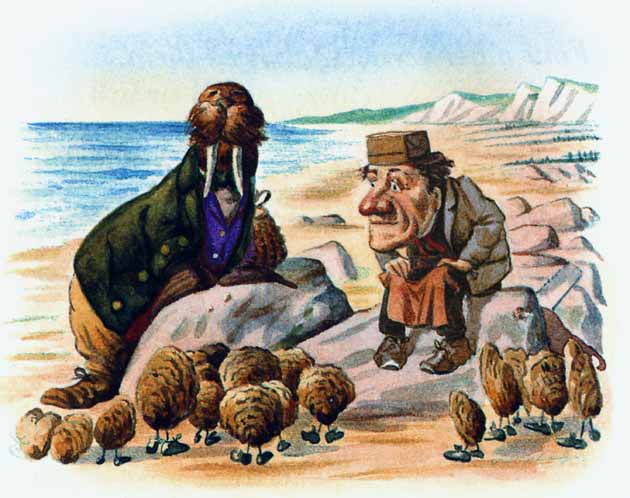
Who Cares About the Sun or How I learned to Love the Sun.

Here comes the Sun, here comes the Sun —- The Beatles, 1969
And I say it’s all right

Image

I am somewhat perplexed and sad.  The moon, the stars and the planets all seem to get a great deal of attention but the Sun is neglected.  There are many more songs, poems and stories about the moon and stars but much fewer about the Sun.  Why the moon should take precedence over the Sun is beyond my understanding.  If the moon suddenly left orbit and when sailing off into space, I am sure many of us would be very sad.  I for one would undoubtedly miss the moon.  I enjoy those evenings when there is a harvest moon and it fills the sky with its bright orange and yellow colors.  I also enjoy the full moon and the many phases it goes through weekly to come back to full again.

However, if the Sun flew off its orbit, or left its position, since I think it does not orbit.  (Last I remember reading; most scientists had agreed that the earth rotated around the Sun and not vice versa.)  Although, I think there were some Republicans and Tea Party members who disputed this scientific observation claiming it was a ploy by the Democrats to raise taxes for Sun screen and Sun protection.  Anyway, if the Sun did leave us, it would mean the end of life on earth.  No Sun, no life. No Sun, no photosynthesis. No Sun, no heat. No Sun, no plants.  No Sun, no sunsets. No Sun, no sun rises.

Here comes the Sun, here comes the Sun
And I say it’s all right

I will refrain from boring you with facts about the Sun.  Let’s just summarize with the following “awesome” statistics.  It is very big.  It is very hot.  It is very far away.  On the negative side, it is not very big as stars go and it will eventually burn out.  If you are (like me) concerned with solar burn out, the following remarks describe the death of the Sun or how long it is expected to last.  This material is from:  http://www.universetoday.com/18847/life-of-the-Sun/

In about 6 billion years, the Sun’s core will run out of hydrogen. When this happens, the inert helium ash built up in the core will become unstable and collapse under its own weight. This will cause the core to heat up and get denser. The Sun will grow in size and enter the red giant phase of its evolution. The expanding Sun will consume the orbits of Mercury and Venus, and probably gobble up the Earth as well. Even if the Earth survives, the intense heat from the red Sun will scorch our planet and make it completely impossible for life to survive. 

When the Sun has blasted off its outer layers, all that will remain will be central core of carbon. But it’s no longer generating solar fusion, and so it will slowly cool down until it becomes the same temperature as the rest of the Universe; just a few degrees above absolute zero. This will take about a trillion years to happen. The Sun’s death will be complete.

 Please note that the Sun will outlast the earth.  According to Universe Today, the earth only has about six billion years left before the death of the Sun ends all life on earth. The Sun will then slowly decay for another 994 billion years before finally burning out completely.

If you have been taking the Sun for granted, you might want to rethink those nice days when you stayed inside or those days when the Sun was shining and you passed up the chance to go on a picnic or simply sit on the patio.  Six billion years might seem like a lot of sunshine but if you live in the Northern Hemisphere, particularly in Wisconsin or Minnesota, you can go for weeks without seeing the Sun.  It really comes down to a lot fewer days of sunshine than six billion.  And of course, as we get older, particularly the baby boomers, six billion could be an irrelevant number, given that our days of sunshine will be considerably more limited than is reflected in this statistic.

Sun, Sun, Sun, here it comes

I would like to issue a warning here: 

“Go outside at your own risk.  This blog is not meant to substitute for sound medical advice concerning your health or the risk of Sun spots or skin cancer.  Please see your physician before going out in the Sun or taking any unnecessary Sun risks.  The author of this blog rejects all claims for liability resulting from heat stroke, Sun exposure, or Sun burn.”

There, now I feel safe from any liability claims or medical malpractice claims.  I have not heard of anyone being sued because of loving the Sun, but I suppose there is always a first time.

I want to tell you a story about the Sun.  There are the famous ones which you all know. The Sun and The Wind story is probably the most famous.  My story is a little different.  It begins with a confession. I confess I love rainy days.  This might seem strange to many if not most people.  Certainly, my wife Karen thinks it is very strange.   How did I come across this love for the damp cold drizzly days where the Sun is nowhere to be seen?  This was not an easy question to answer.

A psychologist that I was seeing a number of years ago taught me a technique to “unlearn” some old hidden childhood messages.  Through a form of mediation, I was taught how to replay some mental tapes that I had assimilated in child hood.  We all assimilate different messages and these messages can continue to dictate our behaviors in later life.  Sometimes these behaviors are very counterproductive.

The results from this technique were to me somewhat astonishing.  Why would  anyone love cold rainy damp overcast days?  Here was my tape:  Father:  “Get your butt outside, it’s too nice to be indoors.”  Now imagine this tape played over and over again a thousand times.  Never once could I stay inside if the Sun was out.  I had to be doing, doing and doing.  Since, I loved reading above every other activity in life, my reading life was relegated to those cold miserable damp days when even my father relented and allowed me to remain in doors.  Thus, a hundred years later and I still feel like I must go outside and play on a nice Sunny day.  I don’t know what or who to play with, but play I must do.  I feel like the police in the Pirates of Penzance:

Father
Then do not stay.

John 
Tarantara!

Father 
Then why this delay?

John 
All right, I go.

Mother/Sisters 
Yes, forward out the door!

Father
Yes, but you don’t go!

John
I go, I go

Mother/Sisters 
Yes, forward out the door!

Father
Yes, but you don’t go!

John
I go, I go

Mother/Sisters
At last he goes!
At last he really goes!

Yes, I left and when he was not looking, I snuck down to the library to find a good book to read until the Sun finally went down and I could return home.

Here comes the Sun, here comes the Sun
And I say it’s all right
Here comes the Sun, here comes the Sun
It’s all right, it’s all right

Yes, now it is truly all right. I can stay in or go out. I can enjoy the Sun or enjoy the rain.  My affection for the Sun has grown over the years.  My appreciation of the limited amount of time that it has left to shine on and my limited time left to appreciate its shine has enabled me to embrace the Sun and truly appreciate its ups and downs. I only hope that my fellow baby boomers can welcome the Sunrises and Sunsets with the same eagerness and enjoyment that I now have for them.  I suppose it will be difficult in heaven to decide whether the weather is going to be Sunny or rainy.  I will be outnumbered if it comes to voting or majority rule.  Do you suppose there will be a heaven for people who love rainy damp dreary days?  If so, I will periodically pay a visit to all the other people in the Sunshine heaven.  I can now appreciate the joys of both.

Time for Questions:

When was the last time you watched a beautiful sunset or a sunrise?  How do you feel when you are watching such a beautiful experience?  How many more sunsets or sunrises do you think you will have time for in your life?  What if you could never see another sunset or sunrise?  How can you make more time to simply watch the sun rise and set?  Is your life too busy?

Life is just beginning.


Previous Older Entries Next Newer Entries