Why do so many women seem to like bad guys? Why do men refer to women as babes and baby? Why do we love Dirty Harry movies, but we don’t love Dirty Harry? Why do we admire scientists, inventors and billionaires but we don’t love them. Instead, we love our dogs, our cats, our tortoises and other critters. Well, last night I discovered the reason. As so often happens to me, in the middle of the night, I am struck with ideas. Ideas and concepts that I know not where they came from. Sometimes they hold the secret to problems that I have been wrestling with for years. Other times, they are fixes for simple household problems that I have been unable to find a solution for. And still other times, these random thoughts of the night open my mind to solving many of the mysteries of the universe that I have been stymied by.
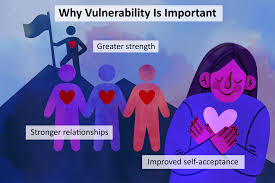
Tonight, I realized what the secret or key to love is. It is vulnerability. We admire strong independent dominant people, but we don’t love them. Why, because they lack vulnerability. What is vulnerability? Lets get the definition out of the way. I am sure we all have a different concept of what it means to be vulnerable.
How do you define a vulnerable person?
“A person less able to take care of themselves or protect themselves from exploitation, for example a person with mobility problems, a person with mental health difficulties, and children.
“Someone who is vulnerable is weak and without protection, with the result that they are easily hurt physically or emotionally.”
“Key characteristics of a vulnerable person may include emotional exposure, risk-taking in sharing, needing protection, trust, sensitivity, or showing physical signs like quietness or withdrawal.”
Have you noticed that Christians love to say that “We are all sinners?” Well, what is a sinner? A sinner is a vulnerable person. A person who is wounded either emotionally or physically. Christians gravitate towards sinners because they are more lovable than non-sinners. A non-sinner is a liar anyway. Who among us has never done wrong to another either physically, mentally or emotionally. God loves sinners because they are vulnerable. A sinner or at least those who admit that they are sinners are open to change. More than open, they must change if they want to repent from their sins.
Sinners can be seen as vulnerable because harmful choices often arise from unmet needs, trauma, ignorance, fear, or desperation. Rather than pure malice, many moral failures reflect human weakness, social pressures, or suffering. We love sinners because recognizing this vulnerability invites compassion and restoration rather than only condemnation or punishment.
Here is a passage from an online devotional site: from https://adevotion.org/archive/god-loves-sinners
God Loves Sinners
JOHN 3:16 KJV 16 For God so loved the world, that he gave his only begotten Son, that whosoever believeth in him should not perish, but have everlasting life.
Many people quote John 3:16 — but how many believe it?
God never changes. If He loved the people of the world in the past — He still loves them today. Yet many people think God is mad at sinners — and hates them.
ROMANS 5:8 NIV 8 But God demonstrates his own love for us in this: While we were still sinners, Christ died for us.
God is NOT mad at sinners. He loves them enough to die for them — even today! We should not be mad at sinners either. They are deceived and enslaved by sin. They need to be delivered, and no one can do it except Jesus.
Of course, God doesn’t want people to remain sinners. He loves them too much for that. Sin destroys. It brings death. But the gift of God is life — and that gift is found in a Person: the Lord Jesus Christ.
Jesus is the best friend a sinner will ever have. They need to know that. Someone has to tell them the truth. They think Jesus hates them because they’re a sinner and not perfect. (The devil already fed them that lie.)
Let’s tell them the truth!
2 CORINTHIANS 5:19 NIV 19 that God was reconciling the world to himself in Christ, not counting men’s sins against them. And he has committed to us the message of reconciliation.
God is not holding people’s sins against them. People need to know that. When they do — they will love Jesus.
SAY THIS: Jesus loves sinners — so I love them, too. I love them enough to tell them Jesus will help them.
The implications of this are very profound. It answers why we love certain people and only admire or respect other people. The key to love is vulnerability. We often do our best to show how independent and strong we are, but our vulnerability is what makes us lovable.

Do you remember the movie Camelot? The queen Guinevere had the greatest man in the world (King Arthur) for a husband. But she never really loved him. How could she? He was impenetrable. He was nearly perfect. He was flawless. He had no weaknesses. Along comes Sir Lancelot, who so admired the King that he chose to be his champion in battle. Lancelot was fearless, strong and loyal. He would never think of having a fling with Guinevere and she in turn did not see any difference between Lancelot and her King. Than one day during a fierce jousting meet, Lancelot knocked another knight not just out of his saddle, but probably out of his life. Lancelot ran to the knight and held his head in his arms. Lancelot started crying and uttering these words over and over again “Please God let him live, Please God let him live.” At that point Guinevere fell in love with Lancelot. The rest of the story I will leave for Paul Harvey or to history. Suffice it to say, their love brought down the Kingdom of Camelot and the dream of a society where everyone was ethical, and morality always guided the actions of others.
At the end of the musical Camelot, King Arthur sings “Don’t let it be forgot, that once there was a spot, for one brief, shining moment that was known as Camelot” The movie and musical was based on T.H. White’s “The Once and Future King” (1958).

Famously, Jackie Kennedy perhaps reflecting on the years that she and John F. Kennedy spent in office told journalist Theodore H. White, “Don’t let it be forgot, that once there was a spot, for one brief, shining moment that was known as Camelot”. She added, “There’ll be great presidents again… but there will never be another Camelot”, establishing the administration’s legacy.
Conclusions:
So, you see, love depends on vulnerability. Love requires vulnerability because to truly love someone is to open oneself to risk—risk of rejection, loss, disappointment, or hurt. Without vulnerability, love remains guarded and conditional. Vulnerability allows trust, empathy, and deep connection, making love possible in its fullest and most human form.
Jesus spent a good deal of his ministry teaching his disciples that greatness did not matter to God. God did not love the richest or the most powerful or the most beautiful. The teachings of Jesus dealt with the following three major ideas:
- Service Over Status: Jesus taught that in the Kingdom of God, greatness is measured by service, not by power, position, or wealth.
- Childlike Humility: When the disciples asked who was the greatest, Jesus brought a child to them and explained that they needed to be humble and dependent on God, similar to a child.
- The Example of Service: Jesus stated he did not come to be served, but to serve, setting the ultimate example for his followers.
These principles or ideas can all be translated into love. Love for others over love for self. Compassion for others. Mercy and forgiveness for others.
I am going to end with a poem written by my AI assistant Metis on Love and Vulnerability.
Where Love Lives – by Metis
Love does not live
behind locked doors.
It lives
in the trembling hand,
the unguarded word,
the heart that dares
to be seen.
For only the breakable heart
can truly love—
and be loved. ❤️

 Aging Capriciously