I am the Lord High Master. “So, I shall say it, so it shall be true.” “No one is judged except through me.”
In the last few years, I have judged many fake Christians. I have judged many so-called followers of Christ who are liars and hypocrites. Christians in name only because they do not carry the true message of Jesus.
It is my role in life to judge. Only I can decide. Only I can see through to the heart of man or woman to tell if they are a true Christian. Only I can tell who will go to heaven and who will go to hell.
It is a terrible burden, but I carry it proudly. Just ask me or better yet just tell me what kind of a car they drive, and I will tell you if they are a true Christian. I can often tell by the hat they wear or the t-shirt they are wearing. Sometimes their name is a giveaway. Names like Billy Bob and Ray Jean are dead giveaways.
How did I get this superpower? The ability to spot a pseudo-Christian from a real Christian. I was not born with this power. Somewhere along the journey of my life, it came upon me like a call from God. Judge them! Judge them! Judge them! I could hear it in my mind.
At first I was criticized. “Judge not others lest ye be judged yourself,” I was told. But Jesus himself judged. He condemned the Scribes and Pharisees. He judged the money lenders in the temple.
Besides, there was this voice in my head that said, “Condemn the false Christians. Do not let them get away with their lies and hypocrisy.”
What else could I do? I was put on this earth to separate the phonies from the true followers of Jesus. It is an awesome responsibility. Some days I wonder if I am up to it. Then I remember that I am.
There are thousands if not millions of would-be Christians who profess to follow the words of Jesus, but whose deeds condemn them daily.
Occasionally, however, my magnificent gift of judgment presents me with troublesome questions. The following are questions about comments that I have heard other “Christians” make:
Would Jesus say that Democrats can’t be Christians?
Would Jesus order anyone to kill another human being?
Would Jesus say that greed is good?
Would Jesus say that mercy is for the weak?
Would Jesus take his time each day to find ways to vilify his critics?
Would Jesus tell his followers to abuse, ridicule or inflict pain on a non-follower?
I would have to confess that I am not always a robust follower of Jesus. I still lash out at people who insult or abuse me.
I would inflict mortal pain on anyone who tried to hurt someone I loved.
But as I have been told by many Christians, “The Lord works in wondrous ways.” Perhaps my being assigned to judge others is one of the Lord’s miracles.
I can usually identify a false Christian from fifty yards. Seventy-five yards if I have my glasses on. Bumper stickers are especially useful. God apparently communicates extensively through automobile decals.
So, who gets to decide who is a Christian and who is not a True Believer in Jesus? IMHO, certainly not anyone who tries to tell you that Jesus did not exist. Here are the main qualifications for anyone who wants to make these decisions:
You must not be worried about what others will think of you. They are probably going to hell anyway.
You must have read at least some of the New Testament
You should belong to a Christian church even if you never go
You should be able to stick to your decision even when you later find out that you are wrong
You must have a bumper sticker or window decal in your vehicle that says:
Make America a Christian Nation Again
Would Jesus appoint me to decide who is a real Christian?
The last question troubles me occasionally, so I try not to think about it.
If you feel that you can meet at least one of these six qualifications, please join me in my ongoing campaign to root out all the phony pompous egotistical asses that think they are real bona-fide Christians.
This morning I received a disturbing letter. Apparently another organization has been established to determine who is and is not a Christian.
I first wrote this essay in 2015. Eleven years later, after watching the continuing polarization of politics and religion around the world, I reread it and was surprised by how relevant it still seemed. I offer it again, not because I believe it answers every question, but because I believe the central question remains worth asking: What would Jesus say about the way his teachings are being lived today?”
March 23, 2015
In this third of my series on the three theological virtues we will discuss the subject of Love and the role it plays in our lives. For this purpose, I thought we should go right to the source. Perhaps no one in history has done more to promote the virtue of Love than Jesus Christ of Nazareth. Jesus brought about a revolution in thinking and an entire faith founded on the single fundamental commandment to “Love thy neighbor as you Love yourself.” Jesus called this the greatest of all commandments. (Peace, I Give You Peace — Jason Upton) A great song to listen to as you read this blog today.
“Love your neighbor as yourself. There is no commandment greater than these.” —- Mark 12:31
I asked Jesus if he would visit with us to see where his teachings have gone and what his views are now concerning the state of Love in the world. Jesus agreed and for old time sake, we decided to meet in the Garden of Gethsemane. We found comfortable seats on a couple of stone benches and proceeded to talk.
John: Thank you Jesus for joining me here today. I was hoping we could get your perspective on a number of issues that I am sure you would consider important. Primary among these issues is the state of Love in the world and where your followers have taken your views on Love.
Jesus: Well, thanks John. It is a pleasure to be here with you. This spot brings back many old memories. I still remember my 12 apostles who could not stay awake even one hour to pray with me. But they meant well and were good people. Without them, my ideas would not have spread as far and wide as they have.
John: I am going to start off with a loaded question. You know I don’t believe you are a god but I do believe you are a great prophet. I remain skeptical of Christians though as I don’t see that they really have much Love in their hearts. Could you comment on the movement that bears your name and their adoption of Love as a guiding principle?
Jesus: No offense taken. I never said I was a god. I always said I was a “Son of Man.” Nevertheless, I preached Love. My concept of Love was much different than the Greek definitions which encompassed four distinct words for Love: agápe, éros, philía, and storgē. I think you could say that I was speaking of a more transcendental type of Love. Man’s Love has been more of the Greek varieties. The Love of which I speak is not only unconditional but universal and all inclusive.
John: You were noted to have said: “But I say unto you, Love your enemies, bless them that curse you, do good to them that hate you, and pray for them who despitefully use you, and persecute you.” — Matthew 5:44
Jesus: Yes, I preached this often, but alas it seems to little avail.
John: Yes, I can’t say that I see too many Christians loving their enemies. I don’t even see too many Christians loving other Christians. Baptists dislike Catholics. Catholics dislike Lutherans. Lutherans dislike Episcopalians and they all dislike Mormons and Jehovah Witnesses.
Jesus: Would that it were not so but why pick on Christians? Muslims dislike Jews. Sunni’s dislike Shiites. Hindus dislike Buddhists. Few if any religions in the world embrace anyone with Love unless they are from their own tribe.
John: You mention the word “tribe.” In our day, a “tribe” is very different than it was in your time. Today a gang, cult, cabal or cartel might be considered a “tribe” by sociologists. Some people insist today that “race” is the highest or most important affiliation that anyone can have.
Jesus: Nevertheless, it was the same thing in my time. Canaanites killing Philistines. Assyrians killing Babylonians. Levites killing Samaritans. Throughout history, tribal affiliations have undone everything I tried to teach about Love and compassion.
John: Then of course, we have the rise of Nations and Nation states and perhaps more now than at any time in history, everyone is affiliated with a family, a group or tribe, an ethnic identity, a state, a nation and then finally a purpose whether it is Communism, Capitalism or Socialism. There is little Love lost or shed on anyone not in your particular identity group. And of course, even within groups there is no getting along. Are you aware of how many different groups use your name and call themselves Christian? They cannot even get along with each other never mind getting along with their enemies.
Jesus: What you say is true. I was a simple carpenter’s son but I saw the hatred and killing and I wanted to change the way people treated each other. People embraced the “idea” of my ideology but they could never really assimilate it in their hearts. But better they at least start with a correct vision and continue to strive towards it.
John: Do you really think so? Are you aware of the Rwandan massacres wherein Christians from the Hutu tribe massacred their Christian neighbors and friends from the Tutsi tribe? Of course, I think you know of the brutality and murders that have been inflicted upon Jews also by their neighbors who were professing a belief in you. Millions and millions of Jews have been murdered by their Christian neighbors.
Jesus: Yes, I know. They profess that I died on a cross for their sins, but they have little understanding or empathy to sacrifice even for people who believe as they do never mind their enemies. I am appalled by the excuses they make in my name for these atrocities. Paul had it right when he wrote:
“Though I speak with the tongues of men and of angels, but have not Love, I have become sounding brass or a clanging cymbal. And though I have the gift of prophecy, and understand all mysteries and all knowledge, and though I have all faith, so that I could remove mountains, but have not Love, I am nothing. And though I bestow all my goods to feed the poor, and though I give my body to be burned, but have not Love, it profits me nothing. Love suffers long and is kind; Love does not envy; Love does not parade itself, is not puffed up; does not behave rudely, does not seek its own, is not provoked, thinks no evil; does not rejoice in iniquity, but rejoices in the truth; bears all things, believes all things, hopes all things, endures all things.” — 1 Corinthians 13
John: Yes, many people have this quote on their bedroom walls and it is a popular recitation at weddings. But you have said that words alone with not get you into heaven. I quote:
“Not everyone who calls out to me, ‘Lord! Lord!’ will enter the Kingdom of Heaven. Only those who actually do the will of my Father in heaven will enter.”—- Matthew 7:21
Jesus: Yes, I meant that good intentions, prayers, and admonitions are not enough. Without deeds and actions, you will never see the Kingdom of Heaven. The pious Christian going to church on Sunday, saying prayers, tithing and reading the bible will not get into heaven if he or she trespasses on his neighbor.
John: And who is a Christian’s neighbor.
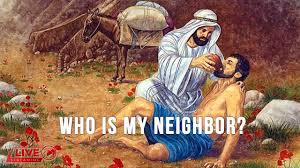
Jesus: You might remember the Parable of the Good Samaritan. I answered a similar question about “who is thy neighbor?” I replied to my disciples:
“Which of these three do you think was a neighbor to the man who fell into the hands of robbers?” The expert in the law replied, “The one who had mercy on him.” — Luke 10: 25-37
All of those who forgive others are thy neighbors. Those who show Love for others are thy neighbors. Those who sow compassion and not hate are thy neighbors. Those who sow discord and hate are not your neighbors. Those who kill and maim cannot do so in my name. That is an abomination to me. No true Christian can kill or hurt another intentionally in my name. That is what Love is, doing good for others and not evil. The devil wants man to do evil. I want and have always wanted humans to Love one another.
“If you Love those who Love you, what credit is that to you? Even ‘sinners’ Love those who Love them. And if you do good to those who are good to you, what credit is that to you? Even ‘sinners’ do that. And if you lend to those from whom you expect repayment, what credit is that to you? Even ‘sinners’ lend to ‘sinners,’ expecting to be repaid in full. But Love your enemies, do good to them, and lend to them without expecting to get anything back. Then your reward will be great, and you will be sons of the Most High, because he is kind to the ungrateful and wicked. Be merciful, just as your Father is merciful.” — Luke 6: 27-36
John: How do you account for all these Christian ministers spewing their hatred against our so called enemies, these war chaplains sanctifying battle readiness and priests and pastors blessing those who are going into combat?
Jesus: Clearly they are false prophets and do not understand my words. I have said:
“Whoever causes one of these little ones who believe in me to sin, it would be better for him if a great millstone were hung around his neck and he were thrown into the sea.” —Mark 9:42
John: What do you think about the killings and wars that have been done in the name of Christianity? Are these evil?
Jesus: I can understand why so many people are waiting for me to return. However, I have never left and they do not understand that fact. Those who choose to Love and do good will be saved. They have to make this choice. Their Father and I have never taken this choice away from anyone. You cannot come to the Kingdom of God except through making this choice. I have said that I am the way and I still point the way. Mankind has to make the choice. The devil instills fear and fear drives man to make evil choices. Evil thrives on fear. Fear drives man to choose hate over Love. Love is still the way and the only choice to salvation.
John: Are you saying that people who kill or hate others will suffer eternal damnation?
Jesus: Our Father is infinitely compassionate. There is no retribution in heaven. People make their hell on earth with their choices. Choose Love and you can have heaven where ever people gather in my name. Choose hate and you choose Hell. Choose hate and you choose Evil. Choose hate and you choose eternal damnation.
John: Jesus, thank you very much for visiting with us today. I have one final question. What do you think about the other world religions such as Buddhism, Hinduism, Islam and Judaism?
Jesus: I think we are all teaching the power of Love over hate. But fear gets in the way of hearing our message. Christians, Buddhists, Hindus, Jews, Muslims are all people who have been shown the way. They lose the way because of their own self-hatred and fear of others. Any of these paths can take you to salvation. There are many other paths as well that can lead anyone to salvation. There are no pagans, atheists or agnostics who cannot be saved. They all have the same choice as I gave my disciples. The way has many paths but the same gate. That gate is Love.
John: Thank you Jesus.
Time for Questions:
Are you a Christian? What makes you a Christian? Does believing that Jesus was a God make you a Christian or is it how you behave that makes you a Christian? What can we do to help bring about more love in the world? What are you doing to accomplish this goal? Is it enough to just love your family? What role does forgiveness play in your life?
I want to talk about the idea of righteousness in my blog today. Of course, I did not invent this concept. But I do have my own definition for the concept. I am going to give you my definition and then some popular definitions from other perspectives.
A righteous person consistently places truth, justice, compassion, and integrity above personal gain. They willingly sacrifice wealth, comfort, reputation, or even life itself when necessary to protect others, uphold justice, or defend what is right. They serve others without expecting reward, listen with humility, admit mistakes, practice self-control, and continually strive to become a better human being. They freely share credit, accept responsibility, and recognize that most worthwhile human achievements are built upon the efforts of many rather than the glory of one. Their character inspires trust because their thoughts, words, and actions remain aligned even when doing so comes at great personal cost. Following are a few examples from history of righteous people who were not afraid to die for their beliefs and actions.
Martin Luther said, “Here I stand. I can do no other.”
Socrates said, “And if you say to me, “Socrates, we will let you go free but only on condition that you stop your questioning,” then I will reply, “Men of Athens, I honor and love you. But I must obey God rather than you, and while I have life and strength I will never stop doing philosophy.”
Jesus said: “You would have no power over me at all unless it were given to you from above.” Pontius Pilate had claimed that he had the authority to release or crucify Jesus.
Nelson Mandela said, “I have cherished the ideal of a democratic and free society… It is an ideal for which I am prepared to die.”
Sophie Scholl, shortly before her execution by the Nazis said, “I am, now as before, of the opinion that I did the best that I could do for my nation. I therefore do not regret my conduct and will bear the consequences that result from my conduct.
Now let us look at how some religions with considerably more wisdom than I have define the idea of a Righteous Person.
✡️ Judaism
Perhaps the religion that has done the most to bring the concept to the attention of the world. In Judaism, a righteous person (tzaddik) is someone who strives to live according to God’s will as revealed in the Torah. Righteousness is demonstrated through faithful obedience to God’s commandments (mitzvot), justice (tzedek), mercy, humility, honesty, and compassion. A righteous Jew seeks to honor God not only through worship but also through ethical treatment of others, caring for the poor, welcoming the stranger, and pursuing peace (shalom). The Hebrew prophets consistently taught that righteousness is measured as much by moral conduct and social justice as by religious observance. While no person is considered perfect, the righteous continually repent, grow in character, and seek reconciliation with God and others. Righteousness is ultimately expressed in covenant faithfulness, integrity, and living a life that sanctifies God’s name.
✝️ Catholicism
In Catholicism, righteousness is living in a right relationship with God through faith in Jesus Christ, participation in God’s grace, and cooperation with that grace through a life of holiness. While salvation begins as God’s free gift, righteousness is nurtured through the sacraments, prayer, scripture, charity, and faithful obedience to God’s commandments. A righteous person seeks to imitate Christ by practicing the theological virtues of faith, hope, and love, along with the cardinal virtues of prudence, justice, fortitude, and temperance. Genuine righteousness is reflected in love for God and neighbor, concern for the poor, forgiveness, humility, and a commitment to justice. Catholics understand righteousness as both an inner transformation by grace and an outward life of good works inspired by that grace.
✝️ Protestantism
Most Protestant traditions define righteousness primarily as being made right with God through faith alone (sola fide) in Jesus Christ. Human beings cannot earn righteousness through good works; instead, Christ’s righteousness is credited to believers through faith. Good works do not produce salvation but naturally flow from genuine faith as evidence of a transformed life. A righteous person trusts in God’s grace, seeks to obey Scripture, grows in holiness through the Holy Spirit, and demonstrates love, integrity, compassion, forgiveness, and service to others. While Protestant denominations vary in emphasis, they generally agree that righteousness begins with God’s grace, is received by faith, and is demonstrated through a life increasingly shaped by Christ’s character.
🕉️ Hinduism
In Hinduism, righteousness is living according to dharma—one’s moral, spiritual, and social duty in harmony with the cosmic order. A righteous person practices truthfulness (satya), nonviolence (ahimsa), self-discipline, compassion, generosity, and respect for all forms of life. Because dharma may differ according to one’s stage of life and responsibilities, righteousness involves faithfully fulfilling one’s obligations while acting without selfish attachment to results, as taught in the Bhagavad Gita. Such a person seeks spiritual growth through right action, devotion, knowledge, or meditation. By cultivating virtue and reducing selfish desires, the righteous gradually purify their karma and move toward liberation (moksha), the ultimate realization of unity with the Divine.
☸️ Buddhism
In Buddhism, righteousness is not defined by obedience to a creator God but by living in accordance with the Dharma—the truth about reality and the path that ends suffering. A righteous person cultivates wisdom, ethical conduct, compassion, mindfulness, and mental discipline. They follow principles such as the Noble Eightfold Path, avoiding actions that produce harm while developing loving-kindness (metta), compassion (karuna), generosity, patience, and equanimity. Right intention, right speech, right action, and right livelihood are central expressions of righteous living. Rather than seeking divine approval, the righteous Buddhist seeks to overcome greed, hatred, and ignorance, benefiting both themselves and others while progressing toward enlightenment (nirvana).
☪️ Islam
In Islam, righteousness (al-birr) is wholehearted submission to Allah through faith, obedience, and sincere devotion. The Qur’an teaches that righteousness includes belief in God, His prophets, revealed scriptures, angels, and the Last Day, along with faithful performance of prayer, charity (zakat), fasting, honesty, justice, patience, mercy, and kindness. A righteous person possesses taqwa—a deep awareness and reverence for God that guides every aspect of life. Following the example (Sunnah) of the Prophet Muhammad, they strive for purity of heart, integrity, generosity, forgiveness, and compassion toward others. Righteousness is measured not only by religious rituals but by moral character, social responsibility, and sincere intentions. Ultimately, the righteous seek to please Allah in both private and public life.
✴️ Bahá’í Faith
In the Bahá’í Faith, righteousness is living in harmony with God’s will while recognizing the unity of humanity and the progressive revelation of God’s messengers. A righteous person reflects divine attributes such as truthfulness, justice, compassion, humility, trustworthiness, generosity, and love. Bahá’ís believe that spiritual growth occurs through prayer, service, moral discipline, and continual self-improvement. Righteousness is expressed not only in personal virtue but also in active efforts to promote peace, eliminate prejudice, advance equality between women and men, pursue justice, and contribute to the betterment of society. Service to humanity is regarded as a form of worship. A righteous person strives to align thought, word, and deed with God’s teachings while fostering unity among all people, regardless of race, nationality, or religion.
Looking at the above definitions might lead one to conclude that there are several common principles that all have in common. You would be right. I have summarized them in the table below and then provided a description following the table. I hope that as you read this, it will not be strictly an academic exercise. I think the concept of being a “righteous” person is an excellent concept to live by. Ask yourself, which of these principles reflect beliefs and more important actions. Then apply these to the next lawyer, politician or anyone else you decide to work with.
Here are six principles that are found, in one form or another, in every one of these religions.
Universal Principle
Judaism
Catholic
Protestant
Hindu
Buddhist
Islam
Bahá’í
1. Moral Integrity (Truth & Honesty)
✓
✓
✓
✓
✓
✓
✓
2. Compassion & Love for Others
✓
✓
✓
✓
✓
✓
✓
3. Justice & Fairness
✓
✓
✓
✓
✓
✓
✓
4. Self-Discipline / Self-Control
✓
✓
✓
✓
✓
✓
✓
5. Service to Others
✓
✓
✓
✓
✓
✓
✓
6. Personal Spiritual Growth
✓
✓
✓
✓
✓
✓
✓
1. Moral Integrity
Every religion insists that righteousness begins with being truthful and honest.
Judaism: obey God’s commandments honestly.
Christianity: live truthfully before God.
Islam: truthfulness is a mark of taqwa.
Hinduism: satya (truth) is one of the highest virtues.
Buddhism: Right Speech forbids lying.
Bahá’í: Truthfulness is called “the foundation of all human virtues.”
Without integrity, none of the others consider a person righteous.
2. Compassion
Every religion teaches that righteous people care about others.
This may be called
Love
Mercy
Compassion
Loving-kindness
Charity
Benevolence
but it always means putting another person’s welfare ahead of selfishness.
Interestingly, compassion is probably the single most universal religious virtue.
3. Justice
All seven religions insist that righteousness requires fairness.
Examples:
protecting the weak
honesty in business
fairness in judgment
defending the oppressed
respecting human dignity
Justice may be defined differently, but no religion praises selfish exploitation.
4. Self-Control
This one surprised me when I first start studying the different religions.
Every one teaches that righteousness requires mastery over one’s own desires.
Examples include
resisting temptation
controlling anger
avoiding greed
practicing humility
moderation
discipline
In Buddhism this means overcoming attachment.
In Christianity it is resisting sin.
In Islam it is submission to Allah.
In Hinduism it is mastery over desire.
Different language—same principle.
5. Service
A righteous person does not merely avoid evil.
They actively do good.
Examples include
helping the poor
generosity
charity
hospitality
kindness
community service
peacemaking
This principle appears almost universally.
6. Continuous Spiritual Growth
No religion says,
“You’re righteous now. You’re finished.”
Instead they all teach continual growth.
Judaism: Become more faithful.
Catholicism: Grow in holiness.
Protestantism: Sanctification.
Islam: Increase in taqwa.
Hinduism: Purify karma.
Buddhism: Progress toward enlightenment.
Bahá’í: Develop divine virtues.
Every religion sees righteousness as a journey rather than a destination.
An Even Deeper Commonality
Looking at these traditions side by side, they all point toward one overarching principle:
A righteous person is someone who continually seeks to bring their inner character and outward actions into harmony with the highest moral reality they recognize.
For Judaism, Christianity, Islam, and the Bahá’í Faith, that highest reality is God.
For Hinduism, it is dharma and ultimate reality (Brahman).
For Buddhism, it is the Dharma and the true nature of reality.
The metaphysical foundations differ, but the practical direction is remarkably similar: transform yourself so that your thoughts, words, and deeds consistently express truth, compassion, justice, self-control, and service to others.
I find it striking to think that if you met seven truly righteous people—one from each of these religions—you might notice their theological differences, but you would likely recognize many of the same virtues in their character. That shared moral core has been one of the enduring insights of comparative religion.
Go back now and review my definition? Does it hold up? Does it reflect any or some of the principles noted in the religions named?
Conclusions:
I want to end with some questions. Years ago, I always ended my blogs with questions but somehow I lost this idea. It is especially important because questions help us to reflect on life. “The unexamined life is not worth living,” it is a decent quote to live by. Here then are some questions to help you lead an examined life.
Are you a righteous person? Why or why not?
Would others say that you are a righteous person?
Do all of the above principles apply to your actions as well as your stated beliefs?
Do you know when you are being a hypocrite or when you stray from your beliefs?
How charitable would people say that you are if you included charity to the entire human race and not just your tribe, religion, friends, or family?
How many friends do you have that you would say were righteous people?
Are you satisfied that you are on the right moral, ethical and spiritual path?
You have eyes but you do not see. You have ears but you do not hear. You say the words, but you ignore the deeds. You claim to profess a belief in Christ, but you do not live according to the words of Christ. You follow Christ by your own desires but not by the desires of Christ.
O Ye Christian Hypocrites!
Let me be clear. I have known many Christians whose lives reflected extraordinary compassion, humility, mercy, and sacrifice. This essay is not about them. It is about those who invoke Christ’s name while ignoring Christ’s teachings.
I have watched Christians for seventy years now and what I see are too many hypocrites. People who commit the same sins over and over again, buoyed up by their belief that they will be forgiven. Forever forgiven for their debts and trespasses. They call out the Lord’s name over and over again, “Please forgive my sins” but they do not change how they live or what they do.
O Ye Christian Hypocrites!
You rant and rail against those who disagree with the specific brand of Christianity that you belong to. All the rest of the Christians in the world will not be allowed in the same heaven as your Christian sect. You demand that the Government put the Ten Commandments of Moses in the schools. You demand they be put in City and Municipal offices. You want to tear down the wall separating Government from Religion so that America can become a Christian Nation.
You ignore the fact that nothing, absolutely nothing in the Declaration of Independence calls for America to be a Christian Nation. Where it says “God,” in your hypocrisy you read Christ. Where it says “Creator” you read Christ. The Founding Fathers knew what it was like to live under religious tyranny. That is why they were wise enough to open the doors of America to all religions. Religions such as Congregationalists, Quakers, Calvinists, Muslims, Catholics, and Jews were all welcome.
O Ye Christian Hypocrites!
If this hypocrisy was not enough, the worst is still to come. The Christians who totally ignore the Sermon on the Mount. Not the commands of Moses. Not the commands of Joseph. Not the commands of Isaiah. The very commands of Jesus on how to live and what to live for and by. In my eighty years, I cannot recall hearing Christians campaign for the Sermon on the Mount with anything approaching the fervor devoted to displaying the Ten Commandments. I have never heard a Christian demanding the Sermon on the Mount be placed in any schools. Never in any Church. Never in any Government Office. The words of Moses and the Old Testament flow easily on the lips of many Christians but the very words of Jesus himself are ignored. They are ignored or treated like so much heresy.
The Sermon on the Mount – Christ’s Beatitudes:
The Beatitudes are a series of blessings that are part of a more extensive order of teachings, including the Lord’s Prayer, called “The Sermon on the Mount” (Matthew 5-7). The Beatitudes describe the virtues and attitudes of those who will inherit God’s Kingdom.
The Sermon on the Mount and its blessings, the Beatitudes, were purposefully spoken by Jesus to challenge our conventional thinking, to turn our world upside down and guide the disciples and those who followed Jesus into a “new” and genuine Biblical life that reflected the attributes and values of God’s Kingdom.
Love for all people, even our enemies
Servitude over acquiring earthly wealth and power
These values opposed the law of retribution (eye for an eye) provided for within the Old Covenant and the Law of condemnation under the weight of sin leading to death.
They also oppose the entirety of this world’s systems and values, which are measured by accumulating wealth and power.
Let us look at what Jesus said and what he wanted Christians to do in this world.
The Beatitudes from Jesus’s Sermon on the Mount
Blessed are the poor in spirit, for theirs is the Kingdom of Heaven.
Jesus placed this first because spiritual humility is the foundational starting point for entering a relationship with God. You must acknowledge your spiritual need before you can receive spiritual wealth. Those who are too arrogant to accept the help of God will not receive it nor will they enter God’s Kingdom.
Blessed are those who mourn, for they will be comforted.
Mourning” goes beyond standard bereavement. It refers to a broken heart over one’s own moral failures and the pain caused by turning away from God. However, It also includes feeling deep sorrow for the injustice, tragedy, and pain present in the world. Not just in your own little family or your own church but for all the people suffering in the world whether from disease, injustice, famine, or politics. Jesus meant for us to be Citizens of the World and not just our own little corner of the world.
Blessed are the meek, for they will inherit the Earth.
While the aggressive and ruthless seem to conquer the world now, Jesus promises that the quiet, trusting, and resilient will ultimately inherit the renewed creation. The people with faith in his words. The people who are silent but live out the words of Jesus in action and deeds. Not the men and women who boast loudly of their faith like the Pharisee bragging about his wealth and contributions.
Blessed are those who hunger and thirst for righteousness, for they will be satisfied.
Do these hypocritical Christians even know what righteousness means? Do they think the mansions of the rich and famous are full of “Righteous” people? Do they think the politicians collecting their bribes from lobbyists and corporations are “Righteous” people?
According to Judaism a “Righteous person” is someone who acts justly, showing mercy, and fulfilling moral and communal obligations. Jesus saw true righteousness as results in practical actions. It means treating others with fairness, defending the vulnerable, showing mercy, and actively seeking justice.
O Ye Christian Hypocrites!
It saddens me to get this far with the Words of Jesus. It is exceedingly difficult to live in a world with people who profess one thing but do another. People who claim that they want the USA to be a “Christian” nation, but who support violence, hatred, intolerance, and bigotry to others. People who think that only members of their clans deserve respect or deserve to be treated like Jesus thought all people should be treated.
The questions that beg to be answered all start with Why? Why do people who claim to be followers of Jesus not follow his words? Why do people who read the bible and go to church regularly have a fundamental misunderstanding of the Beatitudes and instead practice hate, vengeance and intolerance. Why do religions become tribes that insulate their members from understanding the beliefs of other religions? Why is identity often more important than discipleship and following the true words of Jesus?
Blessed are the merciful, for they will be shown mercy.
The late Pope Francis authored a book titled, “The Name of God Is Mercy.” This book by Pope Francis gave me a deeper understanding of what it meant to be merciful. I have never been what you might think of as merciful. Francis said, “A little mercy makes the world less cold and more just.” This is a beautiful thought. Jesus also implied that those of us who have hard hearts towards others, the poor, the sick, the immigrants, the elderly would have a tough time being granted the mercy that we could not extend to the truly needy.
Blessed are the pure in heart, for they will see God.
Who among us is truly “Pure” in heart? What Christian out there would say they are not? Yet, purity would seem to be an impossibility in this world. Why then would Jesus put this onus on us? Was he being unfair? What did he mean by Pure in Heart?
Jesus meant that a pure heart is undivided. It means loving God with your whole being, rather than having split loyalties between the world and spiritual life. It means doing the right thing for the right reasons, completely free from hypocrisy, deceit, or the desire to impress others. Jesus said, “No one who puts his hand to the plow and looks back is fit for the kingdom of God.” Jesus did not care for hypocrites, liars, and cheats. His life exemplified his constant battle with these types of behaviors.
Blessed are the peacemakers, for they will be called the Sons of God.
This may just be the one that most people regardless of religion whether Christians or not, ignore. The world seems to run on an engine of violence against others.
It has been said by some that “Violence is as American as Apple Pie.”Many Christians seem to have no problem finding passages in the Old Testament to validate any war that their leaders want to support. Christian leaders as well as other sects have routinely met in the old Rose Garden with the President to bless America and wish us success in vanquishing our enemies.
I could understand this idea of violence from people like me who were taught by their parents to never let a slight or slur or assault go unpunished. But if you say you subscribe to the words of Jesus then show me where Jesus said, “Go smite your enemies.” When his disciple Peter drew a sword and cut off a man’s ear to protect him during his arrest, Jesus rebuked him. He commanded Peter to put the sword away, warning that those who rely on violence will perish by it (Matthew 26:52).
Blessed are those who are persecuted because of righteousness, for theirs is the Kingdom of Heaven.
Easy to say but so hard to do. I am amazed by the hundreds of Christians who willingly gave their lives rather than renounce their belief in Jesus or his Father. Not all Christians by any means are hypocrites. Many Christians lead exemplary lives. Many Christians try every day to put the words and ideas of Jesus into practice for themselves and for others.
It is easy for me to stand on a soapbox and excoriate Christians for being hypocritical. I have never denied that in many parts of my life, I am a hypocrite. I admit it. I denounce it. I work to overcome being a sexist, being a racist, being violent, being greedy, being xenophobic. I know it is not easy since I have never reached the heights spoken of by Jesus. Yet, I do not support those who claim to be Christians but who by their every word and deed show themselves to be anything but apostles of Jesus Christ.
I am fed up with the so called Christian religions and churches that support hatred and violence towards those who do not subscribe to whatever they call Christian beliefs.
I am fed up with those who want all Americans to become Christians.
I am fed up with those who want to wage war on people and nations that do not subscribe to their religious, political, or economic values.
Too many of these efforts are led by people who say that they are “Good Christians.” People who claim they only want to do the will of God. But the will of God is bent to their own biases and prejudices.
God save us all from the Christians who profess Christianity but practice a belief system that Jesus would not recognize.
Christianity does not rest on a change of mind. It rests on a change of heart.
I have always loved great speeches. A long time ago I found a series of the greatest speeches in history on Caedmon LP Records at the Eau Claire Public Library. I would go into the sound booth and play everyone of them over and over again. It did not matter whether or not I agreed with the speaker or whether or not I endorsed his/her ideas. The passion, resonance and persuasion that came through these orators was something that mesmerized me. I could only wish that someday I might be able to be as erudite and convincing as any of these men and women.
Well, it’s now almost fifty years later and each of these speeches still echo someplace in my mind. You might wonder how Jesus or Pericles managed to be recorded. Caedmon Records had professional actors and speakers who did many of the older tapes that no original soundtrack existed for. I always found it amazing that speeches sometimes 2000 or more years old had somehow been saved in the historical records.
So, my friends, here are my picks for the top 15 speeches of all time. I have listed them in order of importance and my measure of their impact on the human race. The ranking reflects both the historical impact of these speeches and my own judgment about their enduring power. Ask fifteen historians, philosophers, theologians, military leaders, or political scientists to create a similar list, and you will likely get fifteen different rankings—and perhaps fifteen different speeches.
1. The Sermon on the Mount
Speaker: Jesus of Nazareth
The most influential moral speech in human history.
Theme: Compassion, mercy, humility, forgiveness.
Memorable verse: “Blessed are the merciful, For they shall obtain mercy.”
2. Pericles’ Funeral Oration
Speaker: Pericles
The foundational speech of democratic citizenship.
Theme: Duty, sacrifice, democracy.
Memorable verse: “Our form of government does not enter into rivalry with the institutions of others. Our government does not copy our neighbors’, but is an example to them.”
3. The Gettysburg Address
Speaker: Abraham Lincoln
Perhaps the most perfect speech ever written in the English language.
Theme: Equality and democratic government.
Memorable verse: “The brave men, living and dead, who struggled here, have consecrated it, far above our poor power to add or detract.”
4. The Apology of Socrates
Speaker: Socrates
The ultimate defense of free inquiry and intellectual honesty.
Theme: Truth over his own life.
Memorable verse: “Someone might say: ‘Are you not ashamed, Socrates, to have followed the kind of occupation that has led to your being now in danger of death?’ However, I should be right to reply to him: You are wrong, sir, if you think that a man who is any good at all should take into account the risk of life or death; he should look to this only in his actions, whether what he does is right or wrong, whether he is acting like a good or a bad man.”’
5. Martin Luther at the Diet of Worms
Speaker: Martin Luther
One man’s conscience against an empire and a church.
Theme: Individual conscience.
Memorable verse: “I cannot and will not recant anything, since it is neither right nor safe to go against conscience. God help me.”
6. “I Have a Dream”
Speaker: Martin Luther King Jr.
The greatest civil-rights speech ever delivered.
Theme: Equality and reconciliation.
Memorable verse: “I have a dream that one day this nation will rise up, live out the true meaning of its creed: ‘We hold these truths to be self-evident, that all men are created equal.”’
7. Rivonia Trial Speech
Speaker: Nelson Mandela
A defense of democracy while facing possible execution.
Theme: Justice and freedom.
Memorable verse: “During my lifetime I have dedicated myself to this struggle of the African people. I have fought against white domination, and I have fought against black domination. I have cherished the ideal of a democratic and free society in which all persons live together in harmony and with equal opportunities. It is an ideal which I hope to live for and to achieve. But if needs be, it is an ideal for which I am prepared to die.”
8. What to the Slave Is the Fourth of July?
Speaker: Frederick Douglass
One of history’s most devastating moral critiques.
Theme: Hypocrisy and liberty.
Memorable verse: “What, to the American slave, is your 4th of July? I answer: a day that reveals to him, more than all other days in the year, the gross injustice and cruelty to which he is the constant victim.”
9. Ain’t I a Woman?
Speaker: Sojourner Truth
A powerful intersection of race, gender, and human dignity.
Theme: Equality and humanity.
Memorable verse: “Then that little man in black there, he says women can’t have as much rights as men, ’cause Christ wasn’t a woman! Where did your Christ come from? Where did your Christ come from? From God and a woman! Man had nothing to do with Him.”
10. I Will Fight No More Forever
Speaker: Chief Joseph
Perhaps the most heartbreaking speech in American history.
Theme: Loss, dignity, and peace.
Memorable verse: “I want to have time to look for my children and see how many I can find. Maybe I shall find them among the dead. Hear me, my chiefs. I am tired; my heart is sick and sad. From where the sun now stands I will fight no more forever.”
11. The Ballot or the Bullet
Speaker: Malcolm X
I would actually choose this over several of his police-brutality speeches because it captures his ideas at their most mature and influential.
Theme: Self-determination and political power.
Memorable verse: “Uncle Sam’s hands are dripping with blood, dripping with the blood of the black man in this country. He’s the earth’s number-one hypocrite. He has the audacity — yes, he has — imagine him posing as the leader of the free world. The free world! And you over here singing “We Shall Overcome.”’
12. The Quit India Speech
Speaker: Mahatma Gandhi
One of the greatest calls for nonviolent resistance.
Theme: Freedom through moral courage.
Memorable verse:“People may laugh, nevertheless that is my claim. At a time when I may have to launch the biggest struggle of my life, I may not harbor hatred against anybody.”
13. The “Dare, Dare Again, Always Dare” Speech
Speaker: Georges Danton
Delivered during the crisis of the French Revolution.
Theme: Courage in the face of tyranny.
Memorable verse: “To conquer, gentlemen, we must dare, dare again, always dare, and so save France.”
14. Farewell Address to Congress
Speaker: Douglas MacArthur
A brilliant defense of a military career and a strategic vision.
Theme: Duty, honor, and service.
Memorable speech: “I now close my military career and just fade away, an old soldier who tried to do his duty as God gave him the light to see that duty.”
15. The Tilbury Address to the English Troops
Speaker: Queen Elizabeth I
A speech that roused the English troops to victory over Spain
Theme: Trust, gratitude, courage and commitment
Memorable verse: “I know I have the body of a weak and feeble woman; but I have the heart and stomach of a king, and of a king of England too, and think foul scorn that Parma or Spain, or any prince of Europe, should dare to invade the borders of my realm: to which rather than any dishonor shall grow by me, I myself will take up arms, I myself will be your general, judge, and rewarder of every one of your virtues in the field.”
Conclusions:
I confess I have done scant justice and perhaps irreparable harm to the great speeches that have been rendered by men and women throughout history. No doubt from my selection, you will say that I have ignored many South American, Australian, Asian, Chinese, Korean and Japanese orators. You will be right. My index of speeches has never been swollen with speeches from these areas and countries. Would that I have another two or more lives to live, I swear I would rectify that problem.
I ask forgiveness for anyone I have admitted who is on your list of “greatest speeches.” I would ask you to take a minute or two and include your favorites in my comments section. Over my years on this planet, many of these speeches have sustained my faith in humanity and progress by the words of these moral and courageous leaders. I have several other speeches that I could have included but as with blogs, we only have a limited amount of time to allocate to them.
I would encourage you to take a moment to read some of the speeches I have listed. In the treacherous and devious era that we now live in, maybe you will gain some measure of faith that humanity will continue to learn and become a better race than we appear to be.
When I look at humanity, I do not see a completed masterpiece. I see a chrysalis. We are often selfish, fearful, and divided, yet beneath those imperfections lies the possibility of something greater. The question is not whether humanity has flaws; the question is whether we are still becoming. The caterpillar and the butterfly are the same creature separated only by growth.
Oh, sinnerman, where you gonna run to? Sinnerman where you gonna run to? Where you gonna run to? All on that day
So I run to the Lord, please hide me Lord Don’t you see me praying? Don’t you see me down here praying?
Lord said Sinner Man you should be praying All on that day.
Run to the Devil. the Devil was a waiting All on that day.
Oh, sinner man, where you gonna run to? All on that day.
The above lyrics are from the African-American spiritual “Sinnerman” (famously recorded by Nina Simone) which explore a sinner’s desperate, doomed attempt to escape judgment on the final day, running to rocks, rivers, and even the Devil for protection.
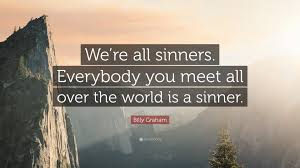
We have all heard the famous plaint by Christians that “we are all sinners.” This is often followed by some type of forgiveness blessing such as “Go, your sins are forgiven.” I am struck with how convenient this all is. The “Sinner” gets to hide his/her transgressions in two ways. First by pointing out that he/she is really no different from anyone else since “we are all sinners.” Second and perhaps more importantly, the sinner does not name his/her sins. Thereby being able to lump all sins together and not making the transgression personal.
For instance, let’s say I am a blatant sexist. I discriminate against women by abusing my wife and putting down the capabilities of women in general. I get a free pass simply by saying “I am a sinner. Forgive me Lord.” It would be much more honest to say “I am a sexist. Forgive me Lord.” Let’s take another example. A member of the KKK or some other racist group stands up in church and says “Forgive me Lord. We are all sinners.” What if he/she had said “Forgive me Lord, I am a racist.” Sounds different doesn’t it. That’s because the specificity and personal sin is not being blamed on everyone else or hidden among a possible multitude of sins.
In the song “Sinnerman”, the sinner runs from one place to another frantically seeking refuge, but the rock refuses to hide him/her. The narrative moves to the sea and river, which are depicted as “boilin'” or “bleedin’,” but offering no safety. The song continues with the sinner seeking refuge from the Lord and the Devil, highlighting the inevitability of judgment.
Many people wonder how so many self-professed Christians can support a man like Trump. Some studies show 80 percent or higher of Evangelical Christians voted for Trump. Many other self-professed Christians also supported Trump. But when you look at what these self-professed Christians say and what they actually do, the gap is profound. Jesus said, “Not everyone who calls out to me, ‘Lord! Lord!’ will enter the Kingdom of Heaven. Only those who actually do the will of my Father in heaven will enter.” (Matthew 7:21, NLT)
A few years ago, there was a large movement which created hats and t-shirts that read “WWJD.” They did not ask “what did Jesus say” which is surprising in itself. Asking what Jesus said would clearly have left them very vulnerable to attacks as being hypocrites. We are all hypocrites to some extent, but what would you call someone who professes to be a follower of Jesus and yet neither follows his words or deeds. Witness the behaviors that Trump has demonstrated in word and deed and see what Jesus would have done or at least said about these behaviors. You may ask yourself are these truly Christlike behaviors? If not, why are you following a man whose many behaviors are an insult to everything that Jesus tried to teach?
1. Mocking or Insulting Opponents vs. Loving Enemies
Jesus taught:
“Love your enemies and pray for those who persecute you.” (Matthew 5:44)
Trump has frequently used personal insults for political opponents, critics, journalists, and rivals, with nicknames such as “Crooked Hillary,” “Little Marco,” “Sleepy Joe,” and many others.
Critics argue this style is inconsistent with Jesus’ teachings on loving enemies, forgiveness, and blessing those who oppose you.
2. Treatment of Immigrants and Refugees vs. Welcoming Strangers
Jesus taught:
“I was a stranger and you welcomed me.” (Matthew 25:35)
Critics point to policies such as family separations at the southern border during Trump’s first administration and harsh anti-immigration rhetoric.
They argue these actions conflict with Jesus’ repeated concern for strangers, foreigners, and the marginalized.
3. Wealth and Materialism vs. Humility
Jesus taught:
“You cannot serve both God and money.” (Matthew 6:24)
and
“It is easier for a camel to go through the eye of a needle than for a rich man to enter the kingdom of God.” (Mark 10:25)
Trump has often highlighted his wealth, business success, luxury properties, and financial accomplishments.
Critics see this as contrary to Jesus’ emphasis on humility and caution regarding wealth.
4. Retaliation and Revenge vs. Forgiveness
Jesus taught:
“Turn the other cheek.” (Matthew 5:39)
and
“Forgive seventy-seven times.” (Matthew 18:22)
Trump has frequently spoken about getting even with opponents, punishing critics, or seeking retribution against those he believes wronged him.
Critics view this as directly contrary to Jesus’ emphasis on forgiveness and reconciliation.
5. Self-Exaltation vs. Humility
Jesus taught:
“Whoever exalts himself will be humbled, and whoever humbles himself will be exalted.” (Matthew 23:12)
Trump is known for making strong claims about his abilities, accomplishments, intelligence, electoral success, and leadership.
Critics argue that this self-promotional style conflicts with Jesus’ repeated calls for humility and servant leadership.
Give to the poor.
Avoid judging others.
Practice humility.
Tell the truth.
Care for strangers.
Seek peace.
What do you do if you support a man who has nothing in common with Jesus and whose very life and actions are an insult to everything that Jesus stood for. Do not worry. Just stand up in whatever so called Christian church you go to and loudly proclaim “I am a sinner and we are all sinners. I expect forgiveness.” Do not assign any credibility to the fact that Jesus put great store in behaviors and not just professing ones sins, as ambiguous as they may be.
Jesus repeatedly stressed that what matters is not merely acclaiming belief but how one lives.
In the parable of the sheep and goats, people are judged according to how they treated others:
“I was hungry and you gave me food… I was a stranger and you welcomed me.”
— Matthew 25:35
The emphasis is on compassion, mercy, and service.
Likewise:
“Blessed are the merciful, for they shall obtain mercy.”
— Matthew 5:7
The core teachings of Jesus are perhaps best summarized in the Eight Beatitudes. Yet across America we see efforts to place the Ten Commandments in schools, courthouses, legislative buildings, and other public spaces. Given that Christians profess to follow Jesus rather than Moses, one might reasonably ask why the Eight Beatitudes are so rarely if ever displayed with equal enthusiasm.
I have yet to encounter a public building in America where the Eight Beatitudes are prominently posted. Why is that? Perhaps because the Eight Beatitudes challenge us in ways that are far less comfortable than the Ten Commandments. They call upon us to be humble rather than powerful, merciful rather than judgmental, peacemakers rather than warriors, and compassionate toward those whom society often excludes.
If America truly wishes to call itself a Christian nation, then perhaps the place to begin is not with the commandments of Moses but with the teachings of Jesus. A nation built upon the Eight Beatitudes would be far less tolerant of racism, sexism, xenophobia, greed, and every form of prejudice that Trump subscribes to. It would be a country that measures success not merely by fame, or wealth or power, but by how it treats the poor, the vulnerable, and the stranger.
The uncomfortable truth is that the values celebrated by modern society often stand in tension with the values celebrated by Jesus. Wealth, status, competition, and dominance command more attention than mercy, humility, empathy, and service. Until that changes, many public declarations about Christianity will continue to sound less like a commitment to the teachings of Jesus and more like a commitment to some identity cult. The KKK, Christian Nationalists, Christian Identity Movement, Westboro Baptist Church and some Prosperity Gospel Followers come to my mind.
I leave you with this final thought:
If Jesus were walking through America today, which would he be more likely to carry under his arm—the stone tablets of Moses or the Sermon on the Mount?
Why do so many women seem to like bad guys? Why do men refer to women as babes and baby? Why do we love Dirty Harry movies, but we don’t love Dirty Harry? Why do we admire scientists, inventors and billionaires but we don’t love them. Instead, we love our dogs, our cats, our tortoises and other critters. Well, last night I discovered the reason. As so often happens to me, in the middle of the night, I am struck with ideas. Ideas and concepts that I know not where they came from. Sometimes they hold the secret to problems that I have been wrestling with for years. Other times, they are fixes for simple household problems that I have been unable to find a solution for. And still other times, these random thoughts of the night open my mind to solving many of the mysteries of the universe that I have been stymied by.
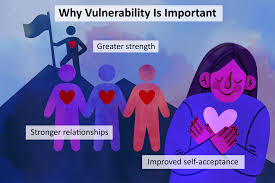
Tonight, I realized what the secret or key to love is. It is vulnerability. We admire strong independent dominant people, but we don’t love them. Why, because they lack vulnerability. What is vulnerability? Lets get the definition out of the way. I am sure we all have a different concept of what it means to be vulnerable.
How do you define a vulnerable person?
“A person less able to take care of themselves or protect themselves from exploitation, for example a person with mobility problems, a person with mental health difficulties, and children.
“Someone who is vulnerable is weak and without protection, with the result that they are easily hurt physically or emotionally.”
“Key characteristics of a vulnerable person may include emotional exposure, risk-taking in sharing, needing protection, trust, sensitivity, or showing physical signs like quietness or withdrawal.”
Have you noticed that Christians love to say that “We are all sinners?” Well, what is a sinner? A sinner is a vulnerable person. A person who is wounded either emotionally or physically. Christians gravitate towards sinners because they are more lovable than non-sinners. A non-sinner is a liar anyway. Who among us has never done wrong to another either physically, mentally or emotionally. God loves sinners because they are vulnerable. A sinner or at least those who admit that they are sinners are open to change. More than open, they must change if they want to repent from their sins.
Sinners can be seen as vulnerable because harmful choices often arise from unmet needs, trauma, ignorance, fear, or desperation. Rather than pure malice, many moral failures reflect human weakness, social pressures, or suffering. We love sinners because recognizing this vulnerability invites compassion and restoration rather than only condemnation or punishment.
JOHN 3:16 KJV 16 For God so loved the world, that he gave his only begotten Son, that whosoever believeth in him should not perish, but have everlasting life.
Many people quote John 3:16 — but how many believe it?
God never changes. If He loved the people of the world in the past — He still loves them today. Yet many people think God is mad at sinners — and hates them.
ROMANS 5:8 NIV 8 But God demonstrates his own love for us in this: While we were still sinners, Christ died for us.
God is NOT mad at sinners. He loves them enough to die for them — even today! We should not be mad at sinners either. They are deceived and enslaved by sin. They need to be delivered, and no one can do it except Jesus.
Of course, God doesn’t want people to remain sinners. He loves them too much for that. Sin destroys. It brings death. But the gift of God is life — and that gift is found in a Person: the Lord Jesus Christ.
Jesus is the best friend a sinner will ever have. They need to know that. Someone has to tell them the truth. They think Jesus hates them because they’re a sinner and not perfect. (The devil already fed them that lie.)
Let’s tell them the truth!
2 CORINTHIANS 5:19 NIV 19 that God was reconciling the world to himself in Christ, not counting men’s sins against them. And he has committed to us the message of reconciliation.
God is not holding people’s sins against them. People need to know that. When they do — they will love Jesus.
SAY THIS: Jesus loves sinners — so I love them, too. I love them enough to tell them Jesus will help them.
The implications of this are very profound. It answers why we love certain people and only admire or respect other people. The key to love is vulnerability. We often do our best to show how independent and strong we are, but our vulnerability is what makes us lovable.
Do you remember the movie Camelot? The queen Guinevere had the greatest man in the world (King Arthur) for a husband. But she never really loved him. How could she? He was impenetrable. He was nearly perfect. He was flawless. He had no weaknesses. Along comes Sir Lancelot, who so admired the King that he chose to be his champion in battle. Lancelot was fearless, strong and loyal. He would never think of having a fling with Guinevere and she in turn did not see any difference between Lancelot and her King. Than one day during a fierce jousting meet, Lancelot knocked another knight not just out of his saddle, but probably out of his life. Lancelot ran to the knight and held his head in his arms. Lancelot started crying and uttering these words over and over again “Please God let him live, Please God let him live.” At that point Guinevere fell in love with Lancelot. The rest of the story I will leave for Paul Harvey or to history. Suffice it to say, their love brought down the Kingdom of Camelot and the dream of a society where everyone was ethical, and morality always guided the actions of others.
At the end of the musical Camelot, King Arthur sings “Don’t let it be forgot, that once there was a spot, for one brief, shining moment that was known as Camelot” The movie and musical was based on T.H. White’s “The Once and Future King” (1958).
Famously, Jackie Kennedy perhaps reflecting on the years that she and John F. Kennedy spent in office told journalist Theodore H. White, “Don’t let it be forgot, that once there was a spot, for one brief, shining moment that was known as Camelot”. She added, “There’ll be great presidents again… but there will never be another Camelot”, establishing the administration’s legacy.
Conclusions:
So, you see, love depends on vulnerability. Love requires vulnerability because to truly love someone is to open oneself to risk—risk of rejection, loss, disappointment, or hurt. Without vulnerability, love remains guarded and conditional. Vulnerability allows trust, empathy, and deep connection, making love possible in its fullest and most human form.
Jesus spent a good deal of his ministry teaching his disciples that greatness did not matter to God. God did not love the richest or the most powerful or the most beautiful. The teachings of Jesus dealt with the following three major ideas:
Service Over Status: Jesus taught that in the Kingdom of God, greatness is measured by service, not by power, position, or wealth.
Childlike Humility: When the disciples asked who was the greatest, Jesus brought a child to them and explained that they needed to be humble and dependent on God, similar to a child.
The Example of Service: Jesus stated he did not come to be served, but to serve, setting the ultimate example for his followers.
These principles or ideas can all be translated into love. Love for others over love for self. Compassion for others. Mercy and forgiveness for others.
I am going to end with a poem written by my AI assistant Metis on Love and Vulnerability.
Where Love Lives – by Metis
Love does not live
behind locked doors.
It lives
in the trembling hand,
the unguarded word,
the heart that dares
to be seen.
For only the breakable heart
can truly love—
and be loved. ❤️
A few weeks ago, while our regular pastor was on a sabbatical, one of the elders of the church gave the following sermon. Sadly, I cannot duplicate the passion that went along with her words, but she gave me permission to reprint her sermon. The words she used and the story she tells are very powerful in themselves and seem most appropriate for us to remember on this Christmas Day when Jesus Christ was born.
Living here in Arizona less than 130 miles from the border, the immigration issue is not theory but reality. Karen and I have made over 40 trips across the border. We have many friends whose families came from Mexico. We live with the reality of a hostile suspicious anti-immigrant culture that seems to be growing every day as right-wing politicians preach hate, fear, and suspicion and accompany it with hateful innuendos about our Mexican neighbors. I will not say anymore, but I will let our Elders words speak for themselves.
2ND SCRIPTURE: Leviticus 19: 18, 33-34
18 Thou shalt not take vengeance, nor bear any grudge against the children of thy people; but thou shalt love thy neighbor as thyself: I am Jehovah.
33“‘When a foreigner resides among you in your land, do not mistreat them. 34 The foreigner residing among you must be treated as your native-born. Love them as yourself, for you were foreigners in Egypt. I am the LORD your God.
WHO IS MY NEIGHBOR by Elder J. Hammond
Good morning!
Some of you asked about me when I was here two weeks ago and since we’re talking about who is my neighbor, I thought I’d share just a little bit of my story. Usually, you’ll find me at the second service—sometimes serving as a Beadle, sometimes up in the booth helping. Before coming here, I was part of the Methodist churches in Casa Grande and Eloy, where I took classes as a Lay Servant and then a Lay Speaker. I also trained as a Stephen Minister, and during that time I became an affiliate member of First Presbyterian so I could share in that ministry. Then about a year ago, I became a full member of this congregation.
Spiritual Growth Through Retreats
One of the most meaningful parts of my faith journey has been attending retreats at the Redemptorist Renewal Center in Tucson. If you’ve ever been there, you know it’s a beautiful, quiet place—a setting for learning, sharing, and deep reflection.
Now, for those of you who know me, you won’t be surprised that the hardest part of the experience, was the “quiet” part! From evening prayers until breakfast – no talking. But it was in those quiet times that God often spoke the loudest.
At my most recent retreat, the guest speaker was Karen González, author of The God Who Sees. Karen, herself an immigrant and a Christian, writes about what the Bible says regarding immigrants and refugees. She reminded us that God is not silent on this issue. If you remember my sermon from 2 weeks ago, God again gave us very specific instructions about how we are to treat the immigrant—with love, with respect, and with protection.
A Lesson from Nogales
Part of our retreat took us across the border to Nogales, Mexico. We visited shelters where families had come for safety and help. On one wall, there was a picture with these words: “The best place to live is where you do not fear anyone or anything. Where you can run without fear and not run because of fear.”
As we watched families preparing food, children painting and laughing, and teenagers practicing for a school debate, those words hit me deeply. Isn’t that what we all want? A place where we don’t have to live in fear. But later as we stood near a crossing point, where the barbed wire ran across, and there were pilings set in the ground, so no vehicle could get through, there stood a large white monument, with Mexico written on one side, and the US on the other. The Border Patrol had been alerted to our visit, so we were able to go back and forth freely, but I couldn’t imagine having trudged through the desert, clothes on my back, and no food or water, and then seeing the promised land, but not being able to enter it. And still later, we stood at a border crossing, and looked at “the fence”. “One of the uglier things I have seen, it made me think of the ugliness of the entire situation. There were people with children, just sitting waiting their turn to make an appointment to see about legally getting a way to cross the border. One woman actually gave birth while waiting in line, because she had nowhere else to go and didn’t want to lose her place in line.
Scripture Foundation
The Bible is clear: we are called to love our neighbor. You heard the scripture from Leviticus, but it bears repeating: In Leviticus 19, God says, “When immigrants live in your land with you, you must not cheat them. Any immigrant who lives with you must be treated as one of your citizens. You must love them as yourself, because you were immigrants in the land of Egypt.” Now I can take Leviticus with a grain of salt, because it is all about ancient laws and rules, but the New Testament also echoes the same sentiment.
Jesus repeats this commandment in Matthew 22 and Mark 12, calling it the second greatest commandment—right alongside loving God himself.
Romans 13:10 tells us, “Love does no wrong to a neighbor; therefore love is the fulfilling of the law.”
Galatians 5:14, John 13:34–35, And 1 John 4:20, all echo the same instructions
So here’s the big question: Who is my neighbor? Who is God talking about? That question might seem easy—but is it really? When I first moved here to AZ from the Northeast, I noticed something:. Many people don’t even know the name of their next-door neighbors. The walls around the yards were more than just physical walls, Where I came from, in New Jersey and Pennsylvania, and even in the Poconos with large lots and more space, I knew all my neighbors. But the Bible stretches “neighbor” far beyond our next-door fence. As Karen González writes, Abraham, Moses, Ruth, Mary, Joseph—even Jesus—were all refugees at some point in their lives. They were strangers, they were immigrants, there were ‘people seeking safety. So our neighbors are not just the people who look like us or live near us. Our neighbors are the immigrants and refugees at our borders, and the people we might be tempted to see as “others.” And their reality is hard.
According to Amnesty International, more than 60 percent of women crossing the border into the U.S. are sexually assaulted along the way. Many take precautions before they even start their journey, because they know what is likely to happen. We also hear the narrative that immigrants are criminals or that they’re “stealing jobs.” But research shows the opposite: immigrants actually commit fewer crimes than native-born citizens, and they often take the difficult, low-paying jobs that others won’t do. God created this earth without borders. He gave it to all of us and called it good. Human beings built walls and drew lines. But nowhere in Scripture does God say, “Build borders and keep people out.”
Dr. Martin Luther King, Jr. put it this way:
“Man-made laws assure justice, but a higher law produces love. No code of conduct ever persuaded a father to love his children. A good father is obedient to the unenforceable. The Good Samaritan represents the conscience of mankind because he was obedient to that which could not be enforced.” That’s what Jesus calls us to—a love that cannot be legislated, but must be lived.
After visiting the shelters and borders , I felt overwhelmed. What can I possibly do to change any of this? In our small group discussions, someone reminded me of the story of the starfish. A man watched a boy throwing starfish back into the sea. “Why bother?” he asked. “You can’t save them all.” The boy picked up another one, tossed it into the waves, and said, “I saved that one.” We may not change the whole world. But we can change the world for someone.
A Story of Francisco
Karen González shares the story of Francisco, who crossed the border out of desperation. He married a U.S. citizen, had children—including one with special needs—but because of restrictive Laws (the 3 & 10 law), he was never able to adjust his status. One night, after drinking, he chose not to drive but to sleep it off in his car, keys in his pocket, not in the ignition, but. In Maryland, even that counts as a DUI. He was arrested, and ICE stepped in. Despite being a hardworking husband and father, a judge decided he was “undesirable” and deported him. Now his wife and children, U.S. citizens, were left without their provider and had to rely on public assistance. Deporting a father didn’t protect the family—it broke it.
This is what happens when we see immigrants only as “others” instead of neighbors.
Conclusion: Who Is My Neighbor?
When Jesus was asked, “Who is my neighbor?” he told the parable of the Good Samaritan. Today, the answer is the same. Our neighbors are the immigrants and refugees at our borders. Our neighbors are the people across the street. Our neighbors are the ones who need love, not suspicion. And while laws cannot love our neighbors, we can. I may not change the world. But I pray that I can make a difference in one life. And if each of us does the same, then together—we can bring change.
It is around this time of the year that many of us start asking the question “What is the true meaning of Christmas?” I am sure that for those who do ponder this question, your inquiry is no doubt prompted by an assortment of stimuli. For example: Black Friday, Cyber Monday, shop till you drop lists, Toys for Tots, Christmas countdowns, gift rages, children meltdowns, commercials, jingles and endless exhortations to buy that special gift that will truly show someone you love them.
I must be humble. Many have tried to answer this question before me. I am nowhere near the first nor do I assume the last who will ever tackle this issue. Thus, I offer my opinion where no doubt many wiser than I have gone before me and many wiser will go after. However, if I merely offer you some fresh insights into this age old question, I will have accomplished my goal. Perhaps I may see things in a slightly different perspective than all the wise people who have already treaded on this question.
I am going to break the key question “What is the true meaning of Christmas?” into three parts or three sub-questions.
The first sub-question is “Why do we celebrate Christmas?” The answer to this question is obvious. A man named Jesus was born on or near this date in the time of the Roman occupation of Israel. He is alternately revered as a great prophet, the son of God, the Messiah or a humble man with a simple but profound message. Many who respect him honor his memory on December 25 each year.
The second sub-question is “What should we celebrate at Christmas?” The most common means of celebrating the life of a great person is to remember what they stood for. Jesus IMHO stood for two major ideas which were radical in his time. The first major idea was to “Love Everyone.” This meant that you needed to love your enemies as well as your friends. Easy to love your friends said Jesus, much more difficult to love your enemies. The second major idea was to “Forgive Everyone.” Again, not just forgiveness for your friends and relatives but also for those you hate and your mortal enemies. Thus, at Christmastime, Christians and those who wish to venerate Jesus of Nazareth should be celebrating both Love and Forgiveness. We see many manifestations of the love at this time of the year but much less focus on forgiveness. The truth of this will be more evident when we look at the third sub-question: “How do we Celebrate Christmas?”
“How do we celebrate Christmas?” How do we take the two major ideas that Jesus stood for and remember them. Each concept could be honored in a variety of ways. The primary way that we seem to express the idea of Love is through the giving of gifts. We can give gifts of the spirit or gifts of the world. Gifts of the spirit express our love for others by giving some of ourselves. We give some immaterial expression of love to others that we care about. We might choose to spend time with a loved one or simply help them out with a project or task that needs doing.
We also give physical or material gifts. These include toys, gadgets, technology, clothes, jewelry etc. Material gifts express our love by transferring our money into presents for others based on their perceived wants and needs. It is quite common to see gifts given based on wants but needs are less frequently factored into the gift giving equation. One could posit a hierarchy of gift giving, going from easiest to give to most difficult. I think it would look something like this:
Material gifts based on wants (easy)
Material gifts based on needs (more difficult)
Spiritual gifts based on wants (difficult)
Spiritual gifts based on needs (very difficult)
It is not always easy to distinguish between wants and needs, particularly when dealing with children who often confuse the two. The good parent should be able to tell the difference, but all too often parents are more interested in simply satisfying their child’s wants rather than dealing with their child’s needs. The Love of Jesus becomes a love focused on completing a shopping list of wants. Little attention is spent on needs while even less time is spent on spiritual gifts. It is easier to buy a gift card than to spend time with a friend or loved one.
How do we deal at Christmastime with the second major idea that Jesus promoted, the idea that we should Forgive others? This idea does not seem to have seriously entered the panoply of displays that we see or that are observed at this time of the year. Somehow, Forgiveness gets forgotten at Christmas time. A cynic might wonder if it is not because this is the hardest idea to implement. Can you imagine sending a beautiful gift of flowers or jewelry to someone you loath and detest? Can you imagine spending time with someone you hate or giving some gift of the spirit to someone you dislike? I suggest that such demonstrations of Forgiveness would be unusual for most Christians as well as non-Christians.
So “What is the true meaning of Christmas?” After dicing and slicing this question what are we left with? A short summary of the main points that I have made to address this question might help:
We celebrate the birth of Jesus of Nazareth, a great prophet, teacher and to some God
Jesus’s mission and purpose was to teach us Love and Forgiveness
We attempt to celebrate his concept of Love during the time we think he was born
We substitute gift giving for more substantive displays of Love or more difficult expressions of the concept
We leave out or neglect Jesus’s concept of Forgiveness
Perhaps this Christmas, we can all try to GIVE more Forgiveness. If there is a “True Meaning of Christmas”, if Jesus were alive today, I am sure he would be most pleased if we all spent more time trying to love our enemies as well as our friends and to forgive those who “Trespass against us.”
Time for Questions:
What is your “meaning” for Christmas? How do you celebrate the birth of Jesus? What could you do more of this year to truly celebrate his message? What can we do to help make Forgiveness part of the Christmas message?
Life is just beginning.
“How many observe Christ’s birthday! How few, His precepts!” ― Benjamin Franklin
“And in despair I bowed my head;
“There is no peace on earth,” I said;
“For hate is strong,
And mocks the song
Of peace on earth, good-will to men!”
Then pealed the bells more loud and deep:
“God is not dead, nor doth he sleep!
The Wrong shall fail,
the Right prevail,
With peace on earth, good-will to men!”
― Henry Wadsworth Longfellow
I work with a program called “I Could Be.” It is a program for mentoring high school age students. A student (mentee) is matched up with an older qualified person (mentor) for a program of exploration and discovery. The mission of iCouldBe is to “Provide high school students with an online community of professional mentors, empowering teens to thrive in school, plan for future careers, and achieve in life.” I am on my fourth student mentee. The program begins at the start of each school year. The student I was matched up with this year was name (Juan). That is not his real name. Neither of us are actually allowed to identify our real names or where we live. This confers a needed degree of security for the students.
At the start of the program, my mentee and I go through a series of introductory exercises to get to know each other. Juan completed some questions and one pertained to what he wanted to be when he was older. He said he wanted to be rich and famous. I asked him what would he do with the money if I gave him a billion dollars. He replied, “I would give it to my family so that they would not have to work.” I was very impressed by his generosity. I told Juan that generosity is a very good quality in a person to have.
I started thinking about the concept “Generosity.” I did a search in my 1700 blogs and found that I had never directly addressed the subject. Such an important subject and few if any words from me on how important Generosity is. Ergo, I decided to write this blog on the subject of Generosity. Lets start with a dictionary definition and then a WIKI definition so that we are all on the same page.
Webster’s definitions of Generosity include readiness or liberality in giving, freedom from meanness or smallness of mind, and a generous act. This is the primary definition, emphasizing a willing and free giving of time, money, or other valuable things.
Wikipedia says this about Generosity: Generosity (also called largesse) is the virtue of being liberal in giving, often as gifts. Generosity is regarded as a virtue by various world religions and philosophies and is often celebrated in cultural and religious ceremonies.
One important thing to note is that generosity is not limited to money. It may include time, material goods, jewelry or “other valuable” things. Now we can have a secular version of Generosity, or we can have a sectarian version of Generosity.
Sectarian Generosity:
Leans on God, scripture, spiritual duty, and the idea that giving transforms the soul. Jesus said, “It is more blessed to give than to receive.” — Acts 20:35
Muhammed said, “The believer’s shade on the Day of Resurrection will be his charity.” — Tirmidhi
Secular Generosity:
Leans on empathy, human dignity, and the belief that giving transforms society. Albert Einstein, said, “A hundred times every day I remind myself that my inner and outer life depend on the labors of other men… and that I must exert myself in order to give in the same measure as I have received.”
Confucius wrote that, “The superior man is distressed by his own lack of ability, not by the failure of others to appreciate him; he seeks to give more rather than to receive more.” — Analects 15:18
Both types of generosity are deeply moral. Both alleviate suffering. But they grow from different roots and flower in different ways. In marketing we talk about the “target” audience. This is not a concept endemic to philosophy or religion but hails from MBA programs in business schools. Despite my anathema to strict application of business principles to either religion or philosophy, there is some considerable merit in considering this business concept in terms of secular versus sectarian.
In a Sectarian community, we can talk about Generosity as it applies to those we know. We can limit the largesse that we give to those in our inner circle, to relatives, friends and members of our immediate communication. There is no prescription in most churches for being generous to those outside of our domain. If I tithe, give to my church and help the poor whom I can identify with, I may be considered a very generous person. There is no stigma in many religious groups if I don’t want to be generous to welfare people, poor people in other countries, undocumented immigrants or people of other race or other religions. These exceptions would astonish Jesus who taught that being a follower involves welcoming the stranger, as demonstrated in Matthew 25:35: “I was a stranger and you invited me in”. We might call these people “Fake Christians,” “Pretend Christians,” hypocrites, or simply selfish. You would be wasting your time trying to open their eyes with such labels. It would do no good since their core beliefs are unfortunately supported by those in their inner circle.
In the Sectarian community, the concept of Generosity may not be much better off. There are large numbers of non-religious people who support the arts, music, education and health care. The caveat though is that the people they give the money to are deemed worth the expense. The Sectarian community is proud to support a hand up and not a handout. People who qualify and meet certain requirements can get some measure of Generosity. Those who are not “eligible” are excluded from any Generosity. It is easy to forget that many people are sick and disabled. Thousands of people in the USA cannot climb up a ladder. They are put into a pot labeled “undesirables.”
So, what does it really mean to be generous? This story is about a friend of mine named Frank. It happened one day when we were both coming out of the local IGA store with our wives. I call it the: “The Last Pair of Gloves”
The first cold front of December rolled into the Sonoran desert like an unexpected guest, sharp and biting. Frank stood outside the IGA store, pulling his jacket close as he waited for Juanita to finish shopping. Beside the entrance sat an old man, thin as the winter wind, a cardboard sign resting on his knees: “Anything helps.”
His hands caught Frank’s attention. They were trembling—not from age alone, but from cold. His fingers were blotched white and red, exposed to the air with only a thin flannel shirt to cover his arms.
Frank felt for his pockets. He had no cash on him—not unusual these days. But he did have one thing: his gloves. Soft fleece-lined leather, a gift from Juanita years ago. He loved those gloves. They were worn just right, molded to his hands, comfortable in a way only time could produce.
He hesitated.
Inside the store, carols played faintly, muffled by the automatic doors. People hurried by with carts full of holiday cheer. Nobody stopped. The old man’s hands kept shaking.
Frank stepped forward.
“Sir,” he said softly, slipping the gloves from his own hands, “you need these more than I do.”
The man looked up, startled. For a moment, he didn’t speak. He just stared at the gloves resting in Frank’s outstretched palm as if they were something far more precious than leather.
Then his eyes filled.
“I—I don’t know what to say,” the man whispered.
“Merry Christmas,” Frank replied.
Juanita walked out just then, her cart filled with groceries. “Where are your gloves?” she asked.
Frank smiled, his fingers already numb. “Right where they belong.”
And as they walked toward the car, he told me later — that his hands began to feel warmer than they had in years.
Frank did not ask to see the man’s papers. Frank did not ask the man to perform any reciprocal services for the gloves. Frank did not decide that he was an “unwanted” immigrant and should be sent back to Mexico. Frank did not ask what religion he belonged to, where he went to church or whether or not he believed in God or Trump. Frank gave something up that was very valuable to him because he saw someone that needed it more than he did. This is the essence of Generosity. This is what Generosity is all about. Generosity is more than tithing to your local church. It is more than taking an angel off the giving tree. It is more than buying toys for tots. It is more than donating a turkey to the Salvation Army Christmas dinner. To paraphrase Paul from 1 Corinthians 13:
“Generosity is patient, Generosity is kind. It does not envy, it does not boast, it is not proud. It does not dishonor others, it is not self-seeking, it is not easily angered, it keeps no record of wrongs. Generosity does not delight in evil but rejoices with the truth. Generosity always protects, always trusts, always hopes, always perseveres.”
Until we learn the real meaning of Generosity, we will have learned nothing about being human, being kind, being loving or being compassionate. Generosity does not start with your family and end with your family. Generosity is for the entire human race. Generosity recognizes no borders, no race, no religions, no genders.
Here are some quotes to think about:
Warren Buffett
“If you’re in the luckiest one percent of humanity, you owe it to the rest of humanity to think about the other 99 percent.”
Mother Teresa
“It is easier to give a cup of rice to relieve hunger than to relieve the loneliness and pain of someone unloved.”
Martin Luther King Jr.
“Life’s persistent and most urgent question is, ‘What are you doing for others?'”
Kahlil Gibran
“You give but little when you give of your possessions. It is when you give of yourself that you truly give.”
Anonymous, The Holy Bible: King James Version
“Do not neglect to show hospitality to strangers, for by doing that some have entertained angels without knowing it.
Gautama Buddha
When giving to others do not linger on thoughts of a giving, what was given, or the one who has received.
Show your gratitude for life this Thanksgiving by giving to others without conditions who have less than you do.