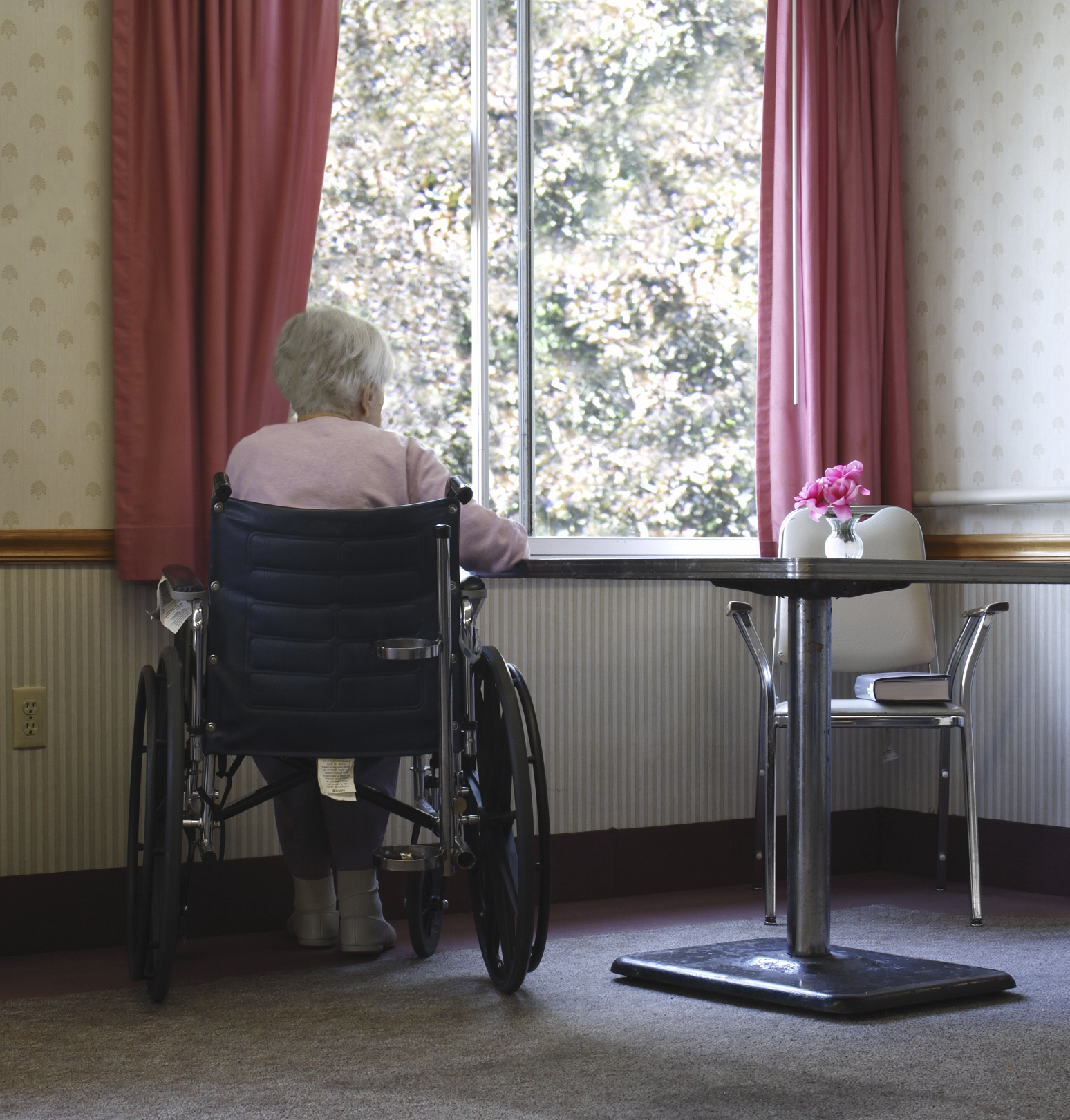
I’m sitting here looking out the window. It has taken me nearly sixty-five years but now I understand.
 I was only twenty-five when I met Irene. It was my first job out of college. I had just finished my RN program at Regina Nursing School. It took me three years going to school days and working part-time evenings to complete my degree. After finishing school, I applied at several nursing homes since I wanted to work with the elderly. In three weeks, I was hired by the River Birch nursing home in New Prague Minnesota.
 My first day on the job was the high point and perhaps also the low point of my life. It was the day I met Irene. My supervisor Michelle started my job orientation by introducing me to the staff I would be working with. She then gave me a brief summary of my work duties. She explained that I would be assigned a wing of the nursing home and within that wing, I would be in charge of a specific number of residents. We were not to call them patients. Each day, my job would be to take care of the residents that I was assigned and to ensure that they received food, care and compassion.

Michele then took me around to the twenty or so residents that I would be responsible for. One by one, she gave me a brief bio and medical review for each person. The last one of my charges was Irene. Michele said that she had saved Irene for last because she would be my most difficult resident.
Irene had been taken into the home about two months prior to my arrival. She appeared to have an advanced case of Alzheimers disease (which sixty-five years ago was not identified as such.) She had been living with her only daughter for the past five years but her daughter had died in a car accident and Irene had no other surviving relatives. Her mother, father and two sisters had died many years before her and no other family members could be located. Social Services selected the River Birch nursing home due to its proximity to her previous home.
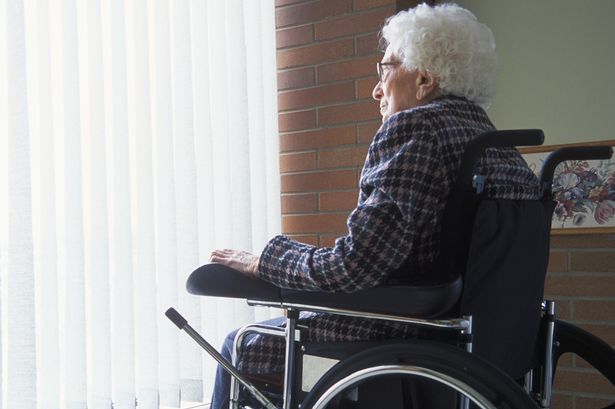
Michele cautioned me that I should not spend too much time with Irene. She did not speak much except to demand being taken in her wheel chair to the same window each day. She would sit and look out the window and was not interested in eating, talking or socializing in any form. Several of the other nurses had tried to form some type of communication with Irene, but all she would ever say was “window, window.” Most thought she was simply unfriendly and had stopped spending any time with her.
I was young and naïve. I thought I could surely reach out to Irene and form some type of bridge which would unite us as human beings. Irene would be my project. We would become friends.
Each day, I made a special point of taking Irene to her window and stopping by a few times of the day to simply chat. I would bring her a cookie in the morning during the coffee break time and one after lunch during mid-afternoon coffee break. Irene would never take the cookie or even bother to look at me. She simply stared out the window.
 Over time, I began to wonder what she was looking at. After looking out the window myself, all I could see was a large grassy field surrounded by numerous oak, maple and birch trees. On any given day, there might some grackles or robins out in the field but very little else to view. It was a pleasant enough scene but nothing that I thought could keep anyone’s attention for more than a few minutes never mind several hours of staring out the window
On the other side of the large sitting room, there was another picture window. I noticed that it had a pretty view of a large lake and periodically several sail boats with brightly covered jibs and mains blowing in the wind would be traversing the lake. I thought that perhaps Irene might like this view better. I walked over to where her sit was sitting in her wheel chair and told her that I was going to show her  a very pretty view that she could look out at. I thought she would enjoy the variety and the change of scenery. As I started to push Irene’s wheel chair away from her chosen window, she became very agitated and started pointing wildly and in a raised voice saying “window, window.” I moved her back to the old window and left her for the day.
Weeks went by and there was never any change in Irene. Then one day, I went over to see how Irene was doing and I brought her a cookie just in case she had changed her mind. I never gave up on somehow connecting with Irene and I thought surely the cookie would be my entre. Much to my surprise, she took the cookie from my hand and replied, “Thank you, they’re coming, they’re coming.” I looked out the window but I did not see anyone. I asked, “Irene dear, who is coming?” Irene answered, “Why mom and dad and my sisters.” Poor thing I thought, she is delusional.
 Next morning, I came to work and started my rounds. I did not see Irene and I wondered where she was. I checked her room but the bed was made up and there was no sign of Irene. I went into see my supervisor and ask about her. “I am sorry” Michele said “She passed away last night and was taken to the funeral home. There will be no services for her as she had no surviving relatives.” I went home and cried for her passing. I had never understood her or made a connection with her that I thought was the least bit meaningful.
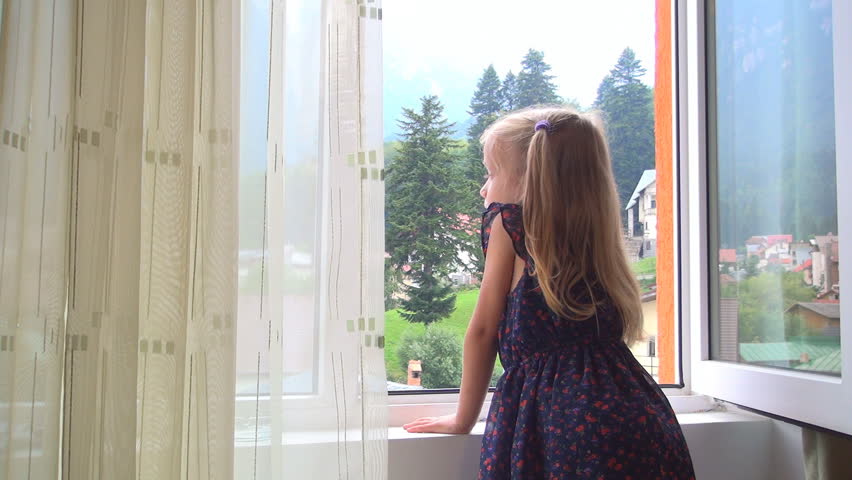 It is sixty-five years later and I finally understand Irene. I am sitting here looking out a window from the nursing home where I am now a resident. Each day I look out the same window and I see a different event from my life. I have been amazed at the events that I have witnessed. I have seen my mother giving birth to me. I have seen the birth of each of my sisters and brothers. I witnessed my first communion and my first day in school. I watched my wedding and the birth of each of my children. I was at my husband’s funeral again. During the past few months, I have seen all the major events of my life one after the other in perfect chronological order. I am almost at the end of my journey. There is only one final event. The last event will be when they come for me. They are getting close. My mom and dad are coming for me. They are coming to take me home. I must keep looking out the window or I will miss them.
Time for Questions:
How do we deal with the loss of a loved one when they are still alive? What connections can we possibly make to bridge the sometimes-unbridgeable gaps that age has a way of creating? What if our loved ones are still with us even when we may think they are not? How do we have compassion for people who no longer seem to know or care about us?
Life is just beginning.
“What would I have wanted to say if I had had the opportunity to see him one more time? I would like to think that I would have kept it simple and said, “I love you,” then just held his hand in silence, letting that thought linger in the space of the time we had left together.”
― Lisa J. Shultz, A Chance to Say Goodbye: Reflections on Losing a Parent
Post Script: June 17th 2025
I wrote the above story eight years ago when I had just turned 70. I am now 78 and with each passing day the story seems more relevant to me. Many of my friends and relatives have either passed away or succumbed to some form of dementia. I had never realized how many types of dementia there was until I went to a caregivers conference a few years ago. A friend posted the following on Facebook and it really moved me. We spend years living with someone and perhaps someday we will say that, “they are gone.” That the person we once loved is no longer there. I have heard this comment many times. I hope that I never have to deal with this but if I do, I want to remember the following suggestions:
20 Things I Would Want If I Got Dementia – by Rachel Wonderlin
If I get dementia, I’d like my family to hang this wish list up on the wall where I live. I want them to remember these things. The original list was also published in my book, “When Someone You Know is Living in a Dementia Care Community.”
If I get dementia, I want my friends and family to embrace my reality. If I think my spouse is still alive, or if I think we’re visiting my parents for dinner, let me believe those things. I’ll be much happier for it.
If I get dementia, don’t argue with me about what is true for me versus what is true for you.
If I get dementia, and I am not sure who you are, do not take it personally. My timeline is confusing to me.
If I get dementia, and can no longer use utensils, do not start feeding me. Instead, switch me to a finger-food diet, and see if I can still feed myself.
If I get dementia, and I am sad or anxious, hold my hand and listen. Do not tell me that my feelings are unfounded.
If I get dementia, I don’t want to be treated like a child. Talk to me like the adult that I am.
If I get dementia, I still want to enjoy the things that I’ve always enjoyed. Help me find a way to exercise, read, and visit with friends.
If I get dementia, ask me to tell you a story from my past.
If I get dementia, and I become agitated, take the time to figure out what is bothering me.
If I get dementia, treat me the way that you would want to be treated.
If I get dementia, make sure that there are plenty of snacks for me in the house. Even now if I don’t eat I get angry, and if I have dementia, I may have trouble explaining what I need.
If I get dementia, don’t talk about me as if I’m not in the room.
If I get dementia, don’t feel guilty if you cannot care for me 24 hours a day, 7 days a week. It’s not your fault, and you’ve done your best. Find someone who can help you, or choose a great new place for me to live.
If I get dementia, and I live in a dementia care community, please visit me often.
If I get dementia, don’t act frustrated if I mix up names, events, or places. Take a deep breath. It’s not my fault.
If I get dementia, make sure I always have my favorite music playing within earshot.
If I get dementia, and I like to pick up items and carry them around, help me return those items to their original places.
If I get dementia, don’t exclude me from parties and family gatherings.
If I get dementia, know that I still like receiving hugs or handshakes.
If I get dementia, remember that I am still the person you know and love.

 Aging Capriciously