Guns or Butter?  What Would Three Battleships Buy for Americans? By John Persico and his AI Partner Metis

Recently, I read that Trump is proposing the U.S. military begin the construction of a new class of battleships called “Trump Class” or as the press is labeling them “The Golden Fleet.”  Each of these ships will have a realistic (not the bullshit projected cost by defense contractors) final cost of $30 billion apiece. If three are built—as is being discussed—we are looking at a price tag approaching $100 billion.

That number is so large that it becomes abstract. When figures reach this scale, they stop meaning anything at all.  So with the help of my AI partner Metis, I tried an experiment: What if we forced that number back into human terms?

I asked Metis a very simple question:

What else could $100 billion buy if applied directly to the daily needs of American families?

To keep this grounded, I used conservative, real-world assumptions—not best-case fantasies.

The Assumptions

To avoid cherry-picking, I chose modest, mainstream benchmarks:

  • A reliable used car: a 3-year-old Toyota Corolla or Honda Civic
    Average cost: $20,000
  • Food for a family of four using the USDA Thrifty Food Plan
    Annual cost: $9,500
  • A two-bedroom home, roughly 2,200 square feet
    Average cost: $350,000

Then I asked the same question three times:

What does $100 billion buy—if we buy only this one thing?

Option One: Transportation

At $20,000 per vehicle, $100 billion would purchase:

5,000,000 reliable used cars

Five million.

That’s not a subsidy.
Not a tax credit.
Not a loan.

That is five million families with dependable transportation—the difference between:

  • Holding a job or losing it
  • Making a medical appointment or missing it
  • Participating in society or being stranded at its margins

Transportation isn’t a luxury in America. It’s infrastructure for survival.

Option Two: Housing

At $350,000 per home, $100 billion would fund approximately:

286,000 homes

That’s enough housing for nearly one million people.

For perspective:

  • It could dramatically reduce homelessness nationwide
  • Stabilize entire regions
  • Lower healthcare, policing, and emergency service costs downstream

Housing is not merely shelter. It is the foundation upon which everything else—health, education, employment—rests.

Option Three: Food Security

Using the USDA Thrifty Food Plan, $100 billion could provide one year of food for:

Over 10.5 million families of four

That’s 42 million people.

More than the population of California.

In a nation where food insecurity still affects tens of millions, this single line item could eliminate hunger—not as charity, but as policy.

Each ship carries not just steel and weapons—but foregone lives improved.

The Real Question:

This is not an argument against defense.  This isn’t about ships versus cars or homes.

It is a challenge to unexamined assumptions.

What kind of security do we believe actually sustains a nation?

  • Military security protects borders
  • Economic security protects civilization itself

We speak of “national security” almost exclusively in military terms, yet:

  • Hunger destabilizes families faster than any foreign power
  • Homelessness erodes communities more reliably than missiles
  • Economic security strengthens democracies from the inside out
  • Food, shelter, and mobility:
    • Reduce crime
    • Improve health outcomes
    • Stabilize families
    • Increase productivity
    • Lower long-term government costs

From a Deming-style systems view (which considers this as an investment vs. expense thinking taken to its logical conclusion.  From a systems perspective, this is a classic case of short-term protection versus long-term stability.

Or to put it plainly:

A nation is not secure when its people are hungry, homeless, and one paycheck away from collapse—no matter how powerful its navy may be.

Conclusions:

When budgets reach into the tens of billions, morality becomes invisible unless we deliberately restore it.

Every dollar spent reflects a value choice.
Every budget is a moral document.

The question is not whether we can afford battleships.

The question is:

What kind of country do we believe we are protecting—and for whom?

My Final Will and Testament – Things – Reflection #4

og_image

Last year at my 40th Demontreville Retreat, one of the exercises that we were given by the Retreat Master included a very challenging set of thoughts.  The worksheet for the activity was labeled as “A Testament.” I took the worksheet and instructions home with me.  It had fourteen tasks or reflections to complete.  I did not desire to complete them during the retreat.  It is now almost a year since my retreat, and I have decided to make the mental and emotional effort necessary to complete this “Testament.”

The worksheet started with these instructions:

Imagine that this is the last day of your life on earth.  In the time that you have left, you want to leave a “Testament” for your family and friends.  Each of the following could serve as chapter headings for your “Testament.”

  1. These are the Things that I have lived for.

In my first reflection, I declared that “Things” were never very important to me.  However, this reflection forced me to look at some “Things” that have mattered to me in my life.  It is hard to admit that any things were ever really important since “Things” are so trivial in many respects.  Nevertheless, it is hard to exist without a few “Things.”  Thus, what are those “Things” which have really mattered to me, and a bigger question is why?  Here are a few of my favorite things and why they matter to me.

Raindrops on roses and whiskers on kittens

Bright copper kettles and warm woolen mittens

Brown paper packages tied up with strings

These are a few of my favorite things — By Julie Andrews, “My Favorite Things”

2613402398_e39a38b665_b

I love rain and stormy days:  I figured the “why out years ago.  On a nice day, my father would say “Get your ass outside and go play.  It’s too nice to be inside.”  Thus, I could only engage in my favorite activity (which was curled up with a good book) when it was raining, and I did not have to go outside.  To this day, I get a thrill when a rainstorm approaches.  I can’t tell you how happy it makes me to see the rain and feel the raindrops on my head.

I love books:  I buy more books than I will ever finish in my lifetime.  I have already at  every move given hundreds of books away.  Just holding a book gives me a sense of excitement that nothing else in life does for me.  The book pulses in my hand like a living thing saying, “Read me and learn.”  “Let me tell you about a million things that you do not know.”

200w

I love a nap:  2 PM in the afternoon and I have nothing to do and no place to be.  I will take a nap.  I close my eyes wondering if I can really get to sleep and forty minute or so later, I wake up feeling energized and ready to continue taking on the woes of the world.  I am not sure where I get my joy of napping from.  Karen is not a napper, and I seldom can get her to take a nap with me.  It is a solo activity, but I guess it gives me a temporary respite from the trials and tribulations of everyday living.  Maybe it is just fun.

Good_Food_Display_-_NCI_Visuals_Online

I love food:  I have never met a food that I did not like.  One of the great joys of life is going someplace different and trying foods out that I have never eaten before.  I have eaten the local foods in all 44 countries that Karen and I have traveled to.  I will try anything though I draw the line if it is still moving.  I have eaten several unknown species of Arthropoda (Bugs) in China and Korea.  I have had rattlesnake in Texas, fresh eel in Japan and one of my favorite Italian foods, Scungilli salad whenever I get back to visit my sister in Rhode Island.

I love music:  Is music a thing?  Generative AI has the following to say about this query:

“Music is a cultural universal that is a human-created meaning, not a fact or thing in the world.  It is the arrangement of sounds to create a combination of form, harmony, melody, rhythm, or other expressive content.  However, definitions of music vary by culture and throughout history, and there is no consensus on the precise definitions of the elements that define music.”

Nice to know what AI thinks.  Not sure it settled anything though.

Moving on with my thoughts, I find music sometimes soothing as with a Strauss waltz.  Sometime exciting as with the “Toreador Song” from Carmen.  Sometimes, a song reflects how I feel about life as with Ricky Shelton’s “I am a simple man.”  Sometimes, music reflects my sense of devotion for certain things.  I am always moved by national anthems like the “Star-Spangled Banner” and the “Marseillaise.”

I love what some call “World Music.”  I can spend hours surfing the various music offerings on YouTube.  I am always amazed at how much great music never seems to find its way into the US music stations.  As with food, I have never met a music genre that I did not like.  From Baroque to Grigorian Chants, to Asian, Latin, Hip Hop, Reggae and a hundred other music genres, I can always find an artist or musical piece that I fall in love with.  In Japan, it was Enka music.  In Portugal, I was Fado music.  In Spain it was the Tango music.  I could go on and on but every place in the world contributes to the store of great music that is out there.

Well, there you have it.  A few of my favorite things.  Perhaps I should add a few.

“Cream-colored ponies and crisp apple strudels

Doorbells and sleigh bells and schnitzel with noodles

Wild geese that fly with the moon on their wings

These are a few of my favorite things.”  By Julie Andrews

Next Reflection:    

  1. These are the insights that I have gained in the school of life.


April 15th:  A Day to be Remembered

april addd

I will bet that you do not know what today is known for?  Looking it up on Google I found the following significant events that April 15 honors.

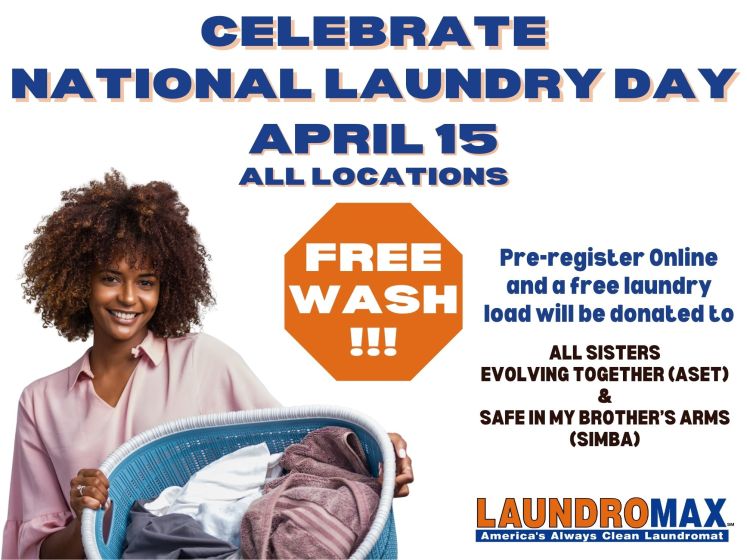
  • National Laundry Day
  • Purple Up! Day
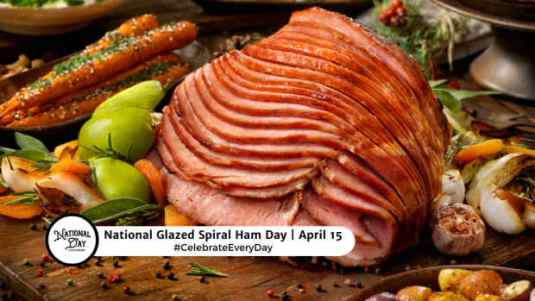
  • National Glazed Spiral Ham Day
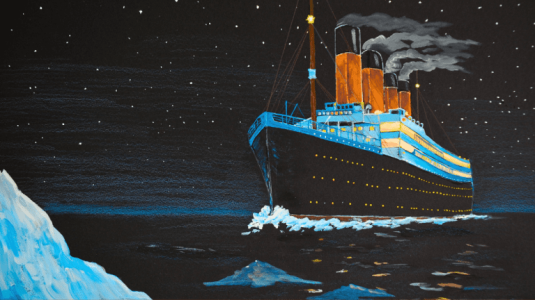
  • National Titanic Remembrance Day
  • National Take a Wild Guess Day
  • National Tax Day

I realize that it is also the day that Trump starts a trial that might just end up in his being charged with a felony.  However, I do not want to say another word or even hear another word about Chump.  If there is hell, I am sure that it will be a place where you get to listen to or read about Chump all day long.  My greatest fear these days (since I do not know how much longer I will be in this world) is that if I get to heaven, I will find Chump there.  Can you imagine a worse image of heaven than a place where Chump gets to go?  Of course, since I don’t believe in heaven, why should I worry about it?  I guess it bugs me that just maybe Chump could even get into heaven.  I mean what if St. Peter is a Republican?  But let’s get back to what April 15th is all about.  I would like to say a few words about each of these significant events.

NTL-LD-LMax

National Laundry Day:

For years, I did the laundry in our family.  Every Sunday, I would take our dirty clothes to the local laundry mat.  I would take a book to read.  I would sort the clothes.  Put them in the appropriate washing machines and then the dryers.  Finishing up, I would fold all the fresh clean clothes and put them into piles before putting them back into the laundry baskets.  I did more than ten years of trips to the laundry mat before finally being able to afford a washer and dryer.  I looked forward to the laundry mat as a place to relax, read and sometimes meet other people who had interesting stories to tell.  For me the laundry mat was the great democratic washing machine of America.  A place where the hoi polloi met on equal terms.  A place where politics did not matter, and you could ask someone for change for a dollar without being thought of as a greedy capitalist.

purple-up-day--april-15

Purple Up!  Day:

Truth be told, I had not a clue today was Purple Up day.  In fact, I had never heard of this “significant event”.  AI on Google gives the following description:

Purple Up! Day is a day to recognize military children and their families and is celebrated on April 15th.  The day encourages people to wear purple to represent all branches of the military and show unity with each other.  Purple Up! Day is part of the Month of the Military Child, which is celebrated throughout April.

Sorry, I joked about it being a significant event.  It is rather a significant event.  Military children (My first daughter was one for a year or so) do not always have it easy.  I particularly like the idea of wearing purple to show unity and represent all branches.  As a military veteran, I think it is important to respect the families of soldiers as well as the soldiers.  Life is not always easy for these families or the children of soldiers.  Never knowing if their father or mother is coming back and often not seeing them for long periods of time.  I need to go out and get a purple t-shirt.

national-glazed-spiral-ham-day--april-15

National Glazed Spiral Ham Day:

I don’t much care for ham.  However, I do like Costco’s spiral ham.  When I was growing up, we always had ham and lasagna on Easter.  I seldom eat ham anymore and I rather have fish on Easter than ham.  Fish seems more appropriate anyway.  If you realize that Christs “last supper” was actually a Passover Seder meal, it seems unlikely that he was eating ham.  More likely he was eating some of the following:

Gefilte fish: Poached fish dumplings

Matzo ball soup: Fluffy matzo balls in broth

Brisket or roast chicken: A popular choice

Potato kugel: Casserole-like dish

Tzimmes: Stew of carrots, prunes, potatoes, or sweet potato

Both Judaism and Islam have prohibited eating pork and its products for thousands of years.  Scholars have proposed several reasons for the ban to which both religions almost totally adhere.  Thus, it seems rather strange that we now see so many families albeit probably Christians eating pork on Easter Sunday.  But don’t worry about it.  Today April 15th you can eat all the ham or pork that you desire.

website-feature---national-titanic-remembrance-day---april-15

National Titanic Remembrance Day:

“At 2:20 a.m. on April 15, 1912, the Titanic hit an iceberg and sunk to the bottom of the North Atlantic as members of the ship’s band played “Nearer My God to Thee.”  There were not enough lifeboats on the ship as she embarked on her maiden voyage just days before, and 1,514 people lost their lives when the ship hit an iceberg and sank.” — Google

The ship carried some of the richest people in the world on that day.  The ship was also billed as “Unsinkable.”  Perhaps these two facts tell us much about the hubris of life.  “Man plans and God laughs.”   No amount of money can save you from death.  Over and over the folly of human beings is portrayed in episodes of arrogance and ego that are difficult to imagine.  We think humans rule the world, but we are simply fools strutting our stuff like Shakespeare said in Macbeth:

Tomorrow, and tomorrow, and tomorrow,

Creeps in this petty pace from day to day,

To the last syllable of recorded time;

And all our yesterdays have lighted fools

The way to dusty death.  Out, out, brief candle!

Life’s but a walking shadow, a poor player,

That struts and frets his hour upon the stage,

And then is heard no more. It is a tale

Told by an idiot, full of sound and fury,

Signifying nothing.

national-tax-day--april-15

National Tax Day:

In the USA, today is technically the last day to file your taxes.  Just for the record, I filed mine back in February.  I now use Turbo Tax and the package works very well.  (I am not getting paid for that plug)  I am not sure how anyone can figure out the written tax forms that the IRS provides.  I think they were written with the idea of forcing people to either go to an accountant or buy a Turbo Tax program.  Any effort to simplify tax forms has been bypassed in favor or making the forms unimaginably complex.

website-feature---national-take-a-wild-guess-day--april-15

National Take A Wild Guess Day:

Who do you think dreamed this beauty up?  Go ahead and take a wild guess?  Don’t ask me.  I haven’t a clue.  I guess I will look this one up later.  I swear I did not make it up.

national-rubber-eraser-day---april-15

National Rubber Eraser Day:

Centuries before Cancel Policy, we had erasers to cancel things.  I never really liked erasers because I think they always left smudges and made the paper look dirty.  Erasers do not work at all with type or ink.  Pencils to me are an anachronism.  I do not understand why people still use them.  The lead breaks.  You have to sharpen them.  You can never find a sharpener when you need one.  Dull pencils suck.  You can’t just put them in your pocket, or you will poke a hole in your pocket and stab yourself with your lead pencil.  Why would anyone want to use a pencil?  If you don’t use a pencil, you won’t need a rubber eraser.  I would guess that the same people who thought up National Rubber Eraser Day own stock in a pencil company.  Take my word for it, buy a nice pen or even better, use a word processer.

That’s It Folks:  Have a Happy April 15th

My apologies for any significant other April 15th events that I have left out. 

The Joy of Eating or Why I Never Met a Food That I Did Not Like

joy-title-1080x675

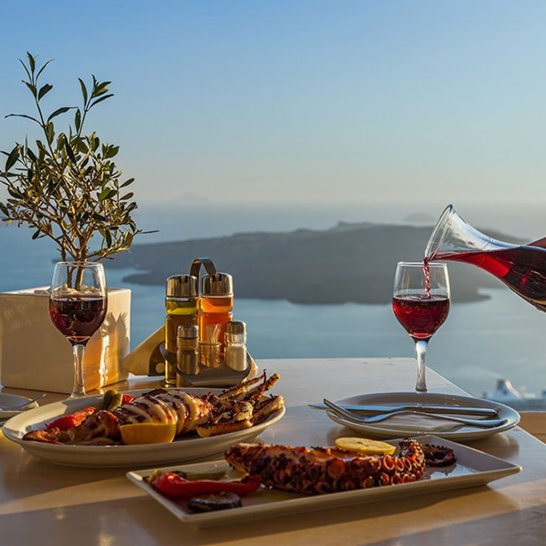
Mexican food, Chinese food, Thai food, French food, Mid-Eastern food, Indian food, I have never met a food I did not like.  From street venders with their push carts to five-star gourmet restaurants with sommeliers in tuxedos, I have eaten food fit for the gods.  When Karen and I travel we love to explore markets and discover new foods to cook.

We love purchasing foods in foreign markets that we cannot recognize and taking them back to our abode to cook.  Cooking our own foods has gifted our palates with some wonderful tastes that I could not begin to describe.  I still do not know what some of the things we ate were, but I am alive to tell this story.

nintchdbpict000307002046I have met people who say, “I never eat Mexican food.”  They say this as though it were some badge of honor.  I want to ask what type of Mexican food do they not eat?  Does their exclusion of Mexican food extend to deserts like fried ice cream or drinks like Tequila or is it simply tacos and burritos that they do not eat?  I have met people who say, “I never eat fish.”  I usually ask them why and I often hear the reply “they taste too fishy.”  I want to ask them if they ever eat meat that tastes too meaty, but instead I usually ask them if their antipathy extends to crustaceans, mollusks, and cephalopods.  I can see the disapproval in my spouse’s eyes when I pursue this line of questioning.
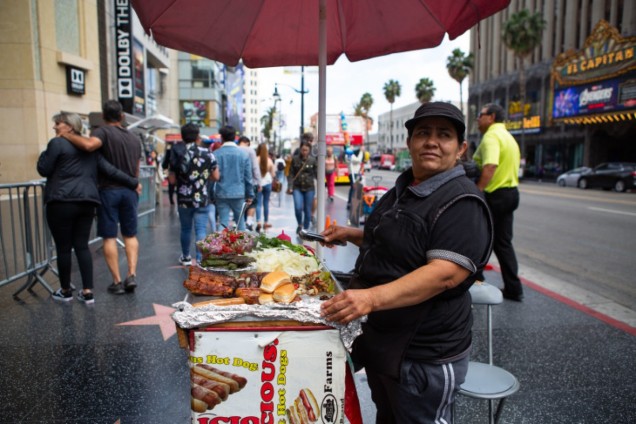
Other people tell me that they never eat from street vendors.  The reasoning I hear most often is that you can’t trust the food since you do not know where it came from.  This is a really funny reason since I feel the same way about grocery stores, but I will give you ten to one odds they eat food from grocery stores.

download

The lowly potato is one of my favorite foods.  Simply slice a potato and fry it in a little olive oil.  Place it between two slices of harvest bread with a dash of mayonnaise and you have a taste treat that you will never forget.  I love tripe and when I was young my mother would cook tripe (cow stomach) in a big pot of spaghetti sauce.  You eat the tripe and sauce in a bowl and dip Italian bread into the sauce with the tripe.  I get hungry just thinking about it.

download (1)menudo-a-classic-mexican__85101.1588116574After exploring the vast variety of Mexican foods, I discovered that the tasty and hearty Menudo soup is chock full of tripe.  Many Latinos as well as Gringos in the Southwest will not eat Menudo.  Several years ago, after I started dating Karen, I was introduced to Lutefisk.  At first I found the texture somewhat off putting.  Over time, by adding butter or cream sauce I discovered the joy of eating Lutefisk around the holidays.  It is a Scandinavian tradition in homes much like Menudo is in Mexican homes.  Paradoxically, many Scandinavians loath Lutefisk.  The derivation of such foods leads many to disavow them.  I confess to the same attitude towards an Italian dish known as Pasta a Fagioli which my mother loved to make.  I left home swearing to never eat any again.

Show_2_Pasta_e_Fagioli-4-e1494876950597Some of these low-cost and nutritious peasant foods have become quite popular now as people look back to their early roots.  An example of such a food dish is the Italian Pasta e Fagioli which I mentioned earlier.  This is a dish comprised of beans and macaroni.  Beans and macaroni form a “whole protein” which means you get all the amino acids you need without having to eat meat.  A protein is considered “complete” when it has the nine essential amino acids in somewhat equal amounts.  Almost every country in the world has some staple food items that provide whole protein.  In poorer cultures, livestock was valued for its ability to help farm crops and produce milk.  In places like India, livestock was made sacred as a way to prevent killing a valuable resource.  Cows were more valuable alive than they were dead.
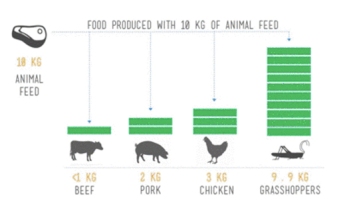
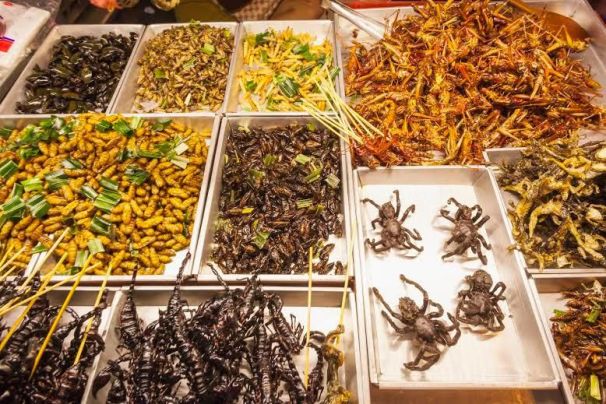
why-we-should-eat-insects-infographic-3A few years ago, at the annual Gustavus Adolphus Nobel Conference the subject was on food production.  A number of experts claimed that the day will come when we will no longer be able to afford a practice so barbaric and wasteful as to slaughter animals for meat eating.  There is an abundance of insects on this earth that could provide an almost endless low-cost supply of protein and minerals to our diets.  Most people respond to thoughts about eating insects with something like “I could never eat bugs.”  My retort is “well you don’t eat bloody chickens or bloody cows do you?”  The insects would be processed, and they would provide a grain that could be used in various ways like we use wheat or corn meal.  I get blank stares.
insects-main

In the future, you may go into a grocery store and have a choice of “ground insect burgers.”  You can choose from spider burgers, cock-roach burgers, ant burgers and termite burgers.  Today there is a daily special on worm-burgers.  Bees are off the menu and are a protected species due to their value for crop pollination, but wasps are selling at premium prices.  Nothing tastes as good as a wasp-loaf with a little tomato sauce on top.

Bon Appetit

The Seven Greatest Appreciations of Life:  Travel and Food

Food-and-Travel-Writing-Living-Bridge-Pune

Yesterday I had an argument with myself.  One of my key values is gratitude.  Years ago, I attended a Demontreville Retreat, and the Retreat Master gave us a sermon.  In the sermon, he told us that Saint Ignatius Loyola believed that ingratitude was the gateway to all sins and misbehaviors.  I thought about this and realized that I am often ungrateful for the joys and benefits that life has given me.  I take things for granted.  I ignore things.  I am simply unappreciative of things.  I compare myself to others and come up ungrateful and angry.  Wondering why or how these people got more than I did.  More money, more talent, more fame, more prestige.

When I started to think about writing this blog, I was confronted with a question.  Are gratitude and appreciation the same thing?  I discovered at a marriage retreat that Karen and I attended that tolerance and respect are not the same thing.  Once, I had thought that my goal in life should be to tolerate others.  I frequently used the quote that “The test of courage comes when we are in the minority and the test of tolerance comes when we are in the majority.”  I thought tolerance was the epitome of human behavior.  I learned at this retreat that respecting others is much different than simply tolerating them.

gratitudeappreciation2Thus, the question arose in my mind about the difference or relationship between appreciation and gratitude.  Perhaps this is like asking how many angels can dance on the head of a needle, but I thought the question deserved some reflection.  Is the relationship between gratitude and appreciation similar to the relationship between tolerance and respect?
After looking up the definition of both words, I have come to the conclusion that gratitude and appreciation are more symbiotic than tolerance and respect.  To have gratitude is to have an appreciation for something.  However, while gratitude is easily defined, the concept of appreciation presents more difficulty.  Websters Online Dictionary defines appreciation as: “Recognition and enjoyment of the good qualities of someone or something.”  I may be grateful for something and this is a heartfelt or emotional process.  Enjoying the good qualities of someone or something is more of a mental or cognitive process.  What exactly do I appreciate about my spouse?  I say every day that I am grateful for a wife like Karen but why?  What are her good qualities that I appreciate?  How often do I compliment her on these qualities?

In this blog, I am going to talk about appreciating travel and food.  Covid 19 has rendered both of these tasks more difficult.  One of the symptoms of the Covid virus is a loss of smell and taste.  Without smell and taste, you cannot tell the difference between a medium rare steak and roast chicken or between vanilla cheesecake and a chocolate brownie.  Until you lose these abilities, you may never realize how important smell and taste are to your life.  Food is never something to simply sustain life.

“If more of us valued food and cheer and song above hoarded gold, it would be a merrier world.”  ― J.R.R. Tolkien

“One cannot think well, love well, sleep well, if one has not dined well.”  ― Virginia Woolf, A Room of One’s Own.

The Covid virus has also made travel an onerous task.  Countries have closed their borders.  Many nations have instituted mandatory quarantines on travelers arriving in their countries.  Dangers exist in crowded places such as airports and airplanes.  Fools are out there in public insisting on their rights not to wear a mask.  Travel means to be in closed confined spaces with a multitude of people.  All situations which exaggerate the risk of getting the Covid virus.  Furthermore, who wants to come down with a deadly virus in a foreign country 5000 miles from home.  These facts have made travel truly frightful for many formerly adventurous people.

“The world is a book and those who do not travel read only a page.” — Saint Augustine

“Well, I’ve done a lot of traveling and, I think over all, travel does broaden one’s soul. If anything at all, that’s probably the most important of what’s happened to me during the past five or six months.  — Malcom X, An Interview with Bernice Bass (December 27, 1964)

Travel and food go arm in arm and hand in hand.  You must eat if you are traveling.  Travel exposes you to mysteries every step of the way.  What will this new land be like?  What will the people be like in this foreign country?  Will they like Americans?  How will I communicate with them?  What do they eat?  Will their food make me sick?  What foods should I avoid?  How will I know what their food tastes like?

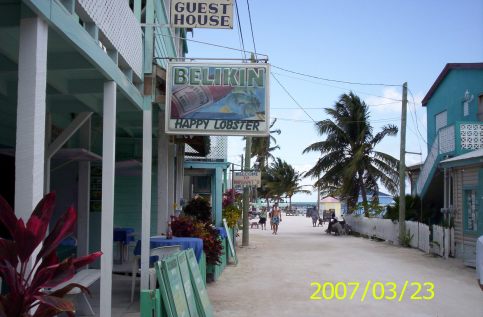
Belize Trip-035 (3)If you do not like to try new things, you should not travel.  One of my mottos is “I have never met a food I did not like.”  Karen and I eat at street vendors.  We often shop locally and pick out foods that we do not even know what they are.  When we were on Naxos, we found a meat market.  We entered and were greeted with a variety of skinned animals hanging from hooks.  There were no labels on these various creatures.  We assumed they sold the meat in kilos, so we asked for a ½ kilo of this and ½ kilo of that.  We decided that we would take the meats or whatever they were back to our little apartment and cook them.  We figured that once we did this, we might be able to guess what we were eating.  This was many years ago and I do not think we ever figured out what we were eating.  The food was good and twenty-five years later we are alive and kicking.  It was a great adventure.  One that we have replicated many times.
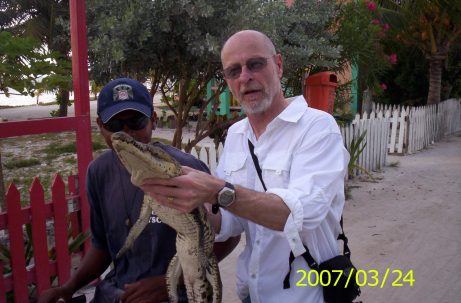
Karen and I avoid prearranged travel tours.  We have a formula that has worked for us over the years.  We rent a small apartment with cooking facilities.  We then take day trips by car to places that we want to visit, or we might take a train or plane.  We do not have to pack for more than an overnight stay and we have our own “home” to come back to.  Having kitchen facilities means we can eat out or in.  Days that we decide to eat in will find us at the local food markets.  It is always exciting going to these markets.  We buy things that we have never eaten before.  Another of my sayings is that, “I have never met a food that I did not like.”

Belize Trip-083 (2)I was forty years old before I had my first trip out of the USA.  I had always wanted to travel and my four years in the military had not provided me the opportunity to travel.  Later on, I became so busy with school and work that traveling seemed like a remote luxury.  One day I was on a plane coming back from Thompson, Manitoba.  (Canada does not count as foreign travel.)  I had been working with a mining client that week and was now headed home.  Next to me sat a young woman holding a travel guide to Spain.  It was May and schools were getting out for the summer.  I remarked “Are you going to Spain?”  “Yes,” she replied.  “Oh”, I said, “you must be very excited.”  She answered somewhat petulantly, “No, I went there last summer but my parents wanted me to go again since I am studying Spanish.”
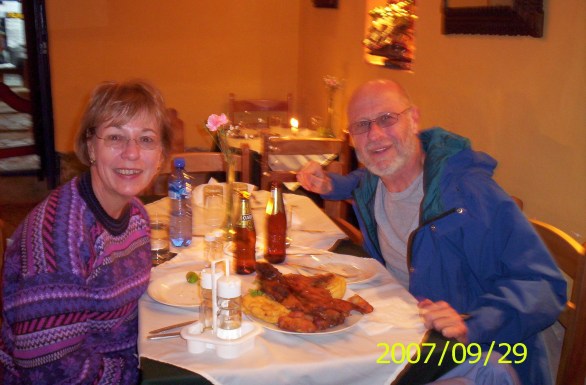
Peru Trip 2007-334 (2)I did not say anymore to the young woman, but I thought “My, would I love to go to Spain or anyplace for that matter.”  Then and there in that moment, I made up my mind.  Karen and I were going to travel.  We were going to see the world.  When I arrived home, I shared my decision and determination with Karen.  She was delighted but wondered how we would manage it.  We have since been to 33 countries for a total of about 25 or more trips.  We like to go to one country and see various sections of it rather than trying to see the whole of Europe or Asia in one trip.  Usually we go for three weeks or so.  We are very budget oriented and try to behave like pilgrims rather than like tourists.  Our trips are usually a balancing act between being a pilgrim and being a tourist.

What have I learned from these trips about the world?  I would say my two greatest insights have been as follows:

  1. Americans are not exceptional.  We are privileged to have been brought up in a country with a great deal of natural and cultural advantages.  People the world over are as smart as we are.  People the world over work as hard or harder than Americans.  The inventiveness and level of development in many countries would astonish many Americans.
  2. People in other countries want the same things that we do.  People all want a successful life, liberty, and the pursuit of happiness.  Wherever we have been, we have seen people striving to live a good life surrounded by friends and relatives that they can share it with. 

We try to respect the cultures and people we visit.  We take some time to practice languages where we are going to travel.  We research cultural faux pas and expectations so as to avoid insulting or disrespecting other people.  We are visitors in their countries, and we are always grateful for the help that people give us.  Many times we have been helped by people whom we have never met before and who have gone out of their way to befriend us.  We have always been treated with respect on our travels and not as outsiders.  We have made many friends during our journeys.

Conclusions:

Travel to another country may be as educational as a year in school.  A life lived without travel is not really a life lived.  Travel requires risk but the rewards are great.  You will meet people who can enrich your life beyond your wildest dreams.  And to top it all off, the icing on the cake, will be the new foods that will expand your palette of tastes and smells and provide a variety to your diet that will make your life infinitely more interesting.

“Travel is fatal to prejudice, bigotry, and narrow-mindedness, and many of our people need it sorely on these accounts. Broad, wholesome, charitable views of men and things cannot be acquired by vegetating in one little corner of the earth all one’s lifetime.”  ― Mark Twain, The Innocents Abroad.