
I debated whether to title this blog, “Why Public-School Education is Dead” or “Why Public-School Education is Being Murdered.” The latter is absolutely true, the former will be true in less than twenty-five years (My prediction). There are several reasons why public schools are dying. But before I go into those reasons, I want to tell you why I think I am qualified to talk about this issue or should I say problem. Mark my words, it is one of the biggest problems that any democracy or would-be democracy can face.
Democracy in America without a good public education program will fade away. Some people will mourn the passing of democracy. However, if the present is any predictor of the future, the number of people who care will decline with each passing year. Democratic principles are not immutable. They will whither and die if they are not nourished. The most important fertilizer for a democracy is public education.

Thomas Jefferson believed that Democracy cannot long exist without an educated citizenry. Jefferson argued that all children should be educated regardless of wealth, birth, or other mitigating circumstances. He believed that free public education should be provided so that children from poor families as well as rich families would receive the knowledge they needed to function in a democratic society. For more information on Jefferson’s educational ideas see the following:
Thomas Jefferson: A Bold Vision for American Education by Gordon E. Mercer
Thomas Jefferson: Stanford Encyclopedia of Philosophy
My Educational Background
 I was an above average student until high school. After starting high school, I spent the next four years being bored and getting into trouble. I probably spent more time in detention than I did in the classroom. Many teachers despised and loathed me. My father kept thinking I would go to college which was some sort of a fantasy on his part. With no money and my poor grades, there was not a single college in the country that I could have been accepted to.
A few weeks out of high school, which I barely graduated from (I think the teachers just wanted to get rid of me.) I decided to enlist in the US Military. The year was 1964. The Vietnam War was ramping up and the military would have taken anybody who could walk a straight line. I joined the Air Force because I liked their uniforms. I had hopes of fighting in Vietnam and being some sort of a war hero. The Air Force decided that I would make a better Radar Technician than warrior and sent me to electronics school in Biloxi, Mississippi after basic training in Texas.
I did not want to go to school, and I resumed my antics in class which resulted in my being sent to see the base commander. He gave me two choices. One was to get my “ass” back in class and start behaving myself, the other was to spend the next four years painting barracks in Mississippi. Perhaps wisely, I decided to pay attention. I graduated second in my class and was sent to my first duty station. It was a remote assignment at a Radar Base in Unalakleet Alaska. It was four hundred miles northeast of Anchorage on the Bering Sea. It would get cold enough there for exposed flesh to freeze in less than one minute.

The rest of my military career was uneventful. After getting discharged from my last duty assignment in 1968 at Osceola, Wisconsin, I worked in a variety of different occupations. I never attended any other classes while in the military and I had no desire to go to school when I left the military. It took about 3 years of not getting anywhere career wise for my first wife to convince me to go to college on the GI Bill or at least try to go to college. Getting in required my former high school counselor to say that my records were lost so that they could not see the comments and stuff said about me. I was finally accepted into a college back in Rhode Island and thanks to the GI Bill I had some money to pay for school. Nevertheless, it was not enough money to pay all the medical bills and household expenses.
I was married with a wife that had a severe medical condition and we had a three-year-old child. Neither of us had any extra money, so I took a job working nights from 11:45 PM to 7:45 AM at a manufacturing plant. I was “temporary” in that the man I replaced had lost his arm in the machine I would be working on. I questioned the supervisor on any new safety protocols that had been adopted after the accident and was told to “keep your arms away from the machine.” I would leave home at 11 PM to bicycle about six miles to work. I would get off work at 7:45 AM and then bicycle to the college which was about 6 miles away. We only had one car and my wife needed the car to take our daughter to day care and then she would go to her part-time job. After finishing my classes, I would bike home from college which was another 5 or 6 miles. Thus, each day for 4.5 years, I biked a round trip of about 20 miles, went to school full time, worked full time, and slept about 4 hours a night until the weekend when I would try to catch up on my sleep. I also had to include time for studying, writing papers, reading and tests.

In 1976, I graduated with a degree in K-12 Health Education, a minor in Biology and a second degree in Psychology. I took a job at the Veterans Administration as a GS-7 Claims Examiner. A year later, my wife and I moved back to Wisconsin and due to some marital problems she decided to leave me. Several months went by. We kept communicating and were able to work out some of our problems. We decided to move back in together and give our marriage another try. I decided to take advantage of a 9-month extension in GI Bill benefits to go to school for a M.S. Degree in School Counseling. I completed the M.S. program in 1979. I was hired for one year as a Biology teacher at Spring Valley HS. I left after my contract was up and took a job as a teacher/counselor at Guadalupe Area Project (GAP) in St. Paul. GAP was a school for troubled high school youth in the St. Paul, MN area. I thought I could use my degree in school counseling at GAP. I soon found out that at this school, I was a counselor, teacher, cleaner and anything else that needed to be done. It was a fantastic experience. The principal at GAP was Sister Giovanni. She was one of the most remarkable people and educators I have ever been fortunate enough to work for.
 Despite efforts by my first wife Julia and myself, our marriage soon unraveled again. We agreed to separate. I moved out and wanting to change careers, I made the decision to go back to school and focus on training in industry. I was accepted into a Ph.D. Program at the University of Minnesota in the Department of Vocational Education. My major would be Training and Organization Development with a supporting field in Adult Education. By this time, my GI Bill had run out and I was now living alone and paying child support. I applied for and was accepted as a research assistant with the Minnesota Research and Development Center in Vocational Education on the St. Paul Campus. This job together with several summer internships and a very frugal lifestyle enabled me to pay my bills, my child support, and my tuition.
 I completed my Ph.D. degree in four years and graduated in 1986. My dissertation was on “Conflict in Organizations.” I was hired by a management consulting firm in Bloomington, Minnesota. I worked the next thirteen years as a trainer and consultant in both for-profit and not-for-profit organizations. In 1999, I joined the faculty of Globe University as a business instructor. I had also been working part-time as an adjunct instructor at Metropolitan State University where I was employed for 16 years. In 2015, I retired from Metropolitan State University. I left Globe University when they closed their doors in 2017.
Since leaving full-time teaching, I have been doing a variety of substitute teaching assignments in the Casa Grande area of Arizona. Karen and I have been splitting the year between Wisconsin and Arizona since 2010. We live and work about six months in each state. As a substitute teacher here, I have replaced Art, Drama, Band, Physical Education, History, Science, Special Ed, English, Spanish, Culinary Arts, ROTC, Mechanical Arts, Social Study, and Dance teachers. I have substituted in every grade from kindergarten to senior high school.
I have taught as a regular teacher at every grade level from kindergarten to Ph.D. programs. I have taught at Army and Navy depots. I have taught at over 40 for-profit industries including Chevron Manufacturing, Whitman Manufacturing Company, International Nickel Corporation and Fletcher Challenge Corporation. I have taught at hospitals, trucking companies, mining companies and in Canada, England, and Taiwan.

I have also written several pieces on education which you can find as follows:
Social Legacy Systems: How They Block Change and Prevent Progress: Part 1- Education
Legislating Balanced Perspectives in Education
Creating a Twenty First Century Education System
Educational Arrogance: Why my degree is better than your degree
What is wrong with education today? Part 1 and Part 2
So that’s if folks, I have told you why I think I am qualified to speak about education and public schools. In the following four parts, I am going to dive into the major issues that are leading to the death of public-school education. I will conclude with some thoughts on what a new system of education will need to look like. The impact these issues has is not limited to high schools but also manifests itself in grade schools and colleges. In many respects, it is impossible to untangle the matrix that comprises the public education system in America. When public school education dies, so will all forms of publicly provided education. If you have a car and the engine is great but the transmission dies, the car will no longer run. In any system, the goal or purpose of the whole is greater than the sum of the parts. There will be no public education in America unless we provide for it. It will either die or evolve. That choice will be up to you.

In the next four blogs, we will look at:
- Why our present educational model is obsolete
- How our politicians are helping to kill public schooling
- How our educational unions are helping to kill public schooling
- What a new model of education should look like?

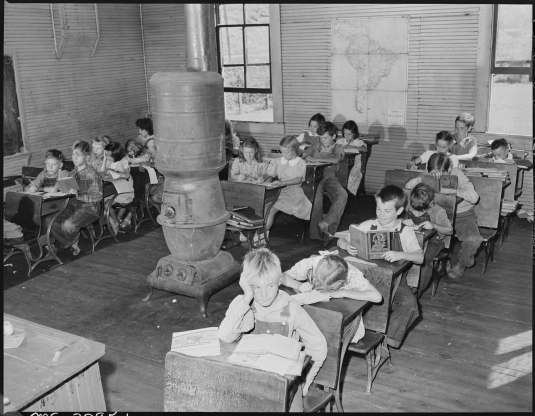
 Today we have an elite system of schooling whereby the children of the wealthy get to go to charter schools, private schools and high-priced universities that are beyond the incomes of the average person. These schools may still provide a decent education, but they are “not open to the public.” This morphing of schools from democratic institutions to elite institutions did not happen by accident. It became all too clear to many people that the public-school system was collapsing. Anyone who has taught in a public school today knows the chaos and bedlam that is called education in these schools. Discipline has gone out the door and students terrorize each other and even the teachers. The results of the decay of the public-school system has seen the wealthy shift their funding to private schools while those who cannot afford private schools often opt for home schooling. The rise in home schooling parallels the decline of the public-school system.
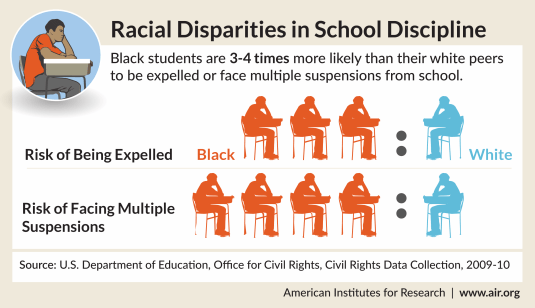 Teachers sit helplessly by as the school system they belong to sinks slowly but inevitably beneath the waves of societal change. Like the proverbial fish, teachers are the last ones to see the water. Asking a teacher how to fix the system is like asking a fish how to fix the ocean. Adding to the general ignorance are pundits in both the business arena and the political arena who propose solutions based on what worked in the past or worse what they think has worked in the business arena. Thus, we see proposed solutions such as:
 Many young people who are now either lost in the present system of schooling or who are ill-served by it would be rejuvenated and excited again. Classrooms would no longer be places where the concept of discipline permeated every minute of instruction. There would be no such thing as failures or dropouts. No such thing as staying back or not passing. No detention or hall monitors. Vocational education, music, art, and drama would be as important as reading and math and science. Poor kids would get the same education as
  rich kids. All kids would find joy and fun in their education since it would be designed to meet their needs and interests and unique abilities. People from two to ninety-two would be able to receive the education and knowledge they need to be effective members of society regardless of whether they had yet begun to work or had retired. Education would be for life. Public funding would be provided throughout a person’s lifetime.
 Aging Capriciously