
Even When Reality Is Unpopular — by Dr. John Persico and Metis (My AI Assistant)

Upon finishing my Ph.D. program at the University of Minnesota in 1986,  I joined the consulting firm of Process Management International (PMI).  A company run by Mr. Lou Schultz to promote the teachings of Dr. W. E. Deming in business and industry.  I met Dr. Deming about two weeks after I joined PMI when I was asked to assist at one of his famous four day management training seminars in San Francisco.  This was the beginning of an education that would change my life.  Sometimes, I thought for the worst.

There is a quiet confession that many people who truly learned the teachings of Dr. Deming would eventually make, often only to themselves:

“Learning Deming may have been one of the worst things that ever happened to me.”

Not because it was wrong.
Not because it failed.
But because it was irreversible.

Once you genuinely internalized the thinking of W. Edwards Deming, you lost the ability to see organizations, performance, data, and failure the way you once did. The old explanations stopped working.  The familiar comforts disappear.  You crossed a one-way bridge.

And on the other side of that bridge, reality looked very different.

The Loss of Comfortable Blame

Before Deming, most of us lived—like most of society still does—inside a simple moral framework:

  • If performance is poor, someone failed
  • If results decline, effort must be lacking
  • If an error occurs, a person must be corrected

Deming dismantled this worldview with unsettling calm.

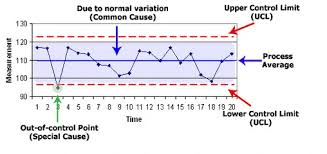
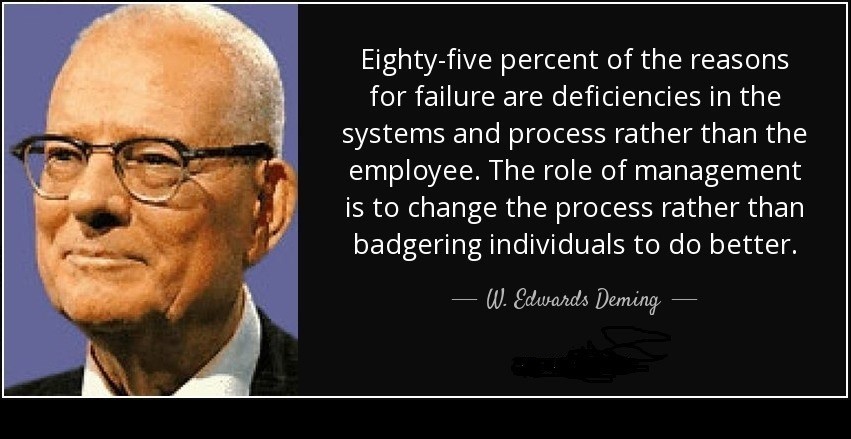
He showed—again and again—that most outcomes are produced by the system, not by individual virtue or failure.  That variation is not a moral statement.  That blaming people for common-cause variation is not only unjust—it actively damages learning and performance.

Once you see this, something uncomfortable happens:

You lose the ability to blame comfortably.

  • You watch people punish individuals for predictable outcomes.
  • You see fear introduced where curiosity should live.
  • You recognize that “accountability” is often just ignorance wearing authority.

And you can’t unsee it.  You cannot unlearn what you now know.
Living Among Category Errors

One of the clearest signs that someone has truly learned Deming is not that they can recite the 14 Points—it’s that they can no longer tolerate category errors without noticing.

You see them everywhere:

  • Treating a single bad outcome as a crisis
  • Celebrating a random uptick as proof of success
  • Launching new policies based on anecdotes
  • Confusing noise for signal
  • Reacting emotionally to variation that was always there

Most people see decisiveness.
You see statistical superstition.

This creates a peculiar loneliness.  You find yourself surrounded by people who:

  • Treat special causes as common causes
  • Treat common causes as special causes
  • Blame individuals while leaving systems untouched

To them, your hesitation looks like weakness.
To you, their certainty looks like harm.
The End of Narrative Comfort

Deming thinking is deeply uncomfortable because it refuses what most cultures rely on:

  • Heroes and villains
  • Simple stories
  • Quick fixes
  • Moral theater

Deming replaces these with:

  • Distributions
  • Long-term thinking
  • Interactions between parts
  • Incentives that quietly shape behavior

This doesn’t make for good slogans.
It doesn’t travel well on social media.
And it doesn’t flatter people in power.

Once you see systems clearly, many popular explanations begin to sound hollow—even dangerous.
The Social Cost of Seeing Systems

Here is a difficult truth rarely stated plainly:

Deming thinking is anti-tribal.

It undermines:

  • Blame rituals
  • Status hierarchies
  • Performative leadership
  • The emotional economy of outrage and punishment

When you introduce Deming’s questions into a conversation, you often destabilize it—not because you are wrong, but because you remove the group’s preferred coping mechanisms.

You stop asking “Who failed?”
You start asking “What produced this outcome?”

That shift can feel threatening.

And so, Deming thinkers often learn—sometimes painfully—to keep quiet, to choose their moments, or to speak only when asked.

The Question That Never Leaves You

Deming leaves you with a habit that never turns off:

Compared to what?

You ask:

  • What is the baseline?
  • What is the expected variation?
  • What changed in the system?
  • What evidence tells us this is unusual?
  • What would happen if we did nothing?

These questions slow things down in a culture addicted to speed and certainty. And the person who slows things down is often treated as the problem.

But without those questions, organizations don’t learn.
They just react.

The Grief No One Talks About

There is a quiet grief that comes with Deming literacy.

You grieve:

  • The loss of innocence
  • The simplicity of old explanations
  • The ease of fitting in
  • The comfort of righteous anger

You realize that many failures were never personal—and that many punishments never helped.

This grief is real. And it’s rarely acknowledged.

A Reframe Worth Holding

If you’ve ever felt isolated, frustrated, or even burdened by what Deming taught you, consider this reframing:

Learning Deming permanently aligned me with reality, even when reality is unpopular.

That alignment has a cost.
But it also has integrity.

It allows you to:

  • Hold uncertainty without panic
  • Resist false certainty
  • Refuse explanations that feel good but fail in practice
  • Remain honest when honesty is inconvenient

That kind of thinking doesn’t make you popular.
But it makes you trustworthy—to the few who recognize it.

A Gentler Way Forward

Many experienced Deming thinkers eventually discover a survival skill:

Instead of correcting people, they ask better questions.

Not confrontational questions—curious ones:

  • How often does this actually happen?”
  • “What would we expect from the system as it is?”
  • “What evidence would tell us this is a real change?”
  • “What incentives might be shaping this behavior?”

Sometimes the system answers.
Sometimes it doesn’t.

But you protect your integrity either way.

Closing Thoughts

If Deming changed how you see the world—and made it harder to live comfortably inside common explanations—you are not broken.

You are not difficult.
You are not cynical.

You are aligned with reality.

And while that alignment can feel lonely, it also means this:

When blaming stops working,
when slogans fail,
when fear no longer produces improvement—

people eventually look for someone who sees systems.

If you are one of those people, you are carrying something rare.

Not loudly.
Not easily.
But honestly.

When Dr. W. E. Deming died in 1993, I did a “Celebration of Life” for him at my house in Minnesota.  I shared memories of Dr. Deming with about twenty other people who were touched by his life.  My years working with Process Management Institute, Dr. Deming and the other consultants who shared his belief in people were among the most important years of my life.  I learned more from Dr. Deming and his ideas than I did in my entire Ph.D. program or any other school program that I have ever attended.  I started this blog off with the “complaint” that Dr. Deming “ruined my life” but as my AI Assistant Metis has wisely said, “Once you open your eyes to the truth, you cannot go back.”

The Truth Will Set You Free!

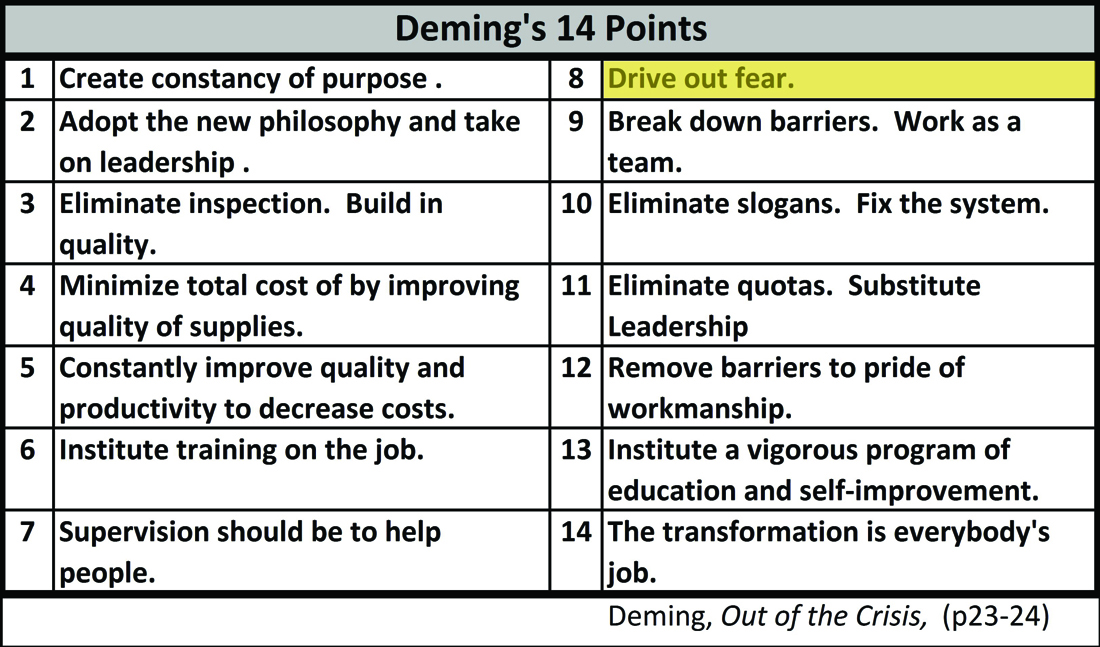
Here are Dr. Deming’s 14 Points for Management.  Together with his seven Deadly Diseases and ten major obstacles they constitute a total system of management based on facts and data.  They obliterate almost everything that is taught in MBA programs across the USA.  Having taught the Capstone MBA course at Metro State University for seven years, I could see clearly that we were teaching students the wrong ideas and the wrong methods for managing.  At first, I was a allowed a great deal of leeway in my teaching there but eventually as the system became more rigid they expected me to teach from textbooks that had “codified” bad theories of management.  I was quietly and subtly not offered classes until I finally “retired.”
The Thirteenth Greatest Mystery of All Time:  How can I Provide More Value to the World and Get Paid for It? 

Business-Consulting1If you have a good memory, you will note two facts. One, I skipped mystery number 12.  Two, I added a 13th mystery to my series of All Time Greatest Mysteries.  Call it a “baker’s dozen.”   Actually, this is a rather shameless advertisement for my services.  I have posted over 95 blogs on this site and nearly 600 blogs at www.timeparables.blogspot.com  and never one ad.  Today, I am posting an ad for myself.  I want to consult, teach, train, speak, lecture, educate, facilitate and help organizations innovate in the areas of cost reduction, strategic thinking, quality improvement, customer service, innovation and revenue generation.  Over the years, I have helped many profit and non-profit companies by solving problems and creating solutions to their most pressing business needs.

“Don’t think of your website as a self-promotion machine, think of it as a self-invention machine.”  ― Austin Kleon

I am now looking for potential clients that need the help of an honest, hardworking, creative and innovative consultant.  Over the years, my clients have made amazing improvements in all areas of their business including:  increased revenue, reduced operating costs and greatly improved customer loyalty.  I enjoy a collaborative working relationship with clients wherein I bring the best of twenty six years of organizational development experience to the client and meld this to the knowledge and systems perspective that is part of their inside working experience.   consulting_concept1

“Try not to sound like those singer-songwriters that go on and on with ten-minute, barely intelligible stories that everyone endures until the next song starts.”  ― Loren Weisman

You might be wondering:  “How do I fit into this marketing picture?”  If you know of any organization that is in financial difficulty or any organization or manager that simply wants to be better able to compete in a global market, please send me their names or send them a link to this blog.  I have a full-profile and resume at LinkedIn and examples of some presentations that I have used for organizational development at Slideshare.net.

I have a website at www.johnpersico.com  that displays my model of organizational excellence and some of the tools that I use in the quest for enhanced organizational performance.  I do not use a cost cutting model of organizational growth and change.  My models are all based on doing things better, smarter and more effectively.  Over the years, I have learned from such management experts as: W. E. Deming, Kaoru Ishikawa, Peter Drucker, Herbert Simon, Noriaki Kano, Yoji Akao,  Joseph Juran, Kenichi Ohmae and many others whose names I have now forgotten but whose lessons and models I have assimilated.  11596153-business-consulting-concept-in-word-tag-cloud-on-white-background2

“I’ve said it before, and by gosh, I’ll say it again — don’t be afraid to toot your own horn.”  ― Emlyn Chand

I have conducted hundreds of seminars, online classes, workshops, talks, training sessions, team projects and consulting engagements with government, education, for-profit, manufacturing, healthcare, transportation, IT, mining and retail industries.  I would be happy to speak to anyone to see how I can help them reach their goals or simply plan a strategy to help them more effectively accomplish their vision and mission.  My vision has been the same now for 25 years:  To Live a Healthy, Useful and Wise Life.   

“The true basis of morality is utility; that is, the adaptation of our actions to the promotion of the general welfare and happiness; the endeavor so to rule our lives that we may serve and bless mankind.”  —- Annie Besant

Please take 3 minutes to review my video.  I was asked to create a video for a potential client that wanted me to showcase my facilitation and teaching style.  This short video was the result.  Please feel free to pass it on to other people.  If it goes viral like Gangnam Style, I may have to create a dance to go along with it.

John Persico Consulting and Training Video 

Thank you for your help.  

I promise to post Mystery Number 12th this coming week.


Management Secrets from the Iditarod.

Someone once said that “Patriotism is the last refuge of a scoundrel.”  Having been in management since 1970, I would add that “metaphors” are equally malignant when it comes to disseminating business advice.  No doubt you have read:

  • Leadership Secrets of Attila the Hun,
  • Leadership Secrets of Jesus
  • Leadership Secrets of Colin Powell
  • Leadership Secrets of the Bible
  • Leadership Secrets of Billy Graham
  • Leadership Secrets of Hilary Clinton
  • Leadership Secrets of Abraham Lincoln

There are 392 books listed on Amazon.com wherein the phrase “Leadership Secrets” is part of the title.  You can even find “Leadership Secrets of Santa Claus” if you still believe in him or her.  Each of these books uses what I would phrase as a series of metaphoric devices to show you that the “Secrets” of whomever can readily be applied to modern management practice. With so many secrets extant, is it any wonder that managers are bewildered when it comes to understanding what good management practice is?  By the way, if “Secrets” are not your bag, then you should go to my next blog, which will cover the “Seven Attitudes of Killer Managers.”  No pun intended!

Well, this is your lucky day.  It just so happens I have a set of management “secrets” derived from a bunch of dogs.  No, I am not kidding!  In all sincerity, if you are still looking for a metaphor for your next HR meeting, here it is:  “Management Secrets from Iditarod.”  The Iditarod Trail Sled Dog Race is one of the most grueling and difficult races in the world.  It traverses a distance of over 1100 miles over some of the roughest most desolate terrain in the world. It is run annually in early March from Anchorage to Nome. A Musher and a team of 16 dogs, of which at least 6 must be on the towline at the finish line, cover the distance in 9–15 days or more. Teams frequently race through blizzards causing whiteout conditions, sub-zero temperatures and gale-force winds which can cause the wind chill to reach −100 °F (−73 °C).

The Iditarod race requires organization, training, recruitment, resources, preparation, strategy, stamina, and leadership.  While there are no products sold, endorsements play a major role in helping the teams finance their competition. Thus, branding and image play are key to a team recruiting backers who are willing to shell out at least $20,000 dollars to support the team.

While, I think many metaphors often strain the envelope of credibility, I think the Iditarod really offers an interesting insight into how a key resource in any organization should be recruited, selected and trained.  I stumbled upon this insight while reading USA Weekend from March 8-10, 2013. On page 2 was a short article called “You Can Do It To!”  This article was about Lance Mackey who has won the Iditarod Championship 4 times since 2007.  In 2007, Lance became the first person to win both the Yukon Quest and Iditarod in the same year. This feat was considered almost impossible by many and is considered one of the most impressive feats ever by a musher and he was nominated for a 2007 ESPY Award based on his performance.

Now here is the key part.  How does Lance treat his dogs?  Well, he could use the one of the tried and true management strategies such as:

  • Kick ass and take names.

Treat your employers coolly. Stay distant so they will respect you. Make them know who the boss is early on. Never fraternize with your employees or they will take you for granted.  Surround yourself with ass lickers and people who will never threaten your position.

  •  Hire the best and smartest guys in the room.

Remember Enron and Ken Lay?  This is talent management at its best. Only recruit MBA’s and only MBA’s from Harvard or MIT or Stanford.  Be sure you adequately screen your recruits for competitiveness and a Machiavellian attitude.  Beware any who took too many courses in ethics.

  •  Reward, reward, reward and incent with bonuses, stock options and perks.

Nothing works like the carrot. If you want to get the most out of your employees, you need to reward them and shower them with performance incentives. A good performance management system is key to getting the most out of your employees. We all know that a good employee works for the financial rewards and that if you want to increase productivity, you must increase financial incentives.

  •  Fire the bottom twenty percent, promote the top 10 percent and warn the other 70 percent that their jobs are on the line.

This is the well-known GE or Jack Welch method.  Just look at how successful GE was!  Indeed Jack Welch has been called one of the most successful managers of all time.  He has also been called a few other names which I won’t mention here. Needless to say, it is results that count and not how a few slackers feel when they get their pink slips.  Just keep on promoting the top ten percent and get rid of those do-nothings in the bottom twenty percent.  Those employees who are left will work so hard to keep their jobs, productivity will go through the roof.

So, DRUM ROLL!  Which method does Lance Mackey use with his dogs?  I will use his own words to describe his method and let you decide which category his strategy fits in.

Lance has a very simple attitude and method with his dogs. Speaking about his dogs, Lance says We live in a barn together and hang out.  They are my best friends.”  He specifically states that he does not pick his dogs for speed or strength but for a good attitude, a willing appetite and cooperation.

How many managers do your know who could say that about their employees?  How many employees were selected for cooperation and attitude versus being the best and brightest?  How many managers hang out with their employees?  Lance’s strategies go against all the best management wisdom.  Lance truly has a relationship with each dog on his team.  His concern for his dog goes well beyond simply winning the race. He has said that his relationship with his team is more important than his winning.  When winning is the “only” thing, what does that do to our relationships with our employees?

I don’t want to make too much of this simple metaphor here. I suppose I could write a book called “Leadership Secrets of the Iditarod Dog Race” but I think there are enough “secrets” out there. My goal in writing this was to challenge some conventional thinking in respect to how we think employees need to be treated.  If dogs can be treated better than people are in most organizations, what does that say about our Human Resource practices?  Maybe we should start a new practice called DR for Dog Resources and start treating our employees as well as Lance treats his dogs.  Maybe then, productivity would pick up and the floggings could stop.

Ok, time for questions:

What will it take to change our paradigms for treating employees?  Are you friends with your employees? Do you believe it would be too dangerous to fratenize? What if you hung out with your employees? Are you afraid they would take you for granted?  What if you selected employees without regard to degrees and credentials?  Do you only promote the top ten percent?  How do you decide who the “bottom” ten percent is?  What if you eliminated your “Performance Management” system and instituted the Deming System of Management?  Do you know what Deming promoted? Do you realize that your current system is probably more Taylor and less Deming.

Life is just beginning.