
In Part 1 of this blog on education, I stated that, “I am going to dive into the major reasons that are leading to the death of public-school education.” In this part, we will look at
- Why our present educational model is obsolete
Our present educational model is obsolete because it is based on several faulty principles or assumptions. Perhaps at one time some of these reasons had some validity but that is no longer true. We are not living in a 19th century agricultural or a 20th century industrial economy. We are now in a digital economy that is moving faster than anything the world has ever known. The following are the most important issues that one must understand to realize why our present educational system is useless.

- Outdated concepts of how education should be conducted
The teaching in the early part of America was based on two principles. First, that every child needed a broad liberal arts education to be qualified as a good citizen. Second, that education curriculums would follow a set of orderly progression starting from simple concepts to more complex concepts. Thus, you would learn simple arithmetic before taking complex subjects like calculus or trigonometry.
The above principles treated every student as though they were the same. There was no customization. There were no exceptions to the grading progressions that developed in most schools. If you were an advanced student, you would need to wait for the less advanced to catch up. If you were not as advanced, then you looked like the dummy in class and were often ridiculed. If you were somewhere in-between, you kept your mouth shut and dreamed of the end of the school year.
These principles may have been useful in a society that was information poor. Marshal McLuhan said that schools made sense when they could bring information to a central point. Prospective students from information poor societies could come together and feast on the abundance of knowledge that was now centralized in one location. Over time, the reverse has taken place. Societies and cultures have become much denser and richer in information than any school could possibly hope to capture. Students today can access more knowledge on their smart phones than probably exists in the entire Library of Congress.
“Today in our cities, most learning occurs outside the classroom. The sheer quantity of information conveyed by press-magazines-film-TV-radio far exceeds the quantity of information conveyed by school instruction and texts. This challenge has destroyed the monopoly of the book as a teaching aid and cracked the very walls of the classroom so suddenly that we’re confused, baffled.” — Marshall McLuhan, excerpt from “Classroom Without Walls,” Explorations in Communication (Boston: Beacon Press, 1960)
Treating students as though they are all the same ignores fundamental elements of human skills and abilities. Some students may have better social skills. Some have better musical, artistic, and athletic skills than others. Even in the domain of cognitive knowledge some students excel at math and others excel at English and language.
Just imagine if music was the dominant purpose of education rather than liberal arts. Children might enroll in schools where the curriculum included violins, drums, harps, guitars, pianos, trumpets, and harmonicas. Each student would have to learn all of these instruments and get a passing grade in each to graduate school. It would not matter if a child received an A in violin if they did not pass drums. If this sounds ridiculous, it should not since it mirrors the way curriculum is handled today.
Furthermore, the system of education assumes that all children would need to progress systematically through learning each instrument. You would have violin 1 before you had violin 2. It would not matter if you could do violin 1 when you came to school, you would still be required to take violin 1 before you could take violin 2. True, in some schools you can test out of a subject but that is still rare in most public high schools.
The idea of holistic learning is totally ignored by the rigid lock step progression that is built into curriculums in both public and private schools. Fifty years ago I argued with math teachers about the use of calculators in a classroom. Most felt that students would not learn the proper concepts behind the calculations if they were allowed to use calculators. Ten years later, the Mathematical Association of America approved the use of calculators in high school classrooms.
The fear of technology is still prevalent in schools as most schools do not allow their students to make use of a smart phone’s capabilities. In many high school classrooms, students are prohibited from having their cell phones out. (There is a constant game today between teachers and students to prohibit students from “misusing” their cell phones.) It is rather funny since some teachers do not restrict cell phone usage and others do. A few students told me a while ago that they wished their teachers could agree on a “cellphone policy.” True, many schools give students laptops and tablets, but their usage of these tools are limited to such programs as Blackboard, Desire to Learn and other instructional interfaces. Students are not taught how to use the power of their cell phones to think. Teachers often seem afraid of new technology perhaps fearing that it will replace them. In truth, the times have changed in respect to what a teacher’s role should be. Looking at the results in the Virginia Governor Race this year, where the pundits believed that parental dissatisfaction played a major role in the election results, I found the following comment. It was made by one of the consultants that the Loudoun County School District in Virginia hired to incorporate equity and inclusion in their curriculum.
“I think the thing that public education offers… because I certainly don’t think we offer learning… are relationships. What historically high schools were for was the dissemination of information very quickly…Well, actually, the internet is better than the high school is…Truthfully, the teacher in relation to the dissemination of information is obsolete.” —Equity Collaborative Leader Jamie Almanza.

- The concept that more money for educators and educational institutions will result in better student outcomes
During the 15 or so years that I was a management consultant, I often encountered the argument that employees would be more productive if they were paid more. Now, I am a great believer in paying employees as much as the organization can afford and well beyond a simple livable wage. I am well aware of the battle between employers and employees over wages and have myself often had to fight to get a salary that I felt was fair. Nevertheless, I see little or even no correlation between productivity and wages and I have told this to many a manager and employee. I have frequently asked people if they thought they would be “twice” as productive if I doubled their salaries tomorrow. No honest person ever told me yes.
Teachers are no different. Teachers who are paid more will not have more students getting higher test scores. There will not be more students graduating or more students learning more because their teachers are higher paid. Yes, I believe teachers are underpaid based on their abilities and goals but that does not mean that I think schools will be more effective with higher paid teachers or with more capital outlays per pupil.
I looked at the rankings for Arizona High Schools a few days ago. (Arizona High School Rankings) The top-rated school in the state was BASIS Scottsdale. Their average student expenditure was $7, 231. Their “Average Standard Score” was 99.9. I then looked at Vista Grande High School where I have been substitute teaching this year. They were ranked 205th out of 226 public high schools. The average dollar spent per capita for students was $9,153 dollars. Their “Average Standard Score” was 14.1. I briefly looked at the student expenditures for all 226 high schools in Arizona. I did not calculate a Standard Deviation for the 226 but if I did, my guess would be that all 226 schools would fall within 3 standard deviations of the mean. I think the mean for “per capital student expenditures” would be about $7,500.
What do the above figures tell me? First of all that per capita spending is not related to school or student performance. Second, that there is a correlation between the wealth or affluency of a community and high school student performance. Put simply, students from poorer families do worse in school than students from more affluent families. The bad news is that no amount of money poured into any school system in the country is going to change these outcomes. The World Development Report 2018 shows a similarly weak correlation between spending and learning outcomes.

- The belief that what can be measured is what is important to teach and that standardized tests and curriculums are essential to a quality education
This is another fallacy that I often encountered in my years as a management consultant. There is some kind of a foolish business quote that says, “What gets measured, gets managed.” What is more accurate is that “What gets measured, gets gamed.” My mentor, Dr. W.E. Deming taught his students that a system is more important to performance than the individual. A favorite saying of Dr. Deming’s was that “A bad system will beat a good performer any time.” Dr. Deming taught how to measure the performance of a system and then to use those measures to improve the system, not to work on exhorting individuals or individual testing to improve the system. Two of Dr. Deming’s 14 Points for Management were:
11 a. Eliminate work standards (quotas) on the factory floor. Substitute leadership.
11 b. Eliminate management by objective. Eliminate management by numbers, numerical goals. Substitute leadership.
12 a. Remove barriers that rob the hourly worker of his right to pride of workmanship. The responsibility of supervisors must be changed from sheer numbers to quality.
12 b. Remove barriers that rob people in management and in engineering of their right to pride of workmanship. This means, inter alia, abolishment of the annual or merit rating and of management by objective.
The standardized tests that are given to students all over America are no help in increasing school performance. The ranking of schools and the ranking of students has no statistical validity in terms of improving the educational system in America. In fact, not only are these measures useless, but they are a major impediment to improving any school system. There are several reasons for this:
- They force teachers to focus on memorization and not learning
- They penalize students that are not good test takers
- They destroy student morale
- They stop educators from making the real reforms that are needed in education
- They have no scientific validity in terms of measuring student performance
The following comments are from a blog titled, “Here’s the Real Reason Why Public Education Will Never Get Better” by Shelly Sangrey
- Schooling and education are two different things.
- Education is about exploration and learning how to think.
- Schooling (which is what our public schools are a part of) is about training and teaching children what to think.
- Someone who is being educated will be told, “Do some research on this topic. Study the evidence, weigh both sides, and make an informed conclusion.”
- Someone who is being schooled is told, “This is how it is because scientists, historians, and other people who are smarter than you have already figured it out. There’s no need to look into it further.”

You cannot measure education. You can measure training. But even measures of training are more likely to reflect the ability of the system rather than the ability of the students in the system.
Where has this emphasis come from in terms of measurement and metrics? The first is from politicians who have little or no knowledge of education. They also lack knowledge of data analysis or statistics. These so-called leaders are more than ready to jump on bandwagons that sound good to their constituents but actually have little value in increasing educational outcomes.
The second is from educators themselves. Believing that if they show good rankings they can justify the money needed for higher salaries and more resources, many teachers support the idea of “pay for performance” or “measuring educational outcomes.” These teachers know little about business concepts but are more than ready to accept that business principles can work in a school system. Unfortunately, many business principles lack any kind of validity either for education or for business. All over America today, we have accountants running businesses and schools. Our systems are driven by short-term numbers and bottom-line thinking. These are major contributors to the death of public-school education.
In Part 3, we will look in more depth at the role that our political leaders play in murdering public school education in America.
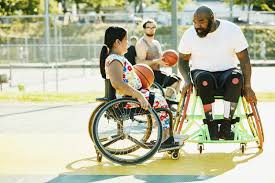
 We have all heard the words, Special Ed, Special Needs. We know that these words refer to kids who are “different.” But do we really know what it means to be different, to be special? Perhaps some of you have had special needs children. If so, you do know what it means to be special or to have a special needs child. For many, like me, it is a somewhat abstract idea. Once in a while, I see a “different” child in a Walmart or someplace out and about. My general feeling is sympathy for the child but also gratitude that I have been blessed to date with good health.
 This past week, I accepted a substitute teacher position in an ESS class or Special Ed class. I was somewhat reluctant to take this class because I knew that there was no teachers aide in the class. In many Special Ed classes, the regular teacher has one or two “Paras” who assist with class management. A few weeks earlier, I had been asked to substitute for only one period in this same class. I was rather surprised to find out that I was alone with ten special needs students. Because they are all very different, having someone aboard who understands their various needs is important. I had no experience with any of these children and have never been trained as a Special Ed teacher. The forty-five minutes went quickly, and I had no problems. Thus, when I saw the opportunity to sub for an entire day (which includes five periods of 45 minutes each) in this Special Ed class, I took it.
 As the day drew closer, I had more and more trepidations. Could I handle these children for five periods by myself? Would I end up doing some emotional damage to these kids? Would there be situations I could not handle. The day of the class, I went in to see the administrative assistant who gives out class keys and class assignments. I think she noticed my reluctance and she asked if I would want to switch with another class that was missing a teacher. It would be a PE or Physical Education class. She knew I have done a great deal of subbing with PE/Health, and I am very comfortable with such an assignment. My undergraduate degree is a B.S. in Health Education with a K-12 certification. Meaning I am certified to teach any grade from kindergarten through 12 grade. In point of fact, I have now taught every grade from pre-school to Ph.D. classes at the University of Minnesota.
 So off I went to five periods of Special kids on a Friday which is the worst day to substitute teach. Friday is the end of the school week and kids are sick of the school regimen and anxious to be free from bells and schedules. Added to this eagerness to leave the school environment is the fact that there are only about three weeks to go until the end of the school year. Students are primed for anything but education.
 The entire day turned out to be very delightful and fulfilling. Not only did I really enjoy interacting with these kids, but I really learned the meaning of “Special.” Each child was very unique. As a group, some had special emotional needs. Some have special physical needs. Some had special cognitive needs. For some the dividing line was difficult to discern.
 Some students were very solemn and said little. They did not really interact with others and pretty much kept to themselves. Some students were more loquacious and liked to laugh and joke with other students. Another young lady in the class started talking about her pet rabbits. I put a short video from “YouTube” up on the screen that showed pictures of various rabbits and some of their habits. The kids all enjoyed the pictures and kept focused on their assignment while they watched the photos of rabbits doing some funny things like sleeping with a cat and sitting on someone’s head. There is hardly anything cuter than a young fluffy rabbit.

 Aging Capriciously