
Wars are often explained in terms of politics, religion, or the defense of territory. Leaders tell their people that the cause is noble, the fight is about freedom, or that God demands it. Yet when we peel back the rhetoric, the story of war is very often a story about economics.
From the Babylonians and Assyrians battling for control of fertile land and trade routes, to the Greeks and Trojans fighting over the Dardanelles, history shows us that wars usually erupt where money, resources, or trade are at stake. Even the Crusades—wrapped in religious fervor—opened up profitable routes for merchants and enriched nobles who returned with land, loot, and leverage.
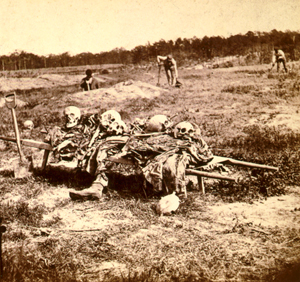
The modern world is no different. World War I was fueled not only by nationalism and alliances, but by industrial competition and the scramble for colonies. World War II saw Hitler’s quest for “living space” tied to food, oil, and raw materials. The Cold War between the U.S. and the Soviet Union pitted two economic systems against one another just as much as two political ideologies. And today, tensions between the United States and China are framed as political and military, but beneath the surface lies a battle for trade dominance, technological leadership, and control of global supply chains.
Of course, not every war is about economics. Some are sparked by religion, fear, or pride. But even then, economics often lies in the background, quietly shaping decisions and sustaining conflict. Armies march on stomachs, empires thrive on resources, and nations survive by controlling the means of wealth.
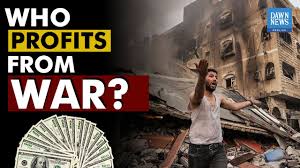
The question really becomes: if economics is so often the root, how do we prevent future wars driven by it? History suggests a few answers:
- Trade Interdependence: Nations that rely on each other for prosperity are less likely to destroy that relationship with war. Europe after 1945 is a powerful example.
- Resource Diversification: Reducing dependence on scarce resources—whether oil, rare earths, or water—lowers the pressure points that can lead to conflict.
- Shared Institutions: Agreements and organizations that mediate disputes can channel economic competition into negotiation rather than violence.
- Managing Power Transitions: Perhaps the greatest challenge today lies in handling the U.S.–China rivalry. Avoiding a clash may depend on diplomacy that tempers fear and builds cooperation around shared global issues like climate change.
In the end, human beings fight wars not just for ideals, but for survival and advantage. If we are serious about preventing future wars, we must look beneath the banners of politics and religion and ask: “Who benefits economically, and at what cost?”

Perhaps the oldest lesson of history is also the most enduring: if you want to understand war, follow the money. Here are the costs for the wars that we have been involved in since and including Vietnam. Where do you think this money comes from? Who do you think really benefits from the money spent?
Vietnam (1965–1975)
- Direct DoD war spending (then-year $): about $111–$139B (differences come from scope/years and “incremental cost” definitions). Naval History and Heritage CommandCQ Press Library
- In 2008 dollars (CRS constant-$): $686B (roughly ~$0.9–$1.1T in 2025 dollars depending on the deflator). Naval History and Heritage CommandFAS Project on Government Secrecy
Iraq (2003–present, incl. ISIS war in Iraq & Syria)
- Spent to date (through 2023) on operations, reconstruction, etc.: ~$1.79T.
- Plus veterans’ care obligations through 2050: ~$1.1T.
- Total (spent + obligated for vets): ~$2.89T. Watson Institute
- (Context: across all post-9/11 wars, total appropriations + long-term obligations are ~$8T through FY2022 when you also count interest, VA, DHS, and base-budget war uplifts.) Watson Institute
Afghanistan (2001–2021)
- Spent to date (operations in Afghanistan/Pakistan, reconstruction, VA to date, some interest, base-budget war uplifts): ~$2.313T. (Excludes future veteran care and future interest.) Watson Institute
- (Same post-9/11 context as above applies.) Watson Institute
Ukraine (2022–present)
- U.S. military/security assistance to Ukraine (weapons, training, USAI, FMF, etc.): ~$66.9B committed as of Jan 2025 (State Dept.). State Department
- Broader U.S. Ukraine response (appropriations for military aid, replenishing U.S. stocks, U.S. force posture in Europe, economic & humanitarian aid, oversight, etc.): ~$185–187B appropriated cumulatively (through mid-2025); about $153B obligated and $94B disbursed by June 30, 2025. U.S. Department of Defense+1Ukraine Oversight+1
Gaza/Israel war (Oct 2023–present)
- Congressional military aid to Israel during the Gaza war (FY2024 acts):
FMF $6.8B + missile defense $4.5B + Iron Beam $1.2B + other DoD items $0.11B = ~$12.61B. Congress.gov - Wider tally including related U.S. operations in the region (e.g., Red Sea/Houthi strikes) through Sept 30, 2024: at least $22.76B total ($17.9B in U.S. support to Israel’s military ops + $4.86B in related U.S. regional operations). (Conservative estimate; excludes non-military/humanitarian spending.) Watson Institute

Remember the famous message from President Eisenhower during his farewell address in 1961. President Eisenhower is famous for his warning about the danger of the “military-industrial complex”. He stated,
“We must guard against the acquisition of unwarranted influence, whether sought or unsought, by the military-industrial complex. The potential for the disastrous rise of misplaced power exists and will persist.”
Conclusions:
- Most wars are waged for economic reasons
- The major beneficiaries are the companies making war profits by selling the tools and equipment to fight the wars
- The public on both sides of the war pay with blood, bodies, sweat, tears and years of pending financial obligations
- All to often major recessions follow a war as the countries have to pay down the war costs
- War is sold to the people by pretentious explanations of defending lies and myths such as the Domino Theory and other bullshit explanations of why we must destroy the chosen enemy


 Aging Capriciously

Aug 28, 2025 @ 22:29:34
John, I totally agree, Trump’s America is the perfect example, Trump wants peace like a hole in the head. America is and has been the world’s armourer for many years, without WAR, what would America be? Now that is the $64 question.
LikeLike
Aug 29, 2025 @ 06:19:00
Some people, I think of the Guru OSHO think war is in our blood and that people need it to feel alive. I am dubious over this assertion but I often think it warrants some reflection. I agree with you Jon for the most part. It is a monetary thing
LikeLike