Five Westerns and Five Moral Universes: What Old TV Shows Still Teach Us About America

By John Persico (with a lot of help from Metis)

In the late 1950s and early 1960s, American television was overrun with cowboys.  Westerns galloped across nearly every network, each one promising a different angle on courage, justice, and the messy human struggle to build a society out of dust and gun smoke.  We tend to remember the big ones—Gunsmoke, Bonanza, The Rifleman—but tucked in that crowded landscape were several thoughtful, sometimes surprisingly philosophical shows that tried to answer deeper questions about right and wrong.

I have always loved cowboy shows.   My favorite cowboys when I was growing up were Hopalong Cassidy, the Lone Ranger and Roy Rogers.  Most of these men got their start in the 30’s but their shows migrated to the TV medium when it was first started.  Many episodes of Hopalong were taken from his early movies.  Later, TV started to develop its own cowboy series with weekly episodes of tall, dark and handsome heroes.  By this time in the late 50’s and early 60’s I was not watching TV anymore.  I was in my early teens and had better things to do than watch TV.  Thus, I never watched the five shows that I am going to talk about in this blog when I was young.

I only started to watch these old TV shows a few years ago.  I was rather amazed at the quality of the stories that they told.  They were nothing like many of the TV series that came around later characterized by many more shootouts and gun fights.  These early TV shows tried to convey a strong sense of morality and featured a more discreet and thoughtful use of gunplay.   Many of the heroes in these shows eschewed violence and attempted to use reason to end a fight rather than gunning down a villain.   

Five of these Westerns—The Tall Man, Wyatt Earp, The Restless Gun, Tombstone Territory, and The Texan—offer a fascinating window into how Americans of that era imagined moral life on the frontier.   Each operated in a different moral universe.  Together, they reveal a whole spectrum of values still relevant in 2025: authority vs.  independence, violence vs.  restraint, institutions vs.  personal codes, loyalty vs.  law.

Here’s what these shows have to teach us when we dust them off and look again.

The Tall Man: Tragedy, Friendship, and the Gray Zone of Morality

Among these Westerns, The Tall Man stands out for its dramatic complexity.  Rather than presenting the frontier as a struggle between clear-cut good and evil, the series explored the psychological and moral tensions between Pat Garrett and Billy the Kid—historical figures already steeped in myth.  The show emphasized the tragic inevitability of their relationship: Garrett, the reluctant lawman; Billy, the charming outlaw whose charisma repeatedly outpaced his judgment. These were not cardboard heroes and villains; they were complicated men bound together by loyalty and destiny.

The morality here is not a simple endorsement of law or rebellion.  Instead, it suggests that human loyalties are fragile, destiny is unforgiving, and justice often emerges from personal conflict rather than abstract principles.  It is a Western operating in shades of gray, reflecting an America grappling with Cold War dilemmas where allies and enemies were not always easy to distinguish.  Viewers recognized themselves in the struggle between duty and friendship, a theme uncommon among early Westerns.

The underlying message was that life often puts us in situations where justice isn’t neat.  Friendship can clash with duty.  Good intentions can slide into the wrong choices.  And sometimes the person you care about most becomes the person you eventually have to confront.

In that sense, The Tall Man feels strikingly modern.  It understands that real life doesn’t divide neatly into good guys and bad guys—something America in the Cold War era was just beginning to wrestle with.

Wyatt Earp: The Comfort of the Uncomplicated Hero

If The Tall Man reveled in moral ambiguity, Wyatt Earp offered the opposite: a mythologized portrait of the West’s greatest lawman, played with crisp, upright dignity by Hugh O’Brian.  This series promoted a worldview in which society advances only when firm, principled authority imposes order on chaos.  Earp serves as the archetype of the responsible American leader—a man who does not relish violence but accepts it as a necessary instrument of civilization.

Earp represented the belief that civilization requires firmness.  Order doesn’t grow on its own—it has to be imposed by strong, decent people who are willing to shoulder responsibility.  For postwar America, still anxious about the atomic age and the looming tensions with the Soviet Union, this moral clarity was reassuring.

The show’s moral message resonated with 1950s ideals of stability: strong institutions, disciplined citizenship, and faith in the ability of virtuous leaders to “keep the peace.” It aligned neatly with postwar values, especially the belief that social progress requires firmness rather than moral compromise. Earp rarely doubted himself, and the series rarely doubted him either.  Its clarity, even rigidity, provided reassurance during an era troubled by atomic anxieties and Cold War uncertainty.

Earp didn’t struggle with his conscience—he was the conscience.

The Restless Gun: Pacifism in a Violent Landscape

In sharp contrast to both Garrett and Earp stands Vint Bonner of The Restless Gun, one of the few early Western heroes who actively sought alternatives to violence.  Bonner modeled the idea that courage is not measured by willingness to kill but by the ability to resolve conflict through empathy, reason, and patience.  Yes, this was a Western.  Yes, he still ended up in gunfights.  But the moral direction of the show pointed firmly away from killing and toward understanding.

This places The Restless Gun closer to a moral philosophy of restorative justice than frontier retribution.  In many episodes, Bonner functioned as a mediator, teacher, or counselor.  The villains were not always evil; they were often misguided, desperate, misinformed, or trapped in circumstances they could not manage.  The show’s worldview subtly challenged the Western convention that justice flows from the barrel of a gun.  Instead, it argued that America’s future might depend more on understanding than dominance.

This made the series unusually modern, anticipating later Westerns such as Have Gun, Will Travel, which incorporated moral complexity into the traveling-gunman archetype. Though the show ended early, its worldview remains distinctive in the genre.

In a genre built on bullets, The Restless Gun dared to say: there is another way.

Tombstone Territory: Justice as a Public Responsibility

Tombstone Territory offered a more institutional perspective on frontier justice. Structured around the fictional Tombstone Epitaph newspaper, the show dramatized the challenges faced by Sheriff Clay Hollister in maintaining order within a volatile, fast-growing community.  Unlike Wyatt Earp, where the marshal’s authority was never questioned, Hollister constantly wrestled with public scrutiny, political pressure, and misinformation—issues that eerily foreshadow the modern news cycle.

The moral heart of the series lies in its quasi-documentary tone. Hollister must uphold the law not simply by enforcing it, but by navigating competing interests, calming mobs, and maintaining legitimacy.  Truth, evidence, and due process—rare elements in early Westerns—become central themes. The show’s structure echoes the belief that justice is not merely an individual virtue but a collective responsibility.  It encourages viewers to appreciate the difficulty of governing rather than merely celebrating the lone hero.

In many ways, Tombstone Territory anticipated the later rise of procedural dramas where law enforcement is portrayed as an institution rather than a personal crusade.

The show’s moral center was institutional: justice requires process, evidence, and the difficult work of maintaining legitimacy.  It wasn’t glamorous.  But it was honest.  In many ways, Tombstone Territory speaks more directly to our modern world than some of the bigger Westerns of its time.

The Texan: The Noble Drifter and the American Myth of Honor

Rory Calhoun’s The Texan returned to the classic Western figure of the noble wanderer—a man whose moral code is internal rather than institutional.  Bill Longley, a Confederate veteran, embodies the Western ethos of individual honor: help the vulnerable, confront injustice, and ride away when the dust settles.  The show foregrounds personal integrity over law, suggesting that character—not institutions—ultimately preserves the frontier’s fragile social fabric.

This worldview reflects an enduring American belief in self-reliance and moral autonomy. Longley’s wanderings represent not rootlessness but a spiritual quest to repair the world one town at a time.  His code is chivalric, almost knightly, and he stands as a corrective to the bureaucratic tensions seen in Tombstone Territory.  While he respects the law, he serves a higher standard—his own conscience.

Longley wasn’t defined by the law, nor by institutions.  His moral compass was internal.  He showed that a single person—armed only with decency and grit—could make things a little better wherever he went.

It is the Western as America likes to imagine itself: independent, honorable, and self-reliant.  Even if it rarely works that way in real life, the aspiration is part of our national DNA.

Five Shows, Five Moral Visions

When you line up these Westerns side by side, the moral variety is remarkable:

  • The Tall Man explores the tragedy of conflicting loyalties.
  • Wyatt Earp celebrates firm authority and disciplined leadership.
  • The Restless Gun champions compassion and restraint.
  • Tombstone Territory elevates due process and public trust.
  • The Texan extols personal conscience as the highest law.

Together, they show how deeply Americans were thinking—even through half-hour cowboy shows—about law, justice, violence, and the kind of people we wanted to be.

And perhaps that is the most interesting lesson of all: Westerns weren’t just entertainment.  They were moral storytelling, played out on horseback.

In dusting off these forgotten classics, we rediscover a whole range of ethical possibilities—some stern, some gentle, some tragic, some idealistic.  The frontier wasn’t just a place; it was a metaphor for the ongoing journey America has always been on: trying to figure out how to live decently in a world that is not always decent.

What Happened to These Shows and the Morality that They Tried to Convey?

  1. The Tall Man (1960–1962)

Why it was cancelled:

  • Ratings sagged as audiences drifted toward lighter, family-friendly Westerns and bigger stars.
  • NBC also faced increasing difficulty with script standards: portraying Billy the Kid sympathetically clashed with emerging TV violence guidelines.
  • Production costs were rising, and no strong sponsor stepped in to keep it going.
  1. The Life and Legend of Wyatt Earp (1955–1961)

Why it was cancelled:

  • After six seasons, the formula grew repetitive, and the mythologized Earp no longer impressed audiences seeking the grittier realism of later Westerns.
  • Hugh O’Brian wanted to move on, and ABC saw declining ratings.
  • The Western market was oversaturated by 1961.
  1. The Restless Gun (1957–1959)

Why it was cancelled:

  • Despite solid ratings, Payne’s contract and salary demands increased, and NBC hesitated to renew at higher costs.
  • The show’s gentler tone was overshadowed by edgier Westerns.
  • Payne himself said he felt the stories were becoming repetitive.
  1. Tombstone Territory (1957–1960)

 Why it was cancelled:

  • Transition from ABC to syndication hurt the budget.
  • Stiff competition from higher-budget Westerns.
  • The semi-documentary framing was admired but not loved; viewers were shifting toward character-driven stories.
  1. The Texan (1958–1960)

Why it was cancelled:

  • It had strong early ratings but lost its time slot advantage to more modern “adult” Westerns.
  • Calhoun’s outside film commitments strained scheduling.
  • CBS was phasing out lower-budget half-hour Westerns in favor of hour-long dramas.

Each show ended for slightly different reasons, but the common story is:  the genre evolved faster than these earlier, simpler morality tales could adapt.  Americans wanted more “grit” more “violence” and yes even less morality.  The change from John Wayne to Clint Eastwood capped the change that we would see in Westerns from morality tales to tales of vengeance and retribution.  America was becoming more jaded.  We did not want heroes any more who were goody two-shoes.  We wanted anti-heroes and the studios offered them up in droves. 

Looking at American politics today, I often wonder where, when and how the decline in values, integrity and morality started.  Some would say it started with the decline in religion.  I don’t think religion has in the last 200 years in the USA been that big of an influence in terms of morality and integrity.  Karl Marx always believed that economics was the major driver of most social trends.  Many people who disagree with him nevertheless admit that the primary influence on voting behavior is the state of the economy.  In my opinion, this influence goes much deeper than voting behavior.  Capitalism thrives on avarice and stupidity.  It needs a large mass of people who want more and more stuff and too brainwashed to realize that the stuff they are buying is not going to bring them happiness. 

Madison Avenue became a major influencer with the advent of TV.  Go back and look at some of these early Westerns.  Smoking was de rigor.  Many of the heroes of these early Westerns died of lung cancer.  Legendary figures like John Wayne, Gary Cooper, and Chuck Connors, with numerous other actors, musicians, and public figures from that era also falling to the disease, highlighting smoking’s heavy toll in Hollywood.  But while these heroes were dying, Madison Avenue was perfecting the use of TV to sell all kinds of products. 

I always laugh at the fact that so many men have been conned into buying what I call “piss beer” from Budweiser, Miller and Coors.  Large macho football players posing in a bar with these watered down beers spent years on TV regaling their followers with the virtues of light beer.  Would be macho males stormed the liquor stores to buy their six pack of piss beer that they could swill down while watching their favorite football teams playing.  The average person is brainwashed by Madison Avenue on a daily basis.  Watch some of the old TV shows and see how much more sophisticated the ads are today.

I once asked all my MBA students if they thought that TV ads had much influence on their buying patterns.  The typical answer I received was “No, I make up my own mind when I go shopping.”  Most people do not even know that they are brainwashed.  The cigarette industry spent years lying to people about the medical effects of cigarettes.  Today, it is the liquor companies that are lying to consumers.  But all of Capitalism and advertising has one major motive when it comes to making a sales pitch.  That motive is too make you feel inferior.  To make you feel needy.  To make you feel inadequate.  Once you feel like you are somehow lacking something, they can pitch you their product.  Their pitch will always be that you will be better, smarter, faster or happier with their product or at least you will be better, smarter, faster and happier than your next-door neighbor who did not buy their product.

I believe the decline in morality and integrity in the USA can be directly linked to Madison Avenue and the brainwashing they conduct on consumers.  If you are on the producers side of the economic equation, you cannot have any qualms about what you are selling or the side effects or the unintended consequences of the use of your products or services.  If you are on the consumer side of the economic equation, your whole reason for being is to buy more and more stuff regardless of its impact on your health and sanity or the environment.  This callousness on both sides has resulted in a society that is unparalleled in terms of greed and avarice. 

The old Westerns were like some of the early fairy tales.  They had a motive beyond entertainment.  They existed to convey a morality that eventually seemed too simplistic and certainly too limiting.  Morality is a unique virtue in the sense that it not only asks you what you are doing for yourself, but it also asks what are you doing for others. Morality cannot coexist with Capitalism any more than Capitalism can coexist with Communism.  We need a new economic system based on principles of love, trust and compassion for ALL the people in world and not just our friends or relatives or the people in our own country. 

How to Use Product or Service Reviews to Get the Best Deals

Everywhere you look today there are reviews telling you how other people feel about a product or service that they have purchased.  A good friend of mine refuses to read reviews.  She argues that it is a little like going into a restaurant and asking a server “What is good today?”  I see her point to some extent.  What do I care about what others think about something?  How do I know the server likes the same thing that I like?

Growing up on the East Coast, I love seafood and spicy food.  Relocating to the Midwest in later years, I found half the population in states like Minnesota and Wisconsin where there are thousands of lakes and millions of fishermen who say, “I don’t like fish.”  I used to ask them, “why?” I don’t anymore because I already know the answer.  “They taste too fishy, they will say”  I want to reply, “Oh, do you dislike steak when it tastes too steaky?  Or hate potatoes that taste too much like potatoes?”   But it would be useless.  About the same use as challenging someone to eat something spicy when they say it will give them an upset stomach.  Somehow, millions of Americans believe that spicy foods cause upset stomachs.

The opinions that inhabit the brains of other people should lead all of us to be very cautious when reading reviews.  Let me give you two examples of bad or stupid reviews I have read.  Then I will tell you the secret for finding useful information from reviews.  Information that will lead you to be able to make purchases nearly 100 percent of the time that provide the quality and reliability that you are looking for.  You see there is both art and science to reading reviews.  Most people merely rely on one or the other and obtain less than optimal results in their choices.

The following are two reviews I have actually read myself.  The first deals with my searching for a new pair of running shoes.  Most reviews unless noted are based on five stars with five being the highest rating.

“I gave these shoes a two star.  They looked good but they did not come in a wide range of colors.  My wife said though that they make me look like a super runner.”

I am a functionalist when it comes to running shoes.  I have been running for nearly fifty years and used more pairs of running shoes than I can count.  I have bought just about every brand of running shoe ever made.  When I buy a running shoe, I buy it according to the type of running that I will be doing.  Will I be on the street, then I want a shoe with more cushion.  Will I be on wooded trails, then I might buy a more minimalist shoe like a Vibram Five Finger Sole.  Will I be on rocky mountain trails, than I want a shoe with more support and a rock sole plate inside like the Merrill’s that I recently bought.

I do not find a correlation with quality and price when it comes to running shoes.  The only correlation that exists in the running shoe industry is with price and fashion.  Many people who run like to look stylish and wear the latest most popular running shoes.  They will pay two or even three times for a new fashionista shoe than it is really worth.  They are often more interested in the colors available for shoes than the quality of the shoe.  Hence, it is buyer beware if you are looking for shoe ratings.

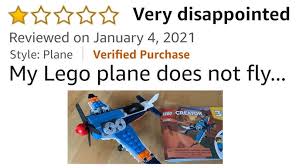
The next stupid review I want to describe was for a book that I was looking at on Amazon.  I was surprised that someone rated the book with a one star until I read the review.

“I gave the book a one star as soon as I saw the title.  No book with a title like this one could be any good.  The cover was also very dumb looking.” 

The only thing dumb about this book was the moron giving the review.  I do lots of reviews on travels and places that I have visited.  I review tours, hotels, concerts, train rides, restaurants etc.  I would never ever want to tear someone’s place or product down with a review that is incompetent and downright mean.  Yes, I think it is mean spirited to write a one-star review unless you can document or back it up with some facts that support your rating.  Facts and circumstances that would justify a one-star review.  Furthermore, I think it is always imperative that you try to deal with the provider before you leave a nasty review.  Speak to the owner or manufacturer or manager before you leave a review that can hurt their business.

The world of reviews is full of problematic reviews that tell you little or nothing about the product or service.  On the other hand, many low rated reviews can provide a wealth of information that will be useful.  Similarly, many high rated reviews can either give you good data or be a waste of time.  The review by a runner that says “I do not run but I rated the shoes high because they came in a wide range of colors” is not likely to be useful to anyone running twenty or more miles a week on hard rocky terrain.

Lets look at the two elements of a review that you should take into consideration.  The first I will call the “Science.”

Simply, how many reviewers have reviewed the product and what is the mean and distribution of data around the mean.  A product with too few reviews could be biased for a number of reasons.  Friends or even employees might have been talked into writing reviews to make the product look good.  I do not trust reviews based on less than 100 reviews and generally I want to see a review with more than 500 reviews.  I trust a larger sample size more than a smaller sample size.

Next, I look at the distribution of ratings.  It is not enough to know that a product received a 4.5 rating overall since the distribution might be lots of high ratings together with some very low ratings.  The average is not always a good figure to rely on.  As the saying goes, if you have two people in a room and one is starving to death with no food to eat and the other person is enjoying an entire chicken to eat by themselves, than on the average there is ½ a chicken per person in the room.  I want to buy a product with a rating that has less spread than a rating with an equal number of ones and fives.

The second part of finding your great product or service is the “Art” part.  It is the reading of the reviews to discern what people liked and disliked about the product.  No one should be buying a product or service without some idea of what they hope or expect it to do for them.  You want to have some expectations of what you are buying in terms of quality and reliability and sometimes style or fashion.

Reading the bad reviews as well as the good reviews can give you invaluable information on how the product performs and what it is capable of doing.  If there are videos that have been submitted showing the product being sold (These can also often be found on YouTube), I will always watch these videos to get more information about the product.  It might be a great product or even a fantastic product, but it might not be great or fantastic for me.  I think it is imperative to match the product or service to your own needs and wants.

I may reject high ratings as well as low ratings for a variety of reasons.  Often, people have unrealistic expectations about the product.  When it comes to movie reviews such as those on Rotten Tomatoes, good reviews might be useless if the movie does not fit into the genre of films that I like.  I tend to like movies that have more plot and character development.  Movies that are short on car chases and action shootouts and high on interesting dialogue.  My choice of movies does not reflect mainstream attitudes today with the current penchant for horror and action flicks.

The major categories of products and services that I purchase include the following.  I will briefly provide a few caveats concerning each of these areas.  A lot more could be said but a few comments should suffice to give you some thoughts.

  • Books

Books are very trendy and fashionable.  Always read a review to see if the content matches your interests and not because it is the “book of the month.”  Popularity does not necessarily equal a good read.

  • Movies

Rotten Tomatoes has its ratings based on two categories.  Critics and Viewers.  A movie might be high in one and lower in the other, high in both or low in both.  I tend to look for the high in both categories but sometimes I have found a great movie that was low in both categories.  Many very popular current films will be high in both categories, but I do not like very many of the current films out there.  I try to look more into the aspects of the film and plot and characterization that resonate with my film choices.

  • Hotels

This is a very difficult product to judge because a hotel is more than just a room.  It is convenience to other areas, amenities, staff, food, service, clientele, ambience and location.  It is very difficult to find ratings on hotels that are very high, and it is one area where I might concede a correlation between price and quality.  That said there are many bargains out there when you get away from the big chain hotels and find small independent operations.  The one that we stayed in called the Zags Hotel in Portland fell into this later category.  It was relatively inexpensive but one of the most fun hotels we have ever stayed at.

Many people are very critical when it comes to hotels and motels.  Some want walk in showers and feather pillows and others don’t care about the showers or pillows.  You must read between the lines when selecting a hotel or you will be very disappointed.

  • Restaurants

Ratings on restaurants are also very problematic.  I blame restaurants for this to some extent since they often create their own problems.  Even the best restaurants in the country have days when everything is just off.   Service is bad, food not up to standards and ambiance bad.  One common review I have read goes as follows, “Used to be great place to eat, food and service have gone downhill.  Would not come back again.”  This review might be followed by another that reads “Great place to eat, food was excellent, service was beyond expectations.”

Two things that restaurants cannot control are the expectations of diners and the behavior of staff both in the kitchen and out of the kitchen.  Many diners act like they are monarchs and should not have to wait five minutes for any service.  I have read so many bad reviews on restaurants where I have had great meals and service that I can only wonder at what happened to the other diner to cause such negativity.  Having been in the customer service sector myself, I can tell you that there are customers that you could never satisfy in a million years.  Thus, I would take any restaurant reviews with a dose of probability.  What are the odds I will get a good meal and good service tonight?  Like with the weather, it will never be a one hundred percent accurate forecast.

  • Cars

I have never made a bad purchase with a car.   I also put car salespeople on my list of top unreliable people to deal with.  I realize that they are in a very high-pressure business and that this is part of the problem.  They don’t get the sale then little Andrea goes hungry.  This means that they are liable to exaggerate claims on what they are selling.  A worse problem is that due to the myriad complexities of the vehicles they are selling you, they will probably be a let less informed about the vehicle than you would expect.  I have hardly ever been sold a vehicle new or used wherein the claims provided by the salesperson matched later expectations.  Despite this discrepancy, my tendency to research the cars I am going to buy and to spend a great amount of time looking at comparable vehicles has helped me be very satisfied in my choices.  The few discrepancies have been irritating but ultimately very negligible in the overall product choice.  One example is a follows.

In 2018 we were shopping for a car to replace our 2009 Honda Civic that had 235,000 miles on it.  We decided to buy a new Honda Accord as it came stock with the new safety package that Honda had developed.  All the new bells and whistles for braking, cameras, adaptive cruise control and other safety features.  One thing I wanted for sure was the built in GPS system.  The salesperson assured us that GPS was standard on the Accord we were looking at.  We bought the car and two weeks later we still had not figured out how to get GPS on the console.  The salesperson had assured us that all we had to do was download the right software.  Turned out that the car did not support GPS regardless of what software we downloaded.  When you buy a car, it is always “Caveat Emptor.”

  • Merchandise

We purchase a great deal of merchandise on Amazon these days.  It is very convenient to peruse their products and their shipping and return policies are excellent.  Since January of 25, we have placed 129 orders with Amazon.  There is such a range of merchandise that it is very difficult to give hard and fast rules about reviews.

Certainly, the science of reviews as I described should be paid attention to.  The number of reviews along with the distribution of ratings is very important.  As to the art of the review, it is imperative that you have a good idea of what you want and that you research the various product options as thoroughly as you can.  This means that if you are buying clothes, check other online sellers out.  The same goes for furniture, appliances, hardware and pharmaceuticals.

The range of ratings for many items prohibits a simple decision.  For almost every product, you will find many people who love it and many people who hate it.  Know the features and benefits that you are looking for and select the product where people rave about these features.  If style is not important, then you may not care about color choices in running shoes.  On the other hand, if reliability is important than look for reviewers who have used the product for several months or even years.  I have seen too many reviews where a product such as a running shoe worked great for two weeks and then fall apart.

Conclusions:

It is not easy wading through myriad reviews to find anything bordering on absolute “truth” about a product.  I like to say that fifty percent of drugs work fifty percent of the time with fifty percent of the people.  The same might be applied to ratings and product reviews.  Some will love the product and swear that it cures old age, and some will swear that it was garbage and not worth the money.  Who is right is the mystery that you will need to solve.  Using ratings to help decide on a product choice is a great adventure in the swamp land of American consumerism.   Think of it as the last great adventure in life.

My Final Will and Testament – Influences – Reflection #9  — Part 2 Literature    

images

If you have gone this far with My Final Will and Testament, you will not need the introduction that I have used for the past 9 Reflections.  If this is your first visit to my series of fourteen reflections than I suggest that you go back to number one and start there.  This link will take you to the first reflection in my series:  “Things that I Have Loved in Life.” You will get the background to my thoughts and desires concerning this series of Reflections in this first blog.

Imagine that this is the last day of your life on earth.  In the time that you have left, you want to leave a “Testament” for your family and friends. 

  1. These are the Influences (people, literature, and Music) that have shaped me.

There are many categories of things which I could describe that have shaped my life.  However, for reasons of expediency I have limited them to three: People, music, and literature.  I will briefly discuss some of the major formative experiences in each category.  On any given day, I could add or subtract several of these experiences and swap them out with others.  The things that have made a difference in my life are like the desert sands.  They shift and take various shapes depending on how the winds of my mind are blowing.  Because the elements of this reflection are so numerous, I am going to break them down into three parts.  In Part 1, I will reflect on the People who have made the greatest contributions to my life.  In Part 2, I will reflect on the Literature that has most influenced my ideas and thoughts.  In Part 3, I will describe the Music and Composers that have moved my feelings, my emotions, and my soul.

Part 2, Literature

Many of my “Best” friends have been the books in my life.  I wrote an old blog about my love affair with books.  The title was, (What else?, “Books, Books, Books, Books, Books).  If I have ever loved anything at first sight, it was a book.  Perhaps something in a title grabbed me and would not let me go or it might have been learning about the book from someone else who had read it.  Hearing about the book, I immediately knew that I wanted to meet the book and when I did I fell in love with it.

I have read so many books, I am not sure where to start.  I have had love affairs with genres that have lasted for many years but ultimately have died.  I am not sure what caused us to break up but somehow I lost interest and moved on to other genres.  Some of my past affairs include the following:  Science Fiction, Business Management, Feminist Literature, Native American Literature, Black Studies, Sword and Sorcery, Satire and Black Humor, Marxism, Adventure Fiction, Biographies and Autobiographies, Classic Literature, Religions and Philosophy, Worlds Greatest Books, Self-Help books and Self-Improvement books, Exercise and Diet, and Spy novels.

My current love affairs are with two different, but I think intimately related genres.  These include History and Political books.  Like Santayana, I do not think you can really understand what is happening in the present if you do not understand the past.  History informs and shapes everything we say and do today though most people hardly realize it.

Politics seem overwhelming to many of us.  The more I study about politics and the people who shape politics, the less I understand the world.  It is like stepping into a pit of quicksand.  The more I struggle to make sense of what is happening, the deeper I sink into the pit.  Sometimes, I feel like I am about to lose my mind.  Other times, I feel that my current passions are starting to drive my friends away.  Many of my friends do not share my passions.  Some believe that I am deluded in thinking that they will love me back.  Philosophers are seldom on the night time talk shows.

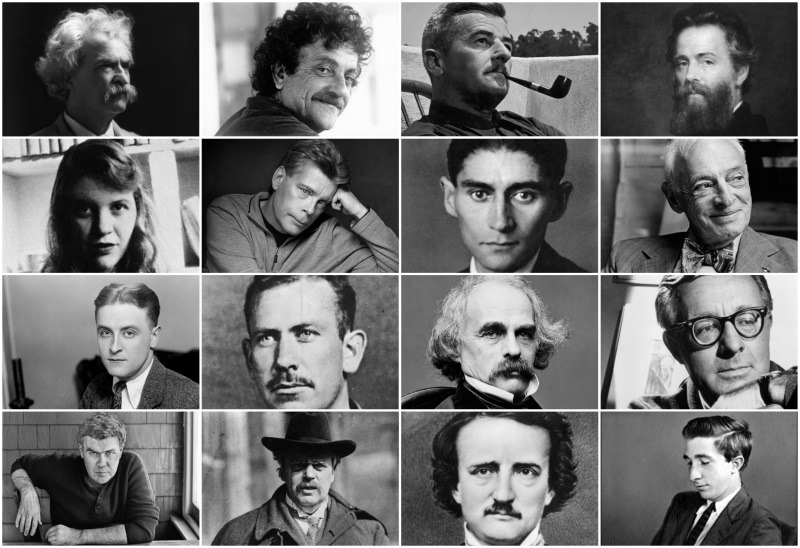
I keep trying to determine if I need to somehow escape from the Zeitgeist or Weltanschauung which envelopes me.  I once heard a noted speaker say, “Why bother about something, if you can not do something about it.”  I like to think that maybe my writings are making a difference, but that stretches my credibility further than even I can admit to myself.  Perhaps politics is simply an addictive drug and not a love affair.  In any case, here are the books and authors that I most want to note as having had a major influence on my life.  The following authors have each had too many writings or books that I have enjoyed for me to list each one, so I am lumping their writings under their names.

12-Writing-Tips-From-Famous-Authors-That-Will-Make-You-a-Better-Blogger

Influential Authors

Fyodor Dostoevsky:

Perhaps the first writer that I fell in love with was the great Russian author Dostoevsky.  How he could describe the life and soul of another human being is beyond my ability to fathom.  I still marvel at his use of language and metaphors.  Even more, I admire his journeys into the souls of human beings.  The innermost dynamics and emotions that make people what they are.  His writings are never easy to travel through as each page requires thought and reflection.  Once through one of his novels, it is hard to believe that you will not think differently about life and yourself.   Read:  The Brothers Karamazov, Crime and Punishment, or Demons.

Edgar Allen Poe: 

To me the greatest horror and mystery writer who ever lived.  “Murders in the Rue Morgue” set the stage for future murder mysteries.  The “Pit and the Pendulum” was the most diabolical story I have ever read.  The “Cask of Amontillado” and the “Tale Tell Heart” had me looking under my bed at night.  For me anyway, Poe was the “Father of the Horror Genre.”  Later writers like Arthur Conan Doyle, Rod Serling and Afred Hitchcock did not entertain the horror that Poe could evoke but were just as adept at evoking the suspense that Poe wedded to the horror of his stories.  I do not read my horror or mysteries these days.  The horror genre has become quite cliched and predictable.  I still enjoy a good mystery and rely on the infrequent recommendation.  Books by Umberto Eco, E. L. Doctorow and Dan Brown will all provide you with some good escape reading.

sddefault

Mark Twain: 

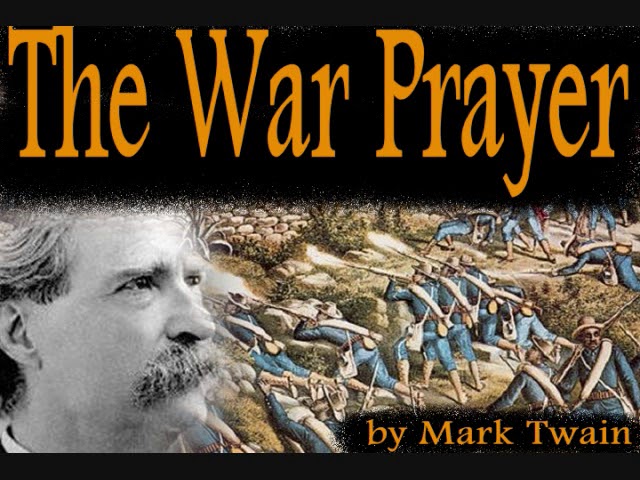
Twain managed to write funny stories that had morals bigger than life.  He wrote many great stories and books that could be read by children as well as adults.  His writings have been criticized of late for not being PC by fools who want to forget the past.  Huckleberry Finn was an adventure story and a story about friendship and racism.  To change the language in the story is an insult to the history of literature as well as the author.   Twain skewered people and social conventions, but he did so in a way that left people laughing rather than angry.  Read:  Letters to the Earth, The War Prayer, or A Connecticut Yankee in King Arthurs Court.

Kurt Vonnegut:

On the way to my basic training, I picked up two books in the Newark Airport which had profound influences on my life.  One was by Lenny Bruce and was called “How to Talk Dirty and Influence People.”  It was not at all what I thought it would be like.  It was sacrilegious, blasphemous, and full of great insights into the hypocrisy around religion.  The other book was by Vonnegut.  It was titled “Cats Cradle.”  This book which some call “Black Humor” led me into a plethora of similar books by authors like, Anatole France, Joseph Heller, Terry Southern, Evelyn Waugh and Hunter Thompson.  I went on to read almost all of Vonnegut’s books until my love affair with sarcasm and social criticism ended.

download

Influential Books:

I will give you the “abridged” version of several books which influenced my life.

“Out of the Crisis” by W. E. Deming: Taught me that most of what I learned in business school was wrong.  Taught me how business should really be conducted.

The Hobbit and the Lord of the Rings Trilogy” by Tolkien.  Perhaps the greatest fantasy adventure that has ever been written.  I wished I had been with them.

Judgement under Uncertainty” by Kahneman and Tversky.  They would latter go on to win a Nobel Prize for their insights and research into human cognitive limitations.  Reading this book was like taking a Ph.D. in how to think more rationally and avoid biases.

“The Autobiography of Malcolm X:”  My foray into Black Studies began with this book.  I began to see the systemic racism that Black people in America still face and the efforts by many White people to discount this racism and pretend it does not still exist.  The story of a courageous man who was not afraid to speak out for a better world for Black people.  Malcolm gave his life to the cause.

The Story of Philosophy: The Lives and Opinions of the Greater Philosophers.” by Will Durant.  A journey into the greatest philosophers of history.  There can be no better education than studying what the wise men and women of history including, Socrates, Plato, Rousseau, and many others have argued, written down and sometimes gave their lives for.  Durant takes on a difficult task to summarize and provide us with an overview of the core teachings of some of the world’s greatest philosophers.  It is an effort which should lead the reader to regard this book as a simple introduction to the great thoughts of history.  There are many other great philosophers some women and some from Eastern cultures who are not included in this book.  Read “The Trial of Socrates” by I.F. Stone.

Against Our Will” by Susan Brownmiller.  Many of the feminist authors that I read or attended conferences with taught me that the world I see is not the same world that many women see.  I thought of myself as a fairly enlightened (if recovering sexist) male, but this book showed me that I still had a way to go.  I had thought rape was a crime of passion and I started out disagreeing with much of what Brownmiller was writing.  Halfway through the book, what she was saying started to make sense.  Rape was a crime of control.  Passion, short skirts, nice breasts had nothing to do with it.  It simply involved men wanting to either hurt or dominate women.  I would advise anyone interested in feminist studies to read this book.

In a Grove” is a short Japanese story by Ryūnosuke Akutagawa.  It was first published in 1922 and has been given awards as one of the ten greatest Asian stories ever written.  The story had a major impact on the way I view truth and fact.  The story involves a fight and murder as described from four different perspectives.  The truth should be based on the facts given by the eyewitnesses, but the facts differ so much that it is impossible to declare what the truth is.  Anyone reading this story will understand that the metaphor of truth and facts applies to our lives.  Perspectives and opinions will vary greatly from person to person and even by the same person as time always influences memories.  I have used the premise of this story for many of my own stories and teachings.

I have probably long exceeded your tolerance for my ruminations.  I am grateful for any who have made it this far.  I swear I have left out many other books and stories that had some degree of impact on my life.  It is not easy sitting at a keyboard and trying to resurrect books that I read more than fifty or so years ago.  The big problem was that once I started putting my mind to this effort, the number of books grew exponentially.  With a concern for your patience and butt muscles, I have limited this list.  I must also apologize for some of the too succinct and perhaps inaccurate reflections on the books and authors noted above.  I hope if you are a devotee of any of them, you will forgive me for any abuses that I have done to their literary credentials.

Next blog, I will publish Part 3 of my reflections on the Influences that have shaped my life.  More specifically, Part 3 will deal with the “Music and Composers” that have shaped my thoughts and behaviors.