Overdose America: Why We Will Never Win the War on Drugs!

A popular quote has it that “The definition of craziness is continuing to do the same thing and expect different results.”  Yet for nearly 100 years now, we have been doing the same thing when it comes to drugs.  Beginning with marijuana, then heroin, then cocaine, then crack, then methamphetamines, then opioids and now fentanyl, every ten or fifteen years or so, we add another drug to the list of drugs that we are waging war on.  The wars are always the same, arrest the people who use the drugs, arrest the drug dealers, interdict the drug suppliers and try to close down the drug factories.

For more than fifty years, the United States has been running what we officially like to call a “War on Drugs.”  Nixon first used the phrase during a press conference on June 17, 1971.  The truth is we have been waging a war on drugs since the first batch of alcohol was produced at some remote still in the Virginia mountains.  The first “Illegal” stills began in 1791.  Distilling became “illegal” only when owners refused to pay the Whiskey Tax of 1791.  This was the first domestic tax imposed by the new federal government.  Before this, private stills were common and perfectly legal.

The charts below tell us—without ideology, slogans, or moral judgment—how this war has actually gone.  What these charts reveal is not a story of individual moral failure or a handful of reckless “bad actors.”  What they reveal is something far more troubling:

A system that consistently produces harm at scale.  A system where drugs are not the cause of the problem but the inevitable outcome of a larger problem.

Chart 1: Total U.S. Deaths from Drug Overdoses and Alcohol (2004–2023)

Total U.S. deaths from all drug overdoses (including prescription and illicit drugs) compared with alcohol-induced deaths, 2004–2023.

Why This Chart Matters

This chart shows the raw number of Americans dying each year from:

  • Drug overdoses (all drugs: prescription and illicit)
  • Alcohol-induced causes (poisoning and chronic disease; not accidents or violence)

The upward trend is unmistakable.

Drug overdose deaths rise from roughly 27,000 in 2004 to over 100,000 per year after 2021.
Alcohol-induced deaths nearly double over the same period, with a sharp surge during and after the pandemic.

At first glance, some will argue this is simply a matter of population growth:  More people means more deaths.  That explanation collapses when we look at the second chart.

Chart 2: Per-Capita Death Rates (Deaths per 100,000 Population)

Per-capita death rates (per 100,000 population) remove population growth from the equation, revealing true changes in risk over time.

Why This Chart Matters

This chart removes population growth entirely.

Measured per 100,000 Americans, drug overdose deaths more than triple over the past two decades.  Alcohol-induced deaths nearly double per capita over the same period.

This is the critical point:

When harm grows faster than population, the problem is not demographic — it is structural.

Healthy systems dampen risk.  Unhealthy systems amplify it.

This Is a Systems Failure, Not a “Bad People” Problem

American drug policy still rests on a comforting fiction:  that addiction and overdose are primarily the result of individual weakness, criminal behavior, or poor moral choices.  In other words, drugs are associated with low life scum bag assholes that bear no resemblance to us, our relative or our friends.

The per-capita data destroys that narrative.

Millions of people do not independently decide to fail in the same way, at the same time, across both legal and illegal substances.  What is failing is the system — the structures that shape incentives, access, despair, treatment, and profit.

This is where the idea of Economic Apex Predators becomes unavoidable.

Economic Apex Predators and the Logic of Harm

In nature, an apex predator is not evil.
It simply occupies a position of unchecked advantage.

When ecosystems collapse, it is rarely because predators are malicious.
It is because balance and restraint disappear.

Our economic system has produced its own apex predators:

  • Pharmaceutical industries that monetize dependency while externalizing risk
  • Financial systems that profit from addiction through insurance, debt, and incarceration
  • Legal systems that thrive on the drug war with lawyers, police, judges and courts all owing their existence to catching and prosecuting anyone in the illegal drug trade.
  • Supply chains optimized for speed and efficiency, not safety
  • Political institutions more responsive to capital than to human cost

None of these actors needed to intend mass death.

The system rewards behavior that makes drugs and drug deaths inevitable.

From Prescription Pills to Fentanyl: A Market Evolution

The overdose curve follows a grim but predictable logic.

Prescription opioids were aggressively marketed.  When backlash came, access tightened — but demand remained.  The market adapted.

Heroin filled the gap.
When heroin became risky to traffic, fentanyl replaced it — cheaper, stronger, deadlier.

This was not a failure of enforcement.

It was a success of market logic operating without ethical boundaries.

Fentanyl did not invade the United States.  It emerged naturally from a system that prioritizes cost reduction, scalability, and profit over human survival.

Why Alcohol Strengthens the Argument

Alcohol’s curve matters because alcohol is:

  • Legal
  • Regulated
  • Taxed
  • Socially normalized

Yet its per-capita death rate rose alongside illegal drugs.

That tells us something deeply uncomfortable:

The crisis is not about legality.
It is about despair.

Despair does not care whether a substance is legal.

2020 Was Not an Aberration — It Was an X-Ray

The pandemic spike is often described as an anomaly.  It wasn’t.

It was an X-ray.

When social supports vanished, when work and healthcare became unstable, and when isolation replaced community, the system’s fragility was exposed.

The pandemic did not create the overdose crisis.

It revealed it.

Why Individual Blame Is Comforting — and Wrong

  • Blaming individuals is emotionally satisfying.
  • It absolves institutions.
  • It preserves the illusion that the system is sound and only people are broken.

But systems that function well do not produce exponential per-capita death curves across decades.  If millions fail in the same way, the problem is not personal failure.

It is design failure.

A Closing Thought

Apex predators do not destroy ecosystems intentionally.
They do so when constraints vanish and balance collapses.

These charts are not just public-health data.
They are moral documents.

They show us what happens when an economic system evolves without ethical boundaries and treats human lives as acceptable losses.

This is not ultimately a story about drugs.

It is a story about power, incentives, and what we choose to tolerate.  I have watched this war now for over fifty years.  The craziness continues with bombings of so-called drug boats and now attacks on Venezuela with drones.  It is as though people in this country are blind to the truth and reality of this war.  You never hear the truth about this war in any media.  The news proudly broadcasts arrests of drug dealers and busts of large drug hauls but no data or facts about the drug war are ever published.  The media would rather ignore the real problem so they can make their blood money on advertising accompanied by their lurid stories of drug deals and drug related crimes.

As a nation we have stuck our collective heads in the sand.  The only time we take them out is when a relative or friend is caught up in the war.  Otherwise, it is them versus us.  Them are low life people with no motivation or desire to improve themselves so they default to drugs.  Them are other countries which find it lucrative to manufacture and sell drugs in the USA.  Them are immoral people who sell drugs to anyone with the money to buy them.  Do we ever ask “why are we alone in a drug war” when the rest of the world seems to look the other way and benefits at our expense.

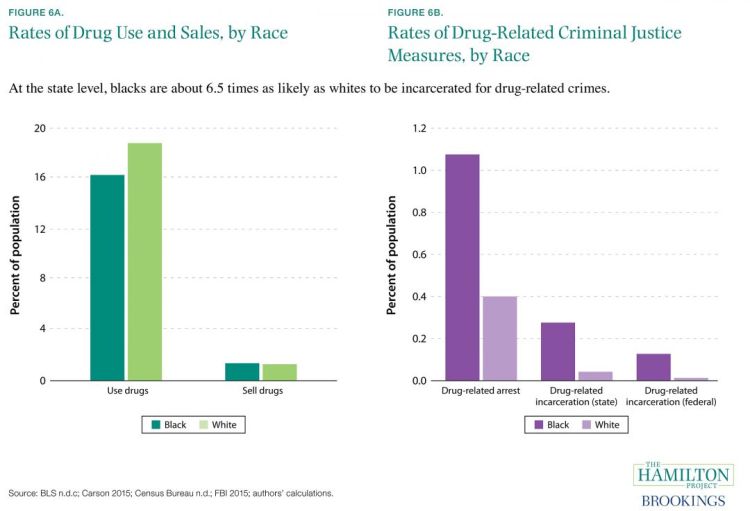
I make a simple prophecy.  Unless we change our tactics and strategy, we will never win the so called Drug War.  Deaths will continue to escalate from drugs.  New drugs will soon replace fentanyl as the target drug.  Drug cartels will continue to manufacture and ship drugs to the USA where they will be eagerly purchased.  Police and courts will continue to prosecute drug pushers, drug users and drug lords.  The majority of people that get sentenced will be poor or minority if previous patterns of prosecution prevail.  Leaders of major cartels will continue to be replaced by even more vicious leaders, and the illegal drug industry will continue to make billions of dollars each year in profits.  Profits from the misery, despair and deaths of the customers who have made them rich.  Meanwhile our leaders will continue to brag that they are against drugs.  Politicians will continue to make more laws that do nothing to help us end the ravages of drugs in America.  Politicians will continue to be quick to espouse anti-drug drivel like “just say no!” to make it look like they are really concerned about the public welfare.

Anyone want to place a bet against my prophecy?
Facing America’s Real Problems: Part 1

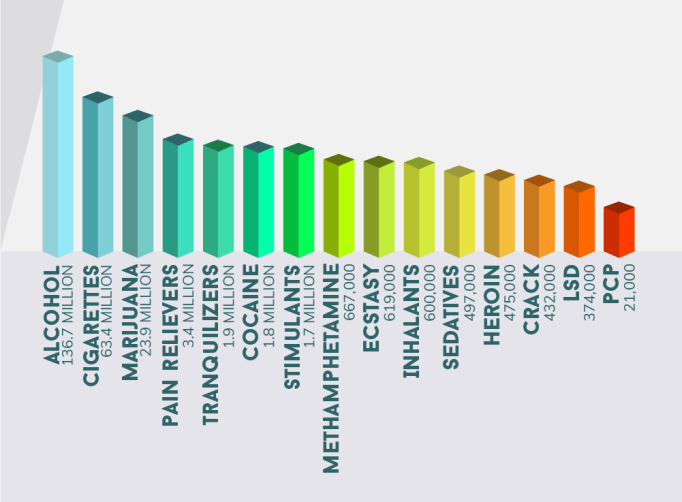
Top-15-Most-Used-Drugs-in-America-03

I have always believed that if you wanted to solve a problem or fix something that was broken, you needed to know how or why it was broken.  Dr. Deming used to say that you must understand the process before you can either fix it or improve it.  Without a fundamental understanding of the process, you can only put temporary fixes on a problem.  Something we can compare to taking ibuprofen for a sore shoulder or a painful knee.  The temporary fix helps deal with symptoms but does nothing to address underlying causes.  Without addressing underlying causes, the problem simply comes back when the “band-aid” wears off.

For years now, I have pondered two seemingly different and unrelated issues.  The first is why we cannot stem the tide of drugs in America.  The second is why schools are so dysfunctional today.  The more I have studied these two issues, the more I see the relationship between the two.  They are both symptoms of the same underlying cause.  Let’s look at each of these issues in turn before we seek a solution.

The Drug Problem in America:

There is no need to regale you as to the extent of drugs in the USA.  The “War on Drugs” has been waged on marijuana, heroin, crack, opioids, cocaine, alcohol, meth and now fentanyl.  For over a hundred years, some type of drug has been identified as detrimental to the social fabric of the USA.  During this time, we have waged this war by banning heroin, banning alcohol, banning pot and recent efforts to decriminalize drugs.  Little or nothing has been done to address and attack the underlying cause of drug abuse.  What is the reason that people take drugs?

The simple reason that people take drugs, besides the medicinal use, is to escape reality.  To escape from a world that is too violent, too scary, too complicated, too isolated, too hurtful, too discriminatory, too racist, too sexist, or too economically difficult to survive in.  Chris Hedges recently wrote that:

“Tens of millions of Americans, cast adrift by deindustrialization, understand that their lives will not improve, nor will the lives of their children.”  The United States of Paralysis,  April 23, 2023

200291845-001

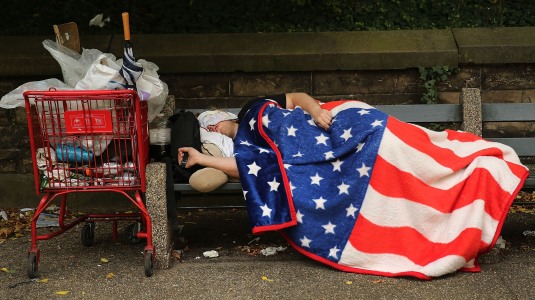
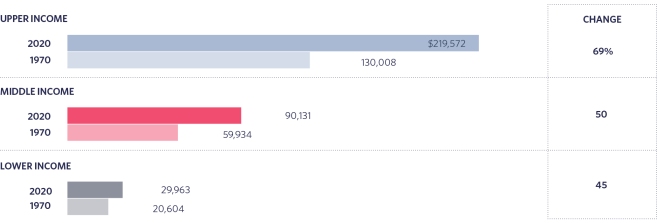
America is divided into three countries.  One country for people with money and social support systems.  This is a country for the rich and connected.  A second country for people with subsistence incomes that are fragile and who have weak support systems.  The third country is an ‘In-between country” which was once called the “middle class” but over the past fifty or so years, has seen a notable decline.  Many of the people in this third country are barely getting by.

Homelessness Reaches All-Time Record In New York City

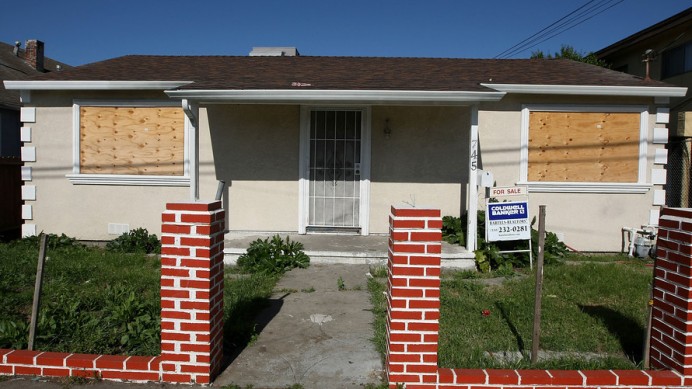
Men and women who were once able to support a family of four or five could no longer count on work that would put them above the poverty level.  Many of these people lived in rural areas of the USA where economic opportunities were less available.  So, what did America do for these dispossessed and cast out workers?  Nothing!  No financial help.  No serious retraining efforts.  No major jobs programs.  No efforts to curtail the outflow of American businesses to low-wage countries.  Simply graphs and charts showing how much more they could earn if they graduated college.  Did you ever hear of a college program for blue-collar workers?

MW-EV556_arrfor_20160908092826_ZH

From 2000 to 2015, I taught in three universities in Minnesota.  I repeatedly said that 1/2 of the students I saw should not have been in college.  Either because they were lost in terms of career goals or because they did not have the academic ability to fit into college as it is now structured.  During this time, high school counselors kept sending graduates to universities regardless of the fit between the student and the college.  Colleges kept admitting these students because more students meant more money for the college.  We have now come to realize the mistake that we made in shutting down alternatives to college.  Millions of students are now getting college degrees that are useless in terms of providing a decent income.  Furthermore, these students will end up saddled with thousands of dollars of debt that they may never be able to pay off.

112fb-free-trade2bfallacy

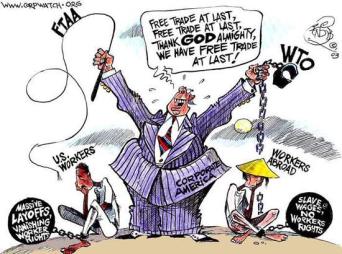
Adding insult to injury is the loss of work that provides for the infrastructure of America.  Carpenters, welders, plumbers, painters, landscape workers and truck drivers are in short supply all over the USA.  Manufactured products may take weeks to order or be backordered for months.  I waited 3 months to get a “molded lead frame” for my F-150 pickup.  Many of the products that we need are now manufactured in other countries.  While I still support the basic idea of a global interconnected economy, I do not support a program that has little or no planning or contingencies for the predictable shortcomings of such an economy.  It is inevitable that robots and Artificial Intelligence will displace many more workers.  However, it will be a tragedy of epic proportions if we ignore the social consequences of this displacement.  The resulting societal disintegration will be on a far greater scale than that which resulted from the lack of planning for Globalization.

Endnote_Infographic_650-Row2

Where do drugs come in?  Misery, loneliness, depression, fear, and hopelessness are the root causes of drug addiction.  Eliminate the causes of these feelings and you eliminate the need for drugs.  Can we eliminate these “feelings?”  Some of them will always be with us but when we have a situation where over 100,000 people in the USA died from drug overdoses in 2022, we have a situation with a cause that is universal.  It is not a personal problem or a mental health problem.  It is a societal problem.

“Rahul Gupta, Director of the White House Office of National Drug Control Policy (ONDCP), issued the following statement regarding the CDC’s release of provisional drug overdose death data, which show 107,477 predicted overdose deaths in the 12-month period ending in August 2022.”CDC Drug Overdose Data

Those who want to ignore the root causes seem ready just as they are with our gun problem to blame the individual and ignore the common causes of the problem.  Problems that have their roots in our society.  Dr. Deming said that “If you put a good person in a bad system, the system will win every time.”  We cannot solve the problem of drugs by sending armies to Mexico or increasing penalties of drug dealers or decriminalizing drugs.  Decriminalizing drugs is a good first step, but it is only a first step.

rates_drug_use_sale_1080_737_80

Our politicians are blind when it comes to dealing with America’s Drug Problem.  Our “War on Drugs” is a farce.  We are no more successful at stopping drugs today than we were in 1900.  We trade one drug for another.  The solution lies somewhat in government.  We need politicians who are astute enough and smart enough to understand the real problems.  They must be able to put aside myths and fallacies pertaining to drugs and set up social programs that help people instead of penalize people.

state-of-the-union-us-wealth-chart.width-1000

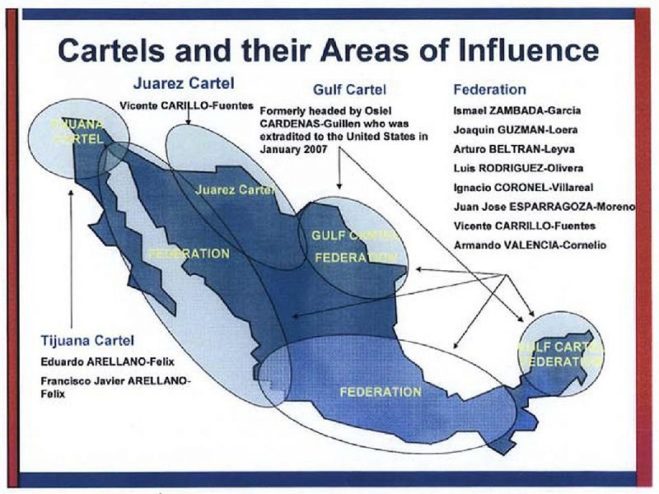
We do not need more penalties for drug possession.  We need leaders who really care about their citizens.  Instead, we have politicians who only care about getting your vote.  We need leaders who are compassionate and not vengeful.  We will not solve the drug problem in our country by invading Mexico.  If you have a buyer for something, you will have a seller.  Destroying the cartels in Mexico will only transfer the drug production to another country.

800px-Mexican_drug_cartels_2008-1200x900

As corny as it might sound, only love will solve the drug problem.

“Love others as much as you love yourself” — Matthew 22:37-40, Christianity 

“Never will you attain the good until you spend [in the way of Allah] from that which you love. And whatever you spend – indeed, Allah is Knowing of it” — Quran 3:92, Islam

“The one who loves all intensely begins perceiving in all living beings a part of himself.” — Yajurveda, Hinduism

“Love is a gift of one’s inner most soul to another so both can be whole.” — Buddha, Buddhism

“Love your neighbor as yourself.” — Moses, Leviticus 19:18, Judaism

“Deal ye one with another with the utmost love and harmony, with friendliness and fellowship . . . This goal excelleth every other goal, and this aspiration is the monarch of all aspirations.” — Bahá’u’lláh, Gleanings from the Writings of Bahá’u’lláh, Baha’i

download

We need to extend love to people who are outcasts.  People who are disenfranchised by a ruthless capitalist system that values money more than people.  We don’t need lectures for these people.  We need help for them.  Help that shows they are not forgotten.  Help that shows they are not looked down on.  Help that shows they are valued human beings.  Help that will enable them to contribute to society.  Help that is grounded in love and not retribution.

If you think that we can kill our way to a drug free culture or that we will eliminate drugs by killing all the cartel leaders, you are part of the delusion that grips American drug policy.  What will it take to erase this delusion and start seeing the problem for what it really is?

A lack of love and compassion for the underdogs in our society. 

Next week my blog will deal with the fundamental problems in our educational systems and what we can do about them.