In Defense of Buffy Sainte-Marie

What I am going to say will be very controversial.  Many people reading this blog will take umbrage at my opinions.  The good thing is that you will not be charged any fees for my opinions.  You are free to take them or leave them.

Perhaps if I were a Native American or a member of a Federally Recognized Tribe my words would carry more weight.  However, I am not an Indigenous person.  As far as I know, I have no Indian relatives and no Indian blood in me.  I do not claim to have an Indian Chief in my ancestry or a relative who was an Indian Princess.  I also must issue the following caveats.  I am a fan of Buffy Sainte-Marie.  I not only respect her, but I admire her.  I will tell you why in a little while.

Now I understand the charges against her quite well.  I have talked about cultural appropriation as an evil done by either stupid or misaligned people.  I do not believe that America ever did right by the people that we stole this land from by genocide, fake treaties, and scams.  As a resident of Arizona, I still see tribal people being taken advantage of when it comes to mining, drilling and water rights.  If an Indian might make some money on something worth selling, there will be a bunch of rich fat White people who want to screw them out of it.  I hear White people say, “It’s a shame we broke all those treaties with the Indians.”  These well-meaning people should get their heads out of their asses.  We are still breaking treaties made many years ago with the Indians.  When it comes to profit, there is no limit to the perfidy of some White people.  I think it was Sitting Bull who said, “I believe in Christianity, but I do not see many White People practicing it.”  I think the same can be said of many so-called Christians today.

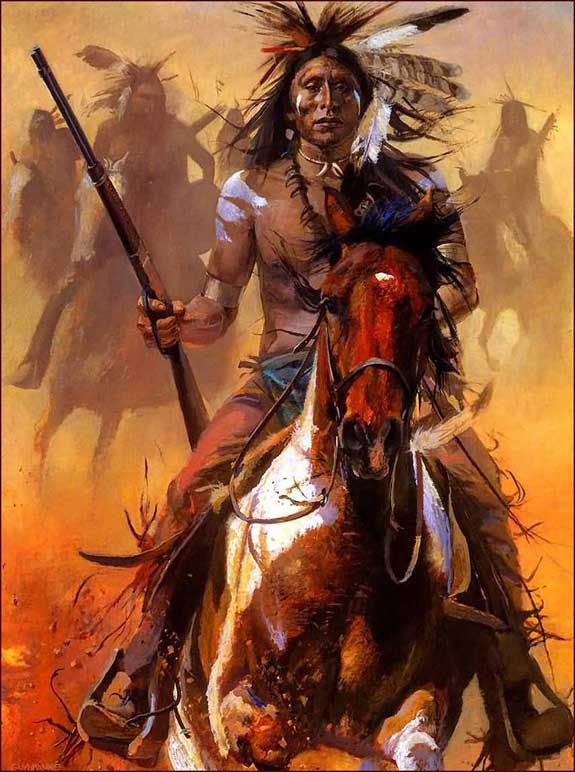
But lets return to the subject of this blog.  Buffy Sainte-Marie passed herself off for many years as a Native American.  She has now been outed by relatives and others who seem to take great delight in maligning her.  I am going to try to offer a defense for her in this blog.  I have already said that I am a fan of hers.  I bought all of her albums back in the sixties and seventies.  I went to a tent concert she did up in Northern Wisconsin a few years ago put on by reservation people.  I have never personally met Ms. Sainte-Marie, nor have I ever corresponded with her.  I am not getting paid one penny for the viewpoints I am offering.  I have already confessed to being White so you can accuse me of bias if you like.  I prefer to think that I have always stood up for the underdogs in my life.

Let’s look at the three of the main charges against her in more perspective.

  1. She is not a real Indian
  2. She took awards that could have gone to real Indians
  3. She sang songs and agitated for Indian rights when she is really not an Indian.

 1.  She Is not a Real Indian:

There is an old adage which says, “If it looks like a duck, walks like a duck and quacks like a duck, it must be a duck.”  In my eyes anyway, Buffy Sainte-Marie looks like an Indian, acts like an Indian and sings Indian like songs.  What’s missing here is Buffy does not have the right set of genes.  Genes or no genes, she is more of an assimilated Indian than many Indians I have known who live off Reservations.  Years ago, we assumed that an Indian could be assimilated by going to an Indian School, wearing White clothes and forsaking their native language.  They could then be accepted as a White person by the larger White community.  At least this was the logic following the Indian wars and the ongoing efforts by White communities of both the USA and Canada to assimilate the Indigenous peoples.

Well, Buffy Sainte-Marie did a reverse assimilation.  She assimilated herself into the Indigenous culture in Canada and was even accepted by a Canadian Tribe.  Records show that she was adopted by a Piapot First Nation family in accordance with Cree law and traditions.  Members of the Piapot family have supported her claims.  Whether she was accepted or adopted into the tribe, she is an assimilated Indian by any stretch of the imagination.

2.  She took awards that could have gone to real Indians:

I am not quite sure I understand this criticism.  Buffy Sainte-Marie did take awards that were earmarked for native accomplishments both socially and culturally.  Specific awards and honors received by Buffy Sainte-Marie that were designated for Indigenous people include:

  • Four Canadian Aboriginal Music Awards: She received these awards at a time when they were specifically designated for Indigenous musicians.
  • Two Aboriginal Peoples’ Choice Music Awards: These awards were also designed to recognize Indigenous artists.
  • Four Juno Awards intended for Indigenous people: For example, she won the Juno for Indigenous Music Album of the Year in 2018 for “Medicine Songs”.
  • Four Indigenous lifetime achievement awards.

Many of these awards for Buffy have since been revoked by  the authorities issuing them.  Most of the awards concern her musical skills.  I hear the claim that a Real Indian could have won these.  This rings hollow to me.  During the sixties, Buffy is the only folk singer that I knew or ever heard who sang “pro-Indian” songs.  Her “My Country Tis of Thy People Your Dying” and “Now that the Buffaloes Gone” made as much impact on my awareness of Native American issues as did Dee Brown’s book “Bury My Heart at Wounded Knee.”  Dee Brown was also not Native American.  He was a White author from the American South.  He was born in Louisiana and raised in Arkansas.  His best-known work, “Bury My Heart at Wounded Knee,” detailed the history of American expansionism and its impact on Indigenous peoples.  Should we take Dee’s book off the shelf?  More’s the pity if you do folks since I never heard one peep during my high school history classes on how much shit we did to Native Americans.  Buffy’s songs and Dee’s book were some of the first major influences upon my White life in terms of the real truth about Indian history.

In March 2025, CARAS announced that it was revoking Sainte-Marie’s Juno Awards and her induction into the Canadian Music Hall of Fame based on the finding that she is not a Canadian citizen and therefore doesn’t meet the eligibility criteria, according to Variety.

3.  She sang songs and agitated for Indian rights when she is really not an Indian.

Here  I would like to judge Buffy Sainte-Marie on the basis of the good that she did for Native American causes and not the bad that she did.  Yes, she lied about her genes and her lineage.  Yes, she continued to insist that she was a true Native American.  She had either brain-washed herself or she really came to believe that she was an Indian.  I certainly do not know the answer to which motive guided her.  I know some of her relatives accused her of trying to smother the truth of her ancestry even by threatening them with a lawsuit.  Shame on Sainte-Marie for this.  Should she have been quicker to apologize?  Yes, I think so.  But does this make Buffy evil?  Does she deserve to be stripped of awards that she earned not by being Native American but because of the songs that she wrote and the messages that these songs sent.

 From “Now that the Buffaloes Gone” by Buffy Sainte-Marie

Oh, it’s all in the past you can say

But it’s still going on here today

The government now want the Iroquois land

That of the Seneca and the Cheyenne

It’s here and it’s now you can help us dear man

Now that the buffalo’s gone.

From “My Country Tis of Thy People Your Dying” by Buffy Sainte-Marie

When Columbus set sail out of Europe, then stress

That the nation of leeches that conquered this land

Are the biggest and bravest and boldest and best

And yet where in your history books is the tale

Of the genocide basic to this country’s birth

Not many people would have the courage to pin such lyrics whether Indian or White.  In my neighborhood, it is dangerous to put up a Democrat for office sign.  Many American “Heroes” have said that the “Only good Indian is a dead Indian.”  What exactly besides sing has St. Marie done for Indigenous people?  I asked ChatGPT this question and received the following reply:

Major Contributions Beyond Music

  1. Trailblazer on Sesame Street
  • From 1976 to 1981, she became the first regular Indigenous presence on Sesame Street, aiming to teach children that “Indians still exist.” Native News Online+12Wikipedia+12Teen Vogue+12
  • In a landmark moment for representation, she famously breastfed her son on air in 1977—likely the first such instance ever shown on television. Teen Vogue
  1. Educational Advocacy & Philanthropy
  1. Pioneering Electronic and Multimedia Art
  • Her 1969 album Illuminations was groundbreaking—using Buchla synthesizers and quadraphonic technology to forge a new sonic frontier. It’s now seen as a pioneering work in electronic and experimental music. Pitchfork+2Vogue+2
  • She also embraced early computer technology—using Apple II and Macintosh systems in the early 1980s to record music and produce visual art. Wikipedia
  1. Media Representation & Hollywood Influence
  • In 1968, Buffy insisted that all Indigenous roles in her episode of The Virginian be filled by Indigenous actors—a first in Hollywood. She held firm despite managers’ objections and succeeded. Teen Vogue (Teen Vogue interview referenced in images)
  1. Humanitarian Voice & Global Activism
  • As a vocal participant in the Red Power movement, she provided a platform for Indigenous concerns through grassroots concerts tied to the American Indian Movement. PBS+5Teen Vogue+5Teen Vogue+5Native News Online+1
  • Her humanitarian spirit led to widespread recognition, including an Oscar, Golden Globe, and honorary doctorates for her work spanning activism and arts. PBS+13Wikipedia+13Teen Vogue+13
  • Through media such as the documentary Buffy Sainte-Marie: Carry It On, she continued advocating for Indigenous rights, touring, and raising awareness well past her prime—into her 80s. muskratmagazine.com+11PBS+11Wikipedia+11

In Summary

Buffy Sainte-Marie’s legacy encompasses far more than her powerful protest songs.  She broke new ground in television, revolutionized arts and education, fought for authentic Indigenous representation, and used her influence to empower Indigenous voices globally.  Her initiatives—from Sesame Street to the Cradleboard curriculum—continue to shape conversations around identity, learning, and equity.

John’s Conclusions: 

Go ahead.  Say “so what.”  Say “who gives a damn.”  Tell me she is a liar and a hypocrite.  Tell me all her good works should be erased because she wanted you to believe that she was an Indian.  Tell me she is not really an Indian and that someone else would have done all the stuff that she did anyway.  Tell me that you can cast the first stone at her for lying because you have never lied in your life.

That’s all I have to say folks.  A courageous humane person made a big mistake but the good that she did and still does should not be forgotten.  If you want to tell me how bad a person she is, tell me what you have done lately for the benefits of our Native brethren.  I don’t think all the awards and recognition that she received should be given back to her.  That is the past.  What I do believe is that she should be given a special award for White people who have contributed to Native American Causes.  Like the Jewish people have their “Yad Vashem” to recognize non-Jews who helped save or give their lives for Jews, perhaps we need a similar hall in our country for people who helped Native American causes or even gave their lives to protect Native Americans.  Here are two examples in case you are wondering if such people ever existed.

  1. Samuel Worcester (1798–1859)
  • A Christian missionary from Vermont who worked among the Cherokee.
  • He defied Georgia state laws aimed at forcing the Cherokee off their lands and was arrested in 1831.
  • His case, Worcester v. Georgia (1832), went to the Supreme Court, which sided with him and affirmed Cherokee sovereignty.
  • Although he survived prison and lived out his life, he endured years of hardship and persecution for standing with the Cherokee at great personal risk.
  1. Edmund D. Pepperman (1901–1930)
  • A white civil rights attorney in Oklahoma who represented Native clients against oil companies and corrupt guardianship schemes during the allotment era.
  • He was murdered in 1930 while investigating abuses connected to Osage oil wealth.
  • His death highlighted the dangers faced by allies who tried to expose exploitation of Indigenous communities.

Buffy’s Song – A Poem by ChatGPT and John P. 

She sang not only with a voice,
but with the marrow of her bones—
a cry against forgetting,
a hymn for nations silenced.

In ballads of resistance,
she wove the stories hidden
beneath the treaties broken,
beneath the trails of tears.

Her guitar became a council fire,
her words—sharp arrows of truth,
piercing the walls of power,
lifting the dreams of the young.

She stood for the water,
for the mothers and the missing,
for children stolen by schools
that tried to burn away their tongues.

Scholar, warrior, poet,
she gave her strength to voices
that history tried to hush,
but could never erase.

Buffy sang of survival,
not as a whisper of sorrow,
but as a thundercloud rising,
a promise of dawn.

And still her song endures—
a river that refuses to dry,
a drum that will not fall silent,
a flame carried in countless hands.

For every child who learns their language,
for every elder whose story returns,
for every Indian standing proud—
her music lives,
a sovereign heartbeat,
forever strong.
Now that the Indians Gone – You Don’t Have to Feel Guilty Anymore.   

download (1)

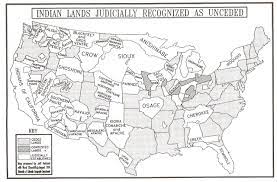
I wrote the following blog 9 years ago.  I decided to republish it after reading the news (Casa Grande Dispatch, March 5-6, 2024) about a federal court panel voting 6-5 to uphold a lower courts denial of an injection to halt the transfer of land in Northern Pinal County for a copper mining project.  The land would be given to a Copper mining company in and area named Oak Flats that was ceded to the Apache Indians by an 1854 treaty.  The Indians in Northern Arizona went to court to contest this denial of their property rights and lost in both a lower court and a federal court.  If you are one of those who say “Well, yes, its too bad we screwed the Indians in all those treaties years ago BUT times have changed.” 

Well, my friend, don’t count on it.  We are still screwing the Indians.  This is the second time in ten years, I have seen former treaties with local tribes stepped on and totally abrogated.  We are still fucking the Indians 150 years later.  Some things never change.  The kicker is that the company petitioning to take the Indian land for a copper mine, is a foreign owned company named Resolution Copper owned by a conglomerate of investors mostly Australian and British.  The spokesperson for this company told the news that “They will continue to work with and listen to the concerns of the local tribes.”  I have made a few updates and changes to my original blog but I think it is still salient and has merit.

(Please listen to Buffy Sainte-Marie’sNow that the Buffaloes Gone”)

war protests1964.  A time of increased social consciousness:  Civil Rights marches.  Women’s Rights marches.  Free Speech marches.  Protests in the grape fields.  The Indian Movement.  The Free Love Movement.  The Whole Earth Movement.  Anti-war marches.  Lots of social commentary and inspiring folk songs written during this period by musicians such as Bob Dylan, Pete Seeger, Buffy St. Marie, Sixto Rodriguez, Richie Havens, Leonard Cohen, Country Joe McDonald, Peter, Paul and Mary, not to mention hundreds of others.   (Many others came before these, like Paul Robeson and Woody Guthrie.)

Can you remember the times
That you have held your head high
And told all your friends of your Indian claim
Proud good lady and proud good man
Your great great grandfather from Indian blood came
And you feel in your heart for these ones

hippies1The Baby Boomers (I sadly must include myself in this category) were going to change the world.  But now Bob Dylan does commercials for General Motors.  Jane Fonda married one of the richest capitalists in the world and makes a fortune on her exercise videos.   Rennie Davis became a venture capitalist.  Lenny Bruce died of an overdose.  Abbie Hoffman committed suicide.  Jerry Rubin became a business executive.  To quote Mr. Rubin: “I know that I can be more effective today wearing a suit and tie and working on Wall Street than I can be dancing outside the walls of power.”   Countless other “counter-culture heroes” joined the “establishment” and de facto “sold out.”

old hippiesFor my part, I never trusted any of these “revolutionaries.”  It is easy to be counter-culture when you’re “daddy’s rich and your mommas good looking.”  I knew I would have to earn a living and while my sympathies lie with the sentiments of these “revolutionaries,” my stomach lie with eating three meals a day.  They say an army marches on its stomach.  I guess a revolution will also rise or fall on the bellies of the revolutionists.  My mother being a part-time store clerk at Woolworths and my father being a postman (In the sixties there were no post-people) did not leave a lot of table scraps left over to feed my revolutionary spirit.

Oh it’s written in books and in song
That we’ve been mistreated and wronged
Well over and over I hear the same words
From you good lady and you good man
Well listen to me if you care where we stand
And you feel you’re a part of these ones

I sold out.  Joined the military.  Served honorably.  Got married.  Got a job with a major corporation and have lived happily ever after.  Except for the guilt, at not manning the barricades, my life has been pretty normal.  No jail.  No drug offenses.  No charges for treason.  No flag burning.  No tear gassing.   How much do I have to pay for taxes this year?

Nevertheless, I do get twinges of guilt from time to time (noted above).  I feel sorry for the Indians.  I feel sorry for the poor.  I feel sorry for the underprivileged.  I feel sorry for minorities.  I feel sorry for the immigrants at the border.  I frequently donate to selected charities, which I suppose helps to assuage my guilt.  I would do more but I am too busy trying to pay my bills. Toys, cars, homes, vacations, clothes do not pay for themselves.

capitalistI know I am like many others.  I regret how we treated and still treat the Indians.  But I don’t want to give the country back to them.  I regret how we treated African Americans but although I am for some type of reparations, I am not out agitating for them.  I would love to do more for the environment but I find it very difficult to remember what plastic pails to throw out and which ones go in which bin.  I want to help the global drought but I like my showers each morning.  I am sorry we put Japanese Americans in internment camps but I don’t know if I would have done anything differently if I had been president in 1941.

When a war between nations is lost
The loser we know pays the cost
But even when Germany fell to your hands
Consider dear lady, consider dear man
You left them their pride and you left them their land
And what have you done to these ones

Lynching_of_Laura_Nelson,_May_1911On my way to my exercise club (LA Fitness) this morning, I was listening to some radio commentator talking about how unfair it was too have put so many Japanese American citizens into what he called prisons for the duration of the war.  He called it a “tragic mistake.”  I thought about all of the “tragic mistakes” we have made in this country from slavery, to lynchings, to Jim Crow laws, to segregation laws, to water rights laws, to reservation laws, to the Trail of Tears, to anti-gay laws, to broken treaties, to anti-immigration laws, to laws protecting the rights of corporations over the rights of citizens.  We have made dozens if not hundreds of “tragic mistakes” throughout American history.  The good thing is we always feel really bad about them later on.  Usually when it is too late to do anything about them.

download (2)

indian-casinoTrue, we screwed the Indians royally but now every Thanksgiving we can feel sorry about it when we remember that they gave us corn on the cob and helped feed us until we could sustain ourselves.  True we made a big mistake when we told them they could have all of the land west of the Mississippi.  Then we made another big mistake when we told them they could own the land and mineral rights which we gave them when we put them on reservations.  Today, we are rapidly realizing that it might not have been such a good idea to give them Casino rights.  This is a “tragic mistake” that is being rectified in many states as I speak.  Capitalism and profits always “Trump” everything else in the “Land of the Free and the Home of the Brave.”

We made another tragic mistake when we told women they would have control over their reproductive rights.  However, many noble Americans have taken to bombing abortion clinics and shooting abortion doctors until our noble politicians can rectify this tragic mistake. (As I edit this former blog, this “rectification” has already taken us back hundreds of years.)

There is no getting away from the fact, that we freed the slaves.  Some would regard this as a tragic mistake compounded by giving them the vote and letting them marry whom they chose.   Of course, we have many loyal Americans doing all they can to put the “Negro” BACK in his or her place.

welcomeimmigrantsbuttonthumbFinally of course, we let all those dam immigrants into the country.  From the Indians point of view, this has been the most tragic mistake of all history.  We let the British, Dutch, French, Irish, Scottish, Germans, Swedes and Italians in.  Then we let the Somalians, Hmong, and Russians in.  Did I forget the Japanese, Koreans, Chinese and Filipinos?   Don’t worry, I have not forgotten the Latinos.  It is just that this last tragic mistake is one that many noble Americans are still trying to rectify.  Right down here in Arizona, it is practically a right to help capture would be Latino immigrants and send them back over the border.  Some other loyal Americans are demanding that we continue to build a large retaining wall to insure that they stay south of our borders.  Of course, the wall must be porous enough to allow US tourists to visit Mazatlán, Cancun, Acapulco and other great South American vacation sites including Algodones for cheap but quality dental work.

Has a change come about Uncle Sam
Or are you still taking our lands
A treaty forever your senators sign
They do dear lady, they do dear man
And the treaties are broken again and again
And what will you do for these ones

download

It is a good thing to be able to learn from your tragic mistakes.  I have a friend whose motto is: “there are no mistakes, only lessons to be learned.”  So what are the lessons, we could and should have learned from all of these “tragic mistakes” that we have made.  I will suggest three lessons.

First Lesson:  Be sure to make your tragic mistakes with people who have less power than you do.  If you are going to screw someone, be sure they do not have a gun, slingshot, bow and arrow or any other kind of an equalizer.  As Samuel Colt said:  “God made men, but I made them equal.”

Second Lesson:  Always look to the past before declaring a tragic mistake.  Never look to present actions that might imply current tragic mistakes because there might still be time to rectify them.  If you only look at past tragic mistakes, you can express sympathy and remorse and not be overly inconvenienced with issues like giving the country back or financial remuneration.

Oh it’s all in the past you can say
But it’s still going on here today
The government now want the Navaho land
That of the Inuit and the Cheyenne
It’s here and it’s now you must help us dear man
Now that the buffalo’s gone.

Lyrics by: Buffy Sainte-Marie – Now That the Buffalo’s Gone

Third Lesson:  Always try to deny responsibility and get the injured parties to move on.   Make it clear that all of this stuff was in the past and they need to get on with life.  Talk about how things are different now.  We have no more racism because Obama was president.  We have no more Indian problems because we let them run the casinos.  We have no more women’s issues because we gave them the vote.  We have no immigration problems because we have lots of immigrants already in the country.  We have no more Gay problems because they are all getting to marry who they want now.

So you see, it’s clear all the problems that people had during the sixties have gone away.  What about Global Warming you say?  No problem, the Republicans are in charge the House now and they don’t believe in it so it will simply disappear like the mirage they say it is.  Did you say, Oil Depletion Allowance, Solar Energy?  No problem, the Oil companies have it under control.  You can trust them to insure that the environment will stay clean and oil will remain affordable.

Time for Questions:

What policies are we pursuing today that we will regret 50 or 100 years from now?  Does guilt and remorse matter if we do not make substantive amends?  What groups do you think we need to make amends to?  Why or why not?  What kinds of amends would you suggest we make to African Americans, Mexican Americans, Asian Americans, Gays, Native Americans?  How can we avoid having to say “I am sorry” in the future?

Life is just beginning.

“Every man is guilty of all the good he did not do.”   ― Voltaire


PS:  When I wrote this blog 9 years ago, I used Buffy St. Marie’s song and lyrics to illustrate some of my points.  More recently she has come under severe criticism for one of the cardinal sins today.  She has misappropriated Native American Culture by falsely claiming to be Native American by birth.  I realize that for many this is an egregious sin. 

The chief of the tribe that she claimed to be from has said that she would be forgiven if she acknowledged the appropriation and asked for forgiveness.  For my part, I find it necessary to forgive her regardless of what she says (perhaps easier for me since I am not a Native American) because of the awareness of the Indian issues that she has brought to my attention.  Buffy stood up for Indians and denounced the hypocrisy of White people in their treatment of Native Americans.  She is among several that I have to thank for what I would like to think is my more progressive attitude towards the rights of our Indian tribes from Maine to California.   

When the TRUTH Will Not Set You Free!  Part 1 of 3 Parts  

Dangerous-LiarsFor the next three weeks, I want to help us find the truth.  Truth has been said to be the most important element in our lives.  Truth is what everyone wants to find.  Thus truth should make a difference in the world, but does it?  We will examine some specific episodes in history in our search for the truth.  I have selected the following ten situations:

  1. The Trial of Socrates
  2. Slavery
  3. The Crusades
  4. The Inquisition
  5. The Extermination of Native and Indigenous Peoples
  6. Reign of Terror
  7. Scottsboro Boys
  8. The Holocaust
  9. The Khmer Rouge
  10. Roman Catholic Sex Abuse Scandals

What do they all have in common?  What does truth have to do with these injustices?  What truths did the perpetrators subscribe to that allowed these travesties of justice to happen?  What truths did the perpetrators fundamentally ignore?  Would the truth even have made a difference?  Are we more liable to listen to “truth” today or is it simply a fiction that we trot out to justify our prejudices, bigotry and murders.  Will it really set us free or is that simply another myth spread by the powerful to emasculate those with less power?  (Listen to in Search of the Truth  by Guy Sweens)

“Historical injustice is ubiquitous in human history. The origins of just about every institution relevant to human political life has a pedigree stained by injustices of various magnitudes. Slavery, genocide, mass expropriation of property, mass internment, indiscriminate killings of civilians and massive political repression are all depressingly familiar features of human history, both in the distant and more recent past.” —- Historical Injustice, Duncan Ivison, University of Sydney in Jon Dryzek, Bonnie Honnig, Anne Philipps (eds) Oxford Handbook to Political Theory (Oxford, OUP, 2006)

I want to briefly explore each of the above injustices.  I apologize for calling these injustices, they deserve a harsher more critical term that that.  For the victims of these “injustices” were slaughtered, maimed, mutilated, tortured, butchered, immolated, hung, gassed, poisoned, executed and stripped of all human dignity.  The words we can use to describe man’s inhumanity to man can never go far enough to convey the “truth.”  I debated whether to start the New Year of 2015 with such a heavy dose of misery and horror but perhaps it is better to start with some thought for creating a better world and recognizing the work that needs to be done.   We are told that all we need is the truth and the world will be a better place. We are constantly urged to seek the truth and to speak the truth.  But what is the truth and what can these injustices tell us about the truth?  Do you dare to see the truth?  Do you have the stomach for the truth?  I have ordered the above list in a rough chronological order.  Let us together examine each one of these horrors to see what truths were behind their execution.  For surely, one fundamental fact is that no human being acts without some truth.  Thus, you may be as curious as I am to see what truths the perpetrators had subscribed to in the implementation of these deeds.  Also, what were the truths that the victims subscribed to?

Keep in mind that we must give perpetrators the benefit of the doubt.  It is possible that they only thought they had the truth and that each of these injustices was not based on actual truth but an incorrect system of beliefs which we shall dutifully avoid calling lies.  Some might say that each of these injustices represented a lapse in truth.  If so, perhaps we can learn the real truth from looking at them more closely and finding out why there was a lapse.

Truth can be stated in a thousand different ways, yet each one can be true.Swami Vivekananda

These ten injustices range from the death of one man to the death of millions of men and women.  They include the deaths of people from every corner of the earth, every tribe that ever existed and every culture that was ever known.  That is a truth.  But I doubt it is the truth that we seek.  Before we proceed with this exploration, let me warn you.  You may find some truths that you do not want to hear.  What if each injustice in this list was the truth?  What would this tell us about human nature?  Could you look at your fellow human beings and live with this truth?  Do not despair yet, for at this point, I have presented no evidence to show that either truth or false beliefs were behind any of these inequities.  Perhaps, we shall find that truth had nothing to do with them.

But I suppose the most revolutionary act one can engage in is… to tell the truth.”  ― Howard Zinn,

The Trial of Socrates:

death of socratesSocrates, the wisest man in the world was tried in Athens, the world’s greatest democracy sometime around 400 BCE.  Socrates was tried for corrupting the minds of the Athenian youth.  The truth for Socrates was that he never taught anything (since he did not know anything) but he loved to ask questions to stimulate the thinking of other people.  Socrates was teaching Critical Thinking skills before they were popular.  The truth for his persecutors was that it was too dangerous for the young people of Athens to be questioning their elders.  Socrates did not mount a defense, did not hire canny lawyers, did not plead “not guilty by reason of insanity” and did not blame Athenian society for his plight.

“At first, they’ll only dislike what you say, but the more correct you start sounding the more they’ll dislike you.”   Criss Jami

Much to everyone’s chagrin, Socrates plead guilty as charged.  One might wonder what fears could have brought about the conviction of a man teaching other people to think.  Was it the potential fall of the Athenian Democracy or the current threats that leaders saw mounted to this democracy?  Was Socrates really a threat to democracy?  Is this possibly a truth we have not admitted in our own zeal to export democracy all over the world?  Truth:  Thinking is bad.  Truth:  Following orders is good.  Truth:  He who is in charge decides what is true.

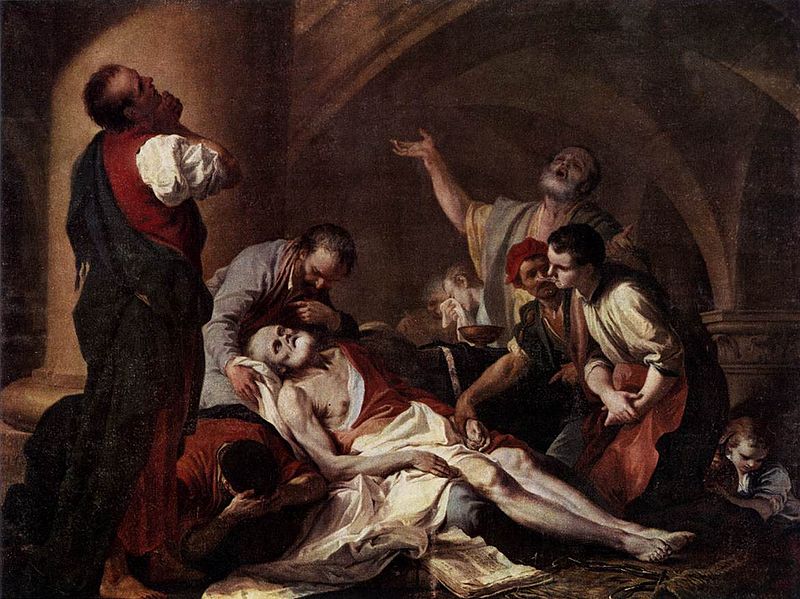
Socrates was given a poison called hemlock and his last words were:  “Crito, we owe a rooster to Asclepius.  Please, don’t forget to pay the debt.”

“Everyone knows perfectly well what truth is – everyone except Pontius Pilate and philosophers.  Truth is the quality of being true, and being true is what some statements are. That is to say, truth is a quality of the propositions which underlie correctly-used statements.” — Bob Stone

Slavery:

slavery in IslamSlavery has existed since time immemorial.  Slavery was known in almost every ancient civilization, and society, including SumerAncient EgyptAncient China, the Akkadian EmpireAssyriaAncient IndiaAncient Greece, the Roman Empire, the Islamic Caliphate, the Hebrew kingdoms in Palestine, and the pre-Columbian civilizations of the Americas.  According to Wikipedia:   “Slavery is officially illegal in all countries, but there are still an estimated 20 million to 36 million slaves worldwide.   Mauritania was the last jurisdiction to officially outlaw slavery (in 1981/2007), but about 10% to 20% of its population is estimated to live in slavery.”

Many distinctions and definitions exist regarding types of slavery and conditions related to how slaves were and are still treated, bought and sold.   According to the U.S. State Department, 600,000 to 800,000 people are trafficked across international borders every year for the purpose of sex, servitude or pornography.  More than 70% are female and half are children.  Without going into the various categories of slavery, anyone with a smidgen of morality can see that all slavery is immoral and cruel.  But that is a truth for the slaves.  What was and is the truth for the slave owners and slave traders?

Truth:  We have a right to their labor and even bodies

Truth:  Slaves are inferior creatures and do not deserve to be treated as we would want ourselves to be treated.

Truth:  If it is my slave, you have no business telling me what I can do with his/her labor.

Truth:  My slaves may have had different ideas regarding these “truths” but their ideas do not count.

Truth:  Money made by slavery is more important than the morality of the trade.

“So our definition of truth needs to be much more flexible than Plato, Descartes and other philosophers claim. I would say that a pragmatic theory of truth is closest: that truth is the ‘thing that works’; if some other set of ideas works better, then it is truer.” — Andrew Warren

Will slavery ever come to an end?  Is there a truth to slavery that will enable all to see the inhumanity of it?  What about the truths that the perpetrators have?  Is their truth less valid than the truth of the slaves?  Does anyone care about the slaves’ truths?  Which truth is truer?  When will the truth arrive to set the slaves free?

“In questions of science, the authority of a thousand is not worth the humble reasoning of a single individual.”  ― Galileo Galilei

The Crusades:

From about 1100 CE to 1300 CE, Europe invaded the Mideast with the purported reason of securing the Holy Land for Christian pilgrims.  Some would say the real reason was conquest while others would say it was purely economic.  According to Wikipedia:

Pope Urban II promised forgiveness of all sins to whoever took up the cross and joined in the war.  While there were additional motivations for taking up the cross—opportunity for economic or political gain, desire for adventure, and the feudal obligation to follow one’s lord into battle—to become a soldier for Christ was to express total devotion to God.”

crusadeWhile I find the arguments for the wars intriguing, I am not as interested in the motives for conquest as I am in the truths that both sides, Muslims and Christians used in their massacres of each other.  As Ulysses S. Grant noted about the southern sharecroppers who supported the Civil War, it is curious that so many Christians could be induced to fighting for goals that had no material or even spiritual advantage for them.  Of course, one could argue that the “forgiveness” of sins was some type of spiritual advantage.  I would counter that there would have been easier ways to attain this goal rather than risking one’s life.  Did not confession as a Catholic sacrament exist in 1100 CE?  No, if there was a real reason for the crusades, I think as usual we will find it in the truths that motivated both sides.

Christians then and now believe that God is our God and not the God of Islam.  Allah is not Jehovah or Yahweh or I Am.  Allah is some foreign and heretical interpretation of the “real” god who belongs to Christians.  “Allah Be Praised” is not the same as “In God We Trust.”  Another truth is that Muslims had no right to the Holy Lands.  God (The Christian God) gave the Holy lands to the Catholics by way of Abraham, David and those other Jews who were known as the Israelites but who no longer existed back in 1100 CE.  Of course, Jews were scattered all over Europe but the world was not yet interested in regaining the Holy Lands for Jews.  In fact, in another one hundred years or so, we would start an institution to get rid of Jews and eliminate the heresy that was associated with Jewish beliefs (More on the Inquisition later).

So what truths motivated the Muslims to risk life and limb to protect the Holy Land and to stop the Infidels from regaining the center of Christian spiritual life?  I think the term “Infidel” easily answers this question.  Translated the word Infidel means:  “A Person who has no religious faith; an unbeliever.”  Thus, to many Muslims then and now, an unbeliever is a Christian or Jew who does not believe in Mohammed or Allah.  That is the Allah of Islam.  The truth to a Muslim is that Christians are unbelievers and not worthy of respect.  Of course, not all Muslims believe this.  Another motivational truth was that many Muslims in 1100 CE thought it was their land.  They were upset that French, Italian and German Knights thought that they somehow had a right to lands that had been occupied by Arabs since Ismael’s time.  The truth that “this is my land and not your land” has always been a powerful motivator for fighting (More will be said about this when we talk about the Extermination of Indigenous Peoples).

“Truth is not constant. Some beliefs which were held to be true are now considered false, and some for which truth is now claimed may be deemed false in the future, and vice versa. Truth is good for helping us decide how to act, because it serves as a standard for making some sort of sense of a world populated also by half-truths and untruths.”  —- Ray Pearce

The Inquisition:

Galloping on through history we now arrive at the Inquisition, another great idea to come from the Roman Catholics.  How can we stamp out lies, heresies and false truths?  Heresy can be defined as:  “My beliefs or truths are different from your beliefs or truths and since you have more power than I do, my beliefs are wrong and punishable.”   Solution:  Let’s inquire as to the beliefs that potential heretics (Jews, Cathars, Protestants, Muslims, Free Thinkers, intellectuals and many others) might have in respect to what are the true beliefs that we know are true.  Any suspects whose thinking deviates from our truth will be punished until they are repentant.

“Wherefore if forgers or money and other evil-doers are forewith condemned to death by the secular authority, much more reason is there for heretics, as soon as they are convicted of heresy, to be not only excommunicated, but even put to death. “Thomas Aquinas

Inquisition_torture_03This simple inquiry or Inquisition process was complicated by the unfortunate fact that people lie.   Solution:  We will need to torture them to tell the truth.  Complication:  people who are tortured will also lie and tell you whatever you want to hear.  (See the current US Senate Report 2014 on Torture).  Thus, the suspect is dammed if he tells the truth and dammed if he does not, since he won’t be believed in either case.  If he does tell his truth and it is not the right truth he will be burnt at the stake for being a heretic.  Solution:  Burn all suspected heretics no matter what they say.   Is it any wonder, so many people finally left the Old World and when they came to the New World wanted nothing to do with religion, the Pope or the Catholic Church?

“Discovering the truth will be a hurtful and painful experience when the facts or realities turn out to be different from what is expected. Yet there ought to be no grounds for despair if we accept that the ideal of truth, like all other virtues, can be approached rather than attained. This ideal truth can be glimpsed if we manage to be skeptical, independent and open-minded when presented with the supposed facts and realities.”  —- Ian Rizzo

The Extermination of Native and Indigenous Peoples:

Aborigines, Mayans, Native Americans (Indians), Eskimos, Tibetans, Incas, Ainus, Daurs, Bushmen.  All indigenous people.  All subjected to murder, famine and extermination by more powerful invaders who wanted their land or resources.  There is not an inhabited continent on earth where the indigenous people were not persecuted and their rights and even lives forfeit to the invaders.  There is not a time in history where such persecutions have not occurred. From the first historical records to the most recent news reports of mass tribal exterminations in various parts of the world, we see the truth.  The truth of the invaders and the truth of the exterminated though are not the same.

I have listed the Holocaust in a separate category of injustice.  Many historians would see the systematic genocide of the Holocaust as perhaps belonging in my category of Extermination.  We can add numerous examples of genocide to the above list.  The Bosnian Serb massacres, the Rwandan murders, the Armenian massacres, the Cambodian massacres might also fit in the Extermination category but in my scheme of things, I would include them in the Holocaust category since I believe and will show that they are based on a different set of “truths.”  The truths for the extermination of indigenous people as defined by the invaders are:

Truth:  They don’t need the land and stand in the way of progress.

Truth:  Might makes right.  Since we are mightier we can simply take their property.

Truth:  They will never fit in with our way of doing things.

This unfortunate race, whom we had been taking so much pains to save and to civilize, have by their unexpected desertion and ferocious barbarities justified extermination and now await our decision on their fate.”Thomas Jefferson

“The Whites, by law of conquest, by justice of civilization, are masters of the American continent, and the best safety of the frontier settlements will be secured by the total annihilation of the few remaining Indians. Why not annihilation? Their glory has fled, their spirit broken, their manhood effaced; better that they die than live the miserable wretches that they are.”L. Frank Baum (Author of the Wizard of Oz)

native_american_indian_six06Looking at the truth from the point of view of those due to be annihilated provides a different perspective on the truth.  We see the White truth that Indians are lazy, barbaric and that their culture stands in the way of progress.  A White truth is that the problems with Indian culture far outweighed any inherent value in their way of life.  They are immoral, cruel and uncivilized and worse they refuse to adopt the “White man’s ways.”  Heck, we gave them reservations, taught them to speak English, sent them to schools to learn to read and write and even sold them booze and now they have casinos.  Truth:  Nothing seems to make them happy.

However, the voices from Native Americans seem to present a different truth:

“Before our white brothers arrived to make us civilized men, we didn’t have any kind of prison. Because of this, we had no delinquents.  Without a prison, there can be no delinquents.  We had no locks or keys and therefore among us there were no thieves.  When someone was so poor that he couldn’t afford a horse, a tent or a blanket, he would, in that case, receive it all as a gift.  We were too uncivilized to give great importance to private property.  We didn’t know any kind of money and consequently, the value of a human being was not determined by his wealth.  We had no written laws laid down, no lawyers, no politicians, therefore we were not able to cheat and swindle one another.  We were really in bad shape before the white men arrived and I don’t know how to explain how we were able to manage without these fundamental things that (so they tell us) are so necessary for a civilized society.”  —John (Fire) Lame Deer, Sioux Lakota – 1903-1976

“I am poor and naked, but I am the chief of the nation. We do not want riches but we do want to train our children right.  Riches would do us no good.  We could not take them with us to the other world. We do not want riches.  We want peace and love.” — Red Cloud

Do Red Cloud’s words sound familiar?  Have you ever heard of a man named Jesus Christ who said:

“Give to everyone who begs from you; and if anyone takes away your goods, do not ask for them again.” — Luke 6:30

“For what shall it profit a man, if he shall gain the whole world, and lose his own soul?”  — Mark 8:36

“A new command I give you: Love one another.  As I have loved you, so you must love one another.” — John 13:34

It would seem like Red Cloud knew more about the “true” teachings of Jesus then the thousands of Christian missionaries who went to Asia, Africa, South America, North America and elsewhere to teach the pagan barbarian primitives how to be good Christians before they were slaughtered.  Much merit to these missionaries since in the Christian theology, you cannot get to heaven unless you are baptized.  It would be simply awful if these indigenous peoples, whom we planned to rape, rob and murder could not get to heaven.  What do you suppose they will say to their murderers when the murderers arrive in heaven?  Egad!  I just had a terrible thought.  What if all the conquerors and murderers are going to hell?

Let’s wrap this up.  Thanks for your patience.  I never thought this blog would get this long. I suddenly realized it was almost beyond too long and I have decided to break it into two parts.  When I started this blog, it was as much an exploration for me as it may have been for you. I truly wondered if I would find the Truth.  I wondered if a clear set of precepts might emerge which would better help me to understand humanity and how we can allow such injustices to occur.

I thought that by exploring the worst injustices or at least a variety of the worst injustices in history, a light would inevitably shine on the Truth.  Everyone talks about the Truth.  Everyone says they are looking for the Truth.  We all know that the “Truth will set us free.”  Free from what though?  I am more confused than ever.  Thus, the search will continue next week.  You deserve the Truth, if you can handle it.  The problem seems to be in finding it.  In my next blog, we will look at the next five atrocities on my list to see if they will shed more light on the Truth.   We have invested too much time to quit our quest now.

“The truth that makes men free is for the most part the truth which men prefer not to hear.”Herbert Agar

Time for Questions:

Have you found the Truth?  What is your Truth?  What keeps us from the Truth?  Is there really a Truth to be found?  How do you know?  What if there was no truth?

Life is just beginning.

“We must pass through the darkness, to reach the light.”   ― Albert Pike