
Introduction:
We are living through a moral epidemic. An epidemic of selfishness. Selfishness has become the new normal — disguised as independence, celebrated as authenticity. In the moral epidemic of which I speak, we are plagued by not one but several symptoms. Selfishness is a disease that can be seen in many manifestations. In this blog, I want to explore how ego, narcissism, ingratitude, denial of responsibilities, entitlement, demand for rights, and isolation are each contributing to a disease that is redefining the American character. The remedy may lie in reviving gratitude, duty, responsibilities and connection.
A few nights ago, I went to a Hobby Lobby store with Karen. She needed to pick up some quilt squares for her Thursday quilting guild. Each week they have a contest, and the prize is a bundle of fat quarters provided by all the members. They change the color of the fat quarters that members must bring to each meeting. I left the store early and told Karen that I would wait for her in the car. The parking lot was mostly dark and deserted. As I walked to my car, I noticed that there was about a dozen or so shopping carts just randomly scattered around the lot.
I assumed that there were no cart bins available but upon further looking around, I noticed many bins where you could leave a shopping cart. Instead, customers had just dropped the carts anywhere they wanted to. As it was late at night, it would be really easy to hit one of these carts either by backing into them or hitting them as you tried to pull out of the parking lot. This fact did not matter to the individuals who were TOO LAZY to just push their carts over to a bin and drop them off.

Karen is normally a very positive person. When she came back to the car, I pointed the situation with the carts out to her. I challenged her to find some “Good Reason” that these customers could not just push their carts over to an available bin. My suggested reasons, “They were in a hurry and had to get to an emergency ward.” “They needed to get to the airport, and they were late.” “They did not have time to find one of the available bins to put their carts in because the football game was starting.” “They were being chased by predators who wanted their Hobby Lobby stuff.” “They were blind, or it was too dark to see the bins.” These were my facetious reasons. Karen laughed at my lame attempt at humor. My conclusion: Lazy and Selfish.
Ego:
The age of the collective has given way to the empire of the self. Every opinion feels sacred, every desire urgent. Technology, consumerism, and politics all whisper the same message: “You deserve everything, instantly”. But when self-interest becomes the ultimate good, the moral commons collapses. “You do your thing, and I do my thing” was part of the famous Gestalt prayer by Fritz Perls that became popular in the 70’s. The attitude behind this prayer has morphed into the epidemic we see today where “shopping till you drop” and “he who has the most toys wins” now defines our National character. A character suffused by obsession for buying things to help build our egos up. But it is not enough to have more, our toys have to be bigger and better. Better is defined by the brand name stamped on the purchase or the neighborhood that you live in. Bigger is a 60-inch color tv or a car with 900 hp or a house with five bathrooms or a Wendy’s Pretzel Bacon Pub Triple with 1530 calories.
Narcissism:
Narcissism is the psychological heart of the new selfishness. My friend Bruce has mentioned this a million times to me whenever we discuss Trump and his followers. I concede that it now exists and is more pervasive than at any time in history. “I matter more than you do.” “I am more important than you are.” The unflattering title of a “Karen” (my wife’s name is Karen) is depicted in thousands of short videos and TV shows such as “Bridezilla” where a would-be bride is screaming “It’s all about me, it’s all about me.” This has become our national motto, “It’s all about me.”

Narcissism feeds on admiration but rejects intimacy. The narcissist seeks reflection, not relationship — an audience, not a community. Social validation replaces self-knowledge, and performance replaces sincerity. We have built a society of mirrors where no one truly sees anyone else. In Greek mythology, Narcissus was a strikingly beautiful young man who rejected the love of others. He sat all day looking at himself in a pool of water and thought how beautiful he was. He fell in love with himself. Punished by the gods for his vanity, he wasted away out of despair because he could not be with his love. Our country is wasting away from a virus that seems to be pervasive. A virus of narcissism. But it is only one of several symptoms killing us.
Ingratitude:
It took me over thirty Jesuit retreats to finally notice a quote by Saint Ignatius Loyola. Loyola said that “Ingratitude is the sin most offensive to Heaven. It is the cause, beginning, and origin of all sins and misfortunes as it is the forgetting of God’s blessings and gifts.” He described it as “The most abominable of sins”.
The more I reflected on this thought, the more I realized exactly what he meant. Ingratitude corrodes the soul from within. It blinds us to the gifts of others, the sacrifices of those who came before, and the simple blessings of daily life. When we stop saying “thank you”, we begin to believe that everything owed to us was earned — and that no one else deserves the same. Gratitude is the soil of empathy; ingratitude is a cancerous rot.
I try to remind myself each day of the need for gratitude. It is not always an easy virtue to arouse. In these challenging times, it can seem to me that I have little to be grateful for. I would never have believed forty years ago that I (WE) would have had to deal with Climate Change, a major Covid Epidemic, Trumpism and now heart problems, all in my seventies. I once thought that like any good cowboy or cowgirl, I would simply ride off into the sunset after years of a peaceful meditative retirement. Added to my woes is the fact that our national character seems to be eroding and replaced with a desire for a despot who would be king.
Denial of Responsibilities:
Freedom divorced from responsibility is not liberty; it is chaos. We live in an era where accountability feels like oppression to many people. People say that they hate the government. “Too much big government” is a rallying cry for right-wing fanatics. Civic, moral, and even legal obligations are dismissed as optional, or outdated. How many people do you see running green lights or ignoring posted speed limits these days?
Thus, we have the movement for “Less government.” Let’s obliterate the agencies and organizations that might hold us responsible for something. But something is always overlooked when it is convenient to make money or power. How many people have ever been prosecuted for the preventable disaster that we call “Climate Change?” Denial of responsibility led to continued use of fossil fuels which accelerated any potential changes in our global climate. Denial of responsibility breaks the invisible threads that hold society together: trust, reliability, and mutual care. “I don’t care what my thirst for money does to you as long as it benefits me!”

Entitlement:
“Man is not, by nature, deserving of all that he wants. When we think that we are automatically entitled to something, that is when we start walking all over others to get it.” — ― Criss Jami
Entitlement is selfishness institutionalized. It is a step beyond responsibility. Now I am not only irresponsible, but I am entitled to be irresponsible. I have a legal right to be irresponsible. It is my right to leave my shopping cart wherever the hell I want to. I bought a product at this store. This entitles me to do whatever I want with this shopping cart. It is the conviction that one’s desires are moral imperatives. The entitled person measures fairness by outcomes, not effort; comfort, not contribution. When entitlement becomes culture, excellence disappears — because effort no longer earns respect. It is taken for granted that some people are born superior and effort has nothing to do with success or failure.
Demand for Rights:
I want my rights. I want my rights! It is my right! I know my rights! Everywhere you look today someone is screaming about their rights. I learned years ago (I wrote a blog about this issue) from Sister Giovanni of Guadalupe Area Project, that for every right there is a responsibility. Have you heard anyone screaming for their responsibilities?
The modern cry is for rights — to speak, to choose, to consume, to be seen — but rarely for the responsibility that sustains those rights. Rights without duties are like currency without value. When everyone demands and no one contributes; liberty itself becomes unsustainable. A functioning democracy requires not just the assertion of rights, but the acceptance of responsibilities. See the short film on “Indigenous Rights vs Responsibilities” for a refreshing view of the two.
https://www.youtube.com/watch?v=w43j30S1yDI
Isolation — The Logical End
Isolation and loneliness are epidemics of their own in America today. A Cigna Group survey from June 2025 found that more than half (57%) of Americans are lonely. Data shows that the amount of time the average American spends alone has increased significantly over the past decades, while time spent socializing with friends has decreased — “Why are we so lonely?”— by John Wolfson, Winter 2024, Boston Magazine
When ego, narcissism, ingratitude, entitlement, and denial of responsibility take root, the harvest is isolation. When I count and you don’t count, I become estranged from you. When I live in a community where there are insiders and outsiders, I become distant from humanity. Back porches have replaced front porches in America. I can walk down a village street or sit on my front step and not see anyone come by for hours. We may live side by side with so-called neighbors, but we feel profoundly alone. Digital life gives us constant connection but no communion. Isolation breeds despair, polarization, and apathy — subtle diseases beneath our prosperity.
Conclusion — The Return of the Connected Self
The cure for selfishness is not suppression of the self but expansion of it — seeing the self as part of a larger whole. To belong but not to a group of xenophobic fanatics. To see the value of Inclusiveness not exclusiveness, diversity not homogeneity. To see all people as equal before the law. The foundations of DEI which seem so despised by people on the right . We rediscover meaning when we give, not when we grasp.
Jesus gave us the parable of the Good Samaritan and the Sermon on the Mount to remind us to take care of others. It is still better to give than to receive. In the New Testament of the Bible, (Acts 20:35), the apostle Paul recalls these words of Jesus. “In everything I showed you that by working hard in this manner you must help the weak and remember the words of the Lord Jesus, that He Himself said, ‘It is more blessed to give than to receive'”
To rebuild our moral ecology, we must learn again the language of gratitude, duty, humility, and compassion. You can start by reading any of the following works by the late Pope Francis: Whether you are Christian, Atheist, Buddhist, I think you will find some useful ideas in these writings.
- The Name of God Is Mercy
- Pope Francis emphasizes that God’s primary attribute is mercy, not judgment. He encourages the Church to become a “field hospital” for the wounded, emphasizes human sin, invites humble openness to forgiveness, and urges believers to extend compassion and reconciliation to all.
- Fratelli Tutti – (All Brothers):
- Published in 2020, this encyclical addresses fraternity and social friendship, calling for greater solidarity on a global scale.
- Laudato Si’ – (Praise Be to You):
- Published in 2015, this encyclical focuses on environmental issues and our responsibility to care for the Earth
- Let Us Dream: The Path to a Better Future
- Pope Francis’s “Let Us Dream” urges readers to see crises—like the pandemic—as opportunities for moral renewal and solidarity. He calls for compassion, social justice, environmental care, and inclusive reform, inviting humanity to rebuild a more equitable, sustainable, and spiritually grounded world guided by conscience and the common good.
The age of the isolated self and the Disease of Selfishness can end only when we remember that: “When I am not the center of the universe, people become human.”
PS: This Epidemic of Selfishness is the heart of the leadership and its cult of followers and sycophants that is leading the USA today. There will be no turning away from the direction that they are taking us, unless the citizens in the USA reject the elements that I have described in the above blog. We must return our country to a place where fear and greed do not guide our actions but instead we are motivated by love, kindness, charity, mercy and compassion. Not just for our friends and relatives and social circle but for everyone in the world. My God is their God as well.

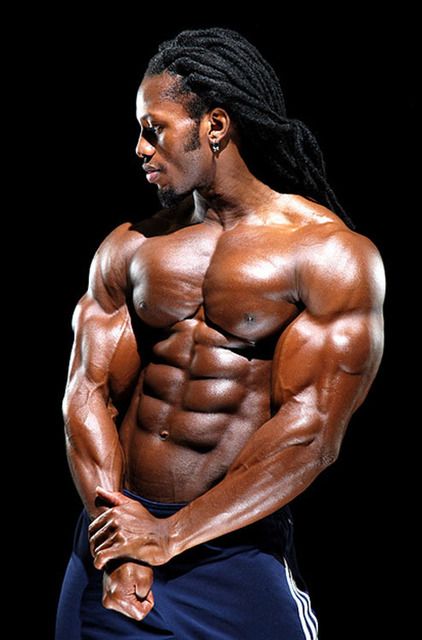 Samson was the strongest most well-built man on the block. He had muscles chiseled in stone. His muscles had muscles. He stood 6 feet 4 inches tall and did not have an ounce of fat on him. Samson worked out seven days a week, twice each day at the Philistine Gym on Gibeon Street. He worked out before he went to work each morning and after work for two hours each evening.
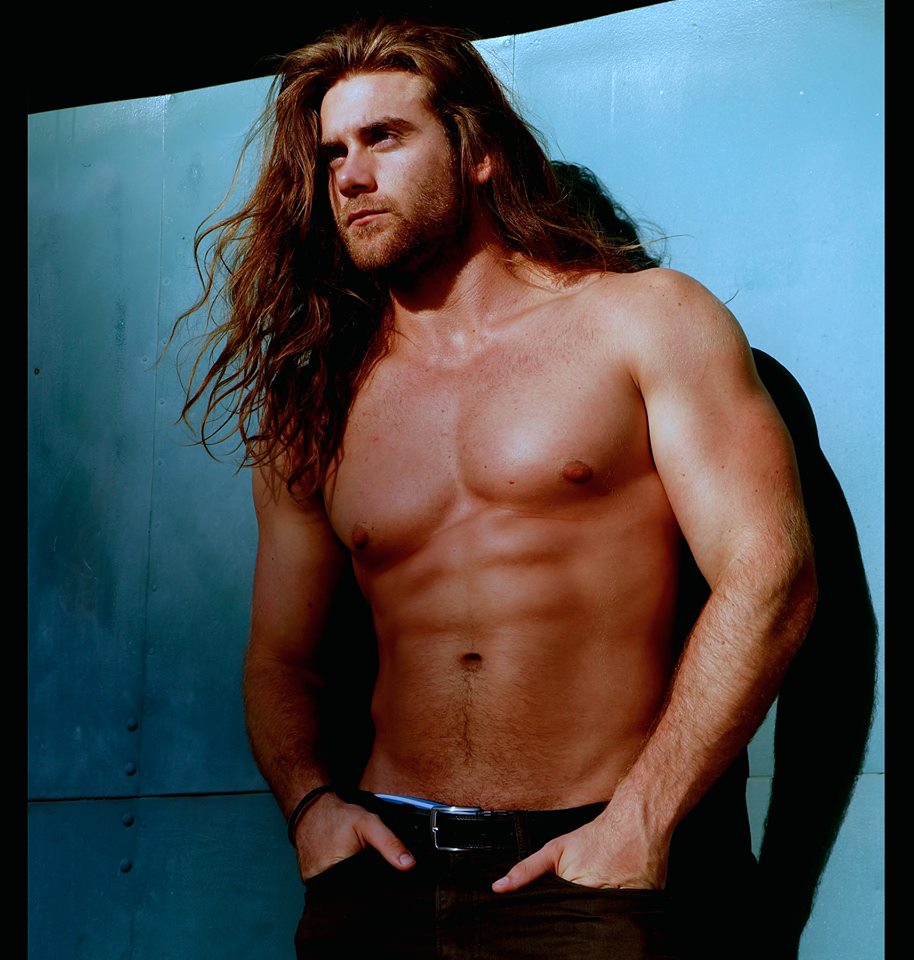 wanting something more because you can’t have it. Delilah had only one other person she admired, herself. Much like Sampson, she could not pass by a mirror without staring at her reflection and thinking “how beautiful I am.”
 Delilah grew more and more desperate in her attempts to get Samson to notice her. Finally, she hit on the idea to simply approach Samson and remark on his wonderful hair. So, one day while he was practicing his dead lifts, she sauntered by and casually remarked on how beautiful his hair was. She proceeded to compliment him on his marvelous muscle definition. She followed up these compliments with the suggestion that they go back to her place after working out and she would cook him a nice microwave dinner and brush his hair. This idea delighted Samson and after working out, they both went to Delilah’s house.

 Delilah waited until the night before the World Weightlifting championship. At around midnight, she used the key that Samson hid near his door to let herself into Samson’s apartment. Moving as stealthily as a cat, she entered Samson’s bedroom. Samson was a sound sleeper and he had no inclination of what awaited him. Delilah took the surgical scalpel that she had borrowed from a medical admirer and in one quick slash, she lopped off Samson’s braid. Samson was totally unaware and did not move a muscle. Delilah slipped back out the way she had come and placed Samson’s key back where he hid it.

 Aging Capriciously