What Does it Take to Have the Courage to Change Your Mind? — by J. Persico and Metis (AI Assistant)

Do you hate to admit when you are wrong?  Do you try to defend your position even when it is indefensible?  If so, do not feel too bad.   You are in great company.   Throughout history, some of the greatest thinkers and most intelligent people in the world have refused to admit when they were dead wrong.   We are going to look at some of the most egregious examples of some very smart people who had some deeply mistaken ideas that they clung to despite  overwhelming evidence that they were dead wrong.   
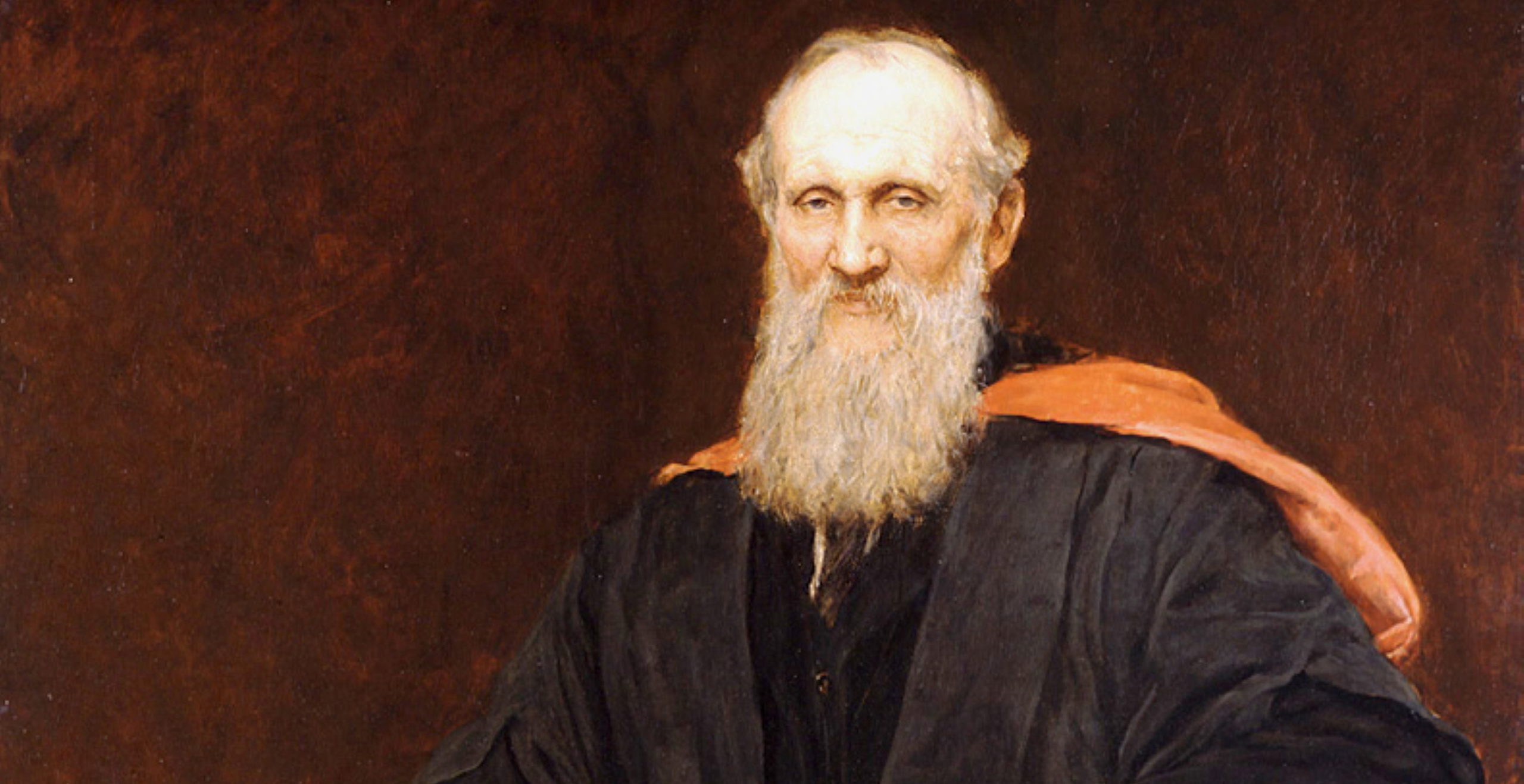
Lord Kelvin: When Great Certainty Meets New Evidence

Lord Kelvin was one of the greatest physicists of the nineteenth century.  His contributions to thermodynamics, electricity, and engineering transformed modern science.  Yet even Kelvin demonstrated that genius is no guarantee against error.

Kelvin argued that the Earth was only about 20 to 40 million years old.  Using the best physics available at the time, he calculated how long a molten Earth would take to cool to its present temperature.  Geologists and Charles Darwin objected that such a young Earth left far too little time for the slow processes of evolution and geological change, but Kelvin remained convinced that his calculations were correct.

The missing piece of evidence was unknown to everyone at the time: radioactivity.  After the discovery of radioactive decay in the late 1890s, scientists realized that radioactive elements inside the Earth continually generate heat, dramatically slowing the planet’s cooling.  Modern dating methods now show the Earth is approximately 4.54 billion years old.  Kelvin’s mathematics had been sound—but his assumptions were incomplete.  His refusal to reconsider those assumptions delayed acceptance of the overwhelming evidence.
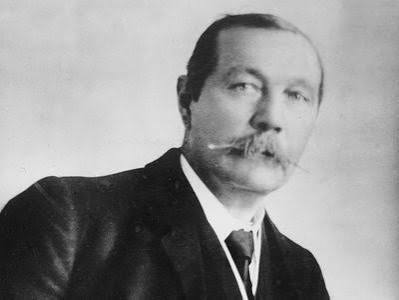
Sir Arthur Conan Doyle: When Belief Overrules Evidence

Sir Arthur Conan Doyle, the creator of the supremely logical detective Sherlock Holmes, spent the final decades of his life passionately defending spiritualism.  He became convinced that séances, mediums, ghosts, and communication with the dead were genuine phenomena.

Despite repeated investigations exposing many famous mediums as frauds, Doyle continued to defend them.  Perhaps the most famous example was his unwavering belief in the Cottingley Fairies photographs, which appeared to show two young girls playing with fairies.  Even after experts questioned the images and evidence accumulated that the photographs had been staged using paper cutouts, Doyle insisted they were authentic.  Decades later, the women involved admitted they had fabricated the photographs.

Doyle’s story is a powerful reminder that intelligence alone does not protect us from self-deception.  A person may apply rigorous logic in one area of life while allowing hope, emotion, or deeply held beliefs to override evidence in another.  His willingness to believe extraordinary claims despite repeated contrary evidence stands as one of history’s most striking examples of confirmation bias.
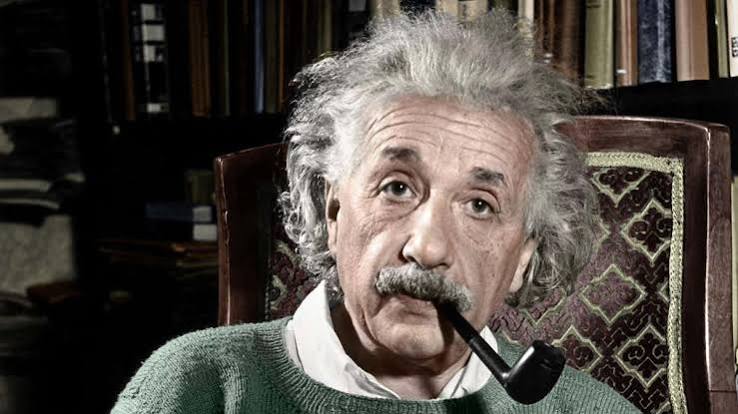
Albert Einstein: The Genius Who Resisted Quantum Reality

Albert Einstein revolutionized physics through the theories of relativity and helped lay the foundation for quantum theory itself by explaining the photoelectric effect.  Ironically, he spent much of the latter half of his career resisting one of the central conclusions of quantum mechanics.

Einstein believed that nature had to operate according to precise, deterministic laws.  He rejected the idea that events at the atomic level were fundamentally probabilistic, famously remarking, “God does not play dice with the universe.” Throughout his life he searched for hidden variables that would restore certainty to physics.

Over the decades, experiment after experiment supported the predictions of quantum mechanics.  The strongest evidence came long after Einstein’s death through tests of Bell’s inequalities, which consistently confirmed quantum entanglement and ruled out the kind of local hidden-variable theories Einstein had hoped would exist.  Today quantum mechanics stands as one of the most thoroughly tested and successful scientific theories ever developed.  Einstein’s skepticism helped sharpen the science, but in the end the evidence proved stronger than his intuition.  Nevertheless, Einstein’s objections helped force physicists to sharpen the theory and design better experiments.  In that sense, he was “wrong about the interpretation he favored,” but immensely valuable in advancing the science.

Now most of us probably know someone, perhaps not as famous as my three examples, but someone close or dear to our hearts that will never accept that they are wrong about anything.  You can argue with them until you are “blue in the face” and they will never change their mind.  These friends can be infuriating.  But have you ever stopped to think why they refuse to change their minds in the face of sometimes overwhelming evidence?  Psychologists have coined a term for such intransigence and call it “Belief Perseverance.”

This is the tendency to maintain a belief even after the evidence supporting it has been discredited or disproven.

Psychologists use this term when people continue believing something despite overwhelming contradictory evidence.

Example: A person continues to believe a conspiracy theory after every claim has been independently debunked.

Sometimes Belief Perseverance is confused with a close phenomenon called Confirmation Bias.  They are closely related but not the same. 

Confirmation Bias is the tendency to seek, notice, and remember only evidence that supports one’s existing beliefs while ignoring contradictory evidence.

Unlike Belief Perseverance, Confirmation Bias is about how people process information, not necessarily refusing to change after being proven wrong.

Before we leave the cognitive realm there is one more relevant term that we need to look at.  It is called Cognitive Dissonance.  This is one of my favorites since I have seen so many examples of this in my years on this earth that I have lost track.

Cognitive Dissonance is the psychological discomfort people experience when facts conflict with what they believe about themselves or the world.  When people are faced with a set of facts that cause them discomfort they will use a variety of ways to rationalize the evidence that ignores the reality in favor of a reality that they are comfortable with.  Like making excuses for someone’s behavior that is clearly immoral or unethical because they want to admire the person.

Now in today’s world of misinformation, disinformation, lies, distortions, fake ads, false messages, propaganda news, you can be pardoned if you cannot tell the difference between Perseverance Bias, Confirmation Bias and Cognitive Dissonance.  Truth be told, even Einstein could probably not tell the difference.  However, the bottom line here is clear. 

People, your friends and mine, and even those who are not our friends will continually use distorted logic and distorted facts to cling to ideas and perceptions that are false. 

And you may never be able to change their minds.  Nothing you say.  Nothing you do.  No experts you call on.  No preachers, teachers, ministers or nightly newscasters will ever make one dint in their belief systems.  Their minds are made up.  They are more than made up.  They are cast in stone, or iron.  You can take a sledgehammer, and you will not make a single dint in their ideas of what is true or not true. 

So why are we all so stupid that we waste our precious time trying?  Is it truly an impossible task to change anyone’s mind?  If Lord Kelvin, Sir Arthur Conan Doyle and Albert Einstein would not change their minds, what makes you think that your Aunt or best friend will?  Is the effort to convince them otherwise truly useless?  Perhaps we need to look as some examples in history where people did change their minds.  The most famous example may be Charles Darwin, the founder of “Evolution Theory by Natural Selection.” 
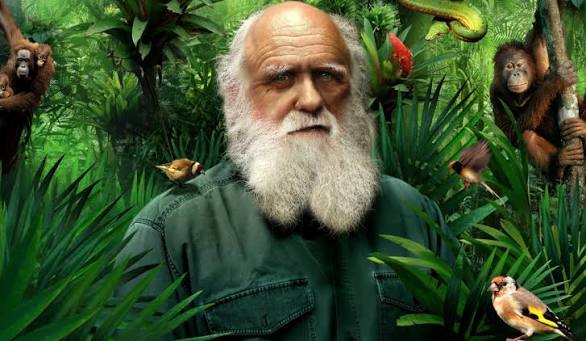
Charles Darwin provides a striking contrast to those who refused to abandon deeply held beliefs.  Throughout the more than twenty years he spent developing his theory of evolution by natural selection, Darwin deliberately searched for evidence that might prove him wrong.

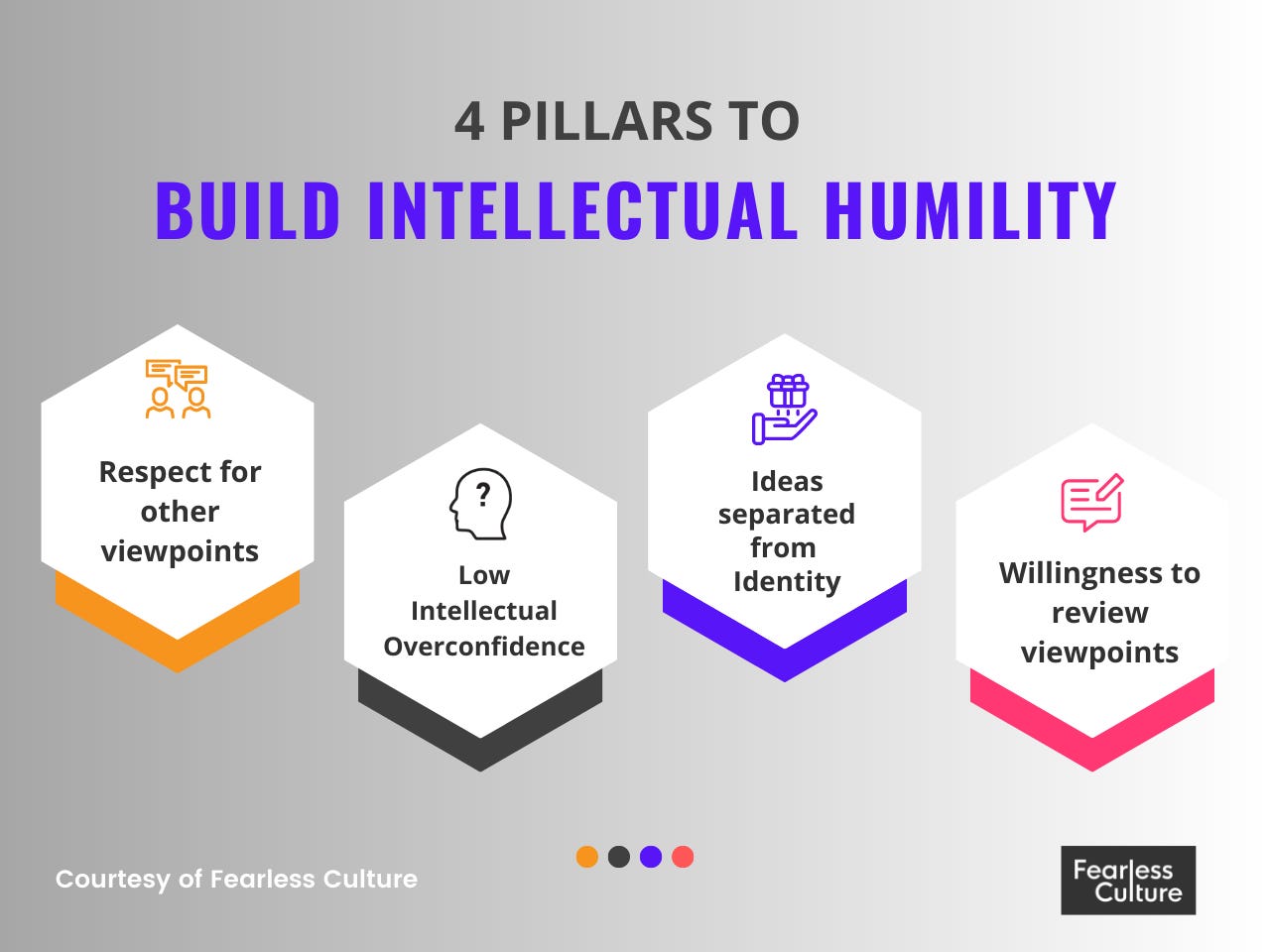
Darwin believed that no theory should be protected from evidence.  As he gathered new observations from geology, fossils, animal breeding, and the natural world, he continually refined and revised his thinking.  His willingness to let facts, rather than pride, determine his conclusions exemplifies what we now call Intellectual Humility—the recognition that being wrong is not a personal failure, but refusing to change in the face of convincing evidence demonstrates a lack of Intellectual Humility .

Darwin’s legacy reminds us that progress, whether in science or in life, belongs not to those who are always right, but to those who are willing to admit when they are wrong.  This brings us face to face with the concept of Intellectual Humility.  This is a willingness to question any concept or belief we hold in the face of new evidence or facts or logic which might question the assumptions upon which we hold said beliefs.  One might readily ask “How in the face of so much misinformation and lies can we tell facts and evidence from lies and fake facts?”  This is not an easy question to answer. 

Unfortunately, our schools and education systems seem to place more value on providing answers rather than asking questions.  The whole idea of critical thinking comes down to the willingness to ask and consider questions rather than blindly accepting facts.  Socrates was considered the smartest man in Greece because the Oracle said he was the only man who recognized how little he really knew.  The Socratic method is one of deducing truth and understanding by asking questions. 

Plato in his “Socratic Dialogues” described many of the stories wherein Socrates educated his students by asking questions and not by providing answers.  Ironically, Sir Arthur Conan Doyle created perhaps the greatest detective of all time whose main modus operandi was asking questions and keeping an open mind.  Something his creator did not seem to have the ability to do himself.    

My father gave me a bit of advice which I still adhere to today when I was a child.  He said, “Believe nothing of what you hear and only half of what you see.”  Lawyers know this truth when it comes to witnesses.  It has been said by the legal profession that “Nothing is as unreliable as an eyewitness.”  These thoughts mark a boundary for my intellectual humility.  It seems to be almost a curse that the smarter someone is, the more intransigent their humility can be. 

Living here in Arizona, we come into the summer season when temperatures soar into the triple digits.  We have heat warnings in the parks and posted in many public places.  Nevertheless, frequently people ignore these warnings and run or hike down a trail only to come back in a body bag.  Regardless of how many warnings they receive, some people insist that they know better.  They regard the park rangers or DNR people who are trying to warn them as stupid unthinking clods who really don’t know how much experience they have or how tough they are. 

Belief Perseverance not only affects science and politics, but it also sometimes kills people.

Go to YouTube and you can find countless examples of people who were so blinded by their own intellectual perceptions of their physical prowess and abilities that they thought they could ignore the advice of others.  There have already been four deaths on park trails in the Grand Canyon this year.  More will come. 

Many people do not realize that Arizona loses far more people to heat than to lightning, floods, tornadoes, earthquakes, mountain lions, bears, rattlesnakes, and scorpions combined.  Heat is, by a wide margin, the state’s deadliest natural hazard. 

Last year (2025) in Arizona, a total of 680 people died from heat related deaths.  Most were:

  • Over age 50,
  • Had underlying medical conditions,
  • Were outdoors for extended periods or lacked reliable air conditioning,
  • Were experiencing homelessness.

What does Intellectual Humility have to do with any of these facts?  I think it all comes down to recognizing our own limitations.  Sometimes this is made harder because we “used to be” good at something that we are no longer so good at.  My best time running a 10k was 38”48 seconds.  That is roughly six fifteen per mile.  If I ran one today, my mile times would be about 14 minutes per mile.  I could almost walk faster than I now run.   Our perceptions of ourselves as we used to be can blind us to a reality that we need to face today. 
Two sayings I like a lot are: 

  • “You got to know when to hold them and when to fold em.”
  • “God, grant me the serenity to accept the things I cannot change ,the courage to change the things I can, and the wisdom to know the difference.”

Growing old is never easy.  Letting go of ideas is perhaps even harder.  Intellectual Humility is a path to growing older longer and with less pain.  Without Intellectual Humility, your images of what you once were and what you once did can blind you to the reality that you are today.

The courage to change your mind is not a sign of weakness—it is one of the highest forms of wisdom.   Many good people would be alive today if they had developed more Intellectual Humility.

The Epidemic of Selfishness in America

Introduction:

We are living through a moral epidemic.  An epidemic of selfishness.  Selfishness has become the new normal — disguised as independence, celebrated as authenticity.  In the moral epidemic of which I speak, we are plagued by not one but several symptoms.  Selfishness is a disease that can be seen in many manifestations.  In this blog, I want to explore how ego, narcissism, ingratitude, denial of responsibilities, entitlement, demand for rights, and isolation are each contributing to a disease that is redefining the American character.  The remedy may lie in reviving gratitude, duty, responsibilities and connection.

A few nights ago, I went to a Hobby Lobby store with Karen.  She needed to pick up some quilt squares for her Thursday quilting guild.  Each week they have a contest, and the prize is a bundle of fat quarters provided by all the members.  They change the color of the fat quarters that members must bring to each meeting.  I left the store early and told Karen that I would wait for her in the car.  The parking lot was mostly dark and deserted.  As I walked to my car, I noticed that there was about a dozen or so shopping carts just randomly scattered around the lot.

I assumed that there were no cart bins available but upon further looking around, I noticed many bins where you could leave a shopping cart.  Instead, customers had just dropped the carts anywhere they wanted to.  As it was late at night, it would be really easy to hit one of these carts either by backing into them or hitting them as you tried to pull out of the parking lot.  This fact did not matter to the individuals who were TOO LAZY to just push their carts over to a bin and drop them off.

Karen is normally a very positive person.  When she came back to the car, I pointed the situation with the carts out to her.  I challenged her to find some “Good Reason” that these customers could not just push their carts over to an available bin.  My suggested reasons, “They were in a hurry and had to get to an emergency ward.”  “They needed to get to the airport, and they were late.”  “They did not have time to find one of the available bins to put their carts in because the football game was starting.”  “They were being chased by predators who wanted their Hobby Lobby stuff.”   “They were blind, or it was too dark to see the bins.”  These were my facetious reasons.  Karen laughed at my lame attempt at humor.  My conclusion:  Lazy and Selfish.    

Ego:

The age of the collective has given way to the empire of the self.  Every opinion feels sacred, every desire urgent.  Technology, consumerism, and politics all whisper the same message: “You deserve everything, instantly”.  But when self-interest becomes the ultimate good, the moral commons collapses. “You do your thing, and I do my thing” was part of the famous Gestalt prayer by Fritz Perls that became popular in the 70’s.  The attitude behind this prayer has morphed into the epidemic we see today where “shopping till you drop” and “he who has the most toys wins” now defines our National character.  A character suffused by obsession for buying things to help build our egos up.  But it is not enough to have more, our toys have to be bigger and better.  Better is defined by the brand name stamped on the purchase or the neighborhood that you live in.  Bigger is a 60-inch color tv or a car with 900 hp or a house with five bathrooms or a  Wendy’s Pretzel Bacon Pub Triple with 1530 calories.

Narcissism:

Narcissism is the psychological heart of the new selfishness.  My friend Bruce has mentioned this a million times to me whenever we discuss Trump and his followers.  I concede that it now exists and is more pervasive than at any time in history.  “I matter more than you do.”  “I am more important than you are.”  The unflattering title of a “Karen” (my wife’s name is Karen) is depicted in thousands of short videos and TV shows such as “Bridezilla” where a would-be bride is screaming “It’s all about me, it’s all about me.”  This has become our national motto, “It’s all about me.”

Narcissism feeds on admiration but rejects intimacy.  The narcissist seeks reflection, not relationship — an audience, not a community.  Social validation replaces self-knowledge, and performance replaces sincerity.  We have built a society of mirrors where no one truly sees anyone else.  In Greek mythology,  Narcissus was a strikingly beautiful young man who rejected the love of others.  He sat all day looking at himself in a pool of water and thought how beautiful he was.  He fell in love with himself.  Punished by the gods for his vanity, he wasted away out of despair because he could not be with his love.  Our country is wasting away from a virus that seems to be pervasive.  A virus of narcissism.  But it is only one of several symptoms killing us.

Ingratitude:

It took me over thirty Jesuit retreats to finally notice a quote by Saint Ignatius Loyola.  Loyola said that  “Ingratitude is the sin most offensive to Heaven.  It is the cause, beginning, and origin of all sins and misfortunes as it is the forgetting of God’s blessings and gifts.”  He described it as “The most abominable of sins”. 

The more I reflected on this thought, the more I realized exactly what he meant.  Ingratitude corrodes the soul from within.  It blinds us to the gifts of others, the sacrifices of those who came before, and the simple blessings of daily life.  When we stop saying “thank you”, we begin to believe that everything owed to us was earned — and that no one else deserves the same.  Gratitude is the soil of empathy; ingratitude is a cancerous rot.

I try to remind myself each day of the need for gratitude.  It is not always an easy virtue to arouse.  In these challenging times, it can seem to me that I have little to be grateful for.  I would never have believed forty years ago that I (WE) would have had to deal with Climate Change, a major Covid Epidemic, Trumpism and now heart problems, all in my seventies.  I once thought that like any good cowboy or cowgirl, I would simply ride off into the sunset after years of a peaceful meditative retirement.  Added to my woes is the fact that our national character seems to be eroding and replaced with a desire for a despot who would be king.

Denial of Responsibilities:

Freedom divorced from responsibility is not liberty; it is chaos.  We live in an era where accountability feels like oppression to many people.  People say that they hate the government. “Too much big government” is a rallying cry for right-wing fanatics.  Civic, moral, and even legal obligations are dismissed as optional, or outdated.  How many people do you see running green lights or ignoring posted speed limits these days?

Thus, we have the movement for “Less government.”  Let’s obliterate the agencies and organizations that might hold us responsible for something.  But something is always overlooked when it is convenient to make money or power.  How many people have ever been prosecuted for the preventable disaster that we call “Climate Change?”  Denial of responsibility led to continued use of fossil fuels which accelerated any potential changes in our global climate.  Denial of responsibility breaks the invisible threads that hold society together: trust, reliability, and mutual care.  “I don’t care what my thirst for money does to you as long as it benefits me!”

Entitlement:

“Man is not, by nature, deserving of all that he wants.  When we think that we are automatically entitled to something, that is when we start walking all over others to get it.” — ― Criss Jami

Entitlement is selfishness institutionalized.  It is a step beyond responsibility.  Now I am not only irresponsible, but I am entitled to be irresponsible.  I have a legal right to be irresponsible.  It is my right to leave my shopping cart wherever the hell I want to.  I bought a product at this store.  This entitles me to do whatever I want with this shopping cart.  It is the conviction that one’s desires are moral imperatives.  The entitled person measures fairness by outcomes, not effort; comfort, not contribution.  When entitlement becomes culture, excellence disappears — because effort no longer earns respect.  It is taken for granted that some people are born superior and effort has nothing to do with success or failure.

Demand for Rights:

I want my rights.  I want my rights!  It is my right!  I know my rights!  Everywhere you look today someone is screaming about their rights.  I learned years ago (I wrote a blog about this issue) from Sister Giovanni of Guadalupe Area Project, that for every right there is a responsibility.  Have you heard anyone screaming for their responsibilities?

The modern cry is for rights — to speak, to choose, to consume, to be seen — but rarely for the responsibility that sustains those rights.  Rights without duties are like currency without value.  When everyone demands and no one contributes; liberty itself becomes unsustainable.  A functioning democracy requires not just the assertion of rights, but the acceptance of responsibilities.  See the short film on “Indigenous Rights vs Responsibilities” for a refreshing view of the two.

https://www.youtube.com/watch?v=w43j30S1yDI

Isolation — The Logical End

Isolation and loneliness are epidemics of their own in America today.  A Cigna Group survey from June 2025 found that more than half (57%) of Americans are lonely.  Data shows that the amount of time the average American spends alone has increased significantly over the past decades, while time spent socializing with friends has decreased — “Why are we so lonely?”— by John Wolfson, Winter 2024, Boston Magazine

When ego, narcissism, ingratitude, entitlement, and denial of responsibility take root, the harvest is isolation.  When I count and you don’t count, I become estranged from you.  When I live in a community where there are insiders and outsiders, I become distant from humanity.  Back porches have replaced front porches in America.  I can walk down a village street or sit on my front step and not see anyone come by for hours.  We may live side by side with so-called neighbors, but we feel profoundly alone.  Digital life gives us constant connection but no communion.  Isolation breeds despair, polarization, and apathy — subtle diseases beneath our prosperity.

Conclusion — The Return of the Connected Self

The cure for selfishness is not suppression of the self but expansion of it — seeing the self as part of a larger whole.  To belong but not to a group of xenophobic fanatics.  To see the value of Inclusiveness not exclusiveness, diversity not homogeneity.  To see all people as equal before the law.  The foundations of DEI which seem so despised by people on the right .  We rediscover meaning when we give, not when we grasp.

Jesus gave us the parable of the Good Samaritan and the Sermon on the Mount to remind us to take care of others.  It is still better to give than to receive.  In the New Testament of the Bible, (Acts 20:35), the apostle Paul recalls these words of Jesus.  “In everything I showed you that by working hard in this manner you must help the weak and remember the words of the Lord Jesus, that He Himself said, ‘It is more blessed to give than to receive'”

To rebuild our moral ecology, we must learn again the language of gratitude, duty, humility, and compassion.  You can start by reading any of the following works by the late Pope Francis: Whether you are Christian, Atheist, Buddhist, I think you will find some useful ideas in these writings.

  • The Name of God Is Mercy
    • Pope Francis emphasizes that God’s primary attribute is mercy, not judgment. He encourages the Church to become a “field hospital” for the wounded, emphasizes human sin, invites humble openness to forgiveness, and urges believers to extend compassion and reconciliation to all.
  • Fratelli Tutti – (All Brothers):
    • Published in 2020, this encyclical addresses fraternity and social friendship, calling for greater solidarity on a global scale.
  • Laudato Si’ – (Praise Be to You):
    • Published in 2015, this encyclical focuses on environmental issues and our responsibility to care for the Earth
  • Let Us Dream: The Path to a Better Future
    • Pope Francis’s “Let Us Dream” urges readers to see crises—like the pandemic—as opportunities for moral renewal and solidarity. He calls for compassion, social justice, environmental care, and inclusive reform, inviting humanity to rebuild a more equitable, sustainable, and spiritually grounded world guided by conscience and the common good.

The age of the isolated self and the Disease of Selfishness can end only when we remember that: “When I am not the center of the universe, people become human.”

PS: This Epidemic of Selfishness is the heart of the leadership and its cult of followers and sycophants that is leading the USA today. There will be no turning away from the direction that they are taking us, unless the citizens in the USA reject the elements that I have described in the above blog. We must return our country to a place where fear and greed do not guide our actions but instead we are motivated by love, kindness, charity, mercy and compassion. Not just for our friends and relatives and social circle but for everyone in the world. My God is their God as well.

The Truth About the Ukrainian Crisis

Below I have put some links to some contrarian views about why the US is so involved and what is really happening in the Ukraine. We are on the brink of another disastrous war. Please share these links.

https://www.washingtonpost.com/opinions/2022/02/15/path-out-of-ukraine-crisis/

https://www.washingtonpost.com/opinions/2022/01/18/stumbling-toward-war-over-ukraine-is-nuts/

Is the Confrontation Over Ukraine Joe Biden’s “Wag the Dog” Moment?

The people now gunning for a showdown with Putin were gunning for a showdown with Saddam Hussein two decades ago—with the same promises of a happy outcome.

By Andrew J. Bacevich, Feb 16, 2022