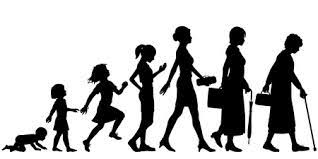
For many years now, I have wondered about the way we live life as we get older. Psychologists and scientists have studied the “growing” process for children and young adults but little or nothing has been done to look at the aging process for older adults. You can look at developmental stages for infants, children, young adults and to some extent adults through middle age. These stages describe changes in motor skills, social skills, cognitive skills, and language skills. The changes in skills are described chronologically. As one goes from infant to adult our skills in these areas undergo profound changes. People like Haim Ginott, Jean Piaget, Arnold Gesell, Eric Erikson, Lawrence Kohlberg and many others have all contributed to our understanding of how we develop from infants to adults.
Unfortunately, there are few if any studies that show how people age after they become adults. It is assumed that adults simply grow old and die. My wife who worked in home care for many years described three stages that were used by home care people to relate to the aging population. They were active elderly, pre-frail elderly and frail elderly. These stages describe differences in physical capacity, cognition, and quality of life. The problem with these stages is that they are too broad and do little to describe the developmental pattern of many aging adults.

Over the years, I have thought about a way to describe the changes that I see many of my aging friends going through. I can see why it is difficult to find any uniform stages because illness and other problems of the aged impact any linear timelines that can be uniformly ascribed to getting older. We see people who are still active when they are in their nineties and people who are sick and bedridden in their sixties. Differences in lifestyle have a major impact on how people age.
However, I have recently thought of one series of changes that I see many aging people going through. These changes do not center or focus on physical change although they parallel to some extent the changes that are taking place both physically and cognitively. The changes I refer to are based on domicile. As we age, we change our living arrangements in terms of scope and scale. We change the size of the place where we live and we change the amenities that are offered in our living places.
I want to describe one pattern of changes that I have seen happen many times now with friends and relatives and neighbors. My caution to you is that not all aging people will go through these domicile changes. For reasons dealing with incomes, social arrangements, ethnicity, culture and health, many aging people may remain in one place for all of their lives. The ideal way to die is often described as to be in bed with no pain and surrounded by your loved ones in your own home. I have seen this happen but perhaps not as often as we would hope for. Thus, the following sequence of “stages” in aging that I describe are centered on changes in residency and are by no means immutable or universal.
Dates are approximate for each of my stages.

Empty Nest: 44-60
Your children are off to college or jobs, and you are still working. You have this entire house to yourself except for when your kids stop by to drop their laundry off or for a free meal.

Downsizing Home and Snow Birding: 60-70
You have either retiring or are getting ready to retire. The house that you have lived in for many years now seems much too big. Your children have moved away to follow their jobs and you hardly see them anymore. You decide to purchase a new home or condo and simplify your life. You get rid of much clutter, move to a less crowded location. You now spend winters going down to Arizona, Florida, Texas, or California. The old bones do not seem to like the cold weather and the tropical breezes feel great on your arthritis.

No More Snow Birding: 70-75
Going back and forth has gotten to be too much. You had to make a choice and your chose the tropical weather over the snow and cold of your old home. You moved down south permanently, and you decide to stick it out through the really hot weather. You crank the air-conditioning up when needed and stay inside. It is still easier with no snow or ice to deal with, and the humidity is low and that feels good. Your new home is small, but it is comfortable and easier to maintain. Taxes are lower and upkeep is lower as well.

Aches and Pains and Missing the Kids: 75-80
Even a smaller home is hard to manage on your own. You decide to move back to your roots. Most of your children also seem to be there now. You sell your tropical paradise, and you find an apartment or small home close to your kids. You are back in the cold and blustery winter weather, but you really do not get out much. You get to see your children more and they are there to help you when you need it. Much of your time is spent in doctors’ appointments.

Assisted Living Home: 80-85
You just can’t do the things that you used to do. Even a small apartment is too much to manage on your own. The kids do not feel that you are safe by yourself. They convince you to move into an assisted living center. It is a beautiful place with birds and fish tanks and many activities for seniors. You really did not want to go but you had no choice.

Nursing Home: 85-90
You can’t get around on your own. You can no longer prepare your own meals. You have a hard time even getting dressed. Your kids felt it was for the best. Everyone seems sleepy and somnolent. You don’t like the ambiance at all. They bring in entertainment once a week and when you are able you participate. Your children stop by every so often.

Hospice Care: Near the End of Life
It just seems like yesterday that you were a little kid. Your mom and dad would take you to the beach in the summer and you would build castles in the sand. Your grandmother would take care of you sometimes and tell you stories about life when she was growing up. You were always getting into a fight with your older brother. Where are they now you wonder? It has been so long since you have seen them.

Cemetery: The End
I never thought it would be like this when I died. I understand why no one ever came back to tell me. All my old friends are here along with my mom, dad, brother, and grandparents. It is like a great big reunion. I don’t feel old anymore and all my arthritis is gone. I don’t know why I was so hesitant to come here. It is a beautiful happy peaceful place. It is my favorite place of all.

PS:
I realize that the scenarios I am sketching are highly restrictive and do not apply to a large majority of the human race. I am describing my experiences to date as a middle class, white somewhat educated male with a wife and several children. The above stages are related to my experiences and while I believe that many people will identify with them, they are far from being a definitive description of the stages that all humans on this planet will experience.
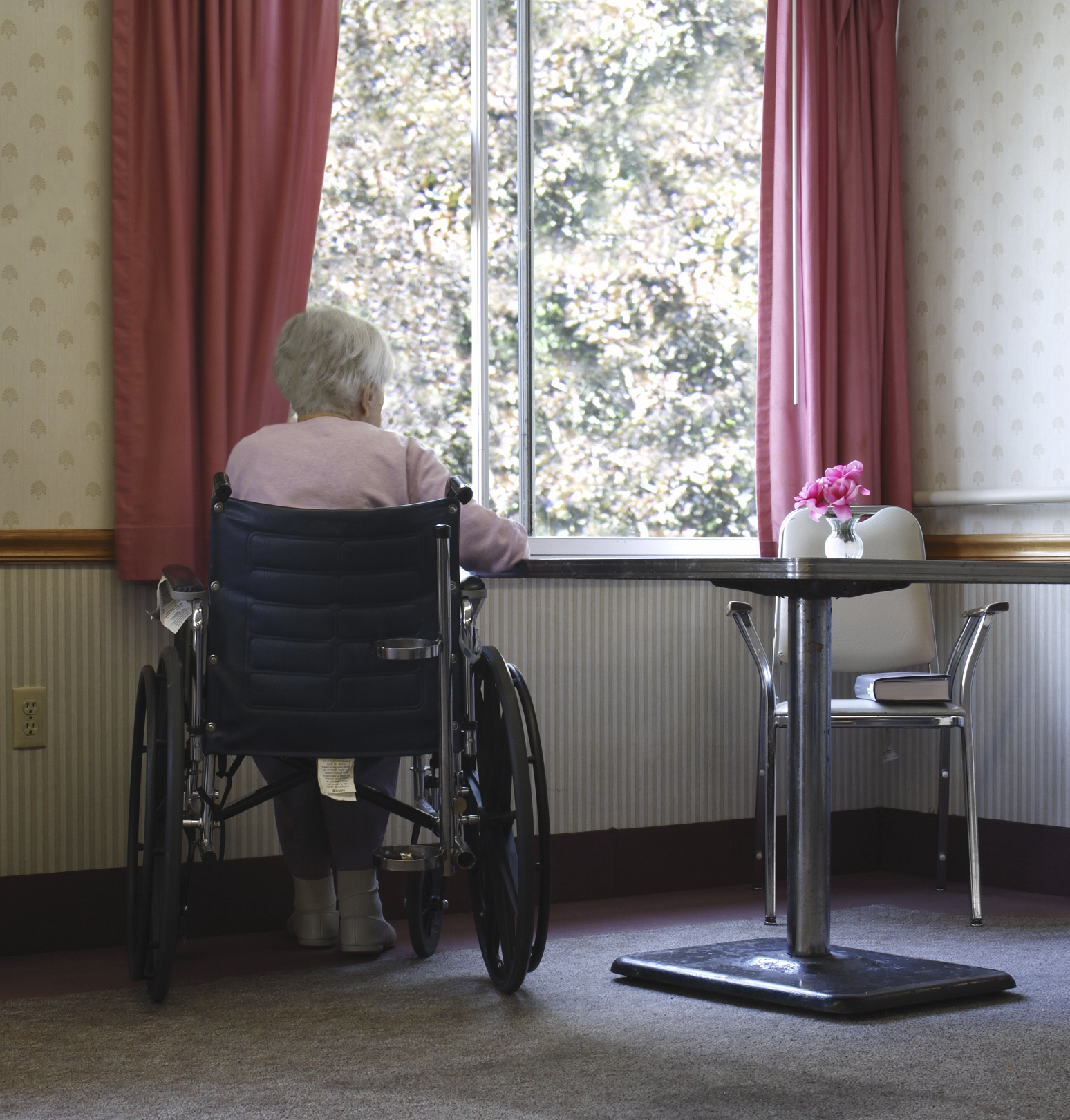
 I was only twenty-five when I met Irene. It was my first job out of college. I had just finished my RN program at Regina Nursing School. It took me three years going to school days and working part-time evenings to complete my degree. After finishing school, I applied at several nursing homes since I wanted to work with the elderly. In three weeks, I was hired by the River Birch nursing home in New Prague Minnesota.
 My first day on the job was the high point and perhaps also the low point of my life. It was the day I met Irene. My supervisor Michelle started my job orientation by introducing me to the staff I would be working with. She then gave me a brief summary of my work duties. She explained that I would be assigned a wing of the nursing home and within that wing, I would be in charge of a specific number of residents. We were not to call them patients. Each day, my job would be to take care of the residents that I was assigned and to ensure that they received food, care and compassion.
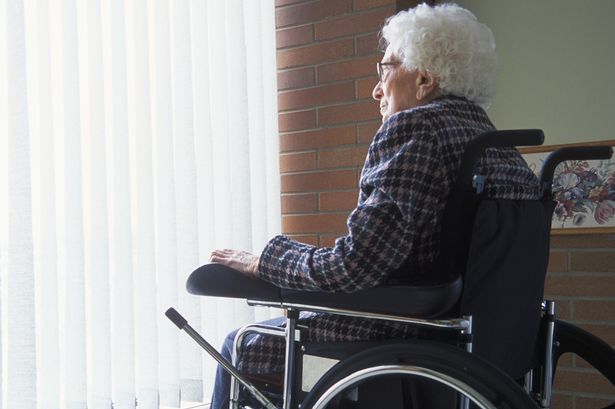
 Over time, I began to wonder what she was looking at. After looking out the window myself, all I could see was a large grassy field surrounded by numerous oak, maple and birch trees. On any given day, there might some grackles or robins out in the field but very little else to view. It was a pleasant enough scene but nothing that I thought could keep anyone’s attention for more than a few minutes never mind several hours of staring out the window
 a very pretty view that she could look out at. I thought she would enjoy the variety and the change of scenery. As I started to push Irene’s wheel chair away from her chosen window, she became very agitated and started pointing wildly and in a raised voice saying “window, window.” I moved her back to the old window and left her for the day.
 Next morning, I came to work and started my rounds. I did not see Irene and I wondered where she was. I checked her room but the bed was made up and there was no sign of Irene. I went into see my supervisor and ask about her. “I am sorry” Michele said “She passed away last night and was taken to the funeral home. There will be no services for her as she had no surviving relatives.” I went home and cried for her passing. I had never understood her or made a connection with her that I thought was the least bit meaningful.
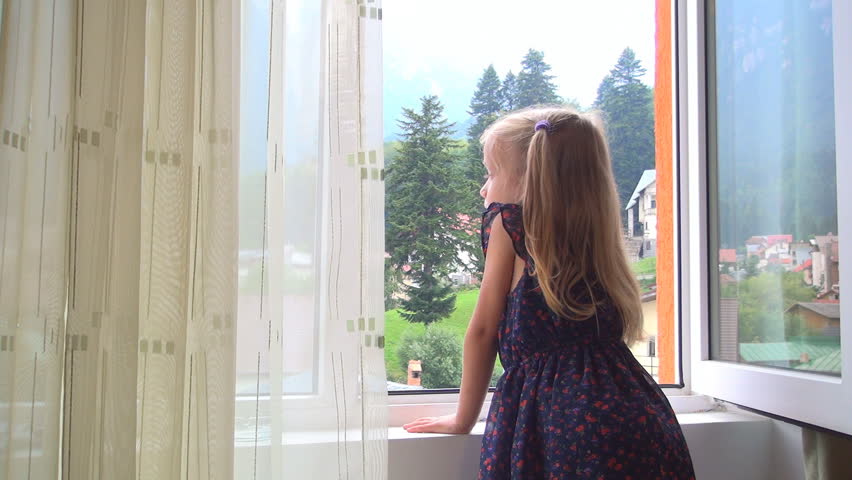 It is sixty-five years later and I finally understand Irene. I am sitting here looking out a window from the nursing home where I am now a resident. Each day I look out the same window and I see a different event from my life. I have been amazed at the events that I have witnessed. I have seen my mother giving birth to me. I have seen the birth of each of my sisters and brothers. I witnessed my first communion and my first day in school. I watched my wedding and the birth of each of my children. I was at my husband’s funeral again. During the past few months, I have seen all the major events of my life one after the other in perfect chronological order. I am almost at the end of my journey. There is only one final event. The last event will be when they come for me. They are getting close. My mom and dad are coming for me. They are coming to take me home. I must keep looking out the window or I will miss them.
 Aging Capriciously