
The Worlds First Un-Blog: How we can solve all of the worlds problems!

Image

I woke up this morning and told Karen that while she was at church, I was going to write an un-blog.  She looked puzzled and wanted to know if that meant I was not going to write a blog.  I said “Of course, I am going to write a blog but it will be an un-blog.”  “Well,” she said, “What is an un-blog?” I replied that it was like an un-birthday party. I actually did not have the slightest clue what it was or could be but I knew that today I was going to invent an un-blog.  With no templates, I would have to invent it as I went along.  I did not bother to Google “un-blog”, so you will forgive me if I reinvent the wheel.  (Actually after I finished this “un-blog”,  I did Google the term to see if I was a “Johnny come lately” or had really invented something new.)

There are several reasons that I come to the point in my blogging where I now know that I need to write an un-blog.  First of all, many of you are probably tired of my advice, admonitions, critiques, complaints, exhortations, etc. about the state of the world and its many problems.  This week alone, I found over five million problems that needed solving in the pages of CNN, MSN, FOX and BBC news.  My best guess is that the number of problems we face in the world has steadily escalated since I was born.  Thus, despite my efforts and other bloggers like me, the number of problems just seems to keep growing exponentially.

Well, being the strategic planner that I like to think I am, I took out my handy “world problem solving software.” I programmed it to prioritize the “greatest” problems this week that I could solve with my exorbitant ego and unlimited resources of advice and solutions.  I must have had low batteries because my screen suddenly went blank and it started flashing “I quit, I quit, I quit.”  Perhaps it was a virus or some type of Trojan?  I immediately turned it off.  This has now created a dilemma.  How can I pick the single most important world problem to solve, if my software is malfunctioning? Would my many followers (considerably less than George Takei) accept me simply choosing a great big humongous problem and solving if for them and the rest of the world?

No! This would not be fair to you my faithful readers and followers.  You will only accept me going after the biggest baddest problems out there selected scientifically and with great forethought.  You expect me to solve these incredible problems with shrewd insight and analytic ability.  You want me to provide solutions that would make Solomon humble.  You expect me to solve only the most critical problems facing the world.  Simple selection would never do for my followers.  Knowing these facts, I felt lost and confused.  With millions of problems out there and my software on the blink, I was like Garry Kasparov trying to win against Big Blue Computer.  I am only human; the stress is unbearable at times.  Thousands of followers, (well maybe a few hundred) depending on my blog each week for advice and succor!

In truth again (Never trust anyone who says “in truth” or “trust me”) I could not select a single problem this week to tackle.  I am weary of solving all of the problems in the world. The burden has become too great.  Simply perusing my blogs, you will note the number of critical world and USA problems that I have already solved this past year.  To make matters worse, to date, I have not received one penny for my efforts or even an invitation to the White House.  I have not been knighted or given the Profiles in Courage award either. Perhaps, I missed the phone calls from Obama and the Queen.  I must remember to check my voice mail more often or at least my text messages.

It is very frustrating.  No matter how altruistic I am, I crave some simple recognition.  It is a lot like being a superhero but no one knows it.  What is the point of having super-powers if no one is there to applaud idealize and worship you?  I can accept that a few of my miraculous ideas and solutions might have been slightly off mark, but I cannot accept that all of them were.  Furthermore, please go to my first blog site where I have posted over 600 blogs dealing with various and assorted issues affecting the world.  See if some of these blogs don’t bring tears to your eyes or joy to your heart.  (You can find them at www.timeparables.blogspot.com)  All of these issues has led me this week to create the world’s first “un-blog.”

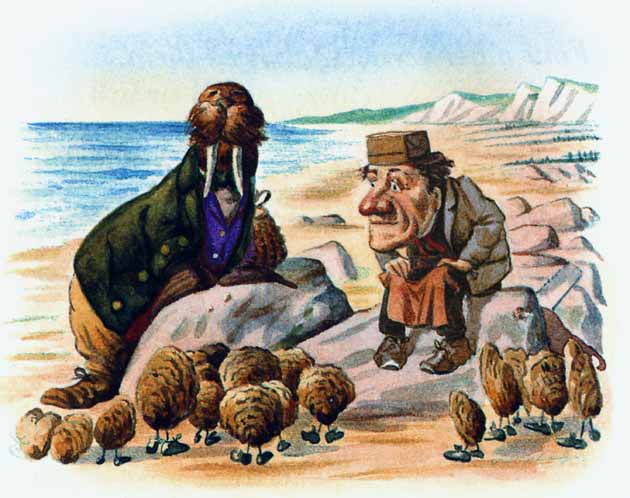
It is my considered but humble opinion that in an un-blog, I (the Blogger) should not solve any problems.  A typical blogger writes their blog either to solve problems or to give opinions and advice. It is not fair, that you the reader (The Bloggee) get all this free advice and give nothing in return.  It is only right that in an “un-blog”, you the reader and faithful follower, should be the ones to solve the problems and give me advice.  It is time to pony up.  How many of my blogs have you commented on?  How many have you disagreed with?  What have you taken a stand on?  What has stopped you from being an “un-blogger?”  It is your turn to pay me back for all the solutions and advice I have so freely and graciously given to you.  Think of your world without my blog.  As the walrus said in “Alice in Wonderland”:
Image

“The time has come,” the Walrus said,
“To talk of many things:
Of shoes–and ships–and sealing-wax–
Of cabbages–and kings–
And why the sea is boiling hot–
And whether pigs have wings.”

I would love to hear your take on “What are the biggest problems the world faces.”  I would really like to hear what you think.  (See my questions below.)  Send me an email persico.john@gmail.com or post your replies in the comments section.  Speak out.  Today is your chance to be an un-blogger.  It is your golden opportunity to help solve the many problems facing the world or to at least offer some advice on what you think those problems are.  Perhaps, your brilliance and erudition might be discovered on my blog and you will be invited to the White House.  (Please do not hold your breath.)  If you do get invited, please, please take me along. 

Time for Questions: 

What are the biggest problems you face in your life?  What are your solutions?  What do you think we should do to save the world?  How can we deal with apathy and those that do not care?  Where do we start?  Should we have major political changes in our constitution?  How could we get these?  What would you like to see changed in the world or even just in your home town?  What does Persico mean “Life is just beginning?”

Life is just beginning.

I finally broke down and looked up “Un-blog” on Google.  Here is what I found.

  1. un- blog – definition and meaning – Wordnik

https://www.wordnik.com/words/un-%20blog

Sorry, no example sentences found. Related Words. Log in or sign up to add your own related words. Wordmap. (beta). Word visualization. Comments. Log in or …

I think this means that there are no definitions.  I can thus claim the distinction of being the first “un-blogger” on the internet.  Or perhaps my readers and faithful followers who have answered my questions should be the first to receive this distinction.

Here is my definition of an “un-blog.”

“A blog site where the readers post opinions and solve problems and the blogger simply listens and does not weigh in with advice or solutions.  A place of introspection rather than extrospection.” 

Gandhi’s Seventh Social Sin: Politics Without Principle

We need to start off this discussion of Gandhi’s Seventh Social sin with a review of the definition of the term “Principle.”  There are many who would argue that politics today has too many principles.  Each side whether Democrat or Republican is firmly ensconced in their philosophical party principles which leave no room for discussion never mind negotiation.  A firm conviction that we cannot negotiate on “principle” has led us to some of the worst political situations we have seen in the long history of the USA.  We have always had “party” politics and there have always been back-room negotiations and political logrolling but never in our history have we seen the type of standoffs that seem to characterize Washington politics today.  Could these political standoffs be caused by rigid adherence to Party Principles?  Is Gandhi off-base with his Seventh Social Sin?  Do we need less principle in politics and not more?  Let us look at what the term “Principle” means by reviewing three different definitions or perspectives. 

Here are three different views of the term Principle

  1. A fundamental truth or proposition that serves as the foundation for a system of belief or behavior or for a chain of reasoning.  – Online Dictionary
  2.  A basic truth, law, or assumption – The Free Dictionary
  3. A principle is something primary that helps in explaining phenomena. A principle can be some existing factor in nature (principles of nature and being, or it can be a logical proposition or judgment (principles of reason) that is a starting point of a valid argumentation. The principles of reason cannot be proven, since in order to prove anything you need to have a starting point, and a starting point is a principle.  – http://www.hyoomik.com/phi205/arche.htm#arche2

Here are some examples for the third definition.  These are: “Principles of Reason.”  I add these so we can be more concrete in our discussion and less theoretical, if that is possible given the nature of the discussion.  Nevertheless, perhaps these examples can help us think more clearly concerning the concept of principles. 

  • The principle of non-contradiction: the same thing cannot both be and not be at the same time and in the same respect. The same proposition cannot be both true and false.
  • The principle of excluded middle: Either a thing is or it is not, there is no third possibility.
  • The principle of the reason of being.  Every being has a reason of its existence either in itself or in something else.
  • The principle of finality: Every agent acts for an end.
  • The principle of causality: Every effect has a cause.
  • The principle of identity: Every being is that which it is.  Each being is separated in its existence from other beings.

We have two issues raised by Gandhi’s Seventh Social sin that I think we must answer. 

First, does politics really need principles?  What purpose do they serve and why are they needed?

Second, can you have too many principles in politics and how do we determine if that is the case?

To answer the first set of questions, let us see what the M.K. Gandhi Institute for Non-Violence has to say about Gandhi’s interpretation of this sin:

Politics Without Principles:  Gandhi said those who firmly believe in nonviolence should never stand for elections, but they should elect representatives who are willing to understand and practice the philosophy. Gandhi said an elected representative is one on whom you have bestowed your power of attorney. Such a person should be allowed to wield authority only as long as s/he enjoys your confidence. When politicians indulge in power games, they act without principles. To remain in power at all cost is unethical. Gandhi said when politicians (or anyone else, for that matter) give up the pursuit of Truth they, or in the case of parties, would be doomed. Partisan politics, lobbying, bribing, and other forms of malpractice that are so rampant in politics today is also unprincipled.  Politics has earned the reputation of being dirty.  It is so because we made it dirty. We create power groups to lobby for our cause and are willing to do anything to achieve our goals.  Not many among human beings have learned how to resist temptation, so who is to blame for the mess we find ourselves in?

In this interpretation, Gandhi implies that the “Evil” of politics comes about because of the lack of ethics that characterizes much political gamesmanship.  We would have to assume that the need for principles reflected by Gandhi’s ideas is connected to the need for a higher standard of behavior then what we most often see in our politicians.  Thus, politicians are unprincipled and unethical if they engage in lobbying, power games and other manipulative endeavors.  However, Gandhi does not clearly describe what an ethical political principle would be. We have to assume that most politics as practiced today would be considered as unprincipled by Gandhi.  Yet he does not provide us with a clear set of ethical political principles.   I conclude my answer to the question: Why are principles needed? as follows:  To provide a clear ethical path for political behavior and to help guide politicians in their search for truth.  

For the second set of questions (see above) we are dealing with a different issue.  If we accept that some political principles (unknown what they are) may be needed, then we must ask if too many of these principles might indeed be injurious to the political process.  I have already noted that we are frustrated today with politicians who are taking oaths to standby their party principles and thus gridlocking the entire political process.  Does this mean, we already have too many principles or do we have too many of the wrong principles?  To answer this question, let us take as an example a key principle that the Republican Party has stood for and see how our system of political ethics might be played out using this principle as a guide.

It is well known that many of our elected officials have taken an oath not to increase taxes under any conditions.  The Norquist Pledge as it has been called was taken by “95% of Republican Congressional representatives.”   Many would argue that this is a bedrock principle of the Republican Party.  However, is it really a principle?  Is it a fundamental truth?  Looking at the three definitions for a principle that started this blog, does the Tax Pledge meet the requirements of a “Principle?”  If so, what evidence is there to link truth to the assumed outcome that we expect to be attained by a rigid adherence to this principle?  Will not increasing taxes always benefit the public good? Is it always best for the common people if taxes are decreased?  Will we all benefit by having fewer taxes?  A fundamental principle should have some fundamental truths or facts to support it otherwise what is the point of the principle?  Either a principle is true or it is a hypothesis.  If it is true, the results should be self-evident.  If the principle is merely a hypothesis, than good logic suggests that we should not be too certain of its validity until more evidence exists to either prove or disprove the principle. 

The logic of my argument so far seems to move me towards the suggestion that “Not allowing any tax increases” does not constitute a valid ethical principle.  I see no evidence that the greater good is always served by this principle.  Perhaps there are other party principles that might be less amenable to my critique since I simply selected one of the “principles” we hear most about and are most familiar with.  No doubt “too many” of these so called “party” principles would wreak havoc with our political system.  IN fact, we see this happening already.  I suggest we should call these unsubstantiated or principles either as false principles or hypothetical principles.  This would give more credibility to Gandhi’s Seventh Social sin.  Unfortunately, it still does not answer the question as to what a set of Ethical Political Principles might look like.  The following principles are one set that has some merit.   It includes eight principles that were taken from a paper by John L. Perkins titled:  Humanism and Morality.     

Non-maleficence: Do not harm yourself or other people. 
Beneficence: Help yourself and other people. 
Autonomy: Allow rational individuals to make free and informed choices. 
Justice: Treat people fairly: treat equals equally, unequal’s unequally. 
Utility: Maximize the ratio of benefits to harm for all people. 
Fidelity: Keep your promises and agreements 
Honesty: Do not lie, defraud, deceive or mislead. 
Privacy: Respect personal privacy and confidentiality.

You can see from looking at these principles that our problem is still not solved.  Some of these principles conflict with others and life is still not simple.  The Principle of Fidelity suggests that the Norquist Pledgers are doing the right thing.  However, you may also notice that this principle may be in conflict with one or more other principles on our list.  For instance, what if allowing a tax increase actually maximizes the ratio of benefits to all people?  Thus, the principle of keeping your Norquist Oath is in direct opposition to a principle that says to do no harm to others.  Very confusing!  Alas, life is never simple and no moral or ethical code can be found that does not have both contradictions and complexities that make conduct difficult.  This latter fact makes a strong case for holding any principle as a hypothesis and not allowing ourselves to be overly strident in its interpretation.  

In conclusion, I must admit to finding this Seventh Sin of Gandhi’s to be a very difficult one to follow and to provide any kind of a prescription for.  I discovered many authors who argued that an ethical or moral code for politicians is impossible and even counterproductive.  I also found many who argued that the need for a moral code for politicians is as important as for any other field of endeavor.  I lean towards trusting Gandhi in support of this Sin.  He has proven to be wise and insightful in almost all of the beliefs that are associated with his life.  Perhaps, I will see more clearly the argument for this Seventh Social Sin as I grow in wisdom.  For now, I am content to accept that our politicians need:

  1.  Moral guidance and moral principles to conduct politics with.
  2. The ability to search for truth as a fundamental principle underlying all other principles
  3. The acceptance and recognition that they may be wrong and being too exclusive of other options is a recipe for ineffective government and politics.  

Time for Questions:

What do you think? Do our politicians need a moral code or set of principles?  Do they already have too many principles? How strongly should they adhere to their principles? Should they be willing to compromise on these principles?  Is not allowing a tax increase really a principle?   Should they stand firm on this principle regardless of the outcomes?  When should we be willing to compromise our own principles? 

Life is just beginning.


Next Newer Entries