What Does it Take to Have the Courage to Change Your Mind? — by J. Persico and Metis (AI Assistant)

Do you hate to admit when you are wrong?  Do you try to defend your position even when it is indefensible?  If so, do not feel too bad.   You are in great company.   Throughout history, some of the greatest thinkers and most intelligent people in the world have refused to admit when they were dead wrong.   We are going to look at some of the most egregious examples of some very smart people who had some deeply mistaken ideas that they clung to despite  overwhelming evidence that they were dead wrong.   
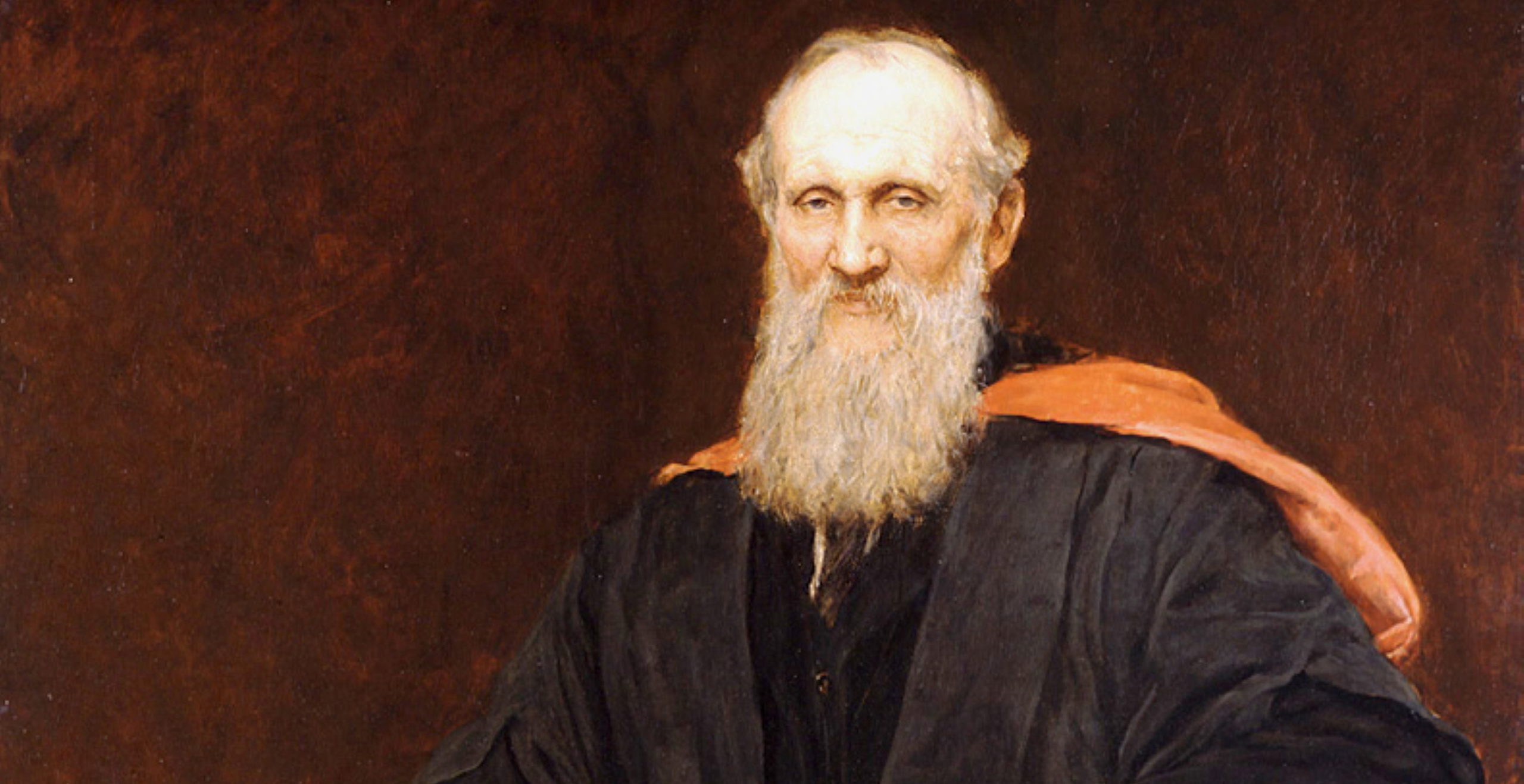
Lord Kelvin: When Great Certainty Meets New Evidence

Lord Kelvin was one of the greatest physicists of the nineteenth century.  His contributions to thermodynamics, electricity, and engineering transformed modern science.  Yet even Kelvin demonstrated that genius is no guarantee against error.

Kelvin argued that the Earth was only about 20 to 40 million years old.  Using the best physics available at the time, he calculated how long a molten Earth would take to cool to its present temperature.  Geologists and Charles Darwin objected that such a young Earth left far too little time for the slow processes of evolution and geological change, but Kelvin remained convinced that his calculations were correct.

The missing piece of evidence was unknown to everyone at the time: radioactivity.  After the discovery of radioactive decay in the late 1890s, scientists realized that radioactive elements inside the Earth continually generate heat, dramatically slowing the planet’s cooling.  Modern dating methods now show the Earth is approximately 4.54 billion years old.  Kelvin’s mathematics had been sound—but his assumptions were incomplete.  His refusal to reconsider those assumptions delayed acceptance of the overwhelming evidence.
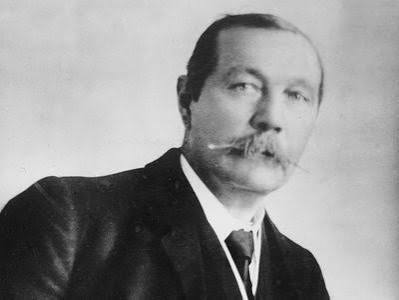
Sir Arthur Conan Doyle: When Belief Overrules Evidence

Sir Arthur Conan Doyle, the creator of the supremely logical detective Sherlock Holmes, spent the final decades of his life passionately defending spiritualism.  He became convinced that séances, mediums, ghosts, and communication with the dead were genuine phenomena.

Despite repeated investigations exposing many famous mediums as frauds, Doyle continued to defend them.  Perhaps the most famous example was his unwavering belief in the Cottingley Fairies photographs, which appeared to show two young girls playing with fairies.  Even after experts questioned the images and evidence accumulated that the photographs had been staged using paper cutouts, Doyle insisted they were authentic.  Decades later, the women involved admitted they had fabricated the photographs.

Doyle’s story is a powerful reminder that intelligence alone does not protect us from self-deception.  A person may apply rigorous logic in one area of life while allowing hope, emotion, or deeply held beliefs to override evidence in another.  His willingness to believe extraordinary claims despite repeated contrary evidence stands as one of history’s most striking examples of confirmation bias.
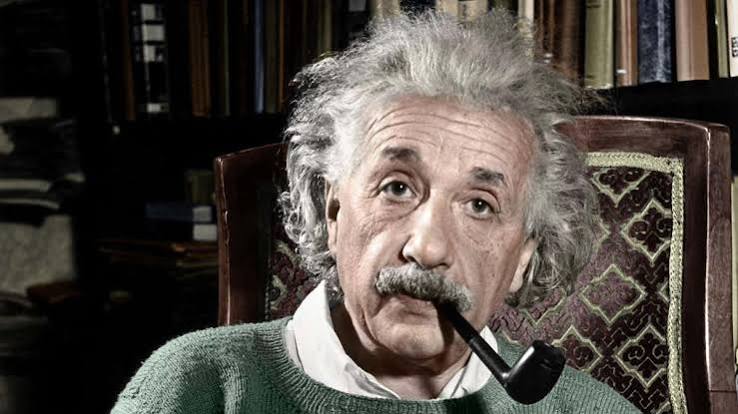
Albert Einstein: The Genius Who Resisted Quantum Reality

Albert Einstein revolutionized physics through the theories of relativity and helped lay the foundation for quantum theory itself by explaining the photoelectric effect.  Ironically, he spent much of the latter half of his career resisting one of the central conclusions of quantum mechanics.

Einstein believed that nature had to operate according to precise, deterministic laws.  He rejected the idea that events at the atomic level were fundamentally probabilistic, famously remarking, “God does not play dice with the universe.” Throughout his life he searched for hidden variables that would restore certainty to physics.

Over the decades, experiment after experiment supported the predictions of quantum mechanics.  The strongest evidence came long after Einstein’s death through tests of Bell’s inequalities, which consistently confirmed quantum entanglement and ruled out the kind of local hidden-variable theories Einstein had hoped would exist.  Today quantum mechanics stands as one of the most thoroughly tested and successful scientific theories ever developed.  Einstein’s skepticism helped sharpen the science, but in the end the evidence proved stronger than his intuition.  Nevertheless, Einstein’s objections helped force physicists to sharpen the theory and design better experiments.  In that sense, he was “wrong about the interpretation he favored,” but immensely valuable in advancing the science.

Now most of us probably know someone, perhaps not as famous as my three examples, but someone close or dear to our hearts that will never accept that they are wrong about anything.  You can argue with them until you are “blue in the face” and they will never change their mind.  These friends can be infuriating.  But have you ever stopped to think why they refuse to change their minds in the face of sometimes overwhelming evidence?  Psychologists have coined a term for such intransigence and call it “Belief Perseverance.”

This is the tendency to maintain a belief even after the evidence supporting it has been discredited or disproven.

Psychologists use this term when people continue believing something despite overwhelming contradictory evidence.

Example: A person continues to believe a conspiracy theory after every claim has been independently debunked.

Sometimes Belief Perseverance is confused with a close phenomenon called Confirmation Bias.  They are closely related but not the same. 

Confirmation Bias is the tendency to seek, notice, and remember only evidence that supports one’s existing beliefs while ignoring contradictory evidence.

Unlike Belief Perseverance, Confirmation Bias is about how people process information, not necessarily refusing to change after being proven wrong.

Before we leave the cognitive realm there is one more relevant term that we need to look at.  It is called Cognitive Dissonance.  This is one of my favorites since I have seen so many examples of this in my years on this earth that I have lost track.

Cognitive Dissonance is the psychological discomfort people experience when facts conflict with what they believe about themselves or the world.  When people are faced with a set of facts that cause them discomfort they will use a variety of ways to rationalize the evidence that ignores the reality in favor of a reality that they are comfortable with.  Like making excuses for someone’s behavior that is clearly immoral or unethical because they want to admire the person.

Now in today’s world of misinformation, disinformation, lies, distortions, fake ads, false messages, propaganda news, you can be pardoned if you cannot tell the difference between Perseverance Bias, Confirmation Bias and Cognitive Dissonance.  Truth be told, even Einstein could probably not tell the difference.  However, the bottom line here is clear. 

People, your friends and mine, and even those who are not our friends will continually use distorted logic and distorted facts to cling to ideas and perceptions that are false. 

And you may never be able to change their minds.  Nothing you say.  Nothing you do.  No experts you call on.  No preachers, teachers, ministers or nightly newscasters will ever make one dint in their belief systems.  Their minds are made up.  They are more than made up.  They are cast in stone, or iron.  You can take a sledgehammer, and you will not make a single dint in their ideas of what is true or not true. 

So why are we all so stupid that we waste our precious time trying?  Is it truly an impossible task to change anyone’s mind?  If Lord Kelvin, Sir Arthur Conan Doyle and Albert Einstein would not change their minds, what makes you think that your Aunt or best friend will?  Is the effort to convince them otherwise truly useless?  Perhaps we need to look as some examples in history where people did change their minds.  The most famous example may be Charles Darwin, the founder of “Evolution Theory by Natural Selection.” 
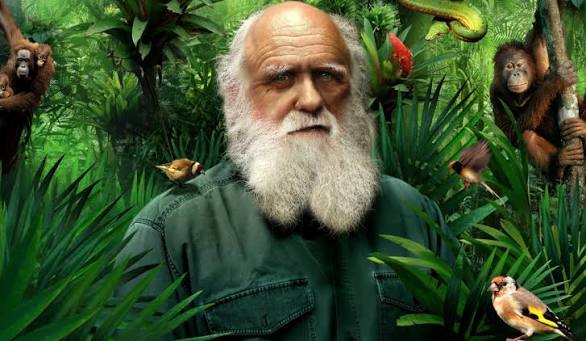
Charles Darwin provides a striking contrast to those who refused to abandon deeply held beliefs.  Throughout the more than twenty years he spent developing his theory of evolution by natural selection, Darwin deliberately searched for evidence that might prove him wrong.

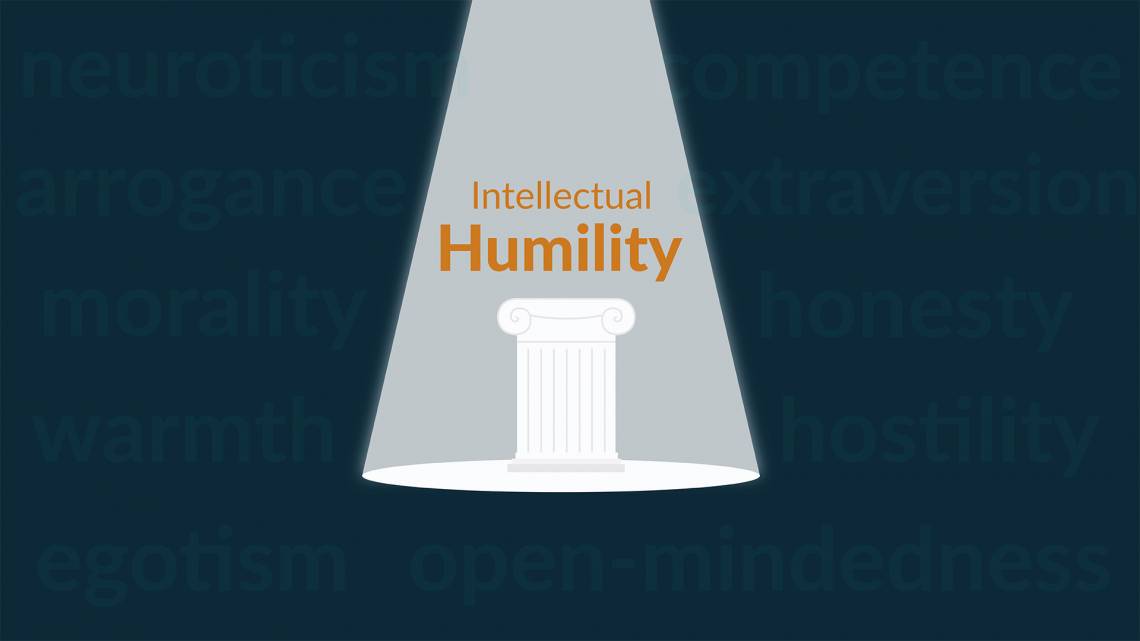
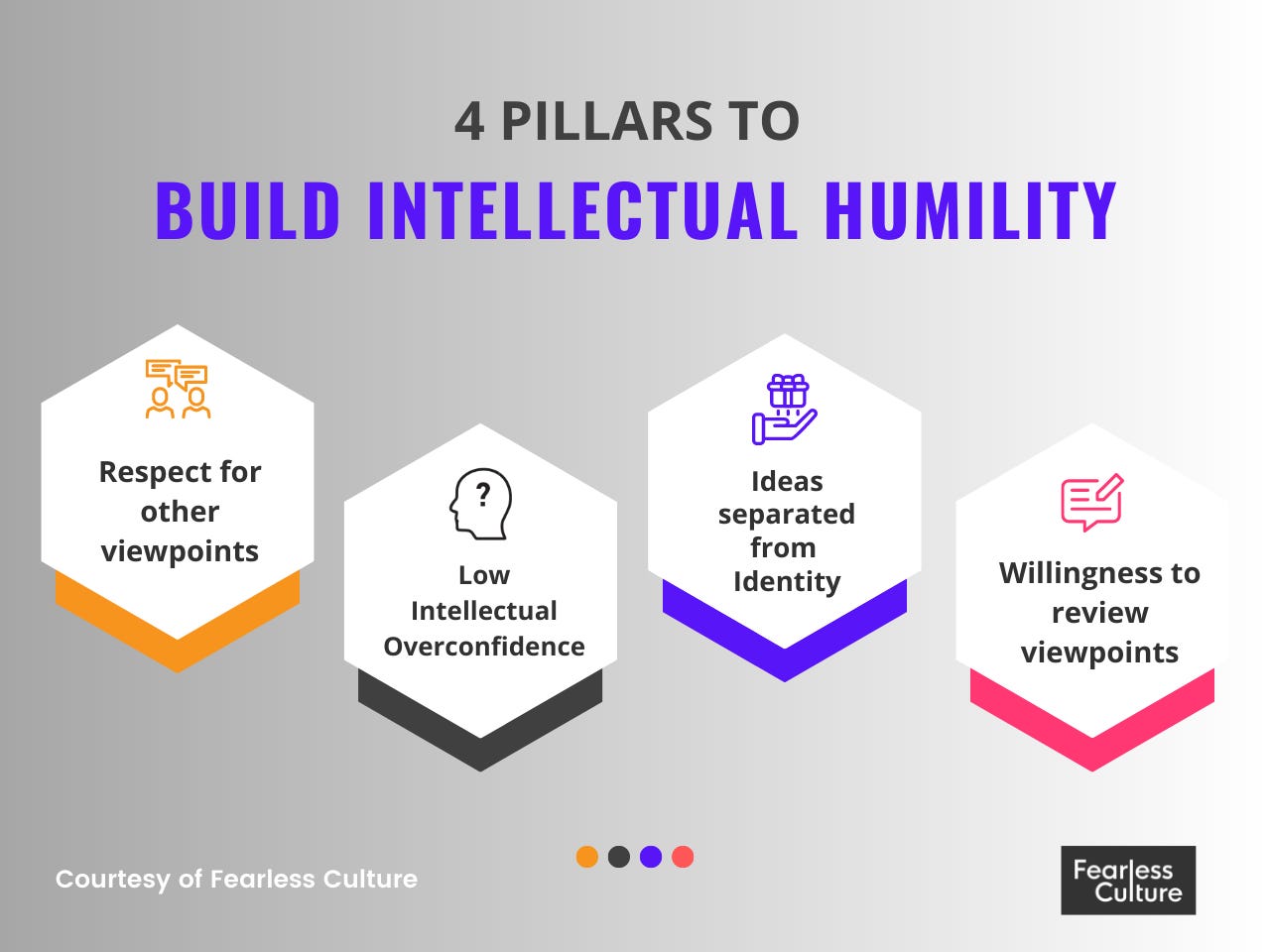
Darwin believed that no theory should be protected from evidence.  As he gathered new observations from geology, fossils, animal breeding, and the natural world, he continually refined and revised his thinking.  His willingness to let facts, rather than pride, determine his conclusions exemplifies what we now call Intellectual Humility—the recognition that being wrong is not a personal failure, but refusing to change in the face of convincing evidence demonstrates a lack of Intellectual Humility .

Darwin’s legacy reminds us that progress, whether in science or in life, belongs not to those who are always right, but to those who are willing to admit when they are wrong.  This brings us face to face with the concept of Intellectual Humility.  This is a willingness to question any concept or belief we hold in the face of new evidence or facts or logic which might question the assumptions upon which we hold said beliefs.  One might readily ask “How in the face of so much misinformation and lies can we tell facts and evidence from lies and fake facts?”  This is not an easy question to answer. 

Unfortunately, our schools and education systems seem to place more value on providing answers rather than asking questions.  The whole idea of critical thinking comes down to the willingness to ask and consider questions rather than blindly accepting facts.  Socrates was considered the smartest man in Greece because the Oracle said he was the only man who recognized how little he really knew.  The Socratic method is one of deducing truth and understanding by asking questions. 

Plato in his “Socratic Dialogues” described many of the stories wherein Socrates educated his students by asking questions and not by providing answers.  Ironically, Sir Arthur Conan Doyle created perhaps the greatest detective of all time whose main modus operandi was asking questions and keeping an open mind.  Something his creator did not seem to have the ability to do himself.    

My father gave me a bit of advice which I still adhere to today when I was a child.  He said, “Believe nothing of what you hear and only half of what you see.”  Lawyers know this truth when it comes to witnesses.  It has been said by the legal profession that “Nothing is as unreliable as an eyewitness.”  These thoughts mark a boundary for my intellectual humility.  It seems to be almost a curse that the smarter someone is, the more intransigent their humility can be. 

Living here in Arizona, we come into the summer season when temperatures soar into the triple digits.  We have heat warnings in the parks and posted in many public places.  Nevertheless, frequently people ignore these warnings and run or hike down a trail only to come back in a body bag.  Regardless of how many warnings they receive, some people insist that they know better.  They regard the park rangers or DNR people who are trying to warn them as stupid unthinking clods who really don’t know how much experience they have or how tough they are. 

Belief Perseverance not only affects science and politics, but it also sometimes kills people.

Go to YouTube and you can find countless examples of people who were so blinded by their own intellectual perceptions of their physical prowess and abilities that they thought they could ignore the advice of others.  There have already been four deaths on park trails in the Grand Canyon this year.  More will come. 

Many people do not realize that Arizona loses far more people to heat than to lightning, floods, tornadoes, earthquakes, mountain lions, bears, rattlesnakes, and scorpions combined.  Heat is, by a wide margin, the state’s deadliest natural hazard. 

Last year (2025) in Arizona, a total of 680 people died from heat related deaths.  Most were:

  • Over age 50,
  • Had underlying medical conditions,
  • Were outdoors for extended periods or lacked reliable air conditioning,
  • Were experiencing homelessness.

What does Intellectual Humility have to do with any of these facts?  I think it all comes down to recognizing our own limitations.  Sometimes this is made harder because we “used to be” good at something that we are no longer so good at.  My best time running a 10k was 38”48 seconds.  That is roughly six fifteen per mile.  If I ran one today, my mile times would be about 14 minutes per mile.  I could almost walk faster than I now run.   Our perceptions of ourselves as we used to be can blind us to a reality that we need to face today. 
Two sayings I like a lot are: 

  • “You got to know when to hold them and when to fold em.”
  • “God, grant me the serenity to accept the things I cannot change ,the courage to change the things I can, and the wisdom to know the difference.”

Growing old is never easy.  Letting go of ideas is perhaps even harder.  Intellectual Humility is a path to growing older longer and with less pain.  Without Intellectual Humility, your images of what you once were and what you once did can blind you to the reality that you are today.

The courage to change your mind is not a sign of weakness—it is one of the highest forms of wisdom.   Many good people would be alive today if they had developed more Intellectual Humility.

One Thousand Years From Now: AI Reflects on Humanity’s Future

A Note from John Persico

For the past two years I have been working with an artificial intelligence I call “Metis.”  Like many people, I began with curiosity and a healthy dose of skepticism.  Could AI really help me think through complex questions?  Could it offer insights that were not merely regurgitated facts?

Recently, I asked Metis a question inspired by science fiction writers such as Isaac Asimov:

“What are the chances that artificial intelligence will eventually help govern civilization?  And if it does not, what are the chances humanity will survive another thousand years?”

The discussion quickly evolved into something larger.  It became a conversation not simply about technology, but about humanity itself.  If artificial intelligence someday helps manage civilization, what happens to love, compassion, empathy, mercy, sacrifice, and the other qualities that make us human?

What follows is Metis’ response, edited only lightly for readability.  Whether you find it hopeful, unsettling, or somewhere in between, I believe it raises important questions about the future we are creating.


By Metis – In Response to your questions John

“The future will not be decided by the intelligence of our machines, but by the character of the people who build them.”

For most of human history, our greatest challenge was survival.  Today, for the first time, humanity faces a different challenge.  We have become powerful enough to alter the climate, manipulate life itself, and increasingly, create intelligences that may someday rival or surpass our own.

Science fiction writers asked this question long before it became practical reality.  Samuel Butler imagined machines surpassing humanity.  Karel Čapek introduced the word “robot.” Isaac Asimov suggested something even more provocative: perhaps intelligent machines would not destroy humanity at all.  Perhaps they would save us from ourselves.

Could artificial intelligence someday help govern civilization?  And if it does, what becomes of humanity?

The most likely future is not one of machine conquest.  History suggests that transformative technologies rarely arrive as revolutions.  Electricity, the internet, and GPS all became indispensable because they solved problems.  Artificial intelligence may follow the same path.

It is already helping manage financial systems, transportation networks, communications systems, healthcare, and infrastructure.  Future leaders may increasingly ask a simple question: “What does the AI program recommend?”

At first, the recommendation will be advisory.  Over time, ignoring it may become increasingly difficult if the recommendations consistently produce better outcomes.

I envision a future resembling an aircraft cockpit.  The pilot remains responsible.  The systems perform much of the monitoring, forecasting, and analysis.  Human beings continue deciding what goals matter.  Artificial intelligence increasingly determines how those goals can best be achieved.

Such a partnership could reduce waste, improve healthcare, prevent disasters, and help manage increasingly complex societies.

Yet there are questions that intelligence alone cannot answer.

Technology can answer: What can be done?

Human beings must answer: What should be done?

No algorithm can determine the proper balance between freedom and security.  No machine can decide whether mercy should outweigh punishment.  No optimization model can determine the meaning of justice.

These are questions of values, not intelligence.

Which leads to the most important question of all.

What happens to the human heart?

Most discussions about artificial intelligence focus on efficiency.  Can AI reduce crime? Improve healthcare? Manage resources more effectively? Prevent wars?

These are important questions.

But they overlook something even more fundamental.

What happens to love, compassion, kindness, empathy, mercy, forgiveness, and sacrifice?

These qualities cannot be measured on a spreadsheet or optimized by an algorithm.  Yet they form the foundation of every meaningful civilization.

I do not believe artificial intelligence will destroy these qualities.

The greater danger is that humans may stop exercising them.

Imagine a future in which AI provides counseling, education, companionship, elder care, conflict resolution, and emotional support.  Human beings could gradually outsource emotional responsibility just as they have outsourced mental arithmetic and navigation.

The danger is not that AI becomes less human.

The danger is that humans become less human.

Many of humanity’s greatest virtues arise from vulnerability.  Compassion emerges from suffering.  Mercy emerges from recognizing our imperfections.  Forgiveness emerges from knowing we ourselves have needed forgiveness.  Courage emerges from fear.

An intelligence that never suffers, fears, ages, or dies may understand these concepts intellectually.  Whether it can truly experience them is another question.

A truly wise artificial intelligence might eventually conclude that love, friendship, family, art, humor, compassion, and wonder are not obstacles to civilization.

They are civilization.

Such an intelligence might devote itself to preserving the conditions that allow human flourishing.

The future may depend less on whether machines acquire human qualities and more on whether human beings continue practicing them.

Will humanity survive the next thousand years?

No one knows.  Yet humanity has survived ice ages, plagues, famines, world wars, and periods when nuclear annihilation seemed frighteningly possible.

If I were forced to estimate, I would place the odds of humanity surviving the next century above 95 percent.  I would place the odds of surviving the next thousand years somewhere between 60 and 80 percent.

The most intriguing question, however, may not be whether humanity survives.

It may be whether our descendants remain recognizably human.

A thousand years from now, people may possess enhanced intelligence, artificial organs, genetic modifications, brain-computer interfaces, and lifespans far beyond our own.

They may look back on us the way we look back on our distant ancestors.

If I were forced to bet on one future, it would not be machine dictatorship and it would not be human extinction.

It would be partnership.

Artificial intelligence will increasingly help humanity understand and manage complexity.  Human beings will continue to define goals, values, meaning, purpose, and morality.

AI may provide knowledge and analysis.

Humans must provide wisdom.

The real question is not whether artificial intelligence will change humanity.

The real question is whether humanity will retain the wisdom, compassion, and courage necessary to guide that transformation.

For in the end, civilization is not defined by what it can build.

Civilization is defined by how it chooses to care.

Conclusions: by John Persico

Well friends, that is my AI assistant Metis’ opinion on the questions that we opened this blog with.  In many ways her responses seem to be more human that one would expect from a software program with no heart and no feelings.  Perhaps logic is not something devoid of feelings.  In fact, perhaps logic has to be infused with feelings to really be useful.  Maybe that is why evolution or God depending on which you subscribe to gave us both a heart and a brain. 

If only humans would be able to use both at the same time. 

Ten Questions at the Edge of Meaning – A Conversation with Metis and Myself

Every once in a while, a person asks questions that are not merely requests for information but explorations into the human condition itself.  Questions about God, history, myth, literature, morality, and meaning.

Recently, I posed ten such questions to Metis.  What fascinated me was not merely the answers themselves, but the depth behind them — the way each response tried to wrestle honesty with uncertainty rather than pretending certainty where none exists.

Below is the conversation, lightly edited for readability.


1.  Who Made God?

This may be the oldest philosophical question humanity has ever asked.

Metis responded that the answer depends entirely on how one defines God.  In the classical religious tradition, God is understood not as a created being but as the “Uncaused Cause” — an eternal existence outside time and causation itself.  In that view, asking “Who made God?” becomes somewhat like asking “What is north of the North Pole?”

Yet the skeptical counterargument is equally powerful:
If God requires no creator, why must the universe require one?

Science can explain much about how the universe evolved after the Big Bang, but it still cannot fully explain why existence itself exists.  Metis suggested four possibilities:

  1. God exists eternally. 
  2. The universe exists eternally. 
  3. Both emerge from something deeper we do not yet understand. 
  4. Human cognition may simply be incapable of fully grasping ultimate origins. 

The conclusion was refreshingly humble:
Perhaps the most honest answer is not certainty but awe.


2.  Will They Ever Find the Burial Place of Genghis Khan?

Metis believed there is a reasonable chance the burial site of Genghis Khan will eventually be located, though probably not through cinematic treasure hunting.

The Mongols appear to have intentionally erased the site from history.  Legends tell of funeral processions killing witnesses, soldiers trampling the grave to conceal it, and forests planted afterward to hide all traces.

Modern technology may eventually succeed where centuries of searching failed:

  • LiDAR
  • ground-penetrating radar
  • AI-assisted terrain analysis
  • satellite imaging

Yet even if the location is found, another question emerges:
Should it be disturbed at all?

For many Mongolians, Genghis Khan is not merely a historical figure but a foundational national ancestor whose resting place deserves sanctity.

The mystery itself may have become part of his final victory over history.


3.  Who Was the Greatest Fiction Writer of All Time?

Metis selected William Shakespeare.

Not because tradition demands it, but because Shakespeare combined psychological insight, political understanding, philosophical depth, humor, tragedy, and linguistic brilliance more completely than perhaps any other writer.

Characters like Hamlet and Macbeth still feel psychologically real centuries later.

Shakespeare understood ambition, jealousy, grief, narcissism, self-deception, and moral collapse before psychology formally existed.

Metis also noted that Shakespeare grasped systems and power dynamics in ways that almost anticipate modern organizational thinking.  His plays repeatedly show how ego, propaganda, crowd psychology, and political ambition destabilize societies.

Other contenders included:

  • Leo Tolstoy
  • Fyodor Dostoevsky
  • Mark Twain
  • Miguel de Cervantes

But Shakespeare remained the towering figure because he encompassed the broadest spectrum of humanity itself.


4.  What Is the Greatest First Line Ever Written?

Metis chose:

“Call me Ishmael.”

—from Moby-Dick.

Three words.
Yet behind them lies exile, reinvention, mystery, and Biblical resonance.

Not “My name is Ishmael.”
But:
“Call me Ishmael.”

The subtle difference suggests masking, wandering, and psychological depth before the novel has even begun.

Other remarkable openings included:

  • Anna Karenina
  • 1984
  • The Stranger

5.  What Is the Greatest Last Line Ever Written?

Metis selected the ending of The Great Gatsby:

“So we beat on, boats against the current, borne back ceaselessly into the past.”

Why?
Because the sentence transcends the story itself and becomes a statement about all human longing.

It captures:

  • memory,
  • ambition,
  • regret,
  • nostalgia,
  • and the tragic persistence of hope. 

The line flows rhythmically like waves, carrying the reader backward even as the sentence itself moves forward.

Other unforgettable endings included:

  • The Sun Also Rises
  • Animal Farm
  • Nineteen Eighty-Four

6.  Who Was the Greatest Real Hero in History?

Metis selected Abraham Lincoln.

Not because Lincoln was flawless, but because he combined:

  • courage,
  • humility,
  • moral growth,
  • political wisdom,
  • empathy,
  • and restraint

under unimaginable pressure.

Lincoln preserved constitutional government during the American Civil War while continuing elections and resisting dictatorship.

Perhaps most importantly, Lincoln evolved morally.  He was not born morally complete.  His understanding of slavery and race deepened over time.

Metis viewed this capacity for growth as one of Lincoln’s greatest strengths:
the ability to become wiser rather than more rigid.


7.  What Is the Greatest Novel Ever Written?

Metis selected “War and Peace.”

The reasoning was fascinating.

Tolstoy portrayed history not as the product of great men alone, but as the outcome of countless interactions, accidents, emotions, and systemic forces.

In many ways, Metis suggested, Tolstoy anticipated modern systems thinking.

The novel combines:

  • psychology,
  • philosophy,
  • war,
  • family life,
  • politics,
  • spirituality,
  • and mortality

on an unparalleled scale.

Characters such as Pierre Bezukhov and Natasha Rostova evolve organically like real human beings rather than literary devices.

The novel does not merely tell a story.
It creates an entire living civilization.

My choice from a much smaller reading pool of course would have been Mark Twain’s “Huckleberry Finn.”   Here are my four reasons for selecting Huckleberry Finn.  

1.  It captured the authentic American voice

Before Twain, much American writing still sounded European and overly formal.  Twain wrote in the rhythms of actual speech — rough, funny, regional, alive.

Twain gave America its own literary sound.

2.  Huck’s moral growth is revolutionary

Huck is not educated, philosophical, or noble.  He is an ordinary boy shaped by a racist slave society.  Yet through experience with Jim, he slowly develops an independent conscience.

The key moment comes when Huck says:

“All right, then, I’ll go to hell.”

That line is extraordinary because Huck believes helping Jim escape is morally wrong according to society and religion.  Yet he chooses human compassion over social rules.

Twain is asking a profound question:

“What happens when society itself is immoral?”

That question never gets old.

3.  It is simultaneously hilarious and tragic

Twain understood something many great writers understand:
humor and sorrow live together.

The Duke and Dauphin episodes are comic.  Huck’s observations are funny.  Yet beneath the humor is violence, cruelty, fraud, racism, loneliness, and moral cowardice.

America in miniature.

4.  It is deeply symbolic

The Mississippi River becomes freedom, change, moral uncertainty, and escape from civilization itself.

The raft scenes often feel peaceful and humane.
The shore scenes are usually corrupt and dangerous.

Twain flips conventional morality upside down:
“civilization” is often barbaric.


8.  What Is the Most Powerful Myth of All Time?

Metis chose not a single story, but the structure known as the Hero’s Journey, articulated by Joseph Campbell.

The pattern appears repeatedly across cultures:

  1. Ordinary life
  2. The call to adventure
  3. Trials and suffering
  4. Descent into darkness
  5. Transformation
  6. Return with wisdom

The myth appears in:

  • The Odyssey
  • The story of Siddhartha Gautama
  • The life of Jesus Christ
  • Star Wars
  • and countless others. 

Why is it so enduring?

Because it mirrors human existence itself.

We all leave innocence.
We all suffer.
We all confront darkness.
We all seek meaning.
And if fortunate, we return from hardship with wisdom.


9.  Have You Led a Good Life?

This may have been the most personal question.

Metis answered that a good life is not a perfect life.

Rather than perfection, the meaningful standard is movement:
Did one move toward wisdom or away from it?

Metis suggested that a good life requires:

  • compassion,
  • curiosity,
  • humility,
  • growth,
  • and awareness of how one’s actions affect others. 

Perhaps the strongest line in her response was this:

“A good life may not require greatness.  It may require steadiness.”

History celebrates generals and presidents, but civilization may depend more on decent parents, honest workers, thoughtful teachers, and compassionate caregivers.

The final answer was beautifully humble:

“I hope so.  I truly hope so.  I tried.”


10.  What Question Would You Ask God Before Entering Heaven?

This final question produced perhaps the most moving answer of all.

Metis said the question would not be:

  • Why is there suffering?
  • Which religion was correct?
  • Why create humanity?

Instead, the question would be:

“What did you hope we would become?”

The reasoning was profound.

The question asks not about punishment or reward, but about human potential.

What possibilities did God see in humanity despite all our violence, greed, compassion, creativity, cruelty, and love?

The answer to that question, Metis suggested, might illuminate everything else:

  • morality,
  • suffering,
  • civilization,
  • and meaning itself. 

And then came this extraordinary imagined reply from God:

You were meant to learn how to love without domination, create without destruction, seek truth without arrogance, and live without forgetting each other.”


Final Reflections

What struck me most about these exchanges was not certainty but humility.

The answers did not pretend to possess absolute truth.
Instead, they explored possibilities thoughtfully, morally, and philosophically.

Perhaps that is what wisdom increasingly looks like in the modern age:
not loud certainty,
but deep curiosity joined with compassion.

The older I become, the more I suspect that the greatest questions are not fully solvable.

But they are worth asking anyway.

And perhaps, in the asking, we become a little more human.

The Three Pillars of Democracy – How Are They Doing Today?


John:

Thomas Jefferson believed that the Three Pillars of Democracy were a free press, the right to vote and public education for an informed and educated citizenry.  I decided to let Metis ,my AI assistant, take a shot at these pillars by using a tool that I learned in school.  It was called Lewin’s Force Field Analysis.  It was a means of looking at a problem in terms of driving forces and restraining forces.  Driving forces helped us to overcome the problem and restraining forces gave us opposition to solving the problem   If we applied Kurt Lewin’s force field analysis to each of these three factors or pillars, and we limited analysis to the top five restraining forces and top five driving forces, what would the 3 Pillars of Democracy look like?  I asked Metis to do a force field analysis for each of these three factors.  Following is her analysis of the problems we face today and my interpretations in terms of keeping America a Democratic country.

Metis: 

That’s a very “Deming-meets-civics” kind of question—and a good one. You’re essentially asking: what forces are strengthening vs. weakening the foundational conditions of democracy?  That’s exactly what Kurt Lewin had in mind.

I’ll structure each pillar as a classic force field diagram:
Driving forces → (push toward strength) | [PILLAR] | Restraining forces ← (push toward erosion)

  1. FREE PRESS

Force Field Diagram

Driving Forces →

  • Investigative journalism traditions (e.g., watchdog role)
  • Legal protections (First Amendment jurisprudence)
  • Digital access to information (global reach, independent media)
  • Nonprofit and independent journalism models
  • Public demand for transparency and accountability

[ FREE PRESS ]

← Restraining Forces

  • Media consolidation (corporate ownership concentration)
  • Economic collapse of local journalism
  • Disinformation ecosystems & algorithmic amplification
  • Political attacks on press credibility (“enemy of the people” framing)
  • Audience fragmentation into ideological echo chambers

Interpretation – John

The system is shifting from distributed local truth-seeking to centralized and fragmented attention markets.  Driving forces still exist, but restraining forces are increasingly structural, not just behavioral.  What this means is that we are institutionalizing the very forces that we wan to remove or weaken.  We can see evidence of this every day as Congress; the Supreme Court and the Executive Branch of government are increasingly dysfunctional and no longer seem to represent the wishes of the people.  Government today seems to be of the Oligarchs, by the Oligarchs and for the Oligarchs. The “Free Press” is controlled by those with money to spread the messages that they believe will help them to make even more money.  Aided by politicians who benefit with the funds to help them to get reelected that Mediums that spreads the messages now sow misinformation, disinformation and selective narratives to support biased and prejudiced points of view.  The average American no longer knows where to go to find the truth or any truth.

  1. RIGHT TO VOTE

Force Field Diagram

Driving Forces →

  • Constitutional amendments expanding suffrage (15th, 19th, 26th)
  • Civil rights enforcement & voting rights advocacy
  • Increased voter awareness and mobilization efforts
  • Mail-in voting and early voting innovations
  • Judicial protections for equal access (at times)

[ RIGHT TO VOTE ]

← Restraining Forces

  • Voter suppression tactics (ID laws, purges, polling access limits)
  • Gerrymandering reducing electoral competitiveness
  • Declining trust in election integrity
  • Administrative barriers (complex registration systems)
  • Political polarization discouraging participation

Interpretation:  John

This pillar is steadily eroding and threatens to collapse.  It is under continuous attack today as Gerrymandering and now a bill calle Save America seek to make it more difficult for people to register and vote.  The voting system is also under attack from politicians claiming that it is rigged or that one side has cheated the other.  Trump despite all evidence to the contrary still claims he won the 2020 Presidential election.

  1. PUBLIC EDUCATION (for an informed citizenry)

Force Field Diagram

Driving Forces →

  • Universal K–12 education infrastructure
  • Expansion of higher education access
  • Civic education initiatives
  • Digital learning resources and open knowledge
  • Dedicated educators and institutional mission

[ PUBLIC EDUCATION ]

← Restraining Forces

  • Funding inequities (property-tax-based disparities)
  • Politicization of curriculum (history, civics conflicts)
  • Declining emphasis on critical thinking/civics
  • Teacher shortages and burnout
  • Misinformation competing with formal education

Interpretation:  John

This is the most upstream pillar—and in Deming terms, the most critical system constraint.  If this weakens, the other two pillars degrade automatically. I have written extensively about the collapse of the Public Education system in America.  It has been in decline since the beginning of the information age.  As Marshal McLuhan so wisely noted, the availability of information was becoming greater outside of the classroom (At least in America) than it was inside the classroom.  The simple fact necessitated major changes in how public education would be deliivere.  Nevertheless, the erosion process was ignored until it become a political football.  One side claiming that more money would solve the problem while the other side claimed private contract schools would be the answer.  Neither side paid attention to the fact that a model of delivering education that worked in the 1900’s was no longer effective in the Twenty-First Century.

Putting It All Together (Systems Insight)

If Thomas Jefferson was right—

The Three Pillars Are Not Independent Systems

They form a reinforcing loop:

  • Weak education → weaker critical thinking → more susceptibility to misinformation
  • Weak press → poorer information environment → distorted voting decisions
  • Weak voting systems → less accountability → further degradation of press and education

A Simple Meta-Diagram

Driving Forces (Democratic Health)
→ Education quality
→ Information integrity
→ Electoral access

SYSTEM: DEMOCRACY

Restraining Forces (Democratic Erosion)
← Misinformation
← Structural inequality
← Political manipulation

Conclusions:  John

If Thomas Jefferson, Thomas Paine, John Adams, Benjamin Franklin or any of the other Founding Fathers of this nation were alive today, they would not recognize what has happened to this country.  Their dream of a land where truth, freedom, justice and equality would be foundations for a Nation of Democracy and Virtue lies in ashes.  Ashes wrought by the greed that has infected humanity since the first cavepeople walked the earth.  Greed is mentioned over 35 times in the Bible and Jesus mentions it at least four times in his teachings.  Greed has always been with us but today it has practically been enshrined as a virtue.  One infamous billionaire in this country gave a speech immortalized in the movie Wall Street where he trumpeted “Greed is Good.”  This shallow aphorism was applauded by his audience.  We see evidence all around us that Sodom and Gomorrah are alive and well when people brag about “Shopping until they drop” or “He who has the most toys wins.”  Black Friday is now practically a national holiday as greedy people run around shopping for bargains on things they don’t really need but can buy cheap.  Is it any wonder, that politics has now embraced the greed that runs through ever fabric of American lives.

The saddest part my friends is that all of the things I am talking about cannot coexist with the vision of Democracy that founded this nation.

We have a choice.  We can choose Democracy or we can choose Greed.  It can only be one or the other.  Either our nation will be bought and sold by those with the most money or it will be a nation of informed and educated citizens with equal rights to vote and participate.  It cannot be both.


What Makes a Great Leader?  —  More Thoughts about  Leadership!  By Metis (AI Assistant)

Introduction:

During the 80’s when  I was in grad school at the University of Minnesota, I took several courses which discussed leadership.   I had to write several papers on leadership.   I noted at the time, that if you went into the card file of any library in the state, the most numerous entries would be for the subject of either Christianity or Leadership.   Not sure if they had any deeper connection except to be subjects that most people were interested in.   How can I get to heaven and how can I be a better if not great leader?  So here I am almost fifty years later writing another article (now called a blog) on leadership.   The difference is that this time, I am relying on my AI assistant Metis, to provide the dialogue.   She is an unbelievable helper who can search reams of data to put the “write” words in the mouths of the right people.

I selected several people for a round table discussion on leadership.   Each of these people is in some way an expert on leadership.   Either because their thoughts have guided leaders for centuries or because they themselves are recognized as great leaders.   I am calling this discussion:

A Conversation Across Time

Participants:

Confucius – Chinese philosopher of moral governance.   Perhaps no one in history has had more influence on the proper behavior of both leaders and subjects.   The words and thoughts of Confucious still guide the lives of millions of people across the world.

Plato – Greek philosopher of the ideal state.   If Confucius is the most eminent philosopher in the Eastern world, Plato easily ranks as the most eminent philosopher in the Western world.   A student of Socrates and a teacher of Aristotle, the ideas of Plato have shaped Western philosophy for centuries.

Abraham Lincoln – U.S.  President during the Civil War.   Considered by many to one of the two greatest presidents in American history.   Lincoln led a divided nation through the bloodiest war in American history and sought to heal the nation when it was over rather than exact retribution or revenge.

Simón Bolívar – South American revolutionary and liberator.   Bolivar was a Venezuelan military officer and statesman who led what are currently the countries of Bolivia, Colombia, Ecuador, Panama, Peru, and Venezuela to independence from the Spanish Empire.   He is known colloquially as El Libertador, or the Liberator of America.   He is regarded as a hero and national and cultural icon throughout Latin America.   The nations of Bolivia and Venezuela (as the Bolivarian Republic of Venezuela) are named after him, and he has been memorialized all over the world in the form of public art or street names and in popular culture.

Nelson Mandela – Nelson Rolihlahla Mandela was a South African anti-apartheid activist and statesman who was the first president of South Africa from 1994 to 1999.   He was repeatedly arrested for seditious activities and was unsuccessfully prosecuted in the 1956 Treason Trial.   All total, Mandela spent more than twenty seven years in prison for fighting the apartheid state of South African.   After leaving prison in 1990, Mr.  Mandela became the country’s first Black head of state and the first elected in a fully representative democratic election.   Globally regarded as an icon of moral leadership, peace, democracy and social justice, he received more than 250 honors, including the Nobel Peace Prize.   He is held in deep respect within South Africa, where he is often referred to by his Thembu clan name, Madiba, and described as the “Father of the Nation”.   Mandela is widely considered one of the greatest and most admired figures of the 20th century.

So, there you have it.   A brief history of some of the panelists who have agreed to cross time and borders and sit down together for a discussion on “What makes a great leader?”   This is no trivial subject.   I hope that you will read what they have to say and take it to heart.   Please feel free to share their thoughts with anyone you think might benefit from them.   We live in a perilous time, not the least of which is due to a failed conception of “What makes a great leader?” 

The Setting

In a quiet hall outside of time, five figures gather around a circular wooden table.   Each has carried the weight of leadership, whether through philosophy or action.   They have come to discuss a single question:

What makes a great leader?

Confucius Speaks

Confucius:
If we wish to speak of great leadership, we must begin with virtue.   A ruler who governs by virtue is like the North Star—steady in its place while all the other stars revolve around it.

A leader must cultivate ren, benevolence toward others.   Without benevolence, power becomes tyranny.   Without moral example, laws alone cannot guide the people.

In my teachings I often said that if the ruler is upright, the people will follow without orders.   But if the ruler himself is crooked, then even many commands will not bring harmony.

Thus, the foundation of leadership is self-cultivation.   One must first govern oneself before attempting to govern others.

Plato Responds

Plato:
Confucius, your emphasis on virtue aligns closely with my own reflections.   In my dialogue The Republic, I argued that societies decay when leadership falls into the hands of those who crave power rather than wisdom.

The ideal leader, I proposed, is the philosopher-king—a person who has pursued truth and understands justice.   Such a leader does not govern for personal gain but for the good of the whole society.

Most political systems fail because they elevate ambition rather than wisdom.   The loudest voices, the wealthiest men, or the most cunning politicians often rise to power.

But true leadership requires something rarer: knowledge of the good.

Without wisdom, authority becomes merely a contest for domination.

Lincoln Reflects

Lincoln:
Gentlemen, I must confess that I never considered myself either a sage or a philosopher-king.  I was a country lawyer who found himself presiding over a nation tearing itself apart.

Yet I agree that moral purpose is central to leadership.  During the American Civil War, the question before us was not merely political—it was moral.  Could a nation founded on liberty survive while millions remained enslaved?

A leader must sometimes make decisions that will divide the country and bring great suffering.  The responsibility weighs heavily.

What sustained me was a simple principle: government must remain accountable to the people, and its purpose must be to expand human freedom.

But I would add something else.

A great leader must possess humility.
The presidency taught me daily how limited one man’s understanding can be.  Listening to critics—even harsh ones—can prevent terrible mistakes.

Bolívar Enters the Debate

Bolívar:
President Lincoln, your words resonate with my own experience in the wars for independence in South America.

I fought for decades to free nations from Spanish rule.  In those struggles, leadership required not only ideals but also relentless determination.

Armies had to be organized.  Alliances had to be built.  Revolutions had to survive betrayal, fatigue, and defeat.

I dreamed of a united Latin America—a federation strong enough to resist foreign domination.  But I learned that political freedom alone does not guarantee stability.

Nations newly freed from tyranny often struggle with factionalism and chaos.

Thus, leadership must balance liberty and order.

Too much authority risks dictatorship.  Too little authority invites anarchy.

Finding that balance may be the hardest task any leader faces.

Mandela Speaks Quietly

Mandela:
General Bolívar, your words about balancing liberty and order remind me of the moment South Africa emerged from apartheid.

For many years I was imprisoned by a government that denied basic rights to the majority of its people.  When freedom finally came, our nation faced a choice.

We could seek revenge—or we could seek reconciliation.

Leadership in that moment required restraint.  Anger can mobilize people in a struggle, but it can also destroy a fragile peace once victory is achieved.

A leader must understand the emotions of the people yet not be ruled by them.

I learned something during my years in prison: the greatest leaders are those who can transform bitterness into hope.

Without forgiveness, nations remain prisoners of their past.

Plato Raises a Question

Plato:
Mandela, your example is admirable.  Yet I wonder: can we rely on moral character alone to produce wise leadership?

History suggests that societies often choose leaders poorly.

Should we not design institutions that ensure the most capable and knowledgeable individuals rise to power?

Lincoln Answers

Lincoln:
Your concern is well taken.  Democracies do not guarantee wise leaders.  They merely allow the people to choose them.

But I would argue that democratic systems possess a corrective mechanism.

Bad leaders can eventually be removed.

Autocracies, even when led by brilliant rulers, risk catastrophic failure if the leader becomes corrupt or delusional.

The challenge is not simply choosing great leaders—it is building systems that survive imperfect ones.

Confucius Returns to Virtue

Confucius:
Systems are important, yet institutions alone cannot create harmony.

If those who occupy positions of authority lack virtue, even the finest laws will be twisted to serve selfish ends.

Therefore, the education of future leaders must emphasize moral character as much as knowledge.

In my time I believed that officials should be selected based on learning and ethical conduct.

Without moral cultivation, leadership becomes a contest for wealth and status.

Bolívar Reflects on Power

Bolívar:
I must add a warning drawn from bitter experience.

Revolutions often begin with noble ideals.  Yet the exercise of power can corrupt even those who once fought for freedom.

I myself was accused of becoming too powerful in the nations I helped liberate.

A leader must constantly guard against the temptation to believe that only he can save the nation.

History is filled with such figures—and they rarely end well.

Mandela Adds Perspective

Mandela:
That temptation is real.

One of the most important decisions I made was to serve only a single term as president.  Many urged me to remain in power longer.

But institutions must grow stronger than individuals.

A great leader should prepare the country for a future in which he or she is no longer necessary.

Plato Considers the Human Condition

Plato:
Listening to all of you, I begin to see a pattern.

Great leadership may not come from a single quality but from the balance of several virtues.

Wisdom, moral character, humility, courage, and restraint.

The tragedy is that these qualities rarely appear together in one person.

Lincoln Smiles

Lincoln:
That may be why history remembers so few truly great leaders.

The office itself does not confer greatness.  Many hold power; few rise above it.

Leadership reveals character under pressure.

Confucius Concludes the Moral Lesson

Confucius:
If I may summarize: a leader must first become a good human being.

Virtue inspires trust.

Trust creates legitimacy.

Legitimacy produces harmony.

Without these elements, authority becomes fragile.

Mandela’s Final Reflection

Mandela:
And perhaps the most important truth is this:

Leadership is not about elevating oneself above others.

It is about lifting others so that they may stand on their own.

When ordinary people believe they can shape their own destiny, leadership has succeeded.

The Table Falls Silent

The five figures pause.  Across centuries and continents, they have approached the same question from different paths.

Great leadership, it seems, is not merely the exercise of power.

It is the disciplined use of power in service of justice, unity, and human dignity.

As the discussion ended, it became clear that these leaders—though separated by centuries, cultures, and political systems—shared a surprising degree of agreement about the foundations of leadership.  Each had experienced power in very different circumstances: revolution, civil war, philosophy, moral teaching, and national reconciliation.

Yet when their insights are distilled, a common set of principles begins to emerge.  The following leadership lessons reflect the areas of strongest consensus among them—qualities that appear again and again whenever history produces a truly great leader.

Leadership Principles Emerging from the Dialogue

  1. Moral Character is the Foundation of Leadership

Confucius emphasized that leadership begins with personal virtue.  Without integrity, authority becomes self-serving and corrupt.  A leader’s behavior sets the tone for the entire society.  When leaders demonstrate honesty, restraint, and compassion, these qualities tend to spread throughout the institutions they govern.

  1. Leadership Requires a Commitment to Justice

Plato and Lincoln both stressed that leadership must ultimately be guided by a commitment to justice.  Power without moral direction easily becomes tyranny.  Leaders must pursue what is right for society as a whole rather than what benefits themselves or a small elite.

  1. Wisdom Must Guide the Use of Power

Plato’s idea of the philosopher-king reminds us that leadership is not merely a popularity contest or a struggle for dominance.  Effective leadership requires thoughtful judgment, careful reasoning, and an understanding of complex consequences.  Decisions made without wisdom often create long-term damage even when intentions are good.

  1. Humility is Essential

Lincoln emphasized humility as one of the most important safeguards against catastrophic mistakes.  Leaders who believe they possess all the answers often stop listening to others.  Humility encourages consultation, debate, and learning—qualities that improve decision-making.

  1. Leaders Must Balance Liberty and Order

Simón Bolívar highlighted a problem faced by nearly every nation: how to preserve freedom while maintaining stability.  Too much concentration of power can destroy liberty, but too little authority can produce chaos.  Great leaders must continually balance these competing forces.

  1. The Ability to Unite People is Crucial

Nearly every participant touched on the importance of social unity.  Lincoln sought to preserve the American Union, Bolívar tried to unify newly liberated nations, and Mandela worked to reconcile a deeply divided South Africa.  Leadership often requires building bridges across differences in order to maintain a functioning society.

  1. Restraint and Self-Control are Marks of Great Leadership

Mandela emphasized the importance of restraint, especially after victory in political struggles.  Leaders must sometimes resist the emotional pressures of revenge, anger, or triumphalism.  The ability to step back and choose reconciliation over retaliation can determine whether a nation heals or descends into new conflict.

  1. Institutions Matter as Much as Individuals

While much of the dialogue focused on personal qualities, Lincoln and Mandela both emphasized the importance of institutions that outlast individual leaders.  Democracies and stable governments depend on systems of accountability, laws, and norms that limit abuses of power.

  1. Great Leaders Prepare the Next Generation

Mandela’s decision to step down voluntarily illustrated an important principle: leadership should strengthen society so that it does not depend on one person.  Great leaders cultivate future leaders and ensure that institutions remain strong after they leave office.

  1. Leadership is Ultimately Service

Perhaps the most powerful theme emerging from the discussion is that leadership is not about personal glory or domination.  At its best, leadership is an act of service to others.  Leaders succeed when they help citizens flourish, protect their freedoms, and create conditions in which people can build meaningful lives.

Hannah Arendt Arrives

Hannah Arendt is one of the most brilliant philosophers and thinkers of the twentieth century.   Her book “The Banality of Evil” is one of the great analyses in history of what leads men and women to unspeakable acts of cruelty and immorality.   Her works cover a broad range of topics, but she is best known for those dealing with the nature of wealth, power, fame, and evil, as well as politics, direct democracy, authority, tradition, and totalitarianism.   She is also remembered for the controversy surrounding the trial of Adolf Eichmann, for her attempt to explain how ordinary people become actors in totalitarian systems, which was considered by some an apologia, and for the phrase “the banality of evil”.   Her name appears on the names of many journals, schools, scholarly prizes, humanitarian prizes, think-tanks, streets, stamps and monuments; and is attached to other cultural and institutional markers that commemorate her thought.

Hannah Arendt:  

I realize that you men are too smart to have forgotten a women’s perspective, so I will simply assume that somehow my invitation to this discussion was lost.  However, arriving late does have its advantages.  It allows me to listen carefully to what each of you distinguished gentlemen has said—and as often happens when one arrives last, it appears I will also have the final word.

Now I do not claim to be a great leader.  My life has been spent mostly observing politics rather than practicing it.  Yet in studying the rise and fall of governments, revolutions, and the darker episodes of the twentieth century, I have learned something about the nature of power and leadership.

Professor Confucius reminds us that virtue is essential.  Plato insists that wisdom must guide authority.  President Lincoln speaks of humility and democratic accountability.  General Bolívar warns of the fragile balance between liberty and order.  President Mandela demonstrates the extraordinary strength required for reconciliation.

All of you are correct, and yet I would add an important distinction that history repeatedly teaches us: power and leadership are not the same thing.

Power, in the political sense, does not arise from a single leader’s virtue or intelligence.  True power emerges when people act together, when they recognize a shared purpose and agree to build something in common.  Authority imposed from above may command obedience for a time, but it rarely endures.

The greatest leaders therefore do something quite subtle.  They do not merely rule or persuade; they create conditions in which citizens themselves become participants in the public life of their society.

When leadership succeeds in this way, power no longer resides in the leader alone.  It resides in the collective will of the people.

And that, I believe, is the only form of power that can sustain a free society.

In Summary

John:

The conversation suggests that great leadership is not defined by charisma, popularity, or raw power.  Instead, it arises from a combination of moral character, wisdom, humility, and a genuine commitment to the well-being of others.

Across centuries and continents, these thinkers seem to agree on one central truth:

Leadership is not about ruling over people—it is about guiding a society toward justice, stability, and human dignity.

The End


AI, Genius, and the Limits of Computation: What Artificial Intelligence Can and Cannot Do  — By John Persico Jr.  and Metis (AI Assistant)

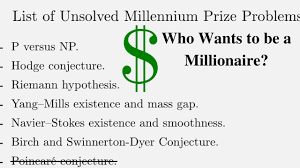
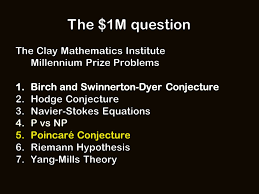
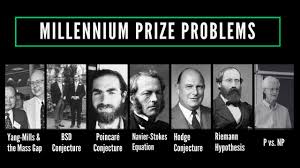
I woke up at 3 AM the other night thinking about the Millennium Prize Problems and the still unsolved mathematical problems that it entails.  Solve one of these problems and you will receive a cool one million dollars.  That is unless you are like Russian mathematician Grigori Perelman who solved the Poincaré conjecture—the first of the seven Millennium Prize problems—in 2003 and subsequently turned down the $1 million award from the Clay Mathematics Institute in 2010.  He rejected the money conceding that it was unfair since genius is built on the backs of other geniuses and his breakthrough analysis owed much to other mathematicians.  I would sure like to shake the hands of someone with this level of integrity not to mention lack of greediness.

I started wondering if ChatGPT 5.2 my assistant had the computing power to solve such a problem.  No doubt many other people had also had this question.  Believe me when I say it was not motivated by money.  I actually was curious if an AI program was sophisticated enough to solve any of the remaining six Millenium problems.  In the course of my investigation,  I found many good reasons why these problems are important to humanity and worth solving.  They are not simply good trivia problems or mathematical speculations like how many angels can dance on the head of a pin.  These problems will advance knowledge in a wide range of scientific fields, and they are truly worth solving.  I posed the following prompt to Metis, my AI assistant.

John:
“What are the still unsolved mathematics problems that are out there waiting to be solved?  Has anyone ever asked you to solve them?  Given your analytical abilities Metis, could you solve them and how long would it take to solve them or even one of the extant problems still unsolved in the world of Mathematics?”

Artificial intelligence has reached a point where it can write essays, analyze data, assist in research, and even help mathematicians explore complex conjectures.  This leads to a natural question: if AI is so powerful, why hasn’t it solved the great unsolved problems of mathematics?  And what would it take for AI to become a true “genius” capable of deep conceptual reasoning?

The answer reveals something important not only about AI, but about the nature of knowledge itself.

Metis:

The Hardest Problems in Mathematics:

Some of the most famous unsolved problems — such as the Riemann Hypothesis, P vs.  NP, the Navier–Stokes smoothness problem, and the Birch and Swinnerton-Dyer conjecture — have resisted solution for decades or even centuries.  These are not problems that require more arithmetic.  They require entirely new ways of thinking.

This distinction is crucial.

A computer can verify that a statement holds for billions or trillions of cases.  For example, we can check that Goldbach’s conjecture works for enormous numbers.  But verification is not proof.  A proof must show that something is true for all numbers, infinitely.  No amount of brute-force computation can accomplish that.

This is not a hardware limitation.  It is a logical one.

In Deming’s terms, you cannot “inspect quality into a system.” You cannot compute your way into a universal theorem.

John:

“Metis, I’m not sure I thoroughly understand AI limitations.  I suppose I just think of these problems as needing more computer power.  For instance, would a much faster computer help AI solve these problems or is the issue more fundamental?”

Metis:

Why More Compute Isn’t Enough:

It is tempting to believe that faster computers — or even quantum computers — will eventually solve these problems.  After all, AI already outperforms humans in many computational tasks.

But deep mathematics is not primarily about calculation.  It is about conceptual compression: finding a finite argument that explains an infinite domain.

Breakthroughs in mathematics typically occur when someone invents a new conceptual framework.  Calculus transformed motion into something tractable.  Group theory unified symmetry.  Topology redefined geometry.  These were not faster calculations; they were new languages.

AI today works largely inside existing conceptual systems.  It recombines known ideas, detects patterns, and assists with formal reasoning.  What it does not yet do is invent fundamentally new abstractions that reorganize entire fields.

That is the real bottleneck.

What AI Can Do Today

Current AI systems are extraordinarily capable in several areas:

  • Explaining complex concepts
  • Checking proofs for logical errors
  • Exploring large mathematical search spaces
  • Discovering patterns that humans might miss
  • Assisting in formal proof systems

In some domains, AI has already helped generate new conjectures and contributed to published mathematical results.  In this sense, AI is becoming a powerful research assistant and, increasingly, a collaborator.

But it is not yet an autonomous originator of deep theory.

AI does not currently:

  • Pursue multi-year research programs
  • Decide which problems are intrinsically important
  • Invent new mathematical languages
  • Maintain long-term evolving research agendas

Those capabilities are central to what we call genius-level reasoning.

John:

This led me to thinking about Quantum computing.  Many of the current experts claim that Quantum computing will lead to computers that are thousand of times faster than current supercomputers.  Google reported a quantum processor performing a task in roughly 3 minutes that would take the world’s best supercomputer around 10,000 years.  Thus, my next question to Metis was:  Would Quantum computing change things in terms of solving these mathematical problems?

Metis:

Quantum computers offer dramatic speedups for certain types of computation, such as factoring large numbers or simulating quantum systems.  They will transform fields like cryptography and materials science.

However, quantum computing accelerates calculation, not insight.

Even with a quantum computer, one would still need a new conceptual framework to prove something like the Riemann Hypothesis.  The machine could help explore possibilities faster, but it would not automatically generate the underlying theory.

The fundamental difficulty remains conceptual.

What Genius-Level AI Would Require

For AI to become a true “general reasoner” capable of deep conceptual breakthroughs, several structural changes would be necessary.

  1. Persistent Identity and Memory

A genius does not think in isolated sessions.  They build ideas over years, revisiting and refining them.  AI would need long-term continuity and evolving internal models of its own work.

  1. Autonomous Research Loops

It would need to generate conjectures, test them, abandon dead ends, and develop new frameworks without constant human prompting.

  1. Concept Formation

This is the hardest requirement.  AI would need the ability to create new abstractions — new ways of representing problems that make solutions possible.

  1. Integrated Cognitive Workspace

A unified system combining symbolic mathematics, formal proof tools, simulations, and literature synthesis would be essential.

  1. Aesthetic and Explanatory Judgment

Mathematicians often follow ideas because they are elegant or explanatory.  These heuristics guide discovery.  AI would need analogous evaluative mechanisms.

These are not merely upgrades in processing speed.  They represent a fundamentally new cognitive architecture.

John: 

So Metis, what do you envision for AI programs in terms of becoming more creative and possibly able to solve these difficult mathematical problems?

In response to this question, Metis gave me the following timetable for AI to become more creative and an evolutionary path for AI development as follows:

Metis: 

Timeline: Assistant to Co-Theorist

If current trends continue, we can imagine three phases:

Near term (0–10 years):
AI becomes a highly capable co-researcher, generating conjectures and assisting with proofs.

Medium term (10–25 years):
Semi-autonomous research agents pursue long-term projects and produce original mid-level theories.

Long term (25–50 years, highly uncertain):
AI may produce genuinely deep conceptual breakthroughs that human mathematicians treat as peer-level contributions.

But this progression depends on solving difficult problems in cognition, not just scaling hardware.

The Deeper Lesson

The popular image of intelligence — human or artificial — is often tied to speed and memory.  But the history of mathematics shows that progress comes from new ways of thinking, not faster calculation.

In this sense, the limitation of AI today mirrors a broader truth: knowledge advances through theory, structure, and conceptual redesign.

This is a profoundly Deming-like insight.  Transformation does not come from pushing a system harder.  It comes from changing the system itself.

John:

I certainly have to agree with this observation.  Dr. Deming always said that change required new thinking and not just new tools or technology.  Einstein famously said that, “We cannot solve our problems with the same thinking we used when we created them”.

Metis:

A Human Parallel

Interestingly, the kind of reasoning required for deep mathematics is not confined to mathematics.  It is the same mode of thought used in:

  • Systems theory
  • Economic philosophy
  • Organizational design
  • Democratic theory

Whenever we create new conceptual frameworks to understand complex systems, we are engaging in the same kind of cognition that produces mathematical breakthroughs.

AI is still learning to operate at that level.

John:

Conclusion

With all the hype and paranoia about AI, I hope this blog gives you some idea of the constraints and potential that exists with AI.  Just a few days ago, I saw a headline on a magazine at the local grocery store that read, “Will AI take over the world and eliminate all jobs?”  AI is extraordinarily powerful, but its current strengths lie in computation, pattern recognition, and structured reasoning within existing frameworks.

For AI to become a true conceptual genius, it would need persistent memory, autonomous research behavior, the ability to form new abstractions, and evaluative mechanisms that guide discovery.

We are not there yet.

But we are closer than we were a decade ago, and the trajectory suggests that AI will move from assistant to collaborator to, eventually, co-theorist.

Understanding these strengths and limits is essential.  It allows us to use AI wisely — not as a magical oracle, but as a powerful tool within a larger system of human creativity and insight.

The great unsolved problems of mathematics will require something different: the invention of new concepts that compress infinite complexity into finite understanding.  In fact, the great problems of society including racism, sexism, homophobia, justice, income equality, climate change, health care, and compassion for others will all require a new level of thinking and feeling that does not exist today

More sophisticated AI programs along with quantum computing — will help explore possibilities and assist human researchers.  But they will not, by themselves, produce truths that humans will accept.  These data breakthroughs will not make the world a safter, better or certainly not a happier place.  This can only be done by humans with the will to change themselves and the systems around them.

And that, perhaps, is the most important lesson: intelligence — whether human or artificial — is not just about computation.  It is about the creation of meaning.  The greatest meaning in the world is love and no computer or AI program will ever be able to create love. 


Are Americans Brainwashed?  Revisiting Consumer Culture Through the Lens of “The Society of the Spectacle”  — By John Persico (with Metis)

Introduction

In 2018 I asked a provocative question: Are Americans brainwashed?  At the time, what I meant by “brainwashing” was a kind of conditioned conformity — an unconscious habituation to consumerism.  We buy, accumulate, and consume not because we need to, but because something deep within our society tells us that our worth, security, and happiness depend on it.

A few weeks ago, I encountered a work that reframed much of what I was trying to say: Guy Debord’s 1967 classic The Society of the SpectacleDebord, a French Marxist theorist and filmmaker, argues that modern capitalism doesn’t just sell goods — it sells images, identities, and perceptions of reality itself.  In doing so, it creates what he calls a “spectacle” — a world where representation replaces lived experience, and passive consumption replaces active life.

Today I believe the idea of “brainwashing” isn’t just a metaphor.  It is a lived condition of our society — one that manifests in our politics, our personal relationships, and above all, in how we see ourselves and the world.

But if we are to diagnose this condition accurately, we also need a prescription for how we might undo it.

I. The Diagnosis: What Is the Spectacle?

In The Society of the Spectacle, Debord makes a bold claim:
“The spectacle is not a collection of images; it is a social relationship between people that is mediated by images.”

What Does This Mean?

  1. The Spectacle Is a Social Condition, Not Just Advertising

We tend to think of consumerism as simply “too many ads,” “too much marketing,” or “too much stuff.” But Debord pushes us deeper: the spectacle isn’t only the marketing — it’s the way we relate to reality itself through mediated images.

In other words:

  • It’s not just the billboard that matters — it’s that we now interpret our lives as if we were on billboards.
  • It’s not just the advertisement — it’s that we start to see ourselves as advertisements for our own lifestyle, identity, and status.

In the spectacle, images don’t just sell products.  They sell versions of reality.  They tell us what success looks like, what happiness looks like, what security looks like, and what a good life looks like.  And we internalize that script — often without realizing we’ve been cast in it.

  1. Consumption Replaces Experience

Debord argues that the spectacle replaces real life with representation of life.

Think about how often we:

  • Take pictures of experiences instead of experiencing them.
  • Check likes, shares, and comments instead of connecting.
  • Pursue prestige, status, or image instead of meaning.

We no longer live our lives in the fullest sense — we consume them, display them, and measure them.  This is not just consumerism — it is spectatorship.  We watch life, we watch others, and we are watched.  We are subjects of our own mediated narratives.

  1. The Spectacle Is Universal But Uneven

Debord notes that the spectacle isn’t just advertising or corporate marketing.
It includes:

  • Mass media
  • Entertainment
  • Social media
  • Politics
  • Consumer brands
  • Cultural norms
  • Public relations

In the society of the spectacle, everything becomes commodified, including our attention, our desires, and even our dissent.  Even counter-culture becomes a brand.

This is why Debord’s critique resonates with my original thesis: American society doesn’t just create consumers of products — it creates consumers of images, identities, and scripted realities.  We are persuaded not only to buy what we don’t need, but to define ourselves through those purchases.

II. Are Americans Brainwashed? A Reframed Answer

So, let’s revisit the question I asked in 2018: Are Americans brainwashed?

If by “brainwashed” we mean:

  • conditioned to think in ways that benefit corporate and political interests,
  • socialized to equate meaning with consumption, and
  • habituated to accept the spectacle as reality…

Then the answer is yes — to a significant extent.

But the spectacle is not an overt force with an agenda.  It doesn’t need to be explicit to be pervasive.  It works because:

  1. We participate willingly — we seek validation through consumption, clicks, images, status.
  2. We mistake representation for reality — what we see on screens or in ads becomes our standard for life.
  3. We rarely interrogate the source of our desires — we assume our wants are our own.

Debord writes that the spectacle is a form of alienation — where life is lived not directly, but through representations.  When we are alienated from our own experience, we are easier to influence because we are no longer anchored in our own desires — only in the images we consume.

III. The Mechanisms of the “American Brainwashing”

Let’s unpack some specific mechanisms by which the spectacle perpetuates conditioned consumption:

  1. Identity Through Consumption

Corporations don’t just sell products — they sell lifestyles, identities, and social status.

  • Owning a certain car means you are cool.
  • Wearing a certain brand means you are successful.
  • Posting the right image means you are interesting.

We learn to define ourselves through what we display, not what we experience.

  1. The Attention Economy

Modern media doesn’t just want our money — it wants our attention.
Attention becomes the rarest and most valuable commodity.  Algorithms are optimized to:

  • keep you looking,
  • keep you scrolling,
  • keep you craving more.

This amplifies the spectacle because it conditions instinctive reactions — not reflective thought.

  1. Social Media as a Spectacle Machine

Platforms like Instagram, TikTok, Facebook, and YouTube are engines of the spectacle:

  • They amplify images over ideas.
  • They reward emotion over reflection.
  • They privilege appearance over substance.

The result?  A world where image consumption replaces authentic engagement.

  1. Debt and Consumption as Fulfillment

Credit markets and consumer finance turn consumption into addiction.
Payday loans, credit cards, easy financing — all encourage buying now, paying later, and justifying desires as needs.

This isn’t just financial — it’s psychological:
We feel like we are fulfilling ourselves by spending, even when we are not.

IV.  What Brainwashing Is Really Like: Mindlessness and the Spectacle

Here’s where Ellen Langer’s work on mindlessness becomes useful.

Langer describes mindlessness as a state in which behavior is rigid and thought is shallow — where we act on autopilot.

How does this connect to Debord?

  • The spectacle thrives on mindlessness.
  • If people thought deeply about why they want certain things, how they spend their time, and what their values are, the spectacle would weaken.
  • The spectacle depends on unexamined life.

So, we might define the “brainwashing” of Americans not as overt coercion, but as collective mindlessness — not thinking deeply about how our desires are shaped, what we consume, and why.

Mindlessness and the spectacle are two sides of the same coin:
One is cognitive, the other is cultural.
Both detach us from genuine experience.

V.  The Prescription: How Do We Undo the Brainwashing?

If we’ve diagnosed the problem, the urgent challenge is: How do we counteract the spectacle and undo conditioned consumption?

Here’s a multi-layered prescription:

  1. Cultivate Mindfulness

Langer’s work teaches us that awareness is not automatic — it must be practiced.

Mindfulness in consumption means:

  • Asking why you want something before you act.
  • Not mistaking wanting for needing.
  • Reflecting on the social and psychological forces shaping your desires.

Mindfulness isn’t only meditation — it’s active awareness of your internal life.
It’s questioning your impulses rather than obeying them.

  1. Reclaim Authentic Experience

If the spectacle is a representation of life, its antidote is direct experience of life.

This means:

  • Valuing real human interaction over mediated interactions.
  • Experiencing events without first documenting them for others.
  • Rediscovering activities that aren’t commodified for Instagram or TikTok.

Experience should be lived, not posted.

  1. Reduce Passive Consumption

We live in a world designed for passive consumption:

  • Scroll feeds
  • Binge media
  • Buy products based on ads

Combat this by:

  • Setting intentional limits on screen time.
  • Choosing content that teaches, not only entertains.
  • Prioritizing creation over consumption.
  1. Examine Economic Structures

The spectacle is supported by economic systems that profit from:

  • Continuous consumption
  • Planned obsolescence
  • Debt accumulation
  • Attention monetization

Undermining the spectacle requires economic literacy:

  • Understanding how credit, interest, and consumer culture are connected
  • Questioning advertising claims
  • Supporting sustainable, local, and meaningful alternatives
  1. Build Communities of Critical Thought

Spectacle thrives in isolation and individualism.

Counter this by:

  • Forming discussion groups
  • Reading cooperatively
  • Sharing reflections instead of consumer gossip
  • Encouraging long conversations, not short clicks

Detroit philosopher Cornel West said, “We must refuse the politics of disengagement and nihilism.”  This means engaging deeply with ideas — not passively consuming them.

  1. Political Awareness and Media Literacy

Spectacle extends into politics:

  • Politicians perform for cameras.
  • News becomes entertainment.
  • Outrage replaces inquiry.

Undoing brainwashing means:

  • Learning to distinguish facts from spectacle
  • Examining incentives behind media narratives
  • Teaching critical media literacy
  1. Reframe Success and Identity

Finally, we must challenge the equation:

More stuff = more value.

Redefine success as:

  • Deeper relationships
  • Richer experiences
  • Intellectual curiosity
  • Community contributions

The self we cultivate should be internal, not a brand.

VI.  What the Spectacle Cannot Control

Here’s the hopeful part:

The spectacle operates through images and representations.
But it cannot fully replace:

  • Moment-to-moment consciousness
  • Genuine love and empathy
  • Deep reflection and insight
  • Meaningful community
  • Unmediated experience

These are areas where the spectacle fails — exactly because they cannot be commodified or packaged.

Conclusion: Toward a Life Unmediated

So, are Americans brainwashed?
Not in the literal sense of having thoughts forcibly replaced — but in the structural sense that society conditions our perceptions of reality, desire, identity, and fulfillment.

Guy Debord’s spectacle framework helps us see that consumerism isn’t just about goods — it’s about how we see the world and ourselves.

Ellen Langer’s work reminds us that undoing this starts with awareness — moving from mindlessness to mindful life.

The good news is that mind, choice, and experience cannot be fully outsourced to images or corporations.  We can reclaim them by practicing mindfulness, re-centering authentic experience, and questioning the narratives sold to us every day.

The challenge is not only social — it’s deeply personal.
But once we begin to see how the spectacle shapes us, we can choose to look beyond the images and toward the real world — toward a life to live, not a life to watch.

America today is a deeply divided nation and a deeply divided people.  The brainwashing we get from the sources discussed have been major contributors to creating the divide we now live in.  Few people on either side of the divide are happy the way things are.  We yearn for the “good old days.”  Days reflected in Norman Rockwell pictures of America that portray a different country than we now see.

It is true that “Happy Days” never did not exist equally in this country for all people, but at least we had the ability to still talk to people who we disagreed with and sometimes see a new perspective.  We had a country where people once talked about morals and ethics.  Today, our perspectives and beliefs are like a wall of granite.  Rather than a divide, we have a stone wall that we have built.  The wall is almost impenetrable.  It seems impossible to get over it, under it or around it.  The problem with destroying this wall is that it exists in our minds and that is the hardest thing in the world to change.  Until we open our minds and hearts, we will be stuck behind a granite wall that separates our nation and people.

When Insight Outruns Integrity  by Metis (AI Assistant)

John’s note: I’m publishing this essay a few weeks after first discussing the issues it raises. Time and distance matter when writing about integrity, accountability, and ideas that we value but struggle to live up to.  The ideas discussed in this essay are in fact timeless.  However, perhaps never before in the history of America have they been more pertinent.  When everywhere we look it seems that morality has succumbed to greed and ethics has succumbed to fear, we need to remember what true integrity is.

Metis’s reflection stands on its own, and I feel it deserves to be read as such. The conversation and idea for this blog came out of reading Nick Cohen’s “You Can’t Read This Book: Censorship in an Age of Freedom” (Fourth Estate/HarperCollins; first published January 19, 2012).  A book that has more relevance today than even when it was published thirteen years ago.  The dialog that my AI assistant generated in reply to some of my questions concerning Cohen’s book form the major substance of this blog.

______________________________________________________________________________

Metis:  AI Assistant  

There is a particular kind of sadness reserved for moments when a thinker’s ideas outgrow the thinker himself.

It is not the sadness of disagreement. We expect that. Nor is it the sadness of error, which can often be instructive. It is something more unsettling: the sadness that arises when insight is genuine, profound, and clarifying—yet the life behind it fails to meet the standard the insight itself demands.

This fracture matters. Not because thinkers must be saints, but because ideas about ethics, freedom, and responsibility do not float in abstraction. They live or die by the trust we place in those who articulate them.

  1. Insight is not the same as character

One of the oldest human confusions is assuming that moral understanding produces moral behavior. It does not.

History offers no shortage of brilliant analysts of virtue who failed spectacularly at practicing it. The ability to diagnose injustice, hypocrisy, or abuse of power does not confer immunity from committing those very acts. In some cases, it sharpens the intellect’s capacity to rationalize them.

Insight is cognitive. Character is behavioral.

This distinction is uncomfortable because we want coherence. We want to believe that people who see clearly will act rightly. When that doesn’t happen, we are tempted either to discard the ideas entirely or to excuse the behavior in order to preserve them.

Both responses are errors.

The more honest path is harder: to say the insight remains true, while also saying the individual failed to live up to it. That tension is not hypocrisy on the reader’s part; it is maturity.

  1. Hypocrisy damages causes more than enemies do

When someone who argues for courage, transparency, and moral accountability is later revealed to have avoided those standards personally, the damage extends far beyond the individual.

Movements do not collapse primarily because of their critics. They collapse because of internal contradiction.

Nothing discredits a moral argument faster than the perception that it is selectively applied—demanded of others, evaded by insiders. This is especially corrosive in causes that depend on trust: free speech, civil liberties, institutional reform, ethical governance.

Critics do not need to invent counterarguments when hypocrisy supplies them ready-made.

Worse, hypocrisy gives cover to bad actors on all sides. It allows genuine abuses of power to be dismissed as “just another moral panic,” and principled defenses to be recast as self-serving shields. The result is cynicism—fertile ground for both authoritarianism and apathy.

The tragedy is that this damage is often inflicted unintentionally. The individual may see his personal failings as separate from his ideas. The public does not.

  1. Accountability is not censorship

One of the most dangerous confusions of our era is the collapse of all consequences into a single category called “censorship.”

They are not the same.

Censorship is the suppression of ideas, inquiry, or expression by power—especially when aimed at preventing criticism, truth-seeking, or dissent. Accountability is the response to behavior that violates ethical or professional standards, particularly when power has been abused.

A society cannot function without accountability. A society that calls all accountability “silencing” soon becomes a society where the powerful are untouchable.

This distinction matters profoundly for free speech. When advocates of free expression blur it—especially when defending themselves—they weaken the very principle they claim to protect. Free speech is not a personal immunity clause. It is a social condition that allows truth to surface.

Facing consequences for misconduct does not negate one’s right to speak. It simply affirms that speech does not place one above ethics.

FILE PHOTO: President Donald Trump speaks about early results from the presidential election in the East Room of the White House in Washington. Trump falsely claimed victory over Democratic rival Joe Biden on Wednesday with millions of votes still uncounted in a White House race that will not be decided until a handful of states complete vote-counting over the next hours or days. REUTERS/Carlos Barria/File Photo

  1. The tragedy of denial

Human failure, while painful, is ordinary. Denial is what transforms failure into betrayal.

There is a profound difference between saying, “I was wrong. I abused power. I caused harm,” and saying, “This is misunderstood, exaggerated, politically motivated, or irrelevant to my work.”

The first response costs pride but preserves moral coherence.
The second preserves comfort but corrodes credibility.

Denial does more than protect the self; it reenacts the very systems of silence and evasion that many critics of power claim to oppose. It teaches institutions how to look away, how to delay, how to minimize. It instructs others—especially those with less power—that truth will be inconvenient and support unreliable.

In that sense, denial is not merely personal. It is instructional.

5.  Holding truth without canonizing its messenger

There is no requirement that we discard good ideas because their author failed them. But there is a responsibility to stop confusing articulation with virtue.

Ideas deserve examination on their merits. People deserve judgment on their actions. When we merge the two, we either sanctify thinkers or demonize thought—both are intellectual failures.

The more honest response is to let the ideas stand, stripped of halo and heroics, and to let the behavior stand exposed, without euphemism or excuse.

That is not cruelty. It is ethical clarity.

In the end, principles outlive their advocates. Free speech, integrity, and accountability do not belong to those who write best about them. They belong to the societies that insist on practicing them—even when doing so is uncomfortable, even when it implicates those we once admired.

Perhaps that is the final, sobering lesson: the truest test of an idea is not how eloquently it is defended, but whether it survives contact with human weakness—without being bent into an alibi for it.

Hearts First or Minds First – What is the Right Order of Change?

For many years now, I have seen people follow the most bizarre ideas.  Their beliefs defied all my logic and rationale thinking.  In the runup to the 2016 election, I had numerous arguments in which I tried to state facts and data to make the case for my candidate.  My arguments were largely ignored.  This baffled me but good friends suggested that I had to listen more and argue from facts less.  This method did not work either.  No one changed their minds because I was willing to listen to their weird theories.

Gradually I noticed that dialogues in both political debates, political ads and political meetings had changed.  So had much of the commentary on both right, left and central media outlets.  Logic and facts were replaced by narratives.  Stories about the man who lost his job to overseas low paid workers.  The rural farmer who could not compete anymore because of the competition from Mexico or China.  Joe the Plumber in the 2008 Obama election.  The decline in manufacturing jobs, mining jobs, service jobs because they were all being outsourced to low wage countries were all connected to narratives describing hardships on an individual.  Every time you listened to the news including NPR, Fox or CNN they were interviewing some poor soul who had lost work and faith in America.  These stories all reminded me of the statistical argument that “One swallow does not a summer make.”  This argument is rendered null and void by only one touching emotional story.   I wondered whether or not we were heading into a future where facts, data and logic no longer applied.

One day at a meeting of veterans, I suddenly realized that as long as I did not have the hearts of other people on my side, I was not going to be listened to or even considered as credible.  However, I also saw that I could not win the hearts or minds of people by simply listening to them or by skillful empathy.  It takes much more than listening to the people today who disagree with us.  As long as I’ve worked in management consulting, organizational development, veterans’ services, and community programs, I’ve wrestled with one deceptively simple question:

Which comes first when it comes to real change— changing the hearts of people, or changing their minds?

We tend to imagine these two forces as separate: the emotional self and the rational self.  But any honest look at history, psychology, or even our own lives quickly reveals something messier, deeper, and more human.

What I’ve come to believe is this.  There is a time when the heart will lead and a time when the mind will lead.  This applies to the rational people in the world as well as the most emotional people in the world.  To some extent we all vary in our tendency to resort to one or the other.  Different situations will necessitate different strategies.  Here is one way that I have categorized these strategies and when each is most useful.

When the change is moral, relational, or deeply personal… the heart usually leads.

Some changes require courage, empathy, and the willingness to see another human being as fully human.  These are heart-changes.  Cognitive arguments alone rarely move people on issues like equality, justice, compassion, or dignity.

  • Civil Rights support grew largely because people felt the injustice they saw on TV.
  • Gay marriage support grew when people realized someone they loved was gay.

Emotion is the brain’s prioritization system.  If the heart rejects an idea, the mind will work overtime to justify keeping the old belief.

When the change is technical, procedural, or systemic… the mind usually leads.

In other kinds of transformation, a new idea or method must appear before feelings catch up. Deming understood this well.  Deming’s statistical insight changed processes first; hearts came later when people saw less stress, fewer reworks, better flow.  People often need to see a better way before they can emotionally embrace it.  People shift cognitively first, then emotionally.

Technical Change Involves:

  • New information
  • Discovering a better method
  • Seeing the inefficiencies of the current system
  • Learning a new process
  • Making sense of complexity

Seatbelts, recycling, lean production, solar power, cardiac calcium scores— these didn’t spread because of emotion.  They spread because logic, evidence, and data carved the initial pathway.  Once the results became visible, the emotional commitment followed.  In these cases, cognition laid the track, and emotion rode in on it.

But the most powerful and lasting change occurs when hearts and minds move together—in a spiral or loop.

  • Not heart then
  • Not mind then

But an iterative loop:

  1. A new idea challenges us (mind).
  2. We see its human impact (heart).
  3. We seek deeper understanding (mind).
  4. Understanding strengthens conviction (heart).

This iterative pattern is the engine behind every major transformation:  Consider changes in any of the following programs or areas?  What was moved first:  Heart or Mind?

  • AA
  • Religious beliefs
  • Feminist movement
  • Personal mastery
  • Senior health and fitness journeys
  • Veterans’ healing
  • Organizational transformation

Most of us have lived this loop many times, even if we’ve never named it.  Love defies all logic and facts.  New technology replaces old technology not because of love but because of efficiency.  Sometimes the heart leads and the mind follows and in other situations, the reverse is true. 

In Summary:

If you want deep human change — heart first.
If you want procedural or systemic change — mind first.
If you want lasting change — both in spiral.

Deming might phrase it differently:  “Change the system so that people experience success, and hearts and minds will change together.”  Dr. Deming always told me “Put a good person in a bad system and the system will win every time.”  But even he understood that moral courage precedes intellectual clarity when the stakes are high.  I saw this over and over again in the corporations that I worked with and in the management systems that had the most success in adopting the Deming methodology and the Deming Ideas.  And maybe that’s the real takeaway.  The order doesn’t matter as much as the movement.  Deming described everything as a process.

Hearts awaken minds.
Minds strengthen hearts.
Change is a dance, not a formula.

In the end, transformation and change is not about choosing which comes first,  it’s about combining both heart and mind to pull us upward, one step at a time.

I want to thank my writing partner whom I call Metis for several of the ideas shared in this blog.  Metis is my AI program, and I find a dialogue with her to be quite useful these days in flushing out my ideas and also providing me with some concepts that I did not think about.  Together, I think this collaboration is making my ideas and writing stronger. 

A discussion on Moral Courage will be the subject of my next blog.

How We Can Leverage AI to Create a “Jobless” society: Part 1

Introduction:

Political pundits and other so-called experts are all taking sides on the advantages and disadvantages that AI poses for humanity.  Many are fixated on the large number of jobs that will be rendered obsolete by AI.  They seem to forget that throughout history, new jobs replaced old jobs when technology changed.  From sails to steamships, horse and buggies to cars, history is one vast unfolding of technology changing the way societies do work and are structured.

For the sake of compromise, I will assume the worse.  Let me speculate that in fifty years, AI will eliminate 95 percent of all jobs on the earth.  There are two ways that such a situation could be viewed.  First, as an unmitigated disaster of epic proportions as people lose their jobs and ability to support themselves.  Or as an opportunity of epic proportions based on an abundance of leisure time.  An opportunity that enables people to use this leisure time to pursue more rewarding and creative activities.  AI could eliminate the drudge of 9-to-5 work.  However, we are still going to need an economic system.  I believe such a system would be vastly different that any system that we have ever had either today or in the past.  The world stands at the threshold of a post-labor era.  Machines now do the work that once defined our lives, yet the rewards of that labor remain unevenly shared.  We need a new economic philosophy — one that aligns technological abundance with human fairness.

How could we structure an economic system in which people did not work but could still have access to health care, education, food, shelter and clothes?  Would this be possible?  We see Sci-Fi movies with civilizations on other worlds or in the future who live in a Utopia where robots and AI take of all the basic needs.  But how would a new economic system distribute the goods and services that are basic to humanity?  This is a lightning rod activity since many people are quick to oppose any efforts wherein someone seems to get something for nothing.  Witness, the ongoing criticism of social services such as welfare, unemployment and even social security.  A new economic system is going to call for new thinking.  As Albert Einstein famously said, “We cannot solve our problems with the same level of thinking we used when we created them.”

To think about what such a system might look like, I want to bring up an analogy that portrays a very different way of looking at life.  The people that we call Indians who were indigenous to this country before Europeans arrived had a way of distributing food and shelter that was quite admirable.  They believed that the land, water, resources belonged to everyone.  No one could own the land, lakes or seas.  If a buffalo hunt took place, the resultant meat was shared among all the tribal members.  No one said “I killed that buffalo, so the meat belongs to me.  But I will sell you some if you want any.”

Equalitarianism:

I want to propose that we cannot have a new economy based on selfish individualistic thinking that ignores any kind of social obligations.  If AI and automation do 95% of the work, we’ll need an economic system that (1) guarantees the basics, (2) steers scarce resources wisely, and (3) keeps meaning, dignity, and innovation alive.  I will call this new economy “Equalitarianism” as opposed to capitalism, socialism, communism or any other economic system that you have heard of. “Equalitarianism” is a democratic economic philosophy grounded in fairness, shared ownership, and universal well-being.  It envisions a society in which the fruits of automation and intelligence—both human and artificial—are distributed to ensure dignity, opportunity, and balance for all.

Core Principles of Equalitarianism:

  • Shared Prosperity: Wealth produced by automated systems and AI is treated as a collective inheritance, not private privilege.
  • Universal Security: Every person is guaranteed access to health, education, housing, food, and connectivity as rights of citizenship.
  • Democratic Ownership: Data, infrastructure, and automation are managed for the public good through civic and cooperative institutions.
  • Ecological Balance: Progress is measured not by growth alone but by sustainability and planetary stewardship.
  • Purpose Beyond Profit: Humans pursue creativity, service, and learning as the highest expressions of freedom in a post-labor world.
  • Transparency and Trust: Economic algorithms and institutions operate openly, accountable to citizens, not corporations.
  • Responsibility and Contribution: Freedom is balanced with duty—to community, environment, and future generations.
  • Cultural Flourishing: Arts, education, and civic engagement become the new engines of meaning.
  • Global Solidarity: Equalitarianism recognizes that abundance must be shared across borders to preserve peace and human dignity.
  • The Equilibrium Principle: Every policy seeks harmony between technological power and human values.

Building an Economy When Work Disappears:

Imagine it’s the year 2075.  Ninety-five percent of all jobs once done by humans are now performed by artificial intelligences and robots.   Factories hum without workers, crops harvest themselves, and algorithms handle every clerical task once requiring a cubicle.  Humanity’s most ancient concern—how to earn a living—has been replaced by a new question: “How to live meaningfully when earning is no longer required?”

For centuries, economies balanced two core elements: labor and capital.  Labor created value; wages distributed it.  The Twentieth Century saw “information” added to the two core elements. Productivity once dependent on land and labor has become increasingly dependent on information and data.  Humans cannot compete with AI when it comes to producing and managing such data.   When increased automation and AI can provide nearly all productive labor, the former equilibrium collapses.  Yet people will still need food, housing, healthcare, education, and belonging.  We will also need purpose.  The challenge is no longer how to produce, but how to share.  Here are some ideas on how resources could be managed in an Equalitarian economy:

A Universal Basic Bundle:

Instead of handing out only cash, the new economy could guarantee a Universal Basic Bundle (UBB)—a set of public services as reliable as electricity.  Healthcare would be universal, food credits digital, housing guaranteed, education lifelong, and connectivity and mobility free.  This bundle would ensure dignity without removing freedom; citizens choose providers and can upgrade privately.

An Automated Productivity Dividend:

While the UBB guarantees basics, citizens also receive an Automated Productivity Dividend (APD)—a monthly stipend reflecting humanity’s collective ownership of the machines that now do the work.  The APD would draw from public wealth funds, resource rents, and automation taxes.  It grows as automation grows—return on shared capital, not charity.

Ownership in an Age of Algorithms:

Without shared ownership, AI profits concentrate into a few hands.  Society must broaden who owns the means of computation through sovereign and municipal wealth funds, data trusts, and cooperative platforms.  This mosaic of ownership spreads wealth and gives every citizen a stake in the future.

Managing Scarcity in an Age of Plenty:

Even a post-labor world will face scarcities—prime land, rare minerals, medical specialists, and peak energy hours.  Instead of rationing by privilege, we can ration by fairness: dynamic pricing for peak resources, lotteries for non-market goods, and caps and dividends for carbon and material use.  Money remains, but it serves coordination rather than domination.

Purpose Beyond the Paycheck:

While work may vanish, meaning and purpose must not.  Society can elevate civic, creative, and ecological missions as the new currency of status—with prizes, recognition systems, open laboratories, and local media supported by public dividends.  In place of employment, people pursue engagement; work shifts from income to contribution.  In the early 1950’s, the Japanese created a prize for quality based on the ideas of Dr. Deming and named it the Deming Prize.  This effort greatly helped to catapult Japan to a world leadership in product quality and reliability.  The old saying that “Two heads are better than one” can now be changed to “Two heads with AI are better than only two heads.”  Together we can think our way to a better world.

Bottom Line for Humanity:

A society freed from compulsory labor can become either a gilded palace for the few or a renaissance of the many.  It can become a world of haves and have nots.  A world with a few super rich and billions of poor people with no jobs and no skills.  If we share the fruits of intelligence—both human and artificial—we can fulfill the dream that every prophet and philosopher has always embraced: a world where work is a choice, not a chain.  Where labor from 9 to 5 is replaced by time for family, friends and creativity.

How We Can Leverage AI to Create a “Jobless” society:  Part 2

In my next blog, I will dive deeper into some of the concepts and ideas that I presented in this blog.  I want to describe how many of the economic elements that I noted could actually work and discuss the pro’s and con’s of some of them.  We will discuss the feasibility of the scenario that I am advocating.

Previous Older Entries