Manufactured Drama: TV’s Phony Marriage to Reality

Update:   Oct 5th, 2023

I wrote the following blog ten years ago.  I think it still holds its validity despite the fact that some of the named TV shows are no longer on the air.  My general premises remain accurate.  

____________________________________________________________________________________________________

I get a lot of strange looks from people when I tell them that I do not have a TV set.  Furthermore, I emphasize that I would not watch TV if I did have one.  Many people then apologize and tell me that they agree with me and that TV is really bad but that they only watch the “good” stuff.   Pause!  Inevitably, this reasoning is followed by: “You really should watch:  The History Channel, The Discovery Channel or PBS.  There are some good shows on these channels.”  They generally ignore my explanation that I can catch any “Good Stuff”  on the Internet via Netflix On-Demand or even direct at the various channels where I can access archives of previous shows.  Thus, I see what I want to see, when I want to see it and without commercials or other idiotic distractions.

Of course, there is the problem that I slowly and inexorably become out of touch with the “mainstream” culture.  As new versions of “Survivors, X-Factor, American Idol, Pawn Wars, Game of Thrones, and NCIS come on, I have no clue as to what these shows are about or who stars in them or why I should watch them.  I feel like a person born in the 18th century who is suddenly catapulted into the 21st Century.  My clothing, concepts, ideas and knowledge of the current zeitgeist marks me as a “Stranger from a strange land.”  I am a Stranger in the midst of all these TV viewers with their myriad diaspora of shows each complete with followers, devotees and addicts.  God forbid I say anything negative about the Teutuls or Duck Dynasty or Holly Boo Boo or SNL.  I must be old or ancient or senile.  How could I miss the beauty and aesthetics of these shows?  (By the way, I will not include sports shows in this blog, since they merit a topic all by themselves.)

Nevertheless, for hours at a time, I am frequently obliged to watch TV.  It happens this way.  Karen and I go to visit a relative, friend, daughter etc.  We sit down in the living room in front of a MEGA 200 inch TV complete with loudspeakers, amplifiers, megaphones and surround sound.  We talk for a few minutes and then the TV gets turned on.  In the next three to four hours, we see snippets of over a ZILLION shows.  My mind starts to reel from the paucity of knowledge and useless amount of information that is being directed at me from the BOOB tube.  I am gracious and do not say anything negative about TV.  Fortunately at some point, I am saved.  Either it is time for dinner, time to leave or time to go to bed.  In either case, my brain is overdue for “time-out” from TV land.  The good part of this travail is that I am now current again with 21st century culture. I now know what moves the hoi polloi.  I can converse with some degree of discernment on the relative merits of Simon Cowell as a judge versus Kelly Rowland.  I can reminisce with those who mourn the death of the Sopranos or Breaking Bad.  Furthermore, I have new content with which to write my next 1000 blogs condemning the inanity that I have somehow managed to survive before my brain totally rotted.

What have I learned from watching 21st Century TV?   TV today is all about “Manufactured” drama.  But you may argue, isn’t most literature and entertainment about drama?  Circus acts, war stories, murder mysteries, Shakespeare, opera, cartoons, police stories, sitcoms, sports and almost any other form of entertainment that one can think about all involve drama.  How is TV today different from “traditional” drama?  Let’s start by looking at the definition of the words we are using here:

Drama: 

1: a:  a composition in verse or prose intended to portray life or character or to tell a story usually involving conflicts and emotions through action and dialogue and typically designed for theatrical performance.

    b:  a movie or television production with characteristics (as conflict) of a serious play; broadly :  a play, movie, or television production with a serious tone or subject <a police drama>

Manufactured:

1:  to make into a product suitable for use

2: a:  to make from raw materials by hand or by machinery

     b:  to produce according to an organized plan and with division of labor

     c:  prefabricate <a manufactured home>

To get a better idea of what I am talking about, I will use a concrete example.  Let’s look at Shakespeare’s Macbeth and compare it to the TV show X-Factor.  Macbeth was a story about a fictional King who may have been meant to resemble in part a real Scottish king of bygone times.  The play’s main plot involves the desire of Macbeth to become King and the greed and depths of depravity that can bring someone to immoral acts to achieve their goals.  The themes are powerful because we can all identify with them.  The story is fictional, the lines are made up, and the characters are drawn from Shakespeare’s fertile mind.  Nevertheless, nothing seems contrived or artificial about this play.  The themes of power and ambition are strong because they resemble many such struggles throughout history.  In fact, all of us can imagine wanting something so bad, that we might even consider unethical acts to obtain it.  Macbeth becomes an icon for the individual who will sacrifice their morals and ethics for ambition.

X-Factor is a TV “reality” show in which singers and entertainers compete for a chance to win a grand prize. The format has one hundred contestants battling it out for just twenty-four places.  Each of four judges gives their favorite contestants one of their six seats.  The drama of competition is heightened by having four judges who alternately select and then reject the very people they selected.

The X-Factor producers are forced to create cruel twists to the competition because viewers are becoming immune to sob stories, a psychologist has claimed.  Chartered psychologist Dr. Rick Norris believes that program makers have to keep shocking the audience to keep up high viewing figures.  http://www.dailymail.co.uk/health/article-2449808/X-Factor-producers-deliberately-creating-cruel-twists-claims-psychologist.html

Watching or reading Macbeth evokes themes of morality, justice, greed, ambition, loyalty and ethics.  Watching X-factor evokes themes of contrived, fake, phoney, pseudo, cruel, malicious and obnoxious behavior.  Watching Macbeth involves strong emotions wherein I can reflect on the morals that must mitigate behavior and action in the real world.  Watching X-Factor, I am appalled by the fake melodrama and artificial behaviors of the judges and contestants.  While Macbeth has no claims to be “reality” drama, TV shows like X-Factor seek to portray themselves as real.

The feeling I get from watching most current TV shows can be summed up as “CONTRIVED and PHONY.”  Real people don’t behave like TV people do.  Real people work 9 to 5 jobs and don’t live on Fantasy Island or spend their days at Pawn Shops.  However, real people can be coerced by TV producers to act like “drama queens.”  A few examples will illustrate my point.  The following is from a graduate thesis:  Behind the Scenes: Uncovering the structures and manipulations of Tabloid Talk Show Workers, Guests and Audiences.  – By  Kelly Thompson Losch Deshotel

The producers have the ability to persuade and intimidate guests into any behavior they feel is beneficial to the program’s ratings. One associate producer (AP) tells the guests that they will be portrayed as cowards if they do not defend themselves during the last segment when the studio audience is given the opportunity to voice opinions or ask questions about the guests on the program. “Get mad, get out there into the audience, they’ll respect you more if you fight back,” this AP exclaims.  Directly following the commercial break, the guests jump out of their chairs and dart into the audience after every audience comment.

The next example is from Entertainment News and is about the Survivors.  In a question about the “reality” of this show the author states:

We’re not too sure about the “pure” aspect of the show, especially since nothing on Survivor is as real as you want it to be. The contestants are filmed as they walk to Tribal Council along jagged rocks and beautiful oceanic views, but as a matter of fact, the contestants merely walk about 500 meters before they get picked up by a production vehicle with blacked-out windows. The contestants are not allowed to talk during this one hour drive to Tribal Council and if they arrive at the Tribal Council destination before dusk, they have to wait outside of the Tribal Council area until the atmosphere is perfect for filming. Several contestants have complained about this fact in the past and have revealed that the time spent at Tribal Council sometimes stretched into the early hours of the next morning to get all the dialogue pinned down.

 With very little research it can be shown that almost all of the drama on TV is “Manufactured.”  There is little real about “reality” TV and there is even less about TV that can be said to have any ethical, moral or spiritually redeeming value.  TV was becoming a vast wasteland in the sixties and it has continued its march towards degeneracy, vulgarity, and mediocrity with little or no resistance from the vast millions of viewers in TV land.   In search of a means of transcending the banality and ordinariness of everyday existence, millions of Americans have become addicted to fake synthetic versions of life that seem to offer something missing in their own lives.  Turn on, Tune in and Drop out.  Americans have added TV to drugs in their search for an alternate reality.   The reality on TV is the reality of dreams while the everyday reality that most TV addicts lead is one of frustration, monotony and boredom.

 Get a life.  Turn the TV off.  Use your imagination.

Time for Questions:

What do I have against TV?  Why criticize something that brings so much joy to so many people’s lives?  Did a TV fall on me when I was young and forever prejudice me against the BOOB tube?  What would happen to America if people spent less time watching TV?  What if instead of 36 hours per week that people spent watching TV, they only spent 18?  What if we demanded an end to the fake reality that is a daily occurrence on TV?  What if TV was more informative and educational and less exploitative and demeaning?  How much TV do you want your kids to watch?  Do you think most images and characters on TV should be role models for others?

Life is just beginning.

Why You Should Believe Nothing You Read or Hear in the News!

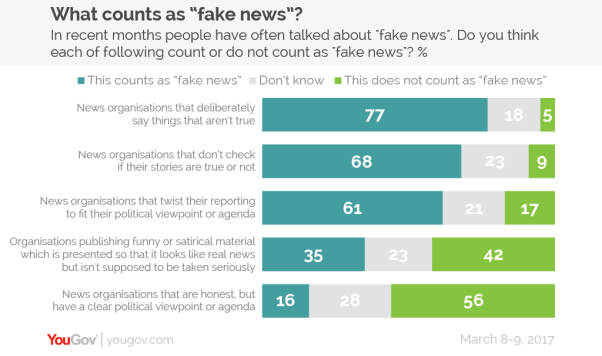
news-icons (1)I want to make an argument as to why most of what you hear or read is biased, prejudiced and based on narrow minded thinking.  Most of what you read will not lead you to the truth but will take you down a path away from the truth.  My argument will also apply to what you are about to read.  I am biased, narrow minded and prejudiced.  So why should you read or listen to what I am about to write?  Well, let’s start at the beginning.

Like many of you reading this, I consider myself somewhat of a truth seeker.  Although, I believe few if any “absolute” truths actually exist.  Nevertheless, I read a wide variety of books and magazines.  I listen to many different sources including TV, Radio, Podcasts, TED Talks, documentaries, and YouTube videos.  I attend training sessions, conferences, and talks by noted experts whenever possible.  I also scan many different news sources each day to find a variety of perspectives concerning political events and popular news.  My friends consider me well informed and very knowledgeable on a wide range of subjects.

maxresdefaultI have been seeking the truth or what might pass as “truth” for most of my 75 years on this earth.  I was considered the “smartest” guy in the room in many of my high school and college classes.  The authorities or those that are supposed to be good judges of truth and knowledge gave me two undergraduate degrees, one master’s degree and a Ph.D. Degree.  Once upon a time, I belonged to many different professional associations and was also a member of MENSA, the so-called high IQ society.  None of my qualifications or associations prepared me any better than anyone else upon this earth to find the TRUTH.  Like most of you, I am still looking and hoping that the “Truth will set me free.”  If only, I can find it.
Fake news-01

A few days ago, I noticed seven different editorials on Google News concerning the Ukrainian War.  Each of the editorials was written by a professional journalist and each espoused some very critical ideas.  Some of these ideas would carry weight with readers and no doubt influence public opinion for good or bad.  Six of the journalists’ names were listed and one was not.  Now most stories we get in the news whether on TV or print are written by journalists.  Less frequently it will be some “policy” expert or high-ranking government official who will be doing an opinion piece or some type of interview.

I started to ask myself a few questions:

  • What are their professional qualifications?
  • How much influence or weight do these journalists carry?
  • How much slant or bias do these journalists carry?
  • Are journalists and the media really qualified to tell us what we should or should not be doing?

I looked up each of the journalists to see what their qualifications were.  Basically, they were professionally trained journalists and most of them had extensive experience in foreign relations.  Neither of these attributes makes them an expert on the Ukraine but it is conceivable that they might have more knowledge in some areas of foreign policy than the general public.  Again, more knowledge does not mean less biases. Here are the news sources and brief bios for the six journalists I researched:

The Washington Post- Liz Sly and Dan Lamothe

Liz Sly (born in the United Kingdom) is a British journalist based in Beirut.  She is currently a correspondent with The Washington Post covering Syria, Lebanon, Iraq and other countries of the Middle East.   She graduated from the University of Cambridge.

Dan Lamothe is an award-winning military journalist and war correspondent.  He has written for Marine Corps Times and the Military Times newspaper chain since 2008, traveling the world and writing extensively about the Afghanistan war both from Washington and the war zone.  He also has reported from Norway, Spain, Germany, the Republic of Georgia and while underway with the U.S. Navy.

NPR – Greg Myre

Greg Myre is an American journalist and an NPR national security correspondent with a focus on the intelligence community.  Before joining NPR, he was a foreign correspondent for the Associated Press and The New York Times for 20 years.  He reported from more than 50 countries and covered a dozen wars and conflicts.

The Wall Street Journal – David Henninger

Mr. Henninger was a finalist for a Pulitzer Prize in editorial writing in 1987 and 1996 and shared in the Journal’s Pulitzer Prize in 2002 for the paper’s coverage of the attacks on September 11. In 2004, he won the Eric Breindel Journalism Award for his weekly column.  He has won the Gerald Loeb Award for commentary, the Scripps Howard Foundation’s Walker Stone Award for editorial writing and the American Society of Newspaper Editors’ Distinguished Writing Award for editorial writing.  He is a weekly panelist on the “Journal Editorial Report” on Fox News.

The Atlantic – Eliot Cohen

Eliot Asher Cohen (born April 3, 1956, in Boston, Massachusetts) is an American political scientist. He was a counselor in the United States Department of State under Condoleezza Rice from 2007 to 2009.  In 2019, Cohen was named the 9th Dean of the Paul H. Nitze School of Advanced International Studies (SAIS) at Johns Hopkins University, succeeding the former dean, Vali Nasr.  Before his time as dean, he directed the Strategic Studies Program at SAIS.

Cohen was one of the first neoconservatives to publicly advocate war against Iran and Iraq.  In a November 2001 op-ed for The Wall Street Journal, Cohen identified what he called World War IV and advocated the overthrow of Iran’s government as a possible next step for the Bush Administration. Cohen claimed “regime change” in Iran could be accomplished with a focus on “pro-Western and anticlerical forces” in the Middle East and suggested that such an action would be “wise, moral and unpopular (among some of our allies)”

The New York Times – Cora Engelbrecht

Cora Engelbrecht is a contributor to the RIGHTS blog.  She recently received her BA in nonfiction writing from Wesleyan University, and now works in New York as a freelance writer, researcher, and graphic artist.  Her interest for human rights and global conflict stems from her time spent researching and writing abroad in Tanzania and South Africa.

rathom-trench-fb

I next turned to the question of how much influence do journalists carry?  The story of John Revelstoke Rathom (1868–1923) is very informative in this regard.  He was a journalist, editor, and author based in Rhode Island at the height of his career. In the years before World War I, he was a prominent advocate of American participation in the war against Germany.

c9713250-e5eb-46c7-8ea9-2810435084fa-9781643139364“Rathom campaigned for the U.S. to enter World War I in support of the British.  Under his management, the Providence Journal produced a series of exposés of German espionage and propaganda in the U.S.  In 2004, that same newspaper reported that much of Rathom’s coverage was a fraud: ‘In truth, the Providence Journal had acquired numerous inside scoops on German activities, mostly from British intelligence sources who used Rathom to plant anti-German stories in the American media.’” –  Wikipedia

It seems logical to assume that since we did enter the war and since the Brits did go out of their way to bias American policy that the efforts of Rathom and others had a major influence on our decision to enter the war on England’s side. America was persuaded by the media that we should enter the war when there was substantial public opinion to stay out of the mess that Europe was in.  My own reading of WW I shows a totally different scenario than from WW II.  I have little doubt that we should have entered the war against Hitler.  However, the picture from WW I is quite different.  I think that each side had equal claims to legitimacy for their war efforts.  But the media heavily influenced our eventual entry into the war.

Next I wanted to see if anyone had opinions about the bias or prejudices that the typical journalist might have.  I found the following comment in a recent article by Politico, “Why Journalists Love War”, by Jack Shafer  03/17/2022

“NBC News reporter Richard Engel, a veteran foreign war correspondent, dropped a tweet a few days after the war began that appeared to lament that U.S. forces hadn’t strafed the huge Russian convoy approaching Kyiv, seemingly unimpressed that such a strike might launch World War III.  Reporters didn’t call in bombers at White House press secretary Jen Psaki’s Monday briefing, but the tone of their repeated questions almost made it sound like they were advocating a no-fly zone and fresh jets for Ukraine.  And the New York Post left no ambiguity about where they stood with its super-partisan “Fight Like Zel” cover headline.”

“The overwhelming majority of U.S. journalists have taken a more subdued position on the war, identifying with Ukraine against the aggressor Russians, but stopping just short of cheerleading. Even so, journalists can’t hide the seductive draw of the bloodworks.  They can’t help themselves. They love war.”

Photojournalist,Documenting,War,And,Conflict

Of course, this is only one opinion.  However, it fit well with my observations.  I have noticed every day calls by journalists for increased efforts to support Ukraine that might well lead to a Nuclear War.  As I read these brash comments, I sit wondering where were the calls to intervene in Nigeria, Rhodesia, Yemen, and Cambodia?  Why are the news outlets pushing a narrative that implies world disaster if the Ukraine falls to Russia?

Listen please!  I would like to see the Ukrainians kick all the Russian asses back to Siberia or some other cold place.  However, I am not willing to start a Nuclear War over the Ukraine.  There have been too many missed opportunities by the West during the past five years that would have avoided the present war.  What is it that brings out the desire to have a nuclear confrontation with Russia?  Nothing I can see except a Democratic Party that needs to look tough and a cadre of journalists pushing a narrative for more and more support by our country for a nation that we do not even have a treaty with.

“The link between safety and ethics may not be immediately obvious, but the same ambitions and economic factors that pressure inexperienced and poorly prepared freelance journalists to enter battle zones also pressure journalists to present the news as they think that their paymasters most want to hear it.”  — https://ethicaljournalismnetwork.org/ethics-safety-solidarity-journalism — Originally published as a chapter of “Conflict reporting in the smartphone era – from budget constraints to information warfare”

A book that I am reading is “The Science of Fear” (2008) by Daniel Gardner.  The following  insight by Gardner is quite pertinent to this discussion.

9780226567198“The media are among those that profit by marketing fear – nothing gives a boost to circulation and ratings like a good panic – but the media also promote unreasonable fears for subtler and more compelling reasons.  The most profound is the simple love of stories and storytelling.  For the media, the most essential ingredient of a good story is the same as that of a good movie, play or tale told by a campfire.  It has to be about people and emotions, not numbers and reason.  Thus, the particularly tragic death of a single child will be reported around the world while a massive and continuing decline in child mortality rates is hardly noticed.” — Pg. 294
Ever since the decline of print news and the rise of the internet, the media has become a cesspool of click bait headlines, gross news reports about inane subjects, media celebrities touted as royalty and increasingly bizarre stories designed to spread fear.  There is no more morality or ethics in the news than there is in a cartel, mafia, or mega-corporation.  It is all about the money and there never seems to be enough these days.  Is the media biased is actually a very stupid question.  Right, left, central it does not matter.  They all have one agenda and that is to sell advertising for their corporate sponsors

My final question was, “Are journalists and the media really qualified to tell us what we should or should not be doing?”  My answer is that they are no more qualified than anyone else on the street or even one of your friends or relatives.  A study done several years ago and published in a book called “Expert Political Judgment: How Good Is It? How Can We Know?” (2005) by Philip E. Tetloc examined the link between experts’ opinions and how often they were right.

Im-an-expert-600x412

Tetloc in his heavily researched study found that experts are often no better at making predictions than most other people, and how when they are wrong, they are rarely held accountable.  Kahneman and Tversky in their book “Judgment Under Uncertainty” (1982) identify dozens of cognitive biases that impact the thinking ability of human beings.  They both later won a Nobel Prize for their work in behavioral economics.  It is often the most highly educated people who suffer from these biases the most.

Thomas Kuhn’s “The Structure of Scientific Revolutions” (1962) dealt with the biases that the scientific community held regarding theories and principles.  Kuhn showed how difficult it was for the scientific community to let go of “old paradigms” and adopt new paradigms.  This was true even when all the evidence showed that the new paradigms did a better job of explaining the subject under study than the old paradigm.  Science history is full of many theories that took fifty or more years to be accepted simply due to the biases and resistance to change that is prevalent among scientists.  This is as true of scientists as it is of journalists, politicians, and the average person.

What is the answer:

A friend of mine said that the most important thing we have to do is to teach our children to question everything.  To question is the heart and soul of critical thinking.  However, we must be cautious lest we raise a nation or world of nihilists.  There is a difference between rejecting everything and questioning everything.

I am not a nihilist though I see a fine line between my thinking and nihilism.  I do not believe in absolute truth, but I think there are approximate truths.  As we learn more and more about anything, our truths get closer to the absolute, but we can never reach it.  I think the same way about meaning in life.  Meaning exists but only in our minds.  It will change many times during our lives.  The same is true for morality and values.  They exist but only in our minds.  Like the Velveteen Rabbit, they become real when we make them so.

Purchasing-Power-of-the-US-Dollar

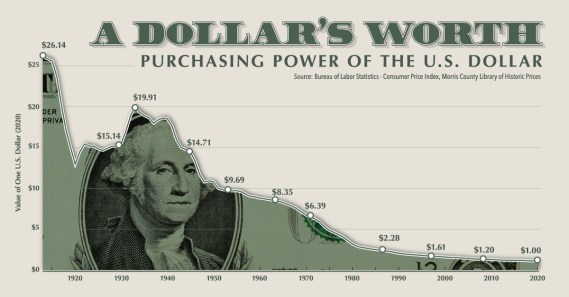
I used to hold up a dollar bill and ask my students how much was it worth?   They typically replied one dollar.  I asked them why it was worth a dollar?  Answers varied, but the truth or close to it is that it is because people believe that it is worth a dollar.  In terms of labor, ink, and paper, it costs the Federal government 6.2 cents to print a dollar.  In terms of buying value, a dollar in 1926 is worth only 15.58 cents today.  However, this is not an absolute either since the current value of a dollar actually varies from state to state.  The value of a dollar varies about 30 cents from the lowest to the highest state across the USA.  In Mississippi, a dollar is worth $1.16, while in Hawaii, the dollar is only worth 84.39 cents.

So, seeing is believing or is believing seeing?  Is there a difference between perception and reality or are they the same?  Can we ever escape the Rashomon effect?  The biases in perception created by our own desires to protect our egos or the egos of others.

1200-610551-47762564-39573934

There is little I have learned in my life that supports my willingness to accept anything as 100 percent factual, 100 percent truthful or 100 percent valid and reliable.  The solution is to question everything.  Do not accept anything as absolute.  When it comes to politicians, lawyers, salespeople, and journalists, we all need to be on guard.  Their built-in bias is not for the truth but for the dollar or at least 84 cents on the dollar.

quote-the-media-has-enormous-power-the-media-is-undergoing-huge-changes-now-it-seemed-like-thomas-hunt-morgan-67-60-81

 Update:  4/29/22

Just read the following on CNBC.  This “brilliant” analysis by a guy who writes regularly for a variety of news outlets and is listed as a “Tutor” notes the following:

“I think it’s outside the realm of possibility right now that there’s going to be a nuclear war or World War III that really spills over that far beyond Ukraine’s borders,” Samuel Ramani, a geopolitical analyst and associate fellow at the Royal United Services Institute, told CNBC.

Dr. Samuel Ramani’s credentials for this brilliant piece of optimistic analysis is that he is a tutor of politics and international relations at the University of Oxford, where he received his doctorate in March 2021. Somehow this makes him an expert in what Russia will do next in the Ukraine.  His “beyond optimism” comes at a time when Putin is starting to get more and more desperate in his bid to defeat the Ukraine.  Putin is becoming a cornered rat and NATO is pushing him into more and more of a corner.  Despite this, the genius who is less than two years since he finished his Ph.D. degree says “it is “OUTSIDE” the realm of possibility that Putin will launch a nuclear strike.  It would only be “OUTSIDE” if Nuclear weapons did not exist.  Questions I have are:

  • Why is CNBC relying on the credentials of someone with so little expertise to give us such an analysis?
  • How could anyone in their right mind say that something is impossible when that something already exists?
  • What is the “narrative” behind the focus by the Western news?
  • Why is NATO supporting a war when we have no treaty with the Ukraine.


The Law Enforcement Legal-Judicial Correctional Complex

The Law Enforcement Legal-Judicial Correctional Complex is an interlocking and interdependent set of institutions whose avowed purpose is to 1. Protect Americans from crime.   2. Fairly punish wrong doers.  3. Provide rehabilitation for errant citizens and 4. Return them as productive members of society.  If we take these as the four main objectives of the system, in actuality, the system accomplishes very little of these objectives.  What it does accomplish, it does so at a high price to our country.  The system is a gross miscarriage of justice whose complexity, cost, processes and outcomes cost Americans billions of dollars of year with little appreciative results for the money.  Do you or any other Americans actually feel safer in your home or on the streets at night?  In what large American city would any man or women simply take a walk at 10 or 11 PM?

In this blog, I want to dissect each of the components of what I am calling our Law Enforcement Legal-Judicial Correctional Complex.  I will demonstrate the monstrous dysfunction of the system and show how each part feeds off of and helps to sustain dysfunction in the other parts.  Let’s start with the Correctional System.  No doubt you have heard some of the statistics that demonstrate how expensive this system is but a short review might help.

The Correctional System:

The following table shows the number of Americans in jails in the US as of 2010:

Image

http://en.wikipedia.org/wiki/Incarceration_in_the_United_States

“The cost of the American prison system is enormous.   It is estimated that the yearly cost of over $74 billion eclipses the GDP of 133 nations. What is perhaps most unsettling about this fact is that it is the American taxpayer who foots the bill, and is increasingly padding the pockets of publicly traded corporations like Corrections Corporation of America and GEO Group. Combined both companies generated over $2.53 billion in revenue in 2012, and represent more than half of the private prison business.”   http://www.smartasset.com/blog/news/the-economics-of-the-american-prison-system/

The United States has the highest documented incarceration rate in the world (743 per 100,000 population),  Russia has the second highest rate (577 per 100,000), followed by Rwanda (561 per 100,000). The United States has less than 5% of the world’s population but 23.4% of the world’s prison and jail population.  As far as rehabilitating prisoners, a 2002 study survey showed that among nearly 275,000 prisoners released in 1994, 67.5% were rearrested within 3 years, and 51.8% were back in prison.  Most studies support a high recidivism rate.

What are you going to do in today’s recession era economy with no job skills, a felony conviction and the past four or five years out of the labor market?   If you tell me you are going to get a job, I will give you one hundred to one odds against it.

However, we are simply looking at one part of the dysfunctional system that I am labeling as the Law Enforcement Legal Judicial Correctional Complex.  The costs of the Correctional system alone are staggering both in terms of financial costs and human lives not to mention human spirits.   But the system is interlocking and like the military industrial complex, each part feeds into and off of the other institutions. Most studies do not show the true cost to the American taxpayer since few take into consideration the cost of courts, lawyers, judges, parole officers, correctional officers and police departments.

The Legal-Judicial System:

Americans are treated almost monthly if not weekly to a real life courtroom drama.  The trial of OJ Simpson and other high profile cases has catapulted crime front and center into part of the American entertainment experience.   There is hardly a day that goes by when we cannot follow a new courtroom drama.  Trials such as the Casey Anthony case, Travon Martin case or the Jodi Arias case occupied front page news and TV time for months.  Even as I write, I am sure that some new bizarre case will soon grace our TV and newspapers.  Judges, lawyers and defendants become actors and Hollywood entertainers as they sacrifice justice for ratings.  The trials may go on for months and the news is quick to pounce on the most titillating and sensationalist elements of the trial in their efforts to increase ratings and advertising revenues. Where once sex reigned supreme to sell ad space and capture viewers, real life crime (often with elements of both sex and violence) are guaranteed to keep viewers welded to their couches.  The secondary effect of this massive bombardment of crime and court time is to persuade us that we are surrounded with and inundated with crime.  Go to Amazon.com and type in Serial Killers and you will find a total of 14.460 books dealing with the subject. Go to your local supermarket and look at the paperback books on the rack. Probably a third will deal with some aspect of murder or mayhem.

What does all this cost Americans in dollars?  It is estimated that the high profile murder case of Jodi Arias has reportedly cost Arizona residents well over $1.5 million to finance her aggressive state-appointed legal team, as well as the continuance of her extensive trial.  Ironically, after months of witnesses in what most thought would be a “slam dunk” case, the jury deadlocked on a verdict and now there must be a retrial.  If you were running the courts and making a fortune off of the advertising, news and TV broadcasts can you think of a better outcome?  More testimony from witnesses, more nude pictures, more sex and more violence; is anybody concerned about justice or the obscene costs of such performances.

Most costs that we associate with these “Hollywood” trials primarily calculate the costs of lawyers, but to obtain “Total Judicial Costs”, we must also include the costs of the courtrooms, the bailiffs, the juries and the judges as part of the entire system.  According to the US Chamber of Commerce, America’s civil justice system is the world’s most expensive, with a direct cost in 2010 of $264.6 billion, or 1.82% of U.S. GDP.  Add to this cost, the cost of the US criminal justice system (well over 300 billion by many estimates) and you now have $76 billion dollars for prisons, $265 billion dollars for civil trials and $300 billion dollars for criminal trials for a total of $641 billion dollars.  BUT WAIT!  We have not included the cost of the US Law Enforcement System.

The Law Enforcement System:

To obtain “Total Costs” we must also include the costs of state, county, municipal police departments, security departments and also such Federal Agencies as the FBI, ATF, and ICE which perform law enforcement activities.  Let’s look at the annual budgets of the three largest Federal agencies first:

  • ICE requested an annual budget of more than $5.8 billion for FY 2012.    ICE
  • The FBI’s fiscal year (FY) 2012 budget request includes a total of $8.1 billion in direct budget authority.  FBI
  • ATF had a fiscal year budget of $1.2 billion dollars.  ATF

Now to include costs of police departments across the US: 

According to the Bureau of Justice, the operating budgets of local police departments totaled $55.4 billion for fiscal year 2007—14% more than in 2003 after adjusting for inflation (Bureau of Justice Statistics)

A more recent report by the Justice Policy Institute for 2012 notes that:

“Despite crime rates being at their lowest levels in more than 30 years, the U.S. continues to maintain large and increasingly militarized police units, spending more than $100 billion every year.  Police forces have grown from locally-funded public safety initiatives into federally subsidized jobs program, with a decreasing focus on community policing and growing concerns about racial profiling and “cuffs for cash,” with success measured not by increased safety and well-being but by more arrests.”

So to our former Total Costs of $641 billion dollars we must now add:

  • $5. 8 billion dollars for ICE
  • $8.1 billion dollars for the FBI
  • $1.2 billion for the ATF
  • $100 billion dollars for police departments across the USA

This brings our Total Costs for The Law Enforcement Legal-Judicial Correctional Complex to $756 billion dollars and I have not calculated the costs of private security systems or private security agencies which by some estimates now include more total employees than in the US Law Enforcement system.  I have also not included other government agencies or state agencies such as Natural Resources which also have a law or code enforcement function.

$756 billion dollars is admittedly a rough estimate.  I would not stake my name or reputation on this figure.  However, the point of this exercise is to demonstrate that we are looking at a huge cost to achieve the aforementioned objectives of:

1. Protect Americans from crime.

2. Fairly punish wrong doers.

3. Provide rehabilitation for errant citizens

4. Return criminals as productive members of society.

At a rough cost of $5000 dollars per every America taxpayer per year, this might not seem like such a high cost if we could actually say that we are achieving our objectives.  But by no stretch of the imagination could anyone think we are actually doing a good job on any of the four objectives I described.  I could write volumes on the unfairness of prison sentences, the injustices in the court system, the unfair rates of incarceration for minorities, the lack of effectiveness of capital punishment to deter crime and the useless war on drugs which nets billions for the Law Enforcement Legal-Judicial Correctional Complex but has been zero percent effective in decreasing drug use.  No doubt though, you have heard these statistics and facts over and over again.  So the question really is where can or should we go from here. We know the system (if not irreparably broke) is in need of major repair.  What should these repairs be and how do we go about instituting them?

Caveats:

I want to clarify a few issues before I move onto my suggestions for change.  First, I do not want to nor do I think it possible or desirable to eliminate police, FBI and even the ICE group.  We need protective services and the world will never be a perfect place with perfect people. There are too many immoral and unethical people to expect that society will self-organize into peaceful crime free communities.

Second, the workers in the system are doing their best but as Deming often said, it is the fault of the system not the employees. The police, judges, lawyers, correction officers, parole officers, administrative people and security services are all doing the best they can in systems that are basically dysfunctional.

Third, we need to change the hearts and minds of Americans who stubbornly think that more prisons, more police, more trials, stricter sentencing and more guns will lead to a safer community.  This is a fallacy that empirically has little support. Wherever it is true, the cost in human lives and spirit not to mention the costs in dollars is not worth the results.

We need to fundamentally change our attitudes about the causes and solutions of crime.  We need to take the same scientific approach to crime that we take to physics, biology, chemistry and genetics.  Too much of our criminal justice system is based on superstition, intuition and emotions.  No doubt crime is a tragedy but the solution must be as analytic as Sherlock Holmes.   Punishments and sentencing based on political and emotional appeal to the populace have no place in the system.

Changes Needed:

 There are a plethora of crimes that need to be decriminalized.  Many crimes should not be felonies and could be resolved with the use of fines or some type of community service.  Once we stamp someone with the mark of felon, we can almost guarantee that we will create someone who can no longer fit into society.  Some types of crimes that could be dealt with without resort to prisons or felony convictions include prostitution, drugs, white collar crimes, domestic and sexual abuse crimes.  In cases where the offenders pose no threat to the physical well-being of others, we should avoid prison sentences and felony convictions at all costs.  Think of a system wherein we declared “War on the Abuse of Women” and put the same amount of money into efforts to stop violence against women as we presently are spending to stop drugs.  We need a multi-national and multi-cultural offensive against the abuse of women which (while needing funding) also needs intelligent interventions to stop abuse.   We do not need most of the men involved in violence against women labeled as felons and sent to prison for long sentences.

Do away with mandatory sentencing guidelines.  These guidelines increase the incarceration rate without any real impact on long-term crime.  Drug sentencing is one example where mandatory sentencing laws have had little or no impact on drug use in this country.

Review trial and court records for evidence of adverse impact and discrimination against minorities.  Change laws and policies which show a disproportionate number of convictions or longer sentences for any income, ethnic, age, or gender groups.

Eliminate the use of past criminal records in hiring for Federal, state, county and municipal jobs.   Allow ex-felons the same voting rights as regular citizens in all states.  Once a person has served his/her time, they should be allowed the same rights that all other citizens have. Their past records should not be used against them.  The only exception I can make here would be in cases involving child abuse and jobs wherein the ex-offender would potentially be working with or around children.

 Time for Questions:

Do you feel safer today than you did ten years ago?  How much are you willing to pay for more security?  Are you willing to give up your freedom for security?  Do you know any criminals? Have you ever been convicted of a crime?  What “second” chance do you think you should have been given?  Do you think others deserve a “second” chance?  Why or why not?

Life is just beginning.