
I wrote the following blog in 2016 just before the Presidential elections that year. I am often guilty of too many political rants. I wrote the following blog and four others on the search for Truth and the relevance of facts, data, and evidence in this search. Some of the issues I describe here happened 9 years ago but as you will see, they are just as relevant and pertinent today as they were then. In fact, they are even more so. Regardless of your political persuasion, it is important to understand how Truth can be found and whether or not we are being lied to and conned. The US government has for many years developed a variety of means to obfuscate, ignore and/or stretch the Truth. If we as citizens can not see when this is happening than we shall surely be forfeit to any mistreatment that comes down from the Government. I worked for almost 20 years to teach some of these ideas to private business, non-profits, military installations and many levels of government from city to state to federal. This blog is part one of the education I think we all need to deal with what I would call “the Search for Truth.” You will need to read all five parts to get an honorary degree in Truth Seeking and Truth Finding. Following is the start of my blog written in 2016
I watched several shows the other day in which Trump supporters were interviewed. People are as curious about his supporters as they are about Trump. Given the unquestionable fact that Trump is a greedy sexist racist hate monger, why would anyone support him? The assumed knowledge is that his supporters are a bunch of ignorant losers: people who are uneducated or at best semi-literate. However, the data and demographics do not entirely support this conclusion. Many Trump supporters are intelligent educated and literate people. These are also people who believe in the United States of America and care about their country. What then persuades or convinces them that Trump is the right person for the job of POTUS? His qualifications pose a questionable proposition that would seem to fly in the face of all known facts in the entire universe. This dilemma strikes at the heart of the matter. We do not know what to believe any more. What is a fact? What is evidence? What is objective data? Where can we find facts that are truthful (not really a redundancy)?
I think about my graduate students at the college where I have taught for many years. These are students who are working on an MBA and are highly literate, highly educated and highly intelligent individuals. Many of them already hold very well paying jobs and responsible positions in successful companies. Nevertheless, the challenge that I continually face is to teach them the difference between facts, data, evidence and truth. Despite their literacy, few of these students understand the difference. This is a scary situation. If these highly educated students do not understand the difference between these concepts, how can we expect the many uneducated members of the general public to understand and comprehend the essential elements of truth finding? I say essential because facts, data and evidence are the three pillars of truth. If you do not have these, you cannot find the truth.

Several problems make the issue even more complex. In academia, we are dealing with a subset of life in which there is much less confusion over the truth since no one is deliberately trying to distort, lie or sell us anything. There may be stupidity, lack of knowledge and even ignorance by many scientists and professors but the greed motive is much less tangible. I am not saying it does not exist, but for most of my teaching career, I cannot think of anything I have ever tried to sell to my students and make a profit on. I can say with some confidence that this is also true of all the instructors whom I have ever known or worked with. The same situation does not exist outside of academia. The marketplace is a vicious jungle when it comes to searching for the truth while academia is a tame zoo in comparison.
When we enter the marketplace and even more so in the political arena, the motive to convince us of something relies much less on elucidating the truth than it does on obfuscating the truth in order to sell us something. Wells Fargo Bank wants you to open a credit account. They don’t care whether you need it or not. Volkswagen wants to sell you a car even if they have to hide the truth about pollution levels. Every politician in America wants you to vote them into office. They don’t want you to know the real truth about their competition or that they do not have all the answers to the problems facing our country.
Companies and politicians have a vested interest in hiding the truth from you. Stories like Miracle on 31st Street where Macy’s sent people to Gimbels are few and far between and exist mostly in fantasy. Similarly, stories about politicians with ethics such as “Mr. Smith Goes to Washington” have become legendary because they depict a reality that seldom exists. Most politicians will promise you the moon to get your vote and most companies will not tell you the truth about cigarettes, drugs, food or anything else unless forced to do so by some form of government regulation or mandate. It does not matter whether it will kill you or not as long as you buy it or elect them.

Finally, we come to perhaps the biggest ruse of all. If anyone is searching for the truth, they will eventually enter into the Fourth Estate. This hallowed ground is defined as: “A societal or political force or institution whose influence is not consistently or officially recognized. Fourth Estate most commonly refers to the news media, especially print journalism or The Press.” (Wiki). Thomas Jefferson believed that the two pillars of a democratic society were an educated citizenry and a free press. Mark Twain was somewhat more skeptical about the power of the press and information to inform people when he noted that: “If you don’t read the newspaper, you’re uninformed. If you read the newspaper, you’re mis-informed.” The truth seeker has been taught since early childhood that in the domain of the Fourth Estate is to be found the truth. Little do they know the quagmire they have entered into or that the role of truth finding in the Fourth Estate no longer exists.

Today, the major purpose of the news (whether print or digital or video or audio) is to sell. Sell, sell, sell, sell and sell some more. Sell junk, sell drugs, sell expensive credit cards, sell stuff and more stuff. Stuff you don’t need, won’t need and will probably never need. The job of the media is to convince you that you do need stuff, that you desire stuff and that you can not possibly live without stuff.
I once thought that journalists were a group to be respected. This was based on the knowledge that they had often risked their lives and their reputations to bring us the truth. Today, journalists are little more than pimps for advertisers. They have sold their souls to the devil, descended into hell and may never come out again. The measure of a journalist is not how much information they provide to the public but how many advertisements they can sell. The changing role of journalists has made it even more difficult for people to find the truth. Nothing in the news is remotely objective or unbiased any more. Every paper, every station has their spin on things. The spin is determined by who owns and controls the media.
Take polls for example. As we go into the final days of the 2016 US presidential election, you can find polls that favor one candidate or the other candidate. If there are seventy polls, half may favor one candidate and half may favor the other candidate. There is no truth even in these so called unbiased statistical polls. Many of my friends have suggested that the news media want the race to be close because this keeps people tuned in. Much like a sports match, we would rather watch an event that had a pair of evenly matched contestants. My friends have suggested that the news seems to do its best to insure that first one candidate gets major media attention thus elevating them in the polls and then it switches to the other candidate providing them attention that elevates their poll numbers. I am not a big conspiracy theorist but this theory does seem to have some merit to it.
 Regardless of whether the media intentionally want to keep the race close or not, there is no denying that the candidate who is the most obnoxious, the most outrageous and the most sensational will garner the most press. Trump has been well aware of this and has continually manipulated the media into providing him billions of dollars in free advertising. The fickle public seems to swing from one candidate to the other depending on who they see in the news. Trump has undoubtedly benefitted from his ability to keep the press absorbed with his every utterance regardless of how inane they are. He can tweet at 2AM in the morning and be assured that Fox News will carry his tweet on the 7 AM morning news.

How then can we blame the general public, educated or not, of being uninformed or misinformed when most of our society is conspiring against them finding the truth? It is a trap that I have fallen into when I have railed against the stupid, illiterate and uninformed Trump supporters. Sadly, they are not to blame for their reliance on Trump to give them the truth. The have certainly not found it in academia or the Fourth Estate. I have some solutions to this issue but I do not have the entire answer to it. I do have part of the answer. It is quite clear to me that one must understand the difference between facts, data, evidence and the role of these three elements in helping to shape the truth. In Part 2 of this blog, I will go into the subject of Facts in more depth. In the following parts, I will cover Data, Evidence and Truth.
Time for Questions:
How do you know what to believe? Who do you trust to give you unbiased information? How much do you trust the news? Are you satisfied with the quality of the information you get from journalists and the news? What do you think we need to do to improve the quality of information the American public receives?
Life is just beginning.
“There’s a danger in the internet and social media. The notion that information is enough, that more and more information is enough, that you don’t have to think, you just have to get more information – gets very dangerous.” — Edward de Bono




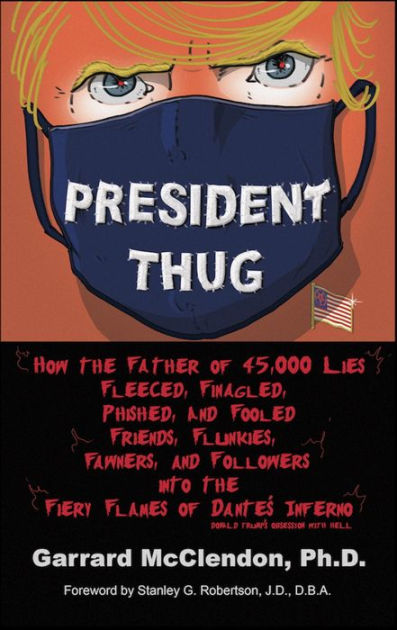 Our Founding Fathers wrote a Big Lie and African Americans have been paying for it ever since. Women and other minorities were not even mentioned in the Big Lie, but it applied to them as well. Lies can be committed because people believe things that do not mesh with reality. Lies are a coverup for many government actions that our politicians do not see as palatable for the public. The Gulf of Tonkin incident, the overthrow of Salvador Allende, the weapons of mass destruction in Iraq are only a few of the lies that have been fed to the American people. Of course, our politicians would have us believe it is for our own good. The really sad part is that the media is always complicit in these lies by reporting them with little or no verification of their truthfulness. Some of these lies fall into what I call the “Realm of Taboos.” Taboos are a good place to look for Big Lies.
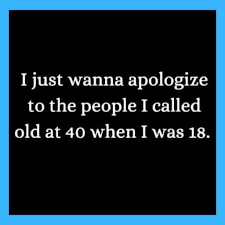 So, we tell a Big Lie that age does not matter. And we have no one willing to challenge that lie. However, it is not only physical aging that puts people at a disadvantage, but mental aging as well. Many older people are stuck in a past generation of ideas and values that are no longer relevant today. Values and cultures change over time and people born in the 40’s and 50’s are less likely to understand and adapt to the changes that daily life brings. If you can only see the “Good Old Days”, you may be suffering from old age. The average age of Nobel Prize winners when they conducted their prize-winning research is 44.1 years. As for writing, “According to experts, we start becoming more creative and prolific in whatever field of art or study we work, around the age of 25. Most people reach their peak after the age of 35 or in their 40s. This is when they produce their most valuable work. After the age of 45, most artists’ prolificity starts slowly declining.” —



 As with any of the constitutional amendments there is a certain, indeed I would say “high” degree of ambiguity as to the limits of what the Founding Fathers meant by their words. We know for instance that they did not mean that you could slander or libel anyone with your words. We know that they did not mean that you could yell “fire” in a crowded theater. We also know that there are many instances of what the Founding Fathers did not have a clue would become an interpretation for “Free Speech.” For instance, the Citizens United decision by the US Supreme Court says that the right to make political contributions is a form of free speech. This will probably go down in history as one of the most egregious interpretations of what the Founding Fathers meant. The only interpretations that seem more egregious concern several earlier court decisions regarding slavery and the buying and selling of human beings.
 Recently, I read of the case of an eleven-year-old convicted of killing his stepmother. His appeal took three and a half years to come to court and then found him not guilty. On the other hand, Kari Lake, the big lie advocate and loser in the Arizona Governor’s race this past year had appeal after appeal and each one seemed to take less than two or three weeks. It takes three and a half years to get justice for an eleven-year-old wrongly convicted of murder, but Lake got trial after trial for her baseless and politically motivated claims that they “stole” the election from her. This same scenario has played out repeatedly in the past few years. Poor people with no money wait years to get a “fair hearing” while rich bottom feeders like Lake walk in and out of court on an almost daily basis.


