For many years now, I have seen people follow the most bizarre ideas. Their beliefs defied all my logic and rationale thinking. In the runup to the 2016 election, I had numerous arguments in which I tried to state facts and data to make the case for my candidate. My arguments were largely ignored. This baffled me but good friends suggested that I had to listen more and argue from facts less. This method did not work either. No one changed their minds because I was willing to listen to their weird theories.
Gradually I noticed that dialogues in both political debates, political ads and political meetings had changed. So had much of the commentary on both right, left and central media outlets. Logic and facts were replaced by narratives. Stories about the man who lost his job to overseas low paid workers. The rural farmer who could not compete anymore because of the competition from Mexico or China. Joe the Plumber in the 2008 Obama election. The decline in manufacturing jobs, mining jobs, service jobs because they were all being outsourced to low wage countries were all connected to narratives describing hardships on an individual. Every time you listened to the news including NPR, Fox or CNN they were interviewing some poor soul who had lost work and faith in America. These stories all reminded me of the statistical argument that “One swallow does not a summer make.” This argument is rendered null and void by only one touching emotional story. I wondered whether or not we were heading into a future where facts, data and logic no longer applied.

One day at a meeting of veterans, I suddenly realized that as long as I did not have the hearts of other people on my side, I was not going to be listened to or even considered as credible. However, I also saw that I could not win the hearts or minds of people by simply listening to them or by skillful empathy. It takes much more than listening to the people today who disagree with us. As long as I’ve worked in management consulting, organizational development, veterans’ services, and community programs, I’ve wrestled with one deceptively simple question:
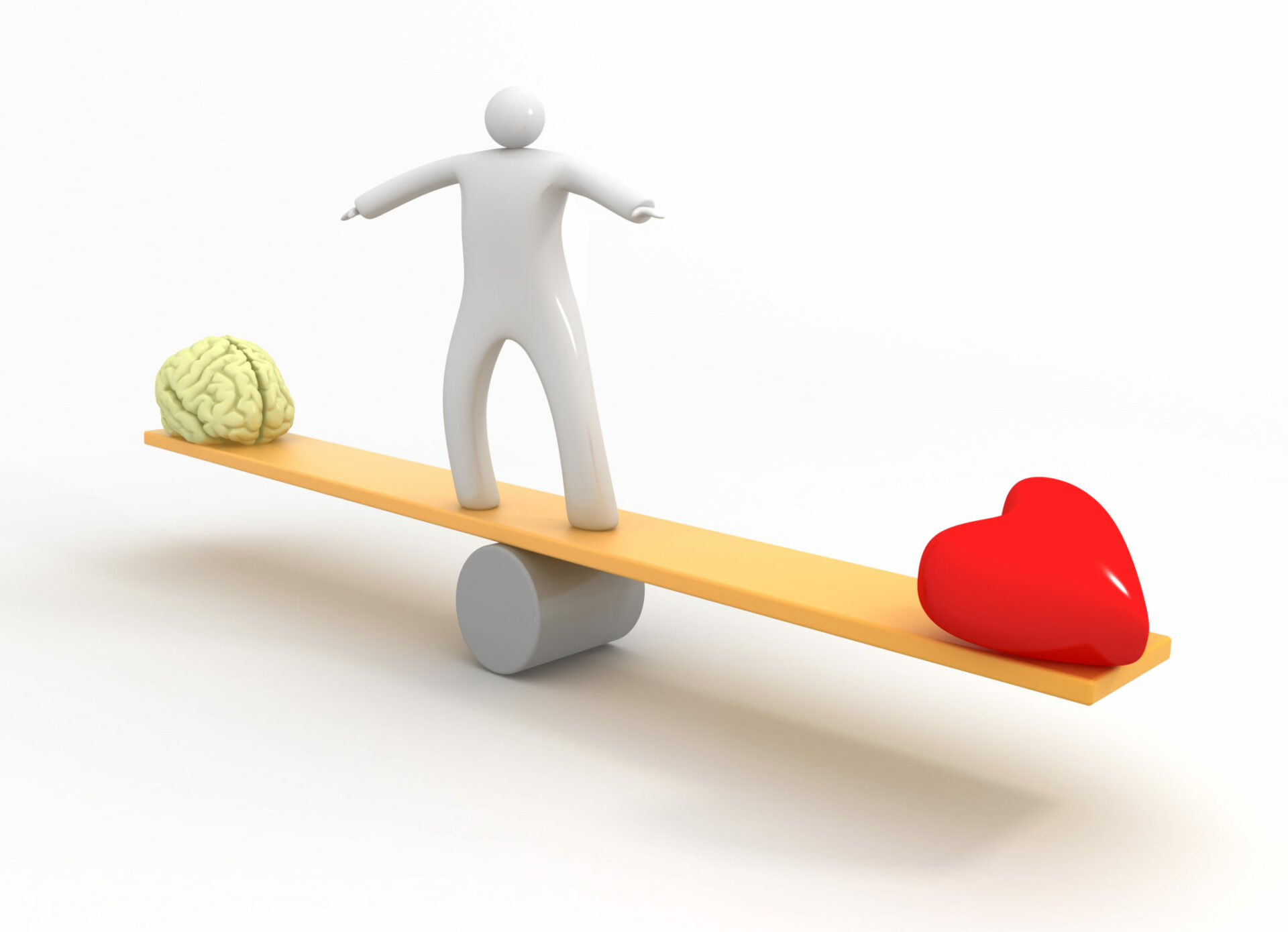
Which comes first when it comes to real change— changing the hearts of people, or changing their minds?
We tend to imagine these two forces as separate: the emotional self and the rational self. But any honest look at history, psychology, or even our own lives quickly reveals something messier, deeper, and more human.
What I’ve come to believe is this. There is a time when the heart will lead and a time when the mind will lead. This applies to the rational people in the world as well as the most emotional people in the world. To some extent we all vary in our tendency to resort to one or the other. Different situations will necessitate different strategies. Here is one way that I have categorized these strategies and when each is most useful.
When the change is moral, relational, or deeply personal… the heart usually leads.
Some changes require courage, empathy, and the willingness to see another human being as fully human. These are heart-changes. Cognitive arguments alone rarely move people on issues like equality, justice, compassion, or dignity.
- Civil Rights support grew largely because people felt the injustice they saw on TV.
- Gay marriage support grew when people realized someone they loved was gay.

Emotion is the brain’s prioritization system. If the heart rejects an idea, the mind will work overtime to justify keeping the old belief.

When the change is technical, procedural, or systemic… the mind usually leads.
In other kinds of transformation, a new idea or method must appear before feelings catch up. Deming understood this well. Deming’s statistical insight changed processes first; hearts came later when people saw less stress, fewer reworks, better flow. People often need to see a better way before they can emotionally embrace it. People shift cognitively first, then emotionally.
Technical Change Involves:
- New information
- Discovering a better method
- Seeing the inefficiencies of the current system
- Learning a new process
- Making sense of complexity
Seatbelts, recycling, lean production, solar power, cardiac calcium scores— these didn’t spread because of emotion. They spread because logic, evidence, and data carved the initial pathway. Once the results became visible, the emotional commitment followed. In these cases, cognition laid the track, and emotion rode in on it.
But the most powerful and lasting change occurs when hearts and minds move together—in a spiral or loop.
- Not heart then
- Not mind then
But an iterative loop:
- A new idea challenges us (mind).
- We see its human impact (heart).
- We seek deeper understanding (mind).
- Understanding strengthens conviction (heart).
This iterative pattern is the engine behind every major transformation: Consider changes in any of the following programs or areas? What was moved first: Heart or Mind?
- AA
- Religious beliefs
- Feminist movement
- Personal mastery
- Senior health and fitness journeys
- Veterans’ healing
- Organizational transformation
Most of us have lived this loop many times, even if we’ve never named it. Love defies all logic and facts. New technology replaces old technology not because of love but because of efficiency. Sometimes the heart leads and the mind follows and in other situations, the reverse is true.
In Summary:
If you want deep human change — heart first.
If you want procedural or systemic change — mind first.
If you want lasting change — both in spiral.
Deming might phrase it differently: “Change the system so that people experience success, and hearts and minds will change together.” Dr. Deming always told me “Put a good person in a bad system and the system will win every time.” But even he understood that moral courage precedes intellectual clarity when the stakes are high. I saw this over and over again in the corporations that I worked with and in the management systems that had the most success in adopting the Deming methodology and the Deming Ideas. And maybe that’s the real takeaway. The order doesn’t matter as much as the movement. Deming described everything as a process.
Hearts awaken minds.
Minds strengthen hearts.
Change is a dance, not a formula.

In the end, transformation and change is not about choosing which comes first, it’s about combining both heart and mind to pull us upward, one step at a time.
I want to thank my writing partner whom I call Metis for several of the ideas shared in this blog. Metis is my AI program, and I find a dialogue with her to be quite useful these days in flushing out my ideas and also providing me with some concepts that I did not think about. Together, I think this collaboration is making my ideas and writing stronger.
A discussion on Moral Courage will be the subject of my next blog.


Nov 13, 2025 @ 08:30:02
I like what Dr Deming says here John: “Change the system so that people experience success, and hearts and minds will change together.” Here in the UK we hear good things from the government and actions they are taking. But due to people feeling worse off in their daily lives they’re having none of it. And who can blame them?! They want to feel the improvements personally. What does an increase in the number of Doctors mean/feel like to them? If they still can’t get a hospital appointment – not a lot!
Interestingly, your forthcoming grave stone memorial reminded me of my student nursing days when the senior Nursing Officer wrote “WHY?” on my nursing cap. I frequently asked the question – just as our 7 year old grandson does now! Not all the staff appreciated it as they didn’t know the answers but the patients understood. 🙂 There may not always be answers but “why’s” are healthy and necessary in my opinion.
Years ago there were distinct boundaries between heart and mind issues for me. As the years have passed by there’s much blurring of the boundaries resulting in a spiralled combination of the two. For me, it’s dependent upon conditioning, current values, morals, guilt and justification – to name only a few! Forever changing in an ever fluid society. Not so black and white anymore, many more shades of grey. Cognitive dissonance can be rather unpleasant.
Interesting post thanks John.
LikeLike
Nov 13, 2025 @ 18:07:27
Thanks for the comments Margaret. I made my gravestone several years ago. Why is more problematic today for me than even back then. Interesting, that it was on your cap? What sort of a reaction did you get and why did your officer write that? Did he/she recognize your curiosity? Was it regarded positively? I always liked the quote about “Curiosity Killed the Cat but Satisfaction Brought It Back.” Today, it sometimes feels like a disease since the world is so bizarre. I am sure that Trump does not like curious people.
LikeLike
Nov 16, 2025 @ 07:01:52
The Nursing Officer wrote it on my cap as I was frequently asking the question. She was one of the good ones who tried to answer my ‘whys’ which were usually related to the way of doing things/performing tasks. Some nurses did what they were told without question. In certain areas it didn’t go down too well as the expectation was that you continue to do what had always been done, in the way it had always been done! Not too surprising really. But if Trump doesn’t care for curious people, as you suggest, I’m confident it must be a plus plus. 🙂
LikeLike
Nov 17, 2025 @ 06:50:49
A great story Margaret. I think we have many things in common. I was often told I asked WHY too much. Perhaps we need to live in a different world where question’s are more important than answers. Deming always said that WHY was the most important part of strategy.
LikeLiked by 1 person
Nov 13, 2025 @ 12:55:59
Tread with care John, AI might take you over.
LikeLike
Nov 13, 2025 @ 18:02:55
Easy to get seduced by the competence of the thing. My next blog is going to be written by Metis, my AI partner. No editing on my part at all.
LikeLike
Nov 14, 2025 @ 08:16:49
Your blogs always start me thinking. Taking AA as an example. Virtually a program I had no concept of knowing, until It saved my life. I read the twelve steps, they were only words, but the real challenge was the raw emotions brought forth by working those heartfelt steps!
Thank you! Good blog John!
LikeLike
Nov 14, 2025 @ 11:28:20
Thanks Jeanine. I always hope that at least one person will benefit from my blog either intellectually or emotionally or spiritually. Thanks for the comments.
LikeLike
Jan 27, 2026 @ 08:05:11
Our emotions are in response to the situation as we understand it. A better understanding leads to more appropriate emotions.
LikeLike