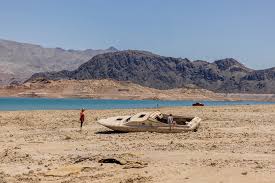
Once upon a time there was a Real Estate Developer. He knew that everyone wanted a home. He also knew that he could get state or city subsidies to build a new housing development. He decided to build in an area where there was a severe water shortage. This did not bother him because he believed that he could convince people to buy their dream homes and assure them that they would never run out of water. Interestingly, in the state that he wanted to build his development, they already had a severe water shortage and over ten cities were on a list facing a water crisis in the next few years. However, this did not perturb our Real Estate Developer one iota. He subscribed to the dictum “Build it and they will come.” “And if they come, I will make loads of money.”
There was a slight impediment to his plan. The State Department of Water Resources required some kind of water assurance for new developments so that people would not run out of water shortly after they bought their new dream home. Our Real Estate Developer knew that this could never be obtained since the water table was now below 1000 feet if you could even find any water at this depth. But this fact did not deter our intrepid Real Estate Developer. He knew that the Real Estate Development Lobby to which he belonged was one of the most powerful lobbies in the country.
Top US Lobbying Clients by Spending (2025–2026)
• US Chamber of Commerce: Consistently the highest spender on federal lobbying.
• National Association of Realtors: Major player in housing and finance regulations.
• Pharmaceutical Research & Manufacturers of America (PhRMA): Top lobbyist for drug companies.
• Business Roundtable: Represents CEOs of major U.S. corporations.
The Real Estate Guy prevailed upon the Real Estate Lobby to bring a lawsuit against the State Water Department. Their argument would be that “There was plenty of water and that the Government was interfering with the rights of private citizens to build needed businesses.”
When I heard this I must say that I was more than a little bit surprised. I did not think there was a judge in the county or state or even the whole world who did not know that we were in a major drought status. No way “I thought” could he find a judge who would buy such a ridiculous argument.
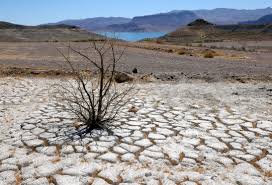
The facts are clear about our water situation: Here is a scenario for Arizona in the next twenty years:
1. Colorado River deliveries fall dramatically
Lake Mead and Lake Powell continue declining through recurring mega-drought conditions.
Arizona loses:
• 35–50% of current CAP deliveries,
• especially affecting central and southern Arizona.
Water rationing becomes common during peak summer months.
2. Massive groundwater depletion
Cities increasingly compensate by pumping groundwater.
• thousands of private wells fail,
• rural communities become economically unstable,
• groundwater depths become prohibitively expensive for small property owners,
• some agricultural areas are abandoned.
3. Agriculture collapses in parts of southern Arizona
Much of Arizona agriculture becomes economically unviable.
Likely casualties:
• alfalfa,
• cotton,
• water-intensive feed crops.
4. Food prices rise locally.
Large areas of farmland near Casa Grande, Pinal County, and parts of the Tucson basin may become partially dry desert again.
5. Water costs rise sharply
Water becomes a major household expense.
Middle-class retirees on fixed incomes feel pressure.
Poorer communities are hit hardest.
6. Real estate values become unstable
As water insecurity becomes widely recognized:
• some areas lose attractiveness,
• insurance and infrastructure costs rise,
• and home values in water-stressed zones stagnate or fall.
7. Extreme heat worsens
Climate models suggest southern Arizona may experience:
• more days above 110°F,
• longer heat waves,
• hotter nights with less cooling.
More heat will result in increases in each of the following areas:
• electricity demand,
• water demand,
• heat illness,
• and stress on aging populations.
• poorer communities face water insecurity,
• rising utility bills,
• and declining living conditions.
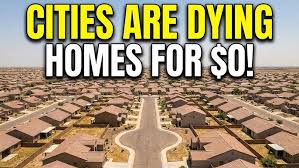
Well, my friends. This issue went to court. Do you want to know what the judge decided? Here was the major question that the judge considered:
Is Arizona planning around physical reality, or around economic growth incentives?
The court ruling did not answer that question scientifically.
It answered it legally.
The judge basically said:
“If the state wants stricter groundwater rules, it must formally create them through proper legal procedures.”
Basically, his decision was to allow the Real Estate Developers to BUILD, BUILD, BUILD
The tragedy, of course, is that when all the legal bullshit is taken care of, the water will have become scarce or non-existent, and the developer will already be gone. He will have taken his/her profits and moved on to the next project.
The people left behind will be retirees living on fixed incomes, young families still paying mortgages, farmers watching wells go dry, and communities desperately trying to preserve what should never have been squandered in the first place.
Perhaps the saddest part of all this is that nobody involved is technically breaking the law.
• The developer wants profit.
• The politicians want growth.
• The cities want tax revenue.
• The banks want loans.
• The buyers want affordable homes.
Everyone is acting rationally within the system.
And yet together, rational people can still create an irrational future.
The problem with water is that eventually reality votes.
- Aquifers do not care about political ideology.
- Reservoirs do not respond to lobbying.
- Drought does not negotiate with campaign donors.
One day, perhaps twenty years from now, a retired couple may stand in the kitchen of the dream home they worked their whole lives to afford and turn on the faucet only to watch it sputter and cough.
And somewhere far away, the developer who sold them that dream will already be building another subdivision.


May 18, 2026 @ 14:40:22
So very true John, GROWTH is the ignored enemy, we have discussed this issue before, but sadly it is still being ignored.
LikeLike
May 18, 2026 @ 16:04:53
Absolutely Jon. Americans seem to think that bigger is always better and more is always better. Madison Avenue keeps up a continuous drumbeat to convince people that they need bigger vehicles, bigger houses, bigger hamburgers, bitter weddings. Everytime you turn around in this country something has gotten bigger. People with two children are living in six bedroom homes with four bathrooms that cost over a million dollars. I call it wretched excess.
LikeLike
May 20, 2026 @ 06:32:38
John, when we met in the early 80’s I was working for the M A Hanna mining company, and I was part of a team working on a large underground copper project just outside of Casa Grande, AZ. One of our geologists had relocated to Casa Grande to manage the project, and I remember, even then, that the irrigation demands of cotton farming in the area were lowering the water table by several feet per year (if memory serves me, the water table at the time was down around 500 feet. There was great concern even then that it would soon become too expensive to continue extracting water from deep underground.
Stunning to hear this problem wasn’t addressed years ago. Greed really is destroying our country.
LikeLiked by 1 person
May 20, 2026 @ 13:30:13
Hi Dennis, glad to hear from you. Karen is in the hospital. Her third emergency trip inside the past 5 weeks. We are trying to figure out what is wrong with her lungs but no definitive diagnosis yet. I hope you and Sedna are both enjoying good health.
It is sad that the water problem has not gone away but much like Climate Change, the greed drives everyone with short term thinking to select the most positive financial outcomes at the expense of health and community welfare. Very discouraging.
LikeLike