This blog continues from where I left off in Part 1
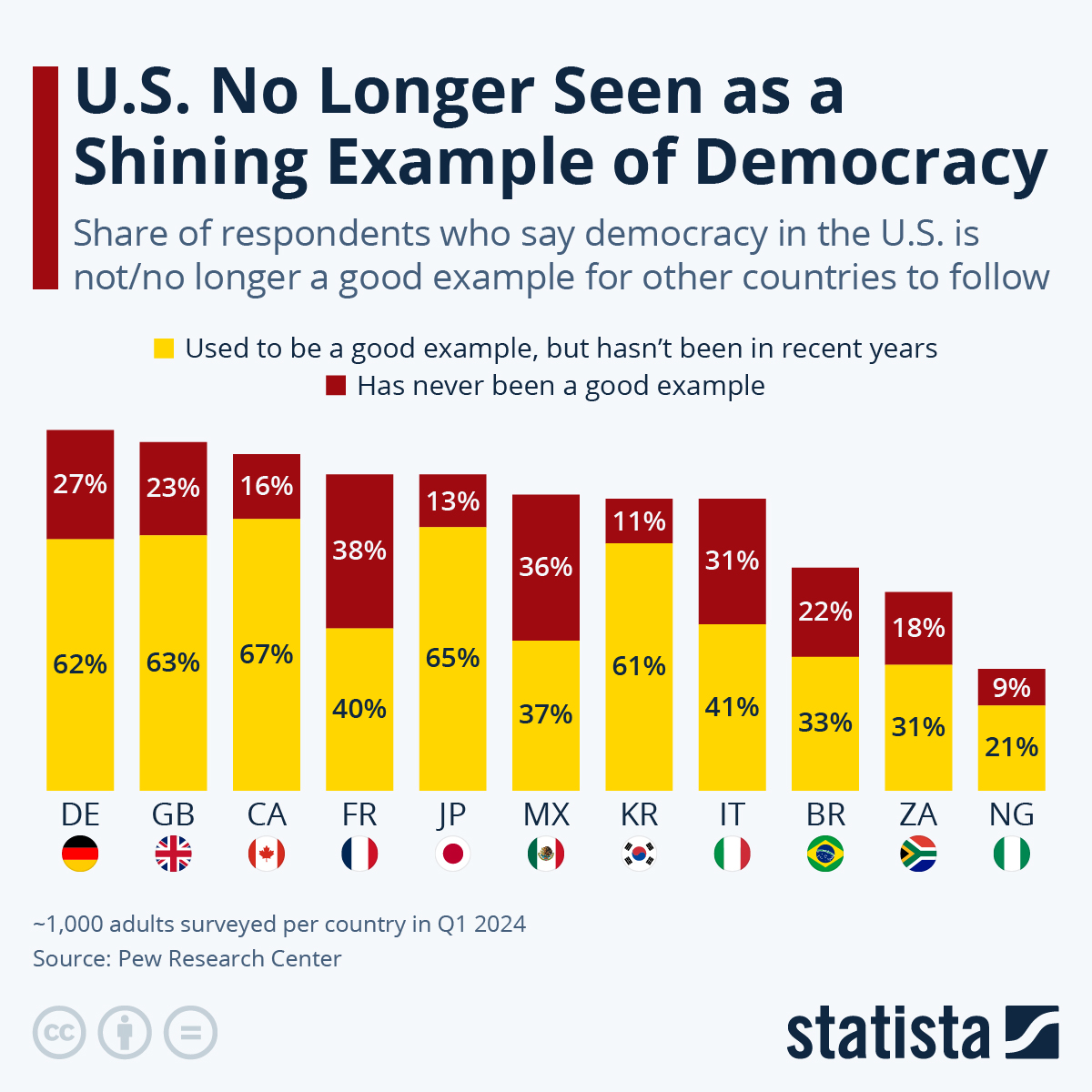
A look at what is going on in the USA today should squash any such naïve belief in our altruism towards the rest of the world. America’s rhetoric about democracy often conflicts with the realities of it’s economic and geopolitical behavior.
- We are heading in our own country towards an autocratic government that bears little evidence of the democracy we claim to believe in
- We are gutting foreign aid programs that really do help the oppressed of the world
- We are supporting wars that have no basis in protecting the American people
- We are threatening to invade our allies
- We are threatening to pull out of NATO
- We are silencing honest journalism throughout the world
Given the above facts, the question that begs answering is “Why then are we doing this?” The short answer to this question can be found by looking at the S&P Stock charts. Throughout everything that has happened in the USA over the past two years, the average value of the Stock Market has grown. It should be obvious that the 10 percent of the people that own 90 percent of the stocks in this country are benefiting from the regressive and anti-democratic policies of the current regime.
The long answer to the question posed above has to deal with “who is going to rule the world economy.” There is an old saying that “He who has the gold makes the rules.” However, turning this trope around is even more accurate: “He who makes the rules gets the gold.” Whoever rules the world economy gets rich. The stock market is evidence that this is already happening.
Federal Reserve data and economic analyses highlight the stark concentration of equity ownership:
- The Top 1%: Owns roughly 50% of all corporate equities and mutual-fund shares
- The Next 9% (90th–99th percentiles): Owns about 37% of the market
We are and have been in a world war for decades now. But it is not a war of bullets and bombs. It is a war of currency and trade. Our team in the USA is based on Corporate Capitalism which masquerades as free enterprise and free trade. Some of the other teams in the war or shall we call it a game include Socialism as practiced in some countries and Communism as many people still associate with Russia. However, these “ism’s” do not exist in a traditional sense anymore as the following information will show.
1. American-Style Corporate Capitalism
Primary example: United States
Core characteristics:
- Private ownership of production
- Large multinational corporations dominate markets
- Shareholder profit maximization
- Financialization (Wall Street influence)
- Consumer culture
- Heavy lobbying and corporate political influence
- Relatively weak labor protections compared to Europe
- Innovation driven by private investment and venture capital
Strengths:
- High innovation
- Entrepreneurial dynamism
- Flexible markets
- Strong technological development
Weaknesses:
- High inequality
- Monopolization tendencies
- Short-term thinking
- Political capture by wealth
- Healthcare and education inequities
- Externalization of environmental and social costs
2. State Capitalism – What once was more Communistic
Primary examples: China, partially Singapore
This may actually be the strongest current competitor to the U.S. model.
Core characteristics:
- Markets and private enterprise exist
- But the state directs strategic sectors
- National goals supersede shareholder goals
- Industrial policy and long-term planning
- Strong state intervention
- Key industries often state-owned or state-guided
China especially combines:
- capitalism,
- authoritarian political control,
- nationalism,
- and centralized strategic planning.
This is not classical communism anymore.
Modern China is better described as:
- authoritarian state capitalism,
- techno-nationalism
- or party-directed capitalism.
Strengths:
- Long-term infrastructure planning
- Rapid industrial mobilization
- Strategic coordination
- Ability to direct national resources
Weaknesses:
- Corruption
- Lack of political freedom
- Innovation constraints in some areas
- Surveillance state tendencies
- Risk of bureaucratic rigidity
3. Classical Socialism
Historically associated with:
- worker ownership,
- public ownership of major industries,
- democratic economic planning.
Modern pure socialism barely exists at national scale anymore.
Historically important examples:
- parts of postwar United Kingdom,
- Yugoslav worker self-management,
- various democratic socialist experiments.
Communism (Classical Marxist-Leninist)
Historical examples:
- Soviet Union
- Maoist China
- Cuba
Core characteristics:
- State ownership of production
- Central planning
- One-party rule
- Suppression of private capital
Almost no major power today operates under pure communism anymore — including China.
The winners of this war will dominate the world economy. The benefits are beyond calculation. Think of a monopoly game. If any player owned all of the following properties they would almost be guaranteed a sure win in the game:
- Illinois Avenue (Red)
- New York Avenue (Orange)
- Tennessee Avenue (Orange)
- St. James Place (Orange)
- Kentucky Avenue (Red)
- Indiana Avenue (Red)
If you controlled only these six properties and developed them efficiently, you would have an enormous statistical advantage over most opponents. Not guaranteed victory — luck and trading still matter — but probably the closest thing Monopoly has to a dominant board position.
The Irony of Monopoly — Elizabeth Magie originally designed the precursor to Monopoly as a critique of concentrated wealth and monopolistic capitalism. It would seem that the lesson was lost on American business or more likely lost on the American public.
One of the most decorated men in WW I was Major General Smedley Butler. He had this to say about America and the wars he fought in:
“War is a racket. It always has been. It is possibly the oldest, easily the most profitable, surely the most vicious. It is the only one international in scope. It is the only one in which the profits are reckoned in dollars and the losses in lives. A racket is best described, I believe, as something that is not what it seems to the majority of people. Only a small “inside” group knows what it is about. It is conducted for the benefit of the very few, at the expense of the very many.”
“Out of war a few people make huge fortunes. In the World War a mere handful garnered the profits of the conflict. At least 21,000 new millionaires and billionaires were made in the United States during the World War. That many admitted their huge blood gains in their income tax returns.” —- from “War is a Racket” by Major General Smedley Butler.
Prussian military theorist Carl von Clausewitz wrote in his 1832 treatise On War that “War is the continuation of politics by other means.” Economic policy today drives political policy. Ergo, wars are fought to support political policies which support economic policies. As my friend Dick always said, “Follow the money.” “Political policy determines who holds power; economic policy determines who receives the rewards of that power.”
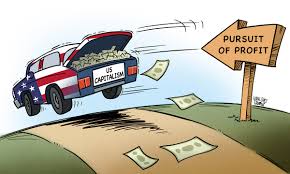
I doubt that most Americans realize on a day to day basic, the economic benefits that could and do accrue from the United States holding a dominant position in world economics. Just one example might help. Here are some benefits and also drawbacks that we get from the Dollar and not the Yuan, Ruble or Yen being the de facto standard for world currency and trade.
- Ability to Borrow More Cheaply Than Most Other Nations
- Persistent Trade Deficits Are Sustainable
The U.S. can import more than it exports for decades because other countries willingly hold dollars instead of demanding immediate repayment in goods. - Global Demand for Dollars Supports American Wealth
Countries, banks, and corporations worldwide need dollars for trade, creating constant demand for U.S. currency and financial assets. - Lower Cost of Imports for Americans
A strong dollar makes imported goods: cheaper, more abundant, and helps keep inflation lower than it otherwise would be. - Massive Influence Over Global Finance
Most international banking transactions move through dollar-based systems. This gives the U.S. extraordinary leverage over: sanctions, banking access, and international finance. - Powerful Sanctions Capability
The U.S. can severely pressure adversaries by restricting access to dollar systems, as seen with: Iran, Russia, and others.
- Foreign Nations Help Finance U.S. Debt
Countries like Japan and China buy large amounts of U.S. Treasury debt, effectively helping finance American spending. - The U.S. Can Create Currency the World Needs
The Federal Reserve can expand the money supply during crises and much of the world still seeks dollars as a “safe haven.” - American Financial Markets Become the World’s Center
Wall Street and U.S. financial institutions dominate global capital flows because the dollar anchors world finance. - Geopolitical and Military Power Are Reinforced
Dollar dominance helps fund:
- large military expenditures,
- global bases,
- and international influence at costs that would cripple many other nations.
The Tradeoff – There are always cons to every action. However, you will note from the following that the cons eventually impact the standard of living of the average American more than they do the Super-Rich.
Because the dollar is so strong:
- U.S. manufacturing can become less competitive; hence companies move overseas for cheaper labor. Consumers gain cheap goods, but capital owners and multinational corporations often gain the largest rewards.
- Outsourcing becomes easier as many nations welcome American factories in their countries. American jobs decline.
- Trade deficits grow: The broadest U.S. trade deficit number today is about $901.5 billion per year for goods and services combined. The goods-only deficit is much larger — about $1.24 trillion annually.
- Financial sectors may gain power relative to industrial labor. Some critics argue the reserve-currency system helped hollow out parts of the American middle class while benefiting finance, multinational corporations, and asset owners.
The dollar’s dominance gives the U.S. extraordinary national power — but distributes the internal benefits unevenly among Americans.
So, who is the bad guy? Is China going to be our next enemy in our economic wars? When will it replace the Soviet Union? Actually, it already has. To date, the Chinese economy has grown faster than any economy in history. The drums for stopping the Chinese growth started beating many years ago. While global trade can create overall wealth, the struggle for dominance within the system often becomes zero-sum among competing powers.
Questions to Consider:
- Do we want to keep getting in wars to support the rich getting richer and Americans dying to make more billionaires?
- Do we have to play the game like it is Monopoly and can only have winners and losers?
- How much do we value our reputation as America being a home for the liberty and justice toward all?
- What will it take to start electing politicians who are more beholden to the American public and less to the International Conglomerates that control trade?


May 29, 2026 @ 12:05:41
the article is good but no country has ever been pure communism. In fact by Marx ideas it was implemented backwards.
LikeLiked by 2 people
Jun 01, 2026 @ 18:24:36
Thanks. I agree of course. No system that I can think of in modern times or perhaps even ancient times was ever pure anything. if we drew capitalism, socialism, democracy, and authoritarianism as corners of a square, every country would appear somewhere inside the square rather than at any one corner. The real debate is not which pure system works best, but where the balance should be.
LikeLiked by 2 people
Jun 02, 2026 @ 03:35:22
Agree for sure. Even in the US there are slivers of socialism, I know people hate to hear that. It is also not pure capitalism, it has restraints, it has to. Marx would be shocked that communism went to a poor industrial country first. That is not how he saw the progression. I sometimes wonder how far this AI will go to loss of jobs that it is the lead to communism. That would be ironic.
LikeLiked by 2 people
Jun 02, 2026 @ 10:44:16
Thanks for commenting. Tell me more about your thoughts on AI if you have time. I like to know what other people think. There is so much hyperbole about it these days, it is incredible.
LikeLiked by 1 person
Jun 03, 2026 @ 08:19:34
Well, we can go in so many directions; we could do each piece as a post. Economic, social, ethical, community, etc. But, to your question, I like it, and it is very helpful if used properly as a tool. It is not as new as people think. Computers and developers have been working for years to make them better and smarter. Things like Siri or Grammarly have been around a while, and others. It was only in 2023 that ChatGPT went mainstream; it started the AI craze. There will always be the doom and gloom and the other side of nirvana, somewhere in the middle, like all technology, where this will sit. I do think it will have the greatest impact of any invention because it will continue to evolve and get better. I use it to research what I post, ensure dates are accurate, and fix my spelling and grammar. I even told it to build me an outline for this idea so that when I write it up, I have a clear progression. I would not like it if somebody said generate a blog post on “topic here,” then copy/paste done. What is the point? And yes, it will make people lazy if they choose to be. I guess I will now write notes for a post on each topic I mentioned and add them to my list of ideas. But I have time.
LikeLiked by 2 people
Jun 03, 2026 @ 11:00:09
Kevin, you seem to understand AI pretty well. I have been a geek or techie since my days in the military as a radar tech in 1964. I had my first training in computers to fix radar based computers in 1965. I was way ahead of the curve for many years but have since fallen behind because of money, time and lack of energy. Nevertheless, I have been using Chat for over a year now and have written about its pro’s and con’s. See my blog:
A Practical Guide to Using AI Without Fooling Yourself by John Persico (with a little help from my AI assistant Metis)
Interesting what you say about making one lazy. What technology that was ever invented could not be accused of that? Bicycles Telephones, Paper and Pens, Fire, the Wheel? Nevetheless, I concede that it is a geniune concern and threat to learning and growth.
The more we depend on technology, the less we use our own physical, emotional and intellectual facilities. But, we all need to keep a balanced perspective which you seem to already have so we need to convey the realities of AI to those who may be more intimidated or easily influenced than is good for them. Too much hype on both sides of AI. My biggest fear is that the average person does not get the benefits of AI. Thanks for commenting and replying. John
LikeLiked by 2 people
Jun 04, 2026 @ 02:14:04
Well you have a few years on me. In 1965 I was learning to stack blocks. I did just retire last year. Yes every new technology leads to some laziness. I hope people use it more as a tool to get some info faster make notes and do more digging. Some will some will not. I think the next couple of years will be the interesting part. The investment has to pay off, some will go away and only the best or popular will survive, some rules and governance needs to be around them and that is complicated in a capitalist structure. Finally the job impact, automation always does this but this could be bigger since it can reach into white collar jobs too. I did some tests and some things I did in my job I can do now in AI in seconds. Nice catting with you.
LikeLiked by 2 people
Jun 04, 2026 @ 07:43:31
Yes, I appreciate your insights and comments. I also see AI as bigger than the web or Internet or Social Media but in many respects starting with the old abacus they are simply a migration of knowledge one building on another. I do think the impact of AI could be a boon for us or a disaster. As you note, we do need some regulations and governance and it will not be easy to get SANE ones. IMHO. Have a great day. Nice chatting with you as well.
LikeLiked by 2 people