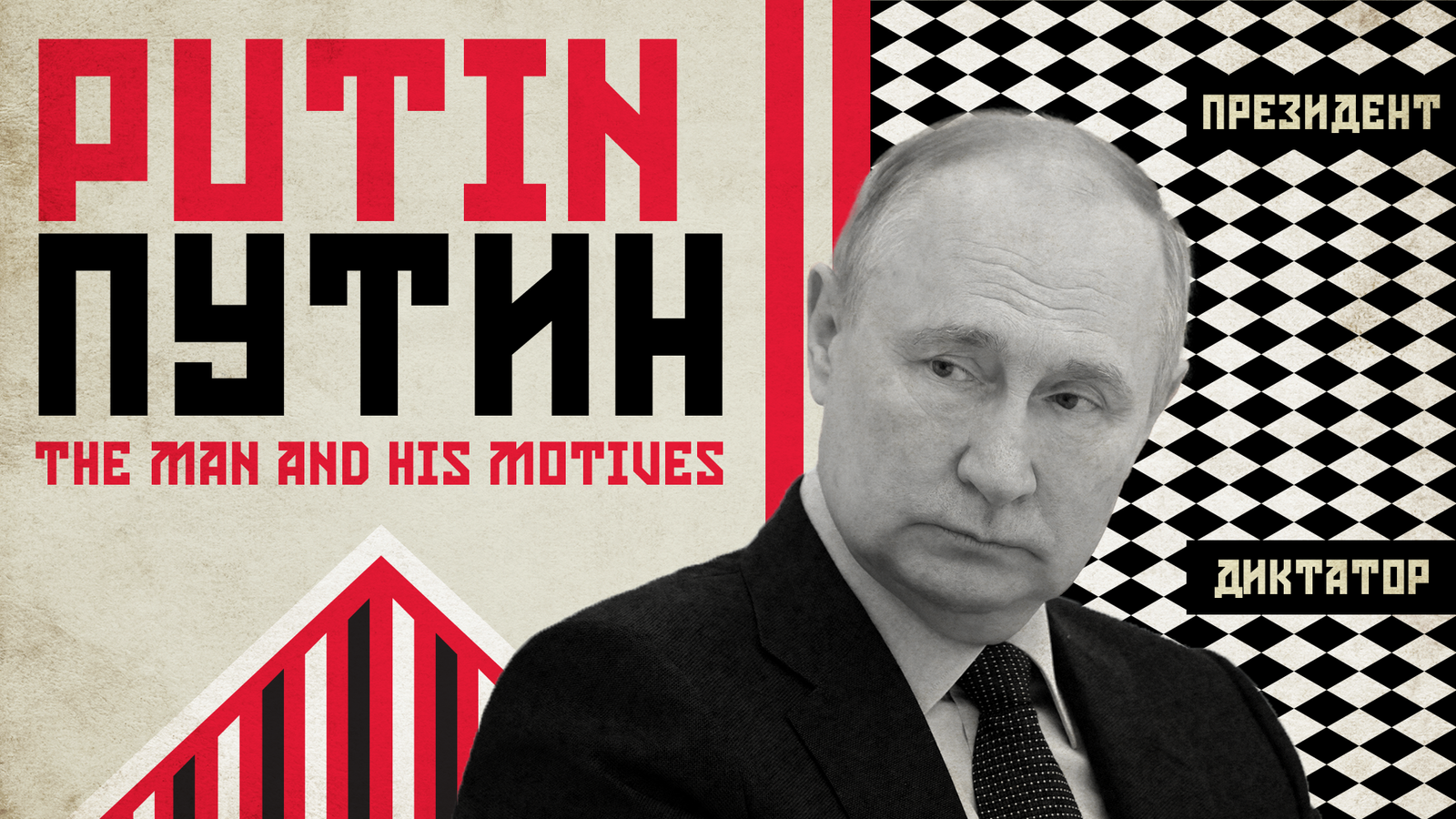
Is Putin a Defensive Nationalist or an Expansionist Authoritarian Bent on World Conquest?
This is one of the central geopolitical questions of the 21st century, and serious historians and strategists disagree sharply about it. What was Putin’s real motive for invading the Ukraine? Did he perceive their entry into NATO as a major threat to the Soviet Union or was it simply a power grab that would if not thwarted presage further incursions into European sovereignty and even the world? The answer depends partly on whether one interprets Putin primarily as:
- A defensive nationalist reacting to perceived encirclement, or
- An expansionist authoritarian trying to restore Russian imperial power.
There is evidence supporting both interpretations.
The strongest argument that NATO expansion mattered comes from a long line of American foreign policy realists, including people like George F. Kennan, John Mearsheimer, and even former U.S. officials who warned for decades that expanding NATO eastward would eventually provoke Russia.
Kennan — one of the architects of Cold War containment — called NATO expansion after the Soviet collapse a “tragic mistake.” He believed Russians of many political persuasions would see NATO moving toward their borders as a strategic threat. Mearsheimer argued repeatedly after 2014 that Ukraine becoming Western-aligned crossed what Russia viewed as a red line.
From the Russian perspective, several things happened that heightened paranoia:
- NATO expanded into former Warsaw Pact countries.
- Former Soviet republics like the Baltic states joined NATO.
- Western governments supported democratic movements in places like Georgia and Ukraine.
- The 2014 overthrow of Ukraine’s pro-Russian president, Viktor Yanukovych, was viewed in Moscow as a Western-backed regime change operation.
- Discussions about eventual Ukrainian NATO membership continued.
Russia historically has also been deeply security-obsessed because it was invaded repeatedly through the European plain — by Napoleon, Imperial Germany, and Nazi Germany. About 27 million Soviets died in World War II. Russian strategic culture never forgot that.
So yes — there is a strong case that if Ukraine had permanently declared neutrality, similar to Austria during the Cold War, the invasion might not have happened.
But that is not the whole story.
There is also substantial evidence that Putin’s ambitions go beyond mere NATO anxiety.
Before the 2022 invasion, Putin increasingly argued publicly that:
- Ukraine was not a “real nation,”
- Russians and Ukrainians were “one people,”
- the breakup of the Soviet Union was a historical catastrophe.
These arguments sound less like defensive realism and more like imperial nationalism.
Russia also acted militarily before NATO membership for Ukraine was remotely imminent:
- Georgia was invaded in 2008.
- Crimea was annexed in 2014.
- Russian-backed separatists operated in eastern Ukraine for years.
Importantly, NATO had shown little actual willingness to admit Ukraine quickly. Germany and France were hesitant for years. So, some analysts argue Putin invaded not because Ukraine was about to enter NATO, but because Ukraine was drifting culturally and politically toward Europe and away from Russian influence. A democratic, increasingly Western-oriented Ukraine on Russia’s border may itself have threatened Putin’s political model.
That distinction matters.
A democratic Slavic neighbor succeeding outside Russian control could undermine the legitimacy of Putin’s authoritarian system inside Russia.
As for the idea that Putin wants to “take over Europe,” I think that is often overstated in popular media. There is little evidence he intended to conquer Western Europe militarily in the style of Adolf Hitler. Russia lacks the economic and demographic strength for that kind of project.
But there is evidence Putin wants:
- a Russian sphere of influence,
- buffer states around Russia,
- weakened NATO cohesion,
- and restoration of great-power status comparable to the Soviet era.
That is different from world conquest, but it is still expansionist in a regional sense.
So, the fairest conclusion may be:
- NATO expansion likely contributed significantly to the crisis.
- Russian security fears were not entirely irrational.
- But Putin’s own nationalism, authoritarianism, and desire to restore Russian influence also played a major role.
- The war probably emerged from both Western strategic pressure and Russian imperial ambition interacting together.
Many public discussions reduce this to “Putin evil” versus “NATO provoked Russia.” Reality is probably more complicated than either slogan.
The war in Ukraine is not merely a military conflict but part of a larger global struggle over who will shape the economic rules of the 21st century.
The major problem for the USA is really not Putin. The major problem we face is here at home. We are continually pushing our model of democracy on the rest of the world. Many people want to believe it is because we think so highly of democracy that we want to share it with the “oppressed people” in other countries. Find out why this is not true in Part 2.
Continued in Part 2: Putin, Capitalism, Communism and World Domination


May 26, 2026 @ 15:47:50
John, I am a supporter of point 1) A defensive nationalist reacting to perceived encirclement.
As I have posted before, I see the lead up to the Russian V Ukraine conflict as being very similar to the Cuban crisis of the ’60’s. I blame Biden for the start of this conflict, the USA should have never gotten involved.
LikeLike
May 26, 2026 @ 16:45:37
Jon, Yes, regardless of Putin’s propensities, they would not have been ignitied if we had exercised more restraint. We demontrated sheer recklessness in our efforts to make Russia the “evil emplire.” IMHO
LikeLike