The Two Words that Keep on Killing Millions by Dr. J and Metis

Perhaps more wars, more inhumanity and more cruelty to others can be laid at the foot of one deceptively simple phrase:

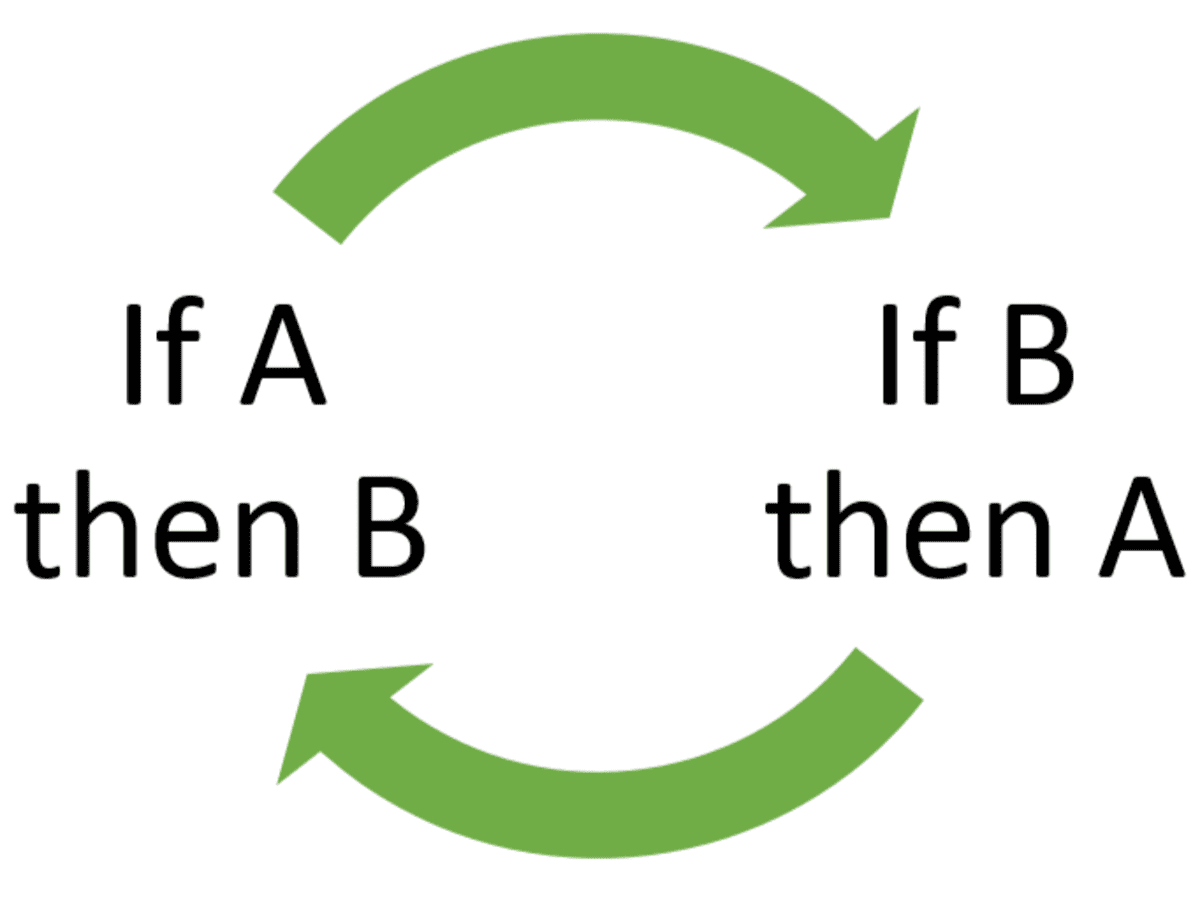
If we do this, then they will do that.”

 I call it the “If-then” fallacy. 

“If we don’t stop them in Vietnam, then they will surely be invading California.” 

“If we don’t punish them, then they will turn into juvenile delinquents.” 

“If we don’t teach them a lesson, then they will keep on doing it.” 

The If-Then fallacy assumes, that if A happens then B is sure to follow.  Sometimes there are facts supporting the assumption.  Sometimes there are studies.  Sometimes there is considerable historical evidence.  But evidence that B followed A yesterday does not prove that B must follow A tomorrow.

And yet we often behave as though it does.

We can become so certain that B follows A that we will fight a war, bomb a country, execute a murderer, spank a child, end a friendship, or refuse to forgive a transgression.

I see this fallacy almost every day.  It torments my feeble brain.  I cannot understand how or why the logic prevails so persistently.

Perhaps it is embedded in humanity as an essential element of survival. 

“If I let them do this, then they will do this and I will die.”

“I have to show them that they cannot get away with doing A otherwise they will move on to B.” 

Does experience speak so strongly or so loudly that there is no room for change? 

Is there always a rainbow after every storm?  Does history show us that people cannot learn from their past mistakes and change directions?  Is every situation a simple reflection of past situations? 

If my first wife cheated on me, will my next wife also cheat on me? 

If we don’t bomb Iran, will Iran develop a nuclear weapon and drop it on New York?  If we do not execute murderers, will everyone become a murderer? 

Where is the logic in the If-Then fallacy? 

A fallacy is a flaw in reasoning that makes an argument invalid, misleading, or false.  It looks like a good point, but the logic fails when tested.  People use fallacies by mistake or to trick others  — Dictionary.com

You can tell me that people are not logical.  Of course they aren’t.  But can I not hope that logic will prevail over fear, anger, revenge, war and death?  What is the purpose of logic if not to somewhat mitigate our emotional perspectives? 

Yes, my child lied to me today, but should I assume that unless he gets a beating, he/she will inevitably continue to lie to me? 

Does the past always predict the future? 

Santayana wrote that:

“Those who cannot remember the past are condemned to repeat it.” 

Shakespeare gave us another famous observation:

What’s past is prologue”? 

But is it?

History is not always prologue to the future. 

History is one input into the future, but it is neither a script nor a destiny.

History creates initial conditions; it does not determine outcomes.

History is prologue only to the extent that the system producing history remains substantially the same.

But systems and life never remain static: 

  • A bullet misses.
  • An election goes the other way.
  • A leader dies.
  • A hurricane changes course.
  • A scientist makes a discovery.
  • A financial institution collapses.
  • Someone makes an unexpected decision.

And suddenly millions of subsequent events take different paths.

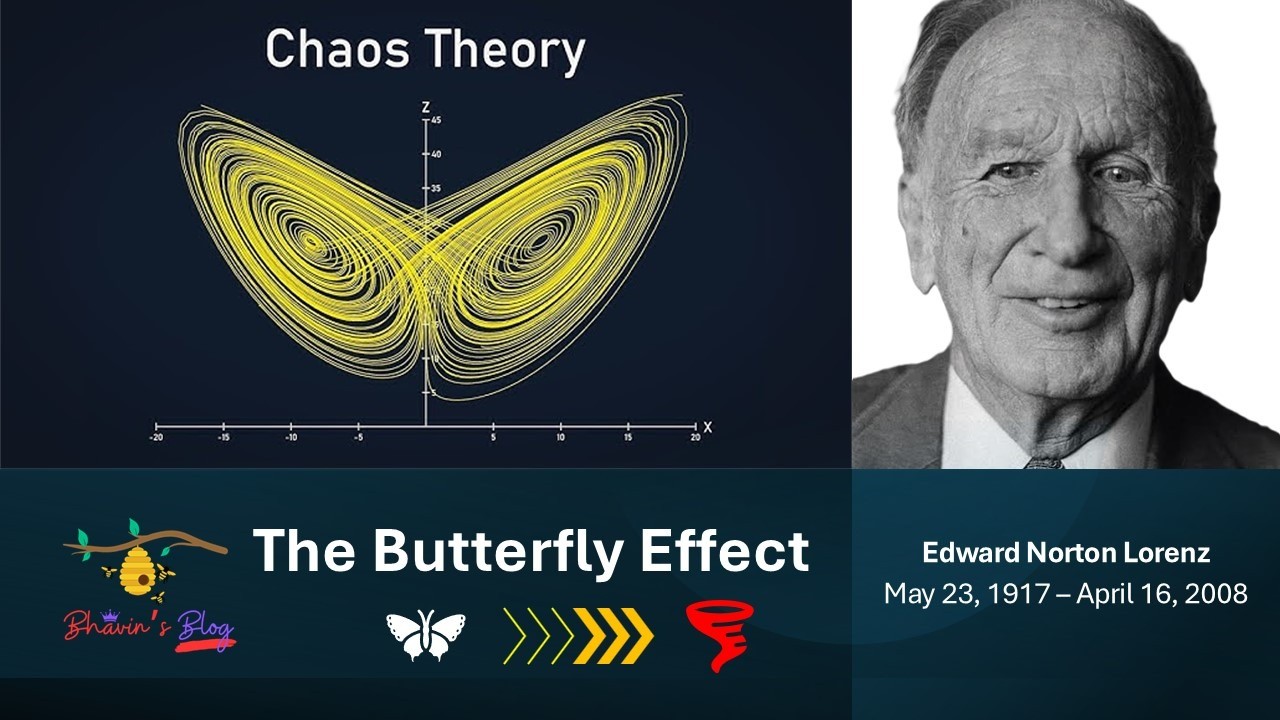
Chaos theory tells us that “Sensitivity to Initial Conditions” provides a scientific rationale for rejecting the “past is prologue” theorem.  In Chaos theory, a deterministic system can be governed by definite rules, yet tiny differences in its starting conditions can eventually produce radically different outcomes.  Lorenz’s famous “butterfly effect” captures this idea: an extremely small difference now may eventually correspond to a very large difference later.

Vietnam: If we stop communism here, we stop it everywhere

The Vietnam War was strongly influenced by the Domino Theory or the  IF-Then fallacy.

IF South Vietnam falls to communism, THEN other Southeast Asian nations will fall one after another.

The premise wasn’t irrational.  Communist expansion had occurred in the Soviet sphere.  China had become communist in 1949.  North Korea had invaded South Korea.  American policymakers extrapolated from those experiences.

The fallacy was treating that historical pattern as a reliable causal rule.  Countries are not interchangeable dominoes.  

Indonesia, Thailand, Malaysia, the Philippines and others had different governments, cultures, political movements and relationships with China and the Soviet Union.

South Vietnam fell in 1975. 

But the predicted wholesale communist collapse of Southeast Asia did not occur.

Trickle-down economics: If the top 1 percent of wealthiest people prospers, prosperity will flow downward

The simplified argument behind what is commonly called trickle-down economics follows a similar pattern: 

IF taxes on corporations, investors and high-income individuals are reduced, THEN they will invest more, businesses will expand, productivity will increase, jobs and wages will rise, and ultimately everyone will become better off.

Again, there is a legitimate economic mechanism buried within the proposition.  Lower marginal tax rates can affect incentives to work, invest, save or start businesses.

The IF–THEN fallacy occurs when that possibility becomes an assumed sequence:

Tax cuts → investment → expansion → jobs → higher wages → broadly shared prosperity.

Money doesn’t have to travel down that pathway.  

Additional after-tax income can instead go into financial assets, stock buybacks, acquisitions, overseas investments, savings, real estate or other uses.  Businesses may invest without substantially raising wages.  And whether tax reductions stimulate enough additional economic activity to compensate for lost government revenue depends heavily upon circumstances.

The mistake is not believing that lower taxes can encourage investment.

The mistake is believing that lower taxes must produce a predictable downstream result.

Once more the fallacy:  If A then surely B.

The influence of the If-Then fallacy, pervades every corner of American life.  From politics, to education, to healthcare to the criminal justice system.  Every institution in America falls victim to a pernicious fallacy that seems to have no ending.  Each day brings fresh evidence that our politicians and lawyers can use this fallacy to their own advantage. 

“If we increase the punishment, crime will decrease.”

“If we lower taxes, the economy will grow.”

“If we raise taxes, the economy will collapse.”

“If we intervene militarily, our enemy will retreat.”

“If we don’t intervene militarily, our enemy will become stronger.”

“If we forgive them, they will take advantage of us.”

“If we punish them, they will learn.”

Perhaps.  Perhaps not.

That is the point.

An IF can describe a possibility.  A THEN can describe a prediction.

Somewhere along the way, human beings have developed an extraordinary ability to turn predictions into certainties—and then to kill, punish, condemn, invade, imprison, impoverish, and hate one another on the basis of those certainties.

And perhaps the real problem goes deeper than faulty logic.

Perhaps we don’t really want uncertainty.

Perhaps certainty is simply more comfortable.

Can you see what I see or hear what I hear?

Jesus’s disciples were perplexed by his use of parables to explain things. 

The disciples came to him and asked, “Why do you speak to the people in parables?”

His answer invoked the prophet Isaiah and described people who were:

“ever hearing but never understanding”

and

“ever seeing but never perceiving.”

Perhaps that ancient observation tells us something about the If-Then Fallacy.

What does it take to open the eyes and the ears of people to seeing and hearing the truth?  People say they long for the truth, but many would rather have certainty than truth.

If the truth will set you free, we must assume that many people do not really want to be free.  They would rather be slaves to ideas that exploit them for profit.  Ideas that place their bodies in endless wars so that others may profit from their sacrifice.  Ideas that view them as commodities to be used and tossed in the garbage pail. 

To say “We are seeking truth” covers up the reality of what we really want.    

We want to believe that we know what comes next.  We want to believe that if we pull this lever, push that button, punish this person, bomb that country, lower this tax, raise that penalty, or elect this leader:

We can be certain what will follow. 

The reality is that:

The past is evidence 

It is not destiny

It is not truth

So, when someone tells me:

“If we do A, then B will happen,”

I have learned to ask one very simple question:

How do you know?

And if the answer is merely,

“Because that’s what happened before,”

Perhaps we should think very carefully before we start another war, punish another child, execute another prisoner, condemn another human being, or build another public policy upon the seductive certainty of two very small words:

IF—THEN

Voices for the Voiceless  – Dr. John  Persico and Metis (AI Assistant

What’s the difference between someone who can speak but does not speak and someone who cannot speak? 

NADA. 

Perhaps, like the difference between someone who can read but does not read and someone who cannot read.  No difference. 

Can you speak but you remain silent?

Can you see injustice, but you say nothing?

Can you see cruelty to others, but you utter not a sound?

John Stuart Mill:  “Bad men need nothing more to compass their ends, than that good men should look on and do nothing.”

Martin Luther King Jr.: The ultimate tragedy is not the oppression and cruelty by the bad people, but the silence over that by the good people.

Desmond Tutu: “If you are neutral in situations of injustice, you have chosen the side of the oppressor.”

Ella Wheeler Wilcox: “To sin by silence, when we should protest, makes cowards of men.”

Elie Wiesel:  “I swore never to be silent whenever and wherever human beings endure suffering and humiliation.  We must always take sides.  Neutrality helps the oppressor, never the victim.  Silence encourages the tormentor, never the tormented.”

Yesterday, I was listening to NPR, and host Scott Tong spoke with Mr. Viles Dorsainvil about the fear and coping mechanisms within the Haitian community in Springfield, Ohio.  The Core Issue: Following a Supreme Court decision allowing the termination of Temporary Protected Status (TPS) for more than 300,000 Haitians, local community members have been summoned to an Immigration and Customs Enforcement (ICE) facility.  Individuals reporting to these appointments are being outfitted with electronic ankle and wrist monitors, generating deep concern that this serves as the immediate next step toward mass deportation.

Pastor Viles Dorsainvil is a Moravian pastor, missionary, and co-founder and executive director of the Haitian Community Help & Support Center in Springfield, Ohio.  Pastor Dorsainvil acts as an advocate and support for the Haitian community. 

Towards the end of the interview, Pastor Dorsainvil was asked, “Are you not afraid to speak out in support of these people.” 

He replied “Yes, of course I am.  But someone must be the Voice for the Voiceless.” 

That comment was the inspiration for this blog.  Voices for the Voiceless.  Heros and Heroines who speak out when silence is deafening and words can lead to unspeakable atrocities.  Herewith are some short stories and bios of men and women who became the Voice for the Voiceless.  

Vernon Dahmer (1908–1966)

Mississippi businessman and voting-rights activist

Dahmer was a successful Black businessman in Hattiesburg, Mississippi, who repeatedly encouraged African Americans to register to vote despite Klan intimidation.  Most strikingly, he publicly announced that people who could not afford their poll tax could come to his store and he would pay it for them.

Dahmer was a member of Shady Grove Baptist Church where he was a music director and Sunday School teacher.  He was also the owner of a grocery store, sawmillplanning mill, and cotton farm.  As he described it, his main objective was to make a living for himself and to provide work for somebody else.  He would hire local individuals from the community to work for him and did not discriminate between black or white.

The Ku Klux Klan retaliated against Vernon for trying to organize Black voters by firebombing his home in January 1966.  Vernon fought the attackers while his family escaped the burning house.

He died the next day from his injuries.  A congressional history specifically records that he was killed after offering to collect poll taxes so that his neighbors would not have to go to the courthouse themselves.

Viola Liuzzo (1925–1965)

Detroit mother of five who went to Selma

After watching television coverage of Bloody Sunday in Selma, 39-year-old Viola Liuzzo left her home in Michigan and drove to Alabama to help the civil-rights movement.  She participated in the Selma-to-Montgomery campaign and transported marchers.

On March 25, 1965, she was driving a young Black activist, Leroy Moton, when Klansmen pursued their car and shot her to death.  The National Park Service describes her as having “gave her life for the cause of civil rights.” 

Growing up, her family was very poor and lived in one-room shacks with no running water.  The schools Liuzzo attended did not have adequate supplies, and teachers had little time to deal with the many children in need.  Because the family moved so often, Liuzzo usually began and ended the year in different schools.  Having been poor in Tennessee for much of her childhood and adolescence, she was close to the racially segregated nature of the South.  Her views on injustice had a powerful influence on her activism.

Emma Beatrice Tenayuca  (1916–1999)

Mexican American labor organizer from San Antonio

Tenayuca began protesting injustice while still a teenager.  At 16 she joined striking women workers; at 21 she became a leader of the enormous 1938 San Antonio pecan-shellers strike.  The workers—predominantly Mexican and Mexican American—were among the poorest-paid laborers in America.

She was born into a Mexican American family, and their lineage in South Texas predated both Mexican independence and the Mexican–American War.   The Tenayuca family were hit hard by the Depression, and all around her, Emma began to see the suffering of low class workers

But the episode that puts her in “Voices for the Voiceless” came in 1939.

San Antonio was a major hub of the pecan industry, partially due to the use of Mexican workers as a cheap source of labor.  In 1938, thousands of San Antonio pecan-shellers started a spontaneous strike in protest of poor working conditions, with Tenayuca serving as the strike committee chair.

Tenayuca was preparing to speak at a political meeting in San Antonio when a hostile crowd of roughly 5,000 surrounded the auditorium and then stormed the building.  She had to be smuggled to safety through an underground tunnel.  Death threats eventually forced her to leave San Antonio.

Rev. James Reeb (1927–1965)

Unitarian minister who answered King’s call to Selma

James Reeb is another remarkable but comparatively forgotten figure.  

James Joseph Reeb was an American Unitarian Universalist minister, pastor, and activist during the civil rights movement in Washington, D.C., and Boston, Massachusetts

After Bloody Sunday, Martin Luther King Jr. called upon clergy from around the country to come to Selma.  Reeb went.

While participating in the Selma to Montgomery marches actions in Selma, Alabama, in 1965, he was murdered by white segregationists and white supremacists. 

On March 9, 1965, after participating in the civil-rights demonstrations, Reeb and two other ministers ate at a restaurant serving African Americans.  After leaving, they were attacked by white segregationists.  Reeb was struck in the head with a club and died two days later.  He was 38 and had a wife and four children.  Three men were tried for Reeb’s murder but were acquitted by an all-white jury.  His murder remains officially unsolved.

Another quote I like is “The test of courage comes when we are in the minority.  The test of tolerance comes when we are in the majority. “  —  by Ralph W. Sockman

Looking at these individuals who became voices for the voiceless, I am struck by something else. The people who threatened, attacked and murdered them generally acted with the support—or at least the acquiescence—of the surrounding majority.  There was little courage in that.

It takes very little courage to shout when the crowd is shouting with you.

Courage begins when you are willing to stand apart from the crowd.

Inner Versus Outer

I began this essay with Pastor Dorsainvil’s remark:

“Someone must be the voice for the voiceless.”

There are so many of these unsung heroes like Pastor Dorsainvil that it is embarrassing to pick out only four.  During the course of my life, I have come across dozens more men and women who faced their fears and showed us what integrity and courage mean in action. 

That raises a larger question.

Why do some people risk their comfort, reputation, livelihood, and sometimes even their lives for people they don’t know?

And why do others remain silent?

A friend of mine describes part of the difference as inner versus outer orientation.

The distinction is certainly not absolute.  Human beings are far too complicated to divide neatly into two boxes.  Most of us contain some of both.

But the idea is useful.

An inner-oriented person derives meaning primarily from values that cannot easily be purchased: compassion, patience, mercy, kindness, integrity, community, spirituality, responsibility to others, and concern for the world we share.

An outer-oriented person is more likely to measure success through external evidence: money, property, status, achievement, recognition, possessions, power, and independence.

Neither orientation is entirely good or entirely bad.  We need ambition.  We need achievement.  We need independence.  Civilization would accomplish very little if nobody wanted to build anything, invent anything, earn anything, or succeed at anything.

The problem begins when outer success becomes the principal measure of human worth.

I asked my friend why so many people seem to be in such a hurry on the roads.

Speeding.  Tailgating.  Road rage.  Passing dangerously.  Honking half a second after the light turns green.

Where in God’s name is everybody going?

His answer was that this might be another manifestation of inner versus outer orientation.

The inner-oriented driver sees other people on the highway.

The extremely outer-oriented driver sees obstacles.

That may be an oversimplification, but I think there is something to it.

And it leads to another question:

Why does modern American society encourage so much outer-directed behavior?

One answer may be found in the economic system surrounding us.

I think this is one of the most interesting ways to examine capitalism—not simply as an economic system, but as a psychological system.  A consumer economy does not merely satisfy existing needs; it also encourages, amplifies, and often manufactures desires.

I would distinguish at least 15 psychological drives:

  1. Security — We buy things that promise safety, stability, health, financial protection, and control over an uncertain future. Insurance, savings, homes, security systems, and warranties all appeal to this drive.
  2. Status — Consumption communicates where we believe we stand—or where we would like others to think we stand. Cars, clothing, homes, watches, vacations, neighborhoods, and educational credentials can become status markers.
  3. Social comparison — We judge what is “enough” partly by looking at other people.   A perfectly adequate kitchen suddenly seems inadequate after seeing the neighbor’s remodeled kitchen. This connects strongly with what economists call relative consumption.
  4. Belonging — People buy things partly to become members of tribes: Harley riders, Apple users, golfers, sports fans, fashion groups, political groups, music subcultures.  Products become badges of membership.
  5. Identity — Consumption helps answer the question, “Who am I?” We don’t simply buy hiking boots; we may buy the identity of being an outdoors person.  We don’t merely purchase books; we surround ourselves with evidence that we are intellectuals.
  6. Novelty — Human beings are attracted to the new.  The old phone may work perfectly well, but the new phone creates curiosity and excitement. Capitalism is exceptionally good at converting our attraction to novelty into repeated purchasing.
  7. Pleasure and sensory gratification — Food, alcohol, entertainment, travel, music, comfortable furniture, beautiful clothing, and countless other products appeal directly to our desire for enjoyment.
  8. Convenience and avoidance of effort — We have a powerful desire to save time and reduce inconvenience.  Fast food, automobiles, dishwashers, delivery services, prepared meals, online shopping, and AI all capitalize on this.
  9. Control and autonomy — Ownership gives us a feeling of control.  “My house, my car, my computer, my money.” Consumer capitalism often associates purchasing power with personal freedom: I can choose.
  10. Achievement — Acquiring things can become evidence that we have succeeded.  The bigger house, promotion, expensive vacation, or luxury automobile can function almost like trophies.
  11. Fear of missing out (FOMO) — “Limited time only.” “Only three remaining.” “Everyone is talking about it.” Scarcity and social proof exploit our fear that other people are experiencing something from which we are excluded.
  12. Self-improvement — We continually purchase promises of becoming better versions of ourselves: exercise equipment, diets, books, courses, cosmetics, supplements, educational programs, productivity software.  The underlying message is powerful: The person you are isn’t quite the person you could be.
  13. Sexual and romantic attraction — Advertising has exploited this almost since advertising began.  Products become implicitly associated with attractiveness, desirability, youth, masculinity, femininity, romance, and sexual success.
  14. Reward and emotional regulation — “I’ve had a terrible day; I deserve this.” Shopping, eating, entertainment, travel, gambling, and other consumption can provide temporary relief from boredom, loneliness, frustration, or anxiety.
  15. Meaning and transcendence — This one is subtler.  Consumption sometimes attempts to satisfy needs that aren’t fundamentally material at all: meaning, purpose, connection, beauty, adventure, even immortality. Travel can promise transformation; a luxury automobile can promise significance; a brand can promise membership in something larger than oneself.

And I would add one particularly important meta-drive:

The desire for “more”

This may be the psychological engine that a consumer capitalist economy depends upon most heavily.  Perhaps underlying all fifteen is this sixteenth force: the desire for “more.”

A subsistence economy asks, “Do I have enough?” A consumer economy continually encourages us to ask, “What should I want next?” The system does not necessarily need to make people unhappy; it simply needs to maintain some distance between what we possess and what we desire.  “Shop till you drop.”  “He who has the most toys wins.”  Perhaps America’s unofficial national anthem should be “Never Enough.”  

Capitalism did not create most of these psychological drives.  Status competition, sexual attraction, tribal belonging, novelty seeking, envy, security seeking, and acquisition existed long before modern capitalism.  What consumer capitalism has accomplished extraordinarily well is attaching products and services to these ancient human impulses. 

Religion tries to help us overcome these drives, but it fails dismally to compete with Madison Avenue. 

In 2025, Americans donated an estimated $151.6 billion to religious organizations.  That includes churches, synagogues, mosques, congregations and other organizations classified by Giving USA under “religion.”  Religion remained the single largest category of American charitable giving, accounting for about 23% of charitable donations.  —- The data comes from Giving USA 2026: The Annual Report on Philanthropy for the Year 2025, published by the Giving USA Foundation

Advertising is much larger.  Estimates vary depending on exactly what is counted as advertising, but eMarketer projected total U.S. media advertising at roughly $400–422 billion for 2025.  As a reality check, digital advertising alone generated $294.6 billion in U.S. revenue in 2025, according to the Interactive Advertising Bureau/PwC. 

We go to church on Sunday,

We listen to the sermon about greed and love your neighbor,

We donate twenty dollars in the offering and then leave for the Mega Mall. 

We buy the new Sony Play Station or iPhone, which are both on sale for only 650 dollars each.

Thus, the more interesting question may not be, “What psychological drives does capitalism create?” but rather, “Which existing human drives does consumer capitalism amplify, monetize, and sometimes manipulate?”

That avoids the simplistic conclusion that capitalism is inherently good or evil.  Instead, it raises a systems question: What kinds of human behavior does our economic system encourage, reinforce, and reward?

And that brings us back to where we began.

Perhaps the struggle in America is not simply between liberal and conservative, Democrat and Republican, religious and secular, capitalist and socialist.

Perhaps beneath those arguments lies an older question:

What do I owe myself—and what do I owe other people?

Vernon Dahmer answered that question when he offered to pay the poll taxes of Black citizens who wanted to vote.

Viola Liuzzo answered it when she left her husband and five children in Michigan and drove to Alabama.

Emma Tenayuca answered it when she stood beside desperately poor workers even when thousands of people wanted to silence her.

James Reeb answered it when Martin Luther King Jr. called for clergy to come to Selma.

And Pastor Viles Dorsainvil is answering it today when he speaks for frightened people in Springfield, Ohio despite admitting that he, too, is afraid.

None of them were fearless.

That is the point.

Courage isn’t the absence of fear.

Courage is deciding that something else matters more than your fear.

So, the next time, someone honks at you because you have sat at the stop light too long, or the next time someone passes you on the right on a two lane road or they pass you on the left side with a solid yellow line, think about this concept of inner versus outer. 

Have some sympathy for a driver who is only trying to get to the Mega Mall before the Sony Play Station sale ends. 

Why Do People Believe in God?

This is not an attack on those of you who believe in some sort of creator or supreme being.  Despite the fact that Atheists are often attacked for their beliefs, I have generally been very tolerant towards anyone who wants to talk to their God whoever or whatever that may be.  Of course, that does not mean that I do not hypothesize why anyone would believe in the idea of a God.  A being that cannot be directly seen, touched, or empirically verified naturally raises skeptical questions for many people, me included.  To answer this question, I have had several different insights.  Many of these go back to my early days of rejecting God the Father.  Here are a few of my beliefs on the enigmatic question of “Why does anyone believe in God?”

  • The Need for Comfort:

People who feel helpless want to believe that someone is out there who can help them.  God can serve this role because believers often see God as omnipotent and omniscient—both all-powerful and all-knowing.  God is more powerful than any superhero created by Marvel Comics.  If I can only make an intimate connection with God or indeed make him MY GOD, then I can tap into his infinite power to help provide for my needs.  Perhaps it is to give me back my health or to provide wealth or to smite my enemies.  MY GOD will help me when I ask him to through the intercession of what are called prayers.

  • The Search for Meaning:

People often rely more on emotion than logic or reason.  People are swayed more by stories than by facts or data.  They want to believe in a supreme being because they cannot think of any other reasons for how the universe or humanity was created.  Rather than relying on something that sounds as incredible as the Big Bang Theory or The Theory of Evolution, they want to believe that there is some type of purpose in creation.  Einstein did not want to believe in Quantum Physics because he did not want to believe that “God played dice with the universe.”  Humans have a need for a logic of sorts to describe our purpose for being here, but it is not a logic of science. 

  • The Power of Culture and Upbringing:

Everywhere you look there are allusions to God.  In God we Trust on our coins.  One Nation Under God in our Pledge of Allegiance.  Our leaders say prayers to a God before beginning major political events.  We sing endless songs extolling the wonders of God.  People are taught from infancy that God will take care of you if you only believe in Him.  As a Catholic, I learned to pray before I went to sleep at night:

Now I lie me down to sleep and pray the Lord my soul will keep,

If I should die before I wake, I pray the Lord my soul will take.

Amen

I have several friends who had pancreatic cancer.  Many of them prayed or had friends and relatives who prayed for their remission or cure.  Not one of them lasted more than six months before dying of this horrible disease.  I can cite a litany of other times when God has failed to intervene on humanity’s behalf, but it would not make one iota of difference. 

Deeply held beliefs—especially those formed in childhood—can become extraordinarily resistant to change, even in the face of contradictory evidence.

People want to believe that God helps humanity.   People want to believe that God is kind, compassionate and full of infinite love and patience. 

  • A New Perspective on Why People Believe in God:

History is filled with brilliant scientists, philosophers, theologians, and ordinary people who have wrestled with these same questions and reached very different conclusions.  The existence—or nonexistence—of God has resisted definitive proof for thousands of years.  Perhaps that is one reason the debate has endured for so long.  It reminds us that, regardless of our convictions, intellectual humility is appropriate when confronting questions that may ultimately lie beyond our ability to answer.

Lately, I have had a different perspective on why people believe in God.  If my other reasons are less than charitable, this one is I believe more complimentary toward humanity.  As I reflected on my earlier explanations, I gradually realized that none of them fully captured why millions of thoughtful people believe in God.  There seemed to be something deeper involved.

I began to realize that it would take a very egotistical person to say that “I don’t need God” or that “Science can solve all of our problems.”  It is a little like the ancients who wanted to believe that the Earth was the center of the universe or that the Sun revolved around the Earth.  It might just be the height of egotism to think that creation revolved around human beings or that God revolved around human beings. 

I once wrote that God did not make man in his image, but that man created God in his image.  Regardless of which way it was, humility and humbleness would dictate that we do not make humanity the center of the Universe.  I don’t have any answers to why we are here or even what I am doing here.  I have made my own purpose in life.  I have not had any divine callings.  I have never heard the Voice of God or any other voices for that matter.  I sometimes pray for my friends or humanity only because it can’t hurt.  Perhaps, there is a benevolent God listening to my prayers.  I would give you a hundred to one odds that is not the situation but greater minds than mine have reached different conclusions.

The realization of our own limitations and frailties may just be the most powerful motivator for a belief in God.  Who among us would have the audacity to say that they can prove “God does not exist?”  Who among us would have the audacity to judge God by the state of the world?  Who among us could say that other people were “stupid” for taking the time to pray to a God? 

Maybe God is not a crutch so much as a recognition of our own limitations and frailties.

Whatever your reasons for believing or not believing in a God or Divine Presence, I hope you find peace and tranquility and compassion for others in your beliefs.  If there is a God and he is a loving compassionate God who cares about human beings, than surely he would want you to demonstrate the same kindness and love towards others.  This includes everyone and not just people who belong to the same church as you do.

Why Is Love So Frail?  By Dr. John Persico and Metis (AI Assistant)

Years ago, I wrote a blog titled But Can We Really Learn to Love Again?”  It was inspired by Pink’s song Just Give Me a Reason.”  Pink raised the hopeful possibility that two people whose love had gone cold might somehow rekindle what they once had.

At the time, I asked: Can we really learn to love again?

Today I find myself wondering if I was asking the wrong question.

Perhaps there is another question that must come first:

Why is love so frail?

How can something that seems so powerful, so permanent and so overwhelming disappear?  How can two people who once could not imagine living without each other reach the point where they can barely stand being in the same room?  How can love become hate?  And perhaps even more puzzling, how can love become nothing more than indifference?

The Promise of Forever

We swear our love will outlive time,
Beyond the years, beyond the grave;
Yet vows proclaimed as though divine
May prove too fragile still to save.
Eternity is easily promised.

We humans are rather fond of the word forever.

We promise to love forever.  We promise to remain faithful forever.  At weddings, people stand before family, friends and sometimes God and promise to remain together until death departs them.

And I think most of them really mean it.

That is what makes the frailty of love so perplexing.  Most people exchanging wedding vows are not lying.  At that particular moment, forever seems entirely possible.

I wrote in my earlier blog about the kind of love in which no reason, logic, facts, data, statistics or arguments could convince us that we would not remain with that person until the end of time.

Whenever one of my students in college would tell me that they were getting married, I would somewhat facetiously ask them “Have you written your prenuptials yet?  They would look at me like I was crazy.  Some would even say “No, we don’t need them.  Our love will never die.”

But then something happens.

Maybe there is an affair.  Maybe there is a betrayal.  Maybe someone drinks too much.  Maybe money becomes a source of endless conflict.  Maybe there is cruelty or neglect.

But perhaps nothing dramatic happens at all.

Perhaps two people simply begin drifting apart.

And one day forever becomes yesterday.

Before the Rose Loses Its Bloom

A rose is placed in a lover’s hand,
Its crimson bloom a pledge to stay;
But hearts, like roses, understand
How quickly beauty fades away.
Some promises die before the petals.

There is something ironic about giving roses as a symbol of love.

We choose something beautiful to represent something we hope will last forever—and the beautiful thing we choose begins dying almost as soon as we give it away.

Maybe that is precisely why the rose is such an appropriate symbol of romantic love.

Love can be astonishingly transient.

People who once spent hours talking to each other eventually have nothing to say.  People who could not keep their hands off one another stop touching.  The person whose telephone call once caused your heart to race eventually becomes the person whose call you don’t want to answer.

How does that happen?

In my earlier essay I wrote about caring becoming neglect, closeness becoming distance and love becoming apathy.

But those words describe what happened.  They don’t explain why it happened.

Perhaps that is the mystery.

There may be no single moment when love disappears. There may be a thousand tiny moments instead.

The kiss we forgot to give.

The conversation we were too busy to have.

The apology we refused to make.

The resentment we decided to keep.

The affection we stopped showing because we assumed the other person already knew.

Maybe love doesn’t always die from a mortal wound.

Sometimes it dies from a thousand paper cuts.

When the Fire Goes Out

The lips that whispered, “You are mine,”
May someday speak another name;
The eyes that once with passion shined
May look at us and feel no flame.
Love seldom tells us when it leaves.

One of the most haunting thoughts in my earlier blog was this:

What happens when we forget that we once loved someone?

I wrote about telling someone “I love you” countless times and meaning it every time—and then eventually reaching a day when I stopped saying it.  Eventually even the memory of that once overwhelming love could become distant.

I still find that idea disturbing.  Like you, I was told that “Love springs eternal from the human breast.”

How can a person who once occupied so much of our emotional universe become almost irrelevant to us?

We remember where we went on vacation.  We remember the house where we lived.  We remember the restaurant where we celebrated an anniversary.  We may even remember what the other person wore on our first date.

But somehow we can forget the feeling.

The memories remain while the love disappears.

Perhaps love does not announce its departure.  There is no alarm bell.  No flashing red light.  No announcement that says:

WARNING: LOVE IS LEAVING.

We simply wake up one day and realize something that once seemed permanent is no longer there.  I walked out of my first marriage on New Years day after sixteen years of marriage.  I finally admitted that the love was no longer there.

Is Hate Really the Opposite of Love?

And stranger still, the heart can turn—
From tenderness to cold disdain;
Where once desire was fierce enough to burn,
Indifference may alone remain.
The opposite of love may not be hate.

We often say that hate is the opposite of love.

I am not so sure.

Hatred still requires something from us.  We think about the person.  We resent them.  We replay old arguments.  We remember injuries.  We become angry when we hear their name.

There is still an emotional connection.

Apathy may be far more final.  No love.  No hate.  Just no care.

Perhaps love truly dies when we simply don’t care anymore.

I don’t love you.

I don’t hate you.

I don’t miss you.

I don’t wonder where you are.

I don’t particularly care whether I ever see you again.

How does someone go from being the most important person in our world to being someone about whom we feel almost nothing?

I don’t know.

And perhaps that inability to explain it tells us something important about love itself.

Perhaps Love Isn’t Something We Have

Perhaps we ask of love too much:
To conquer time and never bend,
When love depends on human touch
And mortal hearts that change and end.
Love may promise forever; we cannot.

At the end of my earlier essay, I compared relationships to the concept of entropy.  Unless energy continues to be put into a system, disorder increases.

Maybe relationships aren’t very different.

We talk about love as though it were something we acquire.

I found love.

I have someone who loves me.

We fell in love.

It was love at first sight

Perhaps therein lies the problem.

Maybe love isn’t something we have.

Maybe love is something we do.

Romance may start the process.  Attraction may bring two people together.  Passion may make us believe that we have discovered the one person in the universe without whom life would be impossible.

But those feelings cannot do all the work forever.

Love may eventually require patience when passion has faded.  Conversation when silence would be easier.  Forgiveness when resentment would feel better.  Attention when we are busy.  Affection when familiarity has replaced excitement.

Perhaps love survives because two people continue putting energy into it.  If life ends without energy, why should love be any different?

Years ago, I asked whether we can learn to love again.

I still don’t know the answer.  I found thirty reasons why my first marriage failed before I stopped counting.

But today I find myself asking an even more troubling question:

Why should we have to learn to love again in the first place?

Perhaps love itself isn’t frail.

Perhaps we are.

We change.  We become distracted.  We become selfish.  We become bored.  We get hurt.  We accumulate grievances.  We forget why this person once mattered so much to us. We cannot forgive or we do not forget.

And perhaps the greatest mistake we make is believing that because love was alive yesterday, it will automatically be alive tomorrow.

A rose does not remain a rose because someone once watered it.

Neither does love.

Cultural Arrogance and How it Destroys our Goals: Part 1

I wrote the following essay in 2013.  Reading it again thirteen years later, I was surprised by how much of its central message still feels relevant.  I have left the essay largely as originally written, making only minor editorial corrections.

Introduction:

Before you start reading my blog this week, you should understand one thing.  I am smarter than you are, stronger than you are, faster than you are, more disciplined than you are, more educated than you are, wealthier than you are and healthier than you are.

Paradoxically, I am also more humble than you are, more loving than you are, more compassionate than you are, have more friends than you, am better liked than you and have more love for others than you.  Believe me; it is truly hard to be humble when I am SOOOOO superior to you.

If you can stop gagging, you will notice in the first paragraph that my superiorities have to do with having more worldly or physical things than you.  In the second paragraph, I allude to having more of the virtuous or spiritual things than you.  Putting things and virtues together is the paradox.  Can I really be more of everything than you are as well as being more humble, more loving and more compassionate?  What is wrong with this idea?  Look closely, and you will notice the problem.  It is not wealth or health or things, and it is not spiritual gifts.  The problem is “More.”   We want more and more and more.  It does not matter whether it is more health or more compassion.  More for the sake of more becomes our guiding principle.  When I have “More” than you, I am better than you.  Culturally, spiritually, or physically, I measure myself by the “more” I have than others have.  I have arrived when I have more.  More money, more clothes, more compassion, more humility becomes our goal in life.  When do we have enough?

In this blog and my next two blogs, I want to look at three areas where “more” causes or leads to substantial problems for us.  I refer to our quest for “more” in each of these areas as an evil of arrogance.  The three arrogancies that lead to disasters for us are:  Cultural Arrogance, Religious Arrogance and Educational Arrogance.  In my blog this week, I would like to address the subject of Cultural Arrogance.  Next week, I will address Religious Arrogance and the following week the subject of Educational Arrogance.  

Let’s start by defining the term arrogance.

: An insulting way of thinking or behaving that comes from believing that you are better, smarter, or more important than other people

Thus, Cultural Arrogance would imply that one believes or acts as though their culture was better than another culture.  E.g. Americans are better than Europeans or Japanese are superior to Chinese.   Here in the USA, we tend to believe that the “American Way of Life” is superior to other ways of pursuing our stated goals of life, liberty and the pursuit of happiness.  We often act as though Americans only included people from the fifty states.  It would surprise many Americans to know that Mexicans and Canadians and most indigenous people also live in America.  In fact, unless we distinguish North America from South America and Central America, we must also include people from about 22 other countries as Americans.   Time for a caveat!

This blog is going to be about the Cultural Arrogance that I specifically see in the USA.  This is not to say that Cultural Arrogance is not a universal trait.  Sadly, it is and does exist in probably every country and every culture in the world.  Each group thinks their group is better than the other group.  However, since the USA is one of the world’s most powerful nations, our attitudes (for better or worse) have far more impact on the world than say the attitudes and biases of people from Belize or Switzerland.  (Perhaps I am being arrogant in assuming this?)

The Cultural Arrogance of the USA may impact the peace and stability of the entire world.  My goal in sharing the negative issues that arise from this arrogance lies in the simple fact that all change starts with awareness.  Awareness precedes choice, choice precedes action and action precedes change.  Unless we are aware of the attitudes, prejudices, biases and sometime simple minded assumptions we make about other countries and other cultures, we are doomed to keep making major strategic and tactical mistakes when it comes to dealing politically and also militarily with other nations.   Two examples will illustrate the negative impacts of Cultural Arrogance.

The first is funny and trivial.  Some people scoff at the use of chop sticks when going to a Chinese restaurant.  I have heard it said that “the Chinese must be really primitive to use such devices.”  “How could you eat steak with chopsticks.”  What these people ignore is the fact that since ancient times, the Chinese thought meat should be cut up before being served.  Thus, using chopsticks made perfect sense since the meat was already prepared to eat and you did not have to cut it up while eating it.  Basically, Karen and I use chop sticks when eating Chinese food since it is fun whether or not it makes more sense. 

The second example is much more serious and concerns the Vietnam War.  This war was an unmitigated disaster for both the people in the USA and the people in Vietnam.  Part of our premise for the war was that the Vietnamese would go Communist and ally themselves with the Chinese to take over all of Southeast Asia.   The concept of the “domino effect” was endlessly repeated as a justification for this totally unjustified war. 

A few years ago, I watched the documentary “The Fog of War” which was based on a series of interviews with Robert McNamara.  He was Secretary of Defense under Kennedy and Johnson and one of the leading architects of our Vietnamese war strategy.   McNamara was one of the “Brain Trust” that Kennedy appointed to his cabinet based on their accepted intellectual and cognitive abilities.  McNamara was over 80 years old when the “Fog of War” was produced and his comments are made with both the wisdom of age and the advantage of hindsight.  His conclusion was that the war was a total fiasco.  The question which McNamara still could not seem to answer was “Why?”  However, the answer was forthcoming.

McNamara Died Without Finding the Right Equation for the Vietnam War

During McNamara’s meeting with his counterpart in Vietnam, General Vo Nguyen Giap; Giap asked McNamara if he had ever read any Vietnamese History.  McNamara asked why?  To which, Giap replied that if he had, he would have understood that the Vietnamese hated the Chinese and given their history, there is no way they would have allied with the Chinese.  The Communist movement in Vietnam was a national movement for independence and not a movement to dominate Southeast Asia.  Our lack of understanding of the Vietnamese culture led to numerous mistakes in policy and war strategy.

My first professional exposure to the Cultural Arrogance endemic in the USA was in 1981.  I was attending a speech by Dr. Robert Cole at the University of Minnesota sponsored by the Minnesota Society for Training and Development.  Dr. Cole was talking about the Japanese quality effort.  Dr. Cole spent seven years studying blue collar workers in Japan and is the author of numerous books on quality and productivity.  Dr. Cole noted that every major trade, scientific and technical journal published in the USA was reprinted in Japan in Japanese.  He asked how many Japanese trade and technical and scientific journals did we think were reprinted in English and available in the USA?  The answer was ZERO!  That’s right!  Not one Japanese article was reprinted in the USA.  Remember, this was 1981 before most Americans realized that the Japanese were already producing higher quality products in many areas then we were in the USA.  We have been working for 30 years now to catch up but the arrogance that led to our export problems has still not abated.

In 1971, I was in a grocery store in Racine, Wisconsin with a Mexican American friend.  We were waiting in the checkout line and when we finally were being rung up; the cashier said to my friend “Oh, I see you are a Puerto Rican.”  My friend simply replied: “No, I am Mexican American” to which the cashier replied, “Oh well, Mexican, Puerto Rican, it’s all the same.”  Too many people in the USA still assume that “it’s all the same.”  The only measurement that counts is the standards we use in the USA.  Thus, our jury system is better than others, our government system is better than others, our constitution is better than others, our economic system is better than others, our workers are better than others, our culture is better than others.  These attributes are the heart of arrogance.  Americans are exceptional, others are not.

We go into Iraq and Afghanistan and because our democracy is “better than their systems” we are going to stay there until we see that the primitive Arabs are now voting regularly and have all the same benefits we do of a fair and impartial election system.  Ignored are the thousands of lobbyists working daily in the USA to subvert our democratic system or the hundreds of examples of cronyism, nepotism, greed and corruption that plague our political system.

Made in America trumps made in any country in the world except when it comes time to buy products and services as cheaply as we can.  We snap up the latest bargains regardless of where they are made in the world.  We used to say “Jap Crap” but we cannot use such phrases anymore since we are now importing low cost high quality products from over one hundred countries in the world.  We probably don’t have enough slang terms to scorn all the countries we buy from:  Polacks, Japs, Gooks, Slopes, Commies, Frogs, Limeys, Dago’s, that’s about all I can think of.  Only 90 more to go and I can denigrate the entire world import economy.

How do we overcome Cultural Arrogance?  This is a question that should concern each and every person in this country.  It is one thing to be proud of your country.  I have often stated that having visited 33 other countries, (2026, We are now up to 44) I have not found another nation I would want to live in. I am proud of my country and proud of my heritage.  However, remember the admonition: “Pride goeth before a fall.”  Hubris has been the downfall of many great leaders, and it can be the downfall of a country.

France, and the whole of Europe have a great culture and an amazing history. Most important thing though is that people there know how to live!  In America they’ve forgotten all about it. I’m afraid that the American culture is a disaster.” — Johnny Depp

Depp is a highly popular movie star.  He is known throughout the world, and his movies are viewed by millions.  He has become somewhat of an icon with his wild portrayals of pirates, Native Americans, vampires, and other interesting characters that many mainstream actors would not attempt to portray.   He is a brilliant actor but that does not mean his views are right or that I agree with them.  I used his quote to point out that not everyone thinks the USA has the world’s greatest culture.

“Every aspect of Western culture needs a new code of ethics – a rational ethics – as a precondition of rebirth.”  – Ayn Rand

Ayn Rand is one of the foundational thinkers of the new conservatives in the USA.  A popular intellectual and proponent of individualistic ethics, she has been outspoken in her criticism of big government and centralized government planning.   It is interesting that many of her followers would probably not realize that she was disgusted with Western ethics and had a strong belief in the need for culture change.

Preservation of one’s own culture does not require contempt or disrespect for other cultures.” — Cesar Chavez

Cesar Chavez was an American “Gandhi.”  “Chavez became the best known Latino American civil rights activist, and was strongly supported by the mainstream American labor movement.  His public-relations approach to unionism and aggressive but nonviolent tactics made the farm workers’ struggle a moral cause with nationwide support.” (Wikipedia)  Chavez pursued the idea of respect for others in his strategies to help migrant workers and numerous farm workers achieve decent benefits and wages.  He did not see the need to denigrate other cultures in his efforts to win respect for the predominantly “Latino” farm workers culture.

To Conclude:

We could look at the pros and cons of USA culture through the eyes of thousands of interesting thinkers, intellectuals, celebrities, politicians, radicals, liberals and conservatives.  What would it prove?  Many would strongly support USA culture; some would strongly condemn USA culture.  Whether we support or condemn our culture is really unimportant.  Such a discussion actually misses the key point.  The point is that we can be proud of our culture but also recognize that other people are and have good reason to be proud of their cultures. 

I have been to 49 states and 33 countries and everywhere I have been, I have seen people, attitudes, habits and behaviors that I found admirable.  (2026, It is now all fifty states and 45 countries)  I have never been to a place that I thought had NO redeeming value or that was 100 percent condemnable.  I have found good people everywhere I have been and I have found some bad ones.  We need to be more like the famous commentator Will Rogers but instead of never meeting a person we did not like; we need to be able to say, “I have never met a culture I did not like.”

People can only live fully by helping others to live.  When you give life to friends you truly live.  Cultures can only realize their further richness by honoring other traditions.  And only by respecting natural life can humanity continue to exist.  — Daisaku Ikeda

Time for Questions:

Do we have to put other cultures down to elevate our own?  Do we respect other cultures when we assume they all want to be “democratic” or capitalistic?   How can we elect politicians who will respect the diversity of nations and other cultures?  Do you teach your children respect for other cultures?  Do you show respect for other cultures in your daily activities?  Do you think living in the USA makes you superior to other people?

Life is just beginning.

Share this:

Love Is All You Need or Is It?

portrait-of-jesus-logo

I first wrote this essay in 2015. Eleven years later, after watching the continuing polarization of politics and religion around the world, I reread it and was surprised by how relevant it still seemed. I offer it again, not because I believe it answers every question, but because I believe the central question remains worth asking: What would Jesus say about the way his teachings are being lived today?”

March 23, 2015

In this third of my series on the three theological virtues we will discuss the subject of Love and the role it plays in our lives.   For this purpose, I thought we should go right to the source. Perhaps no one in history has done more to promote the virtue of Love than Jesus Christ of Nazareth. Jesus brought about a revolution in thinking and an entire faith founded on the single fundamental commandment to “Love thy neighbor as you Love yourself.”   Jesus called this the greatest of all commandments.  (Peace, I Give You Peace — Jason Upton) A great song to listen to as you read this blog today.

“Love your neighbor as yourself. There is no commandment greater than these.” —- Mark 12:31

I asked Jesus if he would visit with us to see where his teachings have gone and what his views are now concerning the state of Love in the world. Jesus agreed and for old time sake, we decided to meet in the Garden of Gethsemane. We found comfortable seats on a couple of stone benches and proceeded to talk.

John: Thank you Jesus for joining me here today. I was hoping we could get your perspective on a number of issues that I am sure you would consider important. Primary among these issues is the state of Love in the world and where your followers have taken your views on Love.

Jesus: Well, thanks John. It is a pleasure to be here with you. This spot brings back many old memories. I still remember my 12 apostles who could not stay awake even one hour to pray with me. But they meant well and were good people. Without them, my ideas would not have spread as far and wide as they have.

religious icebergJohn:   I am going to start off with a loaded question. You know I don’t believe you are a god but I do believe you are a great prophet. I remain skeptical of Christians though as I don’t see that they really have much Love in their hearts. Could you comment on the movement that bears your name and their adoption of Love as a guiding principle?

Jesus: No offense taken. I never said I was a god. I always said I was a “Son of Man.” Nevertheless, I preached Love. My concept of Love was much different than the Greek definitions which encompassed four distinct words for Love: agápe, éros, philía, and storgē.  I think you could say that I was speaking of a more transcendental type of Love. Man’s Love has been more of the Greek varieties. The Love of which I speak is not only unconditional but universal and all inclusive.

John: You were noted to have said: But I say unto you, Love your enemies, bless them that curse you, do good to them that hate you, and pray for them who despitefully use you, and persecute you.” — Matthew 5:44

Jesus: Yes, I preached this often, but alas it seems to little avail.

John: Yes, I can’t say that I see too many Christians loving their enemies. I don’t even see too many Christians loving other Christians. Baptists dislike Catholics. Catholics dislike Lutherans. Lutherans dislike Episcopalians and they all dislike Mormons and Jehovah Witnesses.

black jesusJesus: Would that it were not so but why pick on Christians? Muslims dislike Jews. Sunni’s dislike Shiites. Hindus dislike Buddhists. Few if any religions in the world embrace anyone with Love unless they are from their own tribe.

John: You mention the word “tribe.” In our day, a “tribe” is very different than it was in your time. Today a gang, cult, cabal or cartel might be considered a “tribe” by sociologists. Some people insist today that “race” is the highest or most important affiliation that anyone can have.

Jesus: Nevertheless, it was the same thing in my time. Canaanites killing Philistines.   Assyrians killing Babylonians. Levites killing Samaritans. Throughout history, tribal affiliations have undone everything I tried to teach about Love and compassion.

religion worth killing forJohn: Then of course, we have the rise of Nations and Nation states and perhaps more now than at any time in history, everyone is affiliated with a family, a group or tribe, an ethnic identity, a state, a nation and then finally a purpose whether it is Communism, Capitalism or Socialism. There is little Love lost or shed on anyone not in your particular identity group. And of course, even within groups there is no getting along. Are you aware of how many different groups use your name and call themselves Christian? They cannot even get along with each other never mind getting along with their enemies.

Jesus: What you say is true. I was a simple carpenter’s son but I saw the hatred and killing and I wanted to change the way people treated each other. People embraced the “idea” of my ideology but they could never really assimilate it in their hearts. But better they at least start with a correct vision and continue to strive towards it.

John: Do you really think so? Are you aware of the Rwandan massacres wherein Christians from the Hutu tribe massacred their Christian neighbors and friends from the Tutsi tribe? Of course, I think you know of the brutality and murders that have been inflicted upon Jews also by their neighbors who were professing a belief in you. Millions and millions of Jews have been murdered by their Christian neighbors.

Jesus: Yes, I know. They profess that I died on a cross for their sins, but they have little understanding or empathy to sacrifice even for people who believe as they do never mind their enemies. I am appalled by the excuses they make in my name for these atrocities. Paul had it right when he wrote:

“Though I speak with the tongues of men and of angels, but have not Love, I have become sounding brass or a clanging cymbal. And though I have the gift of prophecy, and understand all mysteries and all knowledge, and though I have all faith, so that I could remove mountains, but have not Love, I am nothing. And though I bestow all my goods to feed the poor, and though I give my body to be burned, but have not Love, it profits me nothing. Love suffers long and is kind; Love does not envy; Love does not parade itself, is not puffed up; does not behave rudely, does not seek its own, is not provoked, thinks no evil; does not rejoice in iniquity, but rejoices in the truth; bears all things, believes all things, hopes all things, endures all things.” —  1 Corinthians 13

John: Yes, many people have this quote on their bedroom walls and it is a popular recitation at weddings.   But you have said that words alone with not get you into heaven. I quote:

“Not everyone who calls out to me, ‘Lord! Lord!’ will enter the Kingdom of Heaven. Only those who actually do the will of my Father in heaven will enter.” —- Matthew 7:21

eliminate hungreJesus: Yes, I meant that good intentions, prayers, and admonitions are not enough. Without deeds and actions, you will never see the Kingdom of Heaven.   The pious Christian going to church on Sunday, saying prayers, tithing and reading the bible will not get into heaven if he or she trespasses on his neighbor.

John: And who is a Christian’s neighbor.

The Good SamaritanJesus: You might remember the Parable of the Good Samaritan. I answered a similar question about “who is thy neighbor?”   I replied to my disciples:

“Which of these three do you think was a neighbor to the man who fell into the hands of robbers?”  The expert in the law replied, “The one who had mercy on him.” — Luke 10: 25-37

All of those who forgive others are thy neighbors. Those who show Love for others are thy neighbors. Those who sow compassion and not hate are thy neighbors. Those who sow discord and hate are not your neighbors. Those who kill and maim cannot do so in my name. That is an abomination to me. No true Christian can kill or hurt another intentionally in my name. That is what Love is, doing good for others and not evil. The devil wants man to do evil. I want and have always wanted humans to Love one another.

“If you Love those who Love you, what credit is that to you? Even ‘sinners’ Love those who Love them. And if you do good to those who are good to you, what credit is that to you? Even ‘sinners’ do that. And if you lend to those from whom you expect repayment, what credit is that to you? Even ‘sinners’ lend to ‘sinners,’ expecting to be repaid in full. But Love your enemies, do good to them, and lend to them without expecting to get anything back. Then your reward will be great, and you will be sons of the Most High, because he is kind to the ungrateful and wicked. Be merciful, just as your Father is merciful.” — Luke 6: 27-36

jesus-love-your-enemies-lgJohn: How do you account for all these Christian ministers spewing their hatred against our so called enemies, these war chaplains sanctifying battle readiness and priests and pastors blessing those who are going into combat?

Jesus: Clearly they are false prophets and do not understand my words. I have said:

“Whoever causes one of these little ones who believe in me to sin, it would be better for him if a great millstone were hung around his neck and he were thrown into the sea.” —Mark 9:42

John: What do you think about the killings and wars that have been done in the name of Christianity? Are these evil?

Jesus: I can understand why so many people are waiting for me to return. However, I have never left and they do not understand that fact. Those who choose to Love and do good will be saved. They have to make this choice. Their Father and I have never taken this choice away from anyone. You cannot come to the Kingdom of God except through making this choice. I have said that I am the way and I still point the way. Mankind has to make the choice. The devil instills fear and fear drives man to make evil choices. Evil thrives on fear. Fear drives man to choose hate over Love.   Love is still the way and the only choice to salvation.

John: Are you saying that people who kill or hate others will suffer eternal damnation?

homeless manJesus: Our Father is infinitely compassionate. There is no retribution in heaven. People make their hell on earth with their choices. Choose Love and you can have heaven where ever people gather in my name. Choose hate and you choose Hell. Choose hate and you choose Evil. Choose hate and you choose eternal damnation.

John: Jesus, thank you very much for visiting with us today. I have one final question. What do you think about the other world religions such as Buddhism, Hinduism, Islam and Judaism?

Jesus: I think we are all teaching the power of Love over hate. But fear gets in the way of hearing our message. Christians, Buddhists, Hindus, Jews, Muslims are all people who have been shown the way. They lose the way because of their own self-hatred and fear of others. Any of these paths can take you to salvation. There are many other paths as well that can lead anyone to salvation. There are no pagans, atheists or agnostics who cannot be saved. They all have the same choice as I gave my disciples.   The way has many paths but the same gate. That gate is Love.

John: Thank you Jesus.

Time for Questions:

Are you a Christian? What makes you a Christian? Does believing that Jesus was a God make you a Christian or is it how you behave that makes you a Christian? What can we do to help bring about more love in the world? What are you doing to accomplish this goal? Is it enough to just love your family? What role does forgiveness play in your life?

Life is just beginning.

“Love is that condition in which the happiness of another person is essential to your own.”  ― Robert A. HeinleinStranger in a Strange Land