Mr. Wardell E. Stephens:  A Profile in Courage, Character and Integrity

Mr.  Wardell Stephens is a 95-year-old Navy veteran.  He was born in 1930 in St. Louis.  Wardell joined the Navy in 1947 at the age of seventeen.  He retired twenty years later in 1967 at the age of 37.  He had a long and distinguished career as a Navy diver conducting deep sea rescue operations.  He is a rare man, and it is my pleasure to provide a brief overview of his life.  I call it a Profile in Courage, Character and Integrity.  Reading this testimonial, I think you will agree that these terms aptly apply to Mr. Stephens.

I first met Mr. Stephens several years ago at one of the Eloy Veterans Day celebrations.  Mr.  Stephens was the guest of honor and a keynote speaker.  He was mild mannered and humble.  He briefly thanked the people for his being there and said a few words about how much the Navy mattered to him.  He was a Navy diver who had conducted several deep-sea rescue operations back when the equipment was much more primitive than it was today.  No bragging about his bravery or how dangerous the job was.  I was impressed with his humility.

Several years went by and one day shortly after they opened the new Eloy Veterans Center, (January 2025) Mr.  Stephens dropped by to visit.  Wardell was now 95 but had not seemed to age a day.  He still walked like a young man with none of the shuffling you often see with the aged.  He was ramrod straight and looked in better health than many people half his age.

We had a talk about some of his career exploits and again I was very impressed with his courage and humility.  I asked if I could interview him and he agreed.  That was more than two months ago.  Mr.  Wardell was sick for a while (as was I) with the damn bug that went around this spring.   We finally set a date for me to interview him.  Earlier he had left a packet of information about his Navy ships and projects for me to look at.  Some of the material that follows are taken from his Navy record and some will include my interview with Wardell on May 7th, 2025.  The interview lasted about 2 hours.  Many veterans are inclined to some exaggeration as the years have passed.  Wardell was just the opposite.  I had a hard time getting him to be anything more than modest about his adventures.

Here is what one of his commanders said about him in a Navy Review:

“Stephens is an extremely conscientious Petty Officer in that he invariably will take charge of an operation.  He goes out of his way to correct other divisional personnel who are performing work in an unseamanlike manner.  His timely suggestions and technical ability have contributed greatly to the ability of the diving division to perform submarine repair work in an expeditious manner.  He is always in a clean complete uniform and wears it in a shipshape fashion at all times.  Definite credit to his rate and to the Naval service.  Highly recommended for advancement in rate.  Stephens when in charge of an evolution uses excellent judgement and disposes his men for maximum effectiveness in accordance with their abilities thereby assuring a smooth operation.”  — J. H. Lindsay, CDR, USN

I had a chance to look at Mr. Stephen’s training record.  It was full of very difficult diving techniques including the following:

  • Deep sea diving school
  • Salvage diving school
  • Diving school instructor
  • Submarine rescue

A number of years ago I went to scuba training and received my PADI certification.  I then went on a trip to Belize to do several dives in the area of Ambergris Caye and Caye Caulker.  I was sixty years old at the time.  Some of my dives were fun but some were scary.  Swimming among large sharks.  Swimming through some narrow channels in dark conditions.  Having to think about time for compensation stops to avoid getting the bends.  Watching my air and depth gauges.  Trying to avoid scraping coral.  Trying to manage my buoyancy to stay with the other divers.  It was very challenging, and I was only recreational diving.  I never went below 150 feet and was never down for more than thirty minutes.

Wardell was diving in pitch black conditions.  Sometimes using helium instead of oxygen and going down to do rescue and salvage operations at depths of 350 feet.  Here is a Letter of Commendation describing one operation that Wardell completed:

On May 13, 1964, NEREUS completed the water-borne replacement of the propeller on the USS Scamp.  The old and new propellors weigh approximately 12 tons.  As far as is known the replacement had never been accomplished in the water.  As a member of the diving crew, you did the work assigned and thus contributed to the overall success enjoyed.  In each instance, the reliance placed on you by the Master Diver and diving officer was justified and your contribution was significant.”  — M. des Granges, Commanding Officer, USS NEREUS

The following video talks about what it is like to be a Navy Rescue and Salvage diver.

https://www.youtube.com/watch?v=AnihhBnzowg

I would like to describe one more operation that Wardell did from the Commendation letter that he received.  After this I will go to the interview that I did with Wardell.  I am glad that he sent me some of his service records because it was hard to get Wardell to “brag” about any of his Navy exploits.  I am trying to give you a sense of the danger and difficulty of what Mr. Stephens did for twenty years.  I don’t often think of all military people as heroes, but it is certainly an appropriate designation for Wardell.

“In the early evening of December 3, 1958, a Marine Corps helicopter flying under conditions of darkness and poor visibility crashed in the Potomac River near Jones Point, Alexandria, Virginia.  While  enroute to commence the salvage operation on the assigned helicopter, you were advised of a second aircraft crash.  This second crash was a Navy Beechcraft with a crew of two which crashed in the Potomac river off Haines Point.  Throughout the daylight hours of 4 December under adverse weather conditions, the officers and men of your entire organization worked expeditiously in the salvage of the downed Beechcraft.  On December 5th, you were also able to complete the salvage of the downed helicopter.” — Commandant, Potomac River Naval Command 

On my last Scuba Diving trip to Belize in April of 2024, the weather conditions were pretty bad.  A storm had come through the area and the water visibility was very poor.  The waves and current were quite rough.  I had a hard time reading my depth gauge and my air gauge and ended up getting separated from the other divers on our ship.  I came up to the surface and could not see the dive boat.  I had left my safety flag back with my pack.  I also had not bothered to take my snorkel.  My tank was almost out of air, and I had no way to alert anyone as to where I was.  When the oxygen ran out of my tank, I had to keep propelling myself above the waves to get a breath of air.  With the waves running high, I could do little except bob up and down and hope someone would find me.  About 90 minutes later, the boat finally found me.  I was picked up and spent the next two hours trying to barf up the seawater that I had swallowed.

I tell you the above story because Mr. Stephens had made many operations where he had to arrange a tow in weather ten times worse than I experienced.  To link a tow ship with a disabled vessel is not as easy as simply throwing a rope to someone on the other ship.  This short video might give you some idea of what courage it would take to engage in such an operation.

Rescue Salvage Towing operations on rough sea

https://www.youtube.com/watch?v=-JhLJoCYi-g

Here are my interview questions and Wardell’s replies.  On the day of the interview, we had not scheduled a definite time.  I had said that I would be at the Veterans Center between 10 AM and 2 PM and that he could stop by anytime he wished.  Shortly after 10 AM, my cell phone rang, and it was Wardell.  I expected that he was calling to say that he was not feeling well.  Not an unexpected event for a man 95 years old.  Instead, he had called to tell me that he might be a little late since he had a phone problem at his house and the repair person was coming out that morning.  I thanked him for his call and told him that any time he arrived it would be okay.  I can’t tell you how surprised I was at his call.  I cannot get repair people to give me a date and time that they will arrive much less call me if they are going to be late.  Wardell receives not one penny from this interview and yet he is courteous and diligent beyond what any norm is today.

John and Wardell Interview:

John:  Can you tell me a little about yourself when you were growing up.  Friends, school, culture, family, dreams?

Wardell:  I was raised by my mom and aunt.  I had no siblings.  I grew up in East Saint Louis in the Rush City Area.  We called it the bottoms.  I started working as a pin setter in a bowling alley when I was 14.  I drove a coal truck when I was 16.  My dream was to own my own truck and go into the coal business.  I never got a drivers license.  I joined the Navy when I turned 17

Wiki describes the Rush City area as follows: 

“Rush City is a historically African-American community within East St. Louis, Illinois, that is unique in the American Bottom region.  It’s characterized by a rural Southern influence, dispersed housing, and vernacular architecture, making it a distinct “country life” pocket within a struggling urban environment.  The community has faced challenges related to economic disinvestment, environmental pollution, and industrial encroachment.”

John:  Why did you pick the Navy?

Wardell:  Well, one day during the second World War, the Navy brought an LST to St. Louis.  I went down to see it and was very impressed.  Later when I decided to leave St. Louis, I enlisted in the Navy.

John:  What are you most proud of in terms of your military service?

Wardell:  The work I did as a rescue and salvage diver and my Sailmaker rate

John:  Can you tell me more about your work in the military?  Challenges etc.?

Wardell:  There was a lot of things to learn.  Setting up a tow.  Different type of rigging on different ships.  Working cables in rough weather.  Using hoists in rough weather.  It was easy to get hurt if you were not careful.

John:  What were your biggest difficulties in the military?

Wardell:  Only had a few minor negative experiences.  Most of my career was positive.

John:  What were the negative experiences?

Wardell:  Well Truman changed some of the policies for the better.  Before Truman there were some bases where they separated Blacks and Whites in the dining halls.

John:  How did the transition to civilian life go for you?

Wardell:  At first it was very chaotic.  In the military things are very orderly and predictable.

John:  Can you tell me a little about your family life?  Spouse, kids?

Wardell:  Well, I was married twice.  I have four children and ten grandchildren.

John:  Wardell, for a 95-year-old guy, you are in great shape.  How do you do it?

Wardell:  I lift weights three times a week.  I don’t smoke or drink.  I eat lots of protein.  Three times per week, I go for a walk.   I walk as much as I can.  I always park as far away from a store in the parking lot so I get more walking in.  I have a treadmill at home I walk on when the weather is too hot or bad.

John:  What advice would you give young people today?

Wardell:  I would tell them that you have to learn and study to get something good in life.  You have to study hard and pay attention in school.  I would tell them that they should learn another language.

John:  What were the highs and lows of your life Wardell?

Wardell:  The high was completing Navy diving school in 1954.  I also finally completed my GED since I never graduated high school.

John:  What would you do over if you could?

Wardell:  I would go for more school.  Continue education all your life.

John:  Am I leaving anything out you would like to share?

Wardell:  That’s about it.  Except I also had a stint in the Merchant Marine after I retired from the military.

John:  Thank you for taking the time to share some of your life and thoughts with us Wardell.  It has been a pleasure talking to you.

That’s it folks.  I hope you have enjoyed learning about a very remarkable human being.  In addition to a depth of character and integrity that is more than noteworthy, Mr. Stevens is  a kind man who said not one bad word about anyone during the entire interview or the time that I have known him.  His integrity and character stems from his taking the responsibility to live life according to what his mother and aunt taught him and what his religious beliefs have inspired in him.

PS:  I still see Wardell every few weeks when he comes down to the Veteran Center in Eloy.  Yesterday, he asked me to add a little something to the bio I did for him.  I was quite surprised to learn that Wardell is a Life Association Member of the Buffalo Soldiers.  He officially belongs to the “9th and 10th (Horse) Cavalry Association – Official Army Unit Association.”  For those of you who have never heard of the Buffalo Soldiers, I give you the following brief excerpt from Wikipedia.  For more information, click on the Wikipedia link or simply go to any Arizona Library.  There are many books written about the Buffalo Soldiers.

Buffalo Soldiers were United States Army regiments composed exclusively of Black American soldiers, formed during the 19th century to serve on the American frontier.

Legacy and Contributions
  • Courage and Discipline:
    The Buffalo Soldiers had the lowest desertion and court-martial rates in the army, demonstrating exceptional discipline and courage. 

    Westward Expansion:
    They played a crucial role in the expansion of the United States, though this placed them in the complex position of enforcing policies that displaced Indigenous populations. 

    Paving the Way for Civil Rights:
    Their exemplary service and perseverance in the face of discrimination helped to advance the cause of civil rights and military integration, which was fully realized in 1948. 


Character, Culture and Race:  From a White Perspective

What do character, culture and race have to do with each other?  That is the subject of my blog this week.  I believe that each of these concepts is not well understood by people in America or in any other country for that matter.  There is a science to understanding these concepts but there is also an art that comes from experience and living.  Both science and experience are necessary to understand each concept and their relationship to each other.  Since my experience can only come from where I stand, I note that I stand as a white, USA born, male in the early 21st Century.  Standing anywhere else would no doubt give me a different experience and a different perspective on these ideas.  Let me start with first defining what the term Character means to me.  I am going to give you my take and not Webster’s dictionary definition.

Character:

I think there are four major elements of character.  I believe these are: integrity, wisdom, tolerance, and courage.  Integrity is standing up for what one believes.  Integrity is the opposite of sycophancy.  Sycophants go along imageswith someone for an underlying motive or future advantage that they hope will accrue for their fawning behavior.  People with integrity do what they believe is right whether or not any advantage will accrue from their efforts.  People with integrity are consistent in their stated ideas and do not read the polls to see which way public opinion is blowing. 

It has been said that: “Knowledge helps you to make a living while wisdom helps you to make a life.”  Wisdom is the ability to as Father Sthokal would have said “Exercise discernment.”  The Greeks would have said that wisdom is the ability to exercise the Golden Mean.  The ability to live life in moderation and not to be seduced by extremes or excesses.  Many a smart people there are who you know are very stupid.  I see college professors who can see no further than the myopia induced by their academic disciplines.  Thus, they see everything through only one lens. 

01-03-2017-brave-louisiana-590

A favorite quote of mine respecting tolerance and courage states that:  “The test of tolerance comes when we are in the majority.  The test of courage comes when we are in the minority.” — Ralph W. Sockman.  It takes real courage to stand up for what you believe when everyone is against you.  In the USA today, it takes courage to stand up for immigrants and poor people.  The greed in American life has prejudiced so many people who mistakenly believe that the poor and needy are taking their jobs or money away.  People are afraid to speak out because they are afraid that they will be labeled as Un-American. 

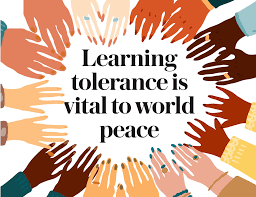
downloadTolerance is the willingness to respect and stand up for someone when you are in the majority and they are in the minority.  Difficult it is to speak out against your peers and tribe.  When someone has an idea that does not fit with the normal conception, the tolerant person will try to hear them out.  Tolerant people respect those with seemingly strange and weird or wild ideas.  The tolerant person does not say “That is crazy or that is a stupid idea.”  A recent example I think that shows both tolerance and courage is the song by Tyler Childers – “Long Violent History.”  You don’t hear many country singers supporting the Black Lives Matter movement or speaking out against racism. 

Character is not limited to any race, religion, culture, nation, or ethnicity

433facd9095fc30472d27ce1428a5e95

Culture:

When I met my current wife Karen, she had an adopted Korean daughter.  Susan or Lee Hei Sook was six years old when Karen went though the procedures to adopt her.  She was an orphan who did know where her mom and dad were.  Many years later when Susan was out of college and expecting her second child she decided to search for her birth mother.  Through her amazing efforts, Susan was able to find both her birth mother and birth father.  I was fortunate enough to travel with Susan and Karen to Korea to meet both of them.  They had been divorced for many years and the story of Susan’s being sent to an orphanage would require a blog of its own. 

What is remarkable about the above story for me is Karen’s effort to help Susan retain her culture, heritage and language and even support her efforts to find her birth mother.  Karen cooked Korean food for Susan, sent Susan to Korean Camp each summer and learned how to eat with chopsticks.  Too many people in the USA believe that culture must be abandoned and that being having an ethnic or cultural identify is incompatible with being patriotic.  I know many of my generation who were not taught their parents’ language since there was a strong drive to become assimilated by many immigrants.  To desire to learn Korean would strike many of the “Greatest Generation” as a useless activity.  It did not strike my wife Karen this way.

Many older and younger people feel that our American culture is the best culture and that immigrants must discard other cultural affiliations in order to become assimilated.  The holy grail for Black people (at least as indicated by many white people) is something called integration.  This basically means abandoning any idea of “Blackness” and becoming as white as possible.  The same holy grail of assimilation or integration was foisted on many Native Americans.  Indians were forced to attend white “culture” schools and were not allowed to practice their native languages or wear indigenous clothing.  This rejection of culture has led to a considerable degree of prejudice and outright racism in the USA.  Witness the incarceration of Japanese Americans during the Second World War. 

1200-218392-characteristics-of-culture

What is culture?  Culture is a universal phenomenon.  There is no such thing as not having a cultural identify.  Culture is forged for every living human being regardless of where they live.  Culture is the norms, habits, rituals, protocols, traditions, and beliefs of a group that you identify with.  Everyone has a culture.  Even hermits develop a culture based on their habits and ideology.  Gangs, tribes, schools, companies, organizations, ethnic groups, countries, nationalities, and any group with a set of shared norms and patterns develops its own unique culture.  I grew up with an Italian father and a mixed Irish-German mother.  I always lived in an Italian neighborhood when I was growing up.  I never learned to speak Italian, but I learned many Italian swear words.  I hung around with a gang who were mostly Italians.  My family had one culture.  My gang had another culture. 

I went into the United States Air Force when I was 18 years old.  The Air Force had its own culture.  The Army had its own culture.  I would guess there is not a person on the face of the earth who does not belong to more than one culture.  I would bet that most of us can identify with many cultures.  Thus, the term “cultural appropriation” is rather quixotic in many ways.  On the one hand, people might feel flattered that you want to merge symbols of their culture in your own traditions.  However, many other groups feel insulted and abused by such appropriation.  I can understand Indians who think that white people have no right to acquire their culture.  When your culture has been denigrated by the majority group and you have been maligned for trying to practice your culture, outrage against any outside group using your cultural icons for profit or fame would be a normal reaction.

Belonging to more than one culture does not necessarily mean that you should or must give up your identification with another culture.  Culture is a grounding for humans.  Culture helps us navigate life by adopting behaviors and norms that will help us fit in.  Culture is a means to share life with others.  As a veteran, I have many stories and fond memories of times spent with men whom I initially had nothing in common with.  Yet years later, I still enjoy meeting with veterans because we share so many of the same experiences concerning life in the military. 

“Culture does not make people.  People make culture.  If it is true that the full humanity of women is not our culture, then we can and must make it our culture.”  — ― Chimamanda Ngozi Adichie, We Should All Be Feminists

Race:

What is race?  Scientists say that there is no such thing as race.  How can this be?  Employment applications, loan applications, credit card applications and hundreds of other official documents include demographic questions where you must identify yourself as Black, White, Native America, Asian American, Latino and sometimes Other.  Black people identify with Black people as members of a common race.  The same is true for Caucasians, Indians, Latinos and Asians.  If there is no “race” how can there be “racism”?  Yet, the concept of “racism” is enshrined in laws both for and against “racism.”  If there is no race, why do I see people of different colors and backgrounds who have common acceptance of the idea that they are different from me.”  What can we attribute these different physical characteristics to if not race?

o001_hand_09

“Researchers who have since looked at people at the genetic level now say that the whole category of race is misconceived.  Indeed, when scientists set out to assemble the first complete human genome, which was a composite of several individuals, they deliberately gathered samples from people who self-identified as members of different races.  In June 2000, when the results were announced at a White House ceremony, Craig Venter, a pioneer of DNA sequencing, observed, “The concept of race has no genetic or scientific basis.”  — National Geographic, Elizabeth Kolbert, March 12th, 2018

Most of the world’s citizens outside Africa originally migrated from Africa.  These early immigrants through genetic mutations and adaptation to different environments gradually gained different features.  The most predominant feature being skin color.  Skin color is not uniform throughout the world as we can see in places like India, Southeast Asia, China, South America, and even among the indigenous people in the USA.  Many people with “dark” skin coloring in the world would not say that they were Black or White.  I have been to more than thirty other countries.  I have noticed that “Black” people or people from an African Ancestry are not called African in these countries.  In the USA, we have used the term African-Americans but in Sweden, Africans are not called African-Swedes.  The same is true in many other countries across the globe.  Here in the USA, we seem obsessed with the concept of race.  Evidence shows that the genetic differences between individuals are greater than the genetic differences between the so-called “races.”

A randomly-selected American can be more genetically similar to a randomly-selected Korean than to a fellow randomly-selected American.  Similarly, a randomly-selected Ethiopian can be more genetically similar to a randomly-selected Norwegian than to a fellow randomly-selected Ethiopian.  This kind of occurrence is so common that simply comparing the genomes of two people will not help you classify them into what the world currently recognizes as their “race”. — Kristen Hovet, There Is No Such Thing as Race at the Genetic Level

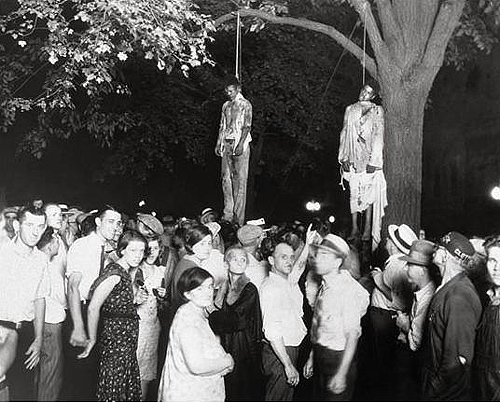
But let’s get down to some common sense and away from science and genetics.  Adolf Hitler said that “Race” mattered more than anything.  Blood and Soil or “Blut und Boden: was a key ideology of the Nazi Party.  Hitler black-people-lynchedbelieved that German blood defined a German race which was superior to other races.  This superiority led to the extermination camps wherein “inferiors” were eliminated.  These inferiors included many people from other “races”, religions, ideologies, and with different physical characteristics.  There was one tribe of Germans and not belonging to this tribe was a potential death sentence.  Hitler set up a pseudo-scientific structure to discriminate between “True Germans” and other inferior “races.”  There never was and never will be a scientific basis for a German race, but this did not stop millions of Germans subscribing to the Nazi ideology of Germanic superiority. 

Conclusions:

prov-12-15If race does not exist but culture exists, what does this mean for group identity?  How strong should group identify be?  Should I sacrifice all for my group and fight to the death for my cultural identify?  What if I believe that my culture is better than your culture?  Could culture become just another banner to wave for those who want to commit acts of prejudice and discrimination on the basis of some perceived differences?  I think this is a distinct possibility and has indeed occurred throughout history.  How then can we have a cultural identify without resorting to racism and discrimination?

I think the solution lies in a hierarchy.  One hierarchy is evil and leads to racism and discrimination as well as genocide and war.  One hierarchy is good and leads to respect, tolerance, acceptance, and harmony among people. 

The Evil hierarchy puts culture, race, ethnicity, religion, gender, nationality, patriotism first and character is second. In this hierarchy, the notion of character is not as important as the notion of skin color, ideology, tradition, language, norms, and many other common bases for group acceptance.  You are first and foremost either a member of my group or not.  If you are a member of my group, I will then judge you on the basis of your character.  However, if you are not a member of my group, your character does not matter. You are evil by virtue of being an outsider and as an evil person, you need to be punished. 

The Good hierarchy puts character first and group identify second.  I don’t care if you do belong to my tribe, if you lack character, integrity, and wisdom then I need to deal with you accordingly.  I must of course exercise good character for myself.  I judge you first on your character.  I should also be judged on my character.  If we belong to or have similar tribal, ethnic, cultural, religious, ideological ideas or traditions, so much the better.  However, my relationship to you is based first on your character and only secondarily on which tribe you belong to.  I do not dismiss the importance of tribal or cultural affiliation.  If I am not of your culture or tribe, I will respect, understand and hopefully even be able to share some of your cultural traditions.  Diversity is a means of obtaining knowledge and ideas that can help us all become better than we are.

I will sum up my message here with the following points.

  • Race is a chimera and a substitute for genuine relationships with people
  • Racism is a negative stereotype based on ignorance and bigotry
  • Culture exists and is real. It can define us and allow us to lead more interesting lives
  • Culture if used as a measure of goodness or excellence can lead to prejudice and discrimination
  • Character is the most important criteria for valuing people
  • Tread lightly on all judgements of others

Here I must issue a warning and an extremely strict caveat.  Beware taking the role of judging others on the basis of what you think character means.  I have no doubt that character exists, but I would be very uneasy thinking that I should or could be the ultimate judge of good character or bad character.  Character is a little like quality.  Many say they know it when they see it but defining it can be very elusive.  If someone lies, cheats, steals, robs, rapes, assaults, abuses others or breaks the law, we may well think that they are a bad character.  On the other hand, a person who is honest, truthful, compassionate, and helps others may well be thought of as a good character.  However, time and circumstances may well render judgements made today as inaccurate in the future.  No one has the insight or knowledge to ever know the goodness or badness of another human being fully.

“We don’t care whether you are Christian or Muslim or Jew or Hindu; all we care is the goodness inside you because only the goodness inside you can make you a good human!” — Mehmet Murat ildan

“We are brothers and sisters not because of the color of our skin but because of what is inside of us.” —- J. Persico

The 3rd of Gandhi’s Seven Social Sins: Knowledge without Character.

Several years ago I became very interested in the question of “Character.”  What is character?  How do we develop character?  Are we losing character in our population and if so, why?  I found a number of books on the subject but the one that most impressed me was called “The Death of Character.”  It was published in 2001 and was written by James Davison Hunter.   The book description is as follows:

The Death of Character is a broad historical, sociological, and cultural inquiry into the moral life and moral education of young Americans based upon a huge empirical study of the children themselves. The children’s thoughts and concerns-expressed here in their own words-shed a whole new light on what we can expect from moral education. Targeting new theories of education and the prominence of psychology over moral instruction, Hunter analyzes the making of a new cultural narcissism.

One of the observations that I drew from reading this book is that as a nation, Americans have moved from a perspective of absolute values to a strong belief in relative values or flexible standards.  Wherein once people could be labeled as moral or immoral based on their behavior, today we have the concept of amorality which does not seem to have existed before the 20th century.   Some definitions might help here:

Moral:  Concerned with the principles of right and wrong behavior and the goodness or badness of human character.

Immoral:  Violating moral principles; not conforming to the patterns of conduct usually accepted or established as consistent with principles of personal and social ethics.

Amoral:  Being neither moral nor immoral; specifically: lying outside the sphere to which moral judgments apply.

Character:  The aggregate of features and traits that form the individual nature of some person.

According to Hunter’s research, the American population has moved from a bipartite arrangement in which people fell between the poles of moral or immoral to a tripartite arrangement in which most people would be classified as amoral, immoral or moral.  The percentage of people in the amoral area has steadily increased while the percentage in the moral area has steadily declined since the early 1900s.

I was teaching in higher education from 1999 to 2015 and one question I  routinely asked my MBA and BA students is “What would you do if you were driving down a lonely dirt road and saw a Wells Fargo money bag lying on the side of the road?  Would you return it?”  I suspect that you would be surprised if I told you that less than 3 students in 30 say they would return it.

However, if I ask them the following question, the numbers change dramatically.  “What would you do if you noticed that upon leaving the classroom, Mary had dropped a twenty dollar bill?  You are the only one who has noticed it. Would you return it?”  The replies are unanimous in that all students say they would return it.  Students regard hurting another person that they know as wrong or immoral, but stealing from Wells Fargo is not considered immoral but is rather considered as amoral.  My own teaching experiences over the years confirm much of what Hunter says in his book.  Amorality is rampant among business students.

So we come to an important question.  Can we have an educated and intelligent population (more people getting degrees and going to school) and less morality?  What if more people are becoming amoral and we have less moral people?  What are the implications?  Well, I think the answer is clear here.  Look at corporate behavior.  You have only to read the story of Enron “The Smartest Men in the Room” to see concrete examples of intelligent behavior without a sense of morality or character.   When we look at amoral behavior in people and organizations, a primary question is how long before the amoral behavior becomes immoral and crosses the line to illegal – as it did with Enron, Worldcom, and Global Crossing.

Gandhi says this about his 3rd Social sin: 

“Our obsession with materialism tends to make us more concerned about acquiring knowledge so that we can get a better job and make more money. A lucrative career is preferred to an illustrious character. Our educational centers emphasize career-building and not character-building. Gandhi believed if one is not able to understand one’s self, how can one understand the philosophy of life. He used to tell me the story of a young man who was an outstanding student throughout his scholastic career. He scored “A’s” in every subject and strove harder and harder to maintain his grades. He became a bookworm. However, when he passed with distinction and got a lucrative job, he could not deal with people nor could he build relationships. He had no time to learn these important aspects of life. Consequently, he could not live with his wife and children nor work with his colleagues. His life ended up being a misery. All those years of study and excellent grades did not bring him happiness. Therefore, it is not true that a person who is successful in amassing wealth is necessarily happy. An education that ignores character- building is an incomplete education.”

In my book, “The New Business Values” one of my chapters was on Information.  I outlined a hierarchy of information as follows: Data>Information>Knowledge>Wisdom.   I described knowledge as a set of beliefs, facts or ideas that contained relevance to some goal, need or desire.  In my model, knowledge cannot become wisdom until it is linked to emotions and feelings for others.  I think Gandhi’s ideas of linking knowledge to character probably hits the mark more accurately.  It was my understanding that knowledge without empathy and compassion for others could never be wisdom.

The world is full of knowledge today since scientific belief has replaced religious belief.   However, science can never develop the sense of empathy and compassion as a central part of character development.  Furthermore, character development even more than knowledge, stands alone as a primary developmental need for any civilized society.  Gandhi wisely noted that we have let our passion for commerce and money outrun our passion for purpose and character.

The famous economist John Kenneth Galbraith wrote in his book Economics and the Public Purpose (1973, Houghton Mifflin) that:

“The contribution of economics to the exercise of power may be called its instrumental function… Part of this function consists in instructing several hundred thousand students each year… They are led to accept what they might otherwise criticize; critical inclinations which might be brought to bear on economic life are diverted to other and more benign fields.” 

Galbreath observed over 35 years ago that we are educating MBA students who have become mindless automatons in a corporate system without a conscience.  Having no conscience is one aspect of amoral behavior.  In today’s society and schools such behavior has become the accepted norm.  It’s the “go along” to “get along” mentality that accepts corporate decisions regardless of their impact on people, the environment or even our nation.  The “diversion” that Galbraith speaks of is easily recognized as sports and media entertainment.  Sports and news create 24/7 hours if mostly inane and benign diversions that keep the public’s mind off of character or moral development.  Indeed watching sports figures and media figures today is evidence of a “vast wasteland” in terms of character development.

So where do we go from here?  The picture appears bleak.  We now accept amorality as a legitimate position on the map of character development.  We ignore the development of true character in our schools and churches; in fact, we supplant the development of character with the requisite amorality needed to get ahead in the business world.  The values of the corporation have supplanted the values needed for a kind and compassionate civilization.  Our schools have become prisons and our prisons overflow.  The USA has some of the highest amounts of incarceration in the world.  Our courts have become three ring media circuses designed to show an endless succession of trials whose main points seem to be to titillate and entertain the masses.  Can we escape from this cycle of destruction that we have built for ourselves?

Time for Questions:

Am I too bleak?  Do you think there is more morality in society than I describe? What do you do to develop your own character?  Do you feel that there is enough emphasis on character development in our churches and schools?  What do you think can be done about it?  How do we start?

Life is just beginning.

“Compassion is the basis of morality.”  ― Arthur Schopenhauer