What the hell is Xenophobia? Whenever I have used this word, this is a common question I get asked. Ironically, it is a very common behavior in America. You would think that everyone knew exactly what it means. On any given day in the USA, there are examples of Xenophobia in the news.
Now I pride myself on doing blog posts that will appeal to the average person. No big words that only someone with a Ph.D. can understand. Yet here I am using a word that perhaps a large percent of Americans would not know what it means. So, I guess that it is time to pull the curtain back and “give it up.”
Xenophobia is the irrational fear, hatred, or dislike of people from other countries, cultures, or backgrounds who are perceived as foreign or strange.
Key Characteristics
- Origin: The word comes from the ancient Greek words xenos (meaning “stranger” or “guest”) and phobos (meaning “fear” or “flight”). It first appeared in English in the late 19th century.
- In-Group vs. Out-Group: It is built on the mental division of people into an “in-group” (those who belong) and an “out-group” (outsiders viewed as a threat).
- Common Triggers: It often spikes during economic hardship, political instability, or rapid social and demographic changes, where outsiders are used as scapegoats for local problems.
- Manifestations: It can lead to social exclusion, verbal harassment, discrimination, institutional policies against migrants, or violence.
A Xenophobe is a person who strongly dislikes, distrusts, or fears people perceived as foreigners, strangers, or members of a different culture or nation.
How often have you heard people say “This is America, speak English” or “If you don’t like it here go back to your own country?”
Let’s break this definition of Xenophobia down further:
In-Group vs. Out-Group:
My team, my church, my religion, my God, my beliefs, my group, my club, my race, my ethnic group is better than your group. In fact, my group is so much better than your group, that I think we need to eliminate your group from America.
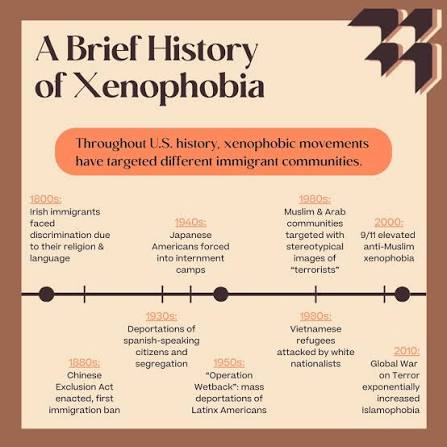
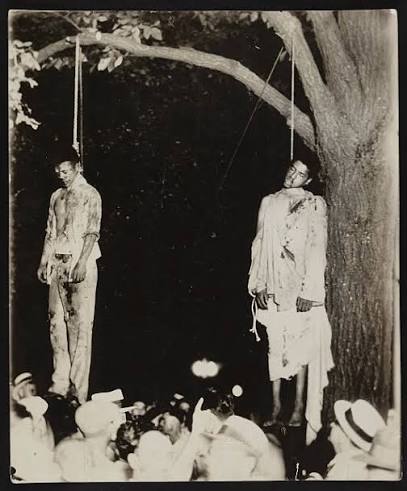
The thinking that underlies the belief that my group is superior can lead to the idea that violence is justified so as to eliminate your group. In some cases, this will mean taking the rights away from other people. In the extreme it can mean denial of basic rights, expulsion, physical attacks or murder. History has repeatedly shown us a progression of violence against others that goes from stereotyping, to blame, to tolerating humiliation of others, to denying fair treatment and sometimes ending in violence. Think Nazi Germany.
If you have been paying attention, you will notice that people we call racists, bigots, sexists all share many of the characteristics of Xenophobia.
Xenophobia, racism, sexism, and Homophobia can share common biases and reinforce one another, while targeting different characteristics. However, there are some substantive differences between Xenophobia and Racism as well as between Xenophobia and Sexism and Xenophobia and Homophobia. For instance:
Xenophobia vs. Racism
- Xenophobia focuses on a person’s nationality, culture, or foreign status (the idea that someone is an “outsider” who does not belong).
- Racism is a belief system that judges an individual’s worth or capabilities based on fixed physical attributes like skin color or racial category.
- While they often overlap and feed into each other, a person can experience or display them independently.
Xenophobia vs. Sexism
Xenophobia and sexism are both forms of systemic prejudice and discrimination, but they differ fundamentally in their targets, origins, and expressions. Xenophobia targets people based on their nationality, geographic origin, or cultural foreignness, whereas sexism targets individuals based on their sex or gender identity.
Xenophobia vs. Homophobia
Xenophobia and Homophobia are both forms of systematic prejudice rooted in an irrational aversion to a specific group, but they target entirely different aspects of identity and operate on different social dynamics. While Xenophobia targets a person’s geographic, national, or cultural origin, Homophobia targets a person’s sexual orientation.
Shared Similarities between Xenophobia and other Prejudices:
- Scapegoating: Minorities, women, gay people and immigrants are frequently scapegoated by political or social movements during times of societal stress to deflect attention from structural problems.
Now one might well ask, well how much Xenophobia actually exists in the USA today or perhaps how many Xenophobic people are there in the USA? Here is what my AI assistant gave me in response to this question.
| Survey | Finding | What it tells us |
| PRRI, March 2026 report | 33% agreed that “Immigrants are invading our country and replacing our cultural and ethnic background”; 62% disagreed. | A substantial minority endorses a belief I would interpret as a strong indicator of xenophobic attitudes. |
| Gallup, June 2026 | 21% said immigration is bad for the country; 73% said it is good. | Most Americans favor immigration overall. The negative response alone does not establish prejudice. |
PRRI: Immigration Enforcement, ICE, and Civil Liberties in the Second Trump Administration — March 26, 2026. Source for the 33% agreement with the invasion-and-cultural-replacement statement.
Gallup: Americans’ Support for Immigration Down, Still Strong — Source for the June 2026 findings: 73% said immigration is good for the country; 21% said it is bad.
My best assessment is Xenophobia affects tens of millions of Americans and has considerable political significance, but the evidence does not support calling most Americans xenophobic. We can measure the prevalence of specific hostile beliefs much more confidently than we can count “xenophobic people.”
Conclusions:
I would like to leave you with three questions. If we can create one iota of doubt in even a few of the people out there who exhibit some of the hostilities I have discussed we would have made some progress.
No one is born Xenophobic. Many of us welcome meeting new people, experiencing new cultures, talking with people who are not “just like we are” or people who “do not belong to our clan or church or group.”
Just like Racism, Sexism and Homophobia, Xenophobia is learned. Something that is learned can be unlearned. But it takes developing some empathy and compassion for all people. The Baháʼí believe in the Unity of all humanity. We are all one people on the face of the earth trying our best to do what we can to lead a decent life and create a good future for our children.
Xenophobia is a virulent disease. It spreads from one Xenophobe to another. It becomes a group identity and a safe haven from having to question one’s own prejudices.
An open Democratic society is not a society that is without risks.
In the “Parable of the Good Samaritan”, the Samaritan gave aid to a wounded traveler thought to be Jewish. First-century Jews and Samaritans were divided by deep religious and historical hostility. The Samaritan gave his own money and time to help the victim with no guarantee that he would be paid back. The Samaritan crossed a boundary of prejudice to help someone outside his own group.
Three Questions:
- How do you think people coming to this country for a better life feel when they are told “Go back to where you belong, we don’t want you here?”
- How do you think people who belong to a different group than you do feel when they are told they are dirty, dangerous and unclean or worthless?
- What do you think Jesus would say to an immigrant who needed asylum or to a Gay person who simply wanted to be treated like other people?



 The “Good Old Boys” of modern country music started in the seventies telling us that rural people were good people. That real life took place in rural areas. Cities were evil. Rural people were God fearing and patriotic. City people were heathens and atheists.
 Donald Trump’s anthem was a song by Lee Greenwood called “God Bless the USA.” Under more normal circumstances, I would applaud this song. Greenwood won the Country Music Association’s award for Male Vocalist of the Year in 1983 and 1984, and his “God Bless the USA” had been awarded the CMA’s Song of the Year honors in 1985. However, when welded by Trump and his supporters it evokes overtones of racism and xenophobia. What else can you think when you see people marching around with Swastikas and Confederate Flags singing “God Bless the USA?”
 “This practice is no certain note of patriotism. To instigate the populace with rage beyond the provocation, is to suspend public happiness, if not to destroy it. He is no lover of his country, that unnecessarily disturbs its peace. Few errors and few faults of government, can justify an appeal to the rabble, who ought not to judge of what they cannot understand, and whose opinions are not propagated by reason, but caught by contagion.” — The Patriot, by S. Johnson, 1774.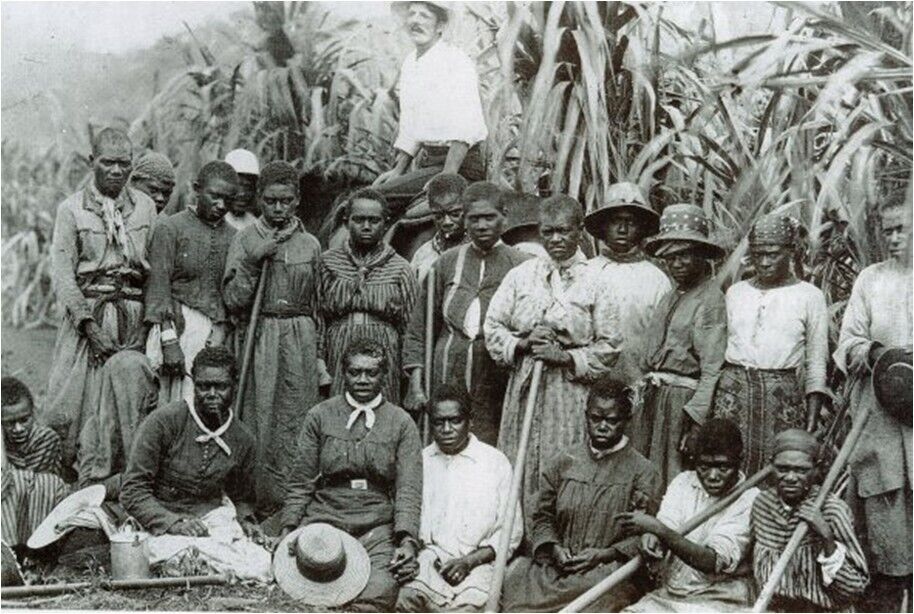
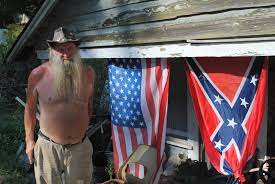
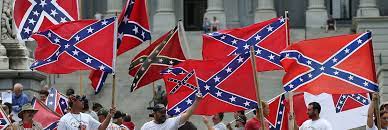

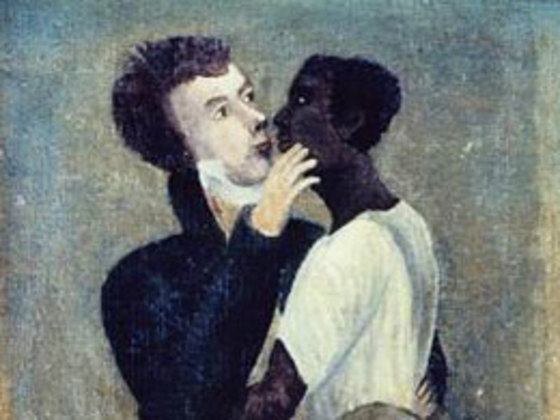


 It’s not about racism or privilege but everyone should have a right to say who they have to live with and go to school with or church with. I am all for equal rights for everyone and that includes my right to stick to my own kind. Does that make me a racist because I like one group of people more than another? We all have our baseball and football team preferences. That is what makes sports so much fun. I don’t have to like your team and you don’t have to like my team. Teams stick together and play with their own kind. You don’t see football players playing against baseball players or lacrosse players playing against rugby players.
 That is why I am not a racist because I believe in the beauty of all colors. I don’t think one color is more beautiful than another. I prefer blue while I think my wife likes pink or green more. I just think you don’t want to mix the colors too much or you lose the beauty. It is also easier to clean a paint brush when you just use it for the same colors. Have you ever tried to clean a paint brush that has been used on too many different colors?
 Now I suppose some of you will still say that I am a racist or prejudiced and that nothing I can say will change your minds. But I don’t dislike those kind of people, I just want to live with my kind of people and those kind of people can live with their own kind of people.