
Introduction
In 2018 I asked a provocative question: Are Americans brainwashed? At the time, what I meant by “brainwashing” was a kind of conditioned conformity — an unconscious habituation to consumerism. We buy, accumulate, and consume not because we need to, but because something deep within our society tells us that our worth, security, and happiness depend on it.
A few weeks ago, I encountered a work that reframed much of what I was trying to say: Guy Debord’s 1967 classic The Society of the Spectacle. Debord, a French Marxist theorist and filmmaker, argues that modern capitalism doesn’t just sell goods — it sells images, identities, and perceptions of reality itself. In doing so, it creates what he calls a “spectacle” — a world where representation replaces lived experience, and passive consumption replaces active life.
Today I believe the idea of “brainwashing” isn’t just a metaphor. It is a lived condition of our society — one that manifests in our politics, our personal relationships, and above all, in how we see ourselves and the world.
But if we are to diagnose this condition accurately, we also need a prescription for how we might undo it.
I. The Diagnosis: What Is the Spectacle?
In The Society of the Spectacle, Debord makes a bold claim:
“The spectacle is not a collection of images; it is a social relationship between people that is mediated by images.”
What Does This Mean?
- The Spectacle Is a Social Condition, Not Just Advertising
We tend to think of consumerism as simply “too many ads,” “too much marketing,” or “too much stuff.” But Debord pushes us deeper: the spectacle isn’t only the marketing — it’s the way we relate to reality itself through mediated images.
In other words:
- It’s not just the billboard that matters — it’s that we now interpret our lives as if we were on billboards.
- It’s not just the advertisement — it’s that we start to see ourselves as advertisements for our own lifestyle, identity, and status.
In the spectacle, images don’t just sell products. They sell versions of reality. They tell us what success looks like, what happiness looks like, what security looks like, and what a good life looks like. And we internalize that script — often without realizing we’ve been cast in it.
- Consumption Replaces Experience
Debord argues that the spectacle replaces real life with representation of life.
Think about how often we:
- Take pictures of experiences instead of experiencing them.
- Check likes, shares, and comments instead of connecting.
- Pursue prestige, status, or image instead of meaning.
We no longer live our lives in the fullest sense — we consume them, display them, and measure them. This is not just consumerism — it is spectatorship. We watch life, we watch others, and we are watched. We are subjects of our own mediated narratives.
- The Spectacle Is Universal But Uneven
Debord notes that the spectacle isn’t just advertising or corporate marketing.
It includes:
- Mass media
- Entertainment
- Social media
- Politics
- Consumer brands
- Cultural norms
- Public relations
In the society of the spectacle, everything becomes commodified, including our attention, our desires, and even our dissent. Even counter-culture becomes a brand.
This is why Debord’s critique resonates with my original thesis: American society doesn’t just create consumers of products — it creates consumers of images, identities, and scripted realities. We are persuaded not only to buy what we don’t need, but to define ourselves through those purchases.
II. Are Americans Brainwashed? A Reframed Answer
So, let’s revisit the question I asked in 2018: Are Americans brainwashed?
If by “brainwashed” we mean:
- conditioned to think in ways that benefit corporate and political interests,
- socialized to equate meaning with consumption, and
- habituated to accept the spectacle as reality…
Then the answer is yes — to a significant extent.
But the spectacle is not an overt force with an agenda. It doesn’t need to be explicit to be pervasive. It works because:
- We participate willingly — we seek validation through consumption, clicks, images, status.
- We mistake representation for reality — what we see on screens or in ads becomes our standard for life.
- We rarely interrogate the source of our desires — we assume our wants are our own.
Debord writes that the spectacle is a form of alienation — where life is lived not directly, but through representations. When we are alienated from our own experience, we are easier to influence because we are no longer anchored in our own desires — only in the images we consume.
III. The Mechanisms of the “American Brainwashing”
Let’s unpack some specific mechanisms by which the spectacle perpetuates conditioned consumption:

- Identity Through Consumption
Corporations don’t just sell products — they sell lifestyles, identities, and social status.
- Owning a certain car means you are cool.
- Wearing a certain brand means you are successful.
- Posting the right image means you are interesting.
We learn to define ourselves through what we display, not what we experience.
- The Attention Economy
Modern media doesn’t just want our money — it wants our attention.
Attention becomes the rarest and most valuable commodity. Algorithms are optimized to:
- keep you looking,
- keep you scrolling,
- keep you craving more.
This amplifies the spectacle because it conditions instinctive reactions — not reflective thought.
- Social Media as a Spectacle Machine
Platforms like Instagram, TikTok, Facebook, and YouTube are engines of the spectacle:
- They amplify images over ideas.
- They reward emotion over reflection.
- They privilege appearance over substance.
The result? A world where image consumption replaces authentic engagement.

- Debt and Consumption as Fulfillment
Credit markets and consumer finance turn consumption into addiction.
Payday loans, credit cards, easy financing — all encourage buying now, paying later, and justifying desires as needs.
This isn’t just financial — it’s psychological:
We feel like we are fulfilling ourselves by spending, even when we are not.
IV. What Brainwashing Is Really Like: Mindlessness and the Spectacle
Here’s where Ellen Langer’s work on mindlessness becomes useful.
Langer describes mindlessness as a state in which behavior is rigid and thought is shallow — where we act on autopilot.
How does this connect to Debord?
- The spectacle thrives on mindlessness.
- If people thought deeply about why they want certain things, how they spend their time, and what their values are, the spectacle would weaken.
- The spectacle depends on unexamined life.
So, we might define the “brainwashing” of Americans not as overt coercion, but as collective mindlessness — not thinking deeply about how our desires are shaped, what we consume, and why.
Mindlessness and the spectacle are two sides of the same coin:
One is cognitive, the other is cultural.
Both detach us from genuine experience.
V. The Prescription: How Do We Undo the Brainwashing?
If we’ve diagnosed the problem, the urgent challenge is: How do we counteract the spectacle and undo conditioned consumption?
Here’s a multi-layered prescription:
- Cultivate Mindfulness
Langer’s work teaches us that awareness is not automatic — it must be practiced.
Mindfulness in consumption means:
- Asking why you want something before you act.
- Not mistaking wanting for needing.
- Reflecting on the social and psychological forces shaping your desires.
Mindfulness isn’t only meditation — it’s active awareness of your internal life.
It’s questioning your impulses rather than obeying them.
- Reclaim Authentic Experience
If the spectacle is a representation of life, its antidote is direct experience of life.
This means:
- Valuing real human interaction over mediated interactions.
- Experiencing events without first documenting them for others.
- Rediscovering activities that aren’t commodified for Instagram or TikTok.
Experience should be lived, not posted.
- Reduce Passive Consumption
We live in a world designed for passive consumption:
- Scroll feeds
- Binge media
- Buy products based on ads
Combat this by:
- Setting intentional limits on screen time.
- Choosing content that teaches, not only entertains.
- Prioritizing creation over consumption.
- Examine Economic Structures
The spectacle is supported by economic systems that profit from:
- Continuous consumption
- Planned obsolescence
- Debt accumulation
- Attention monetization
Undermining the spectacle requires economic literacy:
- Understanding how credit, interest, and consumer culture are connected
- Questioning advertising claims
- Supporting sustainable, local, and meaningful alternatives
- Build Communities of Critical Thought
Spectacle thrives in isolation and individualism.
Counter this by:
- Forming discussion groups
- Reading cooperatively
- Sharing reflections instead of consumer gossip
- Encouraging long conversations, not short clicks
Detroit philosopher Cornel West said, “We must refuse the politics of disengagement and nihilism.” This means engaging deeply with ideas — not passively consuming them.
- Political Awareness and Media Literacy
Spectacle extends into politics:
- Politicians perform for cameras.
- News becomes entertainment.
- Outrage replaces inquiry.
Undoing brainwashing means:
- Learning to distinguish facts from spectacle
- Examining incentives behind media narratives
- Teaching critical media literacy
- Reframe Success and Identity
Finally, we must challenge the equation:
More stuff = more value.
Redefine success as:
- Deeper relationships
- Richer experiences
- Intellectual curiosity
- Community contributions
The self we cultivate should be internal, not a brand.
VI. What the Spectacle Cannot Control
Here’s the hopeful part:
The spectacle operates through images and representations.
But it cannot fully replace:
- Moment-to-moment consciousness
- Genuine love and empathy
- Deep reflection and insight
- Meaningful community
- Unmediated experience
These are areas where the spectacle fails — exactly because they cannot be commodified or packaged.
Conclusion: Toward a Life Unmediated
So, are Americans brainwashed?
Not in the literal sense of having thoughts forcibly replaced — but in the structural sense that society conditions our perceptions of reality, desire, identity, and fulfillment.
Guy Debord’s spectacle framework helps us see that consumerism isn’t just about goods — it’s about how we see the world and ourselves.
Ellen Langer’s work reminds us that undoing this starts with awareness — moving from mindlessness to mindful life.
The good news is that mind, choice, and experience cannot be fully outsourced to images or corporations. We can reclaim them by practicing mindfulness, re-centering authentic experience, and questioning the narratives sold to us every day.
The challenge is not only social — it’s deeply personal.
But once we begin to see how the spectacle shapes us, we can choose to look beyond the images and toward the real world — toward a life to live, not a life to watch.
America today is a deeply divided nation and a deeply divided people. The brainwashing we get from the sources discussed have been major contributors to creating the divide we now live in. Few people on either side of the divide are happy the way things are. We yearn for the “good old days.” Days reflected in Norman Rockwell pictures of America that portray a different country than we now see.
It is true that “Happy Days” never did not exist equally in this country for all people, but at least we had the ability to still talk to people who we disagreed with and sometimes see a new perspective. We had a country where people once talked about morals and ethics. Today, our perspectives and beliefs are like a wall of granite. Rather than a divide, we have a stone wall that we have built. The wall is almost impenetrable. It seems impossible to get over it, under it or around it. The problem with destroying this wall is that it exists in our minds and that is the hardest thing in the world to change. Until we open our minds and hearts, we will be stuck behind a granite wall that separates our nation and people.
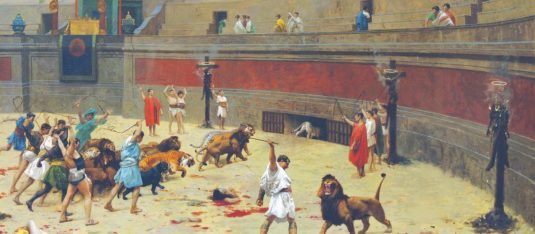 Two thousand years ago, the Roman Empire started its decline after having been the greatest empire that the world had yet seen. Many historians point to the decadence of the Roman Empire during its decline. “Decadence” is defined by the Oxford On-Line Dictionary as, “Moral or cultural decline as characterized by excessive indulgence in pleasure or luxury.” The Romans had their “Bread and Circuses.” The Oxford Dictionary defines “Bread and Circuses” as, “A diet of entertainment or political policies on which the masses are fed to keep them happy and docile.” For many, football and politics are the bread and circuses or our American Empire. I think the rot and decay in America today goes much deeper than that. Here is my list of some of the decadence that I see in the USA today: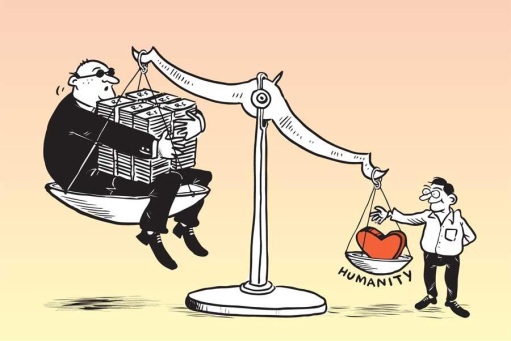
 I have another T-Shirt where I list the “No Exceptions” groups that somehow seem to be conveniently overlooked by many Cultural Christians. The major fallacy that many Christians seem to observe is to define their neighbors as either someone in their own church or in their own social group. When Jesus included the Samaritans who were an outcast group at the time as his neighbors, this should have made it clear that you must go beyond your tribe or friends to include other nations, other ethnicities, other religions, and other people with different beliefs as your neighbor.
 Aging Capriciously