
I wrote this blog 8 years ago. It is even more relevant now than it was then to explain the larger forces behind Trump’s success. You have only to see the phalanx of billionaires standing behind Trump to know what I am talking about. I hope that some day people will see the “bigger picture” and stop looking at the minor forces than are playing a role in politics today. The bigger picture is more chilling and portrays a world in which we are all nothing more than pawns for the corporations who really run the world.
First Posted: 2017, Shortly after Trump was elected President in 2016:
The journey of Donald Trump from businessman to the head of the largest corporate state in the world did not as many assume start just 12 months ago. In fact, the roots of Trumps ascendancy can be traced back to at least 2,500 BCE. Never before in history, has anyone with a business background and so little experience in either politics or military become the leader of a major state. However, we did not see the buildup to this happening because most of the time we are focused on short-view trends and we miss entirely the long term trends that entail even more potent forces at play.
In numerous attempts to explain the election of Trump, most pundits have looked to the micro forces, such as international trade, disillusion among blue collar White males, the Affordable Care Act, distrust of Hillary Clinton, Russian interference in the election, White backlash and rising income inequality. While these forces might explain Trump’s election they do not explain why America has now seen fit to elect a businessperson with no political experience as its 45th President.
In fact, the election of a person with a business background to run the country represents a major shift in power that has been taking place for nearly fifty years and can be linked to other power shifts since the beginning of recorded history. In this blog, I will explain how and why we now find America being run by the elite of corporate America. To do this, we must go back to the ancient Egyptians.
In approximately 2,500 BCE, the Pharaoh Khufu built the largest of the Pyramids known as the Great Pyramid of Giza as a burial chamber. The Great Pyramid was the tallest man-made structure in the world for more than 3,800 years. It was one of three large pyramids built in the Giza complex. Then as now, humans marked their sovereignty by creating tall structures to show their power and prestige. This phenomenon has been so consistent that it provides an insight into the sovereign powers that rule that planet and the various power shifts that have occurred throughout history.

I mean to use the term sovereign to express the possessing of supreme or ultimate power. For nearly 3,000 years, Kings, Pharaohs, Dictators, Emperors and those born of royal blood who were “related to Gods” were the ultimate sovereigns over most of humankind. The early Romans and Greeks made some attempts to commute the power of their rulers by selecting some representatives of the population but these were generally of royal blood themselves and seldom of plebeian birth. Julius Caesar who tried to be a “man of the people” was himself born into a patrician family.
Around the fall of the Roman Empire in 400 CE, sovereign power shifted from the nobility to the Catholic Church (at least in Europe). Bear in mind that the shifts I refer to did not take place overnight. These transitions in power took place gradually over decades and with many tug of wars between the transitioning sovereigns. It was Pope Leo (440 CE) who first asserted Papal primacy and he was supported by the Romans because of the political chaos in the West. Pope Gelasius I (492 CE) declared that priestly power was ab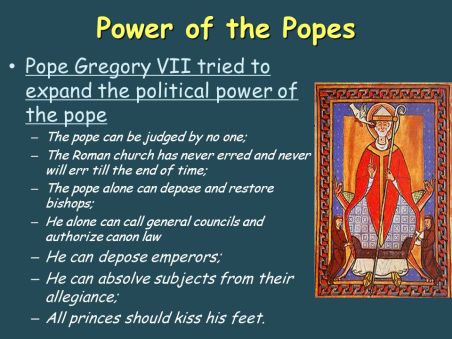 ove kingly power. The Pope was supreme and no appeals could be made for his decision. Sovereign power had now shifted to the clergy of the Roman Catholic Church.
Throughout most of Europe, the clergy and other minions of the Catholic Church assumed roles of leadership and sovereignty. As the power of the church grew, so did the churches, cathedrals and basilicas which they built. Each one was larger than the last one and all were designed to be larger than any buildings of the nobility or royalty. The Church  manifested its power in the grandeur and elegance of its buildings.
The Catholic Church remained the dominant sovereign power in Europe until the reign of Pope Boniface VIII. The clash of the Church to remain dominant over the newly emerging nation/state rulers took place in an epic battle between Pope Boniface VIII (1294  CE) and King Phillip IV of France. Several other skirmishes had already taken place between Popes and rulers in the decades preceding with the battles seesawing back and forth. However, the decisive battle for sovereignty was between Pope Boniface VIII and King Phillip IV. It was vicious and at times bloody. It saw the end of Church sovereignty and the beginning of the
sovereignty of nation/state rulers. Boniface was captured by forces loyal to Philip and was beaten and nearly executed. He was released from captivity after three days and died a short time later. His defeat marked the end of the power of the Church to rule and the rise of the power of rulers of nation/states.
There are four characteristics of a nation/state. These are:
- Defined territory
- Self-Rule (Sovereignty)
- Some form of organized government
- A population of people sharing a national identity
 During the period of nation/state rulers, they built some magnificent buildings such as Versailles in France, Castello Del Valentino in Italy, the Palace of Placentia in London and the Schönbrunn Palace in Vienna. If not the largest buildings in each country, they dwarfed in overall grandeur and size the churches that had been built by the clergy. The period of nation/state rulers lasted from about 1400 CE to the middle of the 19th century.
The power of most of these nation/state rulers (usually with some pedigree of nobility) began to wane as the people in each country demanded more and more input into economic and political decisions. Eventually, the nobility in most European countries were forced to make concessions to the idea of democratic or at least some form of republican rule. The transition from rulers to republics was insured by the rise of a new class which we today call politicians or bureaucrats. In time, these professional politicians became sovereign and replaced the old style rulers by virtue of a concept called elections or voting. No one voted for Henry the VIII of England or Czar Nicholas II of Germany or King Ferdinand of Spain, but with the emergence of State governments, politicians and bureaucrats would become the new sovereigns.

The rise of most modern states started about the mid seventieth century. Increasingly, although rulers in many nations could still be very powerful and even dictators, there was now some agency in every country that attempted to provide a balance to the ruler’s power. In England, they established a parliament in 1706 that was later characterized by a House of Lords and a House of Commons. In France, they created a National Assembly in 1791. In Germany, they established a parliament in the 1870’s. By the beginning of the 20th Century, although many nations had still kept their nobility as a form of tradition, most of the reins of government were in the hands of bureaucrats or elected officials. Prime Ministers and Presidents had replaced Kings and Queens in the political decision making process.
 The new sovereigns started building. No more castles or palaces were built to house the new rulers. Instead, capitals, state houses and mansions would be the new domiciles for politicians and bureaucrats. Government leaders were no different though than Kings and Clergy when it came to siting their residences. They also sought the high ground to place their buildings on. The tallest buildings in the land now belonged to the Government. This situation would not last very long. Even more changes were taking place. In a few short years, nations would no longer have an exclusive on sovereignty. A new challenger was rapidly emerging.

The new challenger started to emerge with the first corporations which began over a thousand years ago. However, until the power of mercantilism started to become critical to state and military power in the late 16th century, the early corporations were rather toothless. An excellent book titled Power Inc. covers the rise of the modern corporation in much more detail than I shall go into here. The book by David Rothkopf is fittingly subtitled: “The Epic Rivalry between Big Business and Government–and the Reckoning That Lies Ahead.”
“In his new book, Power, Inc., David Rothkopf sounds an alarm. He argues that thousands of private actors who he calls “super citizens” now hold greater power than most countries in the world. He notes, for instance, that corporations have grown to the point where roughly the richest two thousand are more influential than 70-80 percent of the world’s nations. Walmart, for example, has revenues higher than the GDP of all but 25 nations.” — Roy Ulrich, the Huffington Post
The capitalistic industries wasted no time in starting to construct new buildings that would soon dwarf all of the previous tombs, castles, cathedrals and capitals throughout the world. These buildings are so tall that they have been labeled as “skyscrapers.” The world’s first skyscraper was the Home Insurance Building in Chicago, erected in 1884-1885. Its 138 foot peak would be dwarfed by skyscrapers today. The Flatiron Building in NYC was built in 1902 and is twenty floors high and 307 feet to its peak. The Empire State Building was built in 1931 in NYC and for many years it was the tallest building in the world standing over 100 stories and 1400 feet in height.
With the rapid economic development of many former third world countries there has been a proliferation of corporate skyscrapers with many countries vying for the honor of having the tallest building in the world. Searching on Google for the “tallest buildings in the world” one finds the following information for buildings over 300 meters tall:
“As of 2016, this list includes all 135 buildings (completed and architecturally topped out) which reach a height of 300 meters (984 ft.) or more as assessed by their highest architectural feature.” — Wikipedia
 The list includes skyscrapers built in China, United Arab Emirates, Dubai, South Korea, Taiwan, Malaysia, Russia and several other nations. Perhaps presaging the emergence of China and Asia as the dominant world economies, Asia is already assuming the role of having many of the largest buildings in the world. What we are witnessing is a contest of global economies vying for supremacy in terms of world economic sovereignty. An interesting aside is that the world currency is considered a reflection of the nation that is the most powerful in this arena. To date, the United States still holds that distinction but many are predicting the demise of the US dollar as the standard for world currency.

But what does this have to do with Trump you may be starting to ask? What does commercial sovereignty have to do with political sovereignty? The answer to the second question is everything. The major reason for the success of the Allied powers in both WWI and WWII was the economic might of the United States. Economic power translates into military power and military power translates into political power. This fact has been recognized for over 500 years now. Spain’s ascendancy to a world power was built on its confiscation of wealth in the New World. Hitler recognized that Germany could not be a dominant world power without confiscating the wealth of Jewish citizens and also of its neighboring countries.
“Great Britain was once a dominant military force in the World while it had a dominant economy. At the start of the First World War, it devalued its exchange rate. By the end of the War, owing to its military expenditure, it had large trade deficits and falling gold reserves.” — Buoyant Economies
The question of Trump brings a larger issue to the fore. Generally, we have seen that as the dominant world power shifts, the leadership shifts along with it. The features of buildings as a representation of power has followed these shifts. However, in terms of the new power of corporations, it would seem that the buildings have been created before the shift in leadership. That is until Trump became President of the United States of America.
 Is Trump’s election an anomaly or does it truly represent the emergence of corporate power into the political arena? My view on this is that Trump’s election is merely the tip of the iceberg. For over 20 years now the United States has been electing more and more political leaders who are not politicians. I am considering someone as not a politician if they are people who have not made a career of politics.
Many business people are jumping right into the political arena without experience in either local, state or federal government. The founder of Electronic Data Systems, Ross Perot may be remembered by many voters as the ultimate tycoon-turned-politician. Perot ran for president in 1992 and 1996 as a third-party candidate.
An article written in 2010 before Trump had become a candidate stated the following concerning the election of corporate people to public office:
“Whoever believes politics is big business must have seen this coming. The high levels of accountability from running a corporation and high expectations of seeking a seat in government have many parallels. Amid this confluence of business and political streams, Chief Executive magazine dubbed 2010 “a high-water mark for the CEO as candidate.”
More than 40 business magnates – the presidents and founders of banks, restaurants and tech giants – are running for seats on Capitol Hill or for governor’s offices in 25 states. And looking ahead Donald Trump says he is “absolutely thinking about” a 2012 presidential bid.” — Ten Business Leaders with Politics in their Blood, by Bill Briggs
During the Republican runoff to the nomination of Trump, we saw Carly Fiorina who was a former CEO also emerge as a potential candidate. We now have ten governors with no former elected government service. Seven former US presidents with business experience have all been elected in the 20th or 21st century. The following chart shows the net worth of the wealthiest senators in the US. Congress as of 2012.
The next chart shows the average net worth of 90 incoming freshman representatives to the 113th US Congress
January 3, 2013 to January 3, 2015
| Year | Number of Freshmen Reports | Average Net Worth | Change from previous year |
| 2011 | 90 | $7,835,242 | —- |
More data can be found at Ballotpedia at https://ballotpedia.org/Main_Page
 My point here is that most millionaires make their money in business. On the 2016 Forbes lists of richest 400 people in the world, richest billionaires in the world and richest people in the world, the majority (about 2/3) have made their money in business. Furthermore, they are self-made in that they did not inherit their fortunes. Perusing Forbes, it is clear that the dominant path to becoming rich is to sell something that people want at a price they can afford.
It is clear that wealth accumulated to a business background has increasingly become a stepping stone to politics and political leadership. Trumps presidency is the crown on the new sovereignty. Business leaders are now rapidly replacing politicians and bureaucrats in the area of political leadership. Already Trump’s nominees include the chief executive of Exxon Corporation; the chief executive of CKE Restaurants; the former chief executive of the World Wrestling Entertainment; a former Goldman Sachs executive; a billionaire investor; a right wing media executive and a former chief executive of Nucor Corporation. These are only a few of the still to come appointments that Trump will make.
 It is my prediction that business leaders will continue to make the transition to political leadership. The business model is now the sovereign model for world power. The power of the state has been usurped by the power of big business. Global power is corporate power. The public is sick of career politicians. The common people bring a (perhaps unfounded) belief in the power of business to save the world. Considering that we have tried the power of academia, the power of science and the power of big government to save the world, perhaps the power of business can do better. One might argue that they can at least do no worst.
Conclusion:
From Khufu to Trump, we have now briefly (my apologies for many simplifications and no doubt omissions in history) covered 4,500 years of political and economic history in a short seven or so pages. I can see the great historians and economists of the world having fits at my narrative. Nevertheless, my thesis remains. Simply put Trump is now the successor to Khufu, Caesar, Pope Boniface, Henry the VIII, Bismarck, Churchill and Roosevelt. Big business is now the dominant sovereign power in the world. How long will it last? How long will it take all politicians to be replaced by business people? I have no answers to these questions; but one must assume that somewhere down the road, another sovereign power will emerge or may already be emerging. Until then, be prepared for most decisions to have a “let’s make a deal” flavor to them.
Time for Questions:
How long will the reign of big business last? How long will it take politicians to all be replaced by business people? Will business succeed in making the world a better place? Why or why not?
Life is just beginning.
“I spent 33 years and 4 months in active military service . . . And during that period I spent most of my time as a high-class muscle man for Big Business, for Wall Street and the bankers. In short, I was a racketeer, a gangster for capitalism.
Thus, I helped make Mexico and especially Tampico safe for American oil interests in 1914. I helped make Haiti and Cuba a decent place for the National City Bank boys to collect revenues in. I helped in the raping of half a dozen Central American republics for the benefit of Wall Street.
I helped purify Nicaragua for the international banking house of Brown Brothers in 1902–1912. I brought light to the Dominican Republic for American sugar interests in 1916. I helped make Honduras right for American fruit companies in 1903. In China in 1927, I helped see to it that Standard Oil went on its way unmolested.
Our boys were sent off to die with beautiful ideals painted in front of them. No one told them that dollars and cents were the real reason they were marching off to kill and die.”
― General Smedley Butler
“Our aim is not to do away with corporations; on the contrary, these big aggregations are an inevitable development of modern industrialism, and the effort to destroy them would be futile unless accomplished in ways that would work the utmost mischief to the entire body politic. We can do nothing of good in the way of regulating and supervising these corporations until we fix clearly in our minds that we are not attacking the corporations, but endeavoring to do away with any evil in them. We are not hostile to them; we are merely determined that they shall be so handled as to serve the public good. We draw the line against misconduct, not against wealth.”
― Theodore Roosevelt



 A version of this myth is the “Too big too fail idea” widely heard during the “Great Recession” and now during the Coronavirus epidemic. General Motors was one of the first giant corporations in America and even as late as 2019, it was ranked 13th on the Fortune 500 rankings of the largest United States corporations by total revenue. In 1952 during his nomination hearing for Secretary of Defense, Charles Wilson (former CEO of General Motors) was asked if he could make a decision as Secretary of Defense that ran contrary to the interests of his former company. He replied with the now infamous remark YES but that he could not conceive of such a situation: “because for years I thought what was good for our country was good for General Motors, and vice versa.” —
  The foregoing belief in the common interests that corporations shared with America came to epitomize the ideology of Corporate America. American corporations then used the media and astute public relations to convince the majority of US citizens that they are indispensable, and that the welfare of the average person depended on the welfare of the corporation. To put it another way, the interests of a giant corporation are claimed to be synonymous with the interests of the average person. “What is good for America’s Corporations is good for You.” “What is good for Microsoft, Google, Amazon, Exxon, Facebook and Pfizer is good for you.”
 When a company makes and sells a product, it is no longer responsible for the effects of that product on either the buyer or the environment. Unless evidence can be shown that somehow the corporation either lied or had some kind of criminal intent in the sales process, the consumer and society are responsible for the negative effects that a product or service might have. For instance, oil companies sell gasoline but are not responsible for the effects of polluting the atmosphere by burning gasoline. Another example is the packaging that many companies use for their products. Amazon is notorious for over boxing even the smallest products. The boxes must then be thrown away or recycled in a landfill. However, the cost of this recycling is not born by Amazon but ultimately by the taxpayer who must pay for the recycling through taxes or direct payments. Meanwhile, Amazon makes a great profit by being able to take advantage of tax loopholes and escaping any costs. These costs are called in economic terms: “Externalities.”


 Dr. Deming wrote reams about the failure of management to balance what he called the “Problems of Today” with the “Problems of Tomorrow.” I would typically hear when beginning a consulting engagement numerous reasons why “it could not be done.” One of the most common excuses was expressed colloquially as “We are up to our ass in alligators.” Another excuse was “We have too many fires to put out.” I was fond of reciting Dr. Deming’s comment that, “Putting out fires is not improvement. Finding a point out of control, finding the special cause and removing it, is only putting the process back to where it was in the first place. It is not improvement of the process.” — Out of the Crisis, W. E. Deming
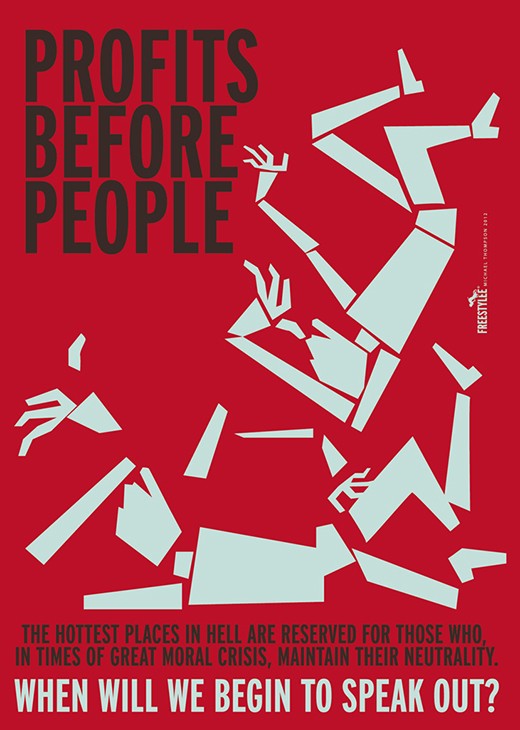
 I have sat in many boardrooms for many planning meetings, and seldom did I ever hear an executive worrying about the environment or the hidden costs of externalities. The oft assumed legal mandate of a corporation is to make a profit. However, corporate law states that a company does not have to pursue profit maximization at all costs. This is idealistic though since the tendency in the marketplace and short-term thinking push corporations to ignore other considerations and pursue profits at all costs. It is also much easier to measure profits than it is to measure a “good” to the environment or a “good” to the social system. Thus, generally profits will trump other considerations in running an effective business.


 Dr. Deming would do two or three of these a month all over the USA. He continued these four-day seminars until about six months before he died at the age of 93 in 1993. Dr. Deming always required help at these seminars since as many as 500 people would usually attend. I was fortunate enough to help out at four of these seminars. After getting to know Dr. Deming fairly well, I brought several consulting clients to his home in D.C. to discuss with him personally his ideas on what we were doing right and wrong. Dr. Deming was always very candid and blunt. This endeared him to some people, while it turned other people off.

 By the way, when we think of government organizations it is usually as being much less capable in the efficiency area and much more focused on effectiveness or doing the right things for society. I suppose that is one of the reasons why it is so easy to ridicule government. Senator Proxmire was famous for his “Golden Fleece Awards “in which he belittled government agencies for their waste and lack of efficiency. I have worked or consulted in many government agencies and I have to admit that “efficiency” was often sorely lacking.






 Most of what people learn about Marx is far removed from his actual ideas. Given that Capitalism has been diametrically opposed to the very name of Karl Marx, it is not surprising that he is routinely disparaged. Even at the University level, it is rare to find anyone studying Marx very deeply. Many educators and instructors describe Marx’s economic theories as “Totally Discredited.” Few people in America have any good words for Karl Marx. Any politician in the USA who might suggest that Marx ever said one good thing or had one good idea would court instant political death. Marx is the devil in our Capitalistic system.
 Marx did of course hate capitalism. He saw Capitalism as a system that exploited workers and allowed the greedy to benefit at the expense of those less fortunate or less aggressive.
 The antipathy directed towards Marx and his critique of Capitalism has discouraged any real in-depth understanding of the limits and myths of Capitalism by most Americans. Capitalism resides in America on the same level as Mom, God, and Apple Pie. Woe to anyone who would dare to attack Capitalism. In the United States, Capitalism is as hallowed an institution as Christianity. In fact, most Christians think that Capitalism and religion go hand in hand, which to a large extent they sadly do. Unfortunately, not all Capitalism is the same. In America, we have a home-grown version that is more appropriately called Corporate Capitalism. What is the difference you might ask? Well it gets even more complicated since economists define four types of Capitalism. These are:
 Over the past 40 years, the Supreme Court has radically expanded constitutional rights for corporations. The original charters for corporations written in the late 19th century, allowed corporations powers never before seen in companies. The abuse of these powers soon led to a considerable amount of legislation designed to reign in some of the most egregious of these abuses. Laws such as the Sherman Anti-Trust Act passed in 1890 to stop monopoly practices and the Clayton Antitrust Act passed in 1914 to stop unethical business practices were somewhat successful at ameliorating corporate abuses. Unfortunately, corporations were still left with considerable power to thwart the goals of democracy and good government.
 Corporate interests easily dominate the interests of the common person. The common person has nowhere near the financial clout of corporations. In 2010, the Supreme Court passed the Citizens United Decision which gave corporations unlimited power to finance and support political candidates running for office as well as to lobby on behalf of any laws that they wanted. This decision basically upheld the idea that corporations had a right to free speech much like any citizen of the USA and that campaign spending was simply a manifestation of free speech. Corporations are now being treated as living breathing people despite the fact that corporations can live forever, and corporations are not organic entities. They are not born, and they do not die like any other creature on the face of the earth.


 One of the most popular movies in the eighties was Wall Street. In the movie, Michael Douglas gave a “Greed is Good” speech which was actually applauded by audiences all over the United States. Some corporations have been sued by stockholders for not being greedy enough.

 Aging Capriciously