By John Persico Jr. (with Metis AI Partner)
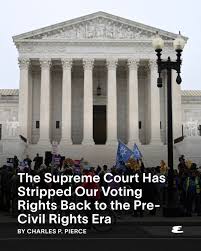
There are moments when I read a Supreme Court decision and wonder—not about the law—but about the underlying thinking. The recent ruling in Louisiana v. Callais is one of those moments.
The Court struck down Louisiana’s attempt to create a second majority-Black congressional district, calling it an unconstitutional racial gerrymander. On its face, that sounds principled—race should not dominate political decisions. A clean, simple rule.
But simple rules often fail in complex systems. And voting in America is nothing if not a complex system.
The Problem the Court Pretends Not to See
Let’s start with a basic fact: people are not randomly distributed. I learned this in my doctoral program when doing work with displaced workers on the Iron Range in Minnesota. We used a technique called “Stratified Random Sampling” to obtain more representative samples than you would get with simple Random Sampling.
People have never been randomly distributed. Not by race. Not by income. Not by religion. Not by education. There are Black neighborhoods, Indian neighborhoods, Hispanic neighborhoods and Asian neighborhoods, not to mention rich neighborhoods, elderly neighborhoods, and too many other stratified neighborhoods to name.
If you’ve spent any time looking at maps—real maps, not legal abstractions—you know this immediately. Neighborhoods cluster. Communities form. History leaves footprints.
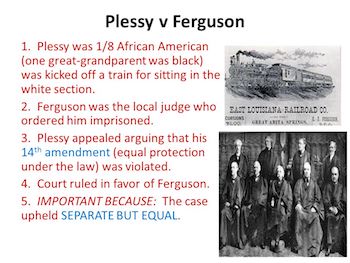
And race, in particular, has left very deep footprints in this country.
So when we draw voting districts “without regard to race,” we are not creating neutrality. We are simply accepting the existing distribution as given, as if it emerged from a fair process.
It didn’t.
A Little Statistics (Without the Headache)
In my former life working with Deming’s ideas, I learned something fundamental:
how you sample determines what you see.
If you take a simple random sample of a population that is unevenly distributed, you risk missing important subgroups. That’s not bias—that’s bad design.
The fix is straightforward: stratified sampling. You deliberately ensure that meaningful subgroups are represented.
Now translate that into voting:
- Minority populations are often geographically clustered
- Voting patterns often correlate with those populations
- Without intentional structure, representation can become distorted
Majority-minority districts are not some strange political invention. They are, in effect, a design correction—an attempt to ensure that a non-random population is not misrepresented by a “neutral” process.
The Court looks at this and says: “You’re using race.”
I look at it and say: “You’re ignoring reality.”
The Illusion of “Colorblindness”
The current legal trend emphasizes what is often called a “colorblind” approach. The idea sounds noble: treat individuals without regard to race.
But here’s the problem:
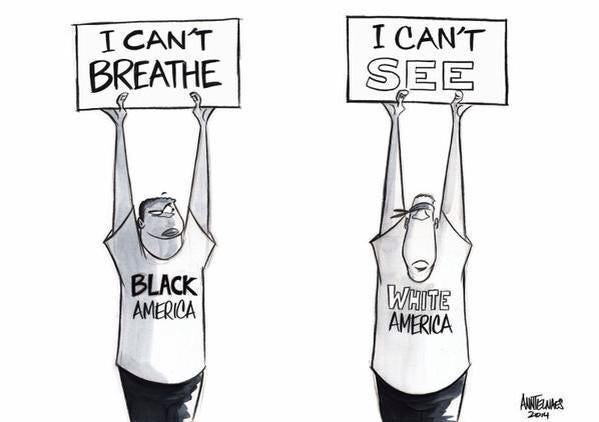
a colorblind rule applied to a system shaped by race is not neutral—it is preservative.
It preserves whatever inequalities already exist.
If race were not already a factor in housing, education, income, and yes, voting patterns, then ignoring it might make sense. But it is a factor. It has always been a factor.
So we end up in a strange place:
- Race shapes outcomes in reality
- But the law increasingly refuses to acknowledge it in design
That’s not neutrality. That’s selective blindness.
Let’s Be Honest About Politics
There is another layer here that we should not politely ignore.
Political actors understand these dynamics very well. They know that race correlates with voting behavior. They know that how districts are drawn can shift power.
So when cases like this are brought forward, they are not just abstract constitutional debates. They are strategic moves in a larger political game.
To pretend otherwise is to confuse theory with practice.
What Kind of Fairness Do We Want?
At the heart of this issue is a simple but uncomfortable question:
What do we mean by fairness?
The Court is increasingly focused on process fairness:
- The rules must not explicitly use race
But many of us are concerned with outcome fairness:
- Do people actually have a meaningful opportunity to elect representatives?
These are not the same thing.
You can have perfectly “neutral” rules that produce systematically uneven outcomes. Anyone who has studied systems—business, education, healthcare—knows this.
Deming warned us about this decades ago. A system can be working exactly as designed and still produce poor results.
The Deeper Issue
This is not really about Louisiana.
It is about whether we are willing to design systems that acknowledge reality, or whether we prefer systems that look fair on paper while ignoring how the world actually works.
Race has been a factor in America since before it was a country. It continues to shape where people live, how they vote, and what opportunities they have.
You can pass a law that says, “Don’t consider race.”
But you cannot pass a law that makes race irrelevant.
A Final Thought
There’s an old saying in quality management:
“If you don’t understand variation, you will mismanage the system.”
The Supreme Court, in this case, seems less concerned with understanding variation than with enforcing a rule.
That may satisfy a legal doctrine.
But it does not necessarily produce a fair system.
And in the long run, systems—not doctrines—determine outcomes.
Conclusions:
Do you think the six to three vote on this issue by party line represents a vote for fairness? Not since the days of slavery have we had a Supreme Court so stacked with partisan advocates. Almost every one of their votes leans towards the policies of Trump and his sycophantic Republican followers. The Supreme Court is not about the pursuit of law although it tries to pretend it is. The Supreme Court has little or no concern with upholding the Constitution of the USA. It is a biased groups of Justices willing to ignore the Constitution to further the aims of a Republican Party gone off the rails. A party with an agenda to support corporate interests over the interests of the people and to support laws that favor a decrease in the power of the people to run a democratic nation. There is a belief by many in a “Prosperity Gospel” today that preaches that the rich are smarter, harder working and have more rights to run the country than the poor.
If you are poor, they are coming for your vote. And the Supreme Court decision will help them get it.



 Most of what people learn about Marx is far removed from his actual ideas. Given that Capitalism has been diametrically opposed to the very name of Karl Marx, it is not surprising that he is routinely disparaged. Even at the University level, it is rare to find anyone studying Marx very deeply. Many educators and instructors describe Marx’s economic theories as “Totally Discredited.” Few people in America have any good words for Karl Marx. Any politician in the USA who might suggest that Marx ever said one good thing or had one good idea would court instant political death. Marx is the devil in our Capitalistic system.
 Marx did of course hate capitalism. He saw Capitalism as a system that exploited workers and allowed the greedy to benefit at the expense of those less fortunate or less aggressive.
 The antipathy directed towards Marx and his critique of Capitalism has discouraged any real in-depth understanding of the limits and myths of Capitalism by most Americans. Capitalism resides in America on the same level as Mom, God, and Apple Pie. Woe to anyone who would dare to attack Capitalism. In the United States, Capitalism is as hallowed an institution as Christianity. In fact, most Christians think that Capitalism and religion go hand in hand, which to a large extent they sadly do. Unfortunately, not all Capitalism is the same. In America, we have a home-grown version that is more appropriately called Corporate Capitalism. What is the difference you might ask? Well it gets even more complicated since economists define four types of Capitalism. These are:
 Over the past 40 years, the Supreme Court has radically expanded constitutional rights for corporations. The original charters for corporations written in the late 19th century, allowed corporations powers never before seen in companies. The abuse of these powers soon led to a considerable amount of legislation designed to reign in some of the most egregious of these abuses. Laws such as the Sherman Anti-Trust Act passed in 1890 to stop monopoly practices and the Clayton Antitrust Act passed in 1914 to stop unethical business practices were somewhat successful at ameliorating corporate abuses. Unfortunately, corporations were still left with considerable power to thwart the goals of democracy and good government.
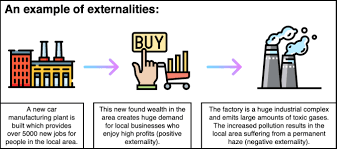
 Corporate interests easily dominate the interests of the common person. The common person has nowhere near the financial clout of corporations. In 2010, the Supreme Court passed the Citizens United Decision which gave corporations unlimited power to finance and support political candidates running for office as well as to lobby on behalf of any laws that they wanted. This decision basically upheld the idea that corporations had a right to free speech much like any citizen of the USA and that campaign spending was simply a manifestation of free speech. Corporations are now being treated as living breathing people despite the fact that corporations can live forever, and corporations are not organic entities. They are not born, and they do not die like any other creature on the face of the earth.


 One of the most popular movies in the eighties was Wall Street. In the movie, Michael Douglas gave a “Greed is Good” speech which was actually applauded by audiences all over the United States. Some corporations have been sued by stockholders for not being greedy enough.


