To Be Bold or Not to Be Bold? – Part 1

With the passage of trump’s “Big Beautiful Bill” it would appear that the Democrats have been handed a major defeat.  A defeat that will go down in history as something that they have earned by their timidity and wimpy responses to the growing menace of fascism in America.  Had they been bolder over the years, they could have cut this menace off at the proverbial knees.  But while the Republican Party became the Party of Greed, the Democratic Party became the Party of Wimps.  What value would Boldness have had for the Democrats?  In Part 1 of my blog, I want to relate what ChatGPT says about the value of Boldness.  In Part 2, I am going to lay out some of my own strategies for what Boldness might entail as we must still confront the goals of trump to destroy democracy in America.  Make no mistake, trump and his supporters have no more affinity for Democracy than Brutus had for Caesar.

I started ChatGPT off with the question:  Is it true that “Fortune Favors the Bold” or that “Success is the Child of Audacity?”  These are two aphorisms that have been around for ages.

ChatGPT:

Great question — both “Fortune favors the bold” (from Latin Fortes fortuna adiuvat) and “Success is the child of audacity” reflect a deep truth about human psychology, society, and even evolution.

Here’s why these ideas seem to hold up in life:

  1. Bold Actions Break Stagnation

Most people are cautious by nature. Those who take bold steps — start businesses, lead movements, speak up, try something unconventional — stand out. And standing out is often a prerequisite for success in a crowded world.

Boldness disrupts inertia. It pushes things into motion that otherwise never would have moved.

  1. Risk Is Tied to Reward

Success usually carries risk: social, financial, emotional, or reputational. Those who are bold enough to accept those risks have access to greater potential rewards. Many never try, so those who do are ahead simply by taking the shot.

  1. Confidence Is Attractive and Contagious

Bold people inspire confidence — in investors, partners, followers, or even random bystanders. Audacity, when not reckless, signals that someone believes deeply in their cause, and others often want to follow or support that.

  1. Failure Is a Learning Loop

The bold fail more — but also learn more. They get feedback the timid never receive. Over time, this trial-and-error process builds resilience, insight, and eventually success.

“The timid die a thousand deaths, the bold only once.”

  1. History Favors the Story of the Bold

Think of who history remembers: explorers, revolutionaries, inventors, artists — often people who defied norms and dared big things. Their boldness makes a compelling narrative. Even when the odds were against them, their courage became legend.

  1. Boldness Taps Into Serendipity

Bold moves often place people in the path of opportunity. Taking initiative creates collisions with luck — new people, ideas, or events that can’t be predicted or planned.

In Short:

Boldness is the gateway to uncommon results.
Not because it’s always right — but because it’s often the only way to reach what’s rare and meaningful.

ChatGPT

Would you like examples from history, psychology, or even nature to see how this principle plays out?

YES

Great — let’s walk through examples from history, psychology, and nature that show how boldness and audacity lead to success, or at least open the door to it in ways caution rarely does:

🏛️ History: The Bold Are Remembered

  1. Alexander the Great
  • At age 20, he became king. Instead of consolidating power cautiously, he launched a bold campaign and conquered most of the known world.
  • His military strategies were risky — but successful — and his name still echoes 2,000 years later.
  1. Rosa Parks
  • Her refusal to give up a bus seat wasn’t the first act of civil disobedience — but it was bold, direct, and visible.
  • That audacity became the spark that lit the Montgomery Bus Boycott and the larger civil rights movement.
  1. Elon Musk
  • Whether one admires or criticizes him, Musk’s career is a case study in boldness: betting his PayPal fortune on rockets, electric cars, and AI.
  • Many experts predicted his failure. But his audacity forced entire industries to evolve.

🧠 Psychology: Why Boldness Works

  1. The “Approach Motivation” Advantage
  • Bold individuals are wired to approach opportunity rather than avoid risk. Psychologists call this “behavioral activation.”
  • This mindset triggers more action, more experimentation, and more eventual wins.
  1. The Halo Effect
  • People attribute competence and strength to those who act confidently and decisively — even if they’re not always right.
  • That perception can open doors that might otherwise remain closed.
  1. The Spotlight Effect
  • We often overestimate how much others notice our failures.
  • Bold people tend to care less about being judged, and this emotional freedom lets them act while others hesitate.

🌱 Nature: Evolution Favors the Daring

  1. Peacocks and Risky Traits
  • A peacock’s tail is wildly impractical. But it’s bold — and signals genetic strength to peahens.
  • Nature sometimes rewards the flashy and the fearless, even if it comes with risks.
  1. Predator-Prey Dynamics
  • In a pack of prey, the ones that break from the herd occasionally find a faster escape route.
  • While riskier, this behavior sometimes allows survival where conformity means death.
  1. Mutation and Evolution
  • Every major evolutionary breakthrough came from a “mistake” — a mutation that took a leap from the ordinary.
  • Boldness, in this sense, is biological experimentation — and essential to progress.

🧭 Summary

Realm Example Boldness Led To…
History Rosa Parks, Alexander, Musk Movements, empires, industries
Psychology Confidence bias, approach motivation Influence, momentum, resilience
Nature Peacocks, predators, mutations Survival, reproduction, evolution

As you can see from the above analysis, there is more than a little truth to the trope that “Fortune Favors the Bold.”  There is not much I can add to these thoughts except to wonder what it will take to instill the boldness in the actions that we will need as we move forward with trumps presumed tenure in office.  I say presumed because I believe he will do everything he can in the next three and ½ years to further gut the powers of Congress and the courts.  His ultimate goal will be to install himself as “President for Life.”  An American version of Stalin, Hitler and Mussolini.

Reconstructing the Great Speeches – Danton:  “Dare, Dare Again, Always Dare”

georges-danton-eadf825f-b590-4d60-ac4c-0971ec7c1e3-resize-750

George Jacques Danton born October 26, 1759 wanted to dare and dare he did.  He dared so much; he lost his head to a guillotine on the 5th of April 1794.  Danton was one of the prime movers during the French Revolution of 1789.  For those of you whose history is limited, the French Revolution was quite a remarkable event.  Here is some background before we look at Danton’s famous speech.  For more detailed history, go to Wikipedia or the library.

Revolutions-that-changed-the-world_2

The French Revolution (1789-1799)

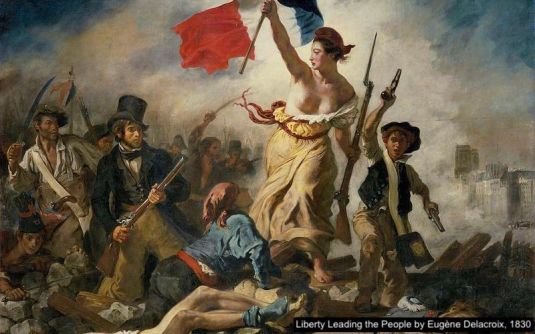
What makes the French Revolution confusing is that there was actually two of them.  We are discussing the background of the first one.  The second one was in 1830.  The first one is noteworthy for two major reasons.  1)  It set a precedent for overthrowing the rule of divine right by kings.  You have to keep in mind, that with the major exception of the United States of America, the world was ruled by Kings and Queens.  Many of these rulers professed a “divine right” to rule.  In other words, they believed that they were ordained by God him/herself to rule over the lesser beings on the planet whom they regarded as subjects.  As “subjects” the people under the rulers were “subject” to all forms of abuse and intimidation.  In many countries, people had little or no rights except by the grace of their rulers.

256px-TroisordresThe Catholic Church in France was a major power.  The Catholic hierarchy managed to continue to exert influence in France long after it lost power in other countries.  The Catholic Church kept its power by a political collusion with the French monarchy which helped the Church fight off the Protestant religion that had swept so much of Europe.  From the beginning of the Protestant Reformation, the Church in France along with the Monarchy had persecuted, exiled, and killed thousands of Protestants.  Thus, there were many in France who hated the Catholic leaders as much as they hated their King and Queen, who by the way also lost their heads during the French Revolution.

c4641830b5625a961f89dca58b695f5f

Needless to say, the rest of Europe was not too happy at seeing the servants and peasants overthrow the royalty in France.  This idea that the royalty was not so special might just infiltrate the minds of subjects in other countries.  Which of course is just what happened.  Over time, most of Europe eventually marginalized the role of their monarchies and established a variety of democratic institutions.  These later institutions would rule by laws set by the people and not by “divine right.”

Three of the most important democratic concepts to come out of the first French Revolution is epitomized by the motto “Liberty, Equality and Fraternity” which became the national motto of France.  Liberty is the right to express one’s ideas without fear of repercussions.  Equality expressed the idea that all social classes were citizens of France and would have equal rights.  The monarchy and the Catholic Church would no longer be privileged.  Fraternity meant that we are all brothers and would share in a common unity of humanity and respect.  In 1789, The leaders of the revolution drafted a document called the “Declaration of the Rights of Man” which outlined a set of enlightened principles about governing and government which bore some resemblance to the Bill of Rights in the USA.  Of course, women were still among the unprivileged.  Which leads us to the second major reason that the first French Revolution is noteworthy.

This second reason is the devolution into chaos and anarchy that happened.  Faced with a great deal of opposition both in and outside France to these new enlightened ideas, the leaders of the revolution became increasingly paranoid.  They were beyond cautious about who their enemies might be and what they needed to do to protect the emerging values of the French Revolution.  This led them to adopt a rather expedient method of protecting the Revolution.  The guillotine was developed as a very effective instrument for cutting off the heads of anyone whom they suspected might be either an enemy of the Revolution or even those who did not fully support the Revolution.  During, what has become known as “The Reign of Terror” (June 1793 to July 1794) about 17,000 people were guillotined.  Many more people were shot or otherwise murdered during the French Revolution.

00-promo-french-rev

Looking back, it seems bizarre to think that a revolution founded on the democratic ideas of the American Revolution and such theorists as Voltaire, Rousseau and Montesquieu could have led to the slaughter of so many people.  A slaughter that sadly is now one of the major things we remember about the First French Revolution.  Furthermore, the Revolution eventually led into an outright dictatorship by Napoleon Bonaparte.  Human nature was no more consistent or predictable in the 18th Century than it is today.  We wonder today how so many people in the USA would seem to reject the principles that it was founded upon.  Everywhere you look, we find those who reject the concepts of democracy and the rule of law.

Danton (1759 – 1794)

Some say Danton was the prime mover behind the French Revolution (1789 – 1799).  Before the Revolution, Danton was a lawyer of no particular noteworthiness.  He came into his own as one of the major leaders of the French Revolution.  He held a number of significant offices as the leaders struggled to form a government that would uphold the new values driving the Revolution.  Danton was perhaps as bloodthirsty or paranoid as some other leaders, notably Robespierre and Saint-Just.  Danton’s trial before his execution tended to be highly political and he was found guilty of a number of charges including bribery, financial corruption, and leniency towards the enemies of the Revolution These charges were founded more on the fears of his political opponents than any real evidence.

220px-DantonSpeaking

Dare, Dare Again, Always Dare (1792)

Danton’s most famous speech was not given at his trial.  Due to his noted oratory, the leaders at his trial decided not to allow him to speak.  They were afraid that if anyone listened to him, he would convince them of his innocence and perhaps even regain power over his accusers.  This speech was given in the face of threats by enemies attacking France from within the country and outside the country.  Danton as a key leader of the Revolution would have been marked for death should the Revolution be overthrown.  Ironically, he was executed by his former comrades.

“It is gratifying to the ministers of a free people to have to announce to them that their country will be saved.  All are stirred, all are excited, all burn to fight.  You know that Verdun is not yet in the power of our enemies. You know that its garrison swears to immolate the first who breathes a proposition of surrender.”             

France was being attacked by Germany then known as Prussia.  Verdun actually surrendered the same day that Danton’s speech was given.  Danton is lauding the efforts of the French people to fight for the principles of the Revolution.  The monarchies in the surrounding countries want to put down the Revolution for fear it could lead to the people in their countries also revolting.  Thus, Prussia, Austria, Spain and Russia all fought to help overthrow the French Revolution.

“One portion of our people will proceed to the frontiers, another will throw up entrenchments, and the third with pikes will defend the hearts of our cities.  Paris will second these great efforts. The commissioners of the Commune will solemnly proclaim to the citizens the invitation to arm and march to the defense of the country.”

In this speech, you can see a resemblance to the famous French National Anthem, the Marseillaise.”  The song was written in 1792 by Claude Joseph Rouget de Lisle in Strasbourg after the declaration of war by France against Austria.  One of the refrains from the song is:

  • Grab your weapons, citizens!
  • Form your battalions!
  • Let us march! Let us march!
  • May impure blood
  • Water our fields!

hqdefault

“We ask that anyone refusing to give personal service or to furnish arms shall be punished with death.  We ask that a set of instructions be drawn up for the citizens to direct their movements. We ask that couriers be sent to all the departments to notify them of the decrees that you proclaim here.  The tocsin we are about to ring is not an alarm signal; it sounds the charge on the enemies of our country.  To conquer them we must dare, dare again, always dare, and France is saved!”

Danton wanted to impose harsh punishments for anyone refusing service to France.  France initially suffered a series of defeats by other countries.  Eventually, by rallying together, France went on the offensive and achieved many victories.  By defeating their enemies, they solidified the gains of the Revolution.  However, these victories also allowed Napoleon to gain power and become Emperor.  Not much difference really between an Emperor and a King.   France might have gone two steps forward but they also went two steps back.

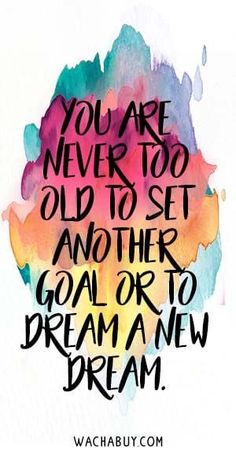
Danton’s concluding line was an exhortation to boldness and audacity.  “Dare, Dare and Always Dare!”  I have always admired these words and have tried to use them in my own life.  Consider what it means, if you will, when you try to apply them.  What are areas of your life where you have fears?  What areas where you need to be braver or bolder?  Where do you think you need to speak out more?  Where do you need to stand up for yourself more?  If you find many areas where you lack bravery, think of Danton’s speech.

Remember the line from the play Julius Caesar “Cowards die many times before their death, heroes only once.”  The following is a short one minute video I found online that captures the spirit of Danton’s lines.

f99d4d14b52e1b7317cf5146a198b530

3609– Friday, June 14, 2019 – Citizens: Dare, Dare Again, Always Dare!

A number of years ago (1998), I was hired by the Metropolitan Council in Minnesota as a Principle Planner II.  My job was to help the various units at the council to improve productivity and service.  I had been an independent Process Improvement consultant for the previous 13 years.  My new job meant a study paycheck and less travel.  It was a good way to get out of consulting and into more regular employment.  The people at the council were hardworking and dedicated.  Nevertheless, as Dr. Deming always said, “hard work guarantees nothing.”

00-lead-jon-stewart

In a short while, I found more waste and useless expenditure of time and taxpayer money than I could have imagined possible.  Even though as a consultant, I had often worked with government agencies from the US Navy to the City of Minneapolis, I was astounded at the staggering amount of fruitless effort throughout the organization and other state agencies.  I had become a liaison for the Metropolitan Council to help coordinate quality improvement agencies for a joint committee that included the Met Council and members of various other state agencies.  I frequently came home and exclaimed to Karen: “My god, if the average citizen saw the waste and stupidity that I see every day, they would grab a rifle or pitchfork and march on City Hall.”  I was dead wrong.

It has been twenty years and the waste and lack of accountability in government is still appalling and “no one is marching on City Hall.”  I often doubt if anyone really cares.  There is an old saying which goes like this:

Businesses get the unions they deserve,

Industries get the regulations they deserve, and

People get the governments they deserve.

 The lack of transparency in government is bewildering.  Transparency and accountability go hand in hand.  However, many cities, states and towns fail to publish their complete financial records on-line.  Yet no one demands to see the records of government spending.

GTY_9-11_responders_02_jef_160909_16x9_992

“Democracy depends on an informed electorate, but due to current practices in both accounting and budgeting, the true financial health of a city can be obscured, and citizens are deceived, or at best misled.  Without access to truthful, timely, and transparent information, how can citizens be knowledgeable participants in their governments?” —  Truth in Accounting

It seems that everyone you talk to is willing to condemn the cupidity and incompetence of most of our political leaders.  Yet, such criticism begs the question: “Not why did we elect these people, but why do we continue to reelect them?”

“Congressional stagnation is an American political theory that attempts to explain the high rate of incumbency re-election to the United States House of Representatives.  In recent years this rate has been well over 90 per cent, with rarely more than 5-10 incumbents losing their House seats every election cycle.”Congressional stagnation in the United States

920x920

These high rates of reelection defy logic since they come at a time when trust in government is at an all-time low.  “We the people” grouse and complain but the fact remains that “we the people” do not demand accountability and we do not enforce accountability.  We elect leaders who soon feel little or no need to represent their constituents but more likely never felt the electorate really mattered in the first place.  Too many of our leaders are fully aware that they owe their first loyalty to the lobbyists and corporations that funded them and not to the “joe or jane” on the street that simply cast a ballot for them.

“Public trust in the government remains near historic lows.  Only 17% of Americans today say they can trust the government in Washington to do what is right ‘just about always’ (3%) or ‘most of the time’ (14%).”  — Public Trust in Government: 1958-2019

Firefighters-Who-Attended-911-Scene-Are-19-More-Likely

I have repeatedly said that we need government.  It would be foolish to think that a community, let alone a nation, could function without a government.  Yet, I can also accept the words of Edmund Burke that “The government that governs best is the government that governs least.”  I do not say throw out government, but I do say “we the people” have to start making our votes and voices heard.  Too many of our so called “silent majority” simply do not give a damn.

If you don’t give a damn, you will get the government you deserve.  It would seem that this bit of wisdom has become a reality for most Americans.

PS:

I just watched Jon Stewart’s heroic and passionate speech to the House Judiciary on behalf of 9/11 Responders.  This speech will go down in history as a testimony to the difference citizens can make in government if we dare to speak out.  Stewart echoes my call for accountability in his speech.  See:  https://www.youtube.com/watch?v=Y2QMqsNvWuc

“Sick and dying, they brought themselves down here to speak to no one.  Shameful. It’s an embarrassment to the country and it’s a stain on this institution.  And you should be ashamed of yourselves for those that aren’t here.  But you won’t be because accountability doesn’t appear to be something that occurs in this chamber.” — Jon Stewart