Restore Democracy to America:  Ban the Lobbyists

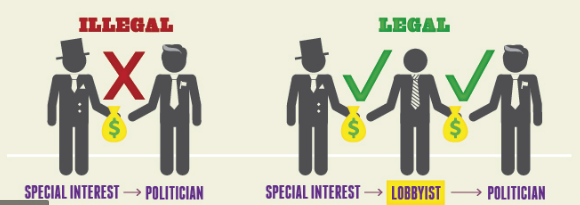
Lobbying is legal bribery.  Lobbying keeps politicians in the pay of vested interests.  As long as we have PAC’S, Paid Lobbyists, Cross-State funding of politicians and corporate money going to political campaigns, we will never have Democracy in America.  The saying “He who has the gold makes the rules “is true.  Our political system is in the pocket of paid lobbyists whose job is to see that our political leaders vote the right way.  The right way is determined by who can provide the most money for their forever campaigning.  Our politicians spend more time trying to raise funds for their next campaign than they do working for the American public.
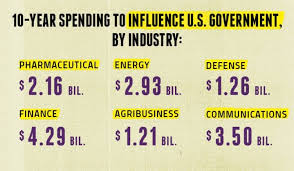
In 1924 over 100 years ago, Senator Bob LaFollette, ran for president on a Progressive Party platform calling for among other things the need to BAN LOBBYING.  There is not an American voter who is not sick and tired of the money that is being extorted by most politicians to finance their next campaign.  The day after an election, you will get a message in your email box telling you how essential it is for you to send money NOW to so and so to help them be reelected.

Rachel Maddow on her TV show the other night (3-1-25) was describing the dissent that is growing among voters nationwide within the voting public.  There are political protests taking place all over America at campaign rallies, town hall meetings, civic meetings and in public office buildings.  People are sick and tired of their elected leaders standing by while they get fleeced.  This dissatisfaction is rife within America and includes voters and citizens from across all political spectrums.  Americans are standing up and demanding that billionaires not be allowed to run America.  Rich oligarchs like Elon Rusk are running amok within the political system because they can provide billions of campaign dollars to our ever hungry for money elected leaders.

In an interview with the leader of the Democratic Party, Hakeem Jeffries, Maddow said the public wanted to know what the Democrats would do to stand up for the rights of the people.  Jeffries started to give a bunch of inchoate efforts the Democratic party was making and mentioned the political rallies taking place.  He sounded like these protest rallies were something the Democratic party was organizing.  Maddow cut him off very quickly with the remark “These rallies are being organized from the bottom up.  They are a grass roots movement and are not a result of Democratic party initiative.”  Jeffries then proceeded with a list of things the Democratic party was planning to do.  His ideas were so vacuous and vague, I have not a clue what they are going to do.  One thing I am certain of, Jeffries did not say one word about moving to ban lobbyists and lobbying from the halls of our Congress.
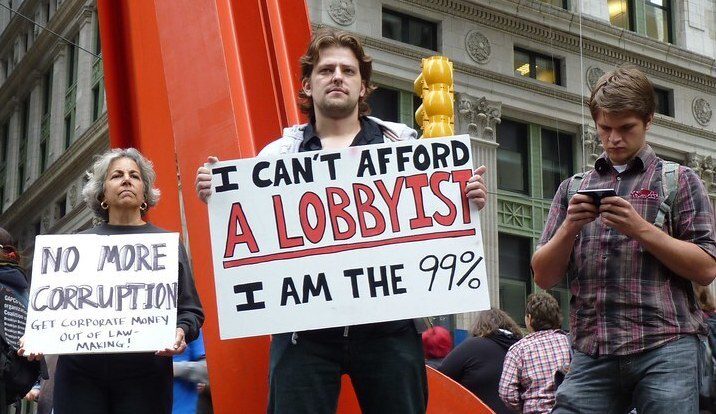
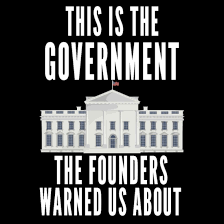
Until we ban lobbyists, we will never restore our government to the government envisioned by the founding fathers.

We need to have a focused movement to ban lobbyists.  Every dissent in America over the next year or so should include a message to ban lobbyists.  The only way the people can regain control of the political system in this country is by making lobbying illegal.  I am calling on all American citizens to stand up and speak out against lobbying.  If you don’t want to speak out, then buy a T-shirt that says, “Ban Lobbyists.”  But every grass roots group in America needs to start an outcry to “Ban Lobbyists.”  Imagine if every Church, Synagogue or Mosque in America was speaking out against Lobbying.  Every protest group should have at least one sign calling to “Ban Lobbying.”  We should be putting signs up outside every legislative building in America saying, “Ban Lobbying.”
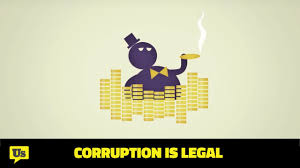
There is some precedent in Christianity for throwing the lobbyists out.  In Matthew 21:12-13 it is written:

“Jesus entered the temple courts and drove out all who were buying and selling there. He overturned the tables of the money changers and the benches of those selling doves. “It is written,” he said to them, “ ‘My house will be called a house of prayer,’ but you are making it ‘a den of robbers.’” — New International Version NIV

Ask yourself what Jesus would do?  Would he stand idly by while the lobbyists bought and sold contracts and bills supporting more and more buying and selling?  I think not.  Jesus would have thrown them all out on their asses.  Those of you who claim to be Christians should take heed here.  There is much every religious organization could do to help clean the temple out, but they sit by doing nothing while our government is sacrificed to the false gods of materialism and profit.

Following, I suggest several ideas to take the money out of politics and to restore our political system to a semblance of a peoples democracy and not a democracy of Billionaires and Oligarchs.  If you like these ideas, than please share them with your friends, neighbors, families, church or whatever groups you belong to.

  • Make lobbying or trying to induce an elected official a crime akin to bribery because lobbying right now is legal bribery.
  • Call for the elimination of PAC money, Special Interest Groups and Corporate funding of political campaigns. Campaign funds should only come from eligible voters.
  • Set a limit of 1000 dollars maximum per year that any eligible voter can donate to political campaigns. You could spread this money across several campaigns or drop it all on one but the legal limit for one year would be 1000 dollars.  This money would be eligible for a tax deduction for the entire amount.
  • Ban the funding of political leaders in one state by voters from other states. You should only be allowed to support political leaders in your state of residence with exception of the office of President.
  • Repeal the Citizens United Decision.  This vote by the Supreme Court treats corporations as private citizens and as such they are entitled to free speech.  This finding is ludicrous in itself but it gets more ridiculous  The court then decides that free speech means corporations can act as private donors in campaign spending.  In other words, corporations are the same as private citizens and entitled to donate as much money as they want to politicians who will support their private programs.  Since when does any corporation have a soul or a heart or even a brain? 

It has been said with a great deal of truth that America is a country run, Of the Corporations, By the Corporations and For the Corporations.  America is being run by special interest groups across a broad spectrum of interests, but all without concern for the interests of the larger American public.  Do we want a government of corporations, or do we want a government of the people, by the people and for the people?  Here are the top ten Lobbying groups in America as of 2025 with the amount purportedly spent on lobbying.  Personally, I doubt the money shown here is in any way a legitimate representation of the amount actually spent by any of these groups. I will discuss why this is true later.

Top Spenders

Lobbying Client                    Total Spent

    1. National Assn of Realtors           $86,385,941
    2. US Chamber of Commerce         $76,260,000
    3. Pharmaceutical Manufacturers  $31,720,000
    4. American Hospital Assn             $29,017,803
    5. Blue Cross/Blue Shield               $27,146,300
    6. American Petrochem Mfg          $26,310,000
    7. American Medical Assn             $24,782,000
    8. Meta                                              $24,430,000
    9. Business Roundtable                 $23,400,000
    10. American Chemistry Council    $22,330,000
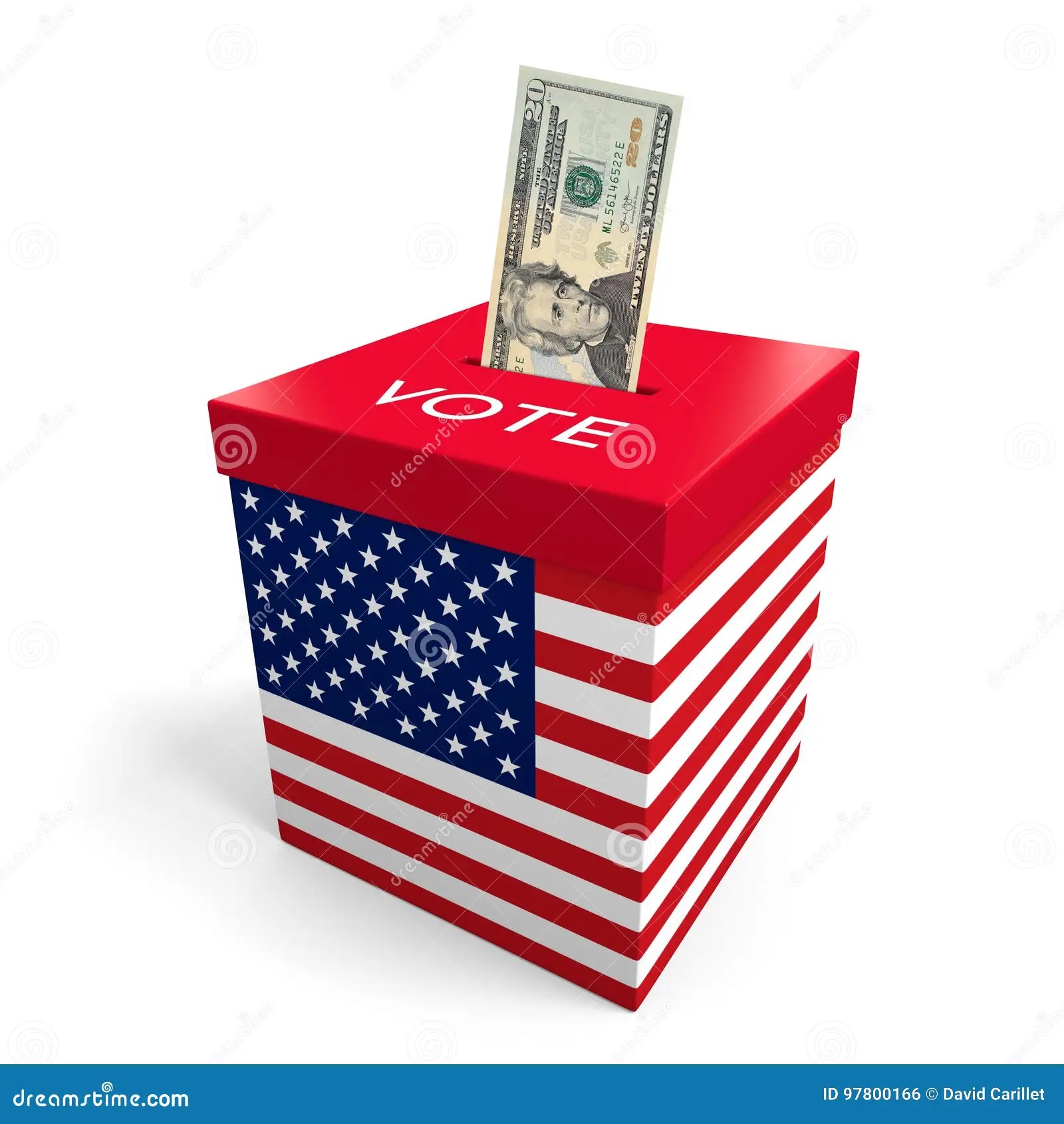
 I queried ChatGPT to see how much money lobbyists spent in 2024 in total and came up with the following information:

“In 2024, lobbying spending reached a record-breaking $4.4 billion.” — OPENSECRETS.ORG

“The total amount spent by lobbyists on political campaigns annually is not separately tracked and is encompassed within the broader category of individual and PAC contributions.”

A majority of funding for the 2024 election — over 65%, or nearly $5.6 billion — comes from political action committees, also known as PACs. — USAFacts

The above information leads to the inescapable conclusion that despite a slew of laws that allegedly govern the activities of lobbyists and PACs, the system is broken.  The system does not work to limit or proscribe the actual influence of lobbyists on our electoral system.   We must demand that the system be fixed.  The system is corrupt, misused and only serves to undermine and torpedo the democratic process in America.  We have enough media to educate people on laws and policies.  We do not need 12,000 paid lobbyists roaming the halls of Congress looking out for their interests and not the interests of the American people.
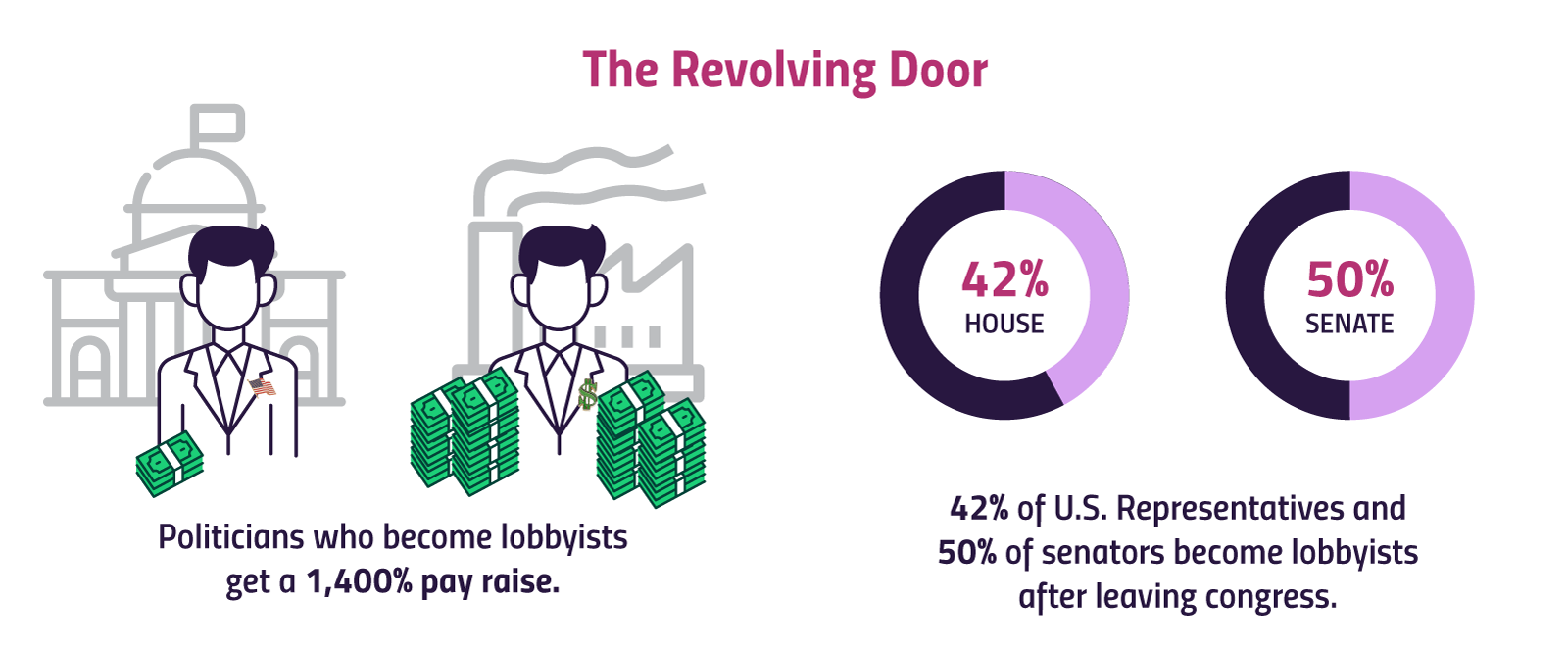
“The financial elite already have the politicians in their pockets, as a result of their lobbying.” — K. Eade

“Very few of the common people realize that the political and legal systems have been corrupted by decades of corporate lobbying.” — S. Magee

“The important thing to remember with the Internet is that there are large companies that have an interest in controlling how information flows in it.  They’re very effective at lobbying Congress, and that pattern has locked down other communication media in the past.  And it will happen again unless we do something about it.”  — E. Pariser

“As long as we, in the United States, continue to insist that our politicians have to spend all of their time raising millions of dollars for television ads, it will be corrupt.  If we leave it up to the politicians to clean up lobbying and finance reform, nothing is going to change.” — K. Spacey

Stand up and demand that your political leader take the money out of politics.  Ban Lobbying.  Ban Lobbyists. 

Restore Democracy to the American people.
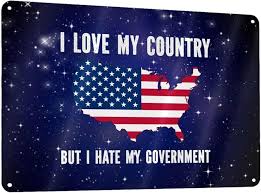


Why Americans Hate the Government!

I sit here in my car driving the speed limit of 75 mph on the interstate and being passed by multitudes of cars doing at least 85 mph or maybe 90 mph.  It feels like I am standing still.  I watch as cars pass on the right, left and in-between in their hurry to get somewhere really important.  Speed limits and stop signs seem to be only ideologies obeyed at the discretion or whim of the drivers on the roads today.

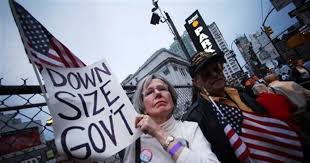
Americans have always said that they want less government.  Today, it seems that they want NO government.  People clamor for their rights at every mention of some law or other injunction that they do not feel applies to them.  Hardly any American cannot find some law that they find unfair and unjust.

Edmund Burke said that the “Government that governs best is the government that governs least.”  Abraham Lincoln said that “If all men were just, there still would be some, though not so much, need of government.”  Many Anarchists would agree with these sentiments.  In the past, Americans have treated Anarchists as terrorists and revolutionaries.  Anarchists are despised by most Americans.  Yet, few Americans understand that many Anarchists share their same belief in “eliminating the government.” The January 6th attacks on the Congress of the USA could have been a picture-perfect representation of an Anarchist attack.  Unfortunately, for such simple depictions of Anarchists many are not violent revolutionaries.  One definition of an Anarchist given by the FBI is as follows:

“Anarchism is a belief that society should have no government, laws, police, or any other authority.  Having that belief is perfectly legal, and the majority of anarchists in the U.S. advocate change through non-violent, non-criminal means.” — FBI. Gov

The implications of this definition are profound.  Consider that “The majority of anarchists are non-violent” whereas the majority of those storming the US Capital on January 6th were engaged in violent criminal attacks.  How many of the people attacking the Capital would agree that they were engaged in the same type of criminal activities that they ascribe to Anarchists?  Nevertheless, both groups share a dislike for government.

A closer reading of Lincoln and Burke though does not show an advocacy for NO government, only less government.  What are the primary purposes of a government than and how can it reconcile achieving these purposes while at the same time not becoming a burden on the everyday lives of its citizens?   Here are the five most important functions of a government:

The five most important functions of a government typically include: (From ChatGPT)

  1. Maintaining Order and Security:

Enforcing laws, protecting citizens from crime, and ensuring national defense against external threats.

  1. Providing Public Services:

Offering essential services like education, healthcare, infrastructure (roads, bridges), and utilities that individuals or private businesses might not adequately provide.

  1. Protecting Individual Rights and Freedoms:

Upholding constitutional rights, such as freedom of speech, religion, and equal protection under the law.

  1. Economic Management:

Regulating trade, managing taxes and public spending, and addressing unemployment and inflation to foster a stable economy.

  1. Formulating and Enforcing Laws:

Creating legislation that reflects societal values and ensures justice, while maintaining systems to fairly enforce these laws.  (End of ChatGPT) 

Few people would disagree with any of these functions.  But if God lies in the details (or the Devil some might say), than our disputes are more around “what exactly will be done and how will it be done.”

Any one of these five functions can illustrate the problem that people have with the government.  For instance, what Public Services will be provided?  We accepted education many years ago as a public service, but now some want to privatize education.  Other people want childcare as a public service while there are people who disagree with the idea.

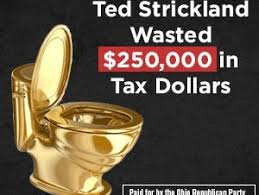
But the question of what services and what laws to provide are not the only problem people have with the government.  A bigger problem lies in the “how” of government.  By how, I refer to the efficiency of government.  The government has long been lambasted for its lack of efficiency.  Several years ago, Senator William Proxmire of Wisconsin created his “Golden Fleece Award.”  Periodically a government agency would receive this award for an egregious offense of efficiency.  Some of these became famous even if they might have been a gross exaggeration.  One that comes readily to my mind was the “Golden Toilet” bowls case.  Allegedly, a government office ordered gold-plated toilet bowls.  Whether this is an urban myth or not, there are indeed countless stories of government bureaucracy creating inefficiency.

When I worked as a principal strategic planner for the Metropolitan Council in Minnesota, I saw so many examples of government waste and stupidity that I often came home complaining to my spouse that, “If only the citizens of this state could see the waste and inefficiency that I am trying to deal with, they would grab guns, knives and even pitch forks and march on city hall.”

That was over twenty-five years ago, and people have finally marched (if not on city hall) on the Capital of the USA.  Unfortunately, as is the case with much anger, it is often misplaced and misguided.  It is not only the Federal Government that is inefficient, but also most state governments, county governments and city governments that are inefficient as well.  When I was teaching the concepts of quality and process improvement to companies, I would use a conceptual framework based on two key economic concepts to explain how a company could improve its operations.

There are two key economic concepts that every organization must be concerned with.  The first key concept is Effectiveness.  Effectiveness can be defined as “Doing the right things.”  The second key concept is Efficiency.  Efficiency can be defined as “Doing things right.”  In order for any organization to maximize productivity it must be both efficient and effective.  It does not matter if you do the right things, but you don’t do them right.  Vice versa, if you do the wrong things but you do them right, that is nonproductive as well.  We can summarize these maxims simply by the following idea:  Your clients and customers expect that you will give them “What they want or need at a price that they can afford.”  Price reflects the efficiency of an operation, while giving customers what they want or need reflects the effectiveness of the operation.

In my experience, both as a business teacher and a management consultant, business organizations focus more on efficiency than effectiveness.  There are countless examples of products and services that are neither needed nor wanted by people, but advertising can always be effective in convincing consumers otherwise.  I am thinking of cigarettes and carbon-based products as two such examples.

On the other hand, the government typically focuses more on effectiveness (that is giving people needed services) and much less on efficiency.  The government tries to reduce the waste and garbage that comes from industry as a direct offshoot of their so-called efficiency. The most noted example is the environmental degradation caused by many business products.  Today we face a world where climate change is destroying our lives and our environment.  If the trends noted today keep growing, we will eventually inhabit a planet where human life can no longer exist.  Much of this climate change could have been prevented.  However, companies and politicians in the pocket of big oil have spent billions of dollars in efforts to deny that climate change is taking place due to carbon-based fuels.

The secret of sustainability (a dirty word to some people) on a global scale is to have businesses and governments that are both effective and efficient.  Unfortunately for most governments, they get the worst of the publicity.  There is much less criticism of the ineffectiveness of big business to provide products that are compatible with a clean environment than there are criticisms of the government for inefficiently trying to regulate this business waste.  It is easy to see why that is the case.  As my friend Dick always said, “Follow the money.”

The government spends very little money trying to convince you that the climate is changing, or that too much production of carbon fuels is destroying our environment.  Big business has dozens of lobbyists padding the campaign budgets of politicians to convince them to ignore the effects of global warming and to deny that it exists.

Big business also spends billions of dollars trying to convince you that they can provide government services more efficiently than the government.  The last few years have seen ongoing attempts to privatize education, prisons, waste treatment plants and many other public services where big business think they can make a profit.  In addition, big business has been at the forefront of efforts to deregulate organizations such as banks, public utilities and airlines in order for them to manage these organizations without restrictions.  Having no restrictions, gives them free rein to make as much profit as they like. Yes, you may get these services cheaper and thus more efficiently than the government would provide them, but you will pay a hidden cost.  There are no free lunches in the world.  The Great Recession of 2007 followed the issuing of loans and mortgages that had too little collateral and too high interest rates leading to a catastrophic failure of banks and homeowners.

IF you want further corroboration regarding my above analysis of the 2007 recession, you can read the following from ChatGPT:

“The 2006 recession was actually part of a broader economic crisis that led into the Great Recession (which officially spanned from late 2007 to 2009), but the roots of the downturn started around 2006.

The major cause was the housing market crash. Here’s a quick breakdown of what happened:

Subprime Mortgage Lending: Banks and lenders gave out risky loans (subprime mortgages) to people with poor credit histories. These loans often had adjustable interest rates that started low but later spiked, making it hard for borrowers to keep up with payments.

Housing Bubble Burst: Housing prices had been soaring due to speculation and easy credit, but by 2006, home prices peaked and started to fall. As prices dropped, homeowners who couldn’t sell their homes or refinance their loans began defaulting.

Mortgage-Backed Securities (MBS): Banks bundled these risky mortgages into financial products called MBS and sold them to investors. When homeowners started defaulting, the value of these securities collapsed, causing massive losses for banks and financial institutions.

Foreclosures and Bank Failures: Foreclosures skyrocketed, and big financial players like Lehman Brothers collapsed or needed bailouts, which deepened the economic panic.

The domino effect triggered a credit crunch — banks stopped lending, businesses cut jobs, and consumer spending shrank, all of which pushed the economy into a full-blown recession by late 2007.”

Consumers and the American public paid a big price for the greed and stupidity of the banking industry.  A greed which was supported by Government deregulation which in turn was pushed by greedy politicians ignoring the need for regulation.  Behind all the politicians are legions of lobbyists for the banking industry.

Major insights I want to leave you with:

  1. People want a free lunch when it does not exist.
  2.  Politicians (first and MOST) represent those from whom they get the most gold. He who has the gold makes the rules.
  3.  Businesses and citizens will never regulate themselves without some help from a government to set norms that everyone must abide by.  Witness, the amount of gun violence, air pollution, water pollution, road rage and senseless speeding that exists today.  There are too many people and too many organizations which will not police themselves.
  4.  Efficiency and Effectiveness are the fundamental building blocks for any sustainable economic system that is going to deliver ongoing value to society.
  5.  We need a government that is fair, nonpartisan, educated and responsible to the citizens and not the lobbyists. We do not have that now. 

 Some Solutions I Would Like to Suggest:

  1.  Make lobbying illegal.  Lobbying is bribery.  Ban all lobbyists from congress.
  2.  Overturn Citizens United Ruling:  Corporations are not people and should not be allowed a vote.  Just as we separated Church and State, we must have a constitutional amendment to separate Corporations and State.
  3.  Term limits for all politicians. I recommend one six-year term for all elected positions.  Furthermore, once an elected politician leaves an office, they cannot hold another government position in any office for ten years. 
  4. Have Vouchers for Campaign Contributions: Every year, each eligible voting citizen of the USA would get a monetary voucher for 500 dollars to fund as many campaigns as they want to contribute to.  The voucher money could only be used to fund political campaigns.   The maximum that any citizen could contribute to political campaigns in a year would be 1000 dollars.   No PAC money, no corporate funds, no other funds except funds from individual registered voters would be allowed.
  5. Supreme Court Justices: Supreme Court Justices should serve a maximum of 15 years.  New justices should be selected by the following practice:  A bipartisan committee of judges nominates a total of 6 candidates.  The final candidate is selected at random from the pool of six.

These changes would be only a first step in bringing true democracy back to America.  There are many changes needed to make the Government bureaucracies throughout America more efficient and effective.  The ideas I have given above are only a start.  We need to bring efficiency and effectiveness to our Education, Health Care, Justice, Military, Social Services, Immigration and Diplomatic systems.  In several other blogs, I have suggested ideas on how to go about dealing with some of these systems.  However, nothing is more important than getting the corruption out of Government fostered by our present system of electing candidates to office.

What is a lobbyist?

Lobbyists are professionals hired by a special interest group to represent their interests to Congress.

The term “lobbyist” harkens back to the days when people hung around in lobbies waiting to get a word in with legislators heading to vote.

All kinds of groups hire lobbyists — from corporations and private companies to nonprofits and unions — to try to persuade the government to pass legislation that’s favorable to them.

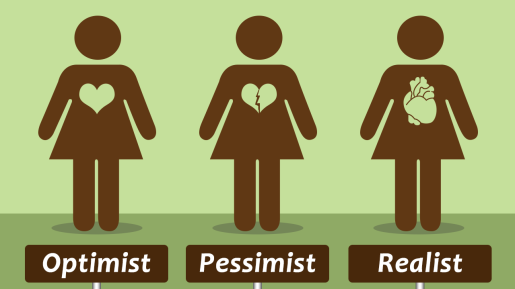
Optimist, Pessimist or Realist

1280-difference-between-pessimist-optimist-realist

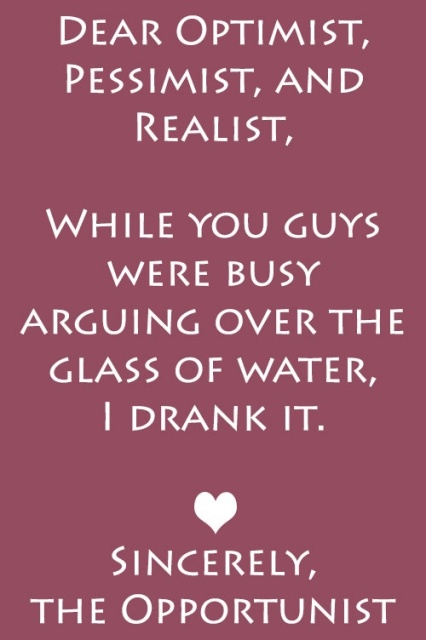
Are you an optimist, pessimist, or realist?  I have a good friend who always says that he leans towards being a “guy whose glass is half-full.”  I guess he is a pessimist.  I know I am married to an optimist, because whenever I say anything negative about anyone, she will provide a contrasting optimistic perspective.  I tend to believe that I lean towards pessimism.  I like to think that I am a realist.  When someone asks me if my glass is half-full or half-empty my answer will depend on whether my glass is being filled up or emptied.  Nevertheless, I suspect many would find that my blogs reflect a rather negative view of life and humanity.

optimist-quote

Climate Change:

Pessimist: “The end is near; the end is near.  We have destroyed the world with carbon pollution, and it is too late to do anything about it.  Nature magazine published a study which shows that Global Warming stated as early as 1830 CE.”

Optimist: “There is still time to do something about climate change.  Humanity has faced disasters before, and we always overcome them.  They thought that we would destroy ourselves with nuclear weapons, but we learned to use other strategies to deal with our differences.”

Realist: “Maybe we have just been lucky.”

quote-both-optimists-and-pessimists-contribute-to-society-the-optimist-invents-the-aeroplane-george-bernard-shaw-39-34-36

Corrupt Government:

Pessimist:  Politicians since the days of Plato and Socrates have always been corrupt.  There is no such thing as an honest politician.  Lying comes naturally to all politicians and the truth is only an inconvenience for most of them.  Politicians have become worse and worse over the years in terms of lacking morality and ethics.  They will always do what is expedient and they are all amoral.”

Optimist: “How can you make such a blanket generalization?  There have been many good politicians and many or them are very honest and moral.  Look at Marcus Aurelius, Rómulo Betancourt, Thomas Sankara, Nelson Mandela, Lee Kuan Yew, Jimmy Carter, and Muhammadu Buhari.  These men were all honest leaders who fought for the welfare of their people and did it selflessly.  They were capable, incorruptible leaders who made a real difference in the lives of their followers.

Realist: “You win some and you lose some.  On the whole, it would seem that we have more leaders like Trump than we do leaders like Gandhi.”

download

Education:

Pessimist: “Pouring money into education is a waste of time.  Kids are learning less today than they did in the early days of public education.  Half the kids in school are bored.  Teacher turnover is at an all time high and classrooms are chaotic.  Parents do not support teacher discipline anymore.  Schools have become jails for most students who would rather be home.  Kids today do not see the value in education because parents do not.  Schools are just factories for the more privileged to come out and get the high paying jobs in society while the rest of the pack will work for Walmart or McDonalds.”

Optimist: “We live in a more educated society today then even twenty years ago.  Education has been responsible for raising the standard of living the world over.  People are living longer than ever because of scientific advances in hygiene, medicine, and public health.  Without education, we would still be dying in our mid-forties instead of in our mid-seventies.  Kids today learn different things then when we were in school.  They are more visually literate, and computers have been a new tool that students today are using to change the world for the better.”

Realist: “We seem to take two steps forward and one back.  For every pro about education today, there is a con.  For every pro about technology there is a con.  We need to have a broader perspective on change that will enable us to embrace new ideas and let go of old ideas that no longer work.”  We simply keep adding pages to school textbooks without taking any out.”

9b5c1a93d55455e007ee15be31b6bbae

I could go on and on with examples of the quite different outlooks that life provides us.  Who is right?  I doubt that we will ever really know.  Many of the old sayings exist to provide us with some direction on how to live.  A friend of mine tried to convince me that writing should be positive and inspirational.  His motto was, “You catch more flies with sugar than with vinegar.”  According to my friend, people will ignore writing that is too dismal and negative.  It is his opinion that writers should provide a path forward to growth and development.  I told another friend the other day that “hope without action is hopeless.”  It is not enough to just hope for change, you need to do something about it.  I like to think that my writings provide a path forward.

Nevertheless, we are all familiar with the concept of being too “Pollyannish.”  Someone who is too Pollyannish always sees the positive in everything.  Pushing the envelope on optimism they become extremists who see a bright spot in every dark endeavor.  We sometimes refer to these people as wearing “rose colored” glasses.  A realist would argue that sometimes a bright spot does not exist.

quotes-about-optimism-relishquotes

My writing instructor, Dr. Wedin informed our class a few weeks ago that the story of Pollyanna, a 1913 novel written by American author Eleanor H. Porter, has been grossly misrepresented.  In common usage, a Pollyannish person is someone who is too unrealistic about life and its difficulties.  I decided to watch one of the many movies based on the novel and found a quite different interpretation of young Miss Pollyanna.  One that I assume was more in line with the novel.  In the movie, Pollyanna is a young girl who faces her share of joys and unhappiness.  However, remembering what her father told her, she always tries to find a bright spot in life regardless of how difficult things may be going for her.  Pollyanna’s philosophy of life centers on what she calls “The Glad Game,” an optimistic and positive attitude she learned from her father.

As a man who has leaned strongly towards pessimism for most of my life, I found myself admiring Pollyanna’s attitude and efforts.  They say pessimists live longer lives but optimists live happier lives.  There is something about pessimism that wears one down and tires others out.  Friends, family, spouses, siblings, and children all have a difficult time being around someone who is relentlessly pessimistic.  Just as hope without action is useless, pessimism without a plan to change things is depressing, gloomy and dreary.  Would you rather be around a pessimist or an optimist?

385043974-life-quote-complain

But what about our third choice?  Would you want to choose a realist for a life partner?  Is this the Golden Mean that the Greeks worshipped?  I think not.  The problem with being a so-called realist is twofold.  The first problem is that realism must be based on a foundation of facts and evidence.  Herein, you can immediately understand the problem.  It is difficult if not impossible to obtain evidence that will prove irrefutable and reliable.  Life is full of lies, half-truths, unsubstantiated facts and impossible to find evidence.

The second problem with realism is that it is not useful without a path forward or some means of making sense out of reality.  Knowing reality is meaningless if you cannot do something about it.  Finding the best path forward always involves a number of decisions that go beyond the facts.  For instance, if I decide that my car needs a new engine, will it be more cost effective to purchase a replacement engine or buy a new car?  You might be able to work out an equation to make this decision, but I guarantee you that there will be several unknowns in your equation.  Every unknown impacts the outcome of your decision making.  Then of course, there are what we call “unintended consequences.”  Charting the unknown, even realists must go into mysterious territory.

So we arrive back to where we started.  Would you rather be an optimist, pessimist, or realist?  I would love to hear your comments on this question.  Please feel free to send me a reply.

Only send optimistic comments though.  😊

Taking It to Extremes – Part 1 of 5

A number of years ago, I wrote an article about the famous “Golden Mean” of Greek philosophy.  The mean was basically a rule that said the best way of living is to balance extremes.  Another way of looking at what this rule implies is that evil or bad things happen when we over do something.  We need to take all things in moderation.  Thus, drugs, smoking, guns, watching TV etc., are not evil or bad in themselves but when we take them to extremes they became dangerous and counterproductive.

I sincerely and whole-heartedly believe in this rule.  However, recently I was thinking about it from another perspective.  I was reflecting on the problems of government today and the extreme polarization that now exists in American politics.  The more I thought about it, the more I realized that the Greek rule was not quite strong enough.  It needs something more.  Perhaps, an extension or a corollary to make the rule stronger.  There are too many instances, where the rule taken at face value does not do enough justice for the circumstances. 

For instance, when I was teaching business I always told my students that organizations needed to balance efficiency with effectiveness.  Efficiency is doing things right, while effectiveness is doing the right things.  Organizations do not need to balance these two concepts as you would a seesaw, but they need to be constantly aware of the tension and perhaps conflict that can exist between the two.  It is an ongoing struggle but never a question of equal balance because the proper balance will never be static.  There are many other polarities in life where it is not really a matter of moderation or balance but actually more a matter of dynamically blending and using synergy to impose a sort of order between the two extremes.  The concept of Hegelian Dialectics comes to my mind. 

Dialectical thinking can be described as: “The ability to view issues from multiple perspectives and to arrive at the most economical and reasonable reconciliation of seemingly contradictory information and postures.”  This is a much more complex process than simply balancing extremes.  The more I thought about it the more I decided to add a corollary to the Greek Rule.  Since I think time has easily proved the value of the Golden Mean, a corollary by definition is a proposition that follows from and is appended to one already proved.  My corollary is as follows:

John’s Corollary:

Anytime, one concept in a set of opposing concepts is allowed to dominate the opposing concept, extreme dysfunction will result 

I want to discuss this more by using five pairs of concepts that I think are critical to our world today.  I want to show you how the distortion created by proponents of each concept are dangerous to life as we know it.  I do not use the word dangerous loosely or frivolously or for effect.  The battle between these ideas is destroying life as we know it on this planet.   The proponents of each side of these polarities seek to destroy the proponents on the other side.  Rather than looking at things from a systems perspective and trying to dynamically adjust the system, opponents are bent on allowing one idea to dominate to the exclusion of the other idea.  Witness the name calling between conservatives and liberals today.  Each side demonizes the other side and assumes God is on their side and Satan is on the other side.  Here are the five pairs of concepts we will look at in the next few weeks.  We will start by looking at number one in my list and following the order given. 

  1. Efficiency versus Effectiveness
  2. Growth versus Development
  3. Society versus the Economy
  4. Conservative versus Liberal
  5. Rights of the Individual versus Rights of the Group
  1.  Efficiency versus Effectiveness:

I noted that I used to teach these concepts to my business students to emphasize the role and responsibilities of a corporation or business.  Taken from a macro perspective, these two ideas might seem unimportant.  However, when you realize that our entire government and system of capitalism runs on both of these concepts, their importance cannot be understated. 

Business seems to sheer towards efficiency with less concern for doing the right things.  If they were more concerned with doing the right things, there would be less of what economists’ call “externalities.”  An externality is a side effect or consequence of an industrial or commercial activity that affects other parties without this being reflected in the cost of the goods or services involved.   Externalities can be either positive or negative in terms of their consequences for society.   Negative externalities include such issues as:  water pollution, air pollution, soil contamination, fumes, dangerous side effects from drugs and many others.  Businesses will invariably try to ignore the costs of these side effects and thus they get passed on to the society.  It is society and environment that suffers from the effects since the consumer or customer generally benefits from the lower costs of production guaranteed by the business passing the costs of the negative externalities on to the world. 

The opposite extreme is seen in government and this is the extreme reflected in how the government tends to manage its costs.  The government focuses on effectiveness.  That is trying to do the right things.  This is actually why we have a government.  The government exists to ensure that things needed by society are provided without regard to costs.  The “without regard to costs” becomes a problem because too often government agencies seem to provide services with little or no emphasis on cost management.  Senator William Proxmire was well known for his “Golden Fleece” award in which a government agency would be bestowed an award for its gross mismanagement of costs.  Over the past decades, conservatives have increasingly tried to take the management of many government functions away from various government agencies due to their gross negligence and ineptness when it comes to management of budgets and costs.  Unfortunately, when put into the hands of a business that is singularly bent on efficiency the quality of the service in terms of its effectiveness may suffer.  One example of this is with our education system. 

Conservatives and Republicans and even some Democrats have decided that public education is inefficient, and that business can do a better job of providing education to American students.  A business exists on a profit and loss model.  However, the idea of providing a quality education to all Americans on such a basis is flawed.  Schools that are democratic institutions cannot cherry pick their students.  In a typical public school, you have a bell-shaped curve of students in terms of both aptitude and attitude.  A private school or charter school will select students with higher aptitudes and attitudes.  This of course, begs the question of how and where the students with lower aptitudes and attitudes will get educated? 

The education of Americans youth becomes an either-or proposition with losers and winners.  No other solutions are looked at as groups coalesce around extremes.  Either we have public education, or we have for-profit education.  There are other solutions, but they involve a radical restructuring of our entire educational system which neither side wants to contemplate.  I do not see public education as the answer to education nor do I see private and for-profit charter schools as the answer.  See my blog on the subject titled:  “Creating a Twenty First Century Education System.”

I could point to dozens of examples of the stupidity of businesses that focus more on costs than effectiveness.  In my twenty some odd years as a management consultant, I worked with many businesses to help create a synergy between efficiency and effectiveness.  The Deming Philosophy exhorted organizations to use systemic thinking to create this synergy.  Much of my focus in consulting was with helping organizations do the right thing and to do things right. 

Conversely, when I was working with a government organization, I would help the organization learn to do things more efficiently.  I was often so frustrated with the inefficiency and economic stupidity of some government agencies that I thought they should simply be abolished.  When Governor Perry was asked which government agencies he would eliminate, he could not name three.  I could immediately think of six that I would abolish. 

I am no friend of inefficiency.  Inefficiency is a crime upon humanity.  It robs people of valuable time and resources and money.  It makes life more difficult by waste and rework and a callous disregard for the abilities of employees.  I am also no friend of ineffectiveness.  What good are products and services if they cannot do what they were designed to do or if in providing their intended functions, the unintended side effects are a disaster for our society or environment.  Corporations need to provide a quality product that is wanted or needed by a customer “but not just at a price they can afford” but at a price that allows the negative externalities to either be avoided or addressed.  In other words, costs of pollution and environmental degradation must be paid for by the organization and its customers. 

I think you should now understand from much of my conversation above, the inherent dangers of not addressing both efficiency and effectiveness in the operations of any business or organization.  As I have argued, ignoring either concept or taking either one to an extreme will create a dangerous situation that will become dysfunctional to life.

My next blog will look at the battle in our world between growth and development.  This is a battle that is destroying our environment and lives throughout the world.  The following has been noted by the Center for Climate and Energy Solutions:

  • Communities, builders, homeowners, and forest managers can reduce the likelihood and impacts of wildfires by:
  • Discouraging developments (especially residential) near fire-prone forests through smart zoning rules.
  • Increasing the space between structures and nearby trees and brush and clearing space between neighboring houses.

Thanks for reading.  Please leave any comments or thoughts you might have on my blog site.  Or email me at persico.john@gmail.com

It’s the Economy Stupid! The Five Myths of Capitalism – Part 2 of 5

quote-the-liberty-of-a-democracy-is-not-safe-if-the-people-tolerated-the-growth-of-private-franklin-d-roosevelt-36-65-91

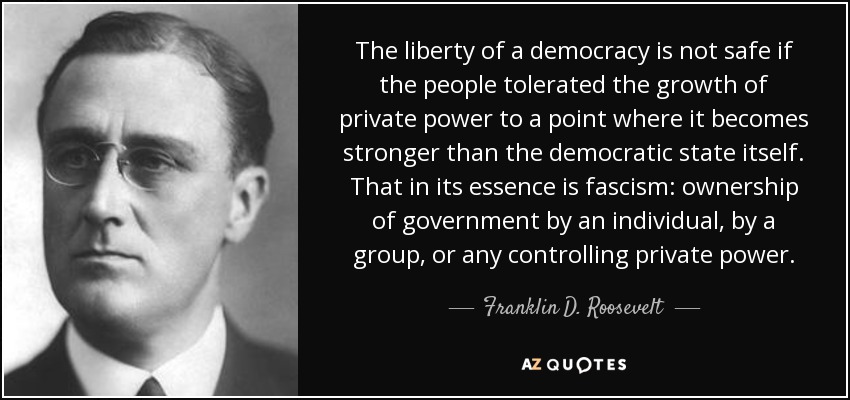
In my last blog, I asserted that unless we change our attitudes and policies regarding Corporate Capitalism, it will destroy our country, our way of life, our freedoms, and our environment.  Furthermore, we will undoubtedly take some of the rest of the world along with us.  This is a serious accusation and one I do not take lightly.  I have been a business educator in higher education and a management consultant to some of the top corporations in the world.  My opinion is not based on theory or just observations.  It is based on the in-depth work I did with over 32 companies during the time I was actively consulting.  There are many good people working in corporate America but as Dr. Deming once said “You put a good person in a bad system and the system will win every time.  Myth #2 is:

  1. Corporations are self-regulating entities for the common good

Laissez-Faire-Economics

Let me explain what I mean by this.  There is a doctrine or concept in economics called “laissez faire.”  Laissez faire is a belief that business and the marketplace works best without the interference of any government agencies.  It implies that there is an invisible hand which controls the dynamics of markets.  This invisible hand ensures that markets reach some kind of an equilibrium.   One example of this is the “law of supply and demand.”  When demand is high, prices will be high, and supplies will be low.  Not everyone who wants the product will be able to find them or afford them.  Producers will then create more of the product to meet demand.  As product quantity rises, prices fall until an equilibrium price is reached that allows everyone who wants the product to purchase the product at a price that is fair to them and allows the manufacturers to make a profit.  Governments can intervene (as they have done) by price controls or subsidies.  Such efforts by the government are generally felt to destroy the inherent equilibrium of the market.

image001-204

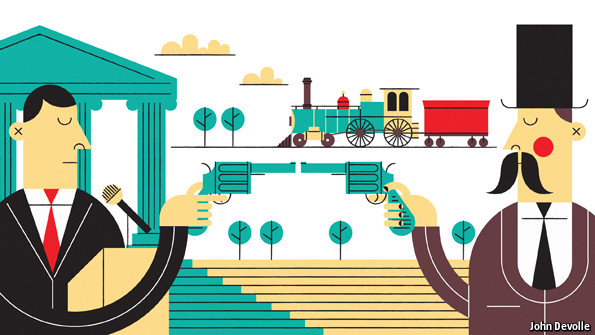
government-warning-poster-mock1_1024x1024People who believe in the idea of “laissez faire” want us to think that corporations can regulate themselves and do a better job of it then when government interferes with rules, policies, laws and regulations.  Business leaders do their best to hype this belief and to create the idea that government run organizations are always less efficient than those run by private entities. Conservatives and Republicans subscribe to this belief and spend a great deal of time and effort trying to thwart those who disagree.
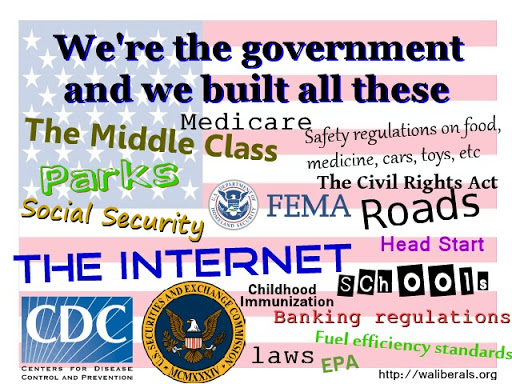
The conservative mantra is that “no government is good government.”  In the past forty or so years, there has been a concerted effort by conservative politicians to eliminate government regulations and to allow private for-profit business to take over such services as public education, wastewater treatment plants, social security, Medicare, and prisons.  The argument is always the same “private business can do it more cost effectively than government.”

unnamed

Here is the catch or hypocrisy in the above argument.  It is only heard when businesses can easily make a profit.  When there is an easy market with lots of potential and lots of potential customers, business leaders want the government to stay out of the way.  However, when things turn sour and profits turn to losses or when the loss potential is high, business then want the government to step in.   The mantra that “No government is good government” soon turns to “We need help, or we will have to declare bankruptcy.”  Suddenly, the government that has been spurned and criticized for being too intrusive and for screwing up the equilibrium of the market is now called upon to help save private companies.  Here are some recent headlines that highlight this hypocrisy:

  • Airlines will receive billions of dollars in grants and loans to pay flight attendants, pilots, and other employees
  • Boeing still expects to get some help from the federal government
  • Trump administration eyes paying oil companies to keep crude in the ground
  • Coronavirus Stimulus Shows Big Government is Back
  • Washington is gripped in a bailout frenzy. Nearly every industry is sending its lobbyists to ask Congress for handouts
  • The coal industry wants permission to stop making payments to miners with black lung disease.
  • The hotel industry alone has requested a $150 billion bailout

For a complete list of companies or industries that have received government bailouts going back a number of years see ProPublica Bailout Tracker.  There are almost a thousand major corporations on this list.

During the recession of 2007 and 2008 government bailouts in the form of loans and outright grants were given to a wide range of American companies.  Many times the argument was heard that “They are too big to fail.”  Some Conservatives actually opposed these bailouts and some Democrats were in favor of them.

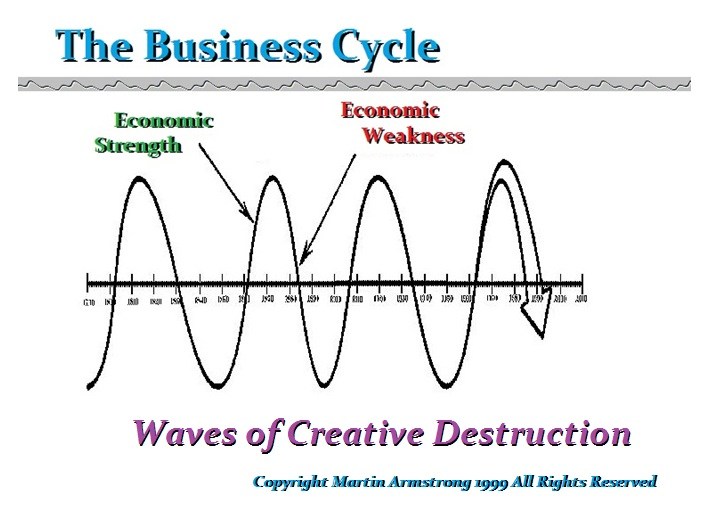
Now understand this please.  I am not necessarily in favor of letting all businesses fail.  The Austrian school of Economics would argue in favor of letting them fail.  They call this  “Creative Destruction.”

“According to Schumpeter (A leader in the school of Austrian Economics), the “gale of creative destruction” describes the “process of industrial mutation that incessantly revolutionizes the economic structure from within, incessantly destroying the old one, incessantly creating a new one”.  — Wikipedia

“Creative destruction is a process through which something new brings about the demise of whatever existed before it.  Old industries and firms, which are no longer profitable, close down enabling the resources (capital and labour) to move into more productive processes.” — Economics Help

BusinessCycle-Waves-of-Creative-Destruction

In other words, if Boeing and United Air and General Motors and all the other companies that want a bailout can’t hack it, them let them fail.  Let them declare bankruptcy and get out of the way so new more productive and more efficient firms can enter the marketplace.  This is a little like the Theory of Evolution in which the weaker species die out and the stronger species survive.   Thus, company bankruptcies and jobs lost will in the long run result in a more efficient industry.

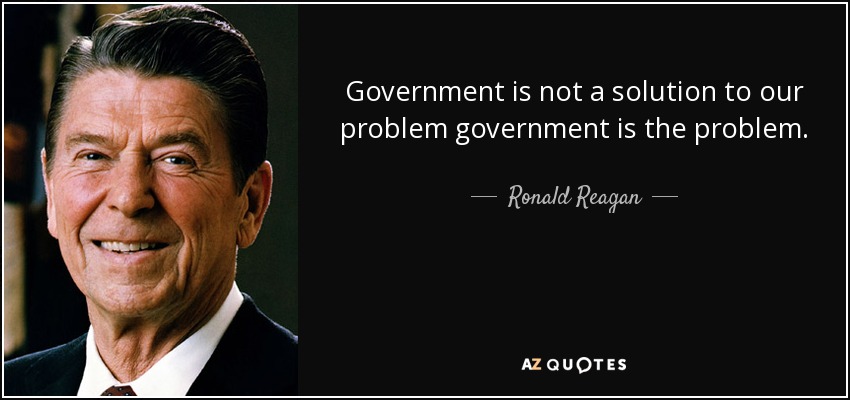
quote-government-is-not-a-solution-to-our-problem-government-is-the-problem-ronald-reagan-37-75-62

I am not against bailing some companies out.  The one thing I have learned in my years on this earth is that there are always exceptions to every rule.  There may be times when we should let businesses fail and there may be times to help them survive a rough patch.  I have no problems with the foregoing thoughts.  What I do have a problem with is the laissez faire argument that ends with “Leave us alone when we are making heaps of money but help us out when things turn bad.”  This is a deceitful and duplicitous argument which has led to an extreme gullibility on the part of many Americans.  Too many Americans now believe that “Government is the Problem” to quote Ronald Reagan.

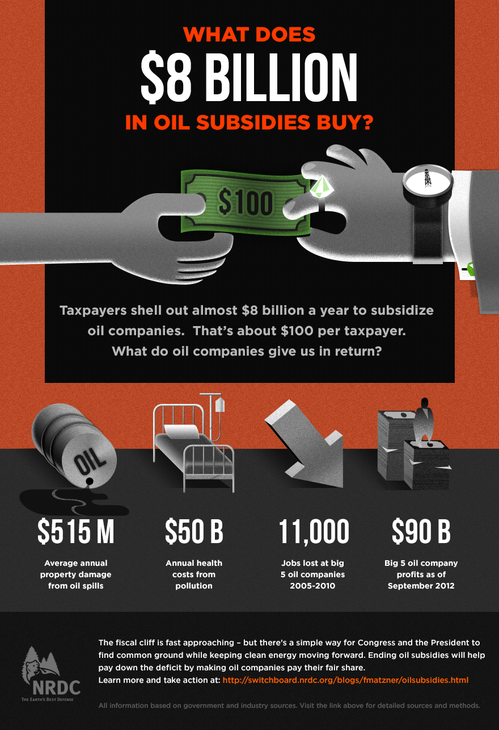
oilsubsidies-thumb-500x730-9012

Here is a short list of how private business benefits from Government:

  • Copyright protection
  • Trademark protection
  • Patent Rights
  • Tax breaks for siting a new business
  • Police protection
  • Fire protection
  • Military protection for overseas business
  • Research and development studies
  • Mineral rights
  • Right of ways
  • Land ownership at sometimes exceptionally low prices
  • Tax concessions, such as exemptions, credits, or deferrals
  • Assumption of risk, such as loan guarantees.
  • Government procurement policies that pay more than the free-market price
  • Stock purchases that keep a company’s stock price higher than market levels
  • Subsidies for externalities that could not be recovered at competitive costs
  • Tariff protections
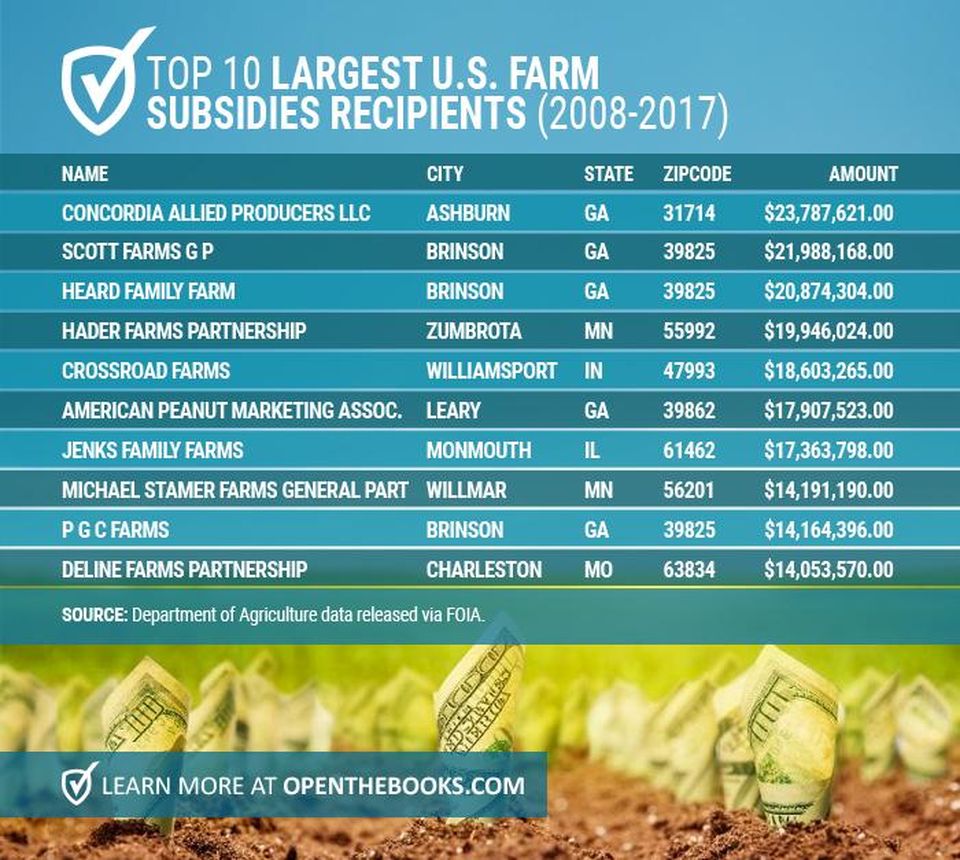
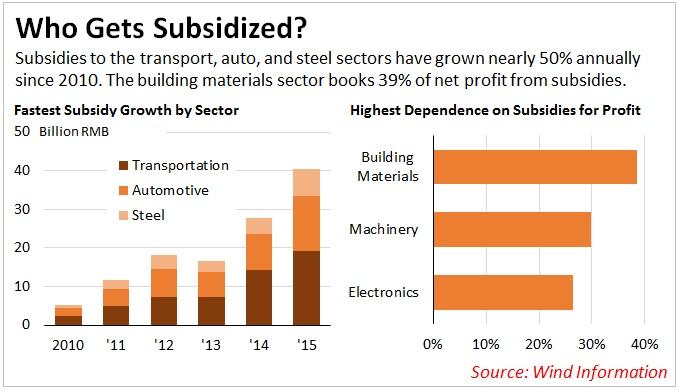
  • Subsidies for farmers, oil companies and many others
  • Job training programs for workers
  • Education programs for workers 

https___blogs-images.forbes.com_adamandrzejewski_files_2018_08_Forbes_USFarmRecipients-2Corporations are liars.  They say they want to live in a laissez faire environment.  They say they want fewer government regulations.  They say the government only interferes and adds no value to their products.  They say they don’t want the government telling them what to do.  The lie is that they do want Government involvement.  They want the government to bail them out of a situation when they will suffer losses or see lower profit margins.  They want the government to give them preferred bankruptcy conditions.  They want the government to side with them in labor-management disputes.  They want the government to help them out with all of the items on my list above.  Do some research.  Find out how many companies and industries get government handouts.  Check out Government Subsidies.
maxresdefault

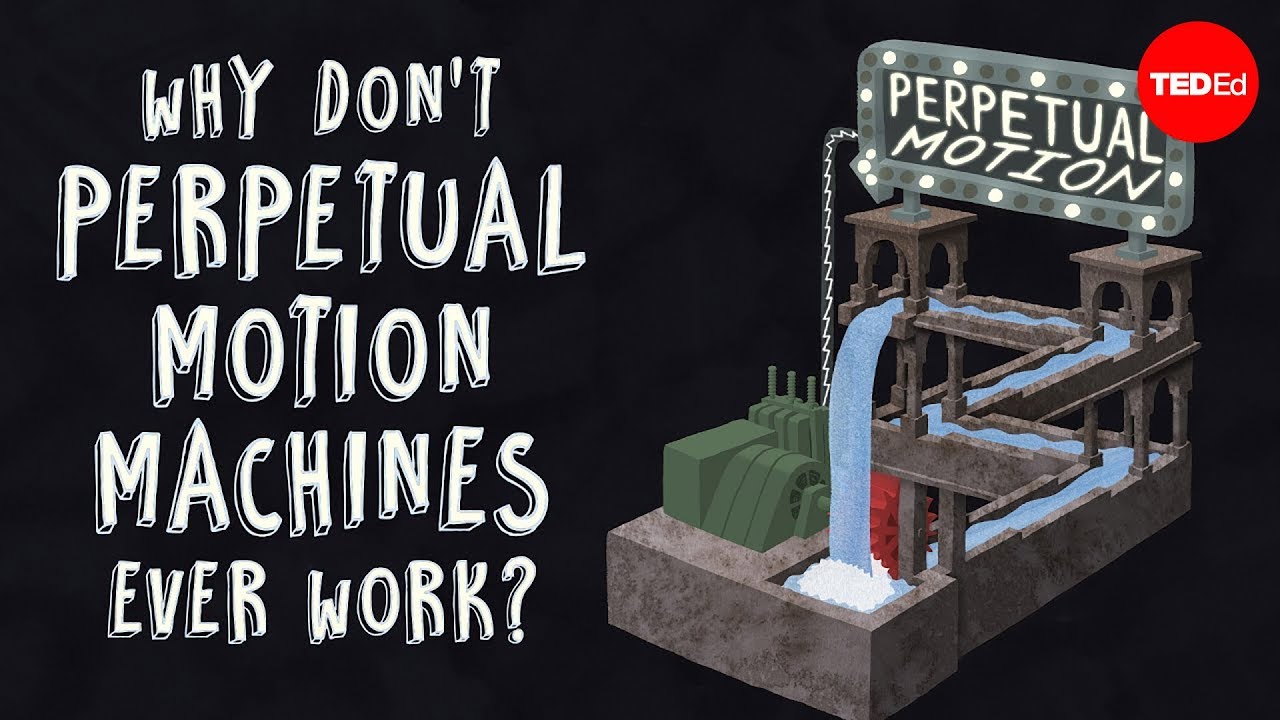
Thus, the myth that organizations are self-regulating is the myth of the impossible.  You might as well believe in a perpetual motion machine.  It does not exist because it is impossible.  The Second Law of Thermodynamics states: “That there is a natural tendency of any isolated system to degenerate into a more disordered state.”  Thus any entity or organism or system needs energy from outside in order to maintain a state of equilibrium.  If the energy is less than needed, the entity will eventually degrade into a state of maximum entropy or disorder.”  For instance, when we die, we will degrade into dust.  If you do not periodically clean and organize your home, it will degrade into a garbage bin.  You cannot expect any system to maintain a steady state without input from outside.

The bottom line is that no corporation including illegal ones like drug cartels and the mafia can exist without independent inputs from outside their system.  Corporations are dependent on governments for their very survival.  Anyone who thinks that Corporate Capitalism could survive (much less thrive) without the input of Government is either stupid, naïve, or trying to sell you the Brooklyn Bridge.  It is about time for politicians and Americans to realize that business needs government and government needs business.

47761114-14781280323343196_origin

Enough with these moronic arguments made by right wing protestors to do away with government.  A capitalistic economy without a government to monitor its excesses and to protect it from the vagaries of the marketplace would soon evolve into a system of chaos, lawlessness and monopolies that would be totally dysfunctional and destructive. The present emphasis on deregulation, privatization and less government has been taken too far and with too little appreciation of the need for government balance and oversight.  If we continue down this road, we will destroy our country and any vestige of the ideals of a free marketplace.  There is no such thing as free.  A free market requires policies, regulations, and rules.  There is no such thing as an economic system without some form of government to oversee, watch out for and protect its lawful interests.  Even illegal systems court the interests of governments albeit with bribes and threats rather than lobbyists and special interest groups.

Some of you might find the following article interesting.  It was published several years ago in the Harvard Business Review.

Does Privatization Serve the Public Interest? by John B. Goodman and Gary W. Loveman from the November-December 1991 Issue of Harvard Business Review.


3609– Friday, June 14, 2019 – Citizens: Dare, Dare Again, Always Dare!

A number of years ago (1998), I was hired by the Metropolitan Council in Minnesota as a Principle Planner II.  My job was to help the various units at the council to improve productivity and service.  I had been an independent Process Improvement consultant for the previous 13 years.  My new job meant a study paycheck and less travel.  It was a good way to get out of consulting and into more regular employment.  The people at the council were hardworking and dedicated.  Nevertheless, as Dr. Deming always said, “hard work guarantees nothing.”

00-lead-jon-stewart

In a short while, I found more waste and useless expenditure of time and taxpayer money than I could have imagined possible.  Even though as a consultant, I had often worked with government agencies from the US Navy to the City of Minneapolis, I was astounded at the staggering amount of fruitless effort throughout the organization and other state agencies.  I had become a liaison for the Metropolitan Council to help coordinate quality improvement agencies for a joint committee that included the Met Council and members of various other state agencies.  I frequently came home and exclaimed to Karen: “My god, if the average citizen saw the waste and stupidity that I see every day, they would grab a rifle or pitchfork and march on City Hall.”  I was dead wrong.

It has been twenty years and the waste and lack of accountability in government is still appalling and “no one is marching on City Hall.”  I often doubt if anyone really cares.  There is an old saying which goes like this:

Businesses get the unions they deserve,

Industries get the regulations they deserve, and

People get the governments they deserve.

 The lack of transparency in government is bewildering.  Transparency and accountability go hand in hand.  However, many cities, states and towns fail to publish their complete financial records on-line.  Yet no one demands to see the records of government spending.

GTY_9-11_responders_02_jef_160909_16x9_992

“Democracy depends on an informed electorate, but due to current practices in both accounting and budgeting, the true financial health of a city can be obscured, and citizens are deceived, or at best misled.  Without access to truthful, timely, and transparent information, how can citizens be knowledgeable participants in their governments?” —  Truth in Accounting

It seems that everyone you talk to is willing to condemn the cupidity and incompetence of most of our political leaders.  Yet, such criticism begs the question: “Not why did we elect these people, but why do we continue to reelect them?”

“Congressional stagnation is an American political theory that attempts to explain the high rate of incumbency re-election to the United States House of Representatives.  In recent years this rate has been well over 90 per cent, with rarely more than 5-10 incumbents losing their House seats every election cycle.”Congressional stagnation in the United States

920x920

These high rates of reelection defy logic since they come at a time when trust in government is at an all-time low.  “We the people” grouse and complain but the fact remains that “we the people” do not demand accountability and we do not enforce accountability.  We elect leaders who soon feel little or no need to represent their constituents but more likely never felt the electorate really mattered in the first place.  Too many of our leaders are fully aware that they owe their first loyalty to the lobbyists and corporations that funded them and not to the “joe or jane” on the street that simply cast a ballot for them.

“Public trust in the government remains near historic lows.  Only 17% of Americans today say they can trust the government in Washington to do what is right ‘just about always’ (3%) or ‘most of the time’ (14%).”  — Public Trust in Government: 1958-2019

Firefighters-Who-Attended-911-Scene-Are-19-More-Likely

I have repeatedly said that we need government.  It would be foolish to think that a community, let alone a nation, could function without a government.  Yet, I can also accept the words of Edmund Burke that “The government that governs best is the government that governs least.”  I do not say throw out government, but I do say “we the people” have to start making our votes and voices heard.  Too many of our so called “silent majority” simply do not give a damn.

If you don’t give a damn, you will get the government you deserve.  It would seem that this bit of wisdom has become a reality for most Americans.

PS:

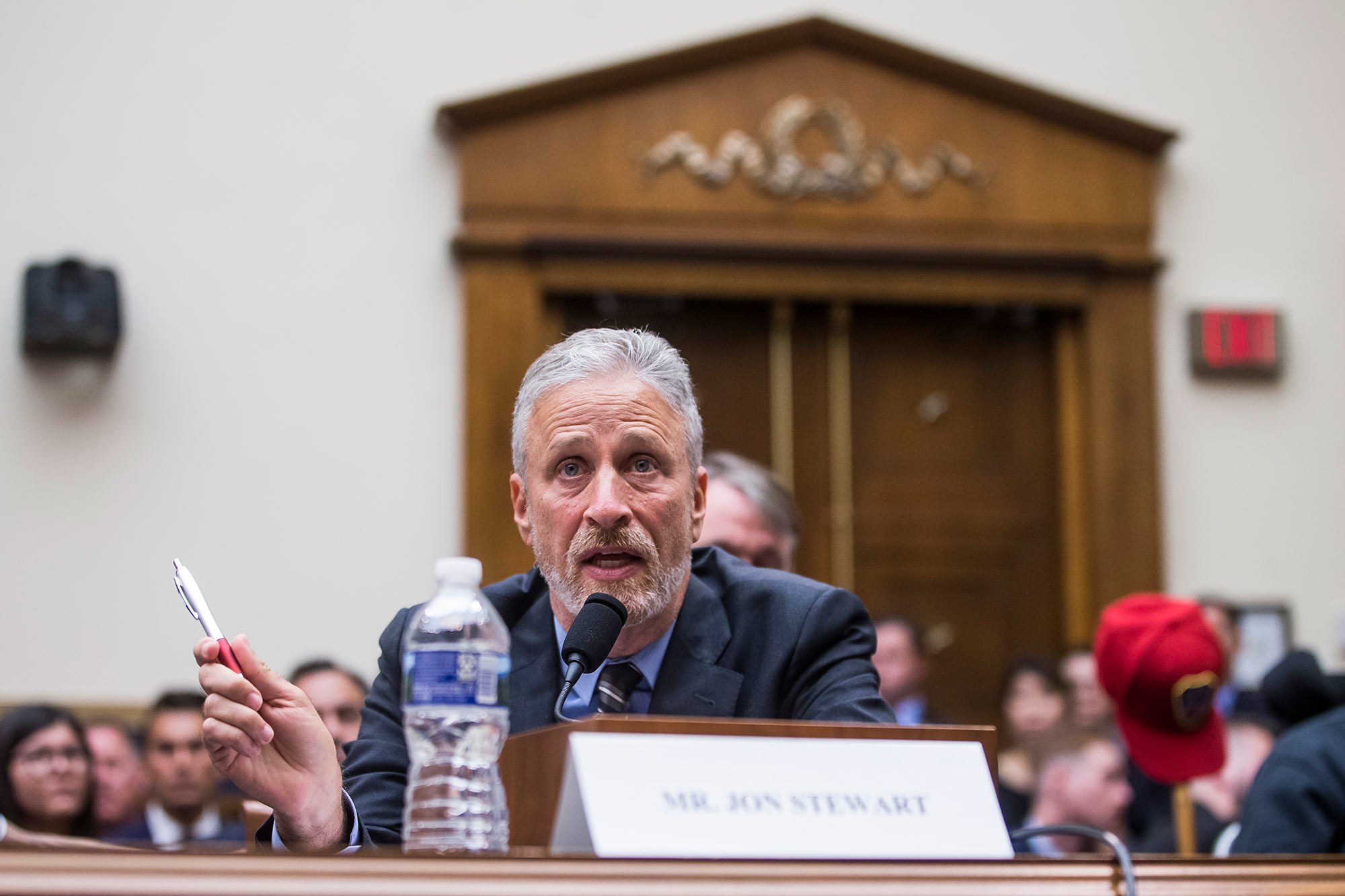
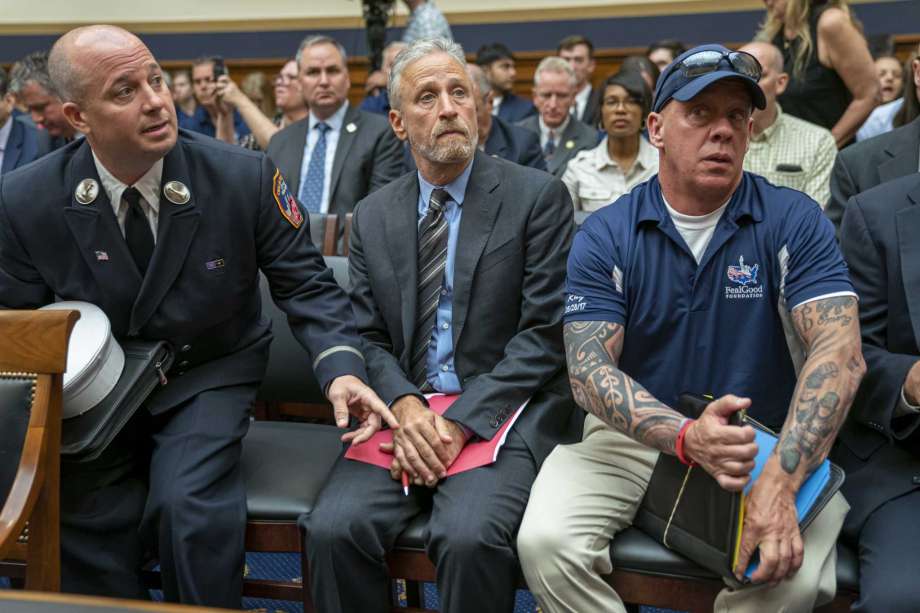
I just watched Jon Stewart’s heroic and passionate speech to the House Judiciary on behalf of 9/11 Responders.  This speech will go down in history as a testimony to the difference citizens can make in government if we dare to speak out.  Stewart echoes my call for accountability in his speech.  See:  https://www.youtube.com/watch?v=Y2QMqsNvWuc

“Sick and dying, they brought themselves down here to speak to no one.  Shameful. It’s an embarrassment to the country and it’s a stain on this institution.  And you should be ashamed of yourselves for those that aren’t here.  But you won’t be because accountability doesn’t appear to be something that occurs in this chamber.” — Jon Stewart


No Time for Immigrants: Part 3

SIx months of the year I am what they call a “Snow Bird.”   Karen prefers we are called “Winter Residents.”   We live in Arizona City.   It is south of I-8 and just west of I-10.  It has been a major corridor for coyotes, drug runners and illegal or undocumented immigrants. There is hardly a week goes by that we do not have coffee shop stories of found pot bales, abandoned vehicles, spotters hiding in caves and illegal’s coming to homes asking for water or food. These stories are supplemented by our almost daily observations of border patrol vehicle searches and regular high speed police runs. One of our visitors commented that she had never seen so many police vehicles in her whole life as in our area. Last fall, one elderly resident who lived out in the desert was found murdered in her home. Nothing was missing but no suspects have been found. There are many folks in my area who will not venture out in the desert without being armed and there are many areas where you are warned to stay clear of. I routinely jog in the Casa Grande Mountains and while relatively safe, there have been drug busts and roundups of drugs and illegal immigrants within the past few months.  A short time ago,  I found a rifle with a telescopic site and a sawed off butt behind a cactus. I turned it into the police station where they were not too concerned about it. To date, my biggest danger has been a cactus that is known as a “jumping Cholla.” These things seem to magically find a way to get attached to you and their barbs are quite painful. I have had at least six attacks by them during the past few months.

The picture I am trying to paint for you, coupled with the fact of the ongoing drug war in Mexico, which is only about 120 miles from our front door (47,000 deaths and counting), is designed to give you some idea of the context in which many Arizonians find themselves. Gated communities, suspicion of neighbors, fear of criminal break-ins and an overall worry about the poor economy, housing foreclosures, and jobs (Arizona has led the nation in many of these problems) gives rise to a citizenry which is far from tolerant of anyone coming over illegally into this country. There is a great deal of fear in the nation as a whole ever since 9/11 and nowhere I think is it more evident than in Arizona. Fear and tolerance do not go hand in hand. However as Ben Franklin noted “Those who would give up their freedom for safety will soon find they have neither.” It is difficult to counsel this advice though when neighborhoods cannot be made safe and people are afraid they will become victims. So what does this have to do with stopping illegal immigration? Let me turn the clock back to help answer this question.

In 1963, I was sent to an Air Force station located in Osceola, Wisconsin. Coming from the east coast, I could not have told you where Wisconsin was if my life depended upon it. Furthermore, to be dropped into the middle of “Dairy Farm USA” was a major culture shock. Nevertheless, I adapted by marrying a woman from Thorp, Wisconsin and having my daughter Christina born in Osceola. Life was good for me in the service but money was short. I found local work doing migrant farm work and finally getting a part-time job (to supplement my service income) at a local nursery called Abrahamsons. It was at this place, that I had my first meetings with Mexican farm workers. Each season, Abrahamsons’s would bring in workers from Mexico to work at the nursery. The work involved digging, balling, burlapping, loading and then digging to replant trees for wealthy buyers in Edina and the Twin Cities. It was hard work. We dug and loaded from 6 AM to often after 9 PM at night. I was paid one dollar per hour. I do not know what my Mexican counterparts were paid because they could not speak English, I could not speak Spanish and my bosses warned me to never discuss salary with the other workers. Thus, I spent my days working in the fields, sharing food but no conversation with the other workers. Believe me when I say there were few local non-Hispanic people applying for these jobs. I have since been to other areas of the USA including Mackinac Michigan and Door County Wisconsin, where they rely on immigrant workers to provide services to locals and tourists. To say that illegal or legal immigrant workers are taking jobs and bread from the mouths of Americans is a shallow and false bit of rhetoric. I have heard it said that if these undesirable jobs were not taken by immigrants then the wages would go up and US workers would then apply for them. This bit of fantasy ignores two possibilities: 1.The work could go overseas to even lower wage workers or 2, The Law of Substitution says that other higher value added services could replace services that become too costly.  In any event, I have yet to see the “older” immigrants from America who are now second generation citizens clamoring for these hard dirty and low paying jobs.  

So year after year, from the middle 40’s to the late 60’s, immigrants came over from Mexico and South America on a seasonal basis. Each year millions of these Bracero program workers would come and work in the USA. Most would go back home after the work was over. Some would apply for citizenship and stay in the US. The Bracero program favored Hispanic workers (there did not seem to be many Canadians or Europeans looking for farm work) and it seemed to create a rather orderly and neat influx and outflow of labor seasonally needed by US employers. Then the program was changed. Barred from working seasonally and denied access to work permits, many Mexicans and other Latinos took the easy road. Illegal yes, enforced no. That is until 9/11, when all hell broke loose. Never in the past 100 years had US citizens felt so vulnerable as after 9/11. Fearing for an influx of terrorists and watching unparalleled amounts of drugs crossing the border, we reacted to our fears by passing the Patriot Act, by beefing up Homeland Security, by building Border Walls, by making it a felony to repeatedly try to cross our borders, by greatly expanding the Border Patrol and by building large detention centers in the Southwest. My county Pinal is often referred to as “Penal County” and has numerous detention centers to house drug runners and detainees awaiting deportation. The number of anti-immigration bills started to proliferate state by state as the Federal government seemed impotent to deal with the crisis. Citizens armed themselves and formed border posses and watchdog groups to police our borders with Mexico. No one really seemed worried about those Canadians. I suppose ever since prohibition was rescinded, the Canadians have stopped smuggling whiskey across the border and are less of a threat to the US.  🙂

So let’s ask a simple question here?  Why do all of these illegals come to the USA? The answer is easy. Two reasons: Jobs and drugs. I wonder if the solution to the problem seems as evident to you now as it does to me. First, legalize drugs. Let the government tax them and let anyone sell them just like cigarettes, coffee and alcohol are sold. We have spent billions on a fruitless drug war and we have accomplished nothing. Furthermore, in light of all the drugs that Americans take, it is a hypocritical war to begin with. It is a war waged by idiots and morons who keep our prisons, courtrooms, and lawyers sucking our taxes and wages for no apparent gain. It is perhaps the most ludicrous endeavor that has ever been created.  It makes Alice in Wonderland look like a reality show.  We have become so blinded by the anti-drug rhetoric that we no longer have the ability to see reality. What did we learn from Prohibition?  “THOSE WHO FORGET THE PAST ARE CONDEMNED TO REPEAT IT!” Banning alcohol did not stop the use of liquor nor did it curtail organized crime. On the contrary, it gave organized crime the income and mandate to expand its power and territory and become even more powerful and dangerous. The same is true for the South American drugs, primarily pot and coke that we are trying to banish. The drug cartels have become so rich and powerful, they are immune to any efforts to abolish them.

The second reason illegals come over is to find work and to have a better standard of living.  To help others accomplish this, we need to create a new policy for temporary and migratory workers that represents the nature of work needed by immigrants and by employers in the USA. This policy needs to be fair and equitable but also realistic. The relationship we have with Mexico cannot be dictated by the relationships we have with Canada, Europe or any other countries. We need an equitable policy, but there is a difference between equity and equality. A fair and just policy must create a win-win both for our nation and for the immigrants we give visas or sanctuary to. There cannot be one size fits all for this policy. Part of this policy must be humanitarian. It is in our constitution and in our national charter to help others escape from tyranny, poverty and other calamities.  Part of our immigration policy must also be self-serving. We need to help our country become stronger and to better meet the needs of competing in a global economy. Realistically, we may have a cost attached to immigration.

Despite many arguments on the negative and positive costs of immigration, the best evidence to support a more liberal immigration policy is to look at our success as a nation over the last 250 years. Can anyone doubt that it was immigration that built and fueled the development of this great nation? We may need to balance short-term costs with long-term gains in a realistic immigration policy but to a good policy needs to be slanted towards tolerance for immigration and not intolerance. 

I have one final idea. Let’s take the development of an immigration policy away from the politicians and appoint a group of immigration experts from a wide range of viewpoints. Take twelve experts on this subject and put them in a room together. Give them four weeks to hammer out a new immigration policy. When they are satisfied that such a policy is realistic and equitable, let them distribute this policy to the newspapers and Internet websites for a review by American citizens. After four weeks of review, let there be a national referendum on the policy. A plurality of sixty percent should be needed to pass. If sixty percent can not be reached, the policy will be returned to the experts for further changes and amendments. Once a plurality of American voters has accepted this policy, it would be sent to the Senate and House for review and to become law. Woe to them if they could not finalize this policy.

Time for Questions:

There are many things you can find wrong with my suggestions. I can hear all the reasons why these ideas would not work. The question I have for you is this: “Can you find any better ideas.” The definition of craziness is to keep doing the same thing and expect different results. Maybe it is time we tried some new ideas; as Einstein said: “Problems cannot be solved by the same level of thinking that created them.” We need to discard our prejudices and biases and see things in a new light. What do you think needs to be done? When was the last time you wrote your representative to express your ideas? When was the last time you went to a party caucus or actively worked to help elect a representative? What could you do to help create a new and fair immigration policy for this country?

Life is just beginning.

Gandhi’s Seventh Social Sin: Politics Without Principle

We need to start off this discussion of Gandhi’s Seventh Social sin with a review of the definition of the term “Principle.”  There are many who would argue that politics today has too many principles.  Each side whether Democrat or Republican is firmly ensconced in their philosophical party principles which leave no room for discussion never mind negotiation.  A firm conviction that we cannot negotiate on “principle” has led us to some of the worst political situations we have seen in the long history of the USA.  We have always had “party” politics and there have always been back-room negotiations and political logrolling but never in our history have we seen the type of standoffs that seem to characterize Washington politics today.  Could these political standoffs be caused by rigid adherence to Party Principles?  Is Gandhi off-base with his Seventh Social Sin?  Do we need less principle in politics and not more?  Let us look at what the term “Principle” means by reviewing three different definitions or perspectives. 

Here are three different views of the term Principle

  1. A fundamental truth or proposition that serves as the foundation for a system of belief or behavior or for a chain of reasoning.  – Online Dictionary
  2.  A basic truth, law, or assumption – The Free Dictionary
  3. A principle is something primary that helps in explaining phenomena. A principle can be some existing factor in nature (principles of nature and being, or it can be a logical proposition or judgment (principles of reason) that is a starting point of a valid argumentation. The principles of reason cannot be proven, since in order to prove anything you need to have a starting point, and a starting point is a principle.  – http://www.hyoomik.com/phi205/arche.htm#arche2

Here are some examples for the third definition.  These are: “Principles of Reason.”  I add these so we can be more concrete in our discussion and less theoretical, if that is possible given the nature of the discussion.  Nevertheless, perhaps these examples can help us think more clearly concerning the concept of principles. 

  • The principle of non-contradiction: the same thing cannot both be and not be at the same time and in the same respect. The same proposition cannot be both true and false.
  • The principle of excluded middle: Either a thing is or it is not, there is no third possibility.
  • The principle of the reason of being.  Every being has a reason of its existence either in itself or in something else.
  • The principle of finality: Every agent acts for an end.
  • The principle of causality: Every effect has a cause.
  • The principle of identity: Every being is that which it is.  Each being is separated in its existence from other beings.

We have two issues raised by Gandhi’s Seventh Social sin that I think we must answer. 

First, does politics really need principles?  What purpose do they serve and why are they needed?

Second, can you have too many principles in politics and how do we determine if that is the case?

To answer the first set of questions, let us see what the M.K. Gandhi Institute for Non-Violence has to say about Gandhi’s interpretation of this sin:

Politics Without Principles:  Gandhi said those who firmly believe in nonviolence should never stand for elections, but they should elect representatives who are willing to understand and practice the philosophy. Gandhi said an elected representative is one on whom you have bestowed your power of attorney. Such a person should be allowed to wield authority only as long as s/he enjoys your confidence. When politicians indulge in power games, they act without principles. To remain in power at all cost is unethical. Gandhi said when politicians (or anyone else, for that matter) give up the pursuit of Truth they, or in the case of parties, would be doomed. Partisan politics, lobbying, bribing, and other forms of malpractice that are so rampant in politics today is also unprincipled.  Politics has earned the reputation of being dirty.  It is so because we made it dirty. We create power groups to lobby for our cause and are willing to do anything to achieve our goals.  Not many among human beings have learned how to resist temptation, so who is to blame for the mess we find ourselves in?

In this interpretation, Gandhi implies that the “Evil” of politics comes about because of the lack of ethics that characterizes much political gamesmanship.  We would have to assume that the need for principles reflected by Gandhi’s ideas is connected to the need for a higher standard of behavior then what we most often see in our politicians.  Thus, politicians are unprincipled and unethical if they engage in lobbying, power games and other manipulative endeavors.  However, Gandhi does not clearly describe what an ethical political principle would be. We have to assume that most politics as practiced today would be considered as unprincipled by Gandhi.  Yet he does not provide us with a clear set of ethical political principles.   I conclude my answer to the question: Why are principles needed? as follows:  To provide a clear ethical path for political behavior and to help guide politicians in their search for truth.  

For the second set of questions (see above) we are dealing with a different issue.  If we accept that some political principles (unknown what they are) may be needed, then we must ask if too many of these principles might indeed be injurious to the political process.  I have already noted that we are frustrated today with politicians who are taking oaths to standby their party principles and thus gridlocking the entire political process.  Does this mean, we already have too many principles or do we have too many of the wrong principles?  To answer this question, let us take as an example a key principle that the Republican Party has stood for and see how our system of political ethics might be played out using this principle as a guide.

It is well known that many of our elected officials have taken an oath not to increase taxes under any conditions.  The Norquist Pledge as it has been called was taken by “95% of Republican Congressional representatives.”   Many would argue that this is a bedrock principle of the Republican Party.  However, is it really a principle?  Is it a fundamental truth?  Looking at the three definitions for a principle that started this blog, does the Tax Pledge meet the requirements of a “Principle?”  If so, what evidence is there to link truth to the assumed outcome that we expect to be attained by a rigid adherence to this principle?  Will not increasing taxes always benefit the public good? Is it always best for the common people if taxes are decreased?  Will we all benefit by having fewer taxes?  A fundamental principle should have some fundamental truths or facts to support it otherwise what is the point of the principle?  Either a principle is true or it is a hypothesis.  If it is true, the results should be self-evident.  If the principle is merely a hypothesis, than good logic suggests that we should not be too certain of its validity until more evidence exists to either prove or disprove the principle. 

The logic of my argument so far seems to move me towards the suggestion that “Not allowing any tax increases” does not constitute a valid ethical principle.  I see no evidence that the greater good is always served by this principle.  Perhaps there are other party principles that might be less amenable to my critique since I simply selected one of the “principles” we hear most about and are most familiar with.  No doubt “too many” of these so called “party” principles would wreak havoc with our political system.  IN fact, we see this happening already.  I suggest we should call these unsubstantiated or principles either as false principles or hypothetical principles.  This would give more credibility to Gandhi’s Seventh Social sin.  Unfortunately, it still does not answer the question as to what a set of Ethical Political Principles might look like.  The following principles are one set that has some merit.   It includes eight principles that were taken from a paper by John L. Perkins titled:  Humanism and Morality.     

Non-maleficence: Do not harm yourself or other people. 
Beneficence: Help yourself and other people. 
Autonomy: Allow rational individuals to make free and informed choices. 
Justice: Treat people fairly: treat equals equally, unequal’s unequally. 
Utility: Maximize the ratio of benefits to harm for all people. 
Fidelity: Keep your promises and agreements 
Honesty: Do not lie, defraud, deceive or mislead. 
Privacy: Respect personal privacy and confidentiality.

You can see from looking at these principles that our problem is still not solved.  Some of these principles conflict with others and life is still not simple.  The Principle of Fidelity suggests that the Norquist Pledgers are doing the right thing.  However, you may also notice that this principle may be in conflict with one or more other principles on our list.  For instance, what if allowing a tax increase actually maximizes the ratio of benefits to all people?  Thus, the principle of keeping your Norquist Oath is in direct opposition to a principle that says to do no harm to others.  Very confusing!  Alas, life is never simple and no moral or ethical code can be found that does not have both contradictions and complexities that make conduct difficult.  This latter fact makes a strong case for holding any principle as a hypothesis and not allowing ourselves to be overly strident in its interpretation.  

In conclusion, I must admit to finding this Seventh Sin of Gandhi’s to be a very difficult one to follow and to provide any kind of a prescription for.  I discovered many authors who argued that an ethical or moral code for politicians is impossible and even counterproductive.  I also found many who argued that the need for a moral code for politicians is as important as for any other field of endeavor.  I lean towards trusting Gandhi in support of this Sin.  He has proven to be wise and insightful in almost all of the beliefs that are associated with his life.  Perhaps, I will see more clearly the argument for this Seventh Social Sin as I grow in wisdom.  For now, I am content to accept that our politicians need:

  1.  Moral guidance and moral principles to conduct politics with.
  2. The ability to search for truth as a fundamental principle underlying all other principles
  3. The acceptance and recognition that they may be wrong and being too exclusive of other options is a recipe for ineffective government and politics.  

Time for Questions:

What do you think? Do our politicians need a moral code or set of principles?  Do they already have too many principles? How strongly should they adhere to their principles? Should they be willing to compromise on these principles?  Is not allowing a tax increase really a principle?   Should they stand firm on this principle regardless of the outcomes?  When should we be willing to compromise our own principles? 

Life is just beginning.