Virtues, Values, Morals and Ethics:  What are the differences and Who Cares?

The older I get, the more questions concerning virtues, values, morals and ethics concern me.  Like most people, I thought that I learned what these concepts meant through church, parents, school, books, fairy tales and movies.  What I never really learned was: 1. Why are they important?  2. What do they mean for society?  3. Why should we care about the differences?  4. How do they actually play out in real life?  Real life meaning in war, in peace, in times of societal disasters and even in everyday living.  Now with a few years left in my life, I am immensely concerned with the above questions. 

I started reading more about virtues and values and morals and ethics a few years ago and did not make even a slight dent in the literature.  Recently, I looked into YouTube to see what some videos had to say about the same questions I am concerned with.  I found more videos to watch than I could review if I lived 100 more years.  Nevertheless, I spent some time scanning a few of these videos to see what other writers had to say about virtues, values, morals and ethics.  After reviewing these videos, I decided I would just wing it from my own perspective and experience.  In this blog, I will try to answer each of the questions I posed based on my own experiences.  Before we begin, I would like to provide a very simple definition for each concept.  No ChatGPT or Google here.  This is my own simple and probably not very profound definition of each.  

Virtue:  A gift to be earned.  Examples, “Patience, Honesty, Faith”

Value:  Something we think is important or worthwhile.  Examples, “Happiness, Love, Frugality”

Moral:  A principle we want to live by.  Example, “Do unto others etc.”

Ethics:  Principles others think we should live by.  Examples, “Always respect your customers”

 1.  Why are they important?

The simplest but most compelling answer to this question is that they help you to lead a happier, more fulfilling life.  People adhering to these concepts will have character and integrity and be both respected and admired.  They may not make you rich.  They may not make you famous.  But true happiness does not come from fame and fortune.  Here are some quotes that I like on happiness:

“True happiness is not attained through self-gratification, but through fidelity to a worthy purpose.” – Helen Keller

“Happiness is not something ready-made.  It comes from your own actions.” – Dalai Lama

“Happiness is when what you think, what you say, and what you do are in harmony.” – Mahatma Gandhi

“Happiness is a warm puppy.” – Charles M. Schulz

“It is not how much we have, but how much we enjoy, that makes happiness.” – Charles Spurgeon

You might be asking yourself “Well, do we really need to pay attention to each of these concepts?”  Why not just worry about virtues or ethics?  My answer is yes.  We need to pay attention to all four of these concepts because they work together.  Like a car needs a transmission, engine, battery and wheels to get anyplace, you cannot become the person you want to be if you ignore any of these ideas. 

You cannot be virtuous and have shallow values.  You cannot have great values but no ethics.  You cannot have ethics but no morals.  We need to understand and embrace all four of these concepts.  Values and ethics deal more with external influences on our lives while virtues and morals come more from inside us and deal with our own abilities and character.  Can you have good character and embrace “bad” actions?  Can you have “bad” character and pursue good actions?  I think the answer to both these questions is “very unlikely.”  Actions flow out of character and character is developed by actions. 

2.  What do they mean for society?

First let me ask you a few questions and see if your thinking about these questions answers my question above.  Are you happy with the way people drive on the freeways today?  Do you feel that politicians and leaders today really care about you and the country?  Do you think that poverty and homelessness are inevitable or that good leadership could help to amend these problems?  Is a good leader ethical, moral, virtuous and guided by good values?  Do you think the above problems can be taken care of simply by higher incomes and fewer taxes? 

Now, I would ask you to go back to my question number 2 and take a few minutes to think of how you would answer it.  What would it mean for society if everyone practiced good virtues, morals, ethics and values?  Would we have as much unhappiness in society as we seem to have today?  Would our crime rate be high?  Would we constantly be involved in fighting wars in other countries? 

“Virtue does not come from wealth, but wealth, and every other good thing which men have comes from virtue.”  Socrates

“No people can be great who have ceased to be virtuous.”  – Samuel Johnson

A country cannot subsist well without liberty, nor liberty without virtue.”Daniel Webster

The first principle of value that we need to rediscover is this: that all reality hinges on moral foundations.  In other words, that this is a moral universe, and that there are moral laws of the universe just as abiding as the physical laws.  –  Martin Luther King Jr

Once upon a time, I thought that the most important thing I could teach in schools would be critical thinking skills.  However, after having been teaching since 1975 in every class from kindergarten to Ph.D. programs, I have come to believe that the most important thing I can teach is an appreciation of these four concepts.  I have no illusions that I can or should force any particular virtue or values or ethics or morality down anyone’s throat.  I think that while each of these concepts is universal, each person must identify his/her own ideas and beliefs that are most important to them.  I have my list of virtues and morals that I try to live by.  Each day, I start out with a little prayer to remind myself to practice a particular virtue.  Today it was patience.  Tomorrow it will be kindness.  I do an inventory at the end of each day wherein I ask myself “how did I do today on my virtue.” 

As for morals, I have several principles that I try to live by.  I have listed five of my most important moral principles below.  You may have five, ten, fifteen or twenty that you believe in and not one that matches any of mine.  I think that what is important is that each of your principles is a building block for positive character.  A character that other people can admire but even more importantly, a character that you can be proud of. 

  • Do no harm to others
  • Stand up for what I believe
  • Do unto others as they would have done unto them
  • Demonstrate integrity in all I say and do
  • Do not be afraid to do what is right

 3.  Why should we care about the differences between these concepts?

Dr. Deming was famous for his quote that, “Experience without theory teaches nothing.”   I strongly support his axiom.  What it means is that if you keep doing something and it works or perhaps does not work, without an underlying theory of causality, you will never understand what factors or actions have resulted in your success or failure.  Without understanding these factors, it may be difficult to replicate your success but also likely you will not be able to improve on it. 

For instance, what if people seem to shy away from me and dislike me?  Or what if I seem to aggravate people but I cannot figure out why?  Going to school to study psychology or reading “How to Win Friends and Influence People” by Dale Carnegie might be just the theory that you need to better understand yourself and your behavior.  Socrates said, “Know Thyself” and also that, “The Unexamined Life is Not Worth Living.”  Reflection and knowledge can lead to wisdom and wisdom will help you to lead a good life.

I also support the opposite belief, that “Theory without experience teaches nothing.”  You can read all the psychology books you want but unless you act on your theories, you will also learn nothing.  You cannot understand an apple or a steak without biting into it.  We must couple action with theory in our lives, or we risk going through life with a tank ½ full.

4.  How do these concepts play out in real life? 

This is a very challenging question.  I can tell you that in my life I tended to ignore the theory part in favor of experiences.  I learned a great deal through the proverbial trial and error, but my life has been in the past like a rubrics cube that came apart and I could not put it back together again.

I did not understand the relationship between the concepts we are discussing now and how they could and should play a role in my life.  I looked for a better more meaningful life by working harder, making more money and acquiring more diplomas and certificates.  Only in the past few years have I began to understand that without a firm grounding in morality, ethics, values and virtues, I could never live a life that measured up to my goals and aspirations.  These concepts form the bedrock and foundation for a life that exemplifies integrity and character. 

“Despotic power is always accompanied by corruption of morality.” – Lord Acton

“Where the roots of private virtue are diseased, the fruit of public probity cannot but be corrupt” –  Felix Adler

“Moral decline has become a growing concern in many societies around the world.  As the traditional values and principles that guide human behavior weaken, we see a shift in attitudes, actions, and even societal structures.  This decline in ethical standards, often characterized by increasing selfishness, dishonesty, and a lack of accountability, has widespread implications for individual lives, families, communities, and nations.” – Virtuous Magazine, 10-9-24

“Those who conduct themselves with morality, integrity and consistency need not fear the forces of inhumanity and cruelty.” –  Nelson Mandela

Conclusions:

I wrote this blog because as many people have attested to, there is an alarming decline in morality, ethics, values and virtues in our world today.  Many people now subscribe to an opportunistic philosophy which states that “If it is not illegal, than I can do it.”  To these people, it does not matter who they will harm by their actions.  The only things that matter are their own personal wants and desires.  Some people have referred to the present generation as the “entitlement” generation.  Others call our present times a time of Amorality.  Amorality is between immorality and morality, but it does not denote a Golden Mean.  Rather it is more like a zombie state that ignores the negative effects of a lack of morality on society.  It ignores the harm that Amorality does to individuals in any society. 

Opportunism, Amorality and Entitlement have become strong values for many in American society.  In this respect, I see them as “bad” values.  The difference between Good Values and Bad Values might seem to be merely a matter of opinion but I disagree.  I have argued in my previous blog that there are Bad Laws and Good Laws.  So too there are Bad Values and Good Values.  Bad values devalue life, liberty and the pursuit of happiness for private profit and gain.  The opposite is true of Good values.  Good values enhance life, liberty and the pursuit of happiness for the greatest number.  James Madison said that a Democracy is a “Rule of the Majority with a concern for the Minority.”  What we see in America today would seem to be the rule of an Oligarchic Rich Elite exploiting minorities for their own benefit.  Perhaps more emphasis on morals, values, virtues and ethics in the media and press and less emphasis on violence and mayhem could reposition our country.  I think many of us would like to live in a nation that is based on empathy and compassion for all rather than revenge and retribution for those who are more vulnerable, poor or less powerful.

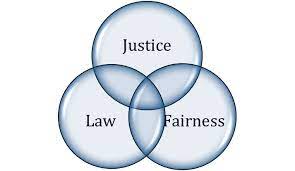
The Diagram that I used in this blog was created by Sudir Vigneshwar.  He has a very good blog on the subject of Morality and Virtue at his website.  I think the diagram depicts in a model what I have been saying in so many words.   Look for 

The Moral Alignment Scale: In Depth Conversations on Morality with an A.I.

Lawyers, Lawyers Everywhere, but Not a Shred of Justice Anywhere

lawyers---white-__00423.1420748943.1280.1280

I am going to make a case here.  My claim is that there are too many lawyers running things in the United States of America.  I will present the facts and arguments.  You be the judge and jury.  If I make a good case, then I will settle for fifty million dollars. 

Ladies and Gentlemen of the Jury.  This may sound like an extreme case.  I know most of you will have some friends who are lawyers.  Some of you may be thinking “Well, there are good lawyers and there are bad lawyers.”  Some of you may be thinking “Well, how would we run this country without lawyers.”  Please listen to what I have to say.  Then you may render your verdict. 

I will repeat my claim.  We have too many lawyers.  They have created a litigious society that is being run by fear and not by logic or reason.  Lawyers use lawsuits to run things and the number and frivolity of these lawsuits has reached epidemic even pandemic proportions.  We have lawyers running our government.  We have lawyers running our school boards.  We have lawyers running our city, county, state, and federal governments.  Everywhere you look in business, there are lawyers prosecuting lawsuits, making claims for reparations, litigation, and countersuits.  Civil courts have begun to take over justice from legal courts.  Law has replaced justice in America.  Laws are not made of the people, by the people and for the people, but laws made of lawyers, by lawyers and for lawyers.

download (1)

For the past two months we have witnessed lawyers running all over the USA with frivolous lawsuits and craftily plied arguments to usurp the will of the people.  Nay, not just to usurp the will of the people but to overthrow the government of the people of the United States of America.  Even as I write these lines, there are still pending threats to the legally elected President and Vice-President Elects of the USA.  These lawsuits and claims are made by men and women without a shred of decency, integrity, or ethics.  The only thing these lawyers care about is power and winning and money.  The destruction of American Democracy means nothing to these vultures.

n_Menendez_garretthaake_michaelkang_abrahamaiyash_janetimm__PAlawsuit_201121_1920x1080

Ladies and Gentlemen.  Allow me to present some statistics on lawyers in the USA.

Lawyer Statistics & Facts – 2020 –  https://goremotely.net/blog/lawyer-statistics/

  • The US legal business sector has an estimated $160 billion market share.
  • More than 100 million cases are filed each year in state trial courts, while roughly 400,000 cases are filed in federal trial courts.
  • Only 14.4% of all US lawyers are certified members of ABA. (American Bar Association)
  • Some high-profile attorneys can earn as much as $2,400 hourly ($5 million annually).
  • There are more than 1.35 million lawyers in the US.
  • The number of active lawyers in the United States increased 14.5% over the last decade
  • In China, there is 1 lawyer for every 4,620 inhabitants.
  • In the USA there is 1 lawyer for every 300 inhabitants
  • The percentage of lawyers who are men and women of color (Hispanic, African American, Asian, Native American, and mixed race) grew by a mere 3% over the past decade, increasing from 11.4% in 2010 to 14.1% in 2020.

Ladies and Gentlemen of the Jury.  Please believe me when I say that I am not the only one who thinks that we have too many lawyers in the USA.  Numerous experts can witness and provide testimony that America is one of the most litigious nations in the world.  The amount of litigation has nothing to do with justice.  Lawyers seek out and design strategies to create lawsuits strictly aimed at making money.  How many of you have been notified that you are eligible for some class action lawsuit?  Lawyers actually buy and sell such lawsuits in the hopes of extorting money from organizations that prefer not to have their reputations smeared or waste time in court challenges.  Many organizations simply settle rather than undergo a long and tedious legal process.

Ladies and Gentlemen.  Let me tell you what happens in many of these class action lawsuits.  A company is found with either a potential or tenuous wrongdoing.  Litigants who may have been remotely connected to this perceived wrongdoing are sought out who are offered a monetary reward for their participation.  They may be former customers, clients, or employees.  The case goes to court.  Millions of dollars are sought from the accused.  The lawyers may win or settle out of court.  An award is made.  Let us say that the settlement is made for 50 million dollars.  The lawyers take twenty percent of that for the claimants.  Thus, ten million dollars may be paid out to other people.  The rest of the money, the other 40 million dollars goes to the law firm. 

Frivolous Lawsuit

Ladies and Gentlemen.  I will give you a personal case that I was witness to firsthand and that I will swear to.  A number of years ago, I received three envelopes in the mail.  Upon opening each envelope, I discovered that they were all from eBay.  One had a check for .47 cents.  One had a check for .97 cents.  One had a check for .25 cents.  The postage on the last envelope did not even cover the cost of the check.  Apparently, eBay had lost a class action lawsuit for some overcharging that they were alleged to have done.  I had never, I repeat never signed any documents alleging any wrongdoing or agreeing to any lawsuits against eBay.

Curious, I went online to find out what this was all about.  As I expected, some law firm had brought the lawsuit and won in court.  eBay agreed to pay.  Thousands of people received small checks like I did based on the volume of business they had done with eBay.  The people connected to this alleged crime received pennies while the law firm copped multi-millions for their efforts on our behalf.  I would gladly have refunded my money to eBay since I still do business with them and have never had a problem with their business practices. 

“In April 2018, The New York Times chronicled an even more troubling (albeit related) consequence of TPLF: litigation funders were pushing plaintiff law firms to encourage women to undergo unnecessary surgeries in order to drive up the value of their claims.” — Third Party Litigation Funding

Ladies and Gentlemen.  Did you know that law firms buy and sell lawsuits like you go to the store to buy and sell clothes or merchandise?  (See How To Sell Your Lawsuit)  If a law firm does not think it has the resources or time to prosecute a potentially lucrative lawsuit, it will simply list such suits in a legal newspaper classified ads offering to “sell” the lawsuit to another firm that has the resources to manage the lawsuit. 

“Mighty lends money to plaintiffs in personal injury lawsuits. You collect only if they do. Plus, the head of this online electronic investment platform recommends that only personal-injury lawyers, or investors who have such lawyers helping them evaluate cases, plunk down their money at this early stage.”

Does anyone here think that this is about justice or fairness or equity?  The legal profession has become about power and money.  Do you think the lawsuits brought by Trump and his cadre of legal experts had anything to do with justice or democracy?

“President Donald Trump and his allies have filed dozens of lawsuits across the country in an attempt to contest the election results.  Most of them have been shot down or withdrawn, and no court has found even a single instance of fraud.  Of at least 57 cases to have been filed, including some not directly involving Trump but which could nonetheless affect his standing, at least 50 have been denied, dismissed, settled or withdrawn.”

Ladies and Gentlemen.  Please consider that the cases on behalf of Trump were brought by men and women with legal degrees.  These are educated people many of whom went to first class legal colleges.  These are people intelligent enough to get an advanced degree and pass tests that would be impossible for the average person.   Nevertheless, the cupidity of these lawsuits in terms of the damage they have done to our country can only point to a failure of the legal profession to inculcate a sense of ethics and morality in their practitioners.  These lawyers have no interest in supporting the very democratic foundations of a country that allows them to practice their profession.

Ladies and Gentlemen.  Let us look now at the damage that this profession has done to our government.  In no country in the world are there as many lawyers in the Federal government as in the United States of America.  Look at the following statistics:

  • The EPA employs 1,020 lawyers with payroll exceeding $1.1 billion
  • The IRS employs over 1,400 lawyers.
  • There are 10,000 lawyers who are employed by the US Department of Justice.
  • In total, there are 25,060 Lawyers in the Federal government costing taxpayers $26.2 Billion per year.
  • 25 of the 45 presidents of the USA have been lawyers
  • In the 116th Congress of the USA, there are a total of 192 lawyers out of a total congressional body of 537 individuals (Membership of the 116th Congress)

Ladies and Gentlemen.  You may well ask, “Well, what harm can all these lawyers do.”  Let me tell you. Having been around lawyers in many different organizations, I can testify to the limited perspective that the legal profession often has in terms of viewing the reality that confronts the average person.  Many of these “legal” experts have never done a day of hard work in their lives.  Often the sons and daughters of privileged and wealthy parents, they go from school to school until they achieve their legal degrees and then go right into some law firm that snatches them up as soon as they graduate.  Their experience of working people and the rest of the world is narrow, limited, and biased.  Once, in their field they are motivated by money, power, and greed. 

downloadLadies and Gentlemen.   How can you have a government of the people, by the people and for the people when it is a government of the rich by the rich and for the rich?  A government of lawyers, political science majors and corporate people.  An interlocking network of proponents who have a self-interest that nowhere matches the nature and interests of the general public of America. 

In the current Senate, only 19 of the 100 office holders served in the US military.  There is one engineer, four farmers, one rancher, one computer programmer, one accountant, about twenty teachers and the rest are either lawyers or businesspeople.  There are no plumbers, no architects, no scientists, no physicists, no chemists, no carpenters, no brick layers in the Senate.  Three percent of the Senate are African American, Five percent are Hispanic, or Latino and three percent are Asian/Pacific Islanders. Twenty five percent of the Senate are women.  — Congressional Statistics

vote-for-kevin-newman-too-many-lawyers

In the USA as a whole, the numbers are quite different from the Senate in terms of representation.  (See Census Government)

  • African Americans are 13.4 percent in population versus 3 percent in the Senate
  • Asian Americans/Pacific Islanders are 6.1 percent in population versus 3 percent in the Senate
  • Hispanic or Latino are 18.5 percent in population versus 5 percent in the Senate
  • Women are 50.8 percent in population versus 25 percent in the Senate
  • Veterans are 6 percent in population versus 19 percent in the Senate

Ladies and Gentlemen.  The facts speak for themselves.  But one last fact, if you please, before I do my summation. 

  • The median net worth of an American family is $52,700. The median net worth of members of Congress who filed disclosures last year is just over $1 million. — open secrets

Ladies and Gentlemen of the Jury.  Let me conclude.  As you can see from the evidence, there is no way that the U.S. Congress represents the American people.  The sad part is that we vote these people in time and time again.  We continue to elect the same people over and over again with the same disastrous results.  We have a so-called democracy which does not represent the American people.  But I have not even touched on perhaps what is the worst of the dangers that lawyers are doing to this country.

In a land where I live called Wisconsin, we have been involved in an ongoing dispute over the siting of what is called a CAFO, or Concentrated Animal Feed Operation.  I have been to many county government meetings and board meetings where arguments have taken place over the jurisprudence and legality of such operations.  In every meeting, there is always a lawyer sitting rather obtrusively near the board members. 

services-featured-civil-litigationMany of the board members in the rural counties are farmers or laborers or educators who have little or no training in the laws that they are sworn to protect.  Thus, they rely heavily on the lawyers that they hire to provide advice and perceived protection from lawsuits.  This renders the board members subject to the legal opinion of the lawyer which is quite often at odds to what the public wants.  The boards are frequently fearful of a lawsuit (often offered by the lawyer as a possibility) and will forego making an informed decision based on evidence that is presented at the hearings. 
I have witnessed this happen at county government meetings over other issues besides the one noted above.  I have also seen business organizations, when I was a management consultant, that relied too heavily on the advice of a lawyer.  This advice, based as it was on the fear of a lawsuit, and not a more probable positive outcome often led to missed business opportunities.  I knew when I had an opinion that differed from the legal opinion that I was going to have an uphill battle to have any positive changes made.  Lawyers thrive on fear and angst. 

download (2)We need less lawyers.  Lawyers and lawsuits are destroying America and Democracy.  We need leaders with more diversity in education.  We need leaders with more ethnic diversity.  We need leaders with more gender diversity.  We need greater representation that reflects the demographics of America.  We need less lawyers.  We need more justice and we need more fairness. 

The Prosecution rests it’s case.


Confessions of a Drug Lord

everett_scarface_

My name is Tiberius Julius Aquila.  My parents had a thing for Roman history.  I live in a little rural village somewhere in the middle of nowhere.  I am called a drug lord, drug dealer, drug pusher, drug runner and other things that I prefer not to mention.  My job is to deliver goods and services to gringo customers that mostly live north of the border between the US and Mexico.  I expect my products to meet the highest standards of quality possible and that my deliveries will be on time every time.

I have been asked to tell you something about drugs that most people do not realize or think about.  In my business, I risk my life every day, so it is important that I know what I am doing and understand the ins and outs of the drug business.  In many ways, the drug business is just like any other business.  We buy materials, convert the materials into a product and attempt to sell the product at a price that will bring a profit and enable us to pay our employees.

300px-Hacienda_abandonada.

Our small village has only one industry.  We do not have high tech businesses or manufacturing businesses or medical businesses in our village.  We are an agricultural community with three excellent resources.  We have plenty of sun, water and soil.  This enables us to grow some of the best marijuana in the world.  Now some of our local farmers look down on the drug business and that is fine with me.  We need to eat, and non-drug farmers provide good crops to feed my soldiers and workers.  But for those in the drug trade, the profits are outstanding, and the work is year-round with guaranteed benefits.

Of course, there is one way that our business differs from other businesses and this gives us a bad reputation.  There is a lot of violence in the drug business.  I wish it were not so but it is true.  You see, if I ran a legal government licensed business, I would be protected by patents, copyrights, trademarks, anti-trust laws and many other laws that protect a legal business.  But in the drug trade, there is no protection.  The police, the army, do not protect my business or my business associates.  Thus, there is always a great temptation by others to take my business away either by stealing my products or killing me outright and taking over my territory.  Because of this I must use guns and violence instead of lawyers and bankers.  This makes the business always risky and dangerous.

Now, I said that I was asked to provide some facts about the drug business.  The first fact is that without customers I would be out of business in a day.  The USA is a land of drug addicts.  The government there does not like to admit it.  Instead they blame the cigarette companies, the pharmaceutical companies, the whisky companies and of course they blame me and my industry.  My industry includes the Mafia, the Camorra, the Columbian Cartels, The Mexican Cartels, the farmers, the mules and anyone else connected with the production and distribution of illegal substances.  Once we have a good network setup, we often branch out to manufacturing and selling other illegal drugs.  Fentanyl has been very popular of late and profitable.  But it is not easy to branch into other drugs.  There is much competition.

ingathering-6

Most of my customers never notice that the popularity of drugs ebbs and flows.  Some years it is heroin, some it is cocaine, some it is marijuana.  In the states, I must compete with the legal drug dealers who seem able to continually come out with new addictive drugs.  Alcohol is not very popular among illegal operations these days because it takes too long to process.  Good quality alcohol must be aged for years to achieve a peak taste.  Drugs do not age and that is both an advantage and disadvantage.  It is an advantage because we can produce a drug and sell it within a month or so of production.  It is a disadvantage because alcohol is still the most popular drug in the world and we are shut out of this market.

“People use drugs, legal and illegal, because their lives are intolerably painful or dull. They hate their work and find no rest in their leisure. They are estranged from their families and their neighbors. It should tell us something that in healthy societies drug use is celebrative, convivial, and occasional, whereas among us it is lonely, shameful, and addictive. We need drugs, apparently, because we have lost each other.” — Wendell Berry, The Art of the Commonplace: The Agrarian Essays

4.1.1

There are two kinds of drug users.  We can label them as recreational users and abusive users AKA drug addicts.  Recreational users consume modest amounts of drugs for fun, days off and special occasions.  Abusive users let the drugs consume their lives and are totally out of control when it comes to how much of a drug to use or when to use it.  The abusive users or addicts give our industry a very bad name.  I would be happier if there were no addicts, but I cannot control how people use my products.  It is like in the gun industry where they say that “Guns do not kill people, people kill people.”  I guess I would say that drugs don’t abuse people, but people abuse drugs.  You probably won’t buy that argument, but I thought I would try to run it by you anyway.

I know some of you will be offended by my calling the USA, a land of drug abusers but take a look at the following statistics: (From the Addiction Center)

  • Almost 21 million Americans have at least one addiction, yet only 10% of them receive treatment.
  • Drug overdose deaths have more than tripled since 1990.
  • From 1999 to 2017, more than 700,000 Americans died from overdosing on a drug.
  • Alcohol and drug addiction cost the U.S. economy over $600 billion every year.
  • About 20% of Americans who have depression or an anxiety disorder also have a substance use disorder.
  • On average, 30 Americans die every day in an alcohol-related car accident, and six Americans die every day from alcohol poisoning.
  • About 88,000 people die as a result of alcohol every year in the United States.

Are you ready for another fact of the drug trade?  Here it comes.  “There is no drug war.”  It is a phony war.  A war is a battle between two or more armies.  One side kills the other side and few if any prisoners are taken.  The armies use tanks, helicopters, airplanes, missile launchers and rockets to kill as many of the enemy as possible.   No one is attacking my soldiers except enemies within my country.  The competition that wants to take over my trade is the only army that I fear.  I do not worry about the military or the police.  We pay them enough to look the other way and as long as we limit the violence and mayhem to ourselves, they are happy to ignore us.

0_Dead-bodies-lie-next-to-a-car-during-clashes-between-Cartel-gunmen-and-federal-forces-following-the

Unfortunately, as with some military endeavors, there are often unintended consequences or as the US Army likes to say some people get killed and they are collateral damage.  We often have citizens who become collateral damage.  This usually gets in the newspapers and is very bad for our business.  We do not like bad publicity any more than other businesses would.  We are much happier with satisfied customers who get a quality product and tell others about our goods.  However, as with any industry, a few greedy people can upset the apple cart and then all hell breaks loose.  I think you saw that recently with the opioid crisis in the USA when a few pharmaceutical companies got very greedy and pushed the sale of large amounts of opioids to people whether they really needed them or not.  Another example from some years ago, was the highly popular company called ENRON which set up an energy business but got greedy and used many shady techniques to lie to their customers and inflate their stock prices.  Several senior executives from Enron ended up with prison terms.  In the end, greed will bring you down.

Chart2a

The last point I want to make about my business concerns the idea that legalization would eliminate most of the illegal activity and violence associated with the trade.  I believe that this is false.  I am not saying this because legalization would put me out of business.  The fact of the matter is that legalization of drugs typically has one big problem.  It is that the government then decides to take a bite out of the profits.  They call this bite, taxes.  Mind you, they don’t just take a small bite, but they take a very big bite.  On average, federal and state excise taxes on cigarettes in the USA contribute to 44.3% of the total retail price of a pack of cigarettes.  Just to take one example for whisky, nearly 60% of every bottle of Bourbon sold goes to federal and state taxes.  When NY State decided to legalize Off Track Betting, it did cut into the illegal activity of bookie betting but not as much as the authorities had hoped for.  The state wanted winners to pay taxes and the mafia was a tax-free payer.  This meant that winners could bring home more money from illegal gambling than from legal gambling.

As long as I can avoid paying taxes, I will be able to provide my products cheaper than legally licensed drug dealers.  If I can provide a quality product at a lower price, I will remain the Walmart of drug dealers.   Perhaps, I should label my trucks with the logo “Always the lowest.”

Two other reasons that I do not worry about legalization concern both the puritanical and pragmatic interests that seem to govern attitudes towards drugs.   The puritanical people feel obligated to ban drugs because they believe that they are the devil’s weapons to destroy people.  Ever since the days of the Pilgrims there were Puritans who did not like to see people having fun.

“Years of research confirm biblical warnings that alcohol use leads to physical, mental, and emotional damage.”  (e.g., Proverbs 23:29-35)

When it comes to pragmatism, it is clear that politicians want to ensure a work force that shows up on time and is dutifully reliable to the time clock.  People using drugs often have a noted propensity for putting the needs of capitalism second to the needs they are focused on while high on drugs.  You may notice in the statistics above the large dollar amount lost to the USA economy that is attributed to drug use.  How this figure is calculated is a mystery but political attitudes towards drugs have always been hostile and show no signs of abating.  Regard the many years it has taken for the legalization of Marijuana to take hold in the USA.

I hope these “facts” of the drug trade have not been too disconcerting or off putting for you.  I believe that there is too much naivety and ignorance about our industry.  It is fostered for some of the reasons that I have noted in my confessions.  There are no doubt issues that I have missed or not mentioned.  If so, I err because of my perspective and not to deceive you.  I would not want to lose any customers.

“If you want to understand a society, take a good look at the drugs it uses. And what can this tell you about American culture? Well, look at the drugs we use. Except for pharmaceutical poison, there are essentially only two drugs that Western civilization tolerates: Caffeine from Monday to Friday to energize you enough to make you a productive member of society, and alcohol from Friday to Monday to keep you too stupid to figure out the prison that you are living in.”  ― Bill Hicks