Chicanos, Mexicans, Latinos, Hispanics, Mexican Americans, Spanish Americans, it’s all so confusing, what do I call them anyway? Why can’t they just take a simple name like we do: Gringos? You don’t see White people making it hard for others to call us names.
 When I grew up in an Italian American neighborhood, we were wops, dagos, greasers, and guineas. As in:
“You think im some goombah housewife with big hair and big jewelry??”
“You dirty wop, go back to Naples”
“You stupid Guinea, go back to Africa”
“What’s up dago?” by mikey ambrosio February 07, 2005
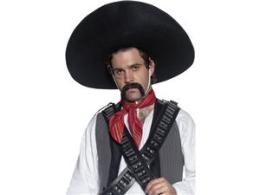
When I grew up, it was the age of cowboy shows. The early shows were collected from old movies and brought to TV and featured such notable characters as Hopalong Cassidy, Lash Larue, Gene Autry, Tom Nix, Zorro and many others. Early TV had two roles for Latinos: Sidekick or villain. Mexicans got to play the bad guy if the script wanted to use someone other than Indians. I can still remember my first image of a Mexican. It was a guy with a long black mustache, bandoliers crossing his chest, carrying two or more side arms. He was adept at hiding behind rocks and ambushing my heroes. Of course, he always wore a large black sombrero and spoke like:
“You tink you get away from Pancho? Pancho no fool? Pancho keel you now, you stupid gringo!”
 The cavalry never had to rescue my hero from the Mexican bad guys as needed to happen when he was captured by the Indians. The Mexican bad guys were easy to outsmart:
“No, I would never try to get away from Pancho. Would Pancho mind loaning me his gun for a minute, I would like to see what a nice gun he has close up?”
“Oh sure, gringo like to see my gun? Here take it and see the nice ivory handle.”
“Hands up Pancho, or I’ll blow your brains out. Come to think of it, I’ll blow your brains out anyway, cause your just a wetback from over the border. You probably don’t even have any legal immigration papers. Blam, blam, blam, take that you dirty Latino.”
The other role for any male south of the border (Latino women were always cooks and stirring a large pot. Later on they got to play tavern whores when the shows got more risqué.) was as a sidekick. One of the most famous Mexican sidekicks was Pancho (What else?) who was Duncan Renaldo’s sidekick on the Cisco Kid.” Renaldo was not born in Mexico but was born in Romania but he played the Cisco Kid who apparently was of Hispanic lineage. The Kid spoke fluent English while of course Pancho (Leo Carrillo) said things like:
The Cisco Kid: There is something Pancho and I can do.
Pancho: Yes, there is something we can do. We could – we – what is it?
The Cisco Kid: Investigate, Pancho.
Pancho: I don’t have a mind to invest in a gate. What good would that do, anyhow?
“The Cisco Kid: School Marm (#6.8)” (1955)
“Although he played stereotypical Mexican Americans, Leo Carrillo (a college graduate) was part of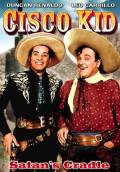 an old and respected California family. His great-great grandfather, José Raimundo Carrillo (1749–1809), was an early settler of San Diego, California. His great-grandfather Carlos Antonio Carrillo (1783–1852) was Governor of Alta California (1837–38), his great-uncle, José Antonio Carrillo, was a three-time mayor of Los Angeles, and his paternal grandfather, Pedro Carrillo, who was educated in Boston, was a writer.” http://en.wikipedia.org/wiki/Leo_Carrillo
Of course, it would not do to have a Mexican play a hero or anything more than a bumbling half-witted but well intentioned sidekick.
Time for some music: Mexican Americans Cheech and Chong full song (Click on Link)
I live in Arizona which has a large amount of undocumented immigrants attempting to pass through. Many people in this state have developed a higher than average intolerance of our Latino friends. A short while ago I was sitting in the local coffee shop and the woman on the stool next to me said rather loudly “I wish those damn Mexicans would all go home.” I said “Well, many of them are home. In fact, many if not most of them were here before you were.” She looked at me rather meanly and said, “What, do you mean by that?” I said, “Well until the Gadsden Purchase, the land you are sitting on was owned by Mexico. Mexicans living here were given the chance to become American citizens and since many of their families had been living here since about 100 years before the Mayflower came over, they decided to stay.” She did not say another word to me.
 My actual first encounter with Latinos was way back in 1967. I was doing migrant farm work for Abrahamson’s Tree Farm in Scandia Minnesota for $1 dollar an hour. It was hard physical labor from about 7 AM to 9 or even 10 PM at night. Many of the field workers were from South of the Border. I was warned never to discuss wages with any of them. This warning was given despite the fact that none of them spoke English and I did not speak Spanish. One day, while I was sitting in the fields with some of the other workers eating lunch. one of them looked at me and said “Bull-OVA, Bull-OVA.” I had not the slightest idea what he was trying to say and looked rather quizzically back at him. He finally reached over and took my arm. He pointed to his wrist and my wrist. I suddenly realized we were both wearing Bulova watches. It was a small thing but it was a rather poignant connection that we shared despite our lack of language. That was my last contact with any Latinos until about 1979 when I was hired by Sister Giovanni to teach at Guadalupe Area Project in Westside St. Paul.
Nearly fifty years later and I am still discovering interesting things about our Latino neighbors and friends. I was substitute teaching in one of the Casa Grande High Schools about a year ago when the phone rang in my classroom. I picked it up and heard a Spanish speaking voice on the other end. I looked at my class which is about 40 percent Hispanic and I picked out one suitably Mexican looking young girl and said to her: “Maria, would you take this call for me, they are speaking Spanish.” She looked back at me and said “I don’t speak Spanish.” So much for getting over stereotypes!
In 2000, Arizona voters approved a law that effectively banned bilingual education in public schools.
Proposition 203, which passed with 63 percent of the vote, prohibits native-language instruction for most limited-English-proficient children in public schools. Using the electoral process to micromanage the schools, the new law imposes a statewide English-only mandate, overruling the
- Choices of Hispanic and Native American parents,
- Judgment and experience of professional educators,
- Decisions of local school boards, and
- Sovereignty of Indian nations trying to save their languages from extinction.
This mentality reminds me of the efforts by the Bureau of Indian Affairs (BIA) in the early 20th century to eradicate the Native American cultures in this country by prohibiting Indian students from speaking their native language. Many Americans now look back on the history of Indians and say how unfair our treatment of them was. We say that we wish we could do it over. But we are trying to do the same thing to the Latino speaking cultures in this country TODAY. This is not happening 100 years ago. In 2010, Arizona passed a law banning Ethnic and Multi-Cultural Studies in schools. The ostensible reason was to insure that the government of the United States was not overthrown by these multi-cultural radicals.
But Mexicans are good for one thing. Many of my compatriots in Arizona love to go to the border towns in Mexico to get their dental work done or their prescriptions filled. The town of Algodones is on the Mexican border of California and Arizona. It is filled each day with people from the USA who cross over to take advantage of the lower prices for both dental and eye work. The prices can be as much as a third lower than in the USA. The popularity of both inexpensive prescriptions and medical care catering to Canadian and US senior citizens has prompted a virtual explosion of pharmacies and dental offices. We may not want these Mexicans to live near us but we don’t mind if they will fix our eyes and teeth at discount rates.
 So what drives this antipathy and sometimes out right hatred towards our Latino neighbors? Why after 300 years of sharing our border have we reached this sorry state of anti-immigration and intolerance towards the Latino culture? Some would say fear. Others would say it is a reflection of hard times in the USA and the difficult economy. Who needs more competition for jobs and work when millions of United States citizens are suffering with unemployment and a high cost of living? But is this any reason to take it out on the poor of other countries who want a chance to escape their poverty? Why can’t we look for a win-win in this scenario?
What further exacerbates this problem is the sorry state of leadership in this country. Instead of looking for solutions that would appeal to the best in human nature, too many of our political leaders seem intent to stoke the fires of race hatred and cultural intolerance.
Resistance to a sweeping immigration overhaul is moving from conservative talk shows to the corridors of power. The Republican-controlled House of Representatives on rejected President Obama’s policy to stop deporting young people brought to this country illegally as children. With all but six Republicans voting against funding a policy that lets hundreds of thousands of law-abiding but undocumented youth enrolled in high school or the military to stay in this country, the vote spotlighted the long odds facing the much broader Senate bill to allow 11 million illegal immigrants to earn citizenship.
The House vote came two days after Republican Gov. Rick Scott of Florida vetoed a bill that would help young people whose deportations were halted by the Obama administration get driver’s licenses. And on Wednesday, a key immigration leader in the House, Republican Raul Labrador of Idaho, defected from bi-partisan talks. http://www.nationaljournal.com/politics/mounting-signs-of-gop-rebellion-against-immigration-reform-20130607
We seem to have forgotten that this country was settled by people from many other countries. Perhaps our greatest strength has come from our diversity and our ability to assimilate people from diverse cultures. The assimilation was not accomplished and has never been accomplished by laws or politicians. The assimilation happened because we were all able to share in the  American dream of “Life, Liberty and the Pursuit of Happiness.” This vision of what could be has been the fuel for the vast melting pot that this country has always represented. Without this fuel, we have no ability to assimilate diverse cultures. People are not assimilated because of anti-language or anti multi-cultural study laws. People are assimilated by a common dream and a common vision. We have always pointed our country out as a beacon for the forlorn and hopeless of other lands. Are we going to give up on this role and the dreams that millions of people have for freedom, justice and prosperity? Will we diminish ourselves by denying this dream to others? What happens to such a dream if we do not share it with others?
“Cruelty is all out of ignorance. If you knew what was in store for you, you wouldn’t hurt anybody, because whatever you do comes back much more forceful than you send it out.” — Willie Nelson
Time for Questions:
When did your grandparents come over? How were they treated? What if they were trying to come over today, how do you think they would be treated? What if you lived in a poor poverty ridden country, what would you do to escape or make your life better? Documented or undocumented immigrants, should we have more opportunities for immigration to this country or less? Why? How much charity should we extend to people from other countries? Can we extend too much?
Life is just beginning.
 Ron: Yep, then all they did was complain even more. Selma and Bama marches!
 Ron: Course not. Then we get the Ferguson riots. Nothing ever makes them happy.
 Jack: My family did not own any slaves.
 Ron: What about NASCAR racing. You don’t see too many Blacks in that.
 Joan: You say you have some Black friends. Do you ever talk to them about their racial history?


 Aging Capriciously