Nothing Left to Mourn

What happens when everything you believe in is shattered?  To mourn something means to regret its loss or disappearance.  What happens if your ability to mourn is overwhelmed by the sheer magnitude of the destruction impacting those people or things or ideas that you love?  Does our ability to face life with a positive attitude disappear in the wind?  Are we less able to effect a happy demeanor as we face each new day?  How do we cope when the world around us seems to no longer support anything that we trust in?

I am probably selfish when I ask these questions.  I am still healthy, can pay my bills and have a wonderful spouse.  But after reading the news this morning about still another Supreme Court victory for trump, I felt an overwhelming sense of depression and futility extend over my life.  Karen noticed my attitude and asked if anything was wrong.  I said yes and told her what I had read.  What can I do about it?  How do I help stop a juggernaut that now seems to be tearing our world apart?  I thought it could not get any worse than Covid and Climate Change and now I am trying to cope with a country that I do not recognize.  We have elected a government that seems to support evil, vengeance and extreme injustice.

I know that there are many people who feel the same way that I do.  I try to coach and counsel them with bromides about resistance and the power of one person to make a difference.  But then I look at the futility of my own efforts.  I march.  I write.  I speak out.  Things keep getting worse.  When will the arc of justice bend back towards love and mercy and compassion?  I am old enough now to think that I will see my life ebb away before this country returns to anything that I once believed it stood for.  Every institution in the country seems corrupted by greed or power or some type of anti-human ideology.  We are the greatest.  We are exceptional.  We can do whatever we want to do because we have bigger and more bombs than anyone else.

Perhaps I am just venting here and will rise like the Phoenix tomorrow.  Born again with hope and optimism.  But what if I cannot?  What if there is nothing left to mourn?  What if all my ideals and hopes for a better world are now simply a chimera?  A phantom that only exists in fairy tales and stories told by naïve writers.  Does the world really march towards progress and less iniquity or have we all been sold a childish narrative.  A story of good and evil where the good always wins over the evil.

Lately I find myself watching many of the reruns of old cowboy stories from the fifties and sixties on YouTube.  I watch them because I can’t read or find any good news in books or the media.  In these old cowboy stories, the good guys always win.  My biggest bit of joy these days is watching a person on the side of justice overcome the evil doers who would thwart the rationale rules of law and order.  In the old cowboy stories, the rule of law is always supported by the end of the story.

I have never shunned history or ever idealized the past.  I am too familiar with the barbarism of all the older and ancient empires in history.  The cliche that “Power Corrupts and Absolute Power Corrupts Absolutely” is as true as any of the laws of Physics.  History is a chronology of the powerful taking the rights away from the less powerful.  There has never been and perhaps never will be a humanistic empire.  Every empire that has ever existed has been an entity that has attacked, destroyed, stolen and devoured what belonged to others less powerful.  OSHO thought that humans would always be destructive since war provided a release from the boredom of everyday life.

If you think that wars have become any less violent or barbaric you need to only review your history books.  Modern wars since 1900 have killed more people than most of the ancient wars by the Assyrians, Babylonians, Egyptians, Romans, Huns, or Mongols.  The Spanish, French, British, German and Russian empires were just as brutal as any of the ancient empires.  That leaves the American empire.  The land of the free and the home of the brave.  A country that was fought and died for by patriots.  Patriots that killed millions of indigenous people and tens of millions of Africans shipped over to work in the fields and help build this country on their whipped backs.

The Great Dying:  Some sources suggest that colonization led to the death of around 56 million people, or about 90% of the indigenous population in the Americas between 1492 and 1600, leading to a period termed the “Great Dying”.  Thousands more were killed during the expansion of the US empire and what have been called the “Indian Wars.”  — Wikipedia

The Slave Trade:  During the Transatlantic Slave Trade, approximately 1.8 million Africans are estimated to have died during the Middle Passage, the horrific journey across the Atlantic Ocean.  This represents about 10-15% of the estimated 12.5 million Africans forcibly transported across the Atlantic between 1500 and 1866.

However, it’s important to understand this is just the mortality on the ships. The total number of deaths associated with the slave trade is much higher, including those who died during:

  • The initial capture and forced march to the coast.
  • Confinement in coastal barracoons awaiting shipment.
  • The “seasoning” process upon arrival in the Americas, where they adjusted to a new climate, brutal work routines, and harsh living conditions.
  • Resistance, mutiny, suicide attempts, and forced starvation during the voyage.

For every 100 enslaved people who survived the Middle Passage, another 40 died in Africa or during the voyage itself.  The Equal Justice Initiative reports that nearly two million Africans died during the Middle Passage, nearly one million more than all Americans who have died in every war fought since 1775 combined.  —- Digital History

It is not easy assimilating the truths about the American empire.  An empire that was and is about as bloody as any empire in history.  That is why the “truthtellers” want to eliminate concepts like Critical Race Theory and Diversity, Equity and Inclusion Training.  It is shameful and embarrassing to have to face the truth about a nation billed as the Shining City on the Hill.  Most of us who grew up in this country with any knowledge of history knew many of the facts concerning the American myth of Truth, Justice and Equality.  However, we held onto the idealism that underpinned the founding of this country.

We believed that someday the checks that Martin Luther King said were marked “Insufficient Funds” would be redeemed for their declared value.  We believed that we would move to a society where equality of income and opportunity would become a reality for all citizens.  We believed in the words inscribed inside the Statue of Liberty that we would provide a haven for all people looking for a better life regardless of where they were from.  We believed that democracy would be exported to other countries rather than a rapacious greedy system of corporate capitalism.  We believed that people would want to imitate our country because they would see firsthand a country that practiced the ideals that all people in their hearts cherish.

We never thought that we would see a country where greed had replaced morality and personal virtue as guiding principles. 

How to Use Product or Service Reviews to Get the Best Deals

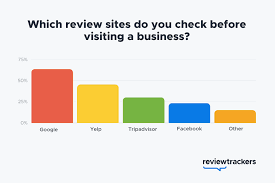
Everywhere you look today there are reviews telling you how other people feel about a product or service that they have purchased.  A good friend of mine refuses to read reviews.  She argues that it is a little like going into a restaurant and asking a server “What is good today?”  I see her point to some extent.  What do I care about what others think about something?  How do I know the server likes the same thing that I like?

Growing up on the East Coast, I love seafood and spicy food.  Relocating to the Midwest in later years, I found half the population in states like Minnesota and Wisconsin where there are thousands of lakes and millions of fishermen who say, “I don’t like fish.”  I used to ask them, “why?” I don’t anymore because I already know the answer.  “They taste too fishy, they will say”  I want to reply, “Oh, do you dislike steak when it tastes too steaky?  Or hate potatoes that taste too much like potatoes?”   But it would be useless.  About the same use as challenging someone to eat something spicy when they say it will give them an upset stomach.  Somehow, millions of Americans believe that spicy foods cause upset stomachs.

The opinions that inhabit the brains of other people should lead all of us to be very cautious when reading reviews.  Let me give you two examples of bad or stupid reviews I have read.  Then I will tell you the secret for finding useful information from reviews.  Information that will lead you to be able to make purchases nearly 100 percent of the time that provide the quality and reliability that you are looking for.  You see there is both art and science to reading reviews.  Most people merely rely on one or the other and obtain less than optimal results in their choices.

The following are two reviews I have actually read myself.  The first deals with my searching for a new pair of running shoes.  Most reviews unless noted are based on five stars with five being the highest rating.

“I gave these shoes a two star.  They looked good but they did not come in a wide range of colors.  My wife said though that they make me look like a super runner.”

I am a functionalist when it comes to running shoes.  I have been running for nearly fifty years and used more pairs of running shoes than I can count.  I have bought just about every brand of running shoe ever made.  When I buy a running shoe, I buy it according to the type of running that I will be doing.  Will I be on the street, then I want a shoe with more cushion.  Will I be on wooded trails, then I might buy a more minimalist shoe like a Vibram Five Finger Sole.  Will I be on rocky mountain trails, than I want a shoe with more support and a rock sole plate inside like the Merrill’s that I recently bought.

I do not find a correlation with quality and price when it comes to running shoes.  The only correlation that exists in the running shoe industry is with price and fashion.  Many people who run like to look stylish and wear the latest most popular running shoes.  They will pay two or even three times for a new fashionista shoe than it is really worth.  They are often more interested in the colors available for shoes than the quality of the shoe.  Hence, it is buyer beware if you are looking for shoe ratings.

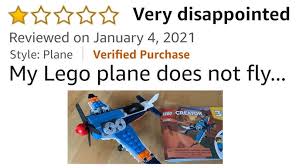
The next stupid review I want to describe was for a book that I was looking at on Amazon.  I was surprised that someone rated the book with a one star until I read the review.

“I gave the book a one star as soon as I saw the title.  No book with a title like this one could be any good.  The cover was also very dumb looking.” 

The only thing dumb about this book was the moron giving the review.  I do lots of reviews on travels and places that I have visited.  I review tours, hotels, concerts, train rides, restaurants etc.  I would never ever want to tear someone’s place or product down with a review that is incompetent and downright mean.  Yes, I think it is mean spirited to write a one-star review unless you can document or back it up with some facts that support your rating.  Facts and circumstances that would justify a one-star review.  Furthermore, I think it is always imperative that you try to deal with the provider before you leave a nasty review.  Speak to the owner or manufacturer or manager before you leave a review that can hurt their business.

The world of reviews is full of problematic reviews that tell you little or nothing about the product or service.  On the other hand, many low rated reviews can provide a wealth of information that will be useful.  Similarly, many high rated reviews can either give you good data or be a waste of time.  The review by a runner that says “I do not run but I rated the shoes high because they came in a wide range of colors” is not likely to be useful to anyone running twenty or more miles a week on hard rocky terrain.

Lets look at the two elements of a review that you should take into consideration.  The first I will call the “Science.”

Simply, how many reviewers have reviewed the product and what is the mean and distribution of data around the mean.  A product with too few reviews could be biased for a number of reasons.  Friends or even employees might have been talked into writing reviews to make the product look good.  I do not trust reviews based on less than 100 reviews and generally I want to see a review with more than 500 reviews.  I trust a larger sample size more than a smaller sample size.

Next, I look at the distribution of ratings.  It is not enough to know that a product received a 4.5 rating overall since the distribution might be lots of high ratings together with some very low ratings.  The average is not always a good figure to rely on.  As the saying goes, if you have two people in a room and one is starving to death with no food to eat and the other person is enjoying an entire chicken to eat by themselves, than on the average there is ½ a chicken per person in the room.  I want to buy a product with a rating that has less spread than a rating with an equal number of ones and fives.

The second part of finding your great product or service is the “Art” part.  It is the reading of the reviews to discern what people liked and disliked about the product.  No one should be buying a product or service without some idea of what they hope or expect it to do for them.  You want to have some expectations of what you are buying in terms of quality and reliability and sometimes style or fashion.

Reading the bad reviews as well as the good reviews can give you invaluable information on how the product performs and what it is capable of doing.  If there are videos that have been submitted showing the product being sold (These can also often be found on YouTube), I will always watch these videos to get more information about the product.  It might be a great product or even a fantastic product, but it might not be great or fantastic for me.  I think it is imperative to match the product or service to your own needs and wants.

I may reject high ratings as well as low ratings for a variety of reasons.  Often, people have unrealistic expectations about the product.  When it comes to movie reviews such as those on Rotten Tomatoes, good reviews might be useless if the movie does not fit into the genre of films that I like.  I tend to like movies that have more plot and character development.  Movies that are short on car chases and action shootouts and high on interesting dialogue.  My choice of movies does not reflect mainstream attitudes today with the current penchant for horror and action flicks.

The major categories of products and services that I purchase include the following.  I will briefly provide a few caveats concerning each of these areas.  A lot more could be said but a few comments should suffice to give you some thoughts.

  • Books

Books are very trendy and fashionable.  Always read a review to see if the content matches your interests and not because it is the “book of the month.”  Popularity does not necessarily equal a good read.

  • Movies

Rotten Tomatoes has its ratings based on two categories.  Critics and Viewers.  A movie might be high in one and lower in the other, high in both or low in both.  I tend to look for the high in both categories but sometimes I have found a great movie that was low in both categories.  Many very popular current films will be high in both categories, but I do not like very many of the current films out there.  I try to look more into the aspects of the film and plot and characterization that resonate with my film choices.

  • Hotels

This is a very difficult product to judge because a hotel is more than just a room.  It is convenience to other areas, amenities, staff, food, service, clientele, ambience and location.  It is very difficult to find ratings on hotels that are very high, and it is one area where I might concede a correlation between price and quality.  That said there are many bargains out there when you get away from the big chain hotels and find small independent operations.  The one that we stayed in called the Zags Hotel in Portland fell into this later category.  It was relatively inexpensive but one of the most fun hotels we have ever stayed at.

Many people are very critical when it comes to hotels and motels.  Some want walk in showers and feather pillows and others don’t care about the showers or pillows.  You must read between the lines when selecting a hotel or you will be very disappointed.

  • Restaurants

Ratings on restaurants are also very problematic.  I blame restaurants for this to some extent since they often create their own problems.  Even the best restaurants in the country have days when everything is just off.   Service is bad, food not up to standards and ambiance bad.  One common review I have read goes as follows, “Used to be great place to eat, food and service have gone downhill.  Would not come back again.”  This review might be followed by another that reads “Great place to eat, food was excellent, service was beyond expectations.”

Two things that restaurants cannot control are the expectations of diners and the behavior of staff both in the kitchen and out of the kitchen.  Many diners act like they are monarchs and should not have to wait five minutes for any service.  I have read so many bad reviews on restaurants where I have had great meals and service that I can only wonder at what happened to the other diner to cause such negativity.  Having been in the customer service sector myself, I can tell you that there are customers that you could never satisfy in a million years.  Thus, I would take any restaurant reviews with a dose of probability.  What are the odds I will get a good meal and good service tonight?  Like with the weather, it will never be a one hundred percent accurate forecast.

  • Cars

I have never made a bad purchase with a car.   I also put car salespeople on my list of top unreliable people to deal with.  I realize that they are in a very high-pressure business and that this is part of the problem.  They don’t get the sale then little Andrea goes hungry.  This means that they are liable to exaggerate claims on what they are selling.  A worse problem is that due to the myriad complexities of the vehicles they are selling you, they will probably be a let less informed about the vehicle than you would expect.  I have hardly ever been sold a vehicle new or used wherein the claims provided by the salesperson matched later expectations.  Despite this discrepancy, my tendency to research the cars I am going to buy and to spend a great amount of time looking at comparable vehicles has helped me be very satisfied in my choices.  The few discrepancies have been irritating but ultimately very negligible in the overall product choice.  One example is a follows.

In 2018 we were shopping for a car to replace our 2009 Honda Civic that had 235,000 miles on it.  We decided to buy a new Honda Accord as it came stock with the new safety package that Honda had developed.  All the new bells and whistles for braking, cameras, adaptive cruise control and other safety features.  One thing I wanted for sure was the built in GPS system.  The salesperson assured us that GPS was standard on the Accord we were looking at.  We bought the car and two weeks later we still had not figured out how to get GPS on the console.  The salesperson had assured us that all we had to do was download the right software.  Turned out that the car did not support GPS regardless of what software we downloaded.  When you buy a car, it is always “Caveat Emptor.”

  • Merchandise

We purchase a great deal of merchandise on Amazon these days.  It is very convenient to peruse their products and their shipping and return policies are excellent.  Since January of 25, we have placed 129 orders with Amazon.  There is such a range of merchandise that it is very difficult to give hard and fast rules about reviews.

Certainly, the science of reviews as I described should be paid attention to.  The number of reviews along with the distribution of ratings is very important.  As to the art of the review, it is imperative that you have a good idea of what you want and that you research the various product options as thoroughly as you can.  This means that if you are buying clothes, check other online sellers out.  The same goes for furniture, appliances, hardware and pharmaceuticals.

The range of ratings for many items prohibits a simple decision.  For almost every product, you will find many people who love it and many people who hate it.  Know the features and benefits that you are looking for and select the product where people rave about these features.  If style is not important, then you may not care about color choices in running shoes.  On the other hand, if reliability is important than look for reviewers who have used the product for several months or even years.  I have seen too many reviews where a product such as a running shoe worked great for two weeks and then fall apart.

Conclusions:

It is not easy wading through myriad reviews to find anything bordering on absolute “truth” about a product.  I like to say that fifty percent of drugs work fifty percent of the time with fifty percent of the people.  The same might be applied to ratings and product reviews.  Some will love the product and swear that it cures old age, and some will swear that it was garbage and not worth the money.  Who is right is the mystery that you will need to solve.  Using ratings to help decide on a product choice is a great adventure in the swamp land of American consumerism.   Think of it as the last great adventure in life.

ChatGPT Political Analysis of the Next Three Weeks Following the US Bombing of Iran

Here is a realistic 3-week scenario following a U.S. (or Israeli/U.S.-backed) bombing of Iran’s nuclear enrichment sites. This projection assumes a limited strike—targeting key facilities like Natanz, Fordow, or Isfahan—rather than a full-scale war. It also assumes no immediate regime change in Tehran.


🔥 Week 1: Shock, Assessment, and Initial Response

Day 1–3: Aftermath of the Strike

  • Iran confirms the bombing, accuses the U.S. (and possibly Israel), and vows retaliation.
  • Images of destroyed facilities emerge. The regime uses this to unify internal dissent and condemn “Western aggression.”
  • Supreme Leader Ali Khamenei and the IRGC declare that Iran will “respond at a time and place of its choosing.”
  • Oil prices spike sharply (10–20%) due to fears of escalation and threats to the Strait of Hormuz.

Day 4–7: Iran Responds Indirectly

  • Proxy attacks begin:
    • Rockets fired at U.S. bases in Iraq and Syria.
    • Possible drone attacks on Gulf infrastructure (e.g., Aramco facilities in Saudi Arabia).
  • Cyberattacks ramp up—U.S. financial institutions, oil pipelines, or water utilities may be hit.
  • Hezbollah increases alert status in southern Lebanon; Israel prepares for possible northern front flare-up.

🔥🔥 Week 2: Retaliation and Global Response

Day 8–14: Asymmetric Escalation

  • Strait of Hormuz Incident:
    • Iran attempts to seize or disable an oil tanker or mines a portion of the sea lane. U.S. Navy increases patrols.
    • Insurance rates for shipping skyrocket; some companies suspend traffic through the Gulf.
  • Missile or drone attacks on Israel may occur via proxies in Lebanon or Syria.
  • Iran announces its withdrawal from the NPT and ends cooperation with the IAEA.
  • U.S. embassies in the region face protests or limited violence. Evacuations begin in unstable areas (e.g., Iraq, Lebanon).

Global Diplomatic Reaction

  • U.N. Security Council convenes emergency meetings, but permanent members (Russia, China) back Iran’s right to respond.
  • European allies urge restraint but face domestic protests over perceived U.S. recklessness.
  • China and Russia increase energy imports from Iran, attempting to buffer sanctions.

🔥🔥🔥 Week 3: Brinkmanship or Stabilization

Day 15–21: Critical Crossroads

Two scenarios could unfold:


Scenario A: De-escalation (40% chance)

  • Backchannel diplomacy via Qatar, Oman, or Switzerland opens dialogue.
  • Iran agrees to “limited retaliation” in exchange for no further U.S. strikes.
  • The U.S. and EU explore a new diplomatic framework—one that includes regional actors like Saudi Arabia and Turkey.
  • A global coalition calls for a new nuclear deal—but it may be even harder to achieve than the JCPOA.

Scenario B: Continued Escalation (60% chance)

  • A U.S. base suffers major casualties from a proxy missile barrage.
  • Israel launches strikes on Hezbollah or targets IRGC units in Syria.
  • Iran threatens all-out war if attacked again. Military activity intensifies around Hormuz.
  • Gulf states (Saudi Arabia, UAE, Bahrain) enter high alert, and the U.S. begins moving naval strike groups into the region.
  • A wider regional war becomes a real possibility—though all sides remain cautious of going “over the edge.”

🧭 Strategic Implications

  • Iran may emerge stronger in domestic politics, despite the strike, by unifying nationalist sentiment.
  • The global economy suffers, with energy markets roiled and major supply chain uncertainty.
  • Diplomacy is damaged for years; no near-term nuclear agreement will be politically possible in Iran.
  • The risk of miscalculation is extremely high—especially if any party overestimates their deterrence or underestimates their adversary’s resolve.

It will be very interesting to follow this AI analysis and see how closely it approximates events in the next three weeks. Let us all pray that it does not result in a third world war.

The Perfect Day When Everything Went Right!

Did you ever have a day when “everything” went right.  A day when you got up on the right side of the bed.  The phone rang all day with calls from good friends instead of spam and telemarketing messages.  Everyone just called to chat, and no one had any problems or issues to face.  A day when the sun was shining and the weather was perfect.  There were no bugs or mosquitoes to be found anyplace in your town.  You felt like a million dollars with no aches or pains.  No one you knew was going  to the doctor for cancer treatments or therapy of any kind.  It was as the younger generation like to say “Perfect.”

Now as you are reading this, you are probably thinking “He must be daydreaming, such days do not exist.”  Or maybe you are thinking that it is my birthday.  I concede the possibility that such days are perhaps rare, but then again should they be any more rare than days where “Everything that could go wrong” did go wrong.  Or is it just our perspective which is goofed up.  We are more likely to remember the days when our dog disappeared or when the doctor told us to come in and see her as soon as possible than days when our dog reappeared or the doctor called to tell us everything is fine.  Cognitive scientists have a term for our propensity to remember the bad more than the good.

“Negativity Bias” is a cognitive bias that refers to the tendency to remember negative events and information more vividly and with greater impact than positive or neutral ones.  I will not bore you with the reasons for this propensity.  I am sure that you recognize that it exists.  Thus, if the Yin/Yang of the world is an accurate theory of our existence, we should have at least as many of the Perfect Days as we do the Shitty days.

I ask you to stop reading this blog for a few seconds.  I challenge you to see if and when you can remember the last perfect day that you have had.  Now I would like for you to describe that day in my comments section before reading the rest of this blog.  Think of the happiness you will bring to me as well as the rest of our readers.  What if the news carried as much good information as they do bad information?  What would your world be like if you only remembered and had perfect days.

At this point, you are probably ready to skewer me as some deranged Pollyanna or Don Quixote. A nutcase who sees everything through rose colored glasses.  Someone who is madly optimistic that there is hope for a better world.  That Donald Trump will not get a statue on Mount Rushmore and that he and his sycophantic followers will soon disappear in the abyss of forgotten history.  I assure you that I go to sleep every night praying to a god that I do not believe exists that these latter events will happen while I am still alive to witness them.  Instead, I wake up every morning to more bad news from the front line of the independent media I subscribe to. Thus, either giving me less hope for humanity or making me feel guilty by asking me for more money that I do not have.

See, you thought I was going to write some really optimistic idealistic treatise that would make you feel like your existence meant something and life was worth living.  Instead, I refer you to Ecclesiastes from the Bible:

Everything Is Meaningless

1 The words of the Teacher,[a] son of David, king in Jerusalem:

2 “Meaningless! Meaningless!”

    says the Teacher.

“Utterly meaningless!

    Everything is meaningless.”

3 What do people gain from all their labors

    at which they toil under the sun?

4 Generations come and generations go,

    but the earth remains forever.

5 The sun rises and the sun sets,

    and hurries back to where it rises.

6 The wind blows to the south

    and turns to the north;

round and round it goes,

    ever returning on its course.

7 All streams flow into the sea,

    yet the sea is never full.

To the place the streams come from,

    there they return again.

8 All things are wearisome,

    more than one can say.

The eye never has enough of seeing,

    nor the ear its fill of hearing.

9 What has been will be again,

    what has been done will be done again;

    there is nothing new under the sun.

10 Is there anything of which one can say,

    “Look! This is something new”?

It was here already, long ago;

    it was here before our time.

11 No one remembers the former generations,

    and even those yet to come

will not be remembered

    by those who follow them.

However, I refuse to finish this blog on a nihilistic note.  I want to finish on a crescendo of hope and faith and happiness.  A belief that one idea, one word spoken, one action taken, one step forward can change the course of humanity.  We can look back to the past and find untold mistakes and failures that have eclipsed the sunlight of joy for the world.  But we can also look forward to a future that we can create because the vast majority of human beings are decent peace-loving equality seeking individuals.  The Negativity Bias blinds us to the positive outcomes that prevail every day in our lives.  At the end of each day, we seem destined to remember the bad things that happen in the world.  This effort is reinforced by a negative biased media which thrives on horror and destruction and pain.  I love the words from this song by Peter Paul and Mary,  “Light One Candle”

Light one candle for the terrible sacrifice

Justice and freedom demand

And light one candle for the wisdom to know

When the peacemaker’s time is at hand


Don’t let the light go out!

It’s lasted for so many years

Don’t let the light go out!

Let it shine through our love and our tears


Light one candle for the strength that we need

To never become our own foe

And light one candle for those who are suffering

Pain we learned so long ago                                                                                                               

Light one candle for all we believe in

Let anger not tear us apart!

Light one candle to bind us together

With peace as the song in our heart


Don’t let the light go out!

It’s lasted for so many years! (lasted for so many years!)

Don’t let the light go out!

Let it shine through our love and our tears

We need to counter this tendency for negative bias by reinforcing the positive “perfect” days of our lives.  Here is a checklist that ChatGPT created from my query:

It is a printable daily practice checklist to help overcome negative bias.  You can use it as a daily or weekly tracker to build habits that shift your mindset toward balance and resilience.

🌞 Daily Practice Checklist: Overcoming Negative Bias

Practice Done Today? Notes or Reflections
1. Morning Gratitude: List 3 things you’re grateful for.
2. Reframe 1 Negative Thought: Catch a negative thought and reframe it positively.
3. Notice the Good: Write down one positive thing that happened today.
4. Kindness Practice: Do one kind thing for someone else.
5. Mindful Moment: Spend 5+ minutes in meditation or quiet reflection.
6. Move Your Body: Take a walk, stretch, or exercise.
7. Limit Negative Input: Avoid or reduce exposure to toxic media or conversations.
8. Evening Reflection: What went well today? What did you learn?

🗓️ Weekly Reflection (Use at the end of the week)

  • What patterns of negative bias did I notice?
  • What helped me shift my mindset the most?
  • What’s one small thing I want to improve next week?

The End Folks. 

Hope you enjoyed this blog.  Let me know what your perfect day was. 

The Window

How was the concept of time created? What is your theory?

What is the beginning of time? Scientists and philosophers have all puzzled over this question now for centuries. Currently we are told by physicists that all time began with the Big Bang. A giant explosion created the Universe and was the beginning of everything as we know it. If you are more religious oriented, you might point to Genesis in the Bible as defining the beginning of time. However, what about the beginning of “using” time to mark the passage of minutes, seconds and days? When did humans start noting the passage of time? I propose the following scenario.

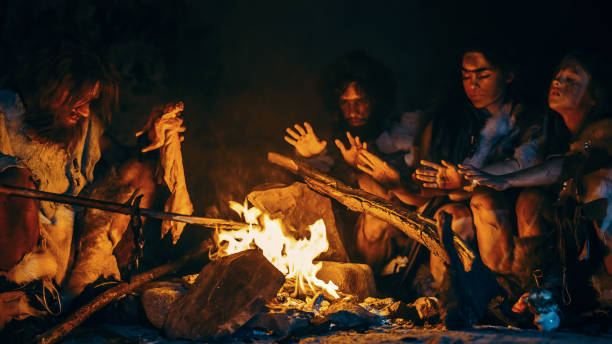
Picture a bunch of our prehistoric relatives sitting around a campfire. Matilda notices that the fire is running out and wood is getting short. She suggests that perhaps the time the clan spends together could be measured in “log-woods.” One log-wood equals one increment of time. Two-log woods equal two increments and so on. Eventually, the sun dial was created and measuring the amount of sun available replaced log-woods. The sun dial proved to be more reliable and accurate then “log-woods.”

It is much more likely that with births, aging, deaths, seasons and the planting of crops humans noticed the importance that time played in their lives and at some point realized the need to measure. My cavewoman scenario is just a fiction. We can ponder over when and who but we may never know the answer. But fictions can keep us thinking. For instance, I believe the Big Bang Theory is simply a fictional description of how the universe was created. Not that I side with creationists or intelligent design theorists. It is more my lack of credibility in science. I delight in seeing the creative ideas that physicists have for trying to answer these riddles. I find it amazing that we gainfully employ armies of physicists who spend their time trying to figure out if the universe is receding or proceeding. They propose the most incredible theories to answer these with a straight face. Moreover, the rest of us are so awed by “scientists” that we would not think of questioning their theories. Scientists have replaced witch-doctors and spiritual leaders when it comes to creating belief systems. I refuse to take these theories very seriously.

What creates your belief system in the world? What or who do you rely on to create and define your reality? Do you question or accept whatever you are told? Why not question more and accept less? What do you think created time?

Finding Fame, Fortune and Success:  Paths to Misery or Happiness?

I am reposting this blog that I wrote four years ago.  I recently reread it and thought how much writing it meant to me.  I think it still resonates with a need all of us have inside us.  I hope you will enjoy reading it. Perhaps the second time for some of you