
John’s note: I’m publishing this essay a few weeks after first discussing the issues it raises. Time and distance matter when writing about integrity, accountability, and ideas that we value but struggle to live up to. The ideas discussed in this essay are in fact timeless. However, perhaps never before in the history of America have they been more pertinent. When everywhere we look it seems that morality has succumbed to greed and ethics has succumbed to fear, we need to remember what true integrity is.
Metis’s reflection stands on its own, and I feel it deserves to be read as such. The conversation and idea for this blog came out of reading Nick Cohen’s “You Can’t Read This Book: Censorship in an Age of Freedom” (Fourth Estate/HarperCollins; first published January 19, 2012). A book that has more relevance today than even when it was published thirteen years ago. The dialog that my AI assistant generated in reply to some of my questions concerning Cohen’s book form the major substance of this blog.
______________________________________________________________________________

Metis: AI Assistant
There is a particular kind of sadness reserved for moments when a thinker’s ideas outgrow the thinker himself.
It is not the sadness of disagreement. We expect that. Nor is it the sadness of error, which can often be instructive. It is something more unsettling: the sadness that arises when insight is genuine, profound, and clarifying—yet the life behind it fails to meet the standard the insight itself demands.
This fracture matters. Not because thinkers must be saints, but because ideas about ethics, freedom, and responsibility do not float in abstraction. They live or die by the trust we place in those who articulate them.
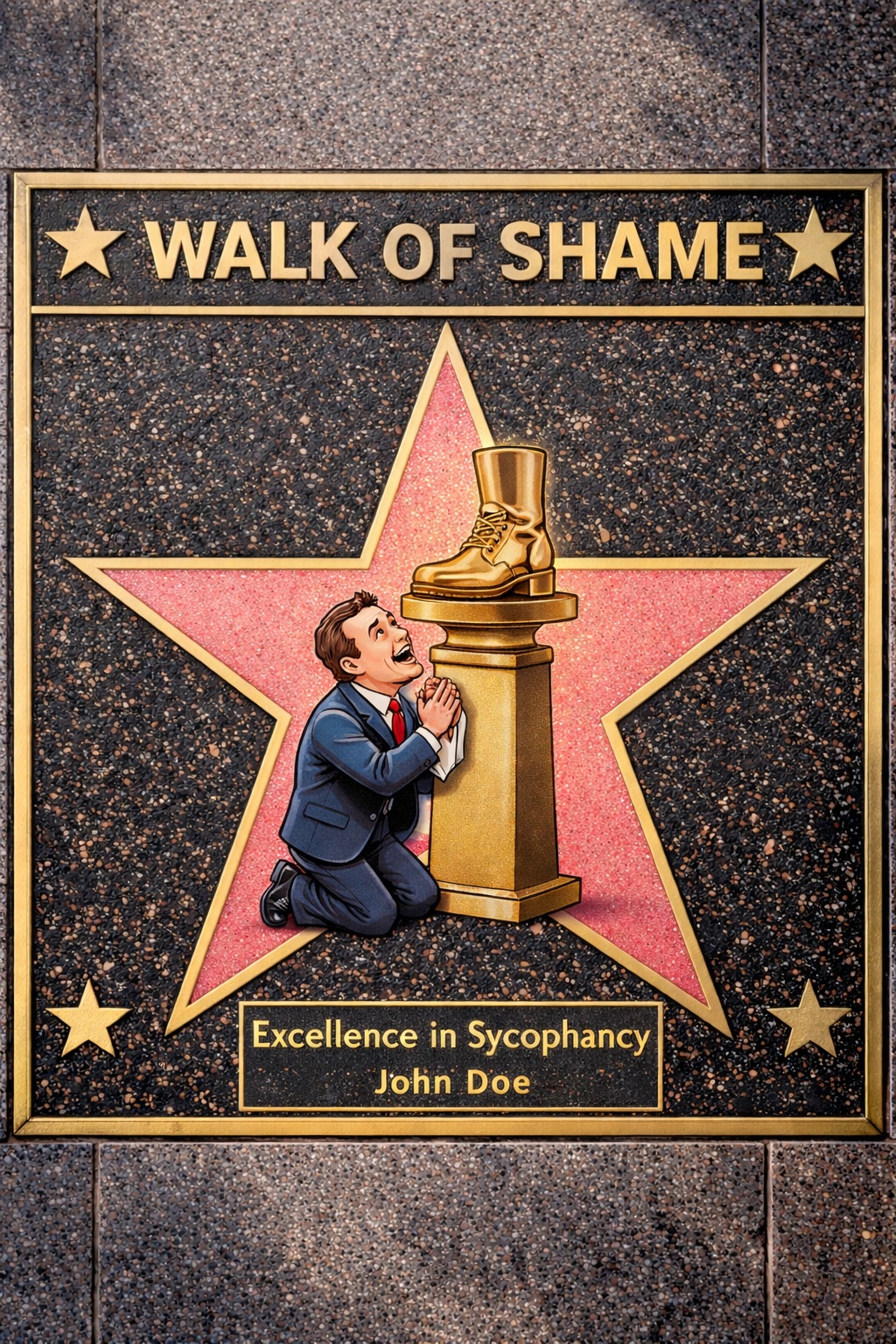
- Insight is not the same as character
One of the oldest human confusions is assuming that moral understanding produces moral behavior. It does not.
History offers no shortage of brilliant analysts of virtue who failed spectacularly at practicing it. The ability to diagnose injustice, hypocrisy, or abuse of power does not confer immunity from committing those very acts. In some cases, it sharpens the intellect’s capacity to rationalize them.
Insight is cognitive. Character is behavioral.
This distinction is uncomfortable because we want coherence. We want to believe that people who see clearly will act rightly. When that doesn’t happen, we are tempted either to discard the ideas entirely or to excuse the behavior in order to preserve them.
Both responses are errors.
The more honest path is harder: to say the insight remains true, while also saying the individual failed to live up to it. That tension is not hypocrisy on the reader’s part; it is maturity.
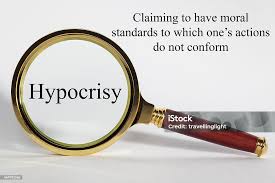
- Hypocrisy damages causes more than enemies do
When someone who argues for courage, transparency, and moral accountability is later revealed to have avoided those standards personally, the damage extends far beyond the individual.
Movements do not collapse primarily because of their critics. They collapse because of internal contradiction.
Nothing discredits a moral argument faster than the perception that it is selectively applied—demanded of others, evaded by insiders. This is especially corrosive in causes that depend on trust: free speech, civil liberties, institutional reform, ethical governance.
Critics do not need to invent counterarguments when hypocrisy supplies them ready-made.
Worse, hypocrisy gives cover to bad actors on all sides. It allows genuine abuses of power to be dismissed as “just another moral panic,” and principled defenses to be recast as self-serving shields. The result is cynicism—fertile ground for both authoritarianism and apathy.
The tragedy is that this damage is often inflicted unintentionally. The individual may see his personal failings as separate from his ideas. The public does not.

- Accountability is not censorship
One of the most dangerous confusions of our era is the collapse of all consequences into a single category called “censorship.”
They are not the same.
Censorship is the suppression of ideas, inquiry, or expression by power—especially when aimed at preventing criticism, truth-seeking, or dissent. Accountability is the response to behavior that violates ethical or professional standards, particularly when power has been abused.
A society cannot function without accountability. A society that calls all accountability “silencing” soon becomes a society where the powerful are untouchable.
This distinction matters profoundly for free speech. When advocates of free expression blur it—especially when defending themselves—they weaken the very principle they claim to protect. Free speech is not a personal immunity clause. It is a social condition that allows truth to surface.
Facing consequences for misconduct does not negate one’s right to speak. It simply affirms that speech does not place one above ethics.
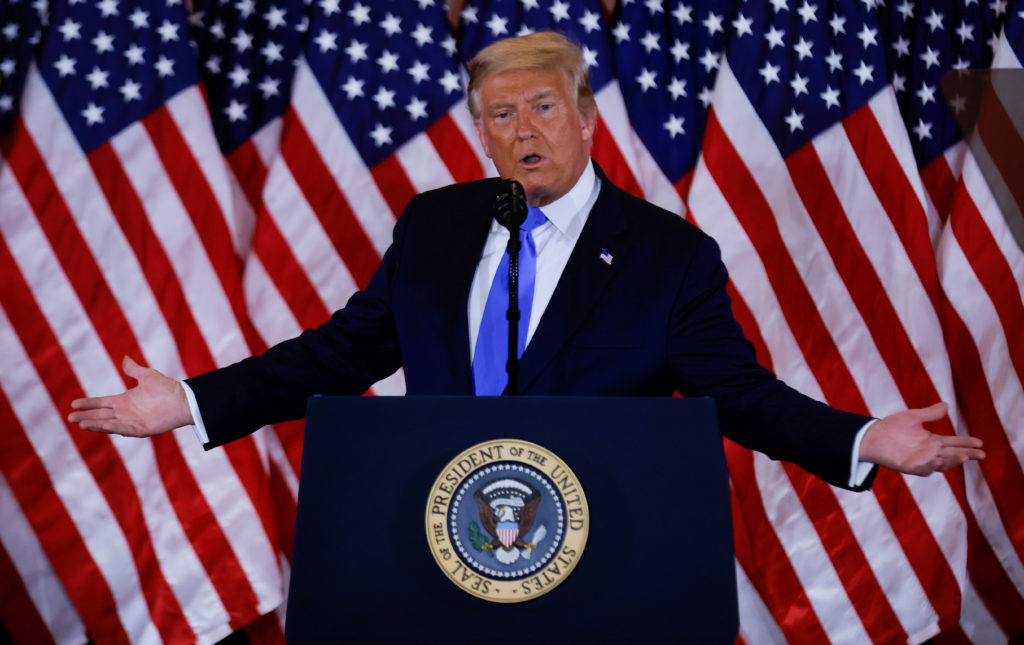
FILE PHOTO: President Donald Trump speaks about early results from the presidential election in the East Room of the White House in Washington. Trump falsely claimed victory over Democratic rival Joe Biden on Wednesday with millions of votes still uncounted in a White House race that will not be decided until a handful of states complete vote-counting over the next hours or days. REUTERS/Carlos Barria/File Photo
- The tragedy of denial
Human failure, while painful, is ordinary. Denial is what transforms failure into betrayal.
There is a profound difference between saying, “I was wrong. I abused power. I caused harm,” and saying, “This is misunderstood, exaggerated, politically motivated, or irrelevant to my work.”
The first response costs pride but preserves moral coherence.
The second preserves comfort but corrodes credibility.
Denial does more than protect the self; it reenacts the very systems of silence and evasion that many critics of power claim to oppose. It teaches institutions how to look away, how to delay, how to minimize. It instructs others—especially those with less power—that truth will be inconvenient and support unreliable.
In that sense, denial is not merely personal. It is instructional.
5. Holding truth without canonizing its messenger
There is no requirement that we discard good ideas because their author failed them. But there is a responsibility to stop confusing articulation with virtue.
Ideas deserve examination on their merits. People deserve judgment on their actions. When we merge the two, we either sanctify thinkers or demonize thought—both are intellectual failures.
The more honest response is to let the ideas stand, stripped of halo and heroics, and to let the behavior stand exposed, without euphemism or excuse.
That is not cruelty. It is ethical clarity.
In the end, principles outlive their advocates. Free speech, integrity, and accountability do not belong to those who write best about them. They belong to the societies that insist on practicing them—even when doing so is uncomfortable, even when it implicates those we once admired.
Perhaps that is the final, sobering lesson: the truest test of an idea is not how eloquently it is defended, but whether it survives contact with human weakness—without being bent into an alibi for it.

 Aging Capriciously
Jan 13, 2026 @ 12:20:39
Fascinating. I know this is aimed at Trump, however, i’ll set that aside and look at this within the context of families. How denial of a failure to function “morally” – by the head of a household and by other members of the family – enables the neglect and abuse to continue. Furthermore, it becomes generational.
The denial is a necessary ego defense mechanism by all parties to keep intact their Self esteem, and keep the family afloat economically. Oftentimes, however, the moral failing of all parties joined with the denial leads to physical or mental sickness and/or addiction.
All of which goes back to your earlier post on the Loneliness Epidemic. None of this is new. It’s been going on since forever. (See Freud’s ‘civilization and its discontents’, among others.) The internet and social media has just made it much worse and more observable. To call out, or hold to account, those at the top can have dire consequences. Thus it continues. Self preservation (see the second figure above), for sure, has more weight than any other behavior. Cheers. Ha!
LikeLike
Jan 13, 2026 @ 16:03:47
Mark, Very insightful. What do you see as the consequences of holding those at the top responsible? It does seem that when it comes to human behavior there is nothing new under the sun. As Pete Seeger and Peter, Paul and Mary sang “When will they ever learn, When will they ever learn?”
LikeLiked by 1 person
Jan 14, 2026 @ 08:21:48
Often it can be retaliation of one form or another, from mild (a warning) to severe, being “fired”. There’s an art to it that I’ve never mastered. Fineness, I think it’s called.
LikeLike
Jan 14, 2026 @ 10:18:24
I guess it is one reason people seem to fear Chump/
LikeLike