For the past fifty years, American business has been quietly—but steadily—consolidating. Companies have merged, industries have shrunk in number, and economic power has increasingly concentrated in fewer hands. To many Americans, this trend is largely invisible. After all, prices at Walmart seem reasonable, Amazon delivers quickly, and the shelves are still full.
So, what’s the problem?
To understand it, we need to look not at spreadsheets or stock prices—but at something far more familiar: a glass of beer.

The Beer Lesson
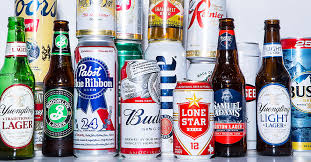
There was a time—not that long ago—when beer in America was dominated by just a few giants: Budweiser, Miller, and Coors. Through decades of consolidation, these companies perfected large-scale brewing. They made beer cheaper, more consistent, and widely available. Before these decades of consolidation, we once had regional or even local brewers. In RI, I remember Narragansett Brewery; in Texas, I remember the Lone Star Brewery; in Washington, I remember the Olympia Brewery and in Minnesota, I remember the Hamm’s Brewery. These were not just names to me since each place was somewhere I was stationed while in the military. Furthermore, being a dedicated beer drinker, I toured each of these breweries and got my free samples of beer. Later on, I used to take my students to visit the Summit Brewery on 7th street in St. Paul. After a tour of the brewery, those who were old enough would be given three or four wooden nickels to “buy” a free beer with. My students loved going on tours like this where they could experience reality.
Getting back to the consolidations and looking at them from a purely economic standpoint, this was a success story. Economies of scale were working exactly as intended.
But something else happened.
Beer became… predictable.
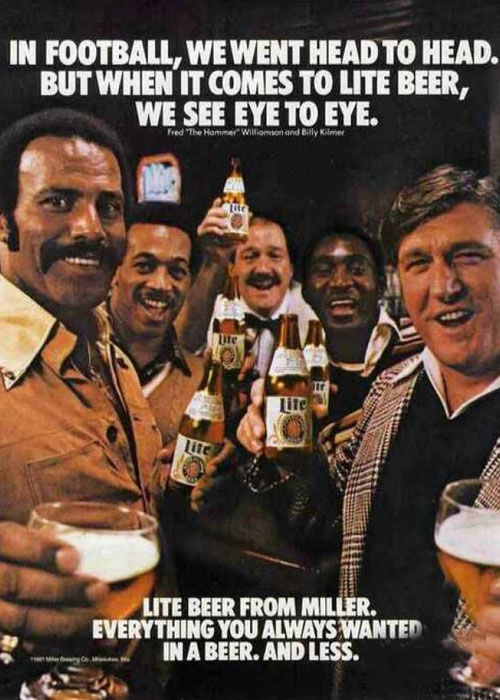
Light. Uniform. Interchangeable. I used to call them “piss” beers. As all they were good for was pissing out after you drank too much and had a hangover. If there was ever any proof needed, that Americans could be brainwashed, the beer commercials selling these “piss” beers should convince any skeptics. Big macho football players selling Bud Light, Coors Light and Miller Light to legions of football fans to swill down while watching NFL games on Sunday.
In short, beer became a commodity.
Then, something interesting occurred. Small, independent brewers began popping up across the country. They experimented. They took risks. They brewed bold IPAs, rich stouts, sour ales—beers with character, identity, and local flavor. I started drinking some of these in the mid-seventies at a local pub where I was living in River Falls, Wisconsin. The more craft beers I drank, the more I liked them. Not only was I drinking a wide variety of craft beers, but I started sampling beers from every country in the world. On my last count, I have drank beer from over 80 countries.
And consumers responded. People who wanted beer with taste and variety.
The craft beer industry exploded—not because it was cheaper, but because it was better, more interesting, more alive.
Innovation did not come from the large, consolidated brewers. It came from the margins.
A Pattern Bigger Than Beer
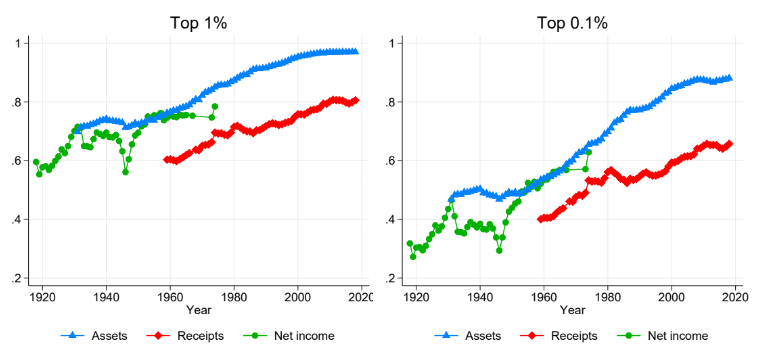
What happened in the beer industry is not an exception. It is a pattern. During my twenty years of management consulting, I watched this pattern reoccur many times in many different industries.
Across American business, we often see the same cycle:
- Fragmentation – Many small players innovate and experiment
- Consolidation – Larger firms absorb competitors and scale operations
- Commoditization – Products become standardized and indistinguishable
- Disruption – New entrants emerge with fresh ideas and restart the cycle
This pattern has played out in:
- Retail
- Technology
- Agriculture
- Media
- Healthcare
In each case, consolidation brings efficiency—but often at the cost of innovation and diversity. Furthermore, efficiency is not always a sibling to effectiveness. The cheapest cars may not be the most effective. Efficiency comes from doing things right, but effectiveness comes from doing the right things. Regard the prices of a vehicle today. When are 500 hp vehicles effective? There is a direct correlation with the HP of vehicles today and their prices. The data shows that:
In statistical terms:
- Correlation: moderate to strong (≈ 0.6–0.8)
- But non-linear
What this means is that generally you are going to pay more for a vehicle with more HP. The exceptions to this lie at the extremes. Exotic cars will probably give you more HP, but you will pay more for the exclusivity of the vehicle than you do for the HP. At the budget end of the spectrum, you get the most for your money. Cars like: Ford Mustang GT and Chevrolet Camaro SS Offer:
- ~450 hp
- ~$40k–$50k
These give the lowest cost per horsepower in the market.
The Illusion of “Low Prices”
Modern economic thinking tends to judge success by one primary measure: price.
If goods are cheaper, the system is working.
If prices are stable, consumers are benefiting.
But this way of thinking has a blind spot.
Low prices do not necessarily mean high value.
A system can produce:
- cheaper goods
- fewer choices
- less innovation
- weaker resilience
And still be considered “successful.”
This is the trade-off we rarely discuss.
What Changed in American Policy
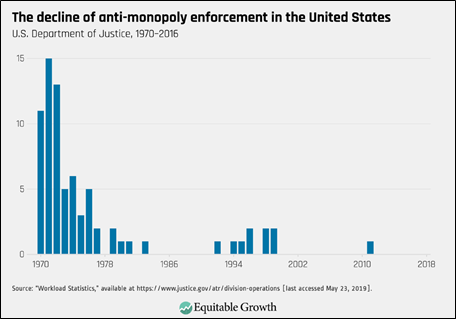
In the early 20th century, antitrust laws were designed to prevent excessive concentration of power. The concern wasn’t just about prices—it was about preserving competition itself.
Over time, that philosophy shifted.
Today, regulators tend to ask:
“Are prices low?”
Instead of:
“Is the market competitive?”
That change matters.
Because consolidation can suppress competition long before it raises prices. By the time prices rise, the damage is already done. What we have seen is the power of the modern corporation/conglomerate to manipulate economic policy so that they benefit in terms of being able to deliver low costs but not the innovation or effectiveness that consumers might need. Unfortunately, people are more concerned with low prices than innovation or effectiveness. Dr. Deming always said that people never asked for calculators or computers. People generally cannot be good predictors of the future technologies that will someday become commodities. All that the public wants and even demands is low prices. If prices and inflation stay low, people are happy. As soon as they start to go up, people want the heads of the politicians in office. Economics becomes driven by political policies rather than economic choice.
A Systems View: Efficiency vs. Vitality
From a systems perspective, consolidation does something very specific.
It optimizes for:
- efficiency
- consistency
- cost reduction
But it often weakens:
- adaptability
- creativity
- resilience
- effectiveness
In other words, the system becomes highly efficient—but less effective
And living systems—whether biological, social, or economic—depend on diversity and variation to remain healthy.
Innovation Lives at the Edges
The lesson from beer—and many other industries—is simple:
When economies of scale dominate a system, innovation migrates to the margins.
Large organizations are excellent at refining and scaling existing ideas. But truly new ideas—disruptive, risky, unconventional—almost always come from smaller players operating outside the dominant system.
This is not a flaw. It is a natural dynamic.
The problem arises when consolidation becomes so extensive that the margins themselves begin to disappear—or are quickly absorbed.
So, What Should We Care About?
This is not an argument against large companies. Scale has real benefits:
- lower costs
- global reach
- investment in research and infrastructure
The issue is balance.
A healthy economy needs:
- large firms for efficiency
- small firms for innovation
When one side overwhelms the other, the system drifts out of balance.
A Different Way to Measure Success
Perhaps the deeper issue is how we define economic success.
For decades, we’ve asked:
- Are prices low?
- Are profits high?
- Is growth steady?
But maybe we should also be asking:
- Is the system innovative?
- Is it resilient?
- Does it offer meaningful choice?
- Is it alive with new ideas?
- Are our systems effective in providing the goods and services that people need and not just want
- Because an economy that is efficient but not effective is not truly healthy.
An efficient system that produces the wrong outcomes is not a success—it is a highly refined failure. Progress demands effectiveness first, efficiency second, and both in balance.
I refer you back to my comments about HP and cars. The amount of HP in most cars has steadily risen over the past twenty years. Over the last 20 years: We didn’t just make cars more efficient—we used much of that efficiency gain to increase power instead of fuel economy. There is nothing effective about a 780 HP truck or a 550 HP sedan. We have seen the rate of speeding continually increase on our highways as more powerful vehicles pay no attention to posted speed limits. The true cost of 500 hp sedans and 800 hp trucks is not paid at the dealership—it’s distributed across society in fuel, infrastructure, safety, and environmental externalities. Here are some of the real costs to society:
Direct Consumer Costs (Visible, but Incomplete)
High-horsepower vehicles cost more to own:
- Fuel: typically 20–50% higher consumption
- Insurance: higher risk → higher premiums
- Tires, brakes, maintenance: faster wear
Over a vehicle lifetime:
- +$5,000–$15,000 per vehicle vs moderate-power alternatives
Fuel & Energy System Costs (Shared by Everyone)
- More horsepower → heavier vehicles → more fuel burned.
Across millions of vehicles:
- Increased national fuel demand
- Greater exposure to oil price shocks
- Higher dependency on energy infrastructure
Societal impact:
- Billions annually in additional fuel consumption
- Hidden costs in energy security and volatility
Environmental Externalities
Higher horsepower vehicles typically produce more emissions (even with efficiency gains):
- Increased CO₂ emissions → climate impact
- More particulate pollution (especially from heavier vehicles and tires)
These costs show up as:
- Healthcare burdens
- Climate adaptation costs (fires, heat, storms)
Estimated societal cost:
- $50–$200+ per ton of CO₂ (social cost of carbon)
- Multiplied across millions of vehicles = tens of billions annually
Safety & Public Health Costs
High horsepower enables:
- Faster acceleration
- Higher crash severity
Heavier, more powerful vehicles (especially trucks) increase:
- Fatality risk for pedestrians and smaller cars
Outcomes:
- Higher medical costs
- Emergency response burden
- Insurance system strain
Infrastructure Wear & Public Spending
More powerful vehicles tend to be:
- Heavier
- Larger
This contributes to:
- Faster road degradation
- Higher maintenance costs for taxpayers
Final Thought
Most Americans are not taught to think about economics in this way. We learn about supply and demand, inflation, and interest rates—but not about system dynamics, concentration of power, or the long-term effects of consolidation.
Yet these forces shape our lives every day.
The next time you walk into a store, browse online, or even order a beer, it’s worth asking:
Are we choosing from a vibrant system—or a consolidated one?
And more importantly:
What kind of system do we want to live in?
Because in the end, the health of an economy is not just about how cheap things are—
It’s about how alive it is.


May 07, 2026 @ 11:53:03
Interesting blog John, as I can remember the old Narragansett brewery in RI. They even gave you a glass of beer when your tour ended.
Lately I have noticed an increase in the variety of non-alcoholic beers, Athletic Brewing being the most talked about and popular lately.
As time goes on we have not only witnessed changes in the beer industry, but wines as well. Even inexpensive bottles of wine today are said to be much better and of higher quality than the cheap bottles of the 70’s.
LikeLiked by 1 person
May 07, 2026 @ 22:04:59
Hi, Jeanine, I tend to think so many things are better today in some ways. Electronics, automobiles, planes, trains, etc. There are many thing that have come out of our economy that are good but on the other hand look at what we have done to the climate? I might opt for the old days with the weather that we knew rather than the chaotic weather we get today. John
LikeLike
May 07, 2026 @ 19:44:38
Interesting point you raise on innovation. But let’s return to craft beer;🍻 How great is it? I’m lucky enough to live in an area with a thriving craft beer scene too. I bad part is that it’s hard to enjoy a mass produced beer after tasting how good beer can be. Maybe you’ll visit Southwest Western Australia one day.
LikeLiked by 1 person
May 07, 2026 @ 22:02:47
I would love to. I suppose Fosters is not a true craft beer but I would love to try a geniune craft beer from Austalia. I wonder if you can recommend some that I might look for in Arizona? I have been to 45 countries and Australia is stillon my bucket list.
LikeLike
May 07, 2026 @ 20:41:58
Thanks for a well researched article.
LikeLike
May 07, 2026 @ 22:00:53
Thanks Wayne, please feel free to repost or share. I think we all need more training in economics. John
LikeLike
May 09, 2026 @ 07:29:57
Americans aren’t taught to think of economics in this way because Americans aren’t taught to think of anything in any subject except in the most superficial way.
I drink Canadian beer ~ Labatt’s Blue, usually.
LikeLike
May 10, 2026 @ 07:16:04
I think Labatts bought Coors, SAB bought Millers and ImBev bought Bud. The largest American brewer is now Sam Adams. Sort of ironic I think. Sam Adams actually make a good beer. I was in Canada a great deal working with the Old INCO, Dominion Bridge, Gardewine Trucking and British Columbia Paper Products in Vancouver. I always liked Labatt’s Blue. It had some taste. I always enjoyed working in Canada. Very good people to work with.
LikeLike
May 10, 2026 @ 09:27:49
Coors bought Molson. I used to drink Molson. I loved Molson, especially Canadian. I used to drink Molson Golden when I was in highschool, & I used to cross the border just to buy cases of Molson Diamond, which was never sold in the US, but when I found out that they contribute to the Trump campaign, I stopped drinking any Molson product.
The same goes for Sam Adams. I loved Sam Adams beer, especially their Octoberfest & their Summerale. But, as much as I can, I refuse to patronize any company that contributes to Trump. Sometimes there’s no way around it.
As far as I know, Labatts has not bought any American beer company, nor any Canadian beer company, either.
LikeLiked by 1 person
May 10, 2026 @ 19:11:18
You are right it was Molson Inc. of Canada that merged with the Adolph Coors Company of the United States in February 2005 to form Molson Coors Brewing Company. While termed a “merger of equals,” it combined Canada’s oldest brewer with the U.S.-based Coors.
Thanks for the correction even though it really does not impact the message of my article about conglomeration. Technically, I would not call any of the beers from these brewers as Craft Beers. The Brewers Association provides a formal definition of a craft brewer in the U.S. as small and independent. However, Bud used to have a contest each Christmas to produce an Ale in small batches that was done by an inhouse brewer. Much as I hated Bud, these were dam good craft beers. Budweiser’s special holiday beer, known as Budweiser Brew Masters’ Private Reserve, was a seasonal 32-ounce bottle that became a cult favorite for its richer, “craft-like” profile. This tradition was distinct from their long-running holiday cans and steins.They put them on the shelf from just before Thanksgiving and if you hunted the small liquor stores you might be able to buy a bottle for about ten dollars. The practice of selling this specific 32-ounce “holiday brew” to the public began in late 2005. It was inspired by an old internal tradition where Budweiser brewmasters would tap the richest part of the batch—taken from the brew kettles before full filtration—to toast the holidays.The wide release of the 32-ounce glass bottles was discontinued around 2009, shortly after the merger of Anheuser-Busch and InBev. This saddened me greatly. I have since gone to the more traditional Belgium Beers although Fat Tire does make a reasonably good Belgium beer.
LikeLike